Category: Environmental

EU: Take Action (Link Below) – An ambitious Nature Restoration Law is needed for an EU where wild animals can thrive.

29 March 2023

In 2022, the European Commission published its proposal for an EU Nature Restoration Law.

This is landmark legislation for the conservation of wild animals habitats in the EU and the time to act is now!

Add your voice to the thousands of citizens calling on the EU to adopt an ambitious EU Nature Restoration Law.

The proposed EU Nature Restoration Law sets an overall target of restoring 20% of the EU’s land and sea area by 2030 and all ecosystems in need of restoration by 2050. This is an ambitious and appropriate target, essential for the EU’s wild animals which are suffering from a decline in the quality of their habitats. 

Indeed, rich and undisturbed habitats are key for the well-being of wild animals. In a world where all animals and species, including humans, are interdependent and rely on healthy ecosystems, nature restoration and conservation is a priority. 

Eurogroup for Animals therefore calls for the EU Nature Restoration Law to fulfil three objectives:

It must effectively protect and restore all natural habitats to safeguard the well being of millions of wild animals and humans;

It must recognise and take into account the interdependence of living beings in line with the One Health and One Welfare approaches;

It must fully integrate the welfare of wild animals as an indicator and objective of conservation and restoration activities.

In this context, the well-being of wild animals must be addressed in the definitions of “sufficient quality of habitat” and “sufficient quantity of habitat”. Similarly, the legislation should ensure that a “favourable reference area” for the given habitats is defined as more than the minimum required, so that wild animals can thrive rather than simply survive. The proposal should also ensure connectivity between habitats so that wild animals do not encounter obstacles to their movement on land or water. The ethological requirements of species must also be adequately taken into account in restoration activities.

If you agree with these statements, tell your decision-makers to keep high ambitions and fully integrate animal welfare considerations in the EU Nature Restoration law to protect the habitats and ecosystems on which humans and wildlife depend.

Regards Mark

Photo – Mark

EU: Press Release – Time For EU Fossils To Update Animal Welfare Rules.

New evidence reveals systematic cruelty of industrial animal farming

23 March 2023

Press Release

Evidence of widespread animal suffering was delivered to the European Commission (EC) today to strengthen its resolve as it prepares the revision of the animal welfare legislation due later this year. We’re calling on the EC to seize the incredible opportunity ahead of us to enact the system change we need for animals.

Thanks to the investigations of our over eighty member organisations in 25 Member States, we at Eurogroup for Animals delivered a video and report today to the EU Health and Food Safety Commissioner, Stella Kyriakides

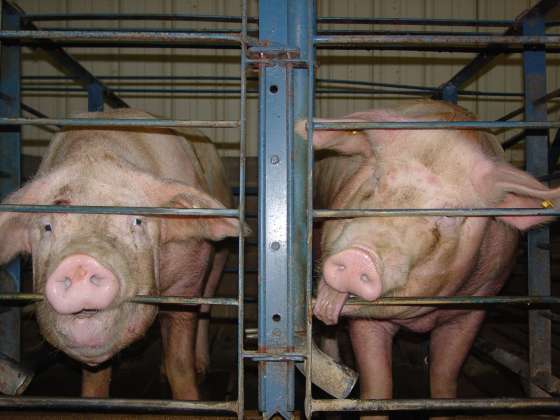
EU welfare rules remain limited, poorly enforced, and plagued by loopholes, leading to widespread suffering in the farming sector. From the cruel handling of broiler chickens to chaining the back legs of dairy cows, the new exposé reveals how the EU’s farmed animals are being callously treated by those who are meant to care for them.

The EC has an opportunity to deliver – in line with its ambitions contained in the Farm to Fork strategy – a future-proofed legal foundation for evidence-based standards, that provide the ability for all farmed animals to experience a positively affected mental state and lead lives that are truly worth living. Any farming practices that cannot meet such requirements should, in effect, be eliminated. In doing so, the EU would remain a world leader in animal welfare standards, citizens’ expectations would be met, and no animal would be left behind.

A formal impact assessment on the coming proposals is expected to be finalised by the beginning of April, and all the reasons why the legislation needs to be ambitious are there: in 2021 the EC pledged to end the cage of farm animals by 2027, and EU scientific advisors also say that unweaned calves should not be transported. 

Despite the strength of public support shown for the End The Cage Age ECI and the No Animal Left Behind campaign, we at Eurogroup for Animals are concerned that pressure from an array of well-established animal farming interests could weaken the EC’s resolve. Eurogroup CEO, Reineke Hameleers, commented:

The new hard hitting evidence shows once again that the EU is responsible for the biggest animal welfare crisis ever: industrial animal farming. Animals have been decimated into objects as cogs in a big machine whereas the EU legislation is expected to meet their natural needs. This year the European Commission has the once in a lifetime opportunity to turn the page. It is crucial to avoid technocratic changes but to be bold and ambitious. 

Regards Mark

IPCC findings confirm urgency to make sustainable healthy diets easy, says NGO coalition.

IPCC findings confirm urgency to make sustainable healthy diets easy, says NGO coalition

20 March 2023

Press Release

In light of the findings to be released today by the Intergovernmental Panel on Climate Change – that changes to our diets can substantially slash greenhouse gas emissions – we at Eurogroup for Animals are calling for better ‘food environments’ in the EU (1) alongside other influential organisations. This means concrete measures to make healthy, more plant-based diets with ‘less and better’ animal products the easy choice for European consumers.

We’ve recently formed a coalition with the European Consumer Organisation (BEUC) and European Public Health Alliance (EPHA), as the European Commission is due to propose a landmark law on sustainable food systems in September. The law is expected to recognise the role and influence of ‘food environments’ in shaping consumer food choices.

Food is among the sectors where demand-side changes can be most impactful. Yet currently, food environments largely push consumers towards unhealthy and unsustainable foods which are the most available and advertised, as well as often the cheapest options.

IPCC experts recognise the right policies and infrastructure need to be in place to enable shifts to sustainable healthy diets (2). Incredibly, changes to our lifestyles and behaviour can result in a 40-70% drop in greenhouse gas emissions by 2050, while also improving our health and wellbeing (3)!

Our coalition, named ‘Put Change on the Menu’, therefore urges action to:

Ensure that foods contributing to sustainable healthy diets are the most advertised and promoted;

Make sustainable and healthy foods more affordable;

Make food products healthier and more sustainable by design through new minimum legal requirements;

Ensure that these minimum requirements also apply to imported foods.

Reineke Hameleers, Eurogroup for Animals Chief Executive Officer, commented:

European citizens care deeply about animal welfare and have made strong calls for animal welfare to be improved. Products from higher welfare systems in combination with more plant-based food on European plates are also good for the planet and health. Still we see numerous campaigns promoting the consumption of animal products in the EU. This needs to change. Therefore we are joining forces with consumer and health organisations to make sure that the healthy, sustainable option is the one that is the most promoted along the lines of ‘less and better’.

Monique Goyens, BEUC Director General, commented:

Sustainable healthy diets are a win-win for health, climate and food security. Most consumers are willing to change their food habits, such as eating ‘less and better’ meat and more fruit, vegetables and pulses. But that is no easy task. Change must be rolled out at several levels to make the healthy sustainable choice the obvious choice. Regulators, food producers, and retailers have a crucial role to play to adjust pricing, marketing, and every other factor that pushes us to buy one food product over another.

Milka Sokolovic, EPHA Director General, commented:

Making healthy and climate smart food choices the easiest options for all is not just needed to reduce the very real threats to health posed by climate change highlighted in the IPCC report. It’s also needed to help tackle the burgeoning burden of ill health that poor diets largely contribute towards.

Notes

In its 2020 ‘Farm to Fork’ Strategy for fairer, healthier, and greener food and farming, the European Commission announced a new EU legislative Framework for a Sustainable Food System for 2023. This horizontal law will introduce definitions, sustainability objectives and principles to ensure that existing and future EU legislation about food consistently contributes towards the goal of a sustainable food system which operates within planetary boundaries. 

For our coalition, it’s vital that the Framework for a Sustainable Food System paves the ground for further concrete policy measures addressing specific elements of food environments such as advertising and marketing, labelling, public procurement and the affordability of healthy and sustainable food.

(1) The Synthesis Report, the closing chapter of IPCC sixth assessment cycle, will integrate the findings of previous reports released by IPCC during this cycle which began in 2015, including that of Working Group III on ‘Mitigation of Climate Change’ which tackled demand-side mitigation solutions.

(2) Which in the EU means eating more fruit, vegetables, wholegrains, and pulses, and ‘less and better’ meat and dairy.

(3) See IPCC Working Group III contribution published on 4 April 2022.

Food environments have been defined as the “physical, economic, political and socio-cultural context in which consumers engage with the food system to make their decisions about acquiring, preparing and consuming food.”

Regards Mark

UK: Trophy Hunt Ban – Government Has Not Checked Things Enough – Trophy Hunters Can Still Import Mass Dead Body Parts to the UK If They Go First Via Northern Ireland (Still part of UK). !!

Following on from our post yesterday relating to a ban in the UK of trophy hunting imports:

UK: We Have Values, and Being Part of a Trade In Endangered Species Body Parts Is Not Part of Those Values. – World Animals Voice

.. it now appears that the press have delved into this more and found that all is not as perfect as was first sold.

The law to ban trophy hunting imports was approved by MP’s very recently. (See above link).  This has now been exposed as a bit of a farce – why ? – the rules will NOT apply to Northern Ireland, and DUP (Democratic Ulster Unionist Party) MP’s have said that the bill is undermined and that Ulster (in Northern Ireland – part of the UK); will be used as a ‘backdoor’ by trophy hunters to continue getting murdered animals from the hunts into the UK.

It basically means that trophy hunters would be able to fly into Belfast (Northern Ireland), loaded up with dead hunted animals body parts; and then simply cross the Irish Sea to the UK.

Now that the Bill will be moving into the House of Lords before it becomes legislation; where it will undergo a lot of scrutiny; we can ony hope that all the loopholes will be exposed and corrected in the draft legislation.

If things are not entirely sorted out before becoming law; then one has to question all the actions undertaken so far by the government – it would appear that the Bill may have been rushed through Parliament without anyone looking into all the loopholes of what exists; there are even some saying that this current proposal may infact kill more animals than things in the past.

It would appear to currently be a failure to support the excellent work of so many anti hunt organisations and personnel; we can only hope the Lords will undertake an in depth review of the draft Bill before it ever becomes legislation – otherwise, what is he point of it all ?

Sticky time for the government; doing so much wrong as they often do.  General Elections not that far away now so that people can vote on issues such as this and many others; faith or no faith ?

Regards Mark

UK: We Have Values, and Being Part of a Trade In Endangered Species Body Parts Is Not Part of Those Values.

This is about the values that we in Britain have, that we do not want to be part of a trade in endangered species’ body parts.

On Thursday 16/3/22, the UK Parliament in London voted (un opposed) and passed the ‘trophy hunting law’; which will now (once passed into law / legislation very soon) stop trophy hunting ‘items’, including hunted animals heads, the skins and tusks of murdered animals etc from being imported into the UK by the sadistic blood lust killers who pay highly financially to travel to Africa in order to undertake their murdering ‘sport’ (as they see it).

Many organisations, celebrities and good ol normal people here in the UK have campaigned about getting this legislation for years.

As expected, ‘pro hunt ‘conservation groups’ (??) have come out of Africa and expressed their concerns – you can read more here:

UK parliament passes trophy hunting law – Digital Journal

Saying things like ‘it is another way of re-colonising Africa’; But we here in England were ‘colonised’ by the Romans when they invaded us in 55BC; we were also invaded a lot by the Vikings; but hey, that is what happens and is called history; I may have been bummed off as an Englishman in 55BC; but throughout history, times and things change; and for me, this ban is very much to the positive; not really a move to re-colonise Africa !! – get a grip please, most of the world detests hunting animals for ‘sport’; and so they will work to oppose it.

Further reading:

UK parliament passes trophy hunting law (ibtimes.co.uk)

Bill banning import of hunting trophies into UK passed by MPs | Hunting | The Guardian

Bill banning import of hunting trophies into UK passed by MPs | Evening Standard

Cecil the lion did not die ‘in vain’, minister says as trophy-hunting ban passed (kentonline.co.uk)

Regards Mark

Check out all our old trophy hunt posts at:

Search Results for “trophy hunting” – World Animals Voice

Malaysia: Animal Rights Group Lodge Police Report Over Baby Macaques Being Tortured and Offered For Sale.

PETALING JAYA: A local animal rights group has lodged a police report over videos of baby long-tailed macaques being tortured that are being offered for sale on a Telegram group.

The report was filed by Hak Asasi Hidupan Liar Malaysia (Hidup) at the Shah Alam district police headquarters following a tip-off from US-based animal welfare group Lady Freethinker and UK’s Action for Primates,

The videos are being sold in a Telegram group called “Monkey Haters”.

“It is such a brutal form of torture that should be investigated immediately by the police,” Hidup’s Dr Kartini Farah Abdul Rahim was quoted as saying by news portal Free Malaysia Today on Friday (Jan 20).

The footage depicted many despicable forms of torture, which includes, dismembering, mutilation, burning, boiling and skinning of monkeys while still alive.

“The monkeys were shrieking and screaming. During the process, the perpetrators take pictures and videos and post them on Telegram,” lawyer Rajesh Nagarajan was quoted as saying.

Read more at:

Animal rights group lodges police report over monkey ‘torture porn’ | The Star

Regards Mark

England: New March (2023) Photographs From Pauline.

Here are the latest photographs which have been sent through by fellow animal buddy Pauline taken in and around South London.

You can see all of her past excellent images by clicking on https://worldanimalsvoice.com/?s=pauline

Finally, I want to thank her for my fabulous birthday card relating to Badgers – we are both Badger people; doing our best to speak up for and look after this iconic chunk of British wildlife. I have scanned in the basic card here for you to see, but on the real card all the heads and other wildlife move – super cool !

My super cool Badger birthday card from Pauline:

Singing Robin:

Above – Adult Herons with baby – see below.

Below – Dunnock.

Below – Heron gathers fish to feed its baby.

Below – Lapwing and Shovelar Duck.

Below – Long Tailed Tit.

Below – Raindrops on the pond.

Below – Two Robins – a bit unusual to see 2 together.

Pauline’s dad has made friends with a little mouse – you can see him enjoying some scoff here:

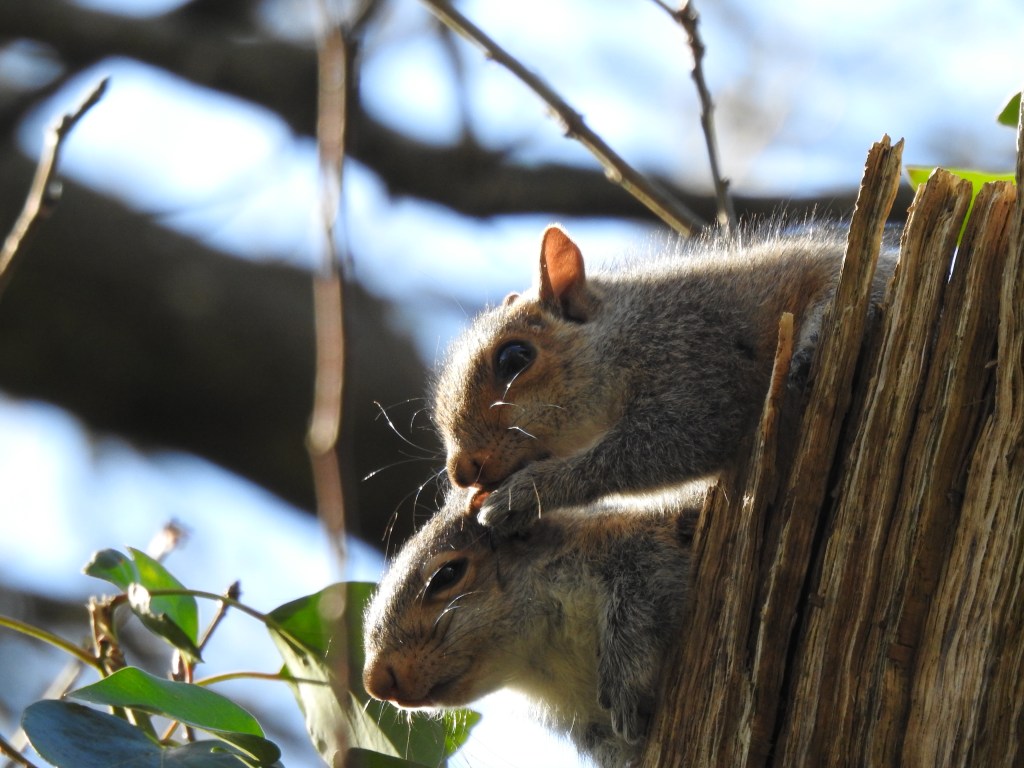
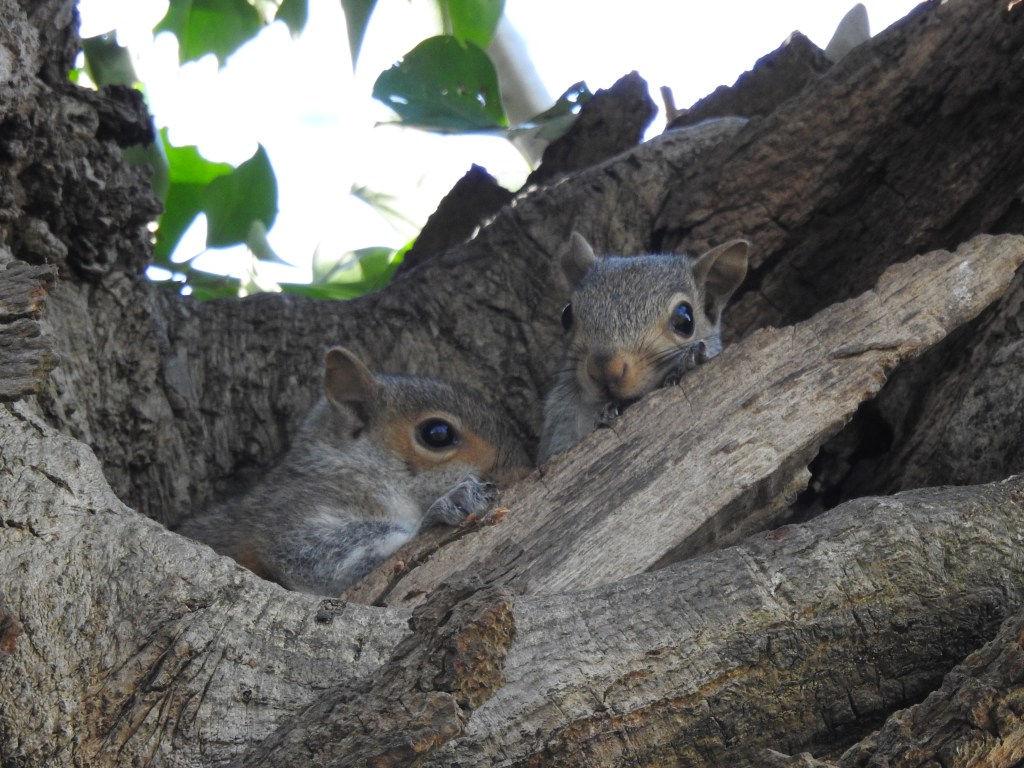
Grey Squirrel.

.. and finally more Robin:

My garden Badger thinks they are all pictures to smile at: he comes round each night for some food treats.

Be good to wildlife no matter what shape and form it comes in – they are all there for a reason;

Regards Pauline and Mark

EU: Civil society denounces opacity and lack of democratic debate on EU-Mercosur agreement.

9 March 2023

As Europe’s trade ministers gather on 9 March for an informal trade Council, environmental, animal protection and trade groups denounce the Commission’s closed-door negotiations with Mercosur countries that aim to push through a controversial Free Trade Agreement (FTA), that has been the subject of public outrage and been rejected by national parliaments across the EU.

The lack of democratic debate and transparency around the protocol further damages the legitimacy of the EU and risks weakening European and national parliaments’ ability to comprehensively debate the consequences of the trade agreement.

The EU-Mercosur FTA has been dormant since the European Parliament and some Member States have refused to ratify it “as it stands” following massive civil society mobilisations from across the EU and South America denouncing the FTA as a bad deal for people, animals and the planet, that prioritises corporate profits at the expense of planetary boundaries.

Yet again the Commission is showing its anti-democratic face by pushing the toxic EU-Mercosur deal across the finishing line. Despite public opposition from both sides of the Atlantic, the EU’s negotiators are still discussing the annex in complete secrecy. Parliaments and civil society play a crucial role in scrutinising trade agreements as they are being negotiated, not once when they are ratified and it’s too late to reverse the impacts it will have.

Audrey Changoe, trade campaigner at Friends of the Earth Europe

Now, the European Commission is seeking to revive stalled discussions with an “additional instrument” – or annex – that is being presented this week to Mercosur countries, despite proof of the rampant devastation of the Amazon.

The European Union’s push for ratification of the EU-Mercosur deal is not supported by public opinion. Three-quarters of Europeans want the deal to be scrapped if it leads to deforestation and environmental damage. Despite public concerns, the Commission refuses to share the content of the additional document and is discussing it behind closed doors.

European and South American civil society groups reiterate their calls to stop the deal and reject these additional annexes and protocols and call for a different kind of relationship between the continents. 

No greenwashed protocols or annexes can fix an inherently bad deal whose aim is to promote trade in products driving deforestation, land grabbing, massive pesticide use, carbon emissions and human rights violations. The good news is that an alternative model exists, which could both strengthen ties with the countries and populations of the Mercosur while basing our relations on sustainability and cooperation.

Leah Sullivan, Seattle to Brussels Network

The recent EU legislation on imported deforestation does not make the FTA acceptable, first and foremost because it cannot offset all the deforestation: it ignores many ecosystems that, just like the Amazon rainforest, are also destroyed by intensive animal agriculture. The scope of products it covers is very limited, as it does not include animal products derived from animals fed by soy on intensive farms. In addition, the EU still does not have any new import requirements related to animal welfare standards.

Stéphanie Ghislain, Political Affairs Manager at Eurogroup for Animals

Regards Mark