Will the once ‘green prince’ clash with his fracking-friendly government?
by Phoebe Weston
I remember discovering as a child that then-Prince Charles spoke to his plants, and laughing about it with my mum. His courtiers also claimed he gives branches of trees a “friendly shake” to wish them well as he walks by. Even by today’s standards these practices still might seem pretty odd, but lots of Charles’s other “dotty” environmental views over the years have aged well.
Since his 20s, the new king has been banging on about plastic pollution and nature-based solutions. In 1970, he spoke about the “cancerous forms” of pollution – oil at sea, chemicals in rivers, air pollution from factories, cars and aeroplanes. Last year, the Washington Post said he could be the “21st century’s first eco-king”.
More recently, Charles revealed to the BBC he forgoes meat and fish for two days a week, and dairy for one day a week. His 50-year-old Aston Martin runs on surplus English white wine and cheese (no, really). Solar panels are now up on Clarence House, and he’s written a 336-page book in which he makes a “call to revolution”. He must be the first monarch to do so.
Charles has always genuinely taken the climate seriously which is much more than the rest of the royal family can profess to do – even if he does have an astronomical carbon footprint himself, living in mansions and travelling by private jet.
Until now he has shown no sign of slowing down. But now, as king, Charles is obliged to take an oath of silence. Will he continue to speak out on the environment from the throne? “Definitely not,” Jonathon Porritt, the environmentalist and Green politician, who also advised Charles as Prince of Wales, told my colleague Fiona Harvey.
But this green stuff is so ingrained in Charles, it could be hard for him to change the habit of a lifetime. With signs suggesting the UK government is moving in the wrong direction on climate change it might be difficult for him to not be active behind the scenes. He will meet with the prime minister once a week, and this is where King Charles III may have power to hold Liz Truss – or whoever else in the future – to account on the issues he cares about.
Of course, one of the Queen’s strengths was that we rarely knew what she believed in private, so the fact Charles has been so vocal about so many issues could be to his detriment. But equally, it also means the royal family could have an unlikely fanbase. Head cheerleader is my great-aunt Tina, who says she doesn’t really like the monarchy but messaged me this the other day: “King Charles will not like fracking or digging up more oil and gas in the north sea, or stopping the green levies, long live King Charles!!”.
It may seem a bit depressing that the best leadership on the environment is coming from an unelected monarch with questionable views about homeopathy and shaking hands with plants. Many of us are hoping that the green prince becomes a green king, but what a sad state of affairs that you have to rely on the monarchy to speak up for the destruction of the natural world.
Right now it feels like most of the government has a vow of silence on the environment. It would be great if those elected to be in power could speak up about these issues first. Especially when many obligations, such as cutting carbon emissions, are in fact enshrined in law – speaking about many of these issues shouldn’t be controversial.
EU fishery policy cannot continue to neglect fish welfare
15 September 2022
Opinion
Written by Douglas Waley
The Common Fisheries Policy (CFP) sets the right foundational objectives for the management of fisheries and fish populations in the EU’s waters. Yet, to date, it still ignores fish welfare.
In October 2012 the Treaty on the Functioning of the European Union (TFEU) was published in the official journal of the EU, including the specific requirements that the formulation and implementation of Union fisheries policy, ‘since animals are sentient beings, pay full regard to the welfare requirements of animals’. More than a year later, in October 2013, the Common Fisheries Policy (CFP) was published, and it failed entirely to take up the commitments made in the TFEU to pay regard to the welfare of animals.
The absence of high level objectives or recognition of animal welfare in the CFP has played out across the subsequent years as a lack of action and lack of awareness, especially for the welfare of fish and aquatic invertebrates. Technical measures, rules on fishing gears and methods, have been established with fish population management in mind, and without regard for the capture experience, exhaustion, suffocation, or injury faced by the animals.
Labelling requirements have been designed to give the consumer information that enables them to make choices based on localised environmental impacts, but not the information that enables consumers to make choices based on animal welfare or global environmental impacts. The wild capture fishery industry in particular has passed these years without developing an awareness of its animal welfare impacts or consumer expectations, and without improving practices to reduce welfare impacts.
The European Commission is now developing a report on how the CFP has functioned to date, and on emerging trends of importance to fisheries and aquaculture. Eurogroup for Animals has published its position paper here. We are making the case that the CFP, with its existing objectives, needs to be fully and properly implemented before reforming the legislation itself. The failures of not incorporating animal welfare need to be acknowledged now and specific actions taken immediately where tools are available. In the future, fisheries policy should be an integrated part of a Common Food Policy and as part of a transition to sustainable food chains.
See here our detailed report on the causes of animal welfare issues in wild capture fisheries, and the steps necessary to make improvements for captured animals.
The European Commission has opened a public consultation on the functioning of the CFP. The consultation is available here and is open until 23 September at midnight CET.
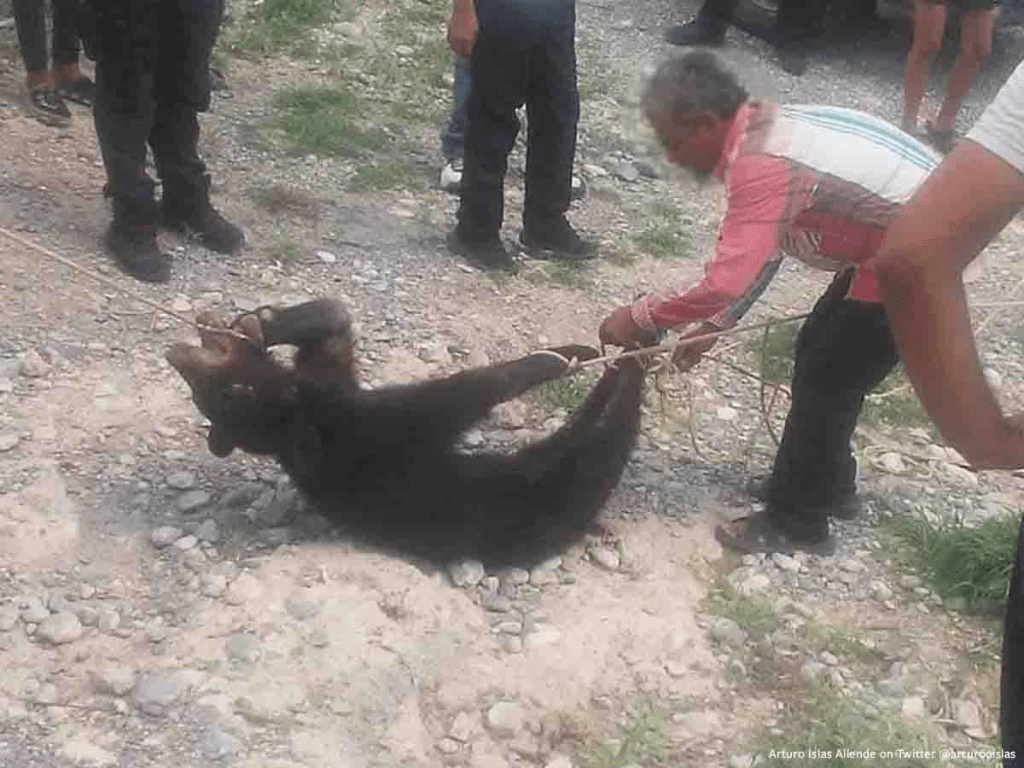
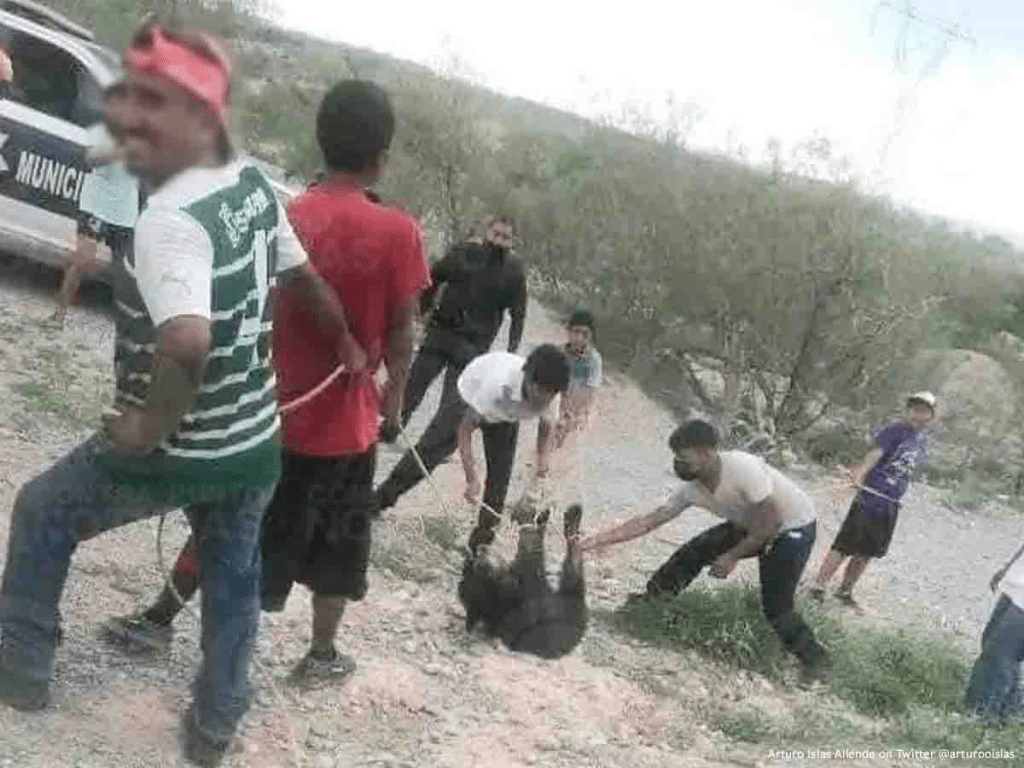
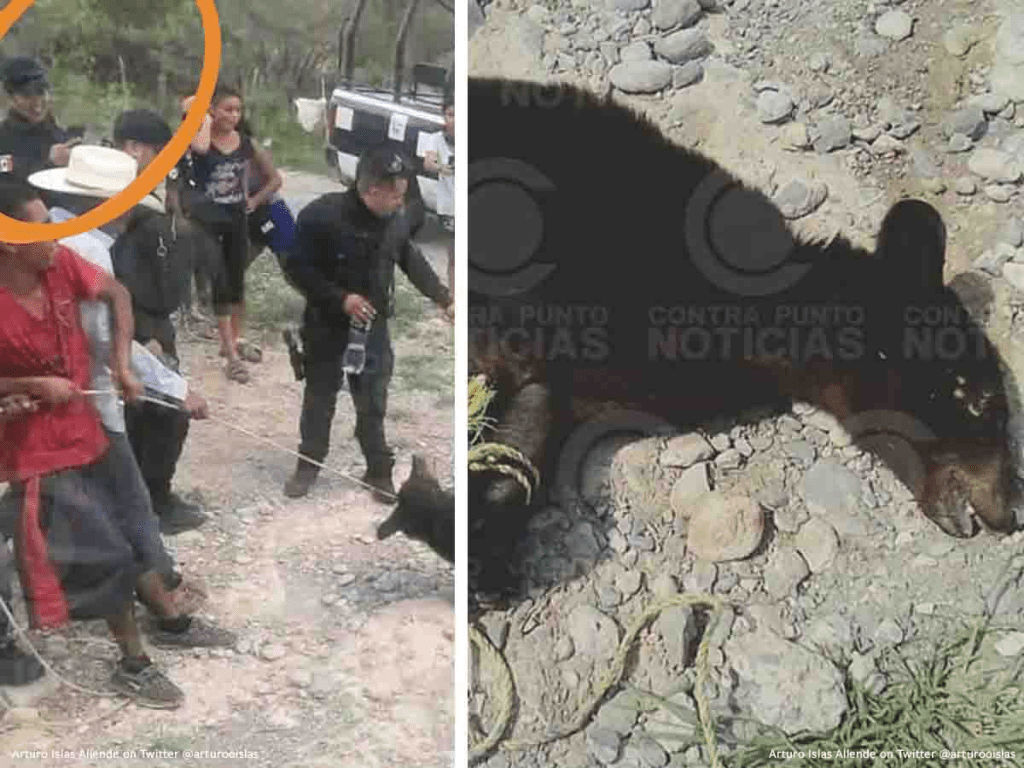
The tragic killing of a five-month-old bear cub who wandered into a town in Mexico is almost beyond belief. Locals and members of law enforcement were documented smiling and laughing as a tiny, terrified bear cub was tortured and strangled to death. Please take action now to make sure every individual who inflicted harm on this endangered animal, as well as those who stood idly by, are charged and sentenced with the maximum penalty under the law.
Mexico News Daily shared the heartbreaking details of a young black bear cub who entered the town of Castaño, Coahuila in Mexico in search of water. In a mob-like fashion, residents of Castaño surrounded the terrified bear and callously celebrated as they tortured her. They tied her mouth and legs with rope and dragged her tiny body along the ground. They yanked at the ropes until she suffocated to death. Photos posted to social media show police smiling as the small bear suffered and took her last breaths.
The Federal Attorney for Environmental Protection (PROFEPA), a Federal environmental protection agency, stated that it was preparing a criminal complaint against those responsible for the killing of the endangered black bear, which could be classified as a “crime against biodiversity.” The agency said that the perpetrators could face jail time and fines and stressed that it is committed to the protection of wildlife.
Governor Miguel Ángel Riquelme Solís weighed in on the horrific event on Twitter and stated that the government of Coahuila “vigorously rejected the outrageous actions” of the individuals involved and indicated that “Profepa and the Coahuila environmental protection agency are in charge of the investigations into the death of an endangered specimen and the mistreatment to which it was subjected.” Governor Riquelme added that the State Attorney General’s Office (FGE) was also investigating and would seek to punish those responsible for abusing the animal.
Governor Riquelme, PROFEPA, and the State Attorney General’s Office appear to be taking this matter seriously. However, we must let all decision-makers know that the world is watching and demands justice for the endangered bear cub who was barbarically tortured and killed.
Contact Governor Miguel Ángel Riquelme Solís, Head of the State Attorney General Office, Dr. Gerardo Márquez Guevara, and PROFEPA to demand that the sentencing of every individual involved in the callous torture and killing of the endangered black bear cub is a top priority.
1. Speak out on social media. Leave a comment for Governor Miguel Ángel Riquelme Solís on Facebook, Instagram, and Twitter.
Then, leave a comment for The Federal Attorney for Environmental Protection (PROFEPA) on Facebook, Instagram, and Twitter.
You may use and personalize the following comment:
“The world demands justice for the helpless black bear cub who was tortured & killed in Castaño, Coahuila. All individuals involved, including law enforcement, must be charged & sentenced for the violent death of an endangered animal.”
2. Send a Letter. Send a message to State Attorney General of Coahuila, Dr. Gerardo Márquez Guevara, by filling out the form on this page.
Sign our alert to immediately deliver your comments to:
Dr. Gerardo Márquez Guevara — State Attorney General of Coahuila
In Defense of Animals fully expects and strongly urges all people involved in this campaign to act responsibly and lawfully and to respect the personal interests and privacy rights and concerns of any individuals who may be affected by, or become the subject of, your protests or related efforts.
Animal Rights ruling against Curaçao Sea Aquarium October 19
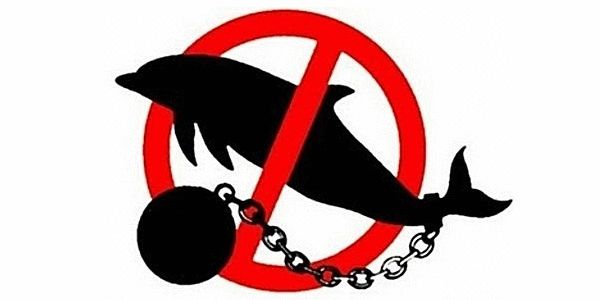
WILLEMSTAD – In the lawsuit filed by Animals Rights against Curaçao Sea Aquarium concerning the five dolphins that were transferred to the Fakieh Aquarium in Saudi Arabia in June, the verdict will be handed down on Wednesday 19 October.
Lawyer Bertie Braam stated during the summary proceedings on Wednesday that Animal Rights would like to see a collaboration with Seaquarium.
Animal Rights started a lawsuit in early June against Seaquarium, the Ministry of Health, Environment and Nature (GMN), and Tursiops, the owner of the dolphins. According to the animal organization, the permit for the transport of the five dolphins should never have been issued.
Last week it was announced that dolphin Mosa has died at the Fakieh Aquarium. Camera images show how the dolphin swims against a wall at high speed. Mosa suffered serious injuries and died as a result of a considerable amount of blood in her lungs.
According to Braam, animal welfare is a high priority for Animal Rights and therefore a collaboration between the two parties seems to be the best solution. In addition, according to the lawyer, it is also a good time to take a close look at the animal welfare legislation in Curaçao. Braam emphasizes to the local Dutch news site NU.cw that the welfare of dolphins is different on the island than in the Netherlands. “There is no organization here that is concerned with the welfare of the animals, we need Animal Rights from the Netherlands for that.”
The lawyer sees two possible statements. “The judge can say that the treaty has been tested and that what happened around the case is in accordance with the treaty and then that’s the end of the story,” said Braam. But according to Braam, the judge can also annul the permit. If the permit is annulled, another solution must be sought. Animal Right hopes that the options for moving the animals to another facility will then be looked into.
European Parliament calls for a more ambitious legislation on imported deforestation
14 September 2022
Press Release
On 13 September, the European Parliament adopted its position on the European Commission’s proposal on deforestation-free products. Eurogroup for Animals welcomes the inclusion of more animal products in the scope of the legislation, but regrets the exclusion of dairy and farmed fish production industries, as well as all other natural ecosystems destroyed by EU-driven deforestation.
Yesterday, the European Parliament (EP) voted for significant improvements of the European Commission’s proposal for a regulation on deforestation-free products. The EC had proposed a prohibition on placing on the EU market a very limited list of deforestation-risk commodities such as palm oil, wood, cocoa, coffee, beef, leather and major soy products.
The Plenary voted to include more animal products such as the ones derived from cattle, swine, poultry and sheep. The inclusion is key as these animals are most often fed with soy which is the second driver of deforestation and it’s widely produced to serve as animal feed, and they are imported from countries with the highest deforestation rates.
As trade in animal products fuels deforestation, the EP’s position is promising for the planet and the animals in regions of the world where intensive animal agriculture or economic activities are destroying precious natural ecosystems. Producers intending to export to the EU will be incentivised to switch to more sustainable production systems, less harmful to wild animals and to their habitats.
There is a real urgency for the EU to use unilateral measures to address the significant impact intensive livestock farming has on the planet and on the animals living on these farms and in these ecosystems. The EU must uphold its sustainable agenda and adopt such legislation when necessary
Reineke Hameleers, CEO, Eurogroup for Animals
The EP’s position is a step in the right direction but it failed to include the dairy and farmed fish production industries, as well as all other natural ecosystems destroyed by EU-driven deforestation. While the Report strengthened the EC’s proposal by enlarging the geographical scope to wooded lands, it failed to protect other ecosystems such as grasslands, wetlands, and savannahs, which are also destroyed by the EU’s consumption of soy and of imported animal products derived from soy-fed animals.
Eurogroup for Animals calls on the EC to conduct an impact assessment on the inclusion of wetlands and grasslands as soon as possible to close this loophole.
All eyes are now on the Council as “trilogue” negotiations will start in the coming weeks. In this context, Eurogroup for Animals urges the Council to uphold the objectives of the Green Deal and thus agree with the European Parliament on a text encompassing a large scope of products including all soy-fed animals and all ecosystems destroyed by EU’s consumption of animal products.
WAV Comment: Do these statements by the police sort of really contradict each other ? – pet or wild ?
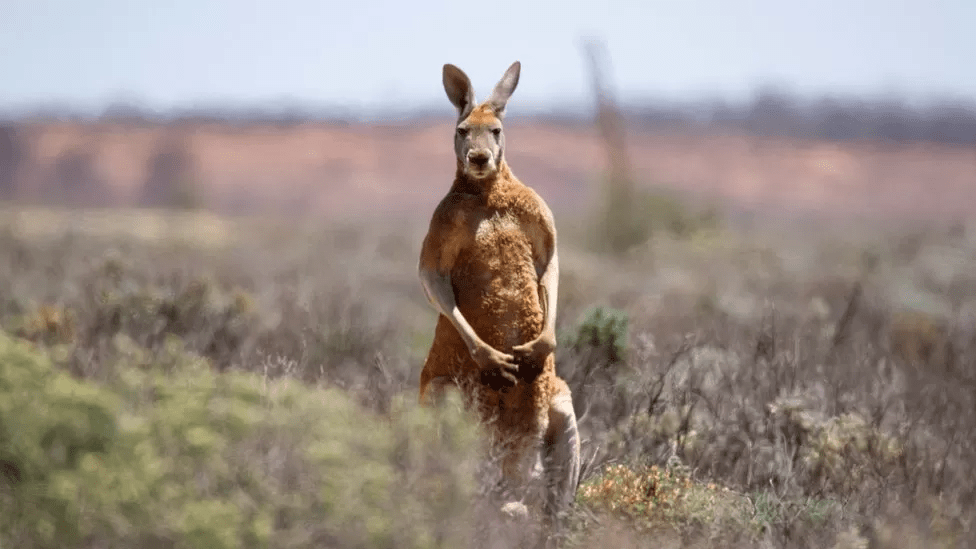
A police spokesperson told media they believed the man had been attacked by the kangaroo – a wild animal – earlier in the day.
Australian man killed by kangaroo he kept as pet, police say
Getty Images – Kangaroo attacks are rare in Australia
Australian man killed by kangaroo he kept as pet, police say
An Australian man has died after being attacked by a kangaroo he had been keeping as a pet, police say.
A relative found the 77-year-old man with serious injuries on Monday at his home in Redmond, about 400km (250 miles) south of Perth.
When the ambulance crew arrived at the rural property, the kangaroo prevented them from treating the man.
Police say they were forced to shoot the marsupial dead so paramedics could reach him. The man died at the scene.
A police spokesperson told media they believed the man had been attacked by the kangaroo – a wild animal – earlier in the day.
Australia is home to about 50 million kangaroos, which can weigh up to 90kg and grow to 2m tall.
But fatal attacks are rare – this is the first one reported in Australia since 1936.
Kangaroos have “a lot of weapons” such as sharp teeth, claws and powerful legs, kangaroo behaviour expert Graeme Coulson told the Australian Broadcasting Corporation.
“Certainly if they’re cornered or in some sort of distress, that can be quite dangerous,” Associate Professor Coulson said.
“The problem with kangaroos and people is we’re both upright animals, we stand on our two feet, and an upright stance like that is a challenge to the male kangaroo.”
In July, a kangaroo left a 67-year-old woman with cuts and a broken leg after it attacked her on a walk in Queensland.
And a three-year-old girl suffered serious head injuries in an attack in New South Wales in March.
Urban development across Australia is increasingly encroaching on wild kangaroo habitats.
One thing that unites Europeans is their strong support for animal welfare. A Commission-organised ‘Eurobarometer’ survey found that 9 out of 10 Europeans believe imported products should respect EU animal welfare standards. Whilst about three-quarters or more want tougher animal welfare rules.
This guest blog summarises Philip Lymbery’s speech during the European Parliamentary event “Enforcement of EU Animal Welfare Legislation”, held on 7 September 2022. The event can be watched in full on YouTube.
The European Union (EU) led the world in 1997 when it gave legal recognition to animals as sentient beings, capable of feeling pain, suffering or pleasure. Article 13 of the Treaty on the Functioning of the EU stipulates that, as sentient beings, full regard should be paid to animals’ welfare requirements.
To that end, the EU has one of the most comprehensive sets of rules in the world on animal welfare.
However, these mean little without proper enforcement.
Poor enforcement
A prime example of this is in live animal transportation. Animals suffer greatly during long journeys. Packed into overcrowded trucks, they become increasingly exhausted, dehydrated and stressed as the long journeys wear on. Some get injured and collapse onto the floor of the truck, where they risk being trampled by their companions. In the worst cases, many die – drowning when ships capsize or succumbing to heat stroke when trucks get stuck for hours or even days at border crossings.
The export of live animals to non-EU countries must be prohibited as these long journeys entail immense suffering for the animals involved and, in many cases, they endure painful, terrifying treatment at slaughter in the destination countries where the OIE international standards on welfare at slaughter are routinely ignored.
In this day and age, long distance transport of live animals makes no sense. I agree entirely with the Federation of Veterinarians of Europe that “Animals should be reared as close as possible to the premises on which they are born and slaughtered as close as possible to the point of production”.
Disasters
However, the reality today is that Every year more than three million live animals are exported from the EU to third countries for fattening and slaughter. The transport conditions on the trucks and ships are often unbearable, causing the animals immense suffering on journeys that can last days, weeks or even months. It is commonplace for some to perish in transit.
In the worst disasters thousands die.
In 2019, more than 14,000 sheep destined for export drowned when the cargo ship carrying them capsized in Romania’s Black Sea port of Midia.
And last year more than 2,600 calves being exported from Spain were killed after being kept adrift at sea for three months as no country wanted to accept them due to a suspected outbreak of disease.
Over the years countless petitions and protests by citizens and NGOs have called on the EU to end the live exports horror show. They are backed up by numerous scientific recommendations advising against continuing this cruel practice.
Yet, the practice still goes on. And when we add in domestic journeys within the EU, the scale of the problem magnifies to over 1.6 billion live animals a year being transported across the EU and beyond its borders.
Long distance transport of live animals really should be a thing of the past, instead replaced with a carcass trade in refrigerated lorries.
However, so long as this archaic trade continues, it should be rigorously enforced. Council Regulation 1/2005 on the protection of animals during transport sets out a comprehensive set of rules designed to give basic protection to animals caught up in this trade.
Comprehensive assessment
Sadly, a 2021 assessment by Compassion in World Farming found that over thirty years enforcement of EU law on the protection of animals has been poor.
The main breaches of EU law that are regularly observed include:
The transport of unfit animals
Stocking densities often exceed the maximum densities permitted by Regulation 1/2005
Animals are frequently given too little headroom
The Regulation’s maximum permitted temperature is often exceeded
The Regulation’s requirements on feed and water are frequently breached. In some cases water tanks are empty or the drinking devices do not work or they are the wrong type for the species being carried or are positioned in such a way that the animals cannot reach them
The Regulation’s requirements on the provision of rest are often ignored
In some cases, insufficient bedding is provided; in other cases it becomes filthy in the later stages of the journey
The transport of unweaned animals on journeys over 8 hours without animals being fed.
These breaches – often by the same transport companies – have been occurring for many years. While some Member States have improved enforcement, many continue to make little serious attempt to enforce Regulation 1/2005.
Regulation 1/2005 provides strong enforcement mechanisms which are expressly designed to prevent recurrence of breaches, but these are poorly used by the Member States (MS).
Commission reports
The European Commission’s own reports show that enforcement of relevant legislation is woefully poor.
Two overview reports published by the Commission in 2020, one on live exports to non-EU countries by road, one on live exports by sea, reveal serious and regular breaches of Regulation 1/2005. The road report states that most transporters do not meet EU rules on the protection of animals during transport after leaving the EU.
An area that until recently has largely escaped attention are the serious problems that arise when animals being exported to the Middle East and North Africa are transferred from road vehicles to livestock vessels in EU ports and the poor conditions on many livestock vessels.
Regulation 1/2005 requires competent authorities to check before loading that the vessel is in a satisfactory state for the carriage of animals, that the animals are fit to continue their journey, and that loading is carried out in accordance with the Regulation. Competent authorities often fail to discharge these duties properly leading to great suffering during loading and the sea journeys to the Middle East and North Africa.
The Commission’s overview report on live exports by sea reveals that the required checks on the safety of the vessels and their suitability for carrying animals are not carried out properly, and that the authorities permit animals to be loaded onto the ship even when pre-loading inspections of the ship reveal deficiencies. It also stresses that pre-loading checks to ensure that animals are fit to travel are not being carried out properly.
Police enforcement
It is clear from the Commission’s own report that neither the exporters nor the Member State authorities are giving any proper consideration to the animals’ welfare during the sea journeys themselves.
This needs to change.
One essential way for the EU to show its citizens a real seriousness about enforcing its own legislation is to set up dedicated police units. Trained officers dedicated to ensuring that citizen concern for animal welfare is translated into concrete action on the ground.
In this way, an immense amount of animal suffering can be avoided.
All of which would have wider benefits to society.
At EU and international policy level, there is growing recognition that protecting people means protecting animal welfare, a concept known as ‘One Health’ – growing recognition that the health of people relies on the wellbeing of animals and a thriving natural environment.
Through enforcement of legislation, the EU can once again be a global leader in animal welfare. It can give groundbreaking priority to demonstrating that the health of all of us is interconnected. One health, one welfare – protecting people means protecting animals too. With dedicated police units leading the enforcement charge, we would have the means to create a better future for people and animals across the European Union and beyond.
Progress on an EU Positive List: ENVI Committee adopts CITES Regulation
9 September 2022
8 September saw a vote on a draft motion for resolution on “Key objectives to the CITES CoP19 meeting in Panama”. CITES stands for the Convention on International Trade in Endangered Species of Wild Fauna and Flora.
The draft motion was adopted by the European Parliament’s Committee on the Environment, Public Health and Food Safety with a strong majority. The final motion is now to be voted upon and adopted at the October Plenary session, and will hopefully send a strong message to the Commission, which acts as the CITES Management Authority for the EU to support decisions at the Cop19 to strengthen protection to endangered animals.
Critically, the Committee pushes for the much awaited revision of the Action Plan against Wildlife Trafficking to be ambitious and published without delay, and should have adequate resources to ensure its full implementation.
Of particular interest, the motion highlights the concern that the market for exotic pets and the range of affected species are growing both within the EU and internationally, a call for a science-based EU-wide positive list of animals allowed as pets was included in the adoption draft. This means that we are one step closer to the Parliament showing support for better regulation of the pet trade under appropriate welfare conditions, without harm to populations in the wild and to European biodiversity. Additionally, the draft motion stresses the need for a Commission study to facilitate the adoption of this list which shall be based, amongst others, on existing experiences of Member States and lessons learned.
There were a number of encouraging amendments voted on which reiterated Parliament’s call for the full and immediate ban at European level of commercial trade, export or re-export within the EU and to destinations outside the EU of ivory, including ‘pre-convention’ ivory. In addition it emphasises the important role that CITES should play in preventing future pandemics as the international wildlife trade regulator and calls for better funding and implementation of CITES Decisions. Regarding species, the draft motion calls on EU Member States to support proposals to CoP19 to list or uplist species that are put forward or supported by range countries. This would increase their protection against overexploitation through trade.
Eurogroup for Animals is also pleased to see that the motion urges the EU to promote and support initiatives to significantly increase wildlife rescue and rehabilitation capacity through resources, funding, training and importantly establishment of a network of responsible and accredited rescue facilities and sanctuaries and national action plans for the management of confiscated live animals.
The next stage is to ensure that this strong draft motion is adopted in Plenary by the European Parliament, to ensure the European position at the CITES is good for the welfare and conservation of animals.
Civil Society Organisations from South America call on the European Commission to include animal welfare as a key component of the EU-Mercosur agreement
12 September 2022
On 9 September, 65 civil society organisations from South America sent a joint letter to Executive Vice President of the European Commission V. Dombrovskis and to European Commissioner S. Kyriakides explaining why the EU-Mercosur trade agreement as it stands is a bad deal for animals and the planet.
In the wake of the war in Ukraine, and with the possibilities of a new government in Brazil after the elections to be held next month, the ratification of the EU-Mercosur agreement has reappeared on the EU’s political agenda. Following strong pressure from civil society, several Member States – like Austria, France, Belgium and Luxembourg – and from the European Parliament, the process has been on hold since July 2020. Yet, the European Commission is now rushing into technical talks with Mercosur countries to possibly wrap up the discussions about a potential additional protocol to the agreement.
In this political context, a coalition of South American Civil Society Organisations sent a letter to the European Commission listing proposals made during an event held on 29 April in Brazil and supported by Eurogroup for Animals. During the event experts representing environment, human rights and animal welfare organisations unanimously found that improving animal welfare standards in the Mercosur countries will effectively contribute to fight deforestation, the spread of zoonoses and the surge in antimicrobial resistance.
Now, the coalition of South American Civil Society Organisations is calling on political leaders from the EU to consider their suggestions.
Measures to promote animal welfare, sanitary improvements and transparency in the farmed animals industry in Mercosur countries will have a profound impact on fighting climate change. We are open to presenting these measures in detail to the European Commission to help them prevent a catastrophe
The EU-Mercosur agreement will lead to an increase and an intensification of livestock farming in Mercosur countries at a time where this sector is already driving deforestation, climate change and biodiversity loss. At times where the EU promotes the Green Deal, such an agreement should in no way impede the improvement of animal welfare, rather it should encourage it.
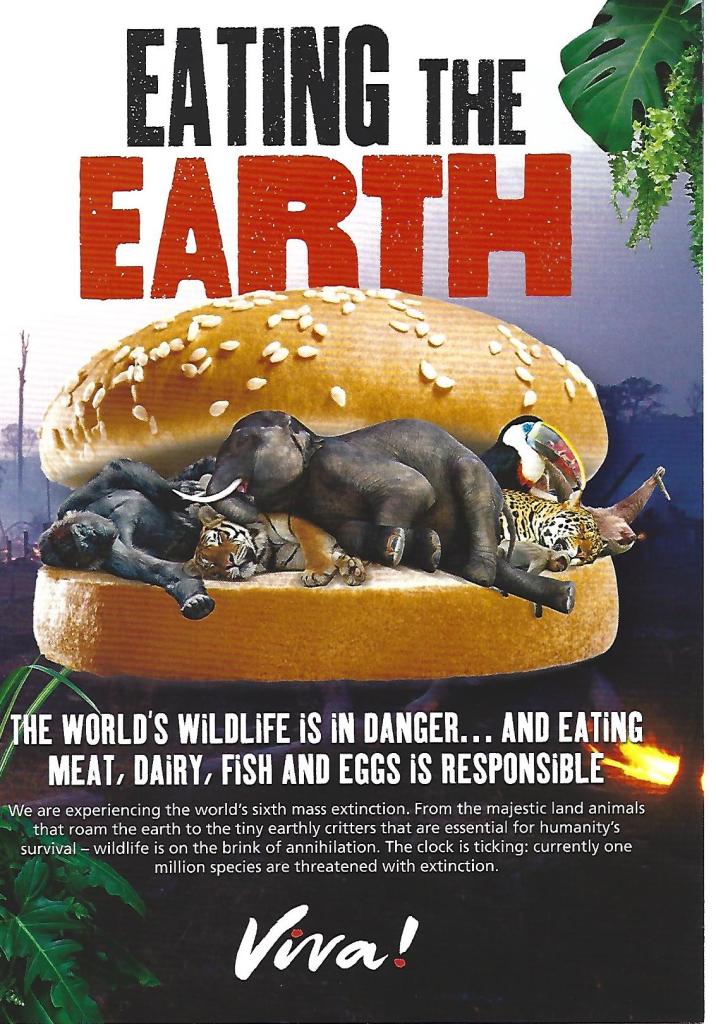
The world’s wildlife is rapidly disappearing, and with it the foundations of humanity’s survival.
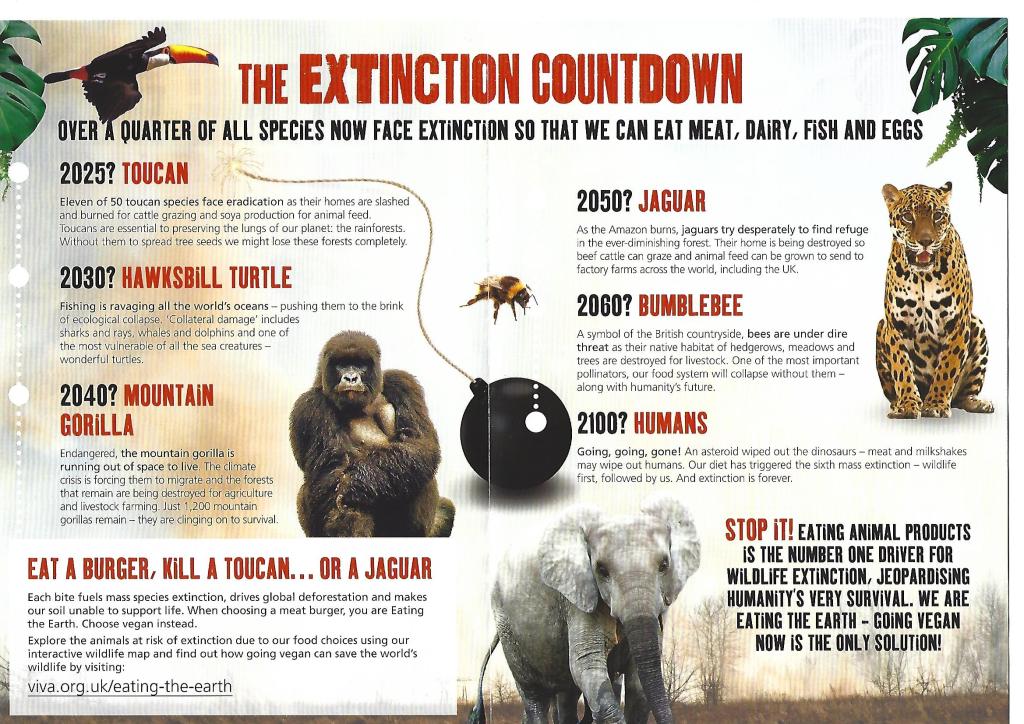
We are experiencing the world’s sixth mass extinction. From the tiny earthly critters that underpin essential biological functioning, to majestic land animals that roam the Earth – worldwide wildlife is on the brink of annihilation. The clock is ticking: currently one million species are threatened with extinction.
At the heart of this problem is our demand for meat, dairy, fish and eggs. It is the number one driver for wildlife species loss world-wide.
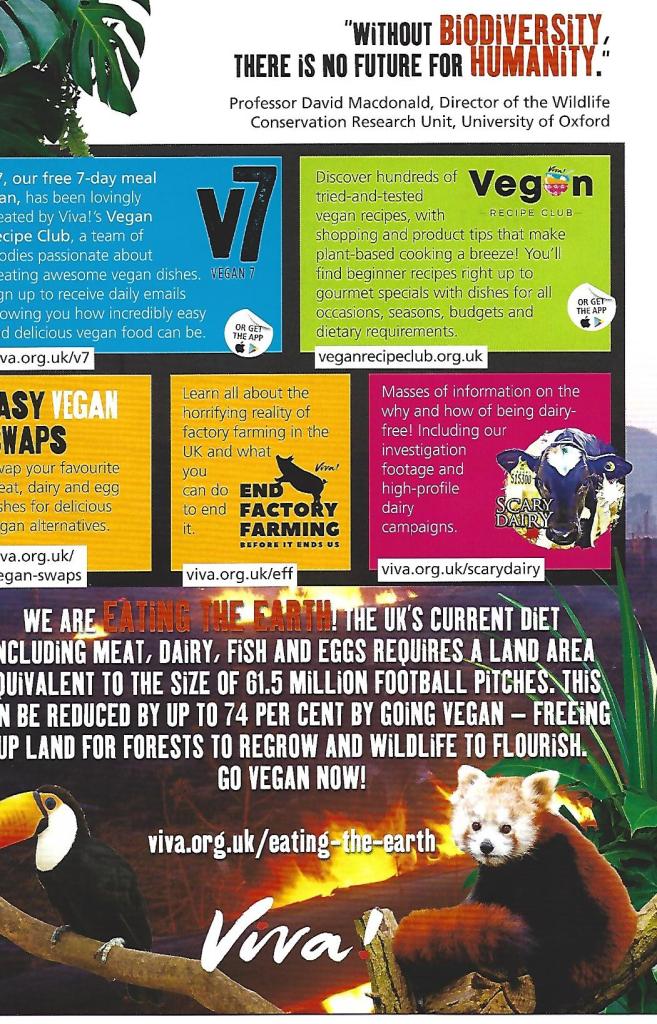
The time left to act is dwindling, but there is still a narrow window to make a difference. Going Vegan Now!is the only way we can save the world’s wildlife and ensure our own survival.









 World Animals Voice