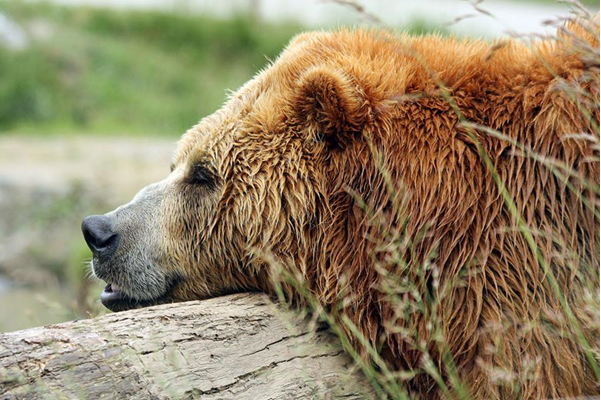
The way brown bears have been treated across the planet – over thousands of years – is one of the most damning examples of humanity’s disdain for the natural world.
Across the globe – and especially across Europe – their homes have been carved to pieces and their populations culled en masse. They’ve been baited, beaten and slammed into cages to spend their lives tortured and performing for grim human amusement.
A simple map of Europe paints the picture in gory detail. In the UK, Germany, Denmark, Portugal, Belgium, Ireland there is not a single surviving wild bear. Not one.
And every casualty behind each of those bloody extinctions was a creature who was truly, undeniably marvellous.
Brown bears are remarkably intelligent – cubs spend years with their mothers learning everything from fishing to finding the plant foods available in each season. They possess one of the most complex brains relative to their size and have more muscle than they know what to do with – allowing them to thrive in forests or steppes or tundra.
But that muscle was futile against human traps, guns and persecution. Almost every bear that wasn’t hidden in deep forests is now dead. The final few in Europe are clinging on in shrinking scraps of habitat and – without help – their chances of surviving this onslaught look slim.
If we want a natural world with brown bears – real bears free from metal cages – then we must help save them. We must not lose them from Europe.
Around a third are hidden away in Romania’s forests, and it’s here that turning their fate around is feasible. Despite centuries of devastation, we now have a realistic hope, with realistic plans. Local people are on board with our project, and we’ve got the expertise to protect the bears.
We just need to secure the forest.
And – through your donations today – we could help do that. We want to help purchase vital land and put up strategic fences to keep the forest and the people who live by it safe. That way we can protect these bears, and give them the safety they’ve needed for generations.
Humanity is irrefutably the villain of this centuries-old tragedy but – with the help of local communities and people like you – we have one last chance to change that, and be the heroes who come through at the end.
Please help save brown bears. If everyone reading this donates just £3, you could help end centuries of suffering and keep bears free and thriving in the wild. Thank you.
1924 – The League was founded by Henry B. Amos to oppose rabbit coursing[7] – he was successful in achieving a ban. This resulted in the organisation expanding its remit to include other blood sports – such as fox, hare and deer hunting.
In 1935, Amos was jailed briefly for throwing a copy of Henry Stephens Salt‘s Creed of Kinship through a stained glass window at Exeter Cathedral during evensong
He first became interested in vegetarianism in about 1886.
1975 – A bill seeking to ban hare coursing, supported by the League, was passed through the House of Commons, but did not receive approval in the House of Lords.
1978 – The League secured legal protection for otters, including a ban on hunting them. The aquatic mammal was up until that point hunted with packs of hounds, one of the reasons for their numbers declining.
1992 – The League helped secure the Protection of Badgers Act, which expanded the protection of the mammals themselves to their setts. The homes of badgers are illegally targeted for several reasons, including being blocked by fox hunts to stop animals being pursued by hounds fleeing underground.
2002 – Fox, hare and deer hunting and hare coursing was banned in Scotland under the Protection of Wild Mammals (Scotland) Act 2002, which was introduced by MSPs following campaigning by the League and other animal protection organisations.
2004 – Fox, hare and deer hunting and hare coursing was banned in England and Wales under the Hunting Act 2004. The legislation was introduced by MPs following campaigning by the League and other animal protection organisations.
2005 – The Hunting Act 2004 came into force – making fox, hare and deer hunting and coursing illegal across England and Wales.
2005 – The Waterloo Cup hare coursing competition held its final meeting at Great Altcar in Lancashire, closing after 169 years following passage of the Hunting Act.
2006 – A huntsman with the Exmoor Foxhounds was found guilty of illegally hunting foxes with dogs in a private prosecution brought by LACS, but the case was overturned on appeal.[8][9]
2007 – Two members of the Quantock Staghounds were successfully prosecuted by the League following chasing a deer across Exmoor.[10]
2008 – Two members of the Minehead Harriers pleaded guilty to chasing a fox with a pack of hounds in a private prosecution by LACS.[11]
2009 – The League announced a new campaign against dog fighting, amidst news reports that there is an increase in dog fighting in London.
2014 – The League celebrates 90 years of campaigning against cruelty to animals in the name of sport. Figures from the Ministry of Justice show that there have been 341 convictions under the Hunting Act 2004.
2015 – Prime Minister David Cameron offered a free-vote on repealing the Hunting Act, backing down shortly afterwards following pressure form the League, MPs and other animal protection organisations.
2015 – Cross-channel ferry companies stop shipping pheasants and partridges from French factory-farms to British shooting estates, following an investigation and lobbying by the League.
2018 – Conservative Party drops its manifesto commitment to offer a free-vote on repealing the Hunting Act following pressure from the League, meaning no Westminster party any longer supports repealing the hunting ban.
2018 – Scottish Government announces intention to strengthen the Protection of Wild Mammals (Scotland) Act 2002, which bans hunting with hounds in Scotland, following pressure from the League and other animal protection organisations.
2018 – Welsh Government bans pheasant and partridge shooting on public land following campaigning and pressure from the League and Animal Aid.
2018 – The Labour Party backs calls made by the League to strengthen the Hunting Act – including prison sentences for those who chase and kill wild mammals.
2019 – University of Wales suspends pheasant shooting on its countryside campus at Gregynog Hall following campaigning by the League.
2020 – In January 2020, an employment tribunal in Britain ruled that ethical veganism is a “philosophical belief” and therefore protected in law. This is the first time an employment tribunal in Britain ruled this. This case was in regards to vegan Jordi Casamitjana, who stated he was fired by the League due to his ethical veganism.[12
ROYAL SOCIETY for the PROECTION of CRUELTY to ANIMALS (RSPCA)
The society was the first animal welfare charity to be founded in the world.
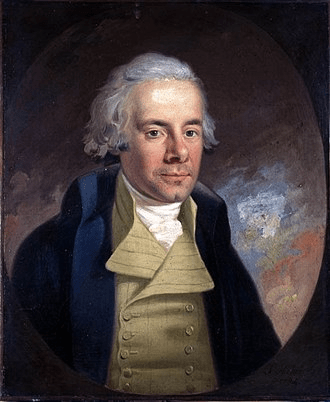
Founded on the 16th June 1824, by Richard Martin, William Wilberforce and the Reverend Arthur Broome, at the Old Slaughter’s Coffee House, near Trafalgar Square, London, who together agreed that the neglect, cruelty and abuse of animals was unacceptable.
William Wilberforce – One of the RSPCA founders and anti slavery staunch campaigner.
Now very close to its 200th anniversary; and going stronger than ever.
Wilberforce was an advocate and staunch campaigner for the abolition of the slave trade; which he achieved shortly before his death:
This proves that animal welfare campaigners are also strong supporters of human welfare issues, as we show with our support for ‘Free Tibet’ who are based in London:
Shots from my garden yesterday (28/4) and today; one of many vulpines (foxes) who come round and chill; get some scoff, and then vanish.
I love foxes; some (Limited numbers) folk still hate them; considering them pests; but I welcome them with open arms and some snacks to enjoy. Why persecute them ? – is finding food and daily survival not difficult enough for them ? – if I can help with a few food snacks and ensuring they are mange free then I will.
My eyes reflect the blue of the sea When they are in freedom, naturally I can jump up so high Chase and play Catch my food This is the dolphin way But when in a small space Entrapped and alone Or even with others All I can do is moan The blue sea reflection Flickers then dies Lost in man’s deception Why bother to try
The animal rights group that unearthed reports of poor treatment of Lolita the Killer Whale, and later revealed the orca’s illness, has appealed to Miami-Dade County officials for transparency about her current status and care.
“In addition to Lolita’s potential transfer, we want to ensure that Miami Seaquarium has already made substantial changes to ensure that she is currently receiving appropriate care,” wrote Jared Goodman, general counsel for animal law of the PETA Foundation, in a letter sent Monday.
The letter from the animal rights group comes as activists and advocates of the famed orca, whose plight has captivated a global following, grow concerned over the scarcity of information about her. In the void, recent social media posts have generated anxious buzz.
“Hopefully this is nothing to worry about but there is a crane at MSQ today,” read a post on Facebook last week with a photo of a lift over Lolita’s stadium at the marine park.
Goodman’s letter, sent to county Mayor Daniella Levine Cava and Commissioner Raquel Regalado, followed weeks of virtual silence about Lolita. Last month, Levine Cava and Regalado announced an arrangement with the orca’s owner, Miami Seaquarium, for an assessment of her health by independent veterinarians.
That agreement, plus the Seaquarium’s decision to retire Lolita as an entertainer, renewed a frenzy of speculation and optimism about the potential release of the orca that has been a captive performer at the marine park for more than half a century.
The actions followed PETA’s divulging, a month earlier, that the orca, believed to be in her mid 50s, suffered from pneumonia. The Seaquarium never denied the report, but at the time only acknowledged Lolita was “under the weather.”
In his letter, Goodman also referenced even more damning disclosures by PETA last fall. That’s when the animal rights advocacy organization revealed allegations by a former Seaquarium veterinarian that the orca was “fed her rotten fish, required her to engage in behaviors that harmed her, and held her in such poor water quality that it injured her eyes.”
With federal and state agencies choosing not to exert regulatory watchdog authority over the Seaquarium’s care of Lolita, it’s up to Miami-Dade County officials, PETA says. In the regulatory vacuum that now exists, PETA said it is calling on county officials to “act immediately and transparently concerning Lolita’s care and their plans for her future,” which the organization said it supports transferring her to a seaside sanctuary
“The agencies that could exercise jurisdiction are not doing so,” Goodman said. “So we are left with the county, which has assured us they will do the right thing, but then has been pretty much silence.”
USDA exempts Miami Seaquarium orca, Pacific porpoises from oversight
Lolita, known as Tokitae by U.S. orca advocates, is now in the hands of a different managerial team at the Miami Seaquarium.
The new company in charge, The Dolphin Co., also owns three other Florida marine animal attractions, including Gulf World in the Panhandle and Marineland in St. Augustine. The company’s CEO, Eduardo Albor, has not responded to numerous requests for an interview about the company’s plans for its Florida parks.
The Dolphin Co.’s license to run the Seaquarium, issued by the U.S. Department of Agriculture, carved out the orca and the Pacific porpoises that share her tank from the federal agency’s regulatory authority.
After the county unveiled the agreement with the Seaquarium for the independent health exam for Lolita, PETA sent a list of recommended veterinarians to Commissioner Regalado.
Goodman said Regalado has not responded. So far, however, it does not appear that independent exam has taken place. Regalado did not respond to a request last week from the Palm Beach Post and the USA Today Florida Network for comment.
Animal rights lawyer said USDA has “washed its hands” of Lolita
USDA officials declined to be interviewed for this article. The agency did say it would answer written questions. But after the questions were submitted, the agency chose not to provide answers.
Instead, it simply issued this blanket statement: “Lolita is currently not being used for any activities covered under the Animal Welfare Act. USDA inspections will continue at the facility for all covered species and activities. Inspection reports, including animal inventories, will be available through the public search tool.”
Delcianna Winders, professor and Animal Law and Policy Institute Director
at the Vermont Law School, said the USDA has for a decade neglected its oversight responsibility for Lolita under the federal Animal Welfare Act.
The 1966 law set national standards for humane care and treatment of animals used for commercial purposes, including for display or entertainment at zoos and marine parks. Winders said, in Lolita’s case, the small size of her tank at the Seaquarium, the lack of protection from the sun and the absence of social companionship from other orcas all amounted to serious Animal Welfare Act violations.
“Under the law, the outcome here should have been no exhibitor license whatsoever,” said Winders, who argued an Endangered Species Act case on Lolita’s behalf as well as a challenge to the Seaquarium’s license while she worked as a PETA attorney.
Winders, who directed PETA’s captive animal law enforcement division, said exempting Lolita from the Seaquarium’s license is a “novel” regulatory approach. Doing so, she said, should at least prompt the USDA to put in a place safeguards for her care and needs, and to make sure that the third party team of veterinarians is truly independent and not tied to the attractions industry.
“The USDA apparently wants to wash its hands of the situation after a decade of being complicit in creating it,” Winders said. “It puts a tremendous burden on the USDA to make sure that, in light of the novel approach they’ve taken, they are going to ensure her well being is accounted for given that they are saying they are not going to take responsibility going forward.”
It also obligates the USDA, Winders added, to take a proactive approach in working with other federal agencies to seek a better and more appropriate home for her.
“USDA is the agency that was supposed to have been protecting her for all of these years,” she said. “It’s the least they can do for her, and they owe her at least that much.”
Congress oversight of USDA animal welfare missing “piece of the puzzle”
Florida’s zoos, marine parks, aquariums and theme park meccas are major draws for many of the 100 million-plus tourists that visit the state every year.
The Florida Association of Zoos & Aquariums, a nonprofit that sets “high ethical standards” for animal care, lists 21 members. They include titans like Walt Disney World’s Animal Kingdom, SeaWorld and Busch Gardens.
The organization also includes as members the Palm Beach Zoo & Conservation Society, Lion Country Safari, Brevard Zoo, Jacksonville Zoo and Gardens, Mote Marine Laboratory, Naples Zoo and St. Augustine Alligator Farm.
Despite the presence in Florida of so many zoos, marine parks and aquariums, and their valuable role in the state’s all-important tourism industry, the state has limited representation in the Capitol Hill committees that oversee the USDA and its animal welfare law compliance.
The state has just two congressional representatives — out of 50 — on the House Agriculture Committee. And neither of the two, U.S. Reps. Kat Cammack, a Republican, and Al Lawson, a Democrat, come from districts in major tourism centers.
Moreover, neither of Florida’s U.S. senators, Marco Rubio and Rick Scott, serve on that chamber’s agriculture committee.
Lack of congressional oversight, and little participation from Florida’s Washington delegation partly explains the lack of scrutiny on the USDA, according to Winders.
“That is a really big piece of the puzzle,” she said. “The Florida situation is unique but there is woefully insufficient congressional oversight of the Animal Welfare Act overall.”
Winders said the congressional committees have not held an Animal Welfare Act oversight hearing for many years. Even though, she noted, the USDA’s own inspector general has issued reports chiding the agency for failing to enforce the law.
“This is our most important animal protection statute. It impacts millions of animals in every state,” she said. “They are just not stepping up. They are letting the USDA get away with not doing the job. And animals are suffering for it, and people, too.”
Winders said it’s time animal welfare protection is place din a separate agency, as was done on environmental issues through the Environmental Protection Agency.
“The larger problem is that we have asked the Department of Agriculture to protect animals,” she said. “Animal protection is very low on their list, if it is on their list at all. It’s just a really poor fit for the responsibilities under this statute.”
Two years ago, our lives were shaken by COVID-19. As COVID-19 may have shown all too clearly, diseases can jump to humans from other animals. In fact, according to the US Centers for Disease Control and Prevention, three out of every four new or emerging infectious diseases in people come from animals. So, how we treat wild and farmed animals isn’t just critically important to their wellbeing. It is crucial to human health.
Will you join over 312,000 people who have already signed, and add your name now?
This is one reason why, Compassion sounded the alarm on the growing emergency to change our farming system, with a petition urging international institutions to take action. During these last two years, many voices raised in the same direction, and in November 2021, the World Health Assembly committed to an international treaty on pandemic causes and response. This was a first victory, but we now need to have factory farming and animal welfare included in this treaty and linked with pandemic risk.
At the start of July, a meeting of countries in charge of the redaction of the Treaty on Pandemics will be held; this is the best time to hand over our petition and show that citizens around the world are aware of the connection between factory farming, animal welfare and pandemic, and ask for change. We will hand over our petition with other organisations, to show how many people worldwide care about this. If you have not signed the petition yet, we need you to raise your voice! We will be your spokesperson and hand in your signature directly.
We all have been impacted and suffered during the COVID crisis; we should not miss this opportunity to act so this is never allowed to happen again. Many thanks in advance for your support. Together we will be able to make it heard that there can’t be health security whilst factory farming continues. For the animals,
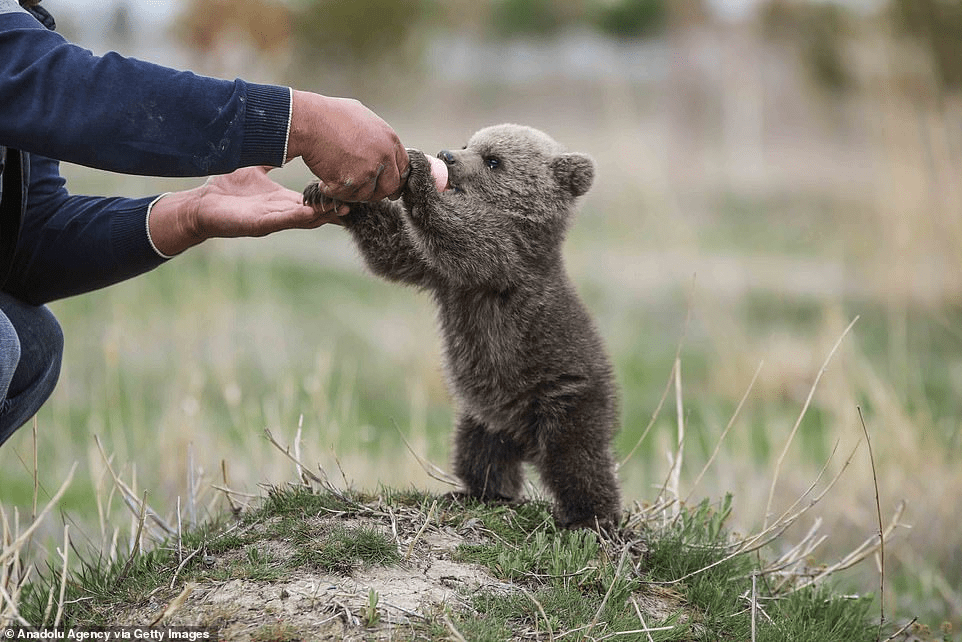
Feeding time: Baby bear ‘Hakvan’ is pictured feeding from a milk bottle by an officer at a rehabilition center in Van, Turkey
Thirstier than the average bear! Adorable orphan cub guzzles milk from a bottle at Turkish rescue centre after he was found wandering alone in the wilderness without his mother
Bear cub ‘Hakvan’ was found wandering the wilderness without his mother near the Turkish border with Iraq
Photos show a rescue centre finding the baby bear and nursing him back to health with a small milk bottle
Turkish rescue workers brought the cub to Van for treatment, feeding Hakvan while under supervision
An adorable bear cub was found lost in the wilderness without his mother by a Turkish rescue centre in Hakkari, a nearby province on the Turkish border with Iraq.
The baby bear, called ‘Hakvan’, is pictured guzzling from a milk bottle after his rescue. Photos show him being nursed back to health after his solo adventure.
‘We will apply a special rehabilitation process for him but he will be a longtime guest here,’ Aslan said. It is not clear at what point the rescue centre will attempt to reintroduce Harkvan back into the wild
After being separated from its mother in Hakkari, Turkish rescue workers brought the bear cub to Van for treatment, feeding Hakvan every three hours and keeping him under supervision.
Great news to start Monday – together we have achieved the necessary 100,000 petition signatures required for the House of Commons (UK Parliament) to hold a debate on the issue of snares. When we have news on a date being set and necessary actions, you will be informed via this site.
Well done everyone – you did it !
Regards Mark
Dear Mark,
Snares petition – you did it!!!
A huge thank you to the 100,000 plus compassionate and dedicated people who signed our government petition to ban snares – and to everyone who helped spread the word about the petition. Absolutely amazing work!
Our heartfelt gratitude, too, to all the groups – right across the spectrum – who have supported and helped the campaign, as well as the high-profile public figures, like Chris Packham, Peter Egan and Deborah Meaden, who also called for a ban on snares.
Having secured 100,000 signatures, we are now awaiting confirmation from the government on the date for the debate on snares. Ahead of the debate, we now need to quickly turn our attention to gaining political support: we need as many MPs as possible to support the campaign before the end of this parliamentary session.













 World Animals Voice