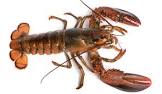
In a monumental step for animal welfare, the UK’s Animal Welfare (Sentience) Bill passed through the final stages in parliament yesterday (7 April 2022) to become law . The passing of this Bill is a historic moment for animal welfare as it marks the first time animals like lobsters, crabs, shrimp, octopus, cuttlefish and squid are protected this way in law.
The Sentience Bill was drafted in 2021 to replace EU animal welfare legislation post-Brexit. The Bill plays a crucial role in recognising that animals are capable of feeling pain and need protection in law and makes provision for an Animal Sentience Committee to scrutinise how government policy impacts animal welfare.
While the Bill initially only covered vertebrates, it was amended in November to include decapods and cephalopods. This was following a government commissioned review of over 300 scientific studies assessing the sentience of these animals. Carried out by an expert team at the London School of Economics (LSE) and led by Dr Jonathan Birch, the peer-reviewed, independent report concluded that there is strong scientific evidence of sentience in decapod crustaceans and cephalopod molluscs, and that they should be included in animal protection legislation.
Our member organisation, Crustacean Compassion, highlighted the widespread support for inclusion of these invertebrates in the form of a petition signed by almost 60,000 people, and an open letter signed by scientists, veterinary organisations and public figures, including the British Veterinary Association, RSCPA and notable wildlife broadcasters.
The Bill will now be sent to the Queen to receive Royal Assent, after which the new law will be known as the Animal Welfare (Sentience) Act 2022.
The Sentience Bill passing into law is wonderful news for decapod crustaceans like crabs and lobsters. The scientific and legal recognition that they are sentient and can feel pain means it is without question that decapods should now also be protected in the real world. Everyday crabs, lobsters and other decapods are treated in ways that would simply be unthinkable for other animals including being boiled alive. Crustacean Compassion look forward to continuing to work with governments and industry to translate the important words within this bill into actions that protect these animals from suffering
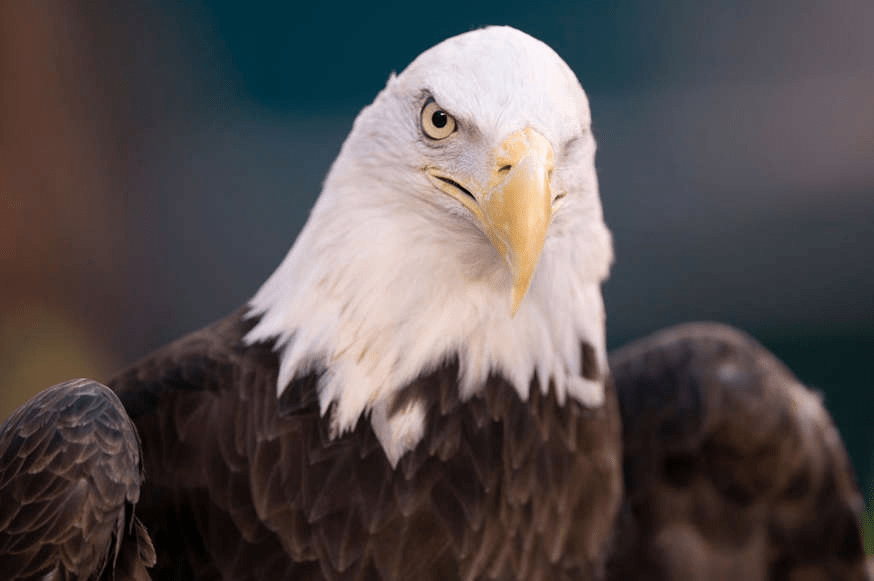
A wind energy company was sentenced to probation and ordered to pay more than $8 million in fines and restitution after at least 150 eagles were killed over the past decade at its wind farms in eight states, federal prosecutors said Wednesday.
NextEra Energy subsidiary ESI Energy pleaded guilty to three counts of violating the Migratory Bird Treaty Act during a Tuesday court appearance in Cheyenne, Wyoming. It was charged in the deaths of eagles at three of its wind farms in Wyoming and New Mexico.
In addition to those deaths, golden and bald eagles were killed at wind farms affiliated with ESI and NextEra since 2012 in eight states, prosecutors said: Wyoming, California, New Mexico, North Dakota, Colorado, Michigan, Arizona and Illinois. The birds are killed when they fly into the blades of wind turbines. Some ESI turbines killed multiple eagles, prosecutors said.
It’s illegal to kill or harm eagles under federal law.
The bald eagle — the U.S. national symbol — was removed from protection under the Endangered Species Act in 2007, following a dramatic recovery from its widespread decimation due to harmful pesticides and other problems. Golden eagles have not fared as well, with populations considered stable but under pressure including from wind farms, collisions with vehicles, illegal shootings and poisoning from lead ammunition.
The case comes amid a push by President Joe Biden for more renewable energy from wind, solar and other sources to help reduce climate changing emissions. It also follows a renewed commitment by federal wildlife officials under Biden to enforce protections for eagles and other birds under the Migratory Bird Treaty Act, after criminal prosecutions were halted under former President Donald Trump.
Companies historically have been able to avoid prosecution if they take steps to avoid bird deaths and seek permits for those that occur. ESI did not seek such a permit, authorities said.
The company was warned prior to building the wind farms in New Mexico and Wyoming that they would kill birds, but it proceeded anyway and at times ignored advice from federal wildlife officials about how to minimize the deaths, according to court documents.
“For more than a decade, ESI has violated (wildlife) laws, taking eagles without obtaining or even seeking the necessary permit,” said Assistant Attorney General Todd Kim of the Justice Department’s Environment and Natural Resources Division in a statement.
ESI agreed under a plea agreement to spend up to $27 million during its five-year probationary period on measures to prevent future eagle deaths. That includes shutting down turbines at times when eagles are more likely to be present.
Despite those measures, wildlife officials anticipate that some eagles still could die. When that happens, the company will pay $29,623 per dead eagle, under the agreement.
NextEra President Rebecca Kujawa said collisions of birds with wind turbines are unavoidable accidents that should not be criminalized. She said the company is committed to reducing damage to wildlife from its projects.
“We disagree with the government’s underlying enforcement activity,” Kujawa said in a statement. “Building any structure, driving any vehicle, or flying any airplane carries with it a possibility that accidental eagle and other bird collisions may occur.”
The legislation will now go to the President, who will sign it into law.
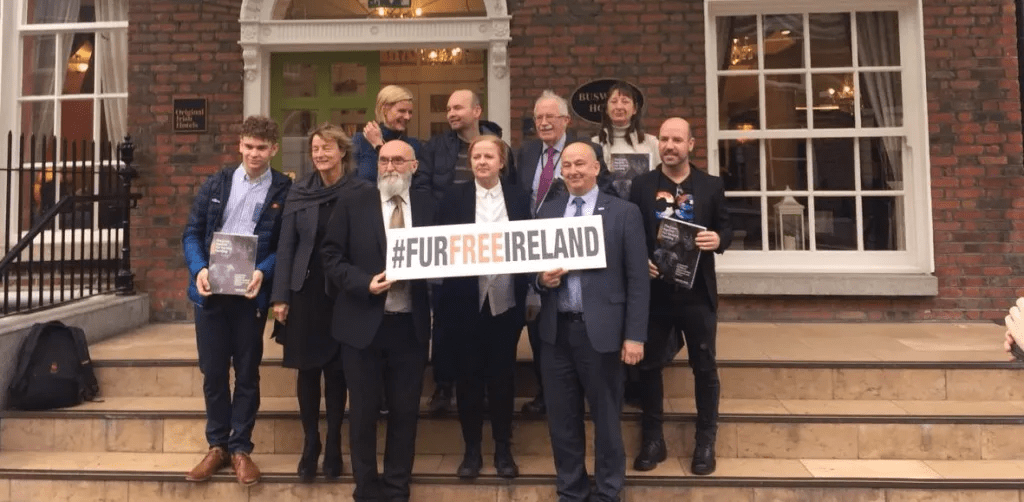
There are currently 3 operational fur farms in the country, which are expected to be closed during the course of 2022 after the success of the bill.
Respect for Animals conducted a poll regarding public opinions of fur farming amongst people of Ireland in 2018. 80% of respondents agreed that the farming and killing of animals for their fur should be banned.
In 2021, several other European countries took steps to implement national bans on fur farming, including Italy, Estonia and France.
Ireland finally takes a historical step and joins the increasing number of European countries that say no to fur farming, a practice that has no place in a society that genuinely cares for animal welfare.
Bethania Malmberg – Programme Officer Fur Animals, Eurogroup for Animals
This is a historic day for animal welfare in the Republic of Ireland and another nail in the coffin of the cruel and callous global fur industry. A critical report by Veterinary Ireland considered, in depth, the scientific evidence regarding mink farming and concluded that, on animal welfare grounds ‘there should be an immediate ban on the farming of mink, and similar wild animals, for the production of fur’. It is essential that legislators around the world – including at EU-level – take urgent action to end the cruelty of fur factory farming once and for all.
On 15 March, the European Parliament adopted its position on the revision of the EU’s Corporate Sustainability Reporting Directive (CSRD). The report, led by MEP Pascal Durand, calls for animal welfare to be included in the scope of the revised legislation. Eurogroup for Animals welcomes this move and calls on Member States to accept this in the coming trilogue.
The EU’s Corporate Sustainability Reporting Directive (CSRD), initially adopted in 2014, defines how companies should report on all extra-financial activities, including on the impact their business has on sustainability. In April 2021, the European Commission put forward a proposal to review this text, notably to extend the scope to all large companies and introduce more detailed and EU-wide reporting requirements, but the proposal missed out on animal welfare.
Photo – Mark (WAV)
The position adopted by the European Parliament’s Legal Affairs (JURI) committee suggests adding animal welfare to the scope of the required reporting. According to the text, businesses would thus need to report on how their activities impact the welfare of animals, both in terms of “living and transport conditions”. The report also proposes enhanced reporting for companies operating in high-risk sectors for sustainability, such as “animal production and seafood industry”.
After the EU Code of Conduct on responsible business and marketing practices, which successfully incorporated animal welfare concerns, this report represents another milestone for animal welfare in the context of the debates on corporate sustainable governance. Indeed, the report recognises that animal welfare is linked to sustainability and should be taken into account by companies when establishing and reporting about their impacts on sustainability.
All eyes are now on the Council as “trilogue” negotiations with the European Parliament have already started. In this context, Eurogroup for Animals calls on the Council to uphold the objectives of the Green Deal and the Farm to Fork strategy and thus agree with the European Parliament on a text encompassing and recognising the inherent links between animal welfare and sustainability.
The third report from the Intergovernmental Panel on Climate Change (IPCC), launched on 4 April, covers the mitigation pathways that can reduce greenhouse gas emissions. It follows upon the previous report launched earlier this year that detailed the catastrophic consequences of climate change and concluded that the brief window to secure a liveable future is rapidly closing.
António Guterres, Secretary-General of the United Nations, warned during the press conference that the world is on a fast track to climate disaster. He called for rapid progress to shift to renewable energy, end the funding of coal, protect forests and ecosystems and reduce methane emissions.
The report warns that methane emissions continue to increase, the main source being enteric fermentation from ruminant animals. In addition to its contribution to global warming, diets heavy in animal protein also contribute to land being used inefficiently. Arable land is used to grow crops for animal feed, with negative impacts on ecosystems and biodiversity.
Conversely, a shift to plant-based diets has significant mitigation (action of reducing seriousness – WAV) potential according to the IPCC. More plant-based diets, with only a moderate intake of animal-source food, can lead to substantial decreases in greenhouse gas emissions.
IPCC notes that a dietary shift comes with co-benefits for animal welfare but also reduced land use for feed production, less nutrient run-off as well as health benefits, reduced mortality from diet-related diseases and lowered risk of zoonotic disease and antibiotic use.
The IPCC recognises that cellular agriculture, such as cellular fermentation and cultivated meat, can bring “substantial reduction in direct GHG emissions from food production”. The report notes that these food technologies use less land and water, have a lower nutrient footprint as well as address concerns over animal welfare.
On alternative proteins, the report indicates that insects could be a mitigation opportunity. However, insects are reared industrially to feed intensively farmed animals, thereby propping up animal production and they are often fed on crops that could be consumed directly by animals or people, which accentuates an inefficient way of producing food.
While lifestyle changes can accelerate climate change mitigation, these changes require systemic changes across all of society including on land use, the report states. When governments meet in Egypt this November at COP27 they will discuss the targets for cutting greenhouse gas emissions in line with the Paris Agreement to limit global warming to 1.5°C.
The report is a strong call on governments to take forceful actions to speed up the shift to more plant-based production and consumption and to reduce the number of animals raised for food production.
At least a third of England’s badger population has been killed in the government’s drive to stamp out bovine tuberculosis, new figures show.Last year, 33,687 of the animals were culled, bringing the total since the campaign began in 2013 to at least 175,000. Estimates put England’s badger population at between 400,000 and 500,000.
The government announced last year’s toll as wildlife campaigners launched a legal battle over plans to begin culling the species in Northern Ireland.
Wild Justice, a lobby group involving wildlife presenter Chris Packham, together with the Northern Ireland Badger Group, is challenging the decision in the courts.
As last year’s English cull tally was revealed, Britain’s Badger Trust warned: “The scale of the attack on one of Britain’s best-loved animals could lead to badgers disappearing from areas across the country and populations becoming unviable in others.”
It said the proportion shot while free running – which may leave injured badgers to die slow deaths – rather than being caged and trapped hit a record of nearly nine out of 10.
The 33,687 was a slight fall on annual figures for 2020 and 2019, but higher than any previous year.
Badgers are known to spread TB, and the government insists its strategy is working. TB infections force farmers to have thousands of cattle culled early each year.
But opponents strongly dispute the efficacy of the cull, saying when badgers are killed, survivors move away from their habitats, potentially carrying disease to new areas.
Peter Hambly, executive director at the Badger Trust, said: “Most people oppose the cull, yet they don’t realise the cull is intensifying and getting worse in its nature, threatening one of the greatest mammals this country has. We should be protecting badgers, not attacking this protected native species.
“The number of badgers unnecessarily slaughtered every year accounts now for over 35 per cent of the estimated badger population in England and Wales, whilst the percentage of cattle killed each year is less than 0.5 per cent.”
He said the Welsh government was addressing “the root cause of the issue, cattle-cattle transmission”.
Scotland has been declared officially bTB free without a badger cull but with rigorous biosecurity, including risk-based trading of cattle, he said.
The government says it is phasing out culls to replace them with vaccination.
Last month, Northern Ireland’s agriculture minister Edwin Poots announced the first badger cull in the province, saying it was “the most cost-effective and practical way forward” and would be carried out by specially trained farmers.
The Ulster Society for the Prevention of Cruelty to Animals campaigned against a badger cull, presenting a petition with 10,000 signatures to Northern Ireland’s assembly.
Wild Justice, the Northern Ireland Badger Group (NIBG) and Born Free this week filed an application for judicial review of this decision at the Royal Courts of Justice in Northern Ireland and asked for an early hearing.
Mike Rendle, of NIBG, said: “This indiscriminate badger cull will kill thousands of badgers using a method that has been branded by the UK government’s independent expert panel as ineffective and inhumane.”
A government spokesperson said: “Bovine TB is one of the most difficult and intractable animal health challenges that the livestock sector in England faces today, causing considerable trauma for farmers and costing taxpayers over £100m every year.
“Our bovine TB eradication strategy has led to a significant reduction in this insidious disease. As a result of the progress made, we are now able to move on to the next phase of the long-term eradication strategy, including steps to expand badger vaccination alongside improved cattle testing and a possible cattle vaccine.
“We have always been clear we don’t want to continue the badger cull longer than absolutely necessary.”
Natural England says it monitors culling daily to ensure the local extinction of badgers is avoided and to ensure the “humaneness, safety and effectiveness” of culls.
There are new fears over the extinction of badgers in some parts of the country following the Government’s latest cull of the animals. A total of 33,687 were killed last autumn through shooting and cage trapping – triggering fury among animal welfare campaigners.
The Mirror reports that figure takes to 174,517 the total number of the creatures killed since the cull began in 2013 – prompting warnings the species could struggle to survive in parts of the country. The Badger Trust said the death toll over the past nine culling seasons represented “over a third of the entire UK badger population”.
Executive director Peter Hambly described the latest statistics, revealed by the Department for the Environment, Food and Rural Affairs, as “nauseating”, adding: “The figures are appalling; the attack on badgers intensifies. With scant evidence that badgers spread bTB (bovine tuberculosis) to cattle, this assault on a much-loved wild animal is reaching catastrophic proportions and needs to stop now.”
However, chief veterinary officer Christine Middlemiss said: “I anticipate that intensive culls, if they continue to be effective, will continue to see similar benefits of reduced disease incidence in cattle over their licence periods.”
Natural England licensed “badger disease control operations” across southern and middle England, including in Avon, Berkshire, Cheshire, Cornwall, Cumbria, Derbyshire, Devon, Dorset, Gloucestershire, Hampshire, Herefordshire, Leicestershire, Lincolnshire, Oxfordshire, Shropshire, Somerset, Staffordshire, Warwickshire, Wiltshire, and Worcestershire. The killing took place between August 31 and November 2.
Natural England’s chief scientist Dr Tim Hill said: “Contractors continued to show high levels of discipline and compliance with the best practice guide. The level of accuracy of controlled shooting compares favourably with previous years and with other wildlife control activities.”
Experts blame badgers for spreading bTB around the countryside. More than 27,000 cattle in England were slaughtered in 2020 to tackle the disease.
Defra hopes to have a jab for cows by 2025, and eradicate bTB by 2035. And last July, Prime Minister Boris Johnson fuelled hopes the cull would be wound down.
He told MPs: “We do think that the badger cull has led to a reduction in the disease. Nobody wants to continue with the cull of a protected species, beautiful mammals, indefinitely.”
Mr Hambly warned: “The sickening total will continue to rise. We estimate the number of badgers killed will exceed 230,000 by the end of 2023, with further years of culling already locked into current expansion plans and four-year licences still to run.”
Shadow environment secretary Jim McMahon said the “impact of bovine TB is devastating”. He added: “Our approach to reducing bovine TB must be science-led, through improved cattle testing and accelerating the cattle vaccination programme, vaccinating badgers and better controls on the movement of herds.”
A Defra spokesman said: “Bovine TB is one of the most difficult and intractable animal health challenges that the livestock sector in England faces today. Our bovine TB eradication strategy has led to a significant reduction in this insidious disease.”
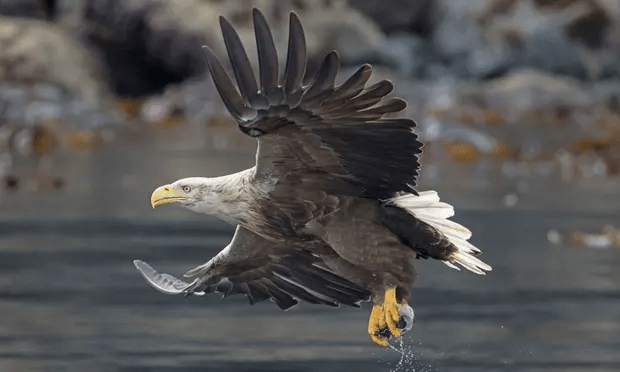
‘Living in a nature-depleted country, seeing such a large predator in the wild takes the breath away.’ A white-tailed eagle, the UK’s largest bird of prey. Photograph: Mike Crutch/Forestry England/PA
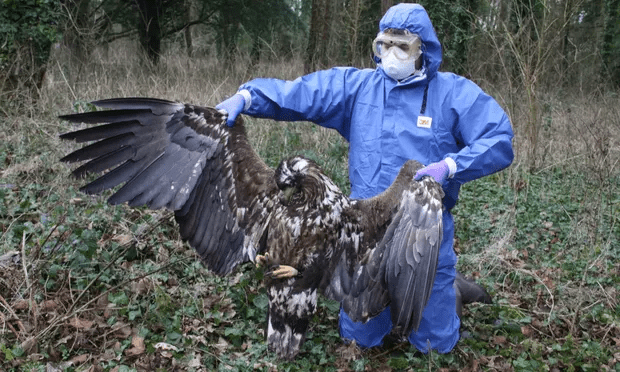
Dorset police launched an investigation into the eagle’s death after it was found on an unnamed estate in January. Photograph: Dorset Police/PA
Dead eagle found in Dorset was poisoned but case closed, police confirm
Rare white-tailed eagle had high level of rodenticide in its system but no further police action will be taken
A rare white-tailed eagle found dead in Dorset was poisoned, police have confirmed – but they have shut the case, in a decision the RSPB has called “baffling”.
The eagle was one reintroduced on the Isle of Wight, where a successful programme has been taking place since summer 2019. The white-tailed eagles had become extinct in the UK in the early 20th century after they were poisoned and shot by gamekeepers.
Those who run shoots are often opposed to birds of prey being in the area, as when they fly over a shoot, the birds scatter. They also occasionally prey on game birds.
The eagle was found dead on an unnamed estate in Dorset in January, and police launched an investigation into its death. Many conservationists in the area suspected it had been poisoned.
The toxicology results have confirmed the eagle had high levels of brodifacoum, a rodenticide, in its system. But police have closed the investigation and will not be naming the estate on which the dead eagle was found.
A spokesperson for Dorset police said: “An investigation under section 1 of the Wildlife Countryside Act 1981 was carried out in conjunction with the RSPB, Natural England, National Wildlife Crime Unit and the Roy Dennis Wildlife Foundation. A detailed examination and tests have been carried out on the bird, which were inconclusive, and it has therefore not been possible to confirm that any criminal offence has been committed.
“While high levels of brodifacoum were detected, it has not been possible to establish whether this was as a result of a deliberate act or due to secondary rodenticide poisoning. As a result, no further police action will be taken in relation to this report.”
An RSPB spokesperson said: “We are completely baffled by the decision of Dorset police to end the white-tailed eagle investigation so prematurely.
“Brodifacoum – the rodent poison that killed the eagle – is highly toxic and it is clear that it was either used incompetently or with intent to kill the eagle – either way an illegal act.”
Regards Mark
*** Additional information relating to the above: ***
Excellent article from ‘The Guardian’ (London as always:
‘Loder told the Guardian he did not feel he was influenced by the money from the estate, and his distaste for eagles in his constituency was because he had fears for their impact on farming. He said he had spent much time campaigning for animal welfare since being elected’.
MP who said eagles not welcome in constituency received funds from shooting estate
This article is more than 1 month old
West Dorset MP Chris Loder caused outrage when he seemed to imply police should not prioritise eagle death
A Conservative MP who said eagles are not welcome in his constituency had his election campaign funded by a shooting estate, the Guardian can reveal.
The West Dorset MP, Chris Loder, caused outrage when he seemed to imply police should not be prioritising the investigation of the recent death of an endangered white-tailed eagle, found dead on an estate in his constituency.
After police confirmed there was a multi-agency investigation into the death of the eagle, including a toxicology report, Loder said: “Dorset is not the place for eagles to be reintroduced. I’m not challenging government for more money for Dorset so it goes on this.” He added that officers should be focusing on crimes such as those involving county lines gangs instead.
The eagle was one reintroduced on the Isle of Wight, where a successful programme has been taking place since summer 2019. The eagle went extinct in the UK in the early 20th century after they were continually poisoned and shot by gamekeepers.
Loder’s 2019 election campaign benefited from a £14,000 donation from the Ilchester Estates, which runs shoots in his constituency. Those who run shoots are often opposed to birds of prey being in the area, as when they fly over a shoot, the birds scatter, disappointing those who paid to kill them. They also occasionally predate on game birds.
The estates are run by Charlotte Townshend, an aristocrat worth almost £500m who has both farming and shooting interests. She also says she is the only person other than the Queen who is allowed to own swans.
Neither Townshend nor a spokesperson for the Ilchester Estates could be reached for comment, and there is no suggestion the eagle died on their land, nor because of anyone associated with the estate. The police have not as of yet revealed where the eagle was found.
Loder told the Guardian he did not feel he was influenced by the money from the estate, and his distaste for eagles in his constituency was because he had fears for their impact on farming. He said he had spent much time campaigning for animal welfare since being elected.
Loder added: “My views on sea eagles come from me being a farmers’ son and my continued best efforts to represent the needs of West Dorset’s farming community. I am not convinced that sea eagles being here are in their best interests. No briefing or consultation has taken place with me or others that I know of by Natural England, campaigners, nor the RSPB to explain how these risks are managed, nor to inform the farming community that indeed these birds are in Dorset.
“My policy views are formed in the best interests of the rural community I represent, which is also my home and where I was brought up. Any suggestion that I have been unduly influenced in this view is completely wrong.”
The Guardian understands that the government is considering action to stop raptor persecution on shooting estates by tightening licences in problem areas. There were 137 cases of confirmed raptor persecution in 2020, according to the RSPB.
Rebecca Pow, an environment minister, said: “There is always more we can do to tackle wildlife crime and we will carefully consider all of the UN’s recommendations – including those relating to raptor persecution – to help us build on the positive progress we have already made. Defra [the Department for Environment, Food and Rural Affairs] sits on the police-led Raptor Persecution Priority Delivery Group, which takes forward activities to raise awareness and facilitate intelligence and incident reporting, leading to increased prevention and enforcement activity.”
Luke Steele, the executive director of Wild Moors and a campaigner against raptor persecution, urged that this crackdown be implemented “without delay”, adding: “Birds of prey including eagles, hen harriers and red kites have a rightful place and an important ecological role in the British countryside. To persecute them to preserve game birds for sports shooting flies in the face of the 68% of the public who support reintroduction of birds of prey.”
The sight of a magnificent white-tailed eagle has once again become common for those lucky enough to live in the flight path of those recently introduced to the Isle of Wight. Thousands of Britons have seen and heard the giant two-metre wings beating overhead, and seen the cruel-beaked birds dramatically dive for fish. For us, living in a nature-depleted country, seeing such a large predator in the wild takes the breath away.
White-tailed eagles were driven to extinction in Britain in the early 20th century, and persecution by landowners was the leading cause. Shot at and poisoned by those hoping to protect their game birds, Britain’s largest bird of prey didn’t stand a chance.
Yet thanks to the work of conservationists, these raptors are now frequently spotted in the skies above the Isle of Wight and Scotland – and sometimes even further afield. It’s the result of years of breeding programmes and negotiations with the Scottish and English governments.
But the tragedy that originally robbed us of perhaps our most awesome airborne predator looks as though it could repeat itself. Two of these giants have now been found dead on estates in Dorset and Sussex. While the cause of death has not been established, the multi-agency police investigation suggests that foul play could have been involved.
Currently, officers are conducting toxicology reports, suggesting they believe the eagles could have been poisoned.
Sadly, this is all too common. In 2020 there were 137 confirmed incidents of raptor persecution, according to RSPB figures. However, these are only instances where a body is found quickly enough to determine the cause of death. Many more tagged birds of prey simply disappear, never to be seen again. A 2019 study found that of 58 hen harriers tagged over 10 years, 72% were either “confirmed to have been illegally killed or disappeared suddenly with no evidence of a tag malfunction.”
Gamekeepers have previously been found to be behind the poisoning of our raptors, as they prey on grouse and other birds stocked by estates for shooting parties. A bird of prey soaring above a shoot also makes the birds scatter, disappointing those who have paid to kill them. After a series of poisonings of rare white-tailed eagles on grouse estates in Scotland, the Scottish government took action, suspending general shooting licences in the hope it would reduce these crimes. But sources at the Home Office have told me it is very difficult to secure prosecutions for the crime of taking an endangered bird out of the sky.
And for many of the Conservative MPs who represent constituencies full of shooting estates and the homes of the landed gentry, wildlife crime is not a priority. Chris Loder, MP for West Dorset, has said that eagles are not welcome in his constituency and suggested that the police shouldn’t even be investigating their deaths.
Member of Parliament (MP) Loder says he does not feel he was influenced by the money he received from the estate. Photograph: Finnbarr Webster/Getty Images
He said: “Dorset is not the place for eagles to be reintroduced. I’m not challenging government for more money for Dorset so it goes on this. I don’t condone this at all, but I want Dorset police to focus on county lines rather than spend time and resources on this.” The local wildlife crime team pointed out to their representative that county lines gangs are not in their jurisdiction, that they work overtime to help Britain’s wildlife, and that wildlife crime is often linked to other serious crimes, including gun offences.
What message is Loder sending to those who want to kill wildlife in west Dorset? The MP has essentially given them a free pass, and signalled that eagles are not welcome in the skies above his constituency. And, despite what Loder says, eagles were not reintroduced specifically to Dorset; rather they flew out of the constituencies of wildlife-friendly MPs into those represented by the likes of Loder.
His constituents could benefit from the eagles if they were to be reintroduced – a study found that those released on the Isle of Mull in Scotland brought millions to the economy, as people travelled to see the birds and spent money in local businesses.
But his attitude perhaps comes as no surprise. Of the 10 biggest landowners in Dorset, eight are country estate owners, and many of these host shoots. This is not to say they had anything directly to do with the raptor deaths, but it perhaps shows why the MP is likely to consider the traditional concerns of the landed gentry over the right of everyday British people to enjoy wildlife.
The problem is, there is no way to meaningfully help these birds recover and properly repopulate in the UK if there are no real consequences for those who kill them. Unless those who own estates are properly held to account for poisoned birds found on their land – perhaps having their shooting licences suspended until they can get a handle on crimes occurring under their noses – this will likely keep happening.
There are few things that make me shake with anger more than the idea of a rare and magnificent bird curling up to die, a burning stomach full of poison, never to fly again. But even those who do not feel so strongly about this matter should take issue with the fact that criminals are getting away with destroying our wildlife and the country’s natural legacy, and we are seemingly powerless to stop it.
Until those who own estates are held to account for what happens on their land, I am afraid history may repeat itself and we may once again see our largest bird of prey silently slip into extinction.
Helena Horton is an environment reporter for the Guardian
WAV Comment: well said Helana; with you and your comment all the way.
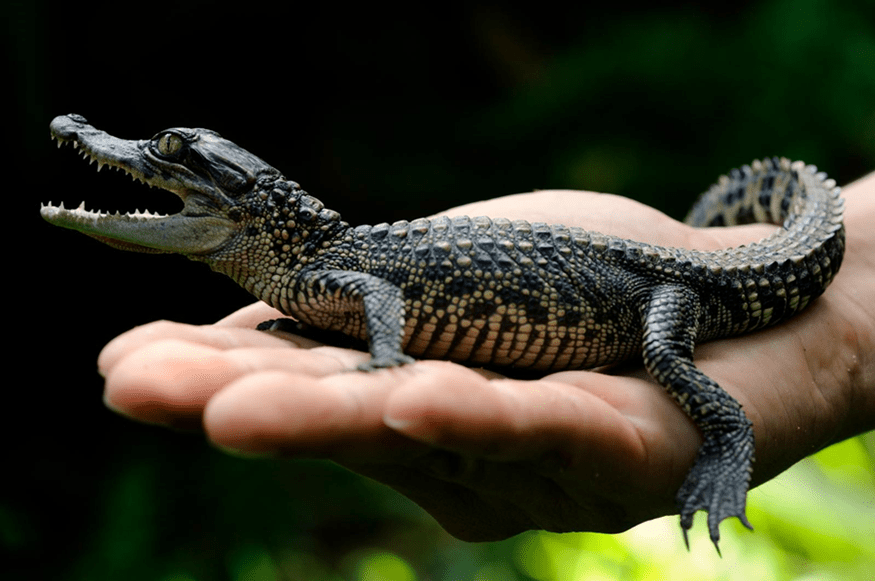
Siamese crocodiles are one of the rarest reptiles on Earth. Wiped out from 99% of their former range. Driven to the brink of extinction.
They have a truly tragic past – taken from the wild in their hundreds and cross-bred with other crocodile species to keep up with a rampant demand for the international skin trade. There are now just a few hundred left.
In fact, they were thought to be extinct until they were rediscovered in Cambodia in 2000 in a series of surveys led by FFI.
They are practically the definition of a neglected species.
Well, that is until a few years ago.
Thanks to your incredible support – we are starting to turn their fate around. FFI and our local partners are carrying out a crucial captive breeding programme in Cambodia, releasing hundreds of Siamese crocodiles into the wild.
Our aim is to double the wild population over the next few years – this could provide an incredible lifeline for the species.
This is ground-breaking news – providing evidence that released Siamese crocodiles are not only able to survive in the wild, but also nest, raising hope for Siamese crocodile conservation across Cambodia.
And the good news doesn’t stop there – last year, a team of community wardens working with FFI to protect Siamese crocodiles in Cambodia’s Chhay Reap received a prestigious international ranger award for their dedicated conservation work. We still have a long way to go to secure the future of these rare reptiles, but this is certainly a great step in the right direction. With your support, we can continue to fund our crucial captive breeding and monitoring programme, helping these incredible creatures to thrive in the wild once again.


















 World Animals Voice