Category: Environmental

Global warming – the reality delivers a tragedy

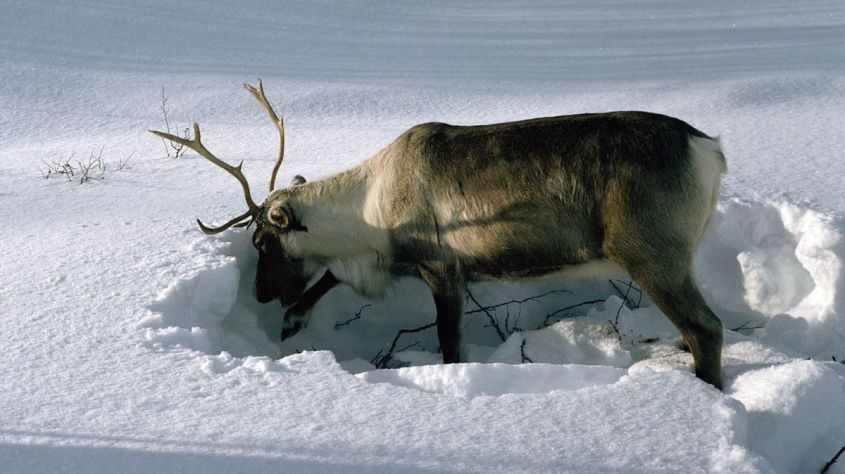
It’s a hard life for reindeer in Lapland.
They have to fight their way through the snow for half a year to get to the scarce food.
At first it sounds positive that future winters in Lapland will be an average of 3 degrees warmer due to climate change.
But less cold and less snow will become a big problem for the reindeer.
The Arctic is warming particularly quickly

The Arctic is considered an early warning system for climate change.
Because global warming is particularly severe there.
Air and water temperatures are rising much faster than the global average.

The Arctic climate report from May 2021 states that the mean air temperature north of the Arctic Circle has risen by 3.1 degrees Celsius over the past 50 years.
As a result, the Arctic is warming three times faster than the world. And so not only the reindeer, but also other fellow sufferers get into trouble particularly quickly.

The ice Bear
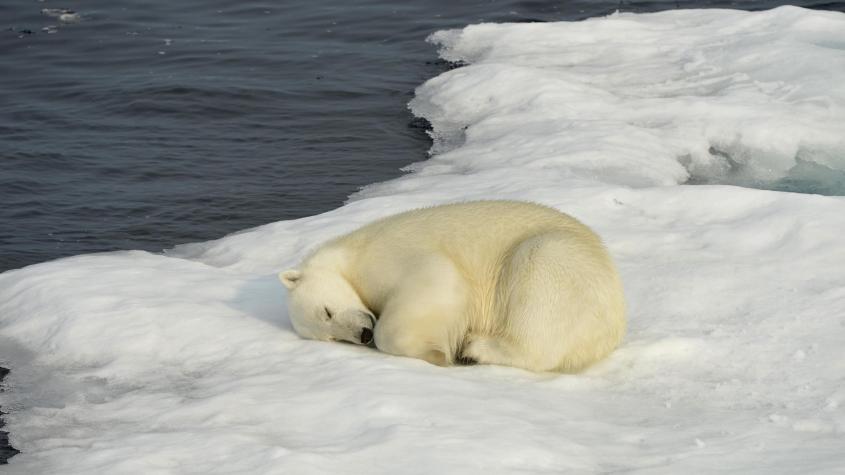
Asleep on an ice floe, this polar bear looks so peaceful and cozy plush. But he is in great danger. © picture alliance / imageBROKER, FLPA/Malcolm Schuyl

He is the symbol for climate change: the polar bear, whose paws are melting away the pack ice.
The polar bears hunt seals on the huge ice surfaces, which consist of ice floes that have been pushed together.
In holes in the pack ice, the seals gasp for air – and the polar bears shut.
By 2050, a third of the world’s polar bear populations could be gone if global warming continues to melt the pack ice, WWF estimates.
Because the polar bears are starving, are weakened for hunting, have fewer offspring, but instead face more competition from other bear species on the mainland and ultimately die exhausted.

The arctic fox

So cute and so endangered: the arctic fox is one of the animal species most threatened by climate change. © picture alliance / imageBROKER, W. Rolfes

If the polar bears die, the arctic foxes also lose an important food source.
They often follow the white giants on their hunt for prey to get hold of the leftovers of the polar bear’s meal.

The arctic fox survives temperatures down to -50 degrees.
But when the winters get warmer, he gets competition from the red fox, which pushes further and further north.
And because the red fox is bigger and stronger than the arctic fox, the latter often comes out on top.
Its camouflage – white fur in winter and grey-brown fur in summer – also fails as the snow melts earlier and earlier.

The walrus

The walrus is also poorly off in climate change. It loves and needs ice floes, but they are dwindling.

Like polar bears, walruses depend on the pack ice and its ice floes.
They can’t swim and dive that long, so they need frequent resting places.
When there is no ice, the massive marine mammals congregate on the narrow coastal strips, e.g. the Russian Arctic coast.

In these places it sometimes gets so narrow that young animals are crushed, mass panics arise and animals fall off the cliffs in search of a resting place.

The Narwhal

The narwhals cannot defend themselves against climate change with their “dagger”.

The narwhals, the unicorns of the sea, are hit twice by climate change.
The melting of the ice not only changes their hunting, resting and feeding grounds, the animals are also exposed to mercury.
The mercury blown into the atmosphere by coal-fired power plants entered the Arctic ice with air currents and precipitation. The rising temperatures are now ensuring that the ice is melting and the toxic contaminated sites are being released.

Unlike other animals, narwhals cannot get rid of environmental toxins.
They have no hair or feathers to lose.

https://www.wetter.de/cms/rentier-polarfuchs-und-eisbaer-die-tiere-der-arktis-verhungern-mit-der-erderwaermung-4911575.html

And I mean…Now there are gloomy forecasts
The earth has already warmed up by a good one degree.
If carbon dioxide continued to be emitted as it has been up to now, its content in the atmosphere could double in the next 60 to 80 years compared to the time before industrialization.

By the way: The lion’s share of environmental pollution is caused by the so-called “civilized” world.

Due to the warming of the earth, the poles are melting and the sea level is rising, new heat records are being reported year after year, meat consumption and water-intensive agriculture are increasing worldwide, therefore rainforest is being cut down cheerfully and diligently, the emissions of the civilized, “developing” world are increasing rapidly.

Why isn’t there actually a forecast of what will happen if the temperature rises by 3 degrees?

Because it’s probably the more realistic thing, so it’s better not to mention it at all, our experts and politicians do that as a profession, because then it has no consequence, just don’t mention it, then there will be no panic and enough illusion
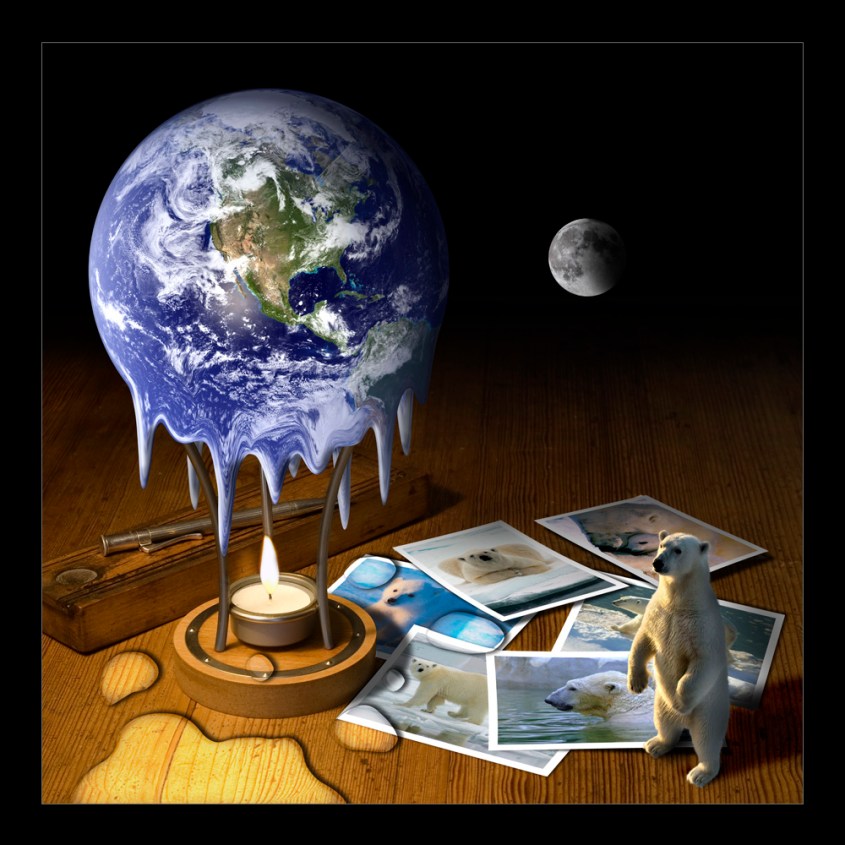
Global warming will have an enormous impact on human living conditions.
There will be great damage for private individuals but also for entire economies.
There will be migration movements and associated attempts to defend themselves.
There will be clashes between states over access to resources.
It is to be expected that these clashes will not be free of violence.

Climate protection does not only mean showing consideration for nature and animals, but preserving living conditions and avoiding economic damage.

We can no longer prevent climate change, but we must do our part to slow it down – so that we can continue to survive on our planet.

The first and fundamentally most important contribution would be the abolition of factory farming and the renunciation of meat and animal products.

My best regards to all, Venus

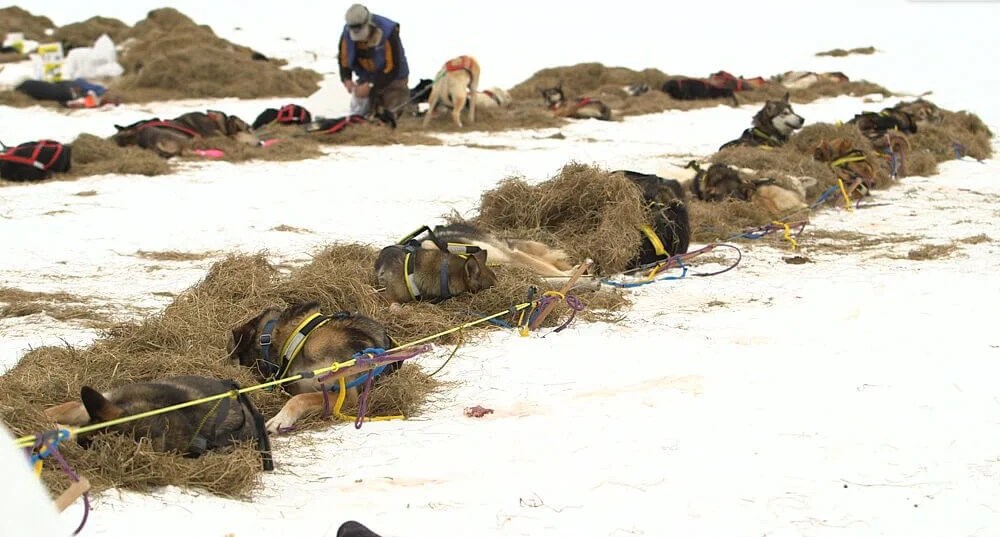
USA: (Alaska) Iditarod, The Worlds Cruelest Dog Race, Starts 5/3/22. It Must Be Stopped. Take Action Here.

Alaska’s dangerous Iditarod dog race is set to begin on March 5. And despite the fact that the 2022 death race hasn’t even started yet, already at least one dog has been killed. Just last month while training for the Iditarod, a team of dogs was hit by a truck. One of the dogs, Noddy, was killed.

Last year, in addition to holding in-person protests, PETA exposed abundant abuse during the race:

  • Nearly 200 dogs were pulled off the trail during the race because of exhaustion, illness, injury, or other causes.
  • Musher Dallas Seavey finished first after four dogs he pushed beyond the breaking point had to be removed from the trail.
  • Musher Martin Buser apparently put an injured dog back in the harness and forced him or her to continue racing, despite video footage showing the dog limping.
  • This pointless, cruel race is a matter of life and death for dogs.
  • Please take action now to urge companies to drop their Iditarod sponsorships.

Take action for dogs:

Note that here you can send several messages one at a time – simply follow the send instructions to each supporter company:

The Deadly Iditarod Race Should Be Terminated: Here’s Why (peta.org)

Watch the video of abuses:

It’s been reported that in the first Iditarod race, at least 15 dogs died—and the body count has continued to pile up since then.

Other dogs barely make it out alive. Take 2021’s race: By the time it ended on March 18, nearly 200 dogs had been pulled off the trail because of exhaustion, illness, injury, and other causes, forcing the rest to work even harder. Musher Dallas Seavey—who has raced dogs who have tested positive for opioids, operates a kennel accused of killing dogs who didn’t make the grade, and owns property where a whistleblower reported finding dying puppies—finished first after four dogs he pushed beyond the breaking point had to be removed from the race. Musher Brenda Mackey admitted that she pulled out of the race after the dogs she forced to run suffered from “the most awful diarrhea I’ve ever seen,” violently vomited, and developed aspiration pneumonia, the leading cause of death for dogs in the Iditarod. And musher Martin Buser apparently put an injured dog back in the harness and forced him or her to continue racing.

Discover nine other reasons why the Iditarod is a deadly nightmare for dogs forced to race:

Dog deaths in the Iditarod are so routine that the official rules call some of them an “Unpreventable Hazard.”

The Iditarod has killed more than 150 dogs since it began in 1973. Five died in 2017 alone. In just the last decade, dogs competing in the event have died from various causes, including asphyxiation, heart attacks, trauma from being struck by a vehicle, freezing to death, excess fluid in the lungs, and acute aspiration pneumonia—caused by inhaling vomit.

If the dogs don’t die on the trail, they’re still left permanently scarred.

The American Journal of Respiratory and Critical Care Medicine reported that more than 80 percent of the dogs who finish the Iditarod sustain persistent lung damage. A separate study in the Journal of Veterinary Internal Medicine showed that dogs forced to take part in endurance racing had a 61% higher rate of stomach erosions or ulcers. And in a paper in Medicine & Science in Sports & Exercise—the official journal of the American College of Sports Medicine—researchers concluded that dogs used in sled races suffer from airway dysfunction similar to “ski asthma” (an asthma-like condition caused by intense exercise in cold weather), which persists even after four months of rest.

There’s no retirement plan.

Breeders of dogs used in sledding have freely admitted that “surplus” dogs are killed. They may be killed if they aren’t fast or fit enough for competition or if they don’t meet certain aesthetic standards—for example, if they have white paw pads. Dogs who finish the race but are no longer useful to the industry may be shot, drowned, or abandoned to starve.

Even when the race ends, dogs’ misery doesn’t.

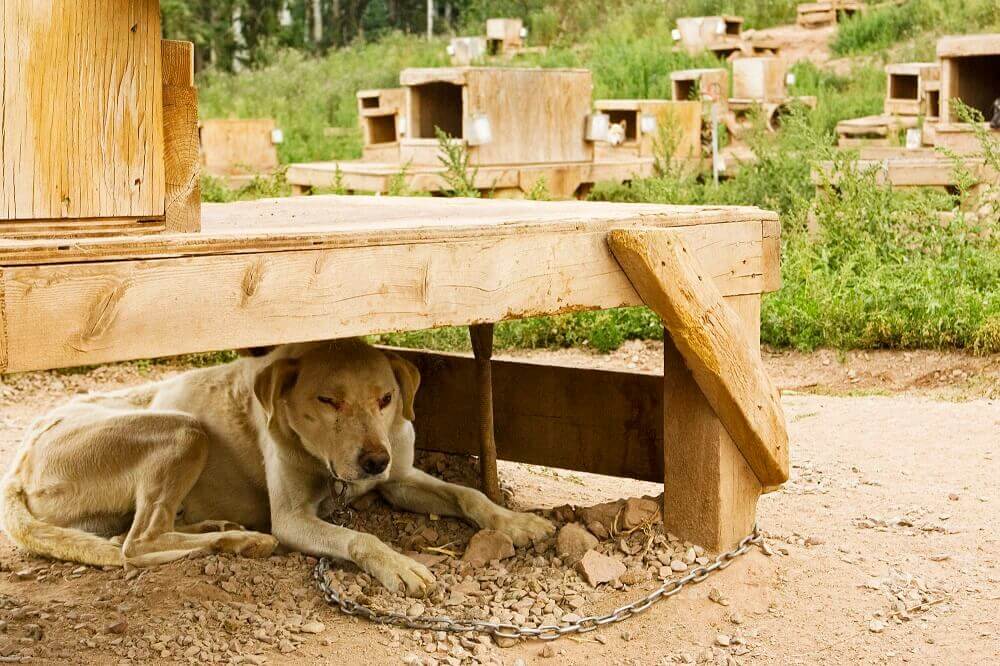
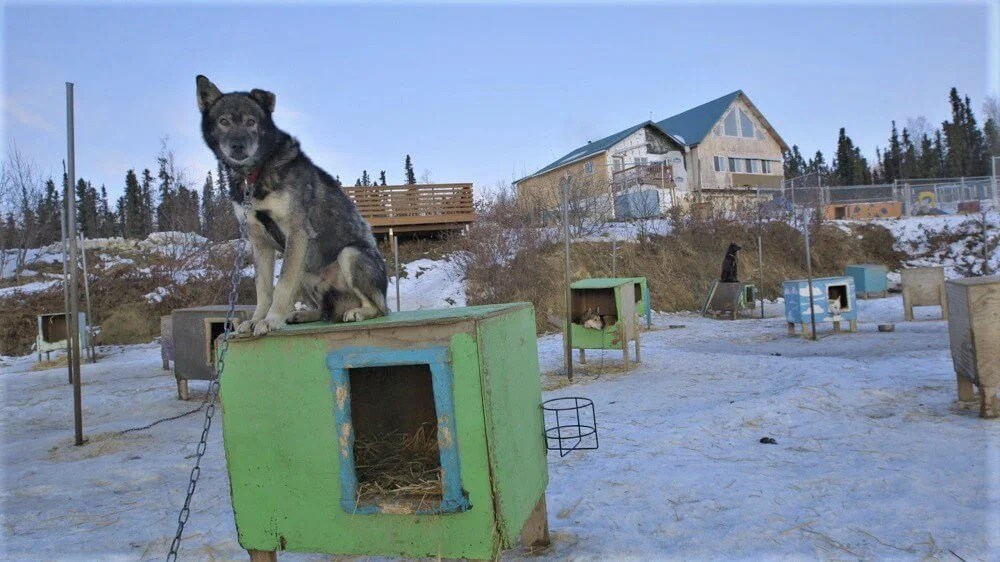
A PETA eyewitness worked at two dog kennels owned by former Iditarod champions and found widespread neglect and suffering there. Dogs were denied veterinary care for painful injuries; kept constantly chained in the bitter cold with only drafty, dilapidated boxes or plastic barrels for “shelter”; and forced to run even when they were exhausted and dehydrated.

Dogs pull mushers’ sleds up to 100 miles a day.

During the race, they’re expected to run approximately 1,000 miles in less than two weeks, and race rules mandate only 40 hours of rest over the entire span of the race. They’re prohibited from taking shelter during any part of the race, except for veterinary exams or treatment.

As many as half the dogs who start the Iditarod don’t finish

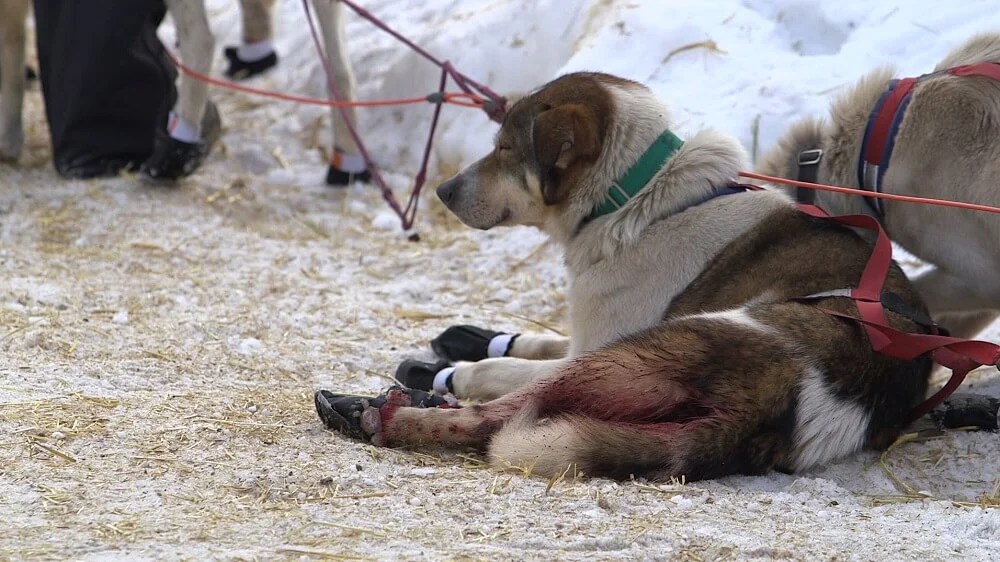
Injured, sick, and exhausted dogs are often “dropped” at checkpoints, but event rules require that only dogs who started the race be allowed to finish, meaning that the remaining animals must work under even more grueling circumstances, pulling even more weight.

No dog would choose to run in this arctic nightmare.

Orthopedic injuries are the number one reason that dogs are “dropped” from the Iditarod—which makes it clear that no dog, regardless of breed, is capable of handling the grueling race on ice, through wind, snowstorms, and subzero temperatures. Even wearing booties, many incur bruised, cut, or swollen feet. They also suffer from bleeding stomach ulcers, pull or strain muscles, and sustain other injuries.

Thousands of dogs are bred each year for sled racing.

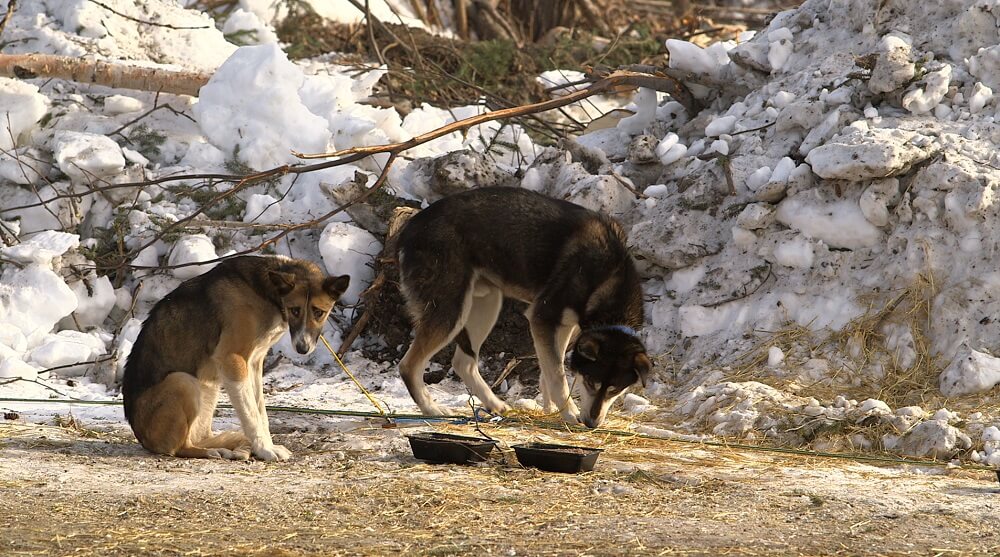
While only a few dozen dogs raised for the race will ultimately be deemed fit enough to compete, many more will be kept tethered and chained for most of their lives, some with nothing more than dilapidated plastic crates as their shelter.

Dogs at dogsled breeding compounds have died of numerous ailments.

Some have frozen to death, while others have died of complications from eating rocks—presumably a result of the intense frustration of spending years on a chain.

Dogs Deserve Far Better Than a Lifetime of Isolation, Cruelty, Suffering, and Death on the Iditarod Trail

The Deadly Iditarod Race Should Be Terminated: Here’s Why (peta.org)

Regards Mark


Netherlands: Dutch Owned Super Trawler Spills 100,000 Dead Fish Off French Coast. Disgusting.

The FV Margiris uses giant drag nets more than a kilometre long. Pic: Sea Shepherd France
© Other The FV Margiris uses giant drag nets more than a kilometre long. Pic: Sea Shepherd France
The images of the massive spill have ben described as 'shocking'. Pic: Sea Shepherd France
© Other The images of the massive spill have ben described as ‘shocking’. Pic: Sea Shepherd France

An investigation has been ordered after the world’s second-biggest trawler shed more than 100,000 dead fish into the Atlantic, sparking claims they were dumped deliberately.

The spill from the FV Margiris off the French coast was caused by a tear in the super trawler’s net, according to the fishing industry group PFA, which represents the vessel’s owner.

Footage of the giant floating carpet of dead fish in the Bay of Biscay was taken by environmental campaign group Sea Shepherd France.

France’s maritime minister Annick Girardin has described the images as “shocking” and said she had asked the country’s national fishing surveillance authority to investigate.

The fish were blue whiting, a sub-species of cod, which is used by the industry to mass-produce fish fingers, fish oil and meal.

Sea Shepherd France has cast doubt on claims it was accident and believes the fish were discharged on purpose.

The group’s head, Lamya Essemlali, said: “It’s forbidden for a fishing vessel to throw overboard bycatch.

“It is supposed to bring the bycatch to port and to make a declaration.

“The EU regulation has been implemented so that we can reduce the non-selective fishing methods because it’s very demanding, time-consuming and costs money for a fishing vessel to go back to port and unload the bycatch, and then go back at sea.

“So the temptation is big for these vessels at sea without any witness, any control, to just throw overboard all the bycatch and stay in the area, and keep on fishing.”

She added: “There is total impunity at sea. There is no control, no witnesses and no fines.

“There is a lot of money to be made and we have to improve the controls at sea, we have to put remote e-monitoring cameras onboard all the fishing vessels.”

Trawlers like the Margiris use giant drag nets more than a kilometre long and process the fish on-board.

Ms Essemlali said: “It has an impact on the fish population itself but also it has an impact on the predators, like dolphins, because the fish that these super trawlers are fishing are the main preys of dolphins and sharks. And basically, we are driving dolphins to starvation.”

Thousands of dead dolphins have washed up on France’s Atlantic coast over the past years.

Following protests by activists against super trawlers, the Margiris was forced to leave Australian waters in 2012.

Traffic data by marinetraffic.com on Friday showed the vessel, which is owned by the Dutch company Parleviliet & Van der Plas and sails under the flag of Lithuania, was still fishing off the French coast.

Super trawler spills 100,000 dead fish off French coast (msn.com)

Regards Mark

Read more here:

Over 100,000 dead fish were dumped by a European trawe off the coast of La Rochelle, western France - Sea Shepherd
© Sea Shepherd Over 100,000 dead fish were dumped by a European trawer off the coast of La Rochelle, western France – Sea Shepherd

The dead fish carpeted the surface of the Atlantic Ocean off the coast of France - Sea Shepherd
© Provided by The Telegraph The dead fish carpeted the surface of the Atlantic Ocean off the coast of France – Sea Shepherd

Trawlers like the Margiris use drag nets measuring over a kilometre in length and process the fish in on-board factories, a practice heavily criticised by environmentalists.

Following protests by activists, the Margiris was forced to leave Australian waters in 2012.

Oil tanker capable of carrying 2 million barrels explodes off coast of Nigeria.

Oil tanker capable of carrying 2 million barrels explodes off coast of Nigeria (msn.com)

The Trinity Spirit, an oil production vessel, is able to carry 2 million barrels of oil - Twitter/Screengrab

An oil production ship capable of carrying up to 2 million barrels of oil has exploded off the coast of Nigeria.

According to local reports, the Trinity Spirit exploded on Thursday morning at the Ukpokiti oil field off Nigeria’s coast near the Escravos terminal close to the River Niger delta.

Dramatic video shows the ship on fire with thick black smoke rising into the sky as it appears to be sinking.

The vessel is an FPSO, a floating production storage and offloading unit, which is reportedly owned by Shebah Exploration & Production Company Ltd (SEPCOL).

These types of ships are used by the offshore oil and gas industry for the production and processing and storage of oil and serve a similar function to larger oil rigs.

The ship had ten crew members on board, chief executive Ikemefuna Okafor said on Thursday, according to Reuters.

It is not believed the crew members have yet been accounted for.

Mr Okafor said investigations were underway to establish the cause of the explosion while attempts to contain the situation were being made with help from local communities and Chevron, which has a facility nearby.

“At this time there are no reported fatalities, but we can confirm that there were ten crew men on board the vessel prior to the incident and we are prioritising investigations with respect to their safety and security,” he said.

While it is not yet clear how much oil will be spilled by the Trinity Spirit, commentators have warned Nigeria could be facing its second environmental disaster in three months, after a huge oil spill from a disused, capped well head released 20,000 barrels of oil a day for a month into the waterways of Nembe, in Nigeria’s Bayelsa state.

The impact of that spill was described as being “like Hiroshima”, by the Nigerian government, with the leaking oil causing the death of marine life and damage to mangroves and waterways.

Regards Mark

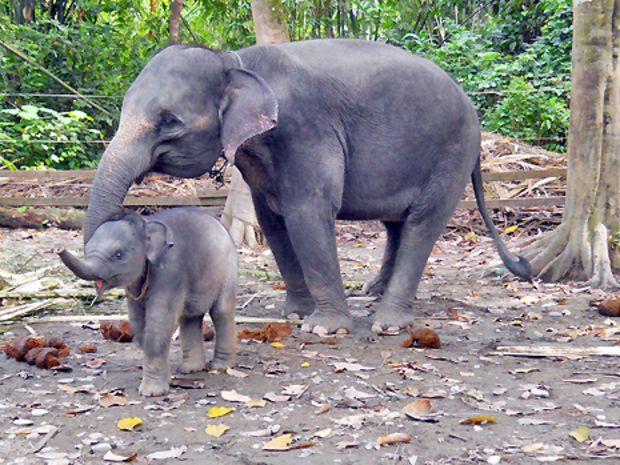
“We can save the Sumatran elephants!”-Petition

Greenpeace.at: The last elephants in Indonesia are threatened with extinction! There are very few Sumatran elephants left in the wild.

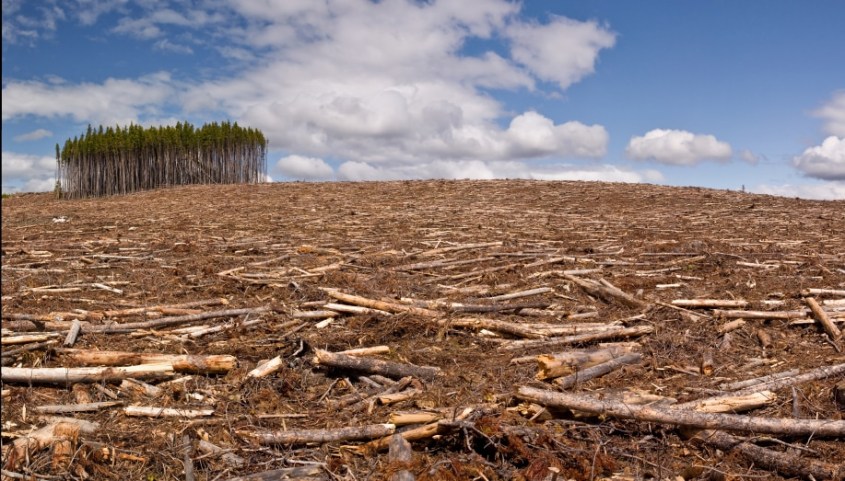
Their rainforests are being brutally cleared for palm oil plantations.
But we can help you now!
The EU Commission has presented a law that would ban the trade in goods from rainforest destruction in Europe.
Among them is palm oil, which deprives the Sumatran elephants of their homes.
We must now ensure that the law is as strong as possible and accepted by the EU member states!

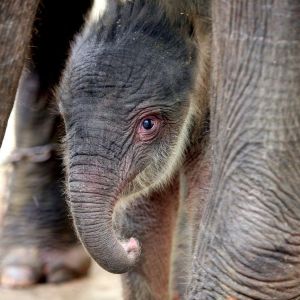
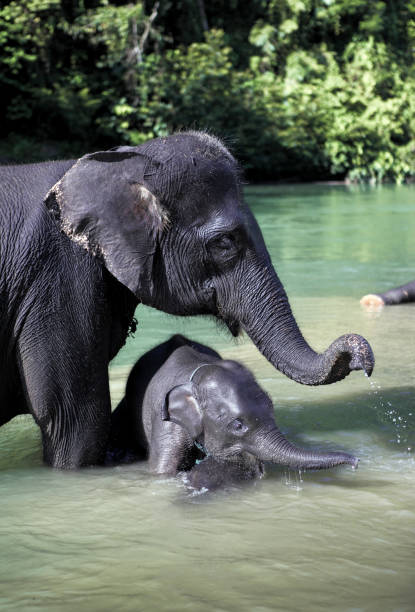
Sumatran elephants are the largest inhabitants of Sumatra and are among the smallest elephant species – they are very special. The social animals form protective groups in which they roam the low hills of the Indonesian island. It has been like this for many thousands of years; the peaceful pachyderms do not disturb anyone.

The home of the elephants destroyed

But the Sumatran elephants are being pushed out of their only homeland. Because larger and larger parts of the rainforest are being destroyed for monotonous palm oil monocultures.
Not even protected areas are spared, as a Greenpeace report showed! Where once there was living forest, there are now only plantations for palm oil and paper for miles.

Corporations have broken promises

Corporations like Nestlé, Mondelēz and Unilever have repeatedly promised an end to the destruction of forests for their products.

They claimed to stop using palm oil from rainforest destruction by 2020. But hardly anything has happened.
The Sumatran elephants are now on the brink of extinction. There are very few left in the wild.

But we can help the elephants!

If the corporations don’t act, laws are needed. And an important law is now within reach: A law that could ban the trade in goods from rainforest destruction on the EU market!
This is our chance to protect the habitat of the Sumatran elephants! However, we must now ensure that the law becomes as strong as possible and accepted by EU member states.

Please sign the petition for a strong law banning the trade in goods from rainforest destruction in Europe!

https://wald.greenpeace.at/sumatra-elefanten/

And I mean…The Sumatra Elephant has little time.
According to environmentalists, it could be extinct within three decades if the rapid deforestation in its habitat is not stopped immediately.

It belongs to the growing list of Indonesian species threatened with extinction – such as Sumatran orangutan, Javan and Sumatran rhino and Sumatran tiger.

The Indonesian government urgently needs to design a protection strategy, with new protection regions and corridors between isolated areas.
The Sumatran elephant is legally protected in Indonesia. But 85 percent of the areas in which it still occurs are outside the protection zones, so protection only applies on paper.

The population has declined by 80 percent in 75 years due to poaching, pollution and habitat destruction.

The Sumatran elephant is a subspecies of the Asian elephant, the largest land mammal in Asia. It is the lightest colored variant. Female elephants and their offspring form close-knit family groups of up to ten animals and a matriarch at the head.

If we don’t act now, in 100 years the earth’s lungs will be dead, animals will be extinct and humans will be in grave danger.
We all bear the responsibility that this terrible end does not come

My best regards to all, Venus
“Basic rights for primates”- Referendum in Switzerland

A very special vote is scheduled for February 13, 2022 in the canton of Basel-Stadt (Switzerland).
The people of Basel will then decide on the “Basic rights for primates” initiative. But what is it actually about? Who is for and who against? You can find out more about this here:

What does the initiative “Basic rights for primates” want?

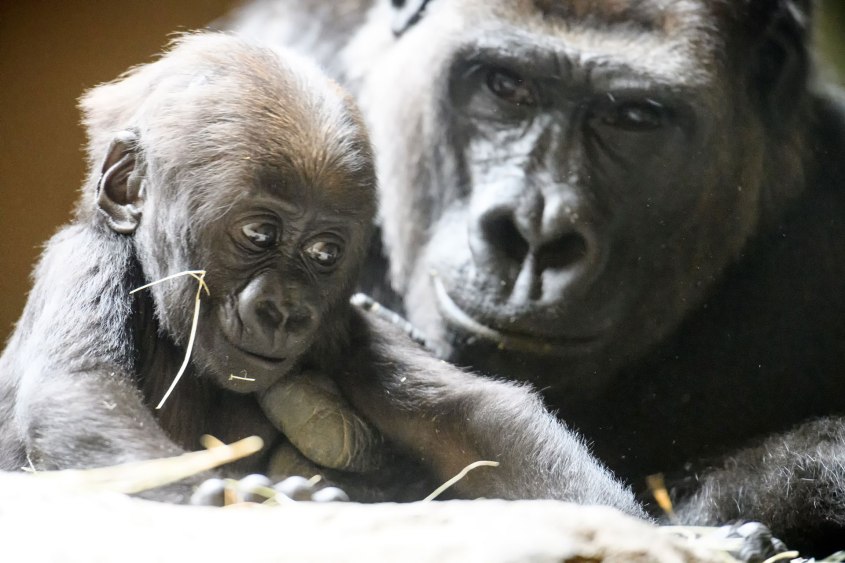
The cantonal people’s initiative by Sentience Politics demands that over 300 primate species be given a “right to life and to physical and mental integrity”.
These include, for example, gorillas, chimpanzees and orangutans.

Who is for the introduction?

The initiative comes from the association Sentience Politics. He fights for the rights of sentient animals. Living beings that can feel happiness or suffering are meant as sentient.

According to the association’s reasoning, animal protection does not go far enough here. For the supporters of the initiative, the relationship between primates and humans is particularly important: “They are genetically very close to us and, like us, have a highly developed central nervous system.”
Therefore, these animals are particularly worthy of protection.

Who is against fundamental rights for primates?

The initiative met with a lot of rejection, especially in politics. The government council even had it declared invalid in 2018.
The case ended up in the federal court, which admitted the submission. Parliament and government of Basel-Stadt are of the opinion that the rights of primates are already adequately regulated in the Animal Welfare Ordinance.

The Association of Swiss Zoos also rejects the initiative on the grounds that animals need protection and not human rights.
If the initiative were implemented, comprehensive protection of particularly endangered monkey species would no longer be possible (!!!)

On the national level, on February 13, Switzerland will also vote on the ban on animal testing, among other three issues.
This initiative wants all animal experiments to be stopped in Switzerland.
In addition, according to the initiative text, products that have been tested on animals should no longer be imported.

https://www.watson.ch/schweiz/abstimmungen%202022/636617548-alles-zur-initiative-grundrechte-fuer-primaten-in-basel-stadt

And I mean…Over three hundred other primate species are our close relatives – the so-called “non-human” primates.

Despite the large overlaps that we have with them, such as maintaining family life, cultural rules, social rituals, friendships, strong communicative understanding, complex learning processes, empathy and feelings, non-human primates have no self-determination for us humans.
Because the Animal Welfare Act always subjects the treatment of animals to a weighing of interests.

People have rights, animals are property.
They are used for entertainment and research, and cannot defend themselves against exploitation and excessive interference in their lives.

The worldwide extinction of species and the loss of biodiversity also show that in order to adequately protect animals and nature, we need to rethink and treat them differently than we have done up to now.
The initiative therefore calls for restricted rights for all non-human primates in the canton of Basel-Stadt: the right to life and the right to physical and mental integrity – no more, no less.

The animal protection legislation – but not only in Switzerland – is completely inadequate and is hardly implemented.

Primates have no autonomy and are abused for human purposes, yet politicians want to claim that” primate rights are already sufficiently covered by the Animal Welfare Ordinance”.
They would have to explain that to us again.

Should species affiliation determine how one is treated, or level of sentience?
The latter is the rational answer.
Because if a living being can feel pain and suffer, there is no reason that could justify this suffering that we humans inflict on animals in animal experiments or in industrial livestock farming.

The initiative wants to tackle and minimize as much as possible this grievance that exists
We are already looking forward to the voting campaign in Basel!

My best regards to all, Venus

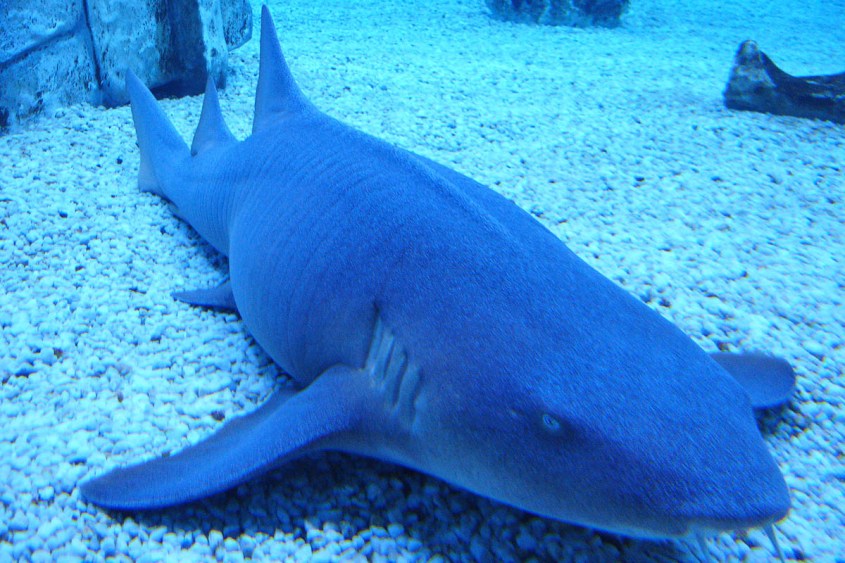
Hawaii becomes first US state to ban fishing for shark 💖🦈

Fishing for sharks is a major problem worldwide.

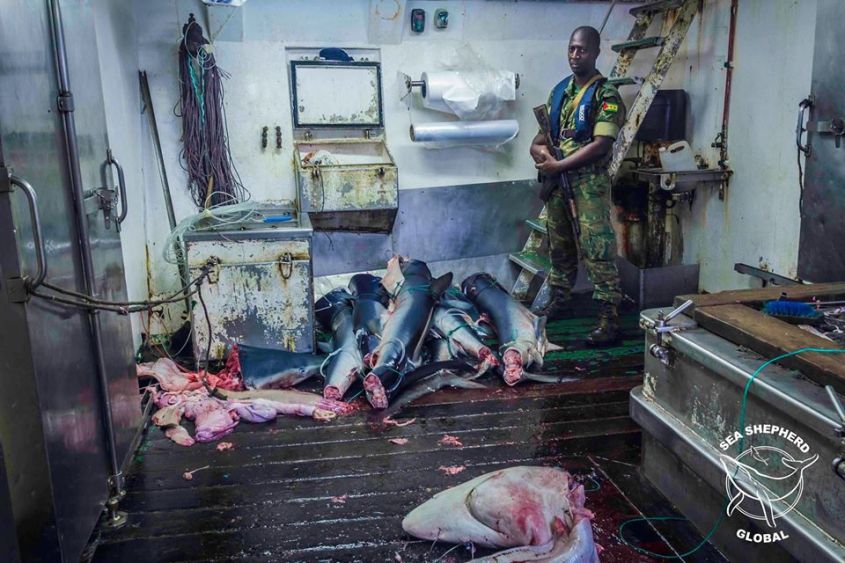
Around 100 million of these wonderful animals are cruelly captured and killed every year.
The stocks hardly have time to recover, since sharks only become sexually mature at 20 to 30 years of age.
A collapse is therefore inevitable if something does not suddenly change worldwide.

The US state of Hawaii is now setting a good example and has banned the fishing of sharks in its territorial waters since January 1, 2022.
Both fishing and angling are prohibited.
This means that no removal of any kind from the regional stocks may take place, nor any capture with the purpose of locking up the shark in any facilities and displaying it, and the deliberate killing of a shark has been considered a criminal offense since then.

After the ban on swimming with dolphins, Hawaii is thus taking on a pioneering role among the coastal states of the USA with regard to the protection of marine animals.

As early as 2010, Hawaii banned the killing of sharks for the purpose of obtaining their dorsal fin, i.e. “shark finning”.
Quoting Brian Neilson from the Hawaiian authorities:
“We are aware of how important sharks are for a healthy ecosystem in the oceans.”.

He also stressed that the ban underscores the importance of sharks to Hawaiians and their culture.
The first violator of the ban will be fined $500, the second $2,000, and the third $10,000.

In addition, an administrative fee of $10,000 is due from the very first violation.
The authority is also entitled to confiscate the fishing or fishing license and to confiscate the boat and equipment.

Fishermen are encouraged to steer clear of shark territory and use barbless circle hooks to release mistakenly caught sharks quickly and without serious injury.

We very much welcome this step by Hawaii and hope that many other states will follow suit.

The shark is a fascinating creature and by no means the beast it is often portrayed as.
If we don’t invade its habitat and don’t disturb it, then it doesn’t pose any danger to humans.

Today the last chance is to do something against the ethical crime of “shark finning” in the EU.

Please take a few minutes and sign the important citizens’ initiative “STOP FINNING – STOP THE TRADE” if you haven’t already, tomorrow will be too late:
https://eci.ec.europa.eu/012/public/#/screen/home

https://www.thepetitionsite.com/de/642/510/595/were-killing-off-sharks.-without-them-the-oceans-may-not-survive./

Text: Together for the animals

AndI mean…Sharks are disappearing at an alarming rate, largely due to shark fishing and being victims of bycatch. Humans need sharks, but there are few laws that protect them.
But now, Hawaii is paving the way for change.

Despite the new law, there are exceptions that allow a lot of wiggle room for offenders to get away. For example, sharks caught as bycatch will not be counted as a violation. Special permits may also be granted to fish sharks by DLNR.

Hopefully, other states will also follow Hawaii’s lead on banning shark fishing and help better protect our oceans, because we, human animals are most certainly willing to hunt a species to extinction..

But we can all do something to help save sharks, and not just these animals.
When we stop eating fish, meat and all the products of animals

My best regards to all, Venus

So; EU Sells Pig Meat to Japan, and Under JEEPA; Japan Sells Pig Meat to the EU. That Makes Environmental Air / Sea Mile Sense, Or Does It ? – They Call It An ‘EU-Japan Economic Partnership Agreement’; We Call It Environmental Destruction.

EU and Japan should use their trade deal to do more for animals

27 January 2022

WAV comment – so, under the JEEPA; the EU imports cattle, hens and pigs from Japan. But hey, does the EU not export (from Germany) pig meat to China  ?   Germany is one of the largest meat exporters in the world with approximately 58 million pigs are slaughtered in Germany every year.

So, lets get a grip – the EU produces pig meat within the EU (Germany) that it then exports outside of the EU.  At the same time through JEEPA, the EU is importing pig meat from Japan on the other side of the planet ! – this must be so effective in reducing all the meat transportation miles and cutting down on air and sea miles I don’t think. 

Sounds to me like a to hell with the environment; as long as we have good export and import figures, who cares !

Why not German pig meat be sold in the EU, and Japanese pig meat sold in Japan or China ? – this shown the environmentally destructive results of ‘economic partnership agreements’ that our master politicians pride themselves on so much.  Fools or sense ?

Regards Mark

From Eurogroup for animals.

The EU-Japan Economic Partnership Agreement (JEEPA) entered into force in February 2019, but the partners have not yet started any discussion on animal welfare. At the occasion of the third joint civil society meeting under the trade deal, Eurogroup for Animals calls on the EU and Japan to make use of the provisions on animal welfare cooperation listed in the agreement to foster a transition towards a more sustainable food system, in which animal well being is respected.

Read our report.

While JEEPA liberalised the trade in most animal products without any condition related to animal welfare, it also provided two channels that could be used to improve animal well being: the provisions on animal welfare cooperation, and the chapter on Trade and Sustainable Development (TSD), which covers wildlife trafficking, sustainable aquaculture and fisheries. 

While the EU does not currently import significant amounts of animal products from Japan, reduced tariffs have still led to more imports of Japanese animal products. For instance, between 2018 and 2019, imports of Japanese fresh and chilled beef increased by 31% and pig meat imports more than doubled.

As tariff reduction was not conditional on the respect of any animal welfare standards, and as Japan has poor legal requirements in the field, the increase in trade is likely to have favoured mostly industrialised intensive farming practices. This is not only detrimental to animal welfare, but also fuels challenges such asclimate change, biodiversity loss, antimicrobial resistance, and the spread of zoonoses

Using the mechanisms available under JEEPA to promote higher animal welfare is thus essential to ensure that trade policy does not impede the EU’s efforts in combating these problems.

In July 2020, in a reply to a joint letter sent by Eurogroup for Animals, Japan Anti-Vivisection Association (JAVA) and Animal Rights Center Japan (ARCJ), the European Commission agreed that increased animal welfare cooperation should be part of the EU-Japan cooperation. At the occasion of the third anniversary of JEEPA, Eurogroup for Animals reiterates its call for concrete actions to take place in the field through the publication of a report on what the EU and Japan could do for animals under JEEPA. 

The report describes the areas that would be the more promising for EU-Japan animal welfare cooperation either because of the EU imports (cattle, hens and pigs), or because the sectors are key in Japan and therefore any improvement to animal welfare could have a significant impact on animals and on the sustainability of food productions (laying hens and broiler chickens), and lastly  because the EU exports live animals who end up being farmed in these sectors in Japan (horses). 

Hopefully, 2022 will be the year such a cooperation starts. This would contribute to the achievements of the objective listed in the Farm to Fork strategy: to use its trade policy to “obtain ambitious commitments from third countries in key areas such as animal welfare”.

Read our report.

Regards Mark

Spain: “Ethically and Environmentally” Disastrous; Plans to FARM Octopus in Spain Advance.

26 January 2022

Experts and animal welfare campaigners are appalled as Spanish seafood company Nueva Pescanova announced plans to open the world’s first octopus farm despite multiple ethical and ecological concerns.

Nueva Pescanova hopes to begin marketing farmed octopus this summer, before selling 3,000 tonnes of octopus a year from 2023 onwards. The commercial farm will be based close to the port of Las Palmas in the Canary Islands. As of yet, the conditions in which the octopus will be held captive – the size of the tanks, the food they will eat and how they will be killed – have not been disclosed by the company. 

Experts have been ringing alarm bells about the ethics and sustainability of octopus farms for many years. The London School of Economics concluded in a landmark report last year: “We are convinced that high-welfare octopus farming is impossible.” Compassion in World Farming released a report in 2021 warning that octopus farming is a “recipe for disaster”. In 2019, researchers concluded that “for ethical and environmental reasons, raising octopuses in captivity for food is a bad idea”. 

Cephalopods are solitary animals that are highly inquisitive, intelligent, and carry out complex behaviours and interactions with their environment. They are territorial animals and could easily be damaged with no skeletons to protect them. The barren and confined conditions of farming systems therefore create a high risk of poor welfare, including aggression and even cannibalism. Aquatic animals are the least protected of all farmed species and at present, there are no scientifically validated methods for their humane slaughter. 

Farming octopuses would also add to the growing pressure on wild fish stocks. Octopuses are carnivores and need to eat two-to-three times their own weight in food over their short lifetime. Currently, around a third of the fish caught worldwide is turned into feed for other animals – and roughly half of that amount goes into aquaculture. So farmed octopus are likely to be fed on fish products from stocks already overfished and at the expense of the food security of coastal communities.

PACMA, the Spanish political party for the animals, is organising a demonstration against the farm on the 5th February 2022. PACMA invites any organisations willing to support their demonstration to email laspalmas@pacma.es providing the logo of your organisation.

This issue would seriously undermine the values of a society that is moving towards empathy and compassion towards other species, and an entire scientific community from all over the world is speaking out against the atrocity of opening this farm

PACMA

Regards Mark

Sri Lanka: Elephants are Feeding On An Open Dump and Many Are Dying After Ingesting Plastic Waste.

Click on the following to see the distressing video footage:

Sri Lanka: elephants feeding in garbage dumps (msn.com)

https://www.msn.com/en-gb/cars/watch/sri-lanka-elephants-feeding-in-garbage-dumps/vp-AASMVtJ?ocid=msedgdhp

In eastern Sri Lanka, elephants are feeding on an open dump and many are dying after ingesting plastic waste.

Regards Mark