Category: Environmental

GROUNDBREAKING: Plant Based Food Market To Skyrocket To $162 Billion, Says Bloomberg.

GROUNDBREAKING: Plant Based Food Market To Skyrocket To $162 Billion, Says Bloomberg

A new report by Bloomberg Intelligence has found that the plant-based meat and dairy sectors are growing at an unprecedented rate

A groundbreaking new report has predicted that the plant-based food market will exceed $162 billion within the next decade. A growing preference for sustainable, healthier foods is pushing the movement.

‘Explosive growth’

Bloomberg Intelligence (BI) produced the report, called Plant-Based Foods Poised for Explosive Growth. BI provides research on more than 2,000 companies, 135 industries, and all global markets. 

The plant-based food market was valued at $29.4 billion in 2020. This means if BI’s predictions are correct, the market will soar by 451 percent. 

Major plant-based meat and dairy brands like Beyond Meat, Impossible Foods, and Oatly are driving some of this growth. Their partnerships with restaurants, fast-food chains, and global food manufacturers are making vegan options more accessible to the masses. Additionally, the collaborations are challenging stereotypes around plant-based food.

Source: Bloomberg Intelligence, OECD FAO Agricultural Outlook 2021-2030, GFI 2020 State of the Industry Report

‘Here to stay – and grow’

According to BI’s Senior Consumer Staples Analyst, Jennifer Bartashus, the meat-free movement isn’t slowing down.

“Food-related consumer habits often come and go as fads, but plant-based alternatives are here to stay – and grow,” she said.

“The expanding set of product options in the plant-based industry is contributing to plant alternatives becoming a long-term option for consumers around the world.” 

Vegan dairy, in particular, could take up 10 percent of its global market shares in the next decade. Meanwhile, BI predicts that the alternative meat market will surge from $4.2 billion to $74 billion in the next decade.

But plant-based meat sales could actually surpass $74 billion, hitting $118 billion by 2030. This would be ‘a more aggressive but still realistic scenario’, BI said.

Population growth

The planet’s ever-growing population could also tip the scales in favor of plant-based eating as resources become more scarce. 

The production of meat and dairy products requires significantly more resources than plant-based foods, including water, land use, and crops. Experts have warned that our current food system won’t be able to support the world’s snowballing population.

A 2018 study published in Elementa: Science of the Anthropocene found that we already grow enough food to feed the 9.7 billion people that are anticipated to be on Earth by 2050. But large amounts of it are funneled into animal agriculture.

Livestock consume roughly 34 percent of global crop production, the study found. Less than half of the world’s cereals are consumed by humans. 

Flexitarians

The number of vegans in the world climbs higher all the time. Currently, around 5 percent of the population identifies as vegan, BI’s report noted.

But it’s not just vegans and vegetarians driving the plant-based market. Flexitarians are boosting it in a big way, too. Flexitarianism refers to lifestyles whereby people mostly eat plant-based foods but occasionally include animal products in their diet. BI named flexitarians a ‘key demographic’ for alternative meat products, now making up a third of the US population.

https://plantbasednews.org/news/economics/plant-based-market-skyrocket/

Regards Mark

Norway is the first country in the world to prohibit deforestation

Norway is so woke to deforestation, it’s the first nation to outlaw it.
On May 24, Norway committed to zero deforestation, reports UN partner Climate Action. The groundbreaking move means that the nation pledges to ban any product in its supply chain that contributes to the deforestation of rainforests through the government’s public procurement policy

Tributary of the Amazon River.

“This is an important victory in the fight to protect the rainforest. Over the last few years, a number of companies have committed to cease the procurement of goods that can be linked to destruction of the rainforest,” Nils Hermann Ranum of Rainforest Foundation Norway said in a statement on the organization’s site.

“Until now, this has not been matched by similar commitments from governments. Thus, it is highly positive that the Norwegian state is now following suit and making the same demands when it comes to public procurements.”

The foundation has campaigned for years to make this a reality.

At the UN Climate Summit in New York in 2014, Norway, Germany and the U.K. pledged to “promote national commitments that encourage deforestation-free supply chains,” through public procurement policies and to sustainably source products like palm oil, soy, beef and timber.

Virgin Amazon rain forest surrounds patches of deforested land prepared for the planting of soybeans.

According to Climate Action, production of palm oil, soy, beef and wood products in seven countries with high deforestation rates (Argentina, Bolivia, Brazil, Paraguay, Indonesia, Malaysia and Papua New Guinea) contributed to 40 percent of total tropical deforestation and 44 percent of associated carbon emissions between 2000 and 2011.

This is not Norway’s first anti-deforestation rodeo, either.

In 2008, Norway gave Brazil — which is home to 60 percent of the Amazon $1 billion to help fight deforestation.
And Brazil delivered.

Mato Grosso State in the Amazon jungle, one of the Brazilian states of greatest deforestation. 

By 2015, the South American nation reduced deforestation by a whopping 75 percent, saving more than 33,000 square miles of forest and keeping 3.2 billion tons of carbon dioxide kept out of the atmosphere — an amount that’s three times bigger than the effect of taking all the cars in the U.S. off the road for a year, according to National Geographic.

Aerial view of Amazon rainforest in Amazonas State, Venezuela,

“Other countries should follow Norway’s leadership and adopt similar zero deforestation commitments,” Ranum said.

“In particular, Germany and the UK must act, following their joint statement at the UN Climate Summit.”

https://www.huffpost.com/entry/norway-first-nation-zero-deforestation_n_57559b5be4b0eb20fa0e7b79

And I mean...Europeans and Latin Americans have been working on a trade agreement, the Mercosur, for 20 years.

In June 2019 Angela Merkel sent a letter to Brussels. Together with six European counterparts, the otherwise indecisive Chancellor called for the EU Commission to finally conclude the free trade agreement with the South American Mercosur states after endless negotiations.

“A historic strategic opportunity,” she called the desired treaty with Argentina, Brazil, Paraguay and Uruguay, and Merkel (including loyal partners), and urged Jean-Claude Juncker, the head of the Commission at the time, to act quickly.

The word climate protection did not appear in the letter.
There have long been warnings that this agreement threatens to become a climate killer.

Because it would enable the Mercosur countries to export more beef and other agricultural goods to Europe.
And more agriculture in South America means destroying more rainforest to build pastures for the animals and soya plantations.

Although under Jair Bolsonaro the deforestation of the rainforest has increased dramatically and the planned agreement Mercosur would be a bit in the wrong direction, “the EU and the South American confederation Mercosur agreed on an ambitious and comprehensive free trade agreement on June 28, 2019” ( Quotation from the website of the EU Commission)

The EU Commission remains optimistic, it said.
That is the other word for irresponsibility, greed for profit and ignorance of the climate.
It is therefore very likely that Germany will disregard the joint declarations of the UN climate summit. For business reasons.

Because the opposite would be a conflict with his contractual partner from Mercosur.

My best regards to all, Venus

Nestlé’s Meal Delivery Service Launches 6 Vegan Options For The First Time; and Wunda Pea Milk Also.

Nestlé’s Meal Delivery Service Launches 6 Vegan Options For The First Time
Freshly just introduced six new vegan options Credit: Freshly

Nestlé’s Meal Delivery Service Launches 6 Vegan Options For The First Time

Freshly is seeing growing demand for meat-free, plant-based options

Nestlé-owned brand Freshly just launched its first-ever vegan ready meal range.

Freshly is a weekly subscription service that delivers fresh, cooked meals. A team of chefs and nutritionists developed the meals without artificial ingredients, chemical preservatives, and highly processed sugars.

Purely Plant

Freshly is introducing six plant-based options under its Purely Plant brand. Customers can reheat the meat-free meals in around three minutes.

The vegan items include the Creamy Buffalo Cauli Mac and Cheeze, Farmstead Baked Pasta with Melty Cashew Cheeze, and an Indian-Spiced Chickpea Curry Bowl.

Freshly also offers a Moroccan Herb Falafel Bowl, the Rainbow Harvest Plant-Based Burger, and its Unwrapped Salsa Verde Burrito – also known as a ‘naked burrito’.

Surging demand

Demand for plant-based food climbs higher all the time. A report from earlier this year found that the US vegan food market increased by 27 percent during 2020.

This is nearly twice as fast as the total US retail food market, which grew by 15 percent.

According to Freshly, 65 percent of its customers identify as ‘flexitarian’. Flexitarians eat mostly plant-based meals but occasionally consume animal products.

Freshly Founder and CEO Mike Wystrach said the company is ‘thrilled’ about the new additions.

“We’re thrilled to provide our customers with a convenient way to incorporate minimally processed, plant-based meals into their routines,” he said.

“We recognize that it can be challenging to eat a more plant-based diet without sacrificing on taste; but with the launch of Freshly’s Purely Plant, we’re laser-focused on delivering a variety of delicious, convenient, and better-for-you meal options, while also supporting flexitarians looking to make simple changes towards a more plant-based lifestyle.” 

Nestlé controversy

Some consumers may be weary of supporting Nestlé for ethical reasons.

The world’s largest food and beverage company has been accused of using child labor, unethical water mining, and causing significant deforestation.

Read more about the issue here.

Nestlé To Launch New Plant-Based Pea Milk In UK Stores Next Week

The Wunda range is rivalling Swedish plant-based giant Oatly on its quest to ‘offer something different to what’s already on the shelves’…

Nestlé is bringing its range of plant-based pea milk to UK stores next week under the Wunda brand.

It comes after the food giant launched in Europe last month.

Wunda pea milk

The Wunda range is made from protein-packed yellow peas sourced in France and Belgium and promises to offer ‘strong nutritional value’ in comparison to similar products on the market.

Nestlé claims the range is high in fiber, low in sugar and fat, and enriched with calcium. Moreover, they are a source of vitamins D, B2, and B12.

Customers in the UK and Ireland will be able to find the products in Tesco and Coop stores from June 28. And, each 950ml carton retails at £1.90.

Nestle is set to launch its Wunda plant-based pea milks in the UK and Ireland later this month
We want to offer a drink that tastes great and makes using a plant-based milk alternative a tasty, positive, no-compromise experience’ Credit: Instagram

Nestlé launch

Managing Director of Food and Dairy at Nestlé’s UK and Ireland team is Honza Dusanek.

He told The Grocer that the company is ‘really excited’ to bring Wunda to the area and that the expansion is part of a wider aim of making plant-based milk alternatives popular among people who enjoy dairy.

‘We want to offer a drink that tastes great and makes using a plant-based milk alternative a tasty, positive, no-compromise experience that is good for you and good for the planet’, he said.

Moreover, the brand is looking to ‘disrupt the market’ and ‘offer something different to what’s already on the shelves’.

In Europe, the brand said it was already witnessing a ‘quiet revolution’ in the plant-based dairy sector.

Plant-based pea milk

The plant-based milk market is certainly expanding – including one of the industry’s leaders, Oatly.

The Swedish oat milk brand recently announced plans to open one of the world’s largest plant-based factories in the UK.

Additionally, another renowned brand – Linda McCartney  – is also launching plant-milks in the UK this summer.

Competition is rife, however.

Oatly launched a legal battle against one of its rivals Glebe Farm Foods earlier this month over accusations the brand had too similar a packaging style. 

The giant is seeking damages and calls for Glebe to stop using the PureOaty name.

Read our in-depth piece on whether vegans should support Nestlé here

Nestlé To Launch Plant-Based Pea Milk In UK Stores Next Week (plantbasednews.org)

Everyone has to accept it now, the future (thankfully) is plant based !

Regards Mark

How To Transform The Way The World Produces, Consumes & Thinks About Food.

WAV Comment – Firstly, we would like to welcome our new friends from Thimphu, the national capital of Bhutan.  We both hope you will find some of our articles of interest; and take the information with you forwards, for the benefit welfare of all animals and people in your beautiful region of the world.

Regards Mark and Venus

Philip Lymbery | How To Transform The Way The World Produces, Consumes & Thinks About Food

How To Transform The Way The World Produces, Consumes & Thinks About Food

 This is a 3 page article.

Why the UN Food Systems Summit is Already a Success

Transformation – denoting a complete change to make things better – is the ambition of the UN Food Systems Summit scheduled for New York in September.

The Summit aims to awaken the world to the fact that we all must work together to transform the way the world produces, consumes and thinks about food. It is a summit for everyone everywhere – a people’s summit. It is also a solutions summit that will require everyone to take action to transform the world’s food systems.

It was convened by United Nations Secretary-General António Guterres with the words, “It is time to change how we produce and consume, including to reduce greenhouse emissions. Transforming food systems is crucial for delivering all the Sustainable Development Goals.”

Big Change

What excites me about the Summit is that word, transforming food systems. What has been missing from previous narratives by policymakers about food is that tweaking the system isn’t nearly enough. That big change is needed. And the first step to big change is recognition. Recognition that there is a problem of a scale that needs game-changing solutions. That the only thing that will save the day is transformation

The Summit itself is recognition that without transformational change in the global food sector, then the world will fall perilously short of sustainability targets set by world leaders for 2030. By Compassion In World Farming’s own analysis, without a move away from industrial animal agriculture – factory farming – several crucial Sustainable Development Goals (SDGs) will be rendered unreachable.

The fact the Summit has been called at all is big news. For many years, sustainability, health, the environment and animal welfare issues have worked against a backdrop that food matters have generally been low on the political agenda.

For decades, there has been a marked complacency about food and the way we produce it. Governments have seen cheap food at any cost as a meal ticket to popularity.

Policymakers at national and international level have long failed to recognise the pivotal role of food to addressing so many of the major challenges facing our society: climate change, the collapse of nature, sustainability (or the lack of it). Food, particularly resource-intensive meat and other animal-sourced foods have barely registered in climate talks. Biodiversity conferences have largely ignored the elephant in the room – that the industrialisation of food has driven the collapse of nature.

Health considerations too have largely been disconnected from food, at least until recently. The Covid pandemic has highlighted the interconnectedness of issues, including how keeping animals in industrial breeding grounds for disease could be brewing up the next pandemic. The EU’s ruling Council in Brussels, for example, recently described industrial agriculture as increasing the “risk of future pandemics” and went on to say that it “needs to be tackled” alongside other major issues including climate change and deforestation.

And then there is hunger, the UN Secretary General’s starting point when convening the conference. Guterres pointed out that, “Today, more than 820 million people do not have enough to eat. It is unacceptable that hunger is on the rise at a time when the world wastes more than 1 billion tonnes of food every year”. And he’s right. The world produces enough food for twice the number of people alive today. Yet, four billion people’s worth of food is feeding factory farmed animals who then waste the vast majority of calories and protein in conversion to meat, milk and eggs.

On top of this, industrialised animal agriculture outcompetes small-scale farmers, especially women and indigenous peoples in the developing Global South, robbing them of the ability to produce their own food, often leaving them too poor to buy the industrialised products, causing serious food security issues. 

Continued on next page

USA: How the Head of the N.R.A. and His Wife Secretly Shipped Their Elephant Trophies Home.

How the Head of the N.R.A. and His Wife Secretly Shipped Their Elephant Trophies Home

The couple had their names removed from the shipment, and placed an order for the animals’ feet to be turned into “stools,” an “umbrella stand,” and a “trash can.”

Read the full article at:

How the Head of the N.R.A. and His Wife Secretly Shipped Their Elephant Trophies Home | The New Yorker

Regards Mark

Why Heathy Animals Lead To Healthy Consumers In Europe.

WAV Comment – we are reproducing an article from Euronews, which deals with animal husbandry and consumer acceptance within the EU.

Why Heathy Animals Lead To Healthy Consumers In Europe

Dr Sabine Schüller, Executive Director of the German Animal Health Industry Association, Bonn, gives us her take on the importance of animal health in Europe.

The treatment of farm animals has become so important to European consumers that in countries like Germany, more than 80 per cent want a state label to guarantee their meat, milk and eggs has come from livestock kept in the best conditions.

Discussions about how best to meet consumer demand for animal welfare standards beyond the existing private sector programme remain ongoing, but where Germany leads, the rest of the EU could follow. Member States are already discussing animal welfare, and looking at Germany’s programme as the model.

Yet the public does not always realise the full extent to which animal health is a prerequisite for animal welfare.

For example, a recent survey found that almost two-thirds of consumers across Europe were concerned about residues from veterinary medicines getting into their food, despite 99 per cent compliance with strict safety levels set by the European Food Safety Authority.

The truth is, there is no animal welfare without good animal health, and this means understanding – and investing in – the crucial role of animal medicines.

The role of animal medicine

National and EU authorities must support welfare standards by reinforcing measures to maintain high standards of animal health as a solid basis for animal wellbeing, while also promoting greater awareness of the importance of animal health among consumers.

Firstly, governments must secure more support at an EU level for research and development into animal health, including vaccination, to tackle new and emerging threats, and build confidence in animal health and welfare.

Vaccine development has been a fundamental success story in preventing and controlling infectious disease in farm animals, including, for example, the suppression of the Schmallenberg virus after it first emerged in cattle and sheep in 2011 by breaking the cycle of transmission right after the first onset.

Alongside a fast-track vaccine development and approval process, preparedness by all levels involved for a swift response in case of an outbreak is indispensable.

However, more research is clearly needed, as demonstrated by recent outbreaks in Europe of African Swine Fever (ASF) in wild boar and domestic pigs. For instance, after identifying its first case in 2014, Poland witnessed outbreaks of ASF on more than 340 farms, with 2020 a record year for the incidence of the disease. Without a vaccine, this painful illness can have devastating impacts on animal welfare and even lead to culling to prevent the spread of disease.

Secondly, it is equally important to raise awareness among consumers that animal welfare is not only about husbandry or production systems, but is also about wider access to and availability of vaccinations and other vital medicines for animals.

More than 60 per cent of European consumers surveyed recognised that medicines positively impact animal welfare.

More than 60 per cent of European consumers surveyed recognised that medicines positively impact animal welfare, but this figure needs to be increased and extended to all animal health tools, from vaccination and nutrition to hygiene and biosecurity measures as well as early detection and diagnosis, all of which contribute to better animal welfare.

Healthy animals lead to healthy humans

Vaccines are especially efficient in protecting animal health and welfare, and reducing the need for treatment with medicines. These tools not only prevent disease in animals, sparing livestock from distress and suffering, but they also prevent the spread of diseases to people.

This is precisely why Europe has not seen a major zoonotic disease emerge from livestock since Q Fever in 2010.

Finally, we must also build confidence among consumers that animal medicines, and especially antibiotics, are only used in livestock when deemed necessary by a veterinarian.

Antibiotics have been banned as growth promoters in animal feed in the EU since 2006, yet concerns about their improper use persist among many consumers. Ensuring a greater awareness of the existing safety protocols in place for animal medicines would help address these misconceptions and reassure consumers about current efforts to protect animal wellbeing.

For all its evocative associations, animal welfare is not just an emotional or psychological state of being; it is predicated on the physical wellbeing of an animal.

Improving animal health not only brings the benefit of higher standards of animal welfare, but it also greatly benefits us as consumers, making our entire food systems healthier and more sustainable from farm to fork.

Why healthy animals lead to healthy consumers in Europe | Euronews

Sea Shepherd: eleven ghost nets in just four weeks destroyed!

Campaign start a complete success: eleven ghost nets in just four weeks

A Sea Shepherd report

The BALTIC SEA CAMPAIGN 2021 started with great success.

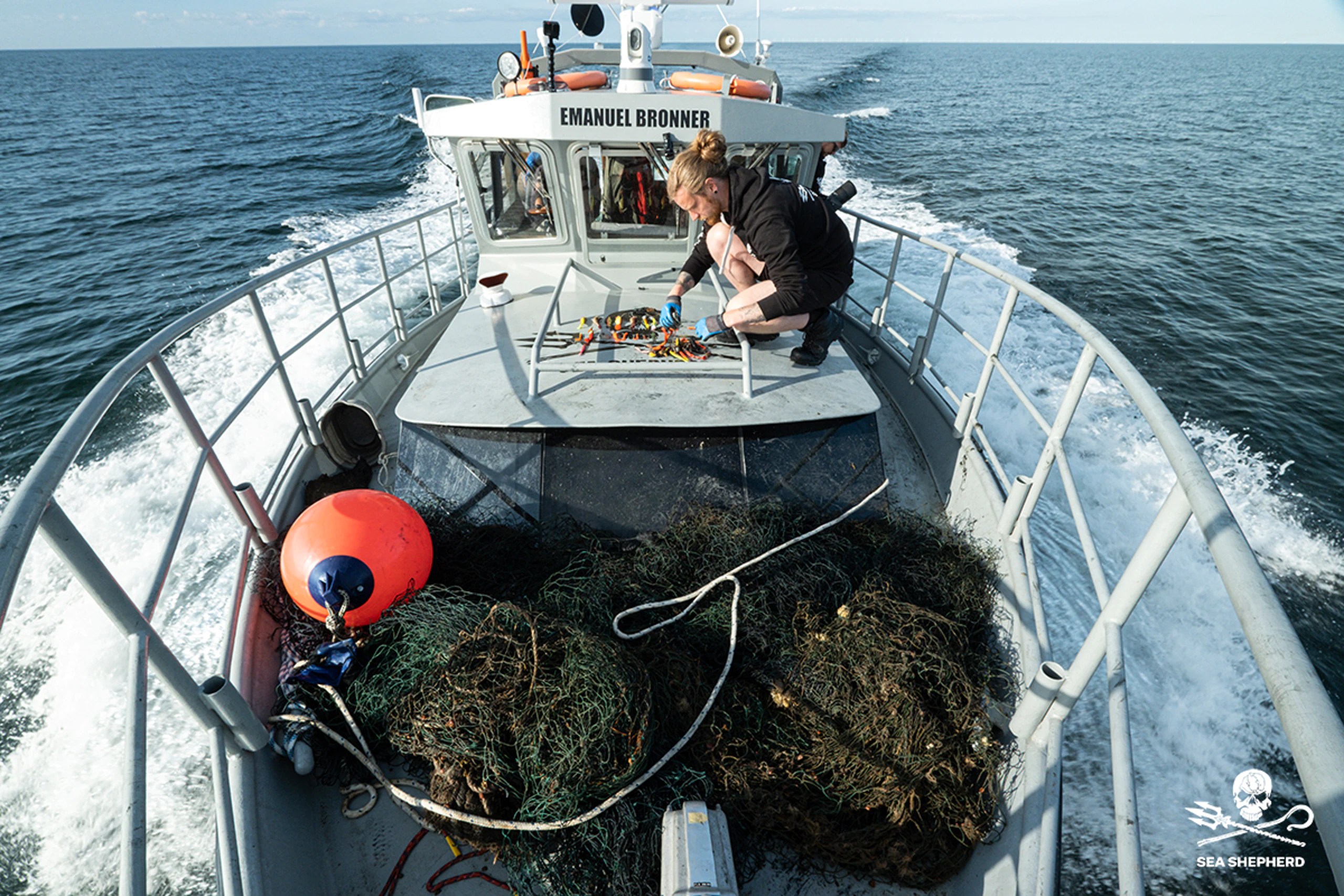
During the first four weeks of the campaign on Fehmarn and Rügen (which are among the largest islands in Germany), eleven ghost nets with a salvage weight of more than 900 kilograms and hundreds of fishing lures were recovered from the Baltic Sea. These nets, fish hooks and lines will no longer kill marine animals.

The team spent the first two weeks of the campaign on the island of Fehmarn.

Patrols were carried out almost every day to locate possible ghost nets and finally to lift them. Because even though ghost nets are obviously causing massive damage, finding them and removing them from the ocean is a major challenge.

It takes a lot of preparation, the use of technical equipment and ultimately perseverance as well as great efforts on the part of the crew to eliminate such death traps.

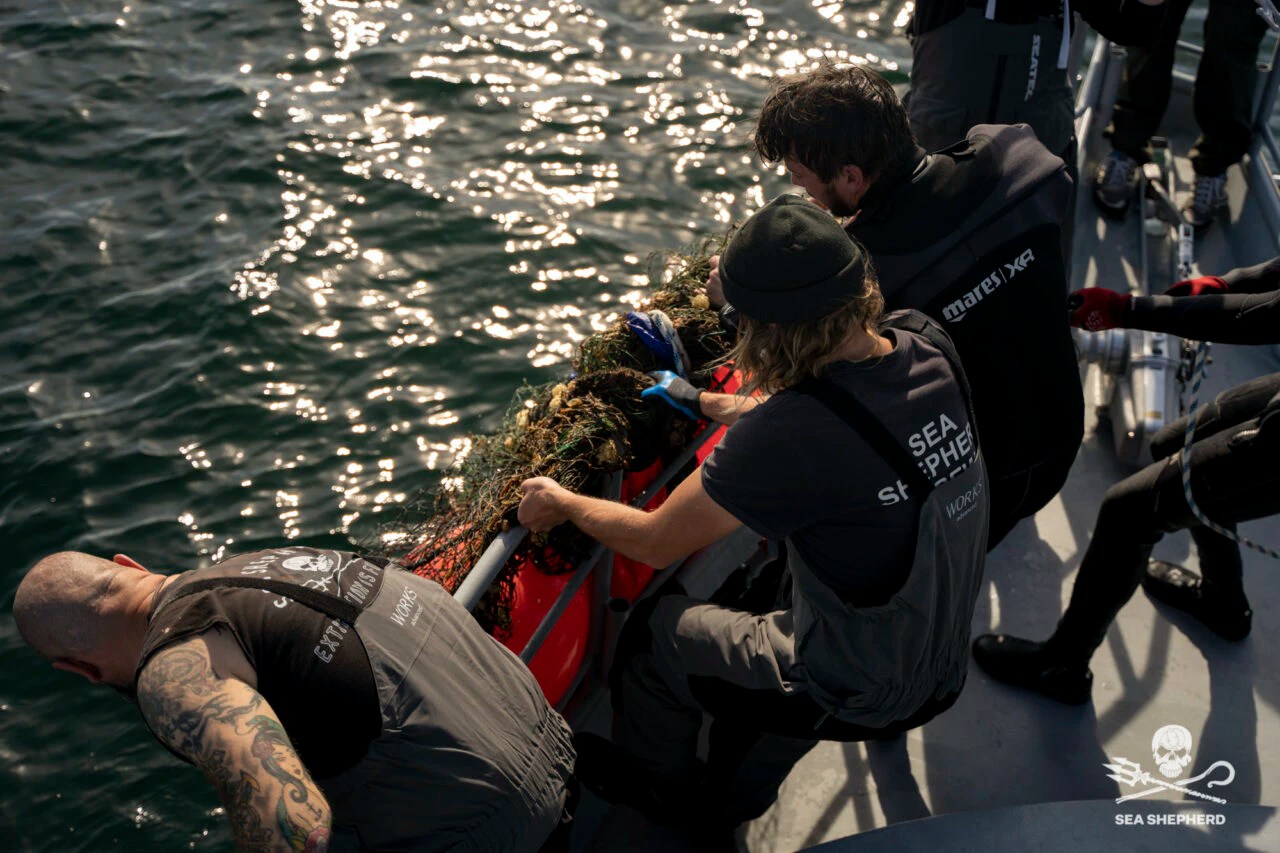
With combined forces, the net is pulled on board. Photo: Robert May / Sea Shepherd

More than 200 kilograms of ghost net

The largest ghost network on Fehmarn was recovered in the lake area in the direction of Puttgarden (District of the island of Fehmarn)
On June 14th, volunteers aboard the EMANUEL BRONNER examined some gillnets that had been deployed in the area.
Gillnets are often used near wrecks to catch cod that find shelter there.

With the help of the underwater robot and a structure scan, the area was examined more closely and various wrecks found.
So the diving team decided to do an exploration dive.
At a depth of 24 meters, the team discovered a massive trawl net about 40 meters long that had become entangled in a wreck.
There were many dead marine animals in the net, including cod in particular, but also starfish and crabs.
What was particularly treacherous about this net were the torn openings through which more and more fish got into the net.
But not all marine animals found their way out again.
“The net was like a prison under water,” explained mission diver Antonia Kirner (Sea Shepherd Germany) after her exploratory dive.

Continue reading “Sea Shepherd: eleven ghost nets in just four weeks destroyed!”

USA: Average American Believes US Could Be ‘Entirely’ Meat-Free By 2039, Poll Finds.

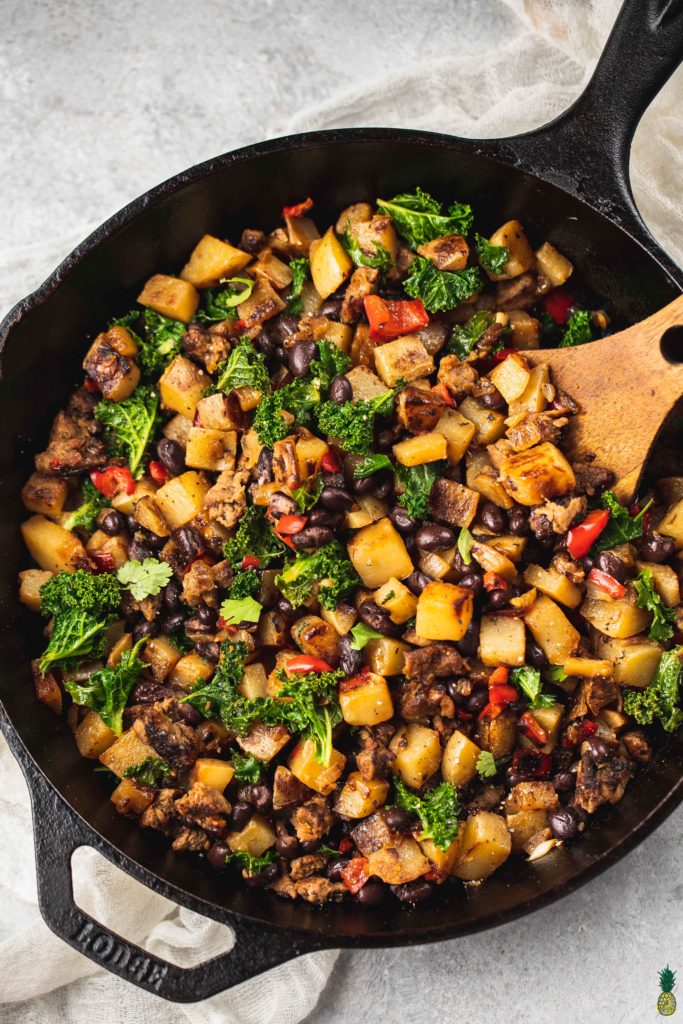
Vegan Breakfast Potato Hash | Recipes | Daily Harvest Express

WAV Comment – Having enjoyed many states in the USA over many years; 12, 14 visits –  lost count; and witnessing some people eat, ‘dive in and eat all you can’ type thing; especially in say, Las Vegas, for example; I personally have big doubts that the USA would ever ‘entirely’ be meat free.

Obviously I would love to see it happen, but am afraid this maybe just media hype rather than reality.

Quote from article – Despite the optimism for a meat-free future, 52% of respondents said turning plant-based isn’t a ‘realistic possibility’ for them right now.

On the other hand, this 2039 scenario is approximately 18 years in the future; and so, hopefully, the very young children of today will be well educated teenagers by then; hopefully eating plant based diets, meat free, for the benefit of them, their health, animals and the environment, as so much present research clearly shows.

Only on 4/8 I was talking to a good (female) friend about all these issues; she is a hairdresser by profession and so meets many people in her work each week.  She told me that from her own experiences, so many of her younger clients (we are in England) are now so fully aware of environmental, animal welfare and food issues, so divorced and so much away from the traditional ‘Sunday Roast’ mob that you sometimes find with some older, entrenched generations who have always had it that way.

So, lets hope those youngsters of today will be taking the issues with them into adulthood.

Possibly, in 20 years time, the amount of Americans who have changed to plant based eating will be huge.  Maybe this vision will eventually become a reality..

Regards Mark

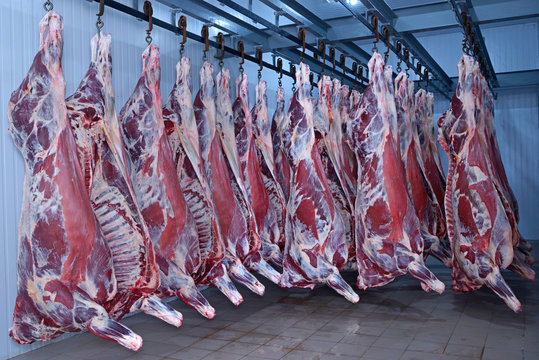
3,706 BEST Beef Carcass IMAGES, STOCK PHOTOS & VECTORS | Adobe Stock

Average American Believes US Could Be ‘Entirely’ Meat-Free By 2039, Poll Finds

Despite the optimism for a meat-free future, 52% of respondents said turning plant-based isn’t a ‘realistic possibility’ for them right now

The average American believes the US could be ‘entirely’ meat-free by the year 2039, according to a new poll.

The 2,000-person survey was conducted by OnePoll on behalf of Vegan Strong. It found one in three respondents agrees that everyone will be eating meatless foods in the future. 

The average year participants think everyone will follow a plant-based diet is 2039.

‘Plants have all the protein you need’

Despite the optimism, a staggering 52 percent of those surveyed said turning plant-based isn’t a ‘realistic possibility’ for them right now. Moreover, one in five said plant-based diets are too expensive and 19 percent think it would be ‘too time-consuming to learn the ins and outs’.

Similarly, 55 percent worry they ‘couldn’t survive on a vegan diet’ based on the amount of protein it provides.

Robert Cheeke is Vegan Strong’s National Tour Director. In a statement sent to PBN, he said: “Most people don’t realize that plants have all the protein you need.  

“Yet many elite athletes are converting to a plant-based diet because they are seeing their performance and strength improve dramatically.”

However, 31 percent admitted to having given a vegan recipe a go for the first time during the COVID-19 pandemic. 

“Plant-based eating can be incredibly affordable if you focus on eating fruits, vegetables, beans, rice, nuts, and seeds,” Cheeke then added.  “Going vegan is better for your health, your wallet, and the earth.”

Is the future meat-free?

Moreover, in 2019, a major report predicted 60 percent of meat consumed in 2040 won’t come from dead animals.

The report, by global consultancy AT Kearney, says 35 percent of meat will be lab-cultured and 25 percent will be vegan alternatives.

The predictions were based on interviews with experts. Environmental impact and animal welfare concerns were cited as reasons behind the growing interest in alternative protein.

Source:

Average American Believes US Could Be ‘Entirely’ Meat-Free By 2039 | Plant Based News

Online Event – Working Animals: Empowering Sustainable Growth.

Event – Working Animals: Empowering Sustainable Growth

4 August 2021

The Donkey Sanctuary

News

Eurogroup for Animals, in partnership with the International Coalition for Working Equids, are pleased to invite you to join us on 28 September as we present an interactive panel event to showcase the role working animals play in helping achieve the Sustainable Development Goals.

The event is part of European Sustainable Development Week 2021. Joe Collins, Chair of Eurogroup for Animals’ Equines Working Group, will introduce the presentations and lead discussion during an interactive question and answer session.

An estimated 200 million working animals are essential to the livelihoods of many communities around the world; they are often key to bringing sustainable growth to those communities, with the ability to transport goods, collect water and work for a source of income. The Sustainable Development Goals can be achieved through many cost effective simple solutions, the welfare of working animals is one of them.

Simple interventions can empower owners to keep their working animals healthy and ensure their continued productive benefit.

Register now to attend.

Regards Mark

England: Badger cull in England in the spotlight again as wildlife groups provide further evidence for alleged breach of international treaty obligations.

WAV Comment – Badgers are protected by law in the UK; if I did kill one intentionally, then quite rightly, I would be prosecuted.  But if you are the UK government, it appears that you can kill over 140,000 badgers in the name of ‘protecting the spread of bovine TB.  We agree fully with the statement put out from Eurogroup for Animals, that being:

The UK government has sought to portray itself as a champion for animal welfare, and yet the ongoing cull of badgers leaves such a claim in tatters. Their policy flies in the face of science, evidence and any notion of the badgers as sentient beings. No animal deserves to be treated this way.

The cull must stop and stop now; enough animals have already been murdered by the UK government, let alone continue until 2025 when another 140,000 could be slaughtered.

The UK government are fools to lie to the British public that this killing is for the better, to stop Bovine TB spreading.  It will be one big issue that will be raised when MP’s come knocking on doors, for votes, when the UK has its neat election. Ministerial fools who know nothing except bullshit. With Badgers visiting my garden every night, they are wonderful, and badgers have friends, and those friends have votes !

Regards Mark

Badger cull in England in the spotlight again as wildlife groups provide further evidence for alleged breach of international treaty obligations

3 August 2021

Badger Trust

Press Release

A coalition of animal welfare organisations have submitted further evidence in support of a complaint which claims that the UK Government’s ongoing badger cull policy in England fails to uphold its duties under the Bern Convention

UK based charities Badger Trust and Born Free Foundation, alongside Eurogroup for Animals, based in Belgium, have supplied additional information to support their original complaint made in 2019. The complaint challenges whether the UK Government has adequately considered the impact of mass culling of badgers on the badger population and wider biodiversity, and whether there has been any significant disease control benefits to justify the culls.

Britain is home to over 25% of the European badger population. However, with more than 140,000 badgers killed under licence since the cull policy started in 2013, and with culling set to continue until 2025 under recently confirmed UK Government plans, that population is coming under severe pressure. The case was put on ‘standby’ by the Bern Standing Committee in 2020, with a request for further information, the first time a complaint made against the UK Government had not been dismissed at the initial stage. 

The additional information covers the following issues:

  • After 8 years of culling badgers in England, there is little evidence to show any substantive benefits to bovine TB rates in cattle in the cull areas. By contrast in Wales, where no mass culling of badgers has taken place, bovine TB rates in cattle are being successfully reduced using cattle-based measures alone;
  • More than 140,000 badgers have been killed in England since 2013, and in spite of UK Government claims that badger culling is to be phased out, it is estimated that the same number again could be targeted over the coming years, with a real risk that badgers could be wiped out completely from swathes of the country where they have lived since the ice age;
  • The UK Government has consistently failed to adequately monitor the impacts of culling on badger populations or the wider ecology, risking unforeseen and potentially disastrous consequences for badgers and wildlife more widely;
  • These and other failures of the badger culling policy clearly place the UK Government in breach of its commitments to the Convention on the Conservation of European Wildlife and Natural Habitats (Bern Convention), under which badgers are a protected species.

Dr Mark Jones, veterinarian and Head of Policy at the Born Free Foundation, said:

‘The UK Government and proponents of the badger cull have hailed the policy as a success. However, after 8 years of culling evidence for substantial disease control benefits among cattle herds in cull areas is lacking. More than 140,000 badgers have been killed over the past 8 years, most by ‘controlled shooting’, a method rejected by the British Veterinary Association because of welfare concerns. This ineffective, inhumane and unnecessary policy must end.’

Dawn Varley, Acting CEO of Badger Trust, said: 

‘With 140,000 badgers already lost, and with another 140,000 set to be killed according to our estimates, it has never been more urgent to challenge the UK Government on a policy that whilst they claim ‘is working’, just doesn’t stack up whichever way you look at it. We know the UK Government will reply by saying the cull is about to end, but in reality there is another 5 years of culling to come, which we argue would wreak havoc on the badger population – at unknown cost to this usually protected species, and for little benefit to the cattle affected by bovine tuberculosis.’ 

Reineke Hameleers, Chief Executive of Eurogroup for Animals, added:     

“The UK government has sought to portray itself as a champion for animal welfare, and yet the ongoing cull of badgers leaves such a claim in tatters. Their policy flies in the face of science, evidence and any notion of the badgers as sentient beings. No animal deserves to be treated this way. For their part, EU Member States and the European Commission have long been bewildered by the rationale of the approach in England. If farmers were not moving their cattle with such frequency, bovine TB rates would be much lower than at present. It is time to end this madness once and for all and to ensure that the European badger is properly protected, if needs be through common European action.”     

The Bern Convention is a binding international legal instrument in the field of nature conservation, covering most of the natural heritage of the European continent. It is the only regional Convention of its kind worldwide, and aims to conserve wild flora and fauna and their natural habitats, as well as to promote European cooperation in this area. 

The treaty also takes account of the impact that other policies may have on natural heritage and recognises the intrinsic value of wild flora and fauna, which needs to be preserved and passed to future generations.

Fifty countries and the European Union are signed up to the Convention, signalling their commitment to promoting national conservation policies, considering the impact of planning and development on the natural environment, promoting education and information on conservation, and coordinating research. 

Notes to Editors

The original complaint lodged with the Bern Convention in 2019 can be found at https://rm.coe.int/files22e-2020-uk-badger-culling-complaint-form/16809ce9d6 

The ‘additional information’ to the original complaint of 2019, and further to additional information supplied in 2020, was submitted prior to the deadline of 31st July. It is understood the Bern Convention will seek a response from the Department of Environment, Food and Rural Affairs for the UK Government. 

It is anticipated the case will then be subject to review by the Bern Convention Bureau, due to meet in September 2021.