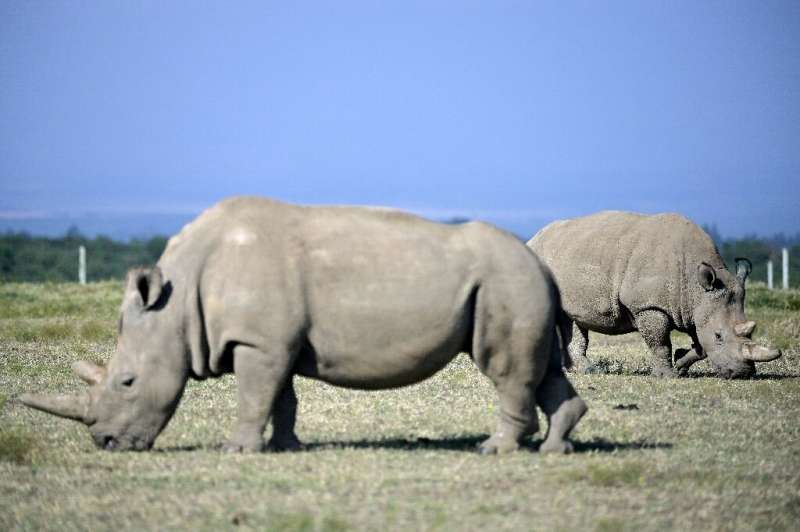
Fatu, right, and her mother Najin are the only two remaining northern white rhinos
Scientists create embryos to save northern white rhino
Scientists working to bring back the functionally extinct northern white rhino announced they had successfully created three additional embryos of the subspecies, bringing the total to 12.
One of world’s two remaining live specimens—female Fatu who lives with her mother Najin on Kenya’s 90,000-acre Ol Pejeta wildlife conservancy—provided the eggs for the project, while the sperm used was from two different deceased males.
Scientific consortium Biorescue described in a press release late Thursday how the eggs were collected from Fatu in early July before being airlifted to a lab in Italy for fertilisation, development and preservation.
Neither Fatu nor Najin is capable of carrying a calf to term, so surrogate mothers for the embryos will be selected from a population of southern white rhinos.
Ol Pejeta director Richard Vigne told AFP on Friday that he believed in the project’s chances of success, while emphasising the high stakes.
“No one is going to pretend that this is going to be easy,” he said.
“We are doing things which are cutting-edge from a scientific perspective and we a dealing with genetics, with the two last northen white rhinos left on the planet,” said Vigne.
“There are many, many things that could go wrong,” he said. “I think everybody understand the challenges that remain.”
Since 2019 Biorescue has collected 80 eggs from Najin and Fatu, but the 12 viable embryos all hail from the younger rhino.
The project is a multi-national effort with scientists from the German Leibniz Institute backing the Kenya Wildlife Service and Ol Pejeta, and the Italian Avantea laboratory providing fertilisation support.
Kenyan Tourism Minister Najib Balala welcomed the news.
“It is very encouraging to note that the project has continued to make good progress in its ambitious attempts to save an iconic species from extinction,” he said in the press release.
Rhinoceroses have very few natural predators but their numbers have been decimated by poaching since the 1970s.
Modern rhinos have roamed the planet for 26 million years and it is estimated that more than a million still lived in the wild in the middle of the 19th century.
Palm oil is found in many products. Although it is vegan as an ingredient, it is not obtained in an animal-friendly manner
In products such as spreads and vegan sausages, palm oil ensures a firm consistency and prevents other liquid fats from settling. In addition, palm oil is cheap because the cultivation is efficient because the oil palm has a very high yield.
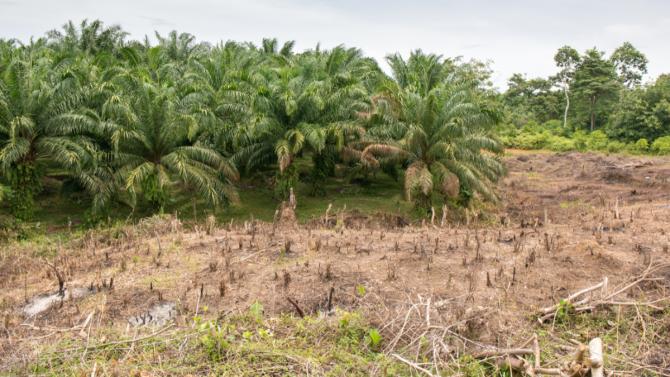
The problem starts with the fact that oil palms grow in jungle areas and rainforest is cleared for the plantations, mostly illegal.
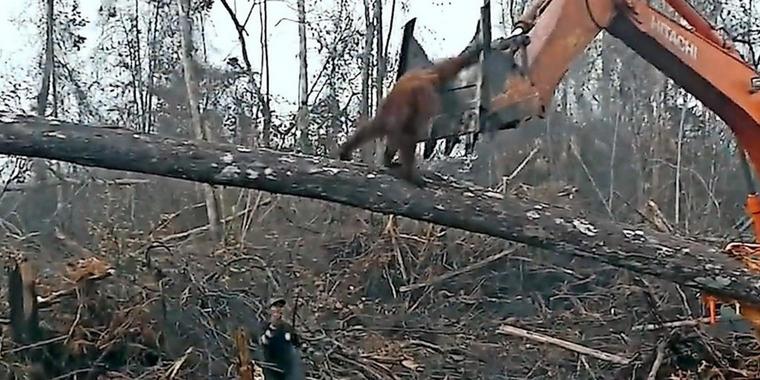
In this way, the last remaining habitats for orangutans are also being destroyed.
After a few years, palm oil yields decline.
Old areas are being given up and more rainforest is being cleared for new areas.
Child labor is also a problem in the extraction of palm oil. This is why some people avoid products that contain palm oil.
Since December 2014, according to the EU Food Information Regulation, the origin of the fats has to appear on products instead of “vegetable oils or fat”. A boycott of the products is possible, but difficult.
In addition to food, palm oil is also found in cosmetics, cleaning agents, candles, paints, varnishes and agrofuels.
Seals have so far been of little help in making a decision.
The RSPO-certified palm oil, for example, has minimum standards such as no deforestation of primary forests and forests that are particularly worth preserving, the core labor standards and payment according to minimum standards.
However, implementation is only mandatory and there is no independent control body.
Other seals only identify a tiny fraction of palm oil.
If you want to do something about the deforestation of the rainforest for palm oil, you can write to food manufacturers and ask them to switch to other oils. But you can also do a lot yourself.
Try our chocolate and nut cream. And we also have a few vegan snacks that don’t contain palm oil.
And I mean…The production of palm oil is a destructive and violent business.
It’s the fault of mogul companies like OOPC, for example, that forests are disappearing at breakneck speed.
Malaysia: palm oil production
Palm oil is omnipresent in our lives – it is in our food, in cosmetics, in cleaning products and in the car tank.
44% of the world’s palm oil harvest is used as an additive for biodiesel. The rest for food, livestock feed, cosmetic products, detergents, care products and cleaning agents. The majority of products on supermarket shelves contain palm oil.
It brings huge profits to large corporations and robs small farmers of land and livelihoods. Displacements, clearing of the rainforest and extinction of species are consequences of our palm oil consumption.
At 66 million tons per year, palm oil is the most commonly produced vegetable oil.
The palm oil plantations worldwide now extend to more than 27 million hectares of land.
On an area the size of New Zealand, the rainforests, people and animals have already had to give way to the “green deserts”.
Only 70,000 orangutans are still roaming the forests of Southeast Asia.
About 54,000 animals live in the wild in Borneo and are highly endangered, in Sumatra there are 14,000 animals.
They are burned, displaced or starved in search of food as a result of the destruction of the rainforest.
Mother animals are killed by criminals, the young animals are sold and enslaved. In five to ten years, as a result of this horrific business, none of the three orangutan species could exist anymore; their habitat could have disappeared by then.
The great apes today are restricted to Borneo and Sumatra.
We can still do something about it in everyday life:
Check the ingredients carefully and strictly: Buy organic products and products with local oils (e.g. sunflower or rapeseed oil). Substances such as palmitates, glyceryl or vegetable oil can be indications of palm oil, which should be avoided.
Write to companies: The more people tell companies that they are not satisfied with or disagree with a product that has palm oil, the greater the pressure on the company.
Public pressure and increased awareness of the problem have already led some producers to stop using palm oil.
About this video:
The British supermarket chain Icelandplanned to run a heartbreaking commercial on television in 2018.
Branded products such as chocolate or shampoos that contain palm oil should disappear completely from the shelves.
Iceland wanted to advertise this with a moving video. But that was not allowed as a TV commercial.
The video spread rapidly on the Internet, more than 13 million Facebook users saw it: You can see a small orangutan turning a child’s room upside down. The girl who lives there has to watch the little monkey knock down plants, chocolate and shampoo.
She calls the monkey Rang-Tan.
He tells his story in the video: His rainforest was destroyed for the cultivation of palm oil.
-Whale-watchers off coast of Japan’s northern island Hokkaido spotted two white orcas swimming together
-One was an older animal first spotted two years ago, but second was younger and had not been seen before
-The two orcas are not thought to be albinos but to have leucism, meaning they still have some skin pigment
-That means their markings are still faintly visible and their eyes are still dark instead of being bright red
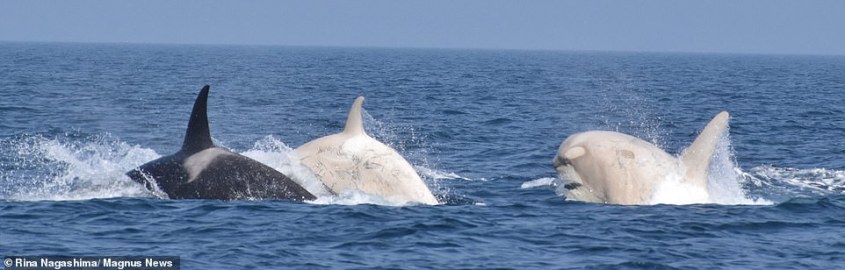
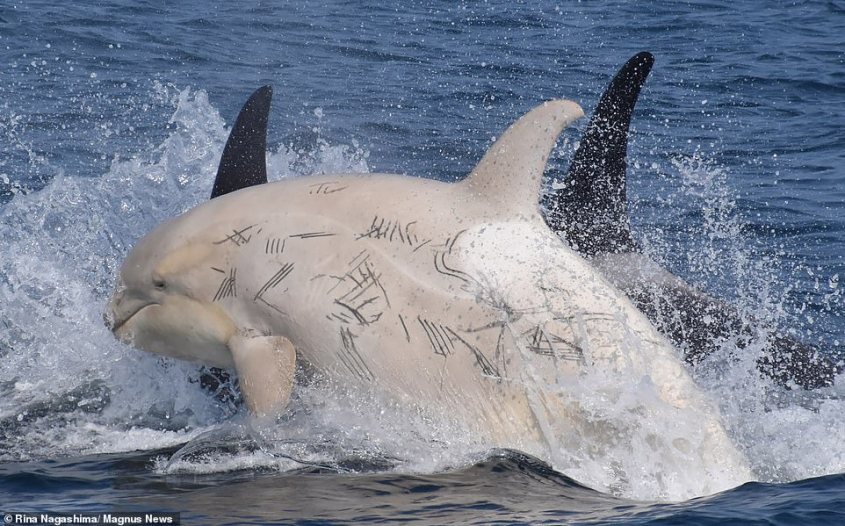
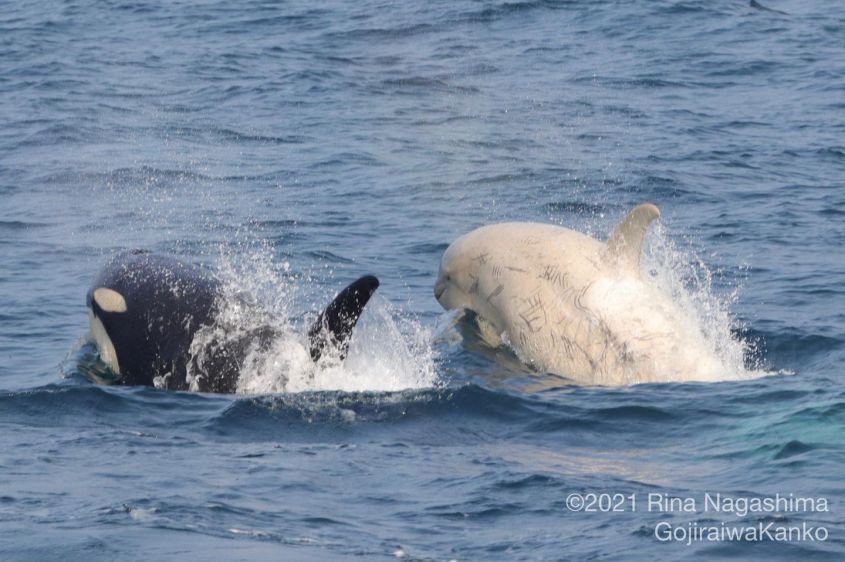
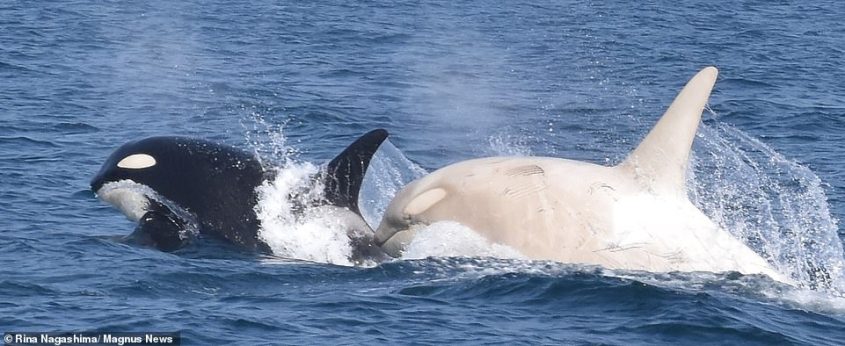
The pair are part of a pod that contains mostly normal-looking orcas, but these two are thought to carry a gene which partially removes pigment from their skin – making them appear white
Whale-watchers off the coast of Japan could scarcely believe their eyes after catching sight of two rare white orcas swimming together as part of the same pod.
The orcas were spotted during a whale-watching tour on July 24 in the Kunashirskiy Strait, a 20-mile stretch of water between the northern islands of Hokkaido and Kunashir.
Mai, an employee of the Gojiraiwa-Kanko tour company, said one of the pair was older with slightly darker skin while the other was younger and had clearly-visible scratch marks down its back.
Japanese whale-watchers were stunned to spot two rare white orcas swimming off the coast of Hokkaido, one of the country’s northern-most islands, over the weekend
She said the older whale was first spotted around two years ago but it is the first time she has seen the younger animal and the first time she has seen both of them together.
‘It was the best day ever. This is the first time two white orcas have been seen off the coast of Japan, ‘she said.
The pair are not ‘true’ albinos, which is caused by a genetic trait that means the affected animal produces no melanin at all – the compound that gives skin, hair, feathers and eyes their color.
True albinos will be completely white and have red eyes – a color given by the red blood in vessels which are usually hidden behind the iris showing through.
Instead, these two whales are thought to have leucism – an umbrella term that covers a range of conditions where animals produce some melanin, but either have noticeably whiter skin or skin that is white in patches.
That explains why the white patches that traditionally surround an orca’s chin and eyes are still visible on the two animals spotted near Japan, and why the eyes themselves are still dark.
It may also help explain the scarring down the side of the younger animal – which is particularly visible as the scar tissue seems to have healed in a darker shade compared to the surrounding white skin.
White orcas and whales were once so rare that they were thought to be a myth, but are becoming increasingly common, with scientists aware of at least five individuals alive today.
It is not clear exactly why they are becoming more common, but scientists theorise that it may be down to dwindling numbers of the whales and is a sign the species is in trouble.
As the population of a species declines, so does its genetic variation because the animals left have fewer potential mates to choose from.
White whales and orcas are becoming more common – which scientists think may be due to falling numbers of the animals which decreases their genetic variation, meaning rare traits crop up more often
Depending on the genes carried by those remaining individuals, it could accentuate some traits that were previously thought of as genetically rare.
That includes rare genetic disorders that hamper an animal’s ability to survive in the wild, threatening to accelerate the species’ decline.
While it is not known exactly what effect the leucism has on the lives of the orcas that inherit it, it does make them more visible – potentially hampering their ability to hunt, and attracting unwanted attention from rivals.
However, the trait is not always harmful. For example, Kermode bears are traditionally black but are increasingly being born white thanks to a recessive gene.
Scientists have found the trait leads to them catching more fish because salmon find it harder to spot them.
And I mean…Let’s just hope they swim away from Japan as soon as possible – Japanese hunters have a thing for whaling, whale murder and whale trading.
And it would be better if the media didn’t make so much fuss about the news.
Because there are many zoos that would also be interested in these beautiful animals, catch them in a tank and earn money with the captives
Europe’s animal welfare laws were introduced piece by piece over the last 40 years, but they are rarely enforced correctly, and there are serious gaps that leave millions of animals unprotected.
2021 offers a very important window of opportunity for animal welfare in the EU: In the context of the Farm to Fork Strategy, a policy initiative by the European Commission with the overarching aim of making European food systems fair, healthy and environmentally-friendly, the European Commission is currently assessing the animal welfare legislation to evaluate whether it is fit for purpose. A review like this is not only rare and long-overdue, but is in fact also the first of its kind for animal welfare legislation.
We must make sure a full-scale review takes place, that our demands for the best possible welfare standards are heard, and that no animal is left behind.
Source Jo-Anne McArthur / We Animals : The tethering of dairy cows is still practiced in some countries. With the tether around their necks, they are confined to a few feet of movement.
This is a multi page article- page numbers at the end on left.
From Stacey at Our Compass – Thanks Stacey: – Regards Mark:
Cattle Farming Is One of the Most Destructive Industries on the Planet
AUGUST 2, 2021
“Natural”: Humans are the ONLY species to drink breastmilk from another species and continuing past infancy. Do you understand why you and so many others are lactose intolerant? Because you’re not a calf.
This is what you do to them.Violence is so normalized in animal agriculture that many believe that subjecting animals to suffering, pain, confinement, and squalor is beneficial to animals: since animals are bred to be dead, any existence “gifted” is considered beneficial regardless of hellish treatment, violence, and suffering. It’s convenient for humans to define others’ exploitation in manners that is comfortable to ONLY humans. And the “existence” argument is an exercise in desperationandlogic failure. For sure, as a vegan who doesn’t purchase products tested on animals, I am entirely unconcerned with the nonexistence of those animals who are not “gifted” a brief life of pain and blindness and fear for toilet bowl cleaner.
Please also understand that even the “small/local” farms contribute to a global foundation of animal exploitation on which abject animal suffering and cruelty comfortably rests: it is all related, the required mass confinement and industrialized “production” and slaughter of 95% of animals globally consumed arose directly from those “idyllic” fantasies of Old MacDonald Farms . The promotion of “sustainable agriculture” is a fairy tale that already has been and has subsequently been discarded due to a billions-demanded source of cheap “meat” and animal “products”.
And if you want dog/cat/horse consumption to cease because it’s inherently barbaric, you must reject causing the inherentbarbarism of chicken/pig/cow/lamb/fish/etc. consumption. If you get angry at vegans for demanding the antiYulin corps cease causing the same torturous treatment and violent death of turkeys and piglets, just remember that when you eat pigs, you cause/sanction/support the consumption of dogs and cats.
The Amazon Rainforest is being cleared of an area the size of a soccer pitch every minute. Most of this is not for agriculture that directly sustains humans, but for cattle farming — to provide grazing land for cattle and land for growing feed crops.
When we consume the products of cattle farming, we might feel distant from these concerns. After all, why should someone enjoying beef in one corner of the world care about what is happening to a rainforest miles away? Yet cattle farming presents a serious problem for us all. If the Amazon forests were to be destroyed completely to meet our demands, the world would experience more droughts, a warmer climate, and massive flooding. And this is just one of the examples of how cattle farming is destroying our environment, placing the future of people and the planet in danger.
So what exactly is cattle farming, and why is it bad for the environment?
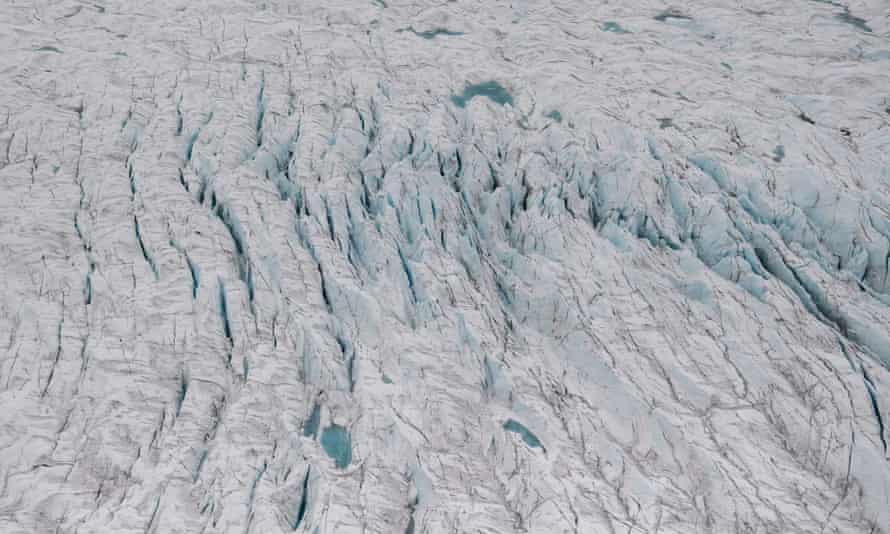
Greenland’s melting season usually lasts from June to August. The Danish government data shows that it has lost more than 100bn tons of ice since the start of June this year. Photograph: Reuters
Greenland: enough ice melted on single day to cover Florida in two inches of water
Data shows ice sheet lost 8.5bn tons of surface mass on Tuesday
All-time record temperature of 19.8C in region on Wednesday
Greenland’s vast ice sheet is undergoing a surge in melting, with the amount of ice vanishing in a single day this week enough to cover the whole of Florida in two inches of water, researchers have found.
The deluge of melting has reached deep into Greenland’s enormous icy interior, with data from the Danish government showing that the ice sheet lost 8.5bn tons of surface mass on Tuesday alone. A further 8.4bn tons was lost on Thursday, the Polar Portal monitoring website reported.
The scale of disappearing ice is so large that the losses on Tuesday alone created enough meltwater to drown the entire US state of Florida in two inches, or 5cm, of water. Ice that melts away in Greenland flows as water into the ocean, where it adds to the ongoing increase in global sea level caused by human-induced climate change.
“It’s a very high level of melting and it will probably change the face of Greenland, because it will be a very strong driver for an acceleration of future melting, and therefore sea-level rise,” said Marco Tedesco, a glacier expert at Columbia University and adjunct scientist at Nasa.
Tedesco said a patch of high pressure is sucking and holding warmer air from further south “like a vacuum cleaner” and holding it over eastern Greenland, causing an all-time record temperature of 19.8C in the region on Wednesday. As seasonal snow melts away, darker core ice is exposed, which then melts and adds to sea level rise.
“We had these sort of atmospheric events in the past but they are now getting longer and more frequent,” Tedesco said.
“The snow is like a protective blanket so once that’s gone you get locked into faster and faster melting, so who knows what will happen with the melting now. It’s amazing to see how vulnerable these huge, giant areas of ice are. I’m astonished at how powerful the forces acting on them are.”
Greenland’s melting season usually lasts from June to August. The Danish government data shows that the island has lost more than 100bn tons of ice since the start of June this year and while the severity of melting is less than in 2019 – when 11bn tons of ice was lost in a single day – the area affected is much larger in 2021.
“It’s hard to say if it will be a record year for melting this year but there is a ton of warm and moist air over the ice sheet that’s causing an amazing amount of melt,” said Brad Lipovsky, a glaciologist at the University of Washington.
“The alarming thing to me is the political response, or lack of it. Sea-level rise is like a slow-moving train, but once it gets rolling you can’t stop it. It’s not great news.”
If all the ice in Greenland melted, the global sea level would jump by about 6 meters (20ft), and although this is unlikely to happen on any sort of foreseeable timescale, scientists have warned that the world’s largest island is reaching a tipping point due to the pressures exerted upon it by global heating.
Greenland’s ice is melting faster than any time in the past 12,000 years, scientists have calculated, with the ice loss running at a rate of around one million tons a minute in 2019. Greenland and the earth’s other polar region of Antarctica have together lost 6.3tn tons of ice since 1994.
This rate of ice loss, which is accelerating as temperatures continue to increase, is changing ocean currents, altering marine ecosystems and posing a direct threat to the world’s low-lying coastal cities, which risk being inundated by flooding. A 2019 research paper found the Greenland ice sheet could add anything between 5cm and 33cm to global sea levels by the end of the century. The world is on track for “the mid to upper end of that”, Lipovsky said.
“It’s very worrisome,” said Tedesco. “The action is clear – we need to get to net zero emissions but also we need to protect exposed populations along the coast. This is going to be a huge problem for our coastal cities.”
Aid for companion animals affected by flooding in Germany
29 July 2021 Deutscher Tierschutzbund News
The storms in North Rhine-Westphalia, Rhineland-Palatinate and in other regions of Germany such as Saxony and Bavaria are devastating. The flood caused great damage and also hit animal welfare associations, animal shelters and companion animal owners in the affected regions. Our member organisation Deutscher Tierschutzbund put initiatives in place to help victims.
Animal shelters that got off lightly started aid campaigns at short notice and offered other animal shelters and evacuated animal owners to temporarily take in their pets. Many private individuals also offered their support.
People who find animals on site as well as affected animal owners from the flood crisis areas, whose animals urgently need help, can contact the organisation. Read more at sourceDeutscher Tierschutzbund – Tiere und Menschen in Not
Exploring EU-China cooperation to improve animal welfare and food systems
22 July 2021
News
On 13 July, Eurogroup for Animals and the Good Food Fund hosted the 9th UNFSS China Dialogue. The event, which gathered participants from the political, business, academic and NGO sectors, explored how the EU and China could cooperate to improve animal welfare, and therefore transition towards more sustainable food systems.
During the webinar, experts stressed the growing importance of animal welfare for consumers, both in China and the EU, paving the way for the EU and China to collaborate on the topic.
Participants also highlighted the importance of animal welfare in achieving sustainable trade and the UN Sustainable Development Goals, as well as the interlinks between animal welfare and human health.
With the publication of the EU’s “Farm to Fork” strategy aiming to foster the transition towards Sustainable Food Systems, and the subsequent announcement made by the European Commission on a future ban of caged productions – which should be applied by 2027, including possibly to EU imports – the momentum has never been so high for the EU and China to put animal welfare high on their agenda for cooperation.
As noted during the event by Zhao Wanping (NPC delegate), animal welfare draft bills are now submitted every year in China, suggesting that the country is willing to achieve progress on animal welfare. In that context, experts noted that the EU animal welfare requirements for imported products may serve as a catalyst for improving the welfare of farm animals in China, rather than a trade barrier.
Topics of discussion further focused on how to improve food systems through policies and regulations. Increased animal welfare standards were identified by experts as a way to deliver not only sustainable food systems, but also consumer health, ecological balance and food security. From a trade perspective, experts noted that aligned animal welfare standards between the EU and China would grant a competitive advantage to businesses on both sides. The last part of the event was centered on the role of public awareness, with speakers emphasising the significant increase of animal welfare awareness among Chinese consumers, particularly among the young generation.
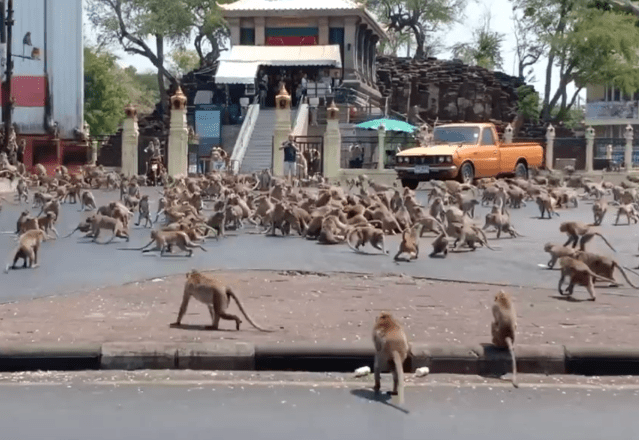
In the videos that are circulating on the Internet, two large groups of monkeys can be seen attacking each other and terrifying commuters at an intersection.
As the monkeys continued their fight, people were seen waiting on motorbikes and cars while some tried to avoid the commotion, fearing they might get involved in the fight.
The insane incident took place near Prang Sam Yot, in front of Phra Kan Shrine in Lopburi, a popular tourist destination in the country that is home to thousands of monkeys.
Food was very difficult for the monkeys to find due to restrictions keeping tourists out of town and a lockdown that kept even most of the locals in their homes.
It appears that hunger led to the struggle between the two groups.
“Monkey fights are common in Lopburi. It’s not unusual. It’s about the power struggle, the food struggle, the fertilization of the females, “ said a spokesman for the Department of National Parks.
He said it was impossible to stop the monkeys when they attacked each other and when people started honking their horns louder to scare them away it only made matters worse.
“Several monkeys were injured as a result of this incident. The road was covered with blood. And only when the leader of the losing side gave up did they withdraw “.
However, it is not the first time something like this has happened. In 2020, two gangs of monkeys were engaged in a fight in the same city and the video sparked a serious discussion about how to deal with animals during the pandemic.
Many had argued that tourism changed the behavior of these monkeys as they now expect to be fed by humans.
The government speaks of sterilization as a solution and wants to sterilize 500 monkeys, but capturing them is not that easy
And I mean…When monkeys pick coconuts from the trees in Thailand and stay chained to a short leash for life, it is believed to be useful and economical.
Before Corona, these same monkeys were tolerated by the locals as tourist attractions: The tourists fed the animals, paid money for photos – the city had around 6,000 monkeys under control!
Wildlife across the country annually attracts over 35 million tourists who come here every year and make up around 20 percent of the economy.
But then Corona came, the tourists stayed away, and of course the monkeys are now hungry and aggressive!
It’s about survival!
And man is looking for a solution!
Human animals wage bloody wars against their weaker conspecifics, even when they are not hungry.
In this case, however, we are not looking for a “solution”, but we are financing the arms industry on top of that.
We are also against wars wherever they take place, which is why we propose the following solution: Sterilization for all arms dealers and operators of the war industry.
WAV Comment – Sounds better than it has been, but we want more than words; like actions ! – we will be watching and reporting any issues that do not take animal welfare to ‘the next level’. Do things right – stay out of the news; do them wrong, make headlines for all the wrong reasons – simple really.
Tyson takes animal welfare to next level with its ‘Five Domains’ platform
SPRINGDALE, ARK. – After making the decision to take the next step in its animal welfare approach from the industrywide adoption of the “Five Freedoms” framework, Tyson Foods Inc.’s Office of Animal Welfare team is leading the company’s global transition to adopting the “Five Domains” science model, which focuses on assessing the mental state of animals to determine their needs and improve animal welfare practices.
By implementing the Five Freedoms across the company’s global operations officials from Tyson’s Office of Animal Welfare said the company can realize its vision to lead the industry in animal welfare by combining compassion with science.
“Part of being a leader means being open to creative thinking, innovation, and evolving knowledge and practices,” Tyson said.
While the Five Freedoms focused on avoiding the negative aspects of animal care, the Five Domains focus on how nutrition, physical environment, health and behavioral opportunities ultimately play a role in the mental state of animals.
“For decades, the Five Freedoms have provided an essential foundation for conceptualizing animals’ welfare needs,” said Candace Croney, PhD, professor of animal behavior and well-being and director of The Center for Animal Welfare Science at Purdue University. “As animal welfare science has advanced, however, the importance of promoting positive (physical, behavioral, and mental) states of welfare in addition to minimizing negative states is increasingly recognized. Incorporation of the Five Domains reflects the leadership mindset needed to facilitate thought processes, actions, and outcome measurements aligned with achieving these goals.”
According to Tyson, research-based learning and the evolution of ideas is part of continuous improvement, and the Five Domain program facilitates a better understanding of assessing how a range of factors effect animals’ mental state and how they influence anima welfare outcomes.
“Incorporating the Five Domains into our daily conversations and actions is essential for Tyson Foods to drive continuous improvement in our welfare program and culture throughout our global operations,” said Ken Opengart, DVM, vice president of global animal welfare at Tyson Foods.
The Five Domains spotlight positive opportunities versus the emphasis on the negative experiences of animals that have been the hallmark of the Five Freedoms for the past 25 years. The new approach focuses on the components effecting the mental welfare of the animal to assess its overall welfare and apply the knowledge-based science to each species’ behavior, biology and ecology.
“Tyson’s adoption of the Five Domains represents an admirable commitment to embrace animal welfare improvements in a scientifically sound, evidence-based way,” said Dorothy McKeegan, PhD, senior lecturer in animal welfare and ethics at the University of Glasgow. “The Five Domains model represents the forefront of current efforts to conceptualize and assess animal welfare.”
For more information on Tyson Foods’ animal welfare and sustainability practices, please visit tysonsustainability.com.

 Malaysia: palm oil production

 The pair are part of a pod that contains mostly normal-looking orcas, but these two are thought to carry a gene which partially removes pigment from their skin – making them appear white
 Japanese whale-watchers were stunned to spot two rare white orcas swimming off the coast of Hokkaido, one of the country’s northern-most islands, over the weekend
 White orcas live with their black and white relatives in family groups
 White whales and orcas are becoming more common – which scientists think may be due to falling numbers of the animals which decreases their genetic variation, meaning rare traits crop up more often











 World Animals Voice