Category: Environmental

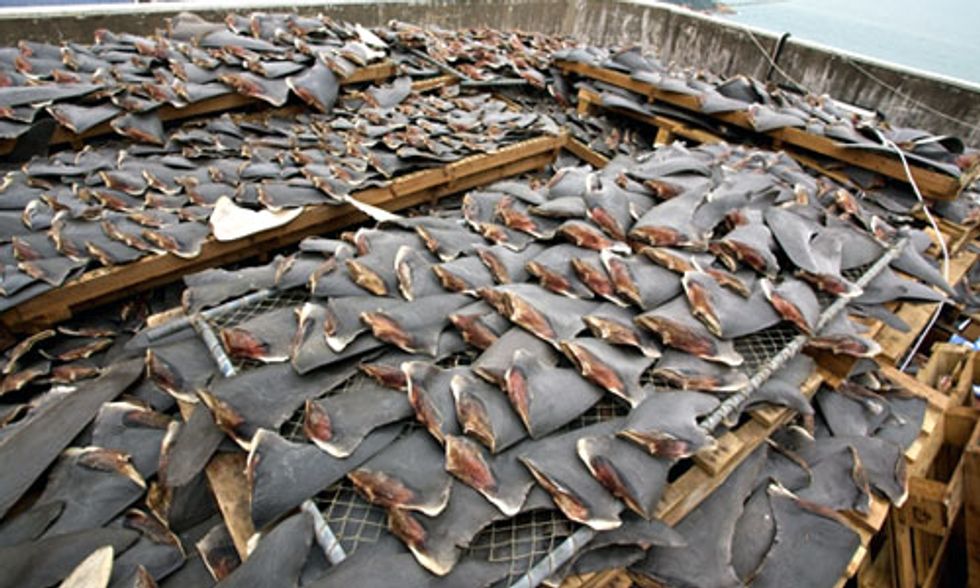
C’est Assez! supports the European Citizens’ Initiative #StopFinningEU to end the European Union’s shark fin trade.

C’est Assez! supports the European Citizens’ Initiative #StopFinningEU to end the European Union’s shark fin trade

22 April 2021

C’est Assez

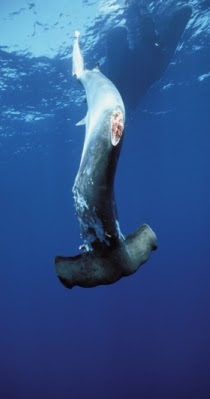
The EU exports approximately 3,500 tonnes of fins per year, with a total value of around 52 million euros. 73 million sharks are slaughtered each year for this purpose

While shark finning is prohibited on EU vessels and in EU waters, and sharks must be caught with fins  attached to their bodies, the EU is one of the world’s largest exporters of fins and a significant transit area for the global fin trade.

More than forty European NGOs, including our member C’est assez!, have pledged their support to compel the European institutions to ban all forms of finning and their transportation in EU countries. The European Citizens Initiative (ECI) has now received over 200,000 signatures in opposition to shark finning.

It is past time to stop this barbaric traffic and take action to protect sharks, which are critical to the health and balance of the oceans.

Read more at source

C’est Assez! soutient l’Initiative Citoyenne Européenne #StopFinningEU pour met…

Regards Mark

Shark Finning Kills 100 Million Sharks a Year,

Shark Finning Kills 100 Million Sharks a Year, International Commission Fails to Address Crisis

Don't be afraid of the shark...: BAN SHARK FINNING

Shark finning - Wikipedia

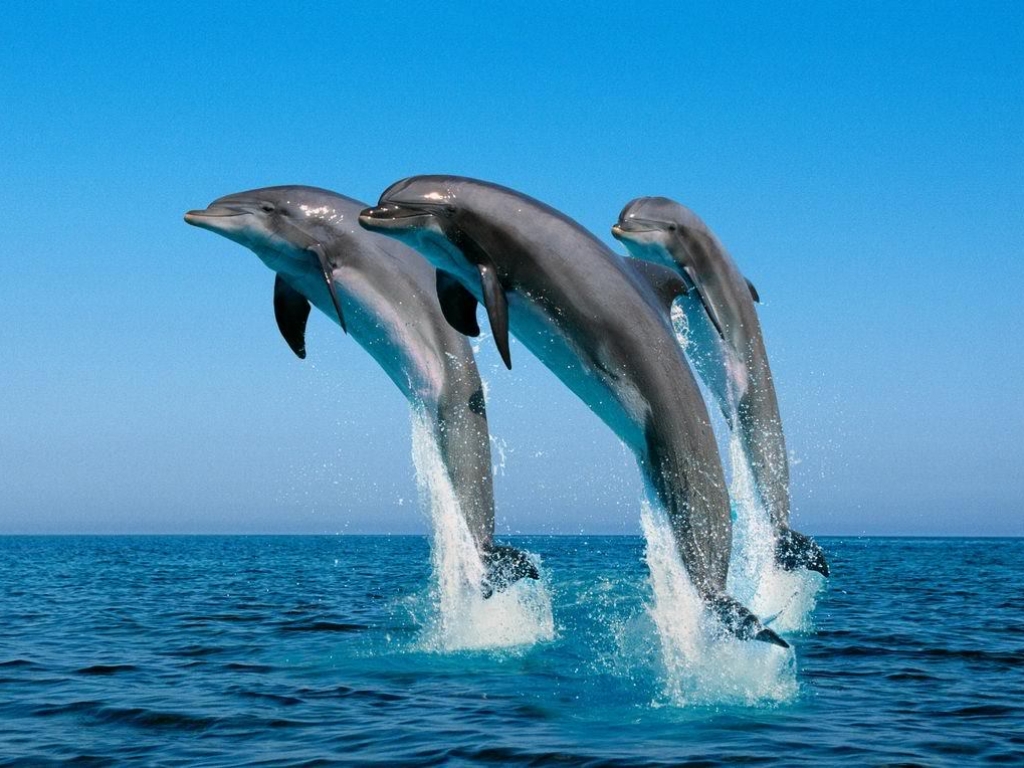
The rapid closing of dolphinariums poses a threat to dolphins.

How they should be – Dolphins swim free in the Oceans.

The rapid closing of dolphinariums poses a threat to dolphins

22 April 2021

Sea First Foundation

Public opinion around dolphins in dolphinariums is clearly changing.

But what happens to dolphins when the parks get closed? Talks with policymakers are underway and several dolphin rehabilitation programs are getting implemented in Europe, but none are yet operational. The very complex nature of such a pilot project may be to blame.

As long as no appropriate alternative is found, the dolphins are relocated to other marine parks. Unfortunately, this causes a great deal of animal distress, and is often fatal. For example, in 2016, three dolphins were moved from Finland’s Särkänniemi Zoo to Attica Zoo in Athens, where one of the animals died after a short period of time.

Dolphin attractions were also closed with immediate effect in France, Spain, and Switzerland as a result of government decisions made in response to pressure from protestors who probably just meant well.
 

Dolphins become ill from time to time and may not survive such abrupt changes or transportation. The animals’ extreme stress and anxiety can be fatal. 

Many who survive the transport are relocated to other parks in countries where public pressure is less severe. This results in ever-increasing dolphin numbers in Europe’s remaining dolphinariums, causing overpopulation and additional stress for the animals.

The marine parks in China are still developing, and it is likely that the next step will be to export European animals to China.

In conclusion, before we start putting more pressure on governments to close sea parks in Europe, it is important that we get our rehabilitation projects fully operational as soon as possible.

Read more at source

Sea First : Snelle sluiting van dolfinaria niet zonder risico voor de dolfijnen

Regards Mark

Beef production drives deforestation five times more than any other sector.

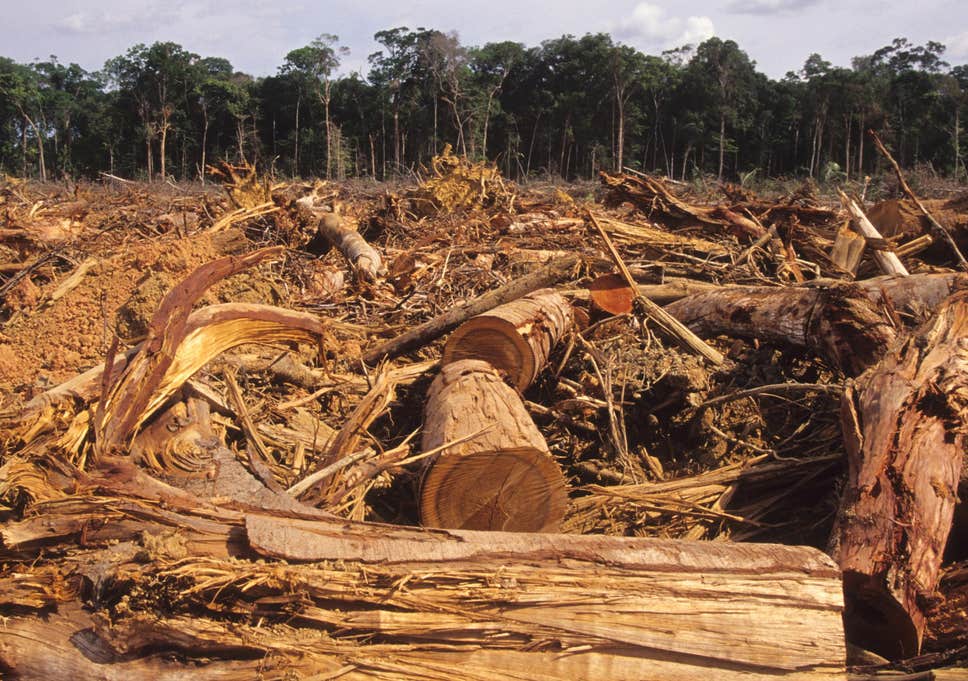
Amazon Destruction.

Beef production drives deforestation five times more than any other sector

22 April 2021

A research published in the World Resources Institute in March 2020 found that two of the main products responsible for deforestation are beef and soy, the latter being used for animal feed. The EU, as net importer of these products, should address the impact of such imports on the environment and on animals to ensure coherence between EU trade policy and the EU Green Deal.

According to a research by Global Forest Watch, the total loss of tropical forest increased by 12% overall between 2019 and 2020. Agriculture is the top source of worldwide deforestation (40%), and  among the top commodity-drivers of deforestation, beef holds the first place. 

Overall, beef is responsible for 36% of all agriculture-linked forest-replacement. The huge responsibility borne by the beef industry is due to the conversion of forests into cattle pasture, which amounted to 45.1 Millions hectares of lands deforested between 2001 and 2015 – a rate that is five times higher than for any other analysed products. 

Soy also ranks seventh in the study, as it is responsible for the destruction of 8.2 million hectares of forests between 2001 and 2015. Soy is widely produced to serve as animal feed, notably in the poultry (37%) and pigs sectors (20%). Therefore, the role played by the meat industry in global deforestation largely exceeds the role played by the beef sector itself.

The findings by Global Forest Watch are deeply alarming, as rampant deforestation has clear impacts on wildlife and their habitats and can lead to the extinction of species that only exist in one specific region. 80% of terrestrial species live in forests, and the world is currently undergoing the sixth great mass extinction of species, which is mainly due to agriculture, according to Global Forest Watch’s report. Deforestation is also a source of many welfare-related concerns. With the increase in wildfires, animals -wildlife, but also pets – are suffering and many do not manage to escape. For the surviving wild animals, many are displaced and will generally suffer from starvation and social disruption.

Whilst hot spots of deforestation vary by sector, the beef industry related deforestation is highly concentrated in the Amazon, which is home to millions of species. In Brazil alone, which hosts the largest part of the Amazon, over half of the deforestation came from pasture in the last twenty years. The responsibility borne by agriculture (including the beef sector) on the Amazon’s deforestation is much higher than in other parts of the world, reaching 56% in 2020 whereas agriculture is generally responsible for 40% of deforestation. 

Considering that agriculture-driven deforestation is permanent (whereas lands that suffer from deforestation caused by fires may regenerate), this adds a sense of urgency for the EU to uphold its sustainable agenda. Mercosur is already the  largest  supplier of  beef  to  the  EU,  accounting  for 73%  of total  EU  beef  imports. If the EU-Mercosur trade deal was implemented as it stands, imports of beef would increase between 30% and 64%. The Ambec report – the impact study commissioned by the French government – concluded that, as it stands, the EU-Mercosur agreement would generate an extra 25% of deforestation in the Amazon in the six years following its entry into force. 

As Eurogroup for Animals has been continuously advocating, the unconditional liberalisation of animal products foreseen in the EU-Mercosur trade deal would fuel intensification of animal farming, which not only is extremely detrimental to animal welfare, but would also highly contribute to fuel deforestation. We thus call on the EU to uphold the objectives of the Farm to Fork Strategy, which are to use trade policy “to obtain ambitious commitments” from partners in key areas such as animal welfare.

The EU must take the opportunity of the EU-Mercosur agreement to negotiate the adoption by Mercosur countries of EU-equivalent legal standards in key sectors (beef, but also broiler chicken and laying hens), as well as in terms of transport, or to agree on conditions to access tariff-rate quotas or liberalisation in animal products, including the respect of EU-equivalent animal welfare standards.

Regards Mark

Thursday 22/4 is the Official ‘Earth Day’.

Thursday 22/4 is the official ‘Earth Day’.

Official site –  https://www.earthday.org/

EARTHDAY.ORG’s mission is to diversify, educate and activate the environmental movement worldwide. Growing out of the first Earth Day in 1970, EARTHDAY.ORG is the world’s largest recruiter to the environmental movement, working with more than 75,000 partners in over 192 countries to drive positive action for our planet. 

Our world needs transformational change. It’s time for the world to hold sectors accountable for their role in our environmental crisis while also calling for bold, creative, and innovative solutions. This will require action at all levels, from business and investment to city and national government.

That’s where you come in: As an individual, you yield real power and influence as a consumer, a voter, and a member of a community that can unite for change.

Don’t underestimate your power. When your voice and your actions are united with thousands or millions of others around the world, we create a movement that is inclusive, impactful, and impossible to ignore.

Every Earth Day can drive a year of energy, enthusiasm, and commitment to create a new plan of action for our planet

Earth Day 2021: Five ways to help save the planet

https://www.independent.co.uk/climate-change/news/earth-day-2021-activities-facts-ideas-b1834277.html

Earth Day quiz: How much do you know about climate change?

https://www.independent.co.uk/climate-change/news/earth-day-quiz-climate-change-b1835097.html

Earth Day 2021 activities: How to get involved from school or home – and what the date marks

https://inews.co.uk/news/environment/earth-day-2021-activities-events-school-home-what-date-meaning-966774

Earth Day 2021: What is Earth Day? FIVE activities you can do

https://www.express.co.uk/life-style/life/1426197/Earth-Day-2021-what-is-earth-day-activities-evg

Start by going plant based food; and then move on to more.

Regards Mark

Maybe more on this very soon – have a great Earth Day.

WHO Calls for a Ban on Sale of Live Wild Mammals for Consumption.

WHO Calls for a Ban on Sale of Live Wild Mammals for Consumption (animalequality.org)

WHO Calls for a Ban on Sale of Live Wild Mammals for Consumption

To prevent the emergence of new diseases, the World Health Organization (WHO) has just called for a ban on the sale of live wild mammals in food markets worldwide.

THE RECOMMENDATION: The WHO published a guide in which they acknowledge the significant risks involved in allowing the sale and slaughter of live animals at food markets, a move that Animal Equality has been pushing for since the beginning of the COVID-19 outbreak over a year ago. The WHO is asking that each country’s government take action as an emergency measure to suspend the trade in live, wild, mammalian animals for consumption or breeding purposes. They’re also calling for the closure of shops within food markets that engage in such activity.

“Animals, particularly wild animals, are reported to be the source of more than 70% of all emerging infectious diseases in humans, many of which are caused by novel viruses,” the report says. “Traditional markets, where live animals are held, slaughtered and dressed, pose a particular risk for pathogen transmission to workers and customers alike.”

THE RESEARCH: The WHO’s recommendation comes after their research revealed that some of the earliest known cases of COVID-19 are linked to a wholesale traditional food market in Wuhan in China, with many of the initial COVID patients being stall owners, market employees, or regular visitors to the market.

ANIMAL EQUALITY’S CAMPAIGN TO BAN LIVE ANIMAL MARKETS: In April of 2020, Animal Equality launched a global campaign, which garnered more than half a million signatures, calling on the United Nations to recommend a ban on markets that sell and slaughter live animals. Our investigators documented live animal markets in China, Vietnam, and India, both before and during the pandemic, revealing not only extreme animal cruelty, but also unsanitary conditions that posed a threat to human health.

The markets, many of which continued operating despite orders to close, held captive animals such as deer, raccoons, crocodiles, and dogs. Our footage reveals animals languishing in cramped, filthy cages suffering from dehydration, hunger and disease. In many cases, the animals were slaughtered while fully conscious and in full view of each other.

WE NEED TO GO FARTHER: Since COVID-19 transformed the world, the risks associated with eating wild animals has been a topic of conversation, but little has been said in the mainstream media about the great risks to human health from the consumption of more “traditionally” farmed animals in the United States. The Centers for Disease Control and Prevention has said that three out of every four infectious diseases in humans came from animals. Diseases like swine flu (H1N1), bird flu (H5N1 and others), and mad cow disease (BSE) all evolved on factory farms, and scientists are warning that it’s only a matter of time before the animal agriculture industry produces the next major pandemic.

The WHO’s recommendation is a step in the right direction, but it needs to include all species, not just wild mammals, and should include recommendations about not only food markets, but industrial farming as well.

WHAT WE’RE SAYING: “Animal Equality welcomes the guidance of the WHO, OIE, and UNEP to suspend the sale of wild animals at food markets. However, this progress is just the beginning. To ensure another pandemic virus does not emerge again, we ask that these organizations also recommend a ban on the sale of all live animals at wet markets. Until that happens, both animals and people will remain at risk,” says Sharon Núñez, President of Animal Equality.

WHAT YOU CAN DO: Animals raised for food, whether at markets or on farms, can experience pain and suffering in the same capacity as humans. We can spare them from a lifetime of misery and also help reduce the risk of future pandemics by simply avoiding animal-derived foods. And with all of the great alternatives available nowadays, going plant-based is easier than ever. By choosing a compassionate lifestyle, you can spare millions of animals from harm. You can also make a difference by signing our petition to end the atrocities that happen at wet markets. With your signature, we can tell the world that enough is enough.

Take Action:

The Danger and Cruelty of Wet Markets (animalequality.org)

Regards Mark

Italy: What’s the real cost of meat? New Italian report sheds light on the 36.6 billion euro bill, in terms of damage to the environment and to the health of consumers.

What’s the real cost of meat? New Italian report sheds light on the 36.6 billion euro bill, in terms of damage to the environment and to the health of consumers

19 April 2021

LAV

Press Release

New report on the hidden costs of meat consumption in Italy reveals the environmental and health impacts which fell on society. If we were to include the hidden costs, one kilogram of beef would cost on average 19 euro more.

The environmental and health costs of meat production and consumption are not included in the price paid when buying it. Citizens pay the price of these hidden costs which have now for the first time been scientifically quantified. 

LAV, commissioned the first independent scientific study on the environmental and health costs of meat consumption in Italy, focusing on the most consumed meat in the country: poultry, beef, and pig. The emissions generated at all stages, rearing, slaughtering, processing, packaging, distribution, consumption and waste treatment, have been converted into economic costs for society through a life cycle assessment (LCA) approach.

The environmental costs are obtained assigning a monetary value to the impact assessed via the LCA on 11 environmental categories (1). In one year, the emissions associated with the beef life cycle alone amount to over 18 million CO2 equivalents, with a hidden annual cost of over 1 billion euro. This is equivalent to the amount of greenhouse gases emitted by the largest and most polluting coal-fired power stations in Europe. 

In addition to emissions of greenhouse gases, there are also the ones from particulates and acidifying gases in stables, and emissions of nitrates and pesticides into the soil. Together they generate the indirect cost of damaging ecosystems, for example agricultural losses due to acid soils and lack of pollinators due to pesticides.

The healthcare costs are estimated in DALY (Disability-Adjusted Life Year) and are based on the average daily consumption in Italy. Approximately 350,000 years of life are calculated to be lost each year in Italy due to meat consumption. The risks cover contracting colorectal cancer, type 2 diabetes, and stroke, and this is likely a conservative estimate, since the damage caused by other diseases associated with meat consumption, such as antibiotic resistance or cardiovascular diseases, were excluded due to the lack of a robust scientific literature. 

In Italy, on a yearly basis, the hidden environmental and health costs amount to 36.6 billion euro with the average cost almost equally divided between environmental (48%) and health costs (52%).

The report shows the unsustainability of meat consumption in Italy and the same situation could easily be mirrored in other Member States. But alternatives exist: 1kg of chicken or pork generates 8 times more costs for society than the same amount of legumes; 1kg of beef generates costs multiplied by 23 times. 

Eurogroup for Animals and LAV, based on the evidence found by the study, believe that it is time to bring forward the hidden costs of meat and implement policies to support the uptake of proteins of plant origin as an alternative to animal proteins. In order to move in this direction, it is essential that the numerous subsidies supporting the livestock industry, in different phases of the production cycle, are soon eliminated.

The results of this study are worrying and we also need to consider the suffering to animals the meat industry creates. In line with the Farm to Fork strategy, the EU has the ultimate opportunity to move away from harmful and pollutive intensive livestock farming systems and transition to a food policy that truly embraces humane and sustainable proteins production. 

Reineke Hameleers, CEO, Eurogroup for Animals

At a historic time when, after the COVID-19 pandemic, attention to the devastating potential of animal food production has increased, and when numerous international bodies warn that an urgent reduction in meat consumption is necessary, the results of this study must represent an inescapable fact for political actors, also with a view to achieving the Sustainable Development Goals of the 2030 Agenda and the Paris Climate Agreements. Thinking that we can achieve an ecological transition without immediately initiating a decisive food transition is illusory, or worse, it is false.

Roberto Bennati, General Manager, LAV.

ENDS

Read The hidden cost of meat consumption in Italy: environmental and health impacts (EN)

Read Il costo nascosto del consumo di carne in Italia: impatti ambientali e sanitari (IT)

Notes
1) The environmental impact categories considered are: climate change; ozone layer reduction; land acidification; eutrophication (divided into freshwater and marine); human toxicity; photochemical smog formation; particulate formation; eco-toxicity (divided between terrestrial, freshwater, and marine); ionizing radiation; land occupation; and water consumption. 

Regards Mark


Google Earth time-lapse video shows the impact of humans and four decades of climate change on the planet.

Google Earth time-lapse video shows the impact of humans and four decades of climate change on the planet

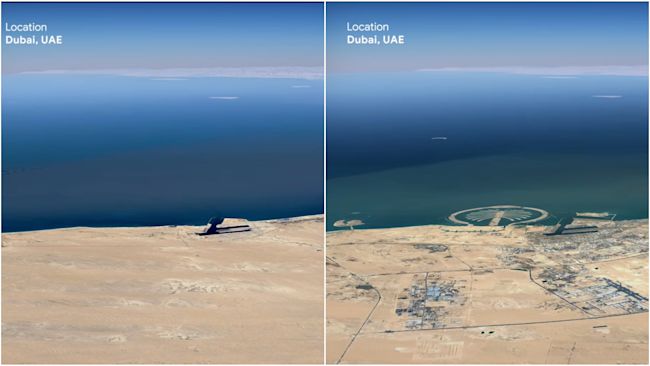
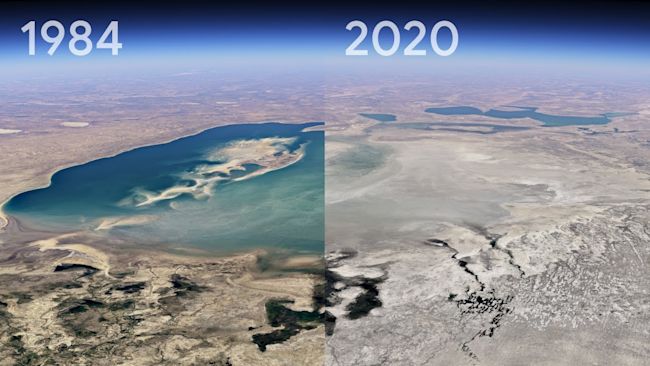
A time-lapse video feature launched by Google Earth has drawn on nearly four decades of satellite imagery to vividly illustrate how the impact of humans and climate change have affected the planet.

The tool, unveiled on Thursday, shows how humans’ impact on the planet has changed glaciers, beaches and forests around the world.

Google says it undertook the complex project in partnership with several government agencies, including NASA and its European counterpart, in hopes that it will help a mass audience grasp the sometimes abstract concept of climate change in more tangible terms through its free Earth app.

The features, enabled by 24 million satellite photos compiled into a 4D experience, is the biggest update to Google Earth in five years.

Cornell University climate scientist Natalie Mahowald described the tool as “amazing” after watching a preview video of the feature.

“Trying to get people to understand the scope of the climate change and the land use problem is so difficult because of the long time and spatial scales,” she told the Associated Press.

“I would not be surprised if this one bit of software changes many people’s minds about the scale of the impact of humans on the environment.”

Most scientists agree that climate change is being driven by pollution primarily produced by humans.

But earlier images have mostly focused on melting glaciers and haven’t been widely available on an already popular app like Google Earth, which can be downloaded on most of the more than three billion smartphones now in use around the world

Google is promising that people will be able to see a time lapse presentation of just about anywhere they want to search.

The feature also includes a storytelling mode highlighting 800 different places on the planet in both 2D and 3D formats.

Those videos also will be available on Google’s YouTube video site, a service more widely used than the Earth app.

Google plans to update the time lapse imagery at least once a year.

Google Earth images of Dubai in 1985 (left) and 2020 (right).Credit: Google Earth

Aral Sea in Kazakhstan in 1984 and 2020.

Aral Sea in Kazakhstan in 1984 and 2020.Credit: Google Earth

Worrying !

Regards Mark

USA: POTUS Joe Biden Urged To Shift To Plant-Centered Food System To Combat Climate Change.

POTUS Joe Biden Urged To Shift To Plant-Centered Food System To Combat Climate Change

The politician is under pressure to transform the US food system leading up to his first ever climate summit as President on Earth Day

POTUS Joe Biden Urged To Shift To Plant-Centered Food System | Plant Based News

POTUS Joe Biden is being urged to shift to a plant-centered food system to ‘combat climate change‘.

To mark Earth Day (April 22) the politician is hosting his first climate summit as President. There, he will discuss the ‘urgency of stringer climate action’ with 40 world leaders.

POTUS Joe Biden

Biden has also announced a $2 trillion proposal to ‘strengthen infrastructure while also tackling climate change’.

However, the plan does not include the promotion of animal-free food or support farmers in transitioning from traditional animal agriculture to plant-based production.

As a result, non-governmental organization ProVeg International has created a petition, calling on the politician to shift to a plant-centered food system.

At the time of writing, the petition has garnered more than 1,500 signatures already. 

‘A terrifying prospect in climate change’

Moreover, Michael Webermann is the US Executive Director of ProVeg International. In a statement sent to PBN, he said: “To discuss environmental crises without centering food production is to wilfully avoid the facts.

“What we eat affects not just climate change, but the biggest issues facing the planet, including pandemic risks, deforestation, antibiotic resistance, and food insecurity. 

“For instance, the FAO tells us that if 40 percent of all crops produced for feeding animals were used directly for human consumption, we could feed nine billion people by 2050. One has to ask when policy will reflect the urgency of this situation?”

Webermann then concluded: “We’re facing a terrifying prospect in climate change, but in diet change lies a real solution. 

“Plant-centered diets, if adopted by many, could be the key to this crisis. We have scientific consensus. Biden’s plans must reflect it.”

You can sign ProVeg International’s petition here

Regards Mark

EU: The EU-Mercosur trade agreement will fuel intensive farming.

The EU-Mercosur trade agreement will fuel intensive farming

14 April 2021

WAV Comment – find out more about the agreement by clicking on this link:

https://ec.europa.eu/trade/policy/in-focus/eu-mercosur-association-agreement/index_en.htm

The European Union and Mercosur states – Argentina, Brazil Paraguay and Uruguay – reached a political agreement for an ambitious, balanced and comprehensive trade agreement.

Nearly two years after the end of the EU-Mercosur trade negotiations, the European Commission finally published the related final Sustainability Impact Assessment (SIA), which confirms the findings of the draft SIA published in July 2020: if ratified as it stands, the agreement will fuel intensive farming, which is detrimental to animals, people, and the environment.

This SIA was released as the ratification of the EU-Mercosur agreement is for now uncertain due to the various concerns raised by civil society organisations. The European Parliament and several Member States, including Austria and France, have pledged not to ratify the deal “as it stands”, mainly because of the significant negative impact the deal will have on deforestation. 

In this context, the SIA tries to defuse some of these concerns by downplaying the impact the deal will have on the expansion of agriculture, and therefore on deforestation. Indeed, the SIA recognises that, in the beef sector, “EU  imports  from  Mercosur  will  increase  in  both  scenarios  (…) but that most of  the deforested  area  is  used  for  low-efficiency  cattle ranching”. Hence,  the SIA suggests that “there  is  great scope  for  expanding  production  by  intensifying  beef  production  in  these  areas  without  inducing deforestation”. However, fuelling the intensification of animal farming is extremely detrimental to animal welfare, but also to people and to the environment as intensive farms often not only rely on crop-based feed, whose production fuels deforestation, but also generates high levels of air, ground and water pollution.  Furthermore, the SIA seems to ignore that, according to a research by Global Forest Watch, the impact of the beef sector on deforestation is five times higher than any other industry, and deforestation rates are increasing worldwide. For instance, in Brazil alone, over half of the country’s deforestation over the last twenty years came from the beef sector, mainly due to the conversion of forests into cattle pasture. As a reminder, the Ambec report – the impact study commissioned by the French government – concluded that, as it stands, the EU-Mercosur agreement would generate an extra 25% of deforestation in the six years following its entry into force. 

The SIA also draws worrying conclusions concerning the Trade and Sustainable Development (TSD) chapter. It recognises that the potential  impact of  TSD provisions are uncertain,  “insofar  as  they  remain  contingent upon  implementation  in  good  faith  of  all  parties”. The decentralisation  of  environmental  regulation in  key countries like Brazil  can  increase this uncertainty. Hence, the environmental concerns are not likely to be addressed unless there is unilateral EU legislation guaranteeing imported products are deforestation-free, or that EU standards, including  animal welfare standards, apply to imported products.   

We regret the late publication of this SIA, which according to the Commission’s own policy, should have contributed to discussions during the negotiations of the agreement. It is worth noting that the European Ombudsman found that:

“the failure of the European Commission to ensure the finalisation of the sustainability impact assessment before the end of the EU-Mercosur trade negotiations constitutes maladministration” and “risks weakening European and national parliaments’ ability to comprehensively debate the trade agreement”

The European Commission also published a Position Paper commenting on the main findings of the SIA report, but it does not not mention any strategy to address the underlined shortcomings or any next step to be taken. For instance, on the beef sector, it supports intensification of the production, regardless of the very negative impact it would have on animal welfare, public health and the environment. Instead of endorsing intensive farming, which is the main driver of deforestation in the Amazon forest, the European Commission should acknowledge that addressing deforestation cannot depend solely on the political will of EU and Mercosur countries, given the economic weight of the beef sector in Mercosur, and the constant imports of beef and soy from the EU.

We  thus call on the EU to uphold the objectives of the Farm to Fork Strategy, which are to use trade policy “to obtain ambitious commitments” from partners in key areas such as animal welfare, and to take this opportunity to negotiate the adoption by Mercosur countries of EU-equivalent legal standards in key sectors (cattle, broiler chicken, laying hens), as well as in terms of transport, or to agree on conditions on animal welfare and sustainability to access tariff-rate quotas or liberalisation in animal products, including the respect of EU-equivalent animal welfare standards. 

https://www.eurogroupforanimals.org/news/eu-mercosur-trade-agreement-will-fuel-intensive-farming

Regards Mark

the happy face spider from Hawaii

Theridion grallator is a species of spider in the genus Theridion that is found exclusively in Hawaii.
The underside is light yellow and somewhat transparent.

Depending on the food consumed, it can be red, black, and white in color.
T. grallator gets its name from its long, spindly legs (grallator meaning “stilt-walker” in Latin).

It gets the nickname happy-face spider because of the yellow color on most of the body and the patterns on the abdomen.
The pattern is similar to a smiling face.
Therefore the common English name is also “happy face spider”.

This polymorphism could counteract the applicability of their hunters’ prey schemes.
The females live as solitary animals under leaves in forests.
They defend their egg balls aggressively and look after the brood for a while after they hatch.
It can happen that some young animals of the brood are taken in by foster mothers.

They mostly live predatorily and feed mainly on captured arthropods, especially insects that they suck out.
For this purpose, the prey animals are first dissolved with an enzyme-containing digestive juice, which the spider brings into its victim, which has been killed with its jaw claws.

It is absolutely harmless to humans.
Despite its restricted habitat, the Theridion Grallator is not considered endangered according to the IUCN

Text: Together for the animals

Not all happy-face spiders have such striking markings, and some are nearly all orange or all blue.
The Hawaiian name is nananana makakiʻi (face-patterned spider).
In addition to the variety of color polymorphisms present in T. grallator, this spider also demonstrates the interesting quality of diet-induced color change, in which its appearance temporarily changes as it metabolizes various food items.

T. grallator spiders do not utilize webs to capture prey, so they do not follow the sit-and-wait method of web-building spiders. Instead, they will forage freely, often traveling to nearby leaves to capture insects.

During prey capture, T. grallator spiders use their silk.
Common prey include Dolichopodidae and Drosophilidae.

A very likable animal and a splendid specimen of the genus!

My best regards to all, Venus