Final vote on the ban of Estonian fur farms in June
20 May 2021
Loomus
WAV Comment – Estonia joined the EU as a member state on 9 December 2010.
The Environment Committee has agreed that the draft Act for Animal Protection and Nature Conservation, which would prohibit fur farms in Estonia, will be put to a final vote on June 2nd.
This announcement has brought joy and optimism to our Estonian member organisation Loomus. “Loomus has been working on the fur ban for years and the decision that the Environment Committee made today takes us very close to finally put an end to this cruel industry. We are glad that the politicians are taking animal-friendly steps and we are very optimistic that this time the farms will be banned,” said Annaliisa Post, Communications Manager and Board Member at the animal advocacy organization.
According to a Kantar Emor poll conducted in September, 75 percent of Estonians are opposed to the breeding of animals such as foxes and minks for their fur. In 2016, 69 percent of respondents agreed, indicating that support for a fur-free Estonia is growing.
European Commission introduces mandatory SARS-CoV-2 screening in all European mink fur farms
19 May 2021
LAV
On 12 May, the European Commission adopted the Implementing Decision 788 which sets standards for the surveillance and reporting of SARS-CoV-2 infections in mink (and raccoon dogs) bred for fur production.
This decision means that, for the first time, there is a mandatory and harmonised diagnostic screening and reporting system in place for all Member States, after more than 400 fur farms saw outbreaks of SARS-CoV-2 in 2020.
The Commission has deemed it necessary to initiate this monitoring in all Member States “without delay”, demonstrating the considerable risks to public health connected to fur farming.
The EU Commission has recognised the risk to public health connected to the presence of mink (and raccoon dog) farms for the production of fur and now, finally, it has adopted a system of control of these farms with active surveillance (diagnostic tests). In Italy we have already had outbreaks on 2 farms out of 8; the time has come for the Minister of Health to assume political responsibility to permanently ban fur farming.
Simone Pavesi, Campaigner, LAV
Diagnostic surveillance involves carrying out virological tests on a weekly basis, on live or dead animals, for a number equal to at least 5% of the population of any single farm. This sampling level can be adjusted from 5% to 20% in the case of positive results for SARS-CoV-2.
However, there are possible loopholes in Implementing Decision 788. Competent authorities can decide to switch from active surveillance to passive surveillance on farms that adopt risk reduction measures. Farms under passive surveillance will only be required to test animals if mortality is increased or farm workers test positive for SARS-CoV-2.
This creates the risk of reversing monitoring systems to those of 2020 where surveillance protocol was based on mere clinical observation, in clear contrast with scientific evidence which suggests mink are in most cases asymptomatic. This would increase the risk of creating SARS-CoV-2 reservoirs, with serious public health implications.
In Italy, a country which, while having suspended mink fur farming for 2021, still has operational farms, 77% of the adult population are in favour of the adoption of emergency measures to end fur farming and breeding. This illustrates that by allowing fur production to continue, the European Commission is more concerned with protecting the economic interests of a small group of stakeholders at the expense of the health of all European citizens.
WAV Comment: The UK is working very hard against environmental pollution; credit where it is due. But this very excellent and completely effective animation shows just how much of a global environmental issue plastic has become. Below is also another video which shows the reality – this is not ‘fantasy land’; so get a grip and make every effort to speak out against the over use of plastics globally. These realistic videos show the reality of the global plastic crisis.
Regards Mark
Prime Minister Boris Johnson Drowns In Plastic In New Satirical Animation Highlighting Pollution Crisis
‘Wasteminster’ sheds light on the ‘shocking truth about what happens to plastic the government tells us is being recycled’…
Wasteminster is directed by Jorik Dozy and Sil van der Woerd for environmental organization Greenpeace. It is voiced by acclaimed impressionists Jon Culshaw and Matt Forde and produced by Studio Birthplace.
Boris Johnson satirical animation
The animation begins with Johnson at 10 Downing Street speaking to press about being a ‘global leader in tackling plastic pollution’.
Directors Sil and Jorik purposely used direct quotes from the politician and his government, as they didn’t want to ‘put words in the Prime Minister’s mouth’.
During Johnson’s speech, a barrage of plastic starts pouring down from above. Eventually, this causes a surge that floods Downing Street.
The film then cuts to real-life footage of plastic waste that has been discarded overseas.
Greenpeace says the piece aims ‘to put into stark contrast the bold promises the government has made about reducing the environmental impact of plastic, with the reality that plastic production has been rising while the government’.
‘The shocking truth’
Nina Schrank is a Senior Campaigner at Greenpeace. In a statement sent to PBN, she said: “This powerful film will show people the shocking truth about what happens to plastic the government tells us is being recycled.
“And, who better to enlist for the voiceovers than impressionists from the legendary Spitting Image… The impeccable voice talents of Culshaw and Forde.”“We need a complete ban on all plastic waste exports and legislation to make companies reduce the amount of plastic they produce…”
Sam Chetan-Welsh, Political Campaigner at Greenpeace UKMoreover, Sam Chetan-Welsh is a Political Campaigner from Greenpeace UK. He added: “The plastic we carefully wash and sort for recycling is being shipped off to other countries… It overwhelms their waste systems. And, much of it ends up illegally dumped or burnt, poisoning local people and polluting oceans and rivers.
“The government could put a stop to this but so far Boris Johnson is only offering half measures. “We need a complete ban on all plastic waste exports and legislation to make UK companies reduce the amount of plastic they produce in the first place.”
sea life trapped by plastic – Google Search
Plastic pollution
Studio Birthplace has also published an animated series and augmented reality app.
The animation aims to help ‘visualize the incredible data related to our abuse of the planet’.
Humanity’s Impact is also written and directed by Sil and Jorik. Sean Lin produces.
It illustrates how a staggering 100,000,000,000 plastic bags are used globally, every year. And, that 1,000,000 plastic bottles are produced every single minute – by showing a town that gets flooded with plastic.
WAV Comment – A wonderful lady who has literally changed the world. Congratulations to her with this award from MFA – so very much deserved.
JANE GOODALL TO RECEIVE AWARD FOR 60 YEARS OF ANIMAL SERVICE. HERE’S WHAT SHE’S DONE
Animal-protection organization Mercy For Animals will honor primatologist Jane Goodall with a Hope Award for her decades of animal activism.
On June 10, primatologist and animal activist Jane Goodall will receive the Hope Award from nonprofit animal-protection organization Mercy For Animals (MFA) at its annual Hope Gala hosted by vegan influencer Tabitha Brown. The virtual event will celebrate MFA’s 22nd anniversary by honoring leaders in animal welfare and the plant-based food industry. MFA will also award animal activist Erik Hastings with the Hidden Hero Award and Miyoko’s Creamery founder Miyoko Schinner with the Global Impact Award.
The Hope Award recognizes Goodall’s 60 years of animal service that focuses on protecting chimpanzees and their habitat. Her work has inspired other animal advocates and everyone who cares about the planet and its inhabitants. “We are thrilled to honor the work of Dr. Jane Goodall, whose groundbreaking research has inspired people around the world to examine their relationship with animals,” MFA President Leah Garcés said. “Her dedication to animal protection and conservation inspires Mercy For Animals’ work to reduce suffering and build a compassionate food system.”
Goodall’s history of animal activism
In July 1960, at the age of 26, Goodall began her landmark study of chimpanzee behavior in what is now Tanzania. Her work at Gombe Stream National Park would become the foundation of future primatological research and redefine the relationship between humans and animals. Her unorthodox approach to research was to immerse herself in the habitat and lives of chimpanzees, allowing her to see them as individuals with emotions and long-term bonds. Goodall’s discovery at that time that chimpanzees make and use tools is considered one of the greatest achievements of 20th-century scholarship.
In 1977, Goodall established wildlife conservation organization the Jane Goodall Institute to support the research in Gombe and focus on protecting chimpanzees from extinction. When she discovered that the survival of chimpanzees was threatened by habitat destruction and illegal trafficking, she developed a breakthrough approach to species conservation that includes the needs of local people, the environment, and the connection between humans and animals. In 1991, Goodall also founded global environmental and humanitarian youth program Roots & Shoots with a group of Tanzanian students to teach youth about wildlife conservation. Today, Roots & Shoots is active in more than 60 countries.
At 87 years old, Goodall now focuses on traveling around the world, writing, speaking, and spreading hope through action. At the onset of the COVID-19 pandemic, the lifelong activist created a video message to encourage people to rethink their “too close” relationships with wild animals. “We have amazing brains.
We’re capable of love and compassion for each other,” Goodall said. “Let us also show love and compassion for the animals who are with us on this planet. Let us all live in peace and harmony together.”
‘Catastrophic’: Sierra Leone Sells Protected Rainforest for Chinese Harbour.
The planned development is on Whale Bay, known for its cetaceans and also a key fish-breeding area, say opponents of the scheme. Photograph: Issouf Sanogo/AFP/Getty
Controversial deal with China would be ‘disastrous’ for fishing and protected rainforest, say opponents
A $55m (£39m) deal struck by the government of Sierra Leone with China to build an industrial fishing harbour on 100 hectares (250 acres) of beach and protected rainforest has been criticised as “a catastrophic human and ecological disaster” by conservationists, landowners and rights groups.
The gold and black sands of Black Johnson beach fringe the African nation’s Western Area Peninsula national park, home to endangered species including the duiker antelope and pangolins. The waters are rich in sardines, barracuda and grouper, caught by local fishermen who produce 70% of the fish for the domestic market.
After reports of a Chinese-backed fishmeal plant began circulating on social media, A statement that appeared to be from the Sierra Leonean fisheries ministry confirmed the deal, but denied the planned construction was a “fish mill”. The facility would be a harbour for tuna and “other bigger fishing” vessels exporting to international markets, it said. It would include a “waste-management component” to “recycle marine and other wastes into useful products”.
The government said the beach, one of many along the nation’s 250-mile (400km) coastline, was the “most suitable place” for construction, and revealed the finance ministry had set aside a compensation package of 13.76bn leone (£950,000) for affected landowners. But the statement leaves more questions than answers, say those objecting to the plan.
Two legal campaign groups, the Institute for Legal Research and Advocacy for Justice (ILRAJ) and Namati Sierra Leone, have written to the government, under the 2013 Right to Access Information Act, demanding to see the environmental and social-impact assessment studies, and the report showing that the beach was, as claimed, the most suitable place for construction “in terms of bathymetry, social safeguards (minimum resettlement costs) and environmental issues”. They are also seeking a copy of the grant agreement between China and Sierra Leone.
Basita Michael, a lawyer for the ILRAJ, said: “The press release was very vague. It left us wondering how did we arrive here and how come we are only hearing about this now. We have a right to know more.”
James Tonner, who owns land at Black Johnson with his mother, Jane Aspden Gbandewa, has written an open letter to the president, Julius Maada Bio, calling for him to intervene and stop the construction, which Tonner said would be “disastrous for the country and the planet”.
It would destroy pristine rainforest, plunder fish stocks and pollute fish breeding grounds and several ecosystems, Tonner said. The beach is on Whale Bay, so-named because whales and dolphins are seen there.
Tonner, who lives in London, has set up a crowdfunding page to fund a judicial review into the deal. The government could be acting unconstitutionally if it acquired the land compulsorily, he said, because the constitution requires any such move to be in the public interest. The compensation stated by the government was also unfair, he argued, claiming that the rate was about 30 times lower than the market value of the land.
“Under the constitution, the government can sequester land if it is in the public interest,” Tonner said. “Even if this just a deep-water harbour, it is not in the public interest because it’s not a suitable site. There are fish breeding sites in the lagoon. It will wipe out the local fish people live on.”
Tito Gbandewa, Tonner’s stepfather, is a former fisherman who runs an ecotourism business on the beach and owns about 1.2 hectares. He said: “If they do this here, the water will be dirty, there will be a lot of oil and noise, the trawlers will be all around.
“Our own fishermen won’t have a place to fish. Everything will be spoiled. Tourism will be finished.”
Dr Sama Banya, president emeritus of the Conservation Society of Sierra Leone, echoed Gbandewa’s comments, saying the proposed development would have a “disastrous” impact on tourism and “the very fish industry that it’s supposed to support”.
Emma Kowa Jalloh, Sierra Leone’s fisheries minister, insisted that the plan was for a harbour and not a fishmeal factory. She said: “I can categorically tell you there is no fish mill [sic] going in at Black Johnson. What we are doing is a fish harbour that will be built by the Chinese government. A fish mill is something where you go and catch all the baby fish and grind it into food to give to piggeries, and fish in aquaculture – and that is so not true.”
It would be built with a Chinese government “grant” and equity from Sierra Leone in the form of land, she said. Half of the land needed was government-owned, she said, including the seafront, up to 200 metres from the sea. The rest has been acquired through compulsory acquisition, she said.
“People are making this fuss about it,” the minister added. “I would just appeal to people: ‘be patient, we want to be developed, we want to grow, we want to be classified as an upcoming country. There must be development and somebody has to sacrifice.’
“I’m not saying everything is going to be 100% perfect but we will make sure that it is near-perfect.”
WAV Comment – Good animal friend; long time live exports campaigner, and environmentalist / farm animal campaigner, Philip, CEO at Compassion In World Farming, shares his feelings about progress for animals and their welfare in the UK last week; re the Queens Speech on upcoming government actions to change legislation.
CIWF
Historic Progress For Animals Announced
This week has been an historic moment for animal welfare in the UK with plans for key reforms announced by government, including legal recognition of animal sentience and a ban on live exports. These, and a suite of other measures, were outlined first in the Queen’s Speech and then in a Defra Action Plan. In total, 40 measures have been unveiled covering farmed, wild and companion animals, which together add up to the biggest welfare shake-up in a generation.
Plans are only as good as the implementation, of course, and Compassion will press hard to ensure government intentions become law. The reforms will be introduced as a series of Bills, with the one recognising animal sentience already having been introduced to the House of Lords.
The Bill provides legal recognition that vertebrate animals are sentient beings and intends assurance that their ability to suffer pain and experience joy, if we let them, will be taken into account in future government policies. Legal recognition of animals as sentient creatures has long been a cornerstone of our work at Compassion. Indeed, it was our founder, Peter Roberts, who first launched the idea in the 1980s. The battle was first won in the European Union in 1997 when legal recognition was attached as a protocol and then later an article in the EU treaty. As the recognition was in the EU treaty rather than a specific law, it wasn’t transposed into British legislation post-Brexit. The government’s new Bill proposes to rectify the situation.
All those years ago – Peter Roberts (foreground), Founder CIWF protests about intensive animal farming.
Another of our longstanding campaigns has been for a ban on the live export trade for slaughter and fattening. Always cruel and unnecessary, this trade has continued down the decades despite overwhelming public opposition. Quite why is a mystery, given the trade’s insignificance to the farming industry when set against overall meat exports.
It is a hugely welcome moment then that the UK government now proposes to end this indefensible trade once and for all. The proposal, of course, comes soon after our own Judicial Review of the Scottish Government over calf exports.
It is also tremendously important that these reforms are quickly followed with bans on other indefensible factory farm practices, including the keeping of mother pigs and chickens in cages.
Factory farming is finally being recognised more widely for what it is — a cruel and deeply damaging form of farming that only makes worse the climate, nature and pandemic emergencies now facing society.
What is crucial now is that Parliament and the UK government takes this opportunity to not only make these key reforms, but also to push on and end all forms of factory farming.
Thank you to everyone who has marched through the streets, written letters, signed petitions, switched their eating habits and got stories in the media calling for these reforms. It is testimony to your efforts over decades.
Whilst celebrating these hugely welcome plans, it is more important than ever before that we keep up the pressure until every last animal is free from the suffering of factory farming.
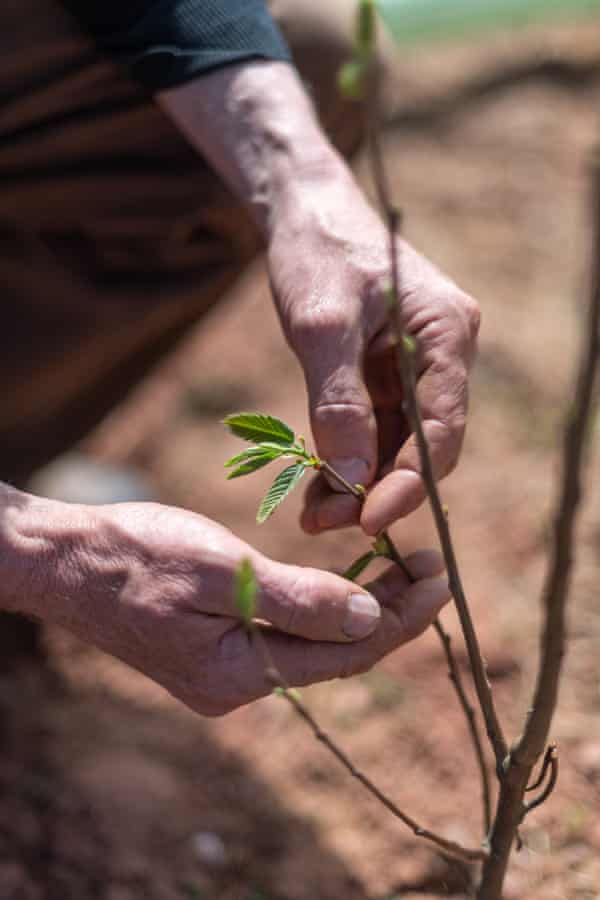
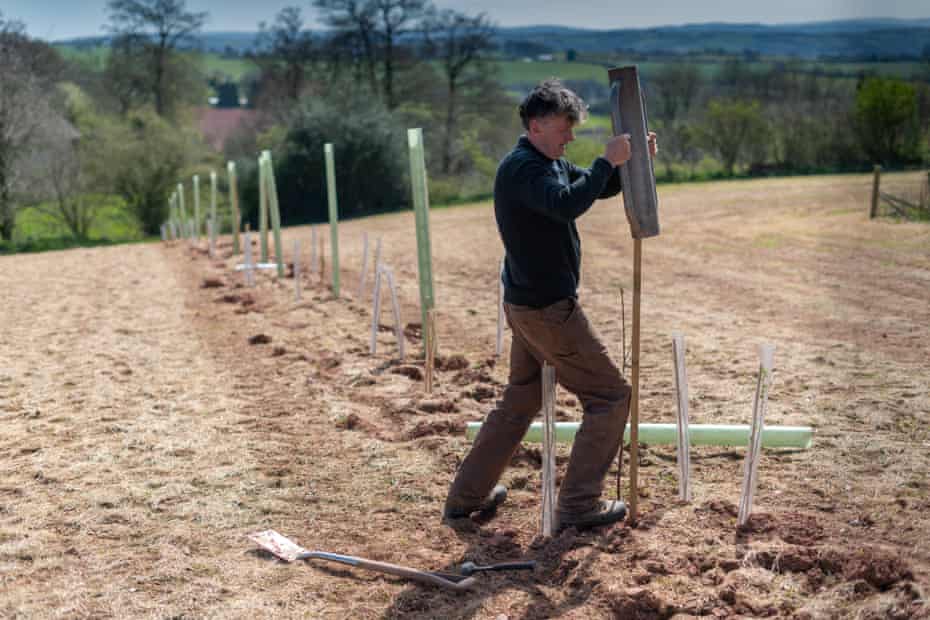
Andy Gray stands beside an enormous hill of bare red earth and smiles with a hint of mischief. This is his best field, its soils known as Crediton red land. The region was once known for producing swedes prized by Covent Garden market. Now, every six metres, planted in rows 14 metres apart, stands a tree guard shielding a young oak, aspen or alder.
“You can grow anything on it and I’m planting trees,” says Gray, a 16th-generation Devon farmer. “I’m seen as the fool on the hill. One neighbour said ‘you might as well concrete it over and build houses’. They could be right. Who knows?”
The company claims it can produce cell-culture meat more efficiently than any other country in the world Credit: Supplied
Company To Save 170,000 Pigs By Scaling Up Cell-Cultured Meat Production In The UK
It comes after predictions that a staggering 60 percent of all meat consumed in 2040 will not come from dead animals
A company spawn from Oxford University is scaling up cell-cultured meat production in the UK – using technology developed in the same building as the AstraZeneca COVID-19 vaccine.
Ivy Farm Technologies plans to remove the equivalent of 170,000 pigs from the production line by producing over 12,000 tonnes of pork.
Ivy Farm Technologies
The process works by taking a small number of cells from a pig and placing them in a bioreactor. Once vitamins and nutrients are added, it is ready for harvest. This takes around three to four weeks.
Since developing the system, Ivy Farm is raising £16 million in order to build a pilot research and development production facility near the university.
It will mark the first step in the plan to become global industry leaders.
Moreover, the company says the ‘scaffold system’ it developed means it can produce cells more quickly and cheaply than any other technology currently available across the world.
It hopes to roll out slaughter-free sausages in supermarkets and restaurants by 2023.
‘Great for meat-lovers’
Co-founder Russ Tucker is eyeing putting the UK on the map in the cell-cultured meat sector.
In a statement sent to PBN, he said: “If you look at the world around us, the way we currently produce and consume food is unsustainable. “Cultured meat is the silver bullet – through cutting-edge technology, we can provide real, high-quality meat while saving the planet.”
Russ Tucker, Ivy Farm Technologies“Already nearly half the worldwide harvest is required to feed livestock and that’s only going to go up.
“Cultured meat is the silver bullet – through cutting-edge technology, we can provide real, high-quality meat while saving the planet.“Ivy Farm will be great for the environment, great for meat lovers, and great for animals as there’s no slaughter.”
Slaughter-free
People are becoming more interested in trying cell-cultured meat. According to Ivy Farm, more than 50 percent are willing to buy it.
It comes after the predictions claim a staggering 60 percent of all meat consumed in 2040 will not come from dead animals.
Rich Dillon, Ivy Farm Chief Executive, said: “Make no mistake, cultured meat is here to stay. It’s a compelling proposition – real meat, guilt-free.“We believe our technology is among the best in the world and that we can fly the flag for Britain.”
Currently, the company is in talks with the Food Standards Agency. They will have to authorize the products before they can be sold.
Djurskyddet Sverige publishes their guide to help consumers to make animal welfare conscious choices
Djurskyddet Sverige, published their own consumer guide, Handla Djurschysst. It is intended for Swedish citizens who want to make animal welfare-conscious food purchasing decisions.
The majority of Sweden’s adult population consumes animal-derived products. However, animal welfare remains an important consideration for Swedish consumers when purchasing meat, eggs, or milk. Yet, it is not always clear what distinguishes the rules of one label from another when it comes to how the animals were treated.
The goal of Handla Djurschysst is to help Swedish consumers make more animal welfare-conscious decisions, so Djurskyddet Sverige investigated labeling regulations to understand which animal welfare criteria each one covers. The guide also explains which standards are important for farm animals in terms of welfare, from the growing environment to the slaughter.
Fish welfare a high priority in EU’s new Aquaculture Strategy to 2030
Today, the European Commission published the Strategic Guidelines on Sustainable and Competitive Aquaculture, a document outlining the major priorities, work areas and initiatives on aquaculture for the next 7 years and setting the stage for a promising future for the welfare of farmed fish in the EU.
After continued advocacy by NGO stakeholders for better fish welfare in aquaculture, the European Commission finally took a major leap towards the better protection of fish welfare with the publication of the long awaited Strategic Guidelines on Sustainable and Competitive Aquaculture. These guidelines will steer policy initiatives and the use of subsidies in the EU aquaculture sector for the period 2021 to 2030 and will be a reference point in global initiatives on sustainable aquaculture. They provide a common vision for the Commission, EU Member States and stakeholders for the further development of aquaculture in the EU as a sector which is both sustainable and competitive, and contributes to broader policy objectives, notably in the context of the European Green Deal.
While the previous guidelines from 2013 did not even contain the word ‘welfare’, the new guidelines have for the first time a dedicated section on animal welfare:
Fish Welfare The stand-alone section on fish welfare includes the following objectives:
Support authorities, experts and stakeholders to develop together a code of good practice on fish welfare including farming, transport and slaughter.
Set common, validated, species-specific, and auditable fish-welfare indicators including farming, transport and slaughter.
Research and innovation especially into species-specific welfare parameters and nutritional needs.
Provide training to aquaculture producers and other operators.
Fish Welfare as an Enabler Our calls for fish welfare improvements have also been taken up in other sections of the guidelines.
The role that welfare plays in improving fish health has been put at the heart of the fish health section, including the following objectives:
Map good husbandry practices, in particular environmental enrichment, and organise training on this.
Prevent the emergence of disease and parasites.
Focus research on supporting the natural defense mechanisms of the fish, especially the microbiome and the impact of stress on immune function.
The following objectives in the environment section are also focussed on and aligned with welfare improvements, in particular:
Encouraging diversification into new species especially non-fed and low-trophic species.
Encouraging diversification away from monoculture systems.
Encouraging new feeding systems to be respectful of ecosystems and biodiversity, while being appropriate for the health and welfare of the fish, and specifically limiting reliance on the use of fishmeal and fish oil.
Good husbandry practices are highlighted as the route to reducing the use of veterinary products and other polluting chemicals.
Promoting EU Aquaculture The guidelines also set out the approach for the EU’s promotion of the EU’s aquaculture sector. There are promising priorities established for promotional and communication campaigns, as well as targeting technical support, including:
Promoting organic aquaculture
Development and promotion of new products especially from traditional systems.
Communication objectives are focussed on lower footprint products especially low-trophic species.
A separate strategy specifically to support the growth of algae production in the EU will follow.
Following the publication of these guidelines it is up to the EU Member States to update their national aquaculture plans to match the new ambition of the guidelines. It is now on the Commission, and on Member States and stakeholders to work towards these objectives and implement these initiatives in concrete and meaningful ways in the next years.