
Category: Environmental

USA: Behind That Green Mask.

This article by Robert F. Kennedy Jr is a profoundly wise and impeccably researched (and referenced) exposé of how the corporate takeover of our food and farming sector is facilitated by Bill Gates’s billions. Robert F Kennedy Jr. is an American environmental lawyer, activist, and author. Kennedy is the son of Robert F. Kennedy and the nephew of former U.S. president John F. Kennedy. He is the president of the board of Waterkeeper Alliance, a non-profit environmental group that he helped found in 1999, and is the chairman of Children’s Health Defense, an anti-unsafe vaccine advocacy group.

If your time is short and just want a taste of what the article holds read below;

Gates has a Napoleonic concept of himself, an appetite that derives from power and unalloyed success, with no leavening hard experience, no reverses.” — Judge Thomas Penfield Jackson, presiding judge in the Gates/Microsoft antitrust-fraud case

For a man obsessed with monopoly control, the opportunity to also dominate food production must seem irresistible.

According to the newest issue of The Land Report, Gates has quietly made himself the largest owner of farmland in the United States. Gates’ portfolio now comprises about 242,000 acres of American farmland and nearly 27,000 acres of other land across Louisiana, Arkansas, Nebraska, Arizona, Florida, Washington and 18 other states.

Thomas Jefferson believed that the success of America’s exemplary struggle to supplant the yoke of European feudalism with a noble experiment in self-governance depended on the perpetual control of the nation’s land base by tens of thousands of independent farmers, each with a stake in our democracy.

So at best, Gates’ campaign to scarf up America’s agricultural real estate is a signal that feudalism may again be in vogue. At worst, his buying spree is a harbinger of something far more alarming — the control of global food supplies by a power-hungry megalomaniac with a Napoleon complex.

Let’s explore the context of Gates’ stealth purchases as part of his long-term strategy of mastery over agriculture and food production globally.

Beginning in 1994, Gates launched an international biopiracy campaign to achieve vertically integrated dominion over global agricultural production. His empire now includes vast agricultural lands and hefty investments in GMO crops, seed patents, synthetic foods, artificial intelligence including robotic farm workers, and commanding positions in food behemoths including Coca-Cola, Unilever, Philip Morris (Kraft, General Foods), Kellogg’s, Procter & Gamble and Amazon (Whole Foods), and in multinationals like Monsanto and Bayer that market chemical pesticides and petrochemical fertilizers.

As usual, Gates coordinates these personal investments with taxpayer-subsidised grants from the Bill & Melinda Gates Foundation, the richest and most powerful organisation in all of international aid, his financial partnerships with Big Ag, Big Chemical, and Big Food, and his control of international agencies — including some of his own creation — with awesome power to create captive markets for his products.

Former Secretary of State Henry Kissinger, a protégé and partner to David Rockefeller, observed that, “Who controls the food supply controls the people.” In 2006, the Bill & Melinda Gates and Rockefeller Foundations launched the $424 million Alliance for a Green Revolution in Africa (AGRA) promising to double crop productivity and boost incomes for 30 million small farmers by 2020 while cutting food insecurity in half.

Characteristically, Gates’ approach to global problems put technology and his chemical, pharmaceutical and oil industry partners at the center of every solution. As it turned out, Gates’ “innovative strategy” for food production was to force America’s failed system of GMO, chemical and fossil fuel-based agriculture on poor African farmers.

African agricultural practices have evolved from the land over 10,000 years in forms that promote crop diversity, decentralisation, sustainability, private property, self-organisation and local control of seeds. The personal freedom inherent in these localised systems leaves farm families making their own decisions: the masters on their lands, the sovereigns of their destinies. Continuous innovation by millions of small farmers maximised sustainable yields and biodiversity.

In his ruthless reinvention of colonialism, Gates spent $4.9 billion dollars to dismantle this ancient system and replace it with high-tech corporatised and industrialised agriculture, chemically dependent monocultures, extreme centralisation and top-down control. He forced small African farms to transition to imported commercial seeds, petroleum fertilizers and pesticides.

Gates built the supply chain infrastructure for chemicals and seeds and pressured African governments to spend huge sums on subsidies and to use draconian penalties and authoritarian control to force farmers to buy his expensive inputs and comply with his diktats. Gates made farmers replace traditional nutritious subsistence crops like sorghum, millet, sweet potato and cassava with high-yield industrial cash crops, like soy and corn, which benefit elite commodity traders but leave poor Africans with little to eat. Both nutrition and productivity plummeted. Soils grew more acidic with every application of petrochemical fertilizers.

As with Gates’ African vaccine enterprise, there was neither internal evaluation nor public accountability. The 2020 study “False Promises: The Alliance for a Green Revolution in Africa (AGRA)” is the report card on the Gates’ cartel’s 14-year effort. The investigation concludes that the number of Africans suffering extreme hunger has increased by 30 percent in the 18 countries that Gates targeted. Rural poverty has metastasised dramatically, and the number of hungry people in these nations has risen to 131 million.

Under Gates’ plantation system, Africa’s rural populations have become slaves on their own land to a tyrannical serfdom of high-tech inputs, mechanisation, rigid schedules, burdensome conditionalities, credits and subsidies that are the defining features of Bill Gates’ “Green Revolution.

Biopiracy

A nation that destroys its soils destroys itself.” — President Franklin D. Roosevelt’s letter to all state governors, February 1937

Long experience and research have shown that agroecology based on biodiversity, Seed Freedom and Food Freedom is essential not just to civil liberties and democracy, but to the future of food and farming.

For thousands of years, farmers’ innovation and biodiversity evolved together to create the most efficient practices for sustainable food production and biodiversity. The United Nations’ seminal 2009 study by the International Assessment of Agricultural Knowledge, Science and Technology for Development (IAASTD) documents the incontrovertible evidence demonstrating the abject failure of the Gates/Rockefeller “Green Revolution” to improve on traditional agriculture.

IAASTD deployed a team of 900 leading scientists, agronomists, and researchers to study the issue of world hunger. Their comprehensive and definitive report showed that GMO crops are not the answer to food shortfalls or rural poverty. That report definitively concludes that neither Gates’ Green Revolution nor his GMOs can feed the world and at the same time protect the planet.

You will not be disappointed by the amount you will learn if you read the entire brilliant article.

Best wishes,

Tracy Worcester, Director
farmsnotfactories.org – England UK

UK: UK Government Rejects Calls For A ‘Meat Tax’ To Fight Against Carbon Emissions – Who Pressures Who, We Ask ?

UK Government Rejects Calls For A 'Meat Tax' To Fight Against Carbon Emissions
‘We will not be imposing a meat tax on the great British banger or anything else’ Credit: Adobe. Do not use without permission.


UK Government Rejects Calls For A ‘Meat Tax’ To Fight Against Carbon Emissions

A senior No10. official has said the meat tax is ‘not going to happen’ – despite the UK’s ‘ambitious’ climate targets…

WAV Comment – We wonder where this pressure has come from ? – all the facts show the British public are changing to a plant based diet in a big way and are very much ‘eco informed and supportive’.  Could it be once again that as always; money talks, and the meat industry will get what it wants regardless ?

The UK government has rejected calls for a ‘meat tax’ as a way to fight against carbon emissions. 

Prime Minister Boris Johnson has been under increasing pressure to up the price of meat due to its environmental impact.

The government has also been told meat and dairy should ‘take their place alongside tobacco, alcohol, sugar, and fuel. All of which are taxed because of their negative impact on human health or the environment’.

‘Not going to happen’

However, according to the Evening Standard, a senior No10. official recently said: “This is categorically not going to happen.

UK Meat tax

Last year, vegan charity PETA urged the UK to implement a meat and dairy tax to ‘lessen the economic fallout after COVID-19 and combat the climate crisis’.

The organization wrote a letter to Chancellor of the Exchequer Rishi Sunak. It suggests revenue from such a tax could ease the burden on the NHS. Moreover, the letter says the move will help farmers transition away from meat and dairy to more climate-friendly arable ventures.

Dawn Carr is PETA ‘sdirector of vegan corporate projects. She said: “We must heed the Committee on Climate Change’s call for meat and dairy consumption to be cut down and act on the United Nations’ recommendation that national governments introduce a tax on meat.“The resulting tax revenue could be used to help meat and dairy farmers make the transition into healthier, more sustainable crop farming at a time when the plant-based food market is booming.”

UK climate targets

The push for a meat tax comes shortly after Johnson’s pledge to slash greenhouse gas emissions by more than two-thirds in the next decade.

The politician described the targets as ‘ambitious’. However, he says they are necessary to set the country ‘on course to hit net zero by 2050’.

He said, in comparison with 1990, there will be a decrease of 68 percent in annual carbon emissions by 2030.

UK Government Rejects Calls For A ‘Meat Tax’ To Fight Against Carbon Emissions | Plant Based News

USA: The Good News – GOOD CATCH’S VEGAN TUNA SALAD IS NOW AVAILABLE BY THE POUND AT WHOLE FOODS. Overfishing Has To Stop !

GOOD CATCH’S VEGAN TUNA SALAD IS NOW AVAILABLE BY THE POUND AT WHOLE FOODS


Good Catch’s Vegan Tuna Salad Is Now Available by the Pound at Whole Foods
Looks Yummy ! – Pic – Veg News


WAV Comment:  Considering the immense damage that the human species is doing to the environment, especially regarding over fishing, this can only be viewed as a positive move to be welcomed.  Better still that by doing this; the oceans and their stock are given the chance to recover their numbers a lot to the pre mega scoop up numbers.  We really look forward to this hitting the UK and Europe – bring it on !

Made from a six-legume blend, Good Catch’s plant-based, deli-style tuna is now available in the prepared foods section of Whole Foods Markets in 10 states.

Good Catch’s Vegan Tuna Salad Is Now Available by the Pound at Whole Foods | VegNews 

Vegan seafood brand Good Catch Foods recently expanded to the prepared foods section of Whole Foods Market (WFM). Owned by parent company Gathered Foods and created by chefs and co-founders Derek and Chad Sarno, Good Catch makes vegan tuna in easy-to-use pouches in three flavors and frozen meals such as crab cakes and fish burgers, all crafted from a proprietary six-legume blend. Good Catch’s plant-based, deli-style tuna is now available by the pound in the prepared foods section of WFM in California, Oregon, Washington, Connecticut, Maine, Massachusetts, New Hampshire, New Jersey, New York, and Rhode Island. The offering will be available in additional locations in the coming months.

Vegan tuna goes to market
“We’re so excited to launch our foodservice product with Whole Foods Market, an important retail partner of ours, to bring our products into the culinary fold with this exclusive offering of our plant-based deli-style tuna,” Chad Sarno told VegNews. “In addition to this exciting launch, we’re looking forward to continuing our foodservice expansion this year, from fast-casual restaurants to other food retailers.”

Last year, the American brand expanded to the United Kingdom, Europe (the Netherlands and Spain), and Canada.The WFM partnership is Good Catch’s second foodservice partnership, following last year’s launch of an exclusive Tuna Melt at vegan restaurant chain Veggie Grill. Good Catch has aggressive international foodservice expansion plans for 2021.

Regards Mark

USA: The Ugly Secrets Behind the Costco Chicken.

The Ugly Secrets Behind the Costco Chicken

An investigator went under cover and brought back disturbing video from a farm growing those famous birds.

Probably like many of you, I think of Costco as an enlightened company exemplifying capitalism that works. One ranking listed it as the No. 1 company to work at in terms of pay and benefits — a prime example of a business that is both profitable and humane.

Unless, it turns out, you’re a chicken.

Rotisserie chickens selling for just $4.99 each are a Costco hallmark, both delicious and cheap. They are so popular they have their own Facebook page, and the company sells almost 100 million of them a year. But an animal rights group called Mercy for Animals recently sent an investigator under cover to work on a farm in Nebraska that produces millions of these chickens for Costco, and customers might lose their appetite if they saw inside a chicken barn.

“It’s dimly lit, with chicken poop all over,” said the worker, who also secretly shot video there. “It’s like a hot humid cloud of ammonia and poop mixed together.”

You may be thinking: Huh? People are dying in a pandemic. Donald Trump is facing a Senate impeachment trial. And we’re talking about chicken, er, poop?

Yet we must guard our moral compasses. And some day, I think, future generations will look back at our mistreatment of livestock and poultry with pain and bafflement. They will wonder how we in the early 21st century could have been so oblivious to the cruelties that delivered $4.99 chickens to a Costco rotisserie.

Torture a single chicken in your backyard, and you risk arrest. Abuse tens of millions of them? Why, that’s agribusiness.

It’s not that Costco chickens suffer more than Walmart or Safeway birds. All are part of an industrial agricultural system that, at the expense of animal well-being, has become extremely efficient at producing cheap protein.

When Herbert Hoover talked about putting “a chicken in every pot,” chicken was a luxury: In 1930, whole dressed chicken retailed in the United States for $7 a pound in today’s dollars. In contrast, that Costco bird now sells for less than $2 a pound.

Those commendable savings have been achieved in part by developing chickens that effectively are bred to suffer. Scientists have created what are sometimes called “exploding chickens” that put on weight at a monstrous clip, about six times as fast as chickens in 1925. The journal Poultry Science once calculated that if humans grew at the same rate as these chickens, a 2-month-old baby would weigh 660 pounds.

The chickens grow enormous breasts, because that’s the meat consumers want, so the birds’ legs sometimes splay or collapse. Some topple onto their backs and then can’t get up. Others spend so much time on their bellies that they sometimes suffer angry, bloody rashes called ammonia burns; these are a poultry version of bed sores.

“They’re living on their own feces, with no fresh air and no natural light,” said Leah Garcés, the president of Mercy for Animals. “I don’t think it’s what a Costco customer expects.”

Garcés wants Costco to sign up for the “Better Chicken Commitment,” an industry promise to work toward slightly better standards for industrial agriculture. For example, each adult chicken would get at least one square foot of space, there would be some natural light and the company would avoid breeds that put on weight that the legs can’t support.

Burger King, Popeyes, Chipotle, Denny’s and some 200 other food companies have embraced the Better Chicken Commitment, but grocery chains generally have not, with the exception of Whole Foods.

I asked Costco for comment. John Sullivan, the company’s general counsel, viewed the Mercy for Animals video and said that much of it simply depicts “normal and uneventful activity” but that “no system is foolproof when you are raising 18 million broilers at any given time.” He said that the company is working to adjust the genetics of Costco birds to develop a “more proportionate” build, but that this takes time.

In one respect, Costco has shown real leadership. The most barbaric part of the chicken industry is the traditional slaughtering process, which results in some birds being boiled alive. To its credit, Costco has moved toward a far more humane approach called controlled atmosphere stunning, so that birds are stunned before being shackled to the conveyor belt that takes them to their deaths.

Sullivan argued that the company is focused on animal welfare at every step of production, even saying that trucks carrying live chickens are set up “for optimal comfort of the birds.”

Hearing the Costco pitch, you get the sense that Costco chickens are enjoying a middle-class avian existence until the moment they end up on the rotisserie. When birds topple onto their backs and can’t get up, when their undersides sometimes carry ammonia burns, don’t believe it.

Yet what struck me was that Costco completely accepts that animal welfare should be an important consideration. We may disagree about whether existing standards are adequate, but the march of moral progress on animal rights is unmistakable.

When I began writing about these issues, I never guessed that McDonald’s would commit to cage-free eggs, that California would legislate protections for mother pigs, that there would be court fights about whether an elephant has legal “personhood,” and that Pope Francis would suggest that animals go to heaven and that the Virgin Mary “grieves for the sufferings” of mistreated livestock.

Hmm. If the pope is right, Costco chickens may have a better shot at heaven than Costco executives.

I don’t pretend that there are neat solutions. We raised a flock of chickens on our family farm when I was a kid, and we managed to be neither efficient nor humane. Many birds died, and being eaten by a coyote wasn’t such a pleasant way to go, either. There’s no need for a misplaced nostalgia for traditional farming practices, just a pragmatic acknowledgment of animal suffering and trade-offs to reduce it.

Abuse of livestock and poultry persists largely because it is hidden — even as chickens are slaughtered in the United States at the rate of one million per hour, around the clock. We treat poultry particularly poorly because humans identify less with birds than with fellow mammals. We may empathize with a calf with big eyes, but less so with species that we dismiss as “bird brains.”

Still, the issue remains as the English philosopher Jeremy Bentham posed it in 1789: “

The question is not, Can they reason?, nor Can they talk? but, Can they suffer?”

Many of us aren’t quite sure what rights animals should have, or how far to take this concern for animal well-being. We’re learning as we go, but most are willing to pay a bit more to avoid torturing animals, and that’s why fast-food restaurants make Better Chicken Commitments; it’s why Costco will eventually come around, too.

Watch the video expose by clicking on the following link:

Opinion | The Ugly Secrets Behind the Costco Chicken – The New York Times (nytimes.com)

Regards Mark

UK: Advertising Standards Authority Receives Complaint Over Pro-Meat TV Ad.

Advertising Standards Authority Receives Complaint Over Pro-Meat TV Ad

The TV advert – which describes meat and dairy as ‘essential’ – has been slammed for presenting a ‘false narrative

WAV Comment – the ASA is a UK authority which regulates all advertising standards.

The Advertising Standards Authority (ASA) has received a complaint over a pro-meat TV Ad.

Last month, the Agriculture and Horticulture Development Board (AHDB) launched its We Eat Balanced campaign to highlight the alleged ‘nutritional benefits of enjoying red meat and dairy’.

The campaign, which costs £1.5 million, consists of an advert currently running on UK TV. It aims to showcase the UK’s world-class standards in food production and sustainability. There are three different endings featuring dishes using beef, lamb, and pork. All of which include a dairy accompaniment.

Speaking about the campaign, AHDB’s Head of Marketing Liam Byrne said: “The nation needs a bit of a lift as it’s been a tough time for everyone. So, now more than ever we wanted to create a campaign that feels uplifting and reassuring for consumers who are increasingly being told by the media to reduce their meat and dairy consumption. “As such this is also a very important campaign for our levy payers as it tells the real story of food and farming from Britain.”

A ‘false narrative’

Now, The Vegan Society has put in an official complaint about the advert – saying it is ‘likely to mislead members of the public’. 

It says the ad’s ‘To B12 or Not B12’ slogan presents a ‘false narrative’ as it ‘suggests you can only have Vitamin B12 by eating animal products’. 

The Vegan Society points out that the vitamin is routinely supplemented on a vegan diet through fortified foods such as milk alternatives and cereals – and that B12 deficiency in omnivores is ‘not uncommon’.Moreover, it believes the advert ‘is in direct conflict with government messaging around health, the environment, and supplementation’. 

‘Scare tactics’

Mark Banahan is The Vegan Society’s Campaigns Manager. In a statement sent to PBN, he said: “The AHDB has set out to mislead the public by denigrating the choices of people who don’t want to eat animal products. 

“Most vegans are aware of the need to supplement B12 in fortified foods or a vitamin supplement. And, by doing so, vegans can maintain a balanced diet.

“It is disappointing to see the ADHB resorting to such scare tactics in response to the growing interest in veganism and in reducing animal products.”

Ad remake

Since the campaigns debut, Plant Based News has remade the advert – showing the harrowing reality of animal agriculture

“We’ve all got a lot on our plates right now but here’s something you’ll want to make room for,” the new ad states.

“The story of a food so brutal it steals calves from their mothers and the flesh of creatures we humans incarcerate. Then, markets it as something edible. 

“The nutrients our bodies need to stay healthy exists in plants. Quit meat and dairy. Enjoy food without victims. Eat plant-based.”

‘Quit meat and dairy’.

Moreover, PBN’s co-founder Robbie Lockie, producer of the new ad, says he was ‘absolutely outraged’ by AHDB’s claims. 

“We’re in the midst of a climate crisis,” he said. “It is absolutely essential we cut our consumption of meat and dairy. “

Lockie then added: “However, the makers of the original ad claim they wanted to help people feel good. Because the media is ‘always trying to get people to eat less meat and dairy’. This is not only incredibly irresponsible, but it also denies the fact that animal agriculture is a leading driver for climate change.”


Check this out also, just for ‘interest’ – Mark

USA: CORY BOOKER BECOMES FIRST VEGAN SENATOR ON THE SENATE AGRICULTURE COMMITTEE – Brilliant !

Cory Booker Becomes First Vegan Senator on the Senate Agriculture Committee

CORY BOOKER BECOMES FIRST VEGAN SENATOR ON THE SENATE AGRICULTURE COMMITTEE

New Jersey Senator Cory Booker—who is working to dismantle factory farming—will be the first vegan to serve on the Agriculture Committee. 

Cory Booker Becomes First Vegan Senator on the Senate Agriculture Committee | VegNews

WAV Comment – Brilliant ! – Congratulations Cory – well deserved.

This week, Senator Cory Booker (D-NJ) was appointed to the Senate Agriculture Committee—becoming  the first vegan Senator to serve on the committee. Booker has been vegan since 2014 and is a longtime advocate for reforming agricultural systems, particularly factory farming, to create a more equitable food system for people and animals. Newly elected Senator Raphael Warnock (D-GA) was also appointed to the Senate Agriculture Committee—marking the first time in the committee’s history that two Black Americans have served as members simultaneously. 

“Our food system is deeply broken. Family farmers are struggling and their farms are disappearing, while big agriculture conglomerates get bigger and enjoy greater profits,” Booker said. “Meanwhile, healthy, fresh food is hard to find and even harder to afford in rural and urban communities alike. In the richest country on the planet, over 35 million Americans from every walk of life are food insecure.”

Booker on factory farms
In 2019, the former presidential candidate proposed the Farm System Reform Act (FSRA), a new bill that aims to transition animal agriculture away from factory farming. FSRA bans the opening of new large-scale concentrated animal feeding operations (CAFOs) and limits the growth of existing CAFOs in the meat and dairy sector. The bill also aims to phase out the largest CAFOs—as defined by the Environmental Protection Agency—by 2040 and hold large meatpackers accountable for the pollution they create. With his bill, Booker hopes to protect small-scale animal farmers who are often contractually bound to, and exploited by, large corporations. After the onset of the COVID-19 pandemic in 2020, FSRA has gained support from other Congress members, including Senator Elizabeth Warren (D-MA) and House Representative Ro Khanna (D-CA)—who filed companion legislation to FSRA in the House.  

After slaughterhouses became COVID-19 hotspots last year, Booker also introduced the Safe Line Speeds During COVID-19 Act, which aimed to protect workers, animals, and consumers from the dangers posed by higher line speeds in poultry, pig, and cattle slaughterhouses. “The fact of the matter is that our current food system is interconnected with so many issues of justice in America: racial justice, health justice, environmental justice, economic justice,” Booker said in a keynote speech at the National Food Policy Conference in July. “And our food system is fundamentally broken. It fails to reflect our collective values. And it is not a dramatization to say that the way we produce and consume food in this country is quite literally a matter of life and death.”

Booker on racial justice
Throughout his political career, Booker has spoken out about the inequities that Black Americans face, including in the agriculture sector. In November, Booker—along with Warren and Senator Krisitin Gillibrand (D-NY)—introduced The Justice for Black Farmers Act (JBFA), which seeks to end racist practices that have resulted in a great loss of land holdings and generational wealth for Black farmers. As a Senate Agriculture Committee member, Booker plans to advance a revised version of JBFA through Congress.

———————————————————————–

Just trying to beam out a few positive rays of light this morning (6/2) in this currently dark world for many – Mark.

See also: UK: Things Looking Positive for a UK Live Export Ban Now It Has Left the EU. Campaigning Still to do, but Looking Goood. – World Animals Voice

Meat consumption is nature’s greatest enemy

UN report on agriculture-Article from the German magazine “Der Spiegel” 

To say it right from the start: an organic steak alone is not enough to save the world.

At least not if it is eaten daily.

According to a recent study, meat consumption is the world’s biggest destroyer of nature, and this includes organic meat. Only with more plant-based nutrition can the dramatic loss of biodiversity and ecologically sensitive habitats be stopped, according to a report published on Wednesday by Unep and the Chatham House think tank.

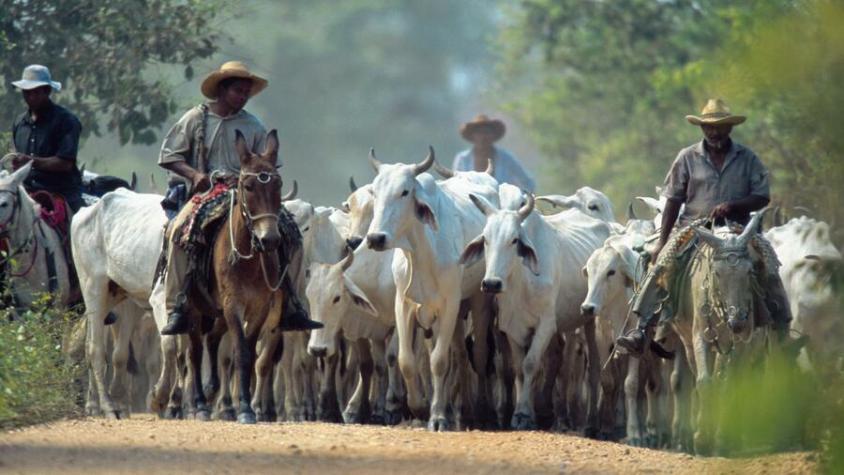
Cattle breeding in South America Foto: Martin Harvey / Getty Images

The global meat industry and intensive agriculture have become the main drivers of this destruction of nature. The loss of habitats and biodiversity has never been as dramatic as in the past 50 years.

The reason is the reallocation of natural ecosystems for feed production or grazing land.

The more intensive agriculture that relies on pesticides and monocultures is particularly problematic. This would permanently destroy the soil, which in turn would lead to even more reallocation of natural land.
In addition, large amounts of fossil energy, fertilizer, and water are needed to produce meat.

This is being fueled by the trend towards more and more cheap food.

Continue reading “Meat consumption is nature’s greatest enemy”

The survival of the ecosystem depends on our choices.

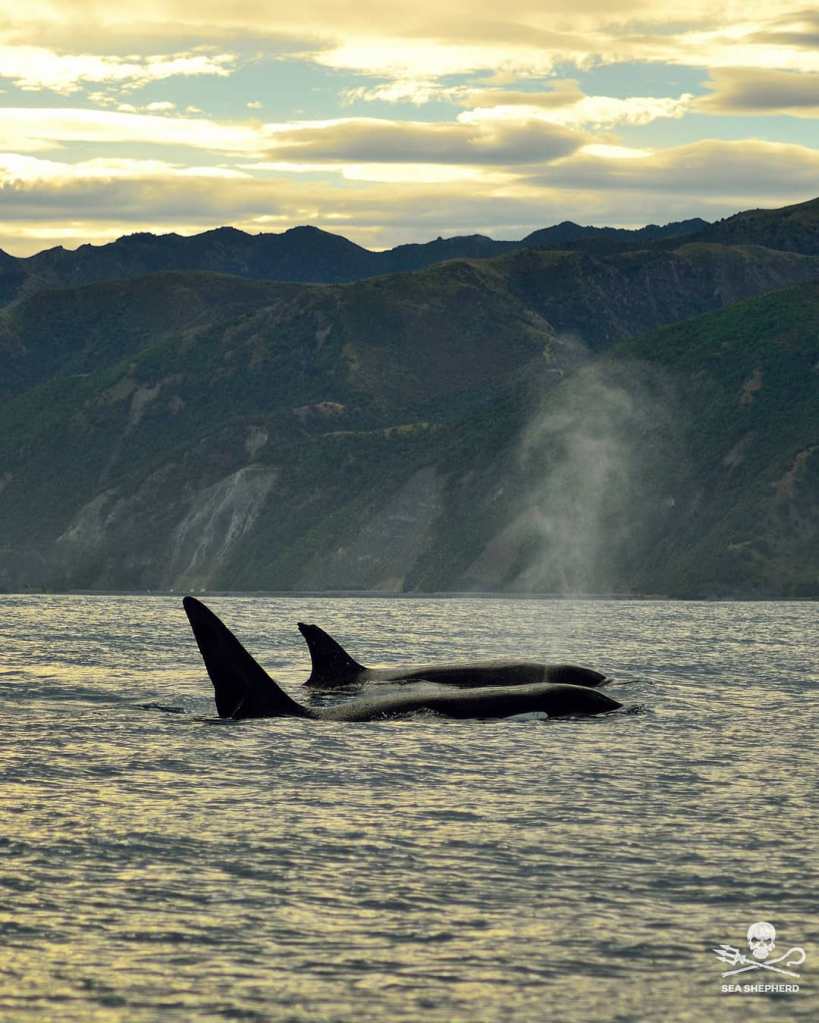
Orcas have no natural predators.
They are only threatened by us humans.
Overfishing of their food sources, pollution of their habitats, and the live trade of the dolphinarium industry are among the greatest threats to orcas.

In Canada, the encroachment on their habitat is already drastically revealed and the orcas have to fight for survival.
The salmon farming industry is changing their food supplies, so animals starve and young animals die.
Hence, the survival of this ecotype depends on our choices.

Sea Shepherd Germany

…there are many reasons not to eat animals
one of them is a clear conscience.
but there are many more benefits than having a clear conscience.

regards and good night, Venus

McDonald’s Officially Debuts Vegan McPlant Range To Gauge Consumer Interest.

WAV Comment:  A lot of British animal activists have had serious issues with ‘McD’ for many years; and we personally would never go near the places after the huge McLibel trial which took place (in the UK) between activists and the burger giant many years ago – see  Defending the Indefensible – Has Anything Changed in the ‘David and Goliath’ World ? – World Animals Voice

Now – Chris Kempczinski is McDonald’s chief executive. In a call with analysts, he said: “Plant-based products are an ongoing consumer trend.“It’s not a matter of if McDonald’s will get into plant-based, it’s a matter of when.”

We support anything that stops animal suffering and killing, and yes, plant based is the way to go forward; so we support this move in that sense.  Mc will always be Mc as far as we are concerned; but everyone has their own choices to make.

We suggest you watch the video in the link above and then make your choice.

——————————————-

McDonald’s Officially Debuts Vegan McPlant Range To Gauge Consumer Interest

McDonald’s is testing its vegan McPlant range in Sweden and Denmark, beginning with a ‘juicy, spicy, and plant-based’ burger

McDonald’s is beginning to roll out its vegan McPlant range.

The fast-food chain is trailing a meat-free burger in Sweden, until March 15, and Denmark, until April 12.

The patty is described as ‘juicy, spicy, and plant-based’ and is made from pea and rice protein. It is served on a bun along with melted cheese, lettuce, tomato, onion, pickles, mayo, mustard, and ketchup. 

While the burger is plant-based and can be customized to not contain dairy, the patty is fried on the same grill as its beef counterpart. 

Vegan McPlant Range

Last year, McDonald’s announced it will test its plant-based burger in multiple markets during 2021.  

It says it will also test both breakfast sandwiches and chicken alternatives. 

Following the announcement of more vegan McDonald’s options, an expert has said the new range shows the ‘future of meat is plant-based’.

Chris Kempczinski is McDonald’s chief executive. In a call with analysts, he said: “Plant-based products are an ongoing consumer trend.“It’s not a matter of if McDonald’s will get into plant-based, it’s a matter of when.”

McDonald’s Officially Debuts Vegan McPlant Range To Gauge Consumer Interest | Plant Based News