Category: Farm Animals

UK: Historic Progress For Animals Announced – A View From Phil; CEO ‘Compassion In World Farming’.

WAV Comment – Good animal friend; long time live exports campaigner, and environmentalist / farm animal campaigner, Philip, CEO at Compassion In World Farming, shares his feelings about progress for animals and their welfare in the UK last week; re the Queens Speech on upcoming government actions to change legislation.

CIWF

Historic Progress For Animals Announced

This week has been an historic moment for animal welfare in the UK with plans for key reforms announced by government, including legal recognition of animal sentience and a ban on live exports. These, and a suite of other measures, were outlined first in the Queen’s Speech and then in a Defra Action Plan. In total, 40 measures have been unveiled covering farmed, wild and companion animals, which together add up to the biggest welfare shake-up in a generation.

Plans are only as good as the implementation, of course, and Compassion will press hard to ensure government intentions become law. The reforms will be introduced as a series of Bills, with the one recognising animal sentience already having been introduced to the House of Lords.

The Bill provides legal recognition that vertebrate animals are sentient beings and intends assurance that their ability to suffer pain and experience joy, if we let them, will be taken into account in future government policies. Legal recognition of animals as sentient creatures has long been a cornerstone of our work at Compassion. Indeed, it was our founder, Peter Roberts, who first launched the idea in the 1980s. The battle was first won in the European Union in 1997 when legal recognition was attached as a protocol and then later an article in the EU treaty. As the recognition was in the EU treaty rather than a specific law, it wasn’t transposed into British legislation post-Brexit. The government’s new Bill proposes to rectify the situation.

Our story | Compassion in World Farming
All those years ago – Peter Roberts (foreground), Founder CIWF protests about intensive animal farming.

Another of our longstanding campaigns has been for a ban on the live export trade for slaughter and fattening. Always cruel and unnecessary, this trade has continued down the decades despite overwhelming public opposition. Quite why is a mystery, given the trade’s insignificance to the farming industry when set against overall meat exports.

It is a hugely welcome moment then that the UK government now proposes to end this indefensible trade once and for all. The proposal, of course, comes soon after our own Judicial Review of the Scottish Government over calf exports.

It is also tremendously important that these reforms are quickly followed with bans on other indefensible factory farm practices, including the keeping of mother pigs and chickens in cages.

Factory farming is finally being recognised more widely for what it is — a cruel and deeply damaging form of farming that only makes worse the climate, nature and pandemic emergencies now facing society.

What is crucial now is that Parliament and the UK government takes this opportunity to not only make these key reforms, but also to push on and end all forms of factory farming.

Thank you to everyone who has marched through the streets, written letters, signed petitions, switched their eating habits and got stories in the media calling for these reforms. It is testimony to your efforts over decades.

Whilst celebrating these hugely welcome plans, it is more important than ever before that we keep up the pressure until every last animal is free from the suffering of factory farming.

Philip Lymbery

Historic Progress For Animals Announced | by Philip Lymbery | May, 2021 | Medium

https://www.ciwf.org.uk/

UK: Company To Save 170,000 Pigs By Scaling Up Cell-Cultured Meat Production In The UK.

Ivy Farm Technologies plans to save 170,000 pigs by developing pioneering cell-cultured meat technology
The company claims it can produce cell-culture meat more efficiently than any other country in the world Credit: Supplied

Company To Save 170,000 Pigs By Scaling Up Cell-Cultured Meat Production In The UK

It comes after predictions that a staggering 60 percent of all meat consumed in 2040 will not come from dead animals

A company spawn from Oxford University is scaling up cell-cultured meat production in the UK – using technology developed in the same building as the AstraZeneca COVID-19 vaccine.

Ivy Farm Technologies plans to remove the equivalent of 170,000 pigs from the production line by producing over 12,000 tonnes of pork.

Ivy Farm Technologies

The process works by taking a small number of cells from a pig and placing them in a bioreactor. Once vitamins and nutrients are added, it is ready for harvest. This takes around three to four weeks.

Since developing the system, Ivy Farm is raising £16 million in order to build a pilot research and development production facility near the university.

It will mark the first step in the plan to become global industry leaders.

Moreover, the company says the ‘scaffold system’ it developed means it can produce cells more quickly and cheaply than any other technology currently available across the world.

It hopes to roll out slaughter-free sausages in supermarkets and restaurants by 2023.

‘Great for meat-lovers’

Co-founder Russ Tucker is eyeing putting the UK on the map in the cell-cultured meat sector.

In a statement sent to PBN, he said: “If you look at the world around us, the way we currently produce and consume food is unsustainable. “Cultured meat is the silver bullet – through cutting-edge technology, we can provide real, high-quality meat while saving the planet.”

Russ Tucker, Ivy Farm Technologies“Already nearly half the worldwide harvest is required to feed livestock and that’s only going to go up.

“Cultured meat is the silver bullet – through cutting-edge technology, we can provide real, high-quality meat while saving the planet.“Ivy Farm will be great for the environment, great for meat lovers, and great for animals as there’s no slaughter.”

Slaughter-free

People are becoming more interested in trying cell-cultured meat. According to Ivy Farm, more than 50 percent are willing to buy it.

It comes after the predictions claim a staggering 60 percent of all meat consumed in 2040 will not come from dead animals.

Rich Dillon, Ivy Farm Chief Executive, said: “Make no mistake, cultured meat is here to stay. It’s a compelling proposition – real meat, guilt-free.“We believe our technology is among the best in the world and that we can fly the flag for Britain.”

Currently, the company is in talks with the Food Standards Agency. They will have to authorize the products before they can be sold. 

Company To Save 170,000 Pigs Through Cell-Cultured Meat Production (plantbasednews.org)

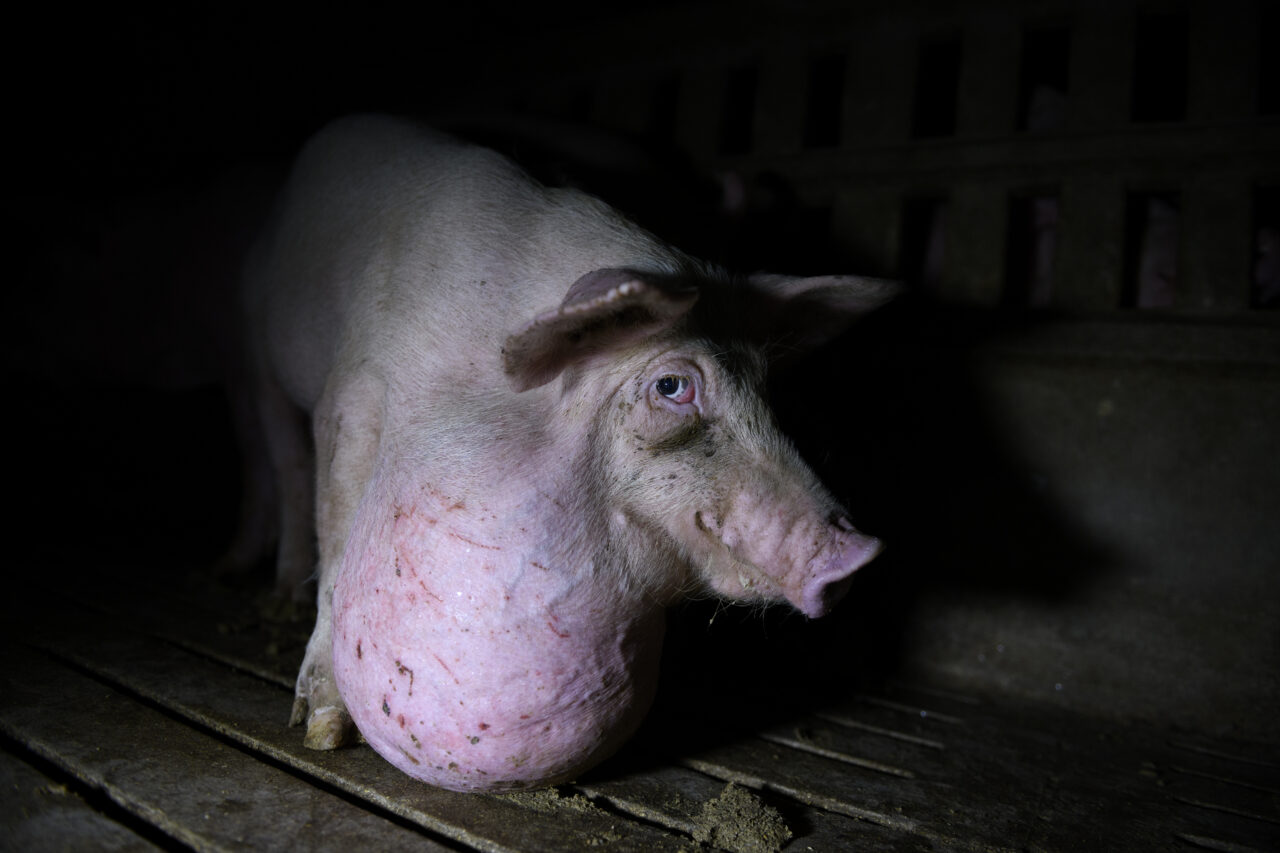
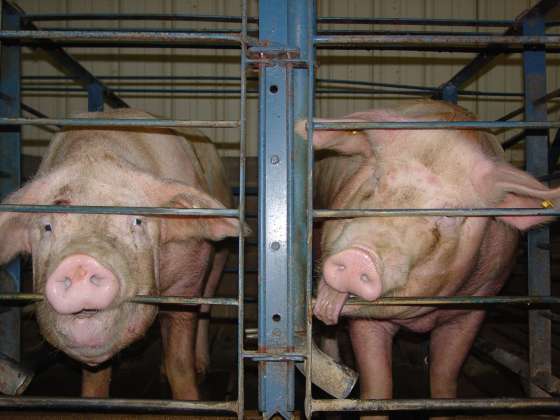
Good news to stop a lot of abuse like this below;

Regards Mark

USA: N.J. celebrities want ban on crates that confine pigs and calves. Christie vetoed it twice.

N.J. celebrities want ban on crates that confine pigs and calves. Christie vetoed it twice.

Updated May 10, 2021; Posted May 10, 2021

Seven years after similar efforts hit a wall under former Gov. Chris Christie, a group of 16 New Jersey celebrities are calling on state leaders to ban the farm practice of using gestation crates to confine pregnant pigs and veal crates to confine calves.

The celebrities — including Steven Van Zandt, Debbie Harry, Chelsea Handler, and Ethan Hawke — joined the Animal Legal Defense Fund in penning the open letter urging the state Legislature and Gov. Phil Murphy to enact a new bill that would criminalize the use of such crates in New Jersey, calling the practice “indefensible.”

“Gestation crates and veal crates are inherently cruel,” the celebrities wrote in the letter, according to a copy obtained by NJ Advance Media. “Both include severely restricting the animal’s movement, to the point of virtual immobilization, which leads to highly stressful conditions that induces physical and psychological illness — and great suffering.”

The celebrities are musician and actor Steven Van Zandt (a Middletown native), actress Maureen Van Zandt, actor Paul Wesley (of Marlboro), comedian Michael Ian Black (of Hillsborough), actress Taissa Farmiga (of Whitehouse Station), television host Daisy Fuentes (of Harrison), comedian Chelsea Handler (of Livingston), musician Debbie Harry (of Hawthorne), actor Ethan Hawke (of West Windsor), YouTube Grace Helbig (of Woodbury), television personality Alison Haislip (of Tewksbury), comedian Myq Kaplan (of Livingston), comedian Bill Maher (of River Vale), actress Cristin Milioti (of Cherry Hill), actress Christina Ricci (of Montclair), and musician Karen O (of Englewood).

Gestation crates are used to confine pigs and calves during pregnancy. Proponents say the crates prevent the animals from fighting each other. Opponents say they prevent the animals from turning around and fully extending their limbs.

“Coupled with increasing demand by consumers for increased compassion and transparency in how farmed animals are raised, now is the time for New Jersey to ban the crates,” Animal Legal Defense Fund Executive Director Stephen Wells said.

New Jersey’s bill (S3401), sponsored by Democrats, would make their use a crime and establish monetary fines. Ten other states, as well as Canada and the European Union, have banned gestation crates.

Christie, a Republican, vetoed measures banning pig gestation crates twice during his tenure as governor, first in 2013 and then in 2014.

Critics accused the then-governor of rejecting the bill because he was planning to run for president and didn’t want to upset pork producers in the key state of Iowa, where nearly one-third of the nation’s hogs are raised.

But it was also uncertain as to how much of an effect the measure would have had in New Jersey. The state is home to fewer than 10,000 pigs, and it’s unclear if any are kept in crates when pregnant.

Christie noted both the state Board of Agriculture and state Department fo Agriculture adopted humane standards in 1995 that cover the issue. He also accused sponsors of using the bill as a “political cudgel” against him.

“I will rely on our in-state experts rather than the partisan politicians who sponsor this bill,” Christie said at the time.

Both houses of the Democratic-controlled state Legislature would need to pass the new bill before Murphy, a Democrat, could decide whether to sign or veto it.

Former state Sen. Raymond Lesniak recently wrote an op-ed saying he had hope the measure would succeed this time now that Murphy is in charge.

“Help is on the way for the suffering pigs,” Lesniak, a Union County Democrat, wrote.


Pro-Palestinian protesters rally against Israeli strikes on Gaza — live  updates | News | DW | 15.05.2021

USA: Approximately 10,000 hogs killed in fire at Pillen Family Farms, Nebraska.

See the video here:

Approximately 10,000 hogs killed in fire at Pillen Family Farms – PLATTE VALLEY – NEWS CHANNEL NEBRASKA

Approximately 10,000 hogs killed in fire at Pillen Family Farms

A large fire near Albion has claimed the lives of approximately 10,000 hogs, according to the Petersburg Volunteer Fire Department.

ALBION, Neb. — A large fire near Albion has claimed the lives of approximately 10,000 hogs, according to the Petersburg Volunteer Fire Department.

The department was training late in Tuesday night when, at 3:14 a.m., a call from Pillen Family Farm came in: one of their barns near Albion was ablaze. 

“The bells started ringing, and by the time we got west of town … it was just a glowing ball out there,” said Doug Koch, a volunteer firefighter. 

The 20-pound hogs were trapped under the collapsed, burning building; none salvageable.

“I kept thinking, you would have thought at least one pig would come walking out, that at least one would have survived […] It was the most destructive for losing livestock I’ve ever seen that large,” said Petersburg Fire Chief Neil Baumgartner. 

They eventually stopped it by tearing through the building around 11 a.m., but they were later called back onto the scene throughout Wednesday to fend off flames.   

“It is dry so a spark could go a long way… the guys are drinking coffee today,” Baumgartner said. 

The cause is still under investigation, but Baumgartner said there had been construction on-site previously.

While the whole building was a loss, no people were injured. 

Pillen Family Farm has not commented on the issue yet to NCN. 

No human injuries were reported. The cause of the fire is currently under investigation.

The Animal Welfare Institute said Thursday morning that the Wednesday fire was the deadliest barn fire in Nebraska this year.

“While we are relieved no humans were injured, the extreme suffering and fear these animals must have endured as they were trapped in a burning building cannot be ignored,” said Allie Granger, farm animal policy associate for the Animal Welfare Institute. “Producers and the industry as a whole must take this problem seriously and start prioritizing fire prevention.”

The institute says nearly 5.3 million farm animals have perished in barn fires since 2013. Nebraska reported the most animal deaths from barn fires last year with approximately 400,000 dying in three fires.


Protests held around the country in support of Palestine

Sweden: Djurskyddet Sverige publishes their guide to help consumers to make animal welfare conscious choices.


Djurskyddet Sverige LOGO

Djurskyddet Sverige publishes their guide to help consumers to make animal welfare conscious choices

Djurskyddet Sverige, published their own consumer guide, Handla Djurschysst. It is intended for Swedish citizens who want to make animal welfare-conscious food purchasing decisions.

The majority of Sweden’s adult population consumes animal-derived products. However, animal welfare remains an important consideration for Swedish consumers when purchasing meat, eggs, or milk. Yet, it is not always clear what distinguishes the rules of one label from another when it comes to how the animals were treated. 

The goal of Handla Djurschysst is to help Swedish consumers make more animal welfare-conscious decisions, so Djurskyddet Sverige investigated labeling regulations to understand which animal welfare criteria each one covers. The guide also explains which standards are important for farm animals in terms of welfare, from the growing environment to the slaughter.

Read more at source

Djurskyddet Sverige : Consumer guide Handla Djurschysst

Sounds really positive for animal welfare

Regards Mark


EU: Fish welfare a high priority in EU’s new Aquaculture Strategy to 2030.

Fish welfare a high priority in EU’s new Aquaculture Strategy to 2030

Today, the European Commission published the Strategic Guidelines on Sustainable and Competitive Aquaculture, a document outlining the major priorities, work areas and initiatives on aquaculture for the next 7 years and setting the stage for a promising future for the welfare of farmed fish in the EU.

After continued advocacy by NGO stakeholders for better fish welfare in aquaculture, the European Commission finally took a major leap towards the better protection of fish welfare with the publication of the long awaited Strategic Guidelines on Sustainable and Competitive Aquaculture. These guidelines will steer policy initiatives  and the use of subsidies in the EU aquaculture sector for the period 2021 to 2030 and will be a reference point in global initiatives on sustainable aquaculture. They provide a common vision for the Commission, EU Member States and stakeholders for the further development of aquaculture in the EU as a sector which is both sustainable and competitive, and contributes to broader policy objectives, notably in the context of the European Green Deal.

While the previous guidelines from 2013 did not even contain the word ‘welfare’, the new guidelines have for the first time a dedicated section on animal welfare:

Fish Welfare
The stand-alone section on fish welfare includes the following objectives:

  • Support authorities, experts and stakeholders to develop together a code of good practice on fish welfare including farming, transport and slaughter.
  • Set common, validated, species-specific, and auditable fish-welfare indicators including farming, transport and slaughter.
  • Research and innovation especially into species-specific welfare parameters and nutritional needs.
  • Provide training to aquaculture producers and other operators.

Fish Welfare as an Enabler
Our calls for fish welfare improvements have also been taken up in other sections of the guidelines.

The role that welfare plays in improving fish health has been put at the heart of the fish health section, including the following objectives:

  • Map good husbandry practices, in particular environmental enrichment, and organise training on this.
  • Prevent the emergence of disease and parasites.
  • Focus research on supporting the natural defense mechanisms of the fish, especially the microbiome and the impact of stress on immune function.

The following objectives in the environment section are also focussed on and aligned with welfare improvements, in particular:

  • Encouraging diversification into new species especially non-fed and low-trophic species.
  • Encouraging diversification away from monoculture systems.
  • Encouraging new feeding systems to be respectful of ecosystems and biodiversity, while being appropriate for the health and welfare of the fish, and specifically limiting reliance on the use of fishmeal and fish oil.
  • Good husbandry practices are highlighted as the route to reducing the use of veterinary products and other polluting chemicals.

Promoting EU Aquaculture
The guidelines also set out the approach for the EU’s promotion of the EU’s aquaculture sector. There are promising priorities established for promotional and communication campaigns, as well as targeting technical support, including:

  • Promoting organic aquaculture
  • Development and promotion of new products especially from traditional systems.
  • Communication objectives are focussed on lower footprint products especially low-trophic species.
  • A separate strategy specifically to support the growth of algae production in the EU will follow.

Following the publication of these guidelines it is up to the EU Member States to update their national aquaculture plans to match the new ambition of the guidelines. It is now on the Commission, and on Member States and stakeholders to work towards these objectives and implement these initiatives in concrete and meaningful ways in the next years.

Regards Mark

Ukraine must deliver on animal welfare before getting more access to EU market.


Ukraine must deliver on animal welfare before getting more access to EU market

As trade negotiations will soon start to review the market access provisions included in the EU-Ukraine Deep and Comprehensive Free Trade Agreement (DCFTA), Eurogroup for Animals calls on the EU to oppose granting further market access to Ukrainian animal food products until the country implements EU-equivalent standards.

Read our position paper here.

The EU-Ukraine DCFTA granted significant trade preferences to Ukrainian animal-derived products when it entered into force in 2016, leading to the tripling of Ukraine’s exports of eggs and chicken meat and making the country the first source of EU imports for these products. The increase of Ukrainian chicken meat exports to the EU market largely profited Ukrainian giant poultry producer MHP, which is known for producing in intensive megafarms. The giant also forced the EU into extending trade preferences available for poultry under the DCFTA back in 2019, as a compromise to solve a dispute related to the agreement’s implementation. As the EU does not impose most of its animal welfare standards on imported food, the DCFTA has thus so far stimulated a very unsustainable trade, and thus production.

Ukraine is bound by the agreement to align its animal welfare standards with the EU’s. But the country only adopted a legislation aiming at approximating such standards in February 2021, five years after the DCFTA’s entry into force, and the implementation of this legislation is only foreseen as of 2026. The EU must therefore condition the DCFTA’s market access review to an effective alignment between Ukrainian and EU animal welfare standards. Such an approach would respond to citizens’ concerns regarding the surge in lower welfare imported food. This would also help avoiding that the DCFTA fosters further unsustainable farming in Ukraine and, as an additional positive side effect, it would contribute to improve the level playing field for EU producers. 

On a more positive note, Ukraine being a key player in the agrifood sector worldwide, achieving progress over there could have a positive impact on a huge number of animals. When Ukraine fulfils its DCFTA commitments, the country will be the first EU trade partner to apply EU-equivalent animal welfare standards. In addition, the wording of the DCFTA implies this alignment is dynamic, and once the EU will have revised its animal welfare standards, as expected with the Farm to Fork Strategy (F2F), Ukraine will have to move ahead too.  

At the time when the EU approach to animal welfare is subject to renewed debate, and in light of the objectives contained in the F2F strategy, it is important for the EU to demonstrate it can deliver progress for animals through trade policy. In the case of Ukraine, the review of the DCFTA  can be used to speed up the implementation of higher animal welfare in the country, and this is what Eurogroup for Animals is calling for. 

Read our position paper here.

Regards Mark


UK: 12/5/21 – Live Animal Exports To Be Banned – and Other Things.

WAV Comment (Mark) – After more than 30 years of personally campaigning against this disgusting, barbaric trade; the news today (12/5/21) is finally looking good.  “MINISTERS have published an action plan on animal welfare, looking at how to use Britain’s freedom outside the EU to increase standards”.  Freedom outside of the EU; this legislation shows what can be done by individual nations when they do not have to bow to do nothing fools in Brussels.

I am checking and re checking everywhere to get confirmation; but as you can see below it looks positive.

I will write more on this as more detail is obtained.

Regards Mark

George Eustice, the environment secretary, said: “We are a nation of animal lovers and were the first country in the world to pass animal welfare laws.

Our action plan for animal welfare will deliver on our manifesto commitment to ban the export of live animal exports for slaughter and fattening, prohibit keeping primates as pets, and bring in new laws to tackle puppy smuggling.

As an independent nation, we are now able to go further than ever to build on our excellent track record.”

UK to ban live animal exports for slaughter as part of welfare plan | Reuters

https://www.theguardian.com/world/2021/may/12/animals-to-be-formally-recognised-as-sentient-beings-in-uk-law

https://www.totallyveganbuzz.com/news/uk-ban-live-export/

https://www.moneycontrol.com/news/world/uk-to-ban-live-animal-exports-for-slaughter-as-part-of-welfare-plan-6882771.html

Brexit Britain leads the way! UK shames EU as plans announced to end ‘barbaric’ practice

MINISTERS have published an action plan on animal welfare, looking at how to use Britain’s freedom outside the EU to increase standards

Read in full – https://www.express.co.uk/news/politics/1434968/brexit-news-uk-live-animal-export-ban-update-george-eustice

https://www.rspca.org.uk/-/blog-uk-to-ban-live-animal-exports

UK: 11/5/21 – Update On ‘Quality Assured’ Pig Farm By ‘Animal Equality’.

WAV Comment – Our recent post – P&G Sleigh Pig Unit in Scotland- Pigs ‘hammered to death’! – World Animals Voice

By now, you probably will have seen our latest investigation into an intensive pig farm called P&G Sleigh pig unit. A lot has happened since we conducted the investigation. Here’s an overview of what unfolded.

  • Philip Sleigh, the owner of the farm, resigned as the Chairman of the Pigs Standard Setting Committee of Quality Meat Scotland (QMS), a public body to which he had been appointed as a Board Member by the Scottish Government.
  • The farm was dropped by the QMS assurance scheme.
  • Our investigation was published in an article in The Times, alongside a leader article titled ‘The Times view on animal welfare failings: Cruel Country’.
  • Tesco and Lidl both dropped the farm.
  • The Independent, the Scottish Daily Mail, and many more newspapers published articles covering the story, including the front page of Scotland’s most widely-read paper.

What we have achieved so far is huge. After our investigators captured footage of pigs being abused, we made sure people everywhere saw it by securing coverage in some of the UK’s leading newspapers. Scottish actress, Karen Gillan, also shared our investigation on Instagram to her 7.3m followers.

Not only has this led to people all over the country learning about the cruelty behind meat production in the UK, but it has been seen by government officials and company executives: decision-makers who are in a position to create change.

By uncovering ties between the farm and major UK supermarkets, Tesco and Lidl, we have sent another strong and clear message to retailers: if you do business with farms that abuse and exploit animals, you will be found out.

And we have also sent a powerful message to the meat industry itself. Philip Sleigh, who resigned as the Chairman of the Pigs Standard Setting Committee of QMS, is a well-known and influential figure in the UK meat industry. 

Rubbing shoulders with Government officials and accreditation reps, he was entrusted with a position of power, and yet his own farm breached the very standards that he helped set.

With this investigation, we have shown that it doesn’t matter how high up in the industry you are: we will hold you to account. 


While Philip Sleigh (pictured above) has left his position at QMS, the publicly-funded body still has a lot to answer for. It boasts of being proud of its standards, yet it took Animal Equality to uncover these serious breaches on its board member’s farm. How can QMS claim to take animal welfare seriously when its own poster-boy didn’t?

QMS is just one part of an industry which routinely misleads the public and profits from the abuse and exploitation of animals. We need the Government to take action.

ACTION

Please sign the petition at  Investigation: Suffering on Scottish Pig Farm | Animal Equality UK

Regards Mark