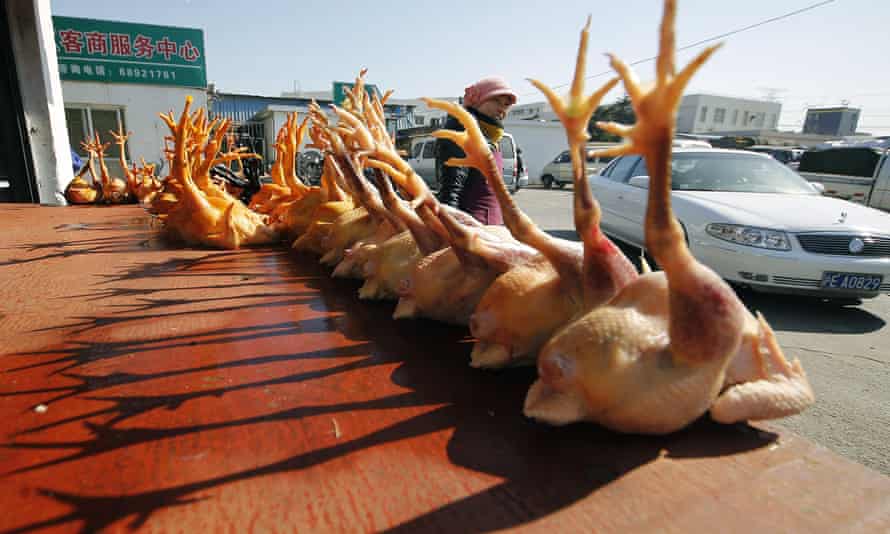
Chicken carcasses at a wholesale poultry market in Shanghai. Many strains of avian flu are present in China and some sporadically infect people. Photograph: AP
China confirms first human case of H10N3 bird flu strain
Man, 41, in Jiangsu, diagnosed on 28 May but risk of avian virus spread is low, says state health agency
A 41-year-old man in China’s eastern province of Jiangsu has been confirmed as the first human case of infection with the H10N3 strain of bird flu, although health officials in China said the risk of large-scale spread remained low.
The man, a resident of the city of Zhenjiang, went to hospital on 28 April after developing a fever and other symptoms, China’s national health commission said.
He was diagnosed as having the H10N3 avian influenza virus on 28 May, the commission said though it did not give details about how the man had been infected with the virus. The man was stable and ready to be discharged from hospital. Medical observation of his close contacts had not found any other cases.
H10N3 is a low pathogenic, or relatively less severe, strain of the virus found in poultry, and the risk of it spreading on a large scale is very low, the commission added.
The strain was “not a very common virus”, said Filip Claes, regional laboratory coordinator of the Food and Agriculture Organization’s Emergency Centre for Transboundary Animal Diseases, at the Asia and Pacific regional office. Only about 160 isolates of the virus were reported in the 40 years to 2018, mostly in wild birds or waterfowl in Asia and in some limited areas of North America, and none had been detected in chickens so far, Claes said.
Analysing the genetic data of the virus would be necessary to determine whether it resembled older viruses or if it was a novel mix of different viruses, he added.
Many different strains of avian influenza are present in China and some sporadically infect people, usually those working with poultry. There have been no significant numbers of human infections with bird flu since the H7N9 strain killed about 300 people during 2016-2017.
No other cases of human infection with H10N3 have previously been reported globally, the commission said.
Oppose Gruesome Rabbit-Butchering Facility Plans in Derbyshire
Plans have been submitted to Derbyshire Dales District Council for a gruesome rabbit-“processing” facility in Atlow, Derbyshire. If approved, thousands of rabbits would be slaughtered for their flesh and fur each year before being butchered at the facility and turned into pies, pâté, and other “products”. The applicants already exploit thousands of rabbits on four rabbit farms across the country and are looking to expand their horrific franchise.
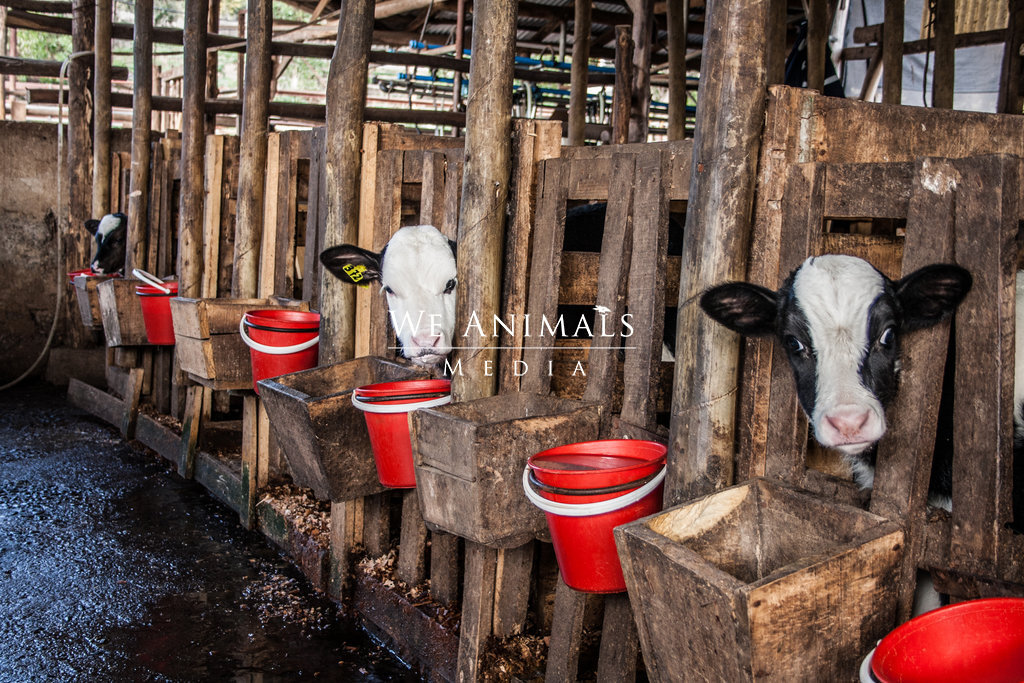
We have been involved with live calf export work and report writing to the EU in the past; check it out at About Us. | Serbian Animals Voice (SAV) and scroll down until ypou come to the photos of the export calves.
TRANSLATOR – Please remember we have one on the site, so you can read everthing we produce in a multitude of languages. On the left of the page is a heading called ‘TRANSLATE’ – just click here, select your language, and all we be converted. Simple !
We Animals Media (WAM) brings visibility to hidden animals through compelling photo and videojournalism. As the world’s leading animal photojournalism agency, it is our mission to document the stories of animals in the human environment — those used for food, fashion, entertainment, and experimentation — and to connect those stories to the individuals and organizations who can amplify their reach.
Our growing network of award-winning photographers and videographers extends throughout the world, capturing images from a broad and diverse spectrum of animal industries. Together, we have created the world’s most comprehensive collection of animal photojournalism. This globally accessible resource is made available for free to anyone working to inspire compassion, conversation and change.
WAV Comment – A few weeks ago we heard from Jill that there would soon be some very special news; so we waited. Today, 1/6/21, we have finally had the news we had patiently been waiting for; and that is; 101 moon (ex bile) bears have been rescued by Animals Asia from an ex-bear bile extraction and breeding facility in Nanning, China, to their bear rescue centre in Chengdu, 750 miles away.Safe now at their new home; free from abuse.
This unprecedented, historic and momentous event has been eight years in the making. It has been the most challenging, unpredictable and emotional journey we (Animals Asia) have been on as an organisation. But we are at last able to share the joyous news with our amazing supporters, that the Nanning bears are finally home.
Our story begins in 2013 at a huge bear breeding and bile farming facility in Nanning. Nanning is a beautiful, mountainous region of southern China.
The new owner of the land that the facility stood on, Mr Yan, was disturbed to find the then 132 bears in tiny, filthy and barren cages, having been used for bile extraction and breeding by the previous owner.
Mr Yan contacted Animals Asia to ask for our help, and there began a tumultuous eight-year journey to bring the bears home, with myriad legal and logistic challenges to negotiate and overcome.
But, today is a cause for celebration. We did it. 101 bears are home. And we simply couldn’t be happier or more grateful to all our loyal supporters for making this day a reality.
The final journey begins
Late on Friday 9 April, we received the news we’d been waiting for: the last permit allowing us to move the bears to our sanctuary in Chengdu had finally been signed!
In a huge feat of logistics, where Covid-19 could have disrupted plans at any moment, each bear was individually moved into a transport cage, loaded onto a truck and travelled the 750 miles from Nanning to Chengdu.
Animals Asia’s Founder and CEO Jill Robinson said:
“We’ve rescued hundreds of bears over the years, but no one has ever attempted anything on this scale before, bringing so many bears home to sanctuary in a single operation. We couldn’t have done it without our amazing Bear and Vet team in China, without the help of the local authorities and without the help of the local community too. But most importantly we could never have done this without you, our supporters, our donors, our family”.
The entire mission took place over three phases between 19 April and 27 May 2021, with the bears being transferred in three convoys of nine trucks, each carrying up to four transport cages.
Each leg of the operation took over 55 hours and was accompanied by Animals Asia’s specialist team of vets and bear carers to ensure the bears were kept safe and healthy along the way.
“We’re so proud of how the bears handled the journey,” said Animals Asia’s China Bear & Vet Team Director, Ryan Marcel Sucaet.
“Most of them have spent their entire lives in confinement. To be suddenly transported halfway across China could have been very distressing for them, but our team did an incredible job of keeping them calm, well fed, stimulated and comfortable along the way, as well as attending to their ongoing medical needs.”
Home at last
When we got the bears back to Chengdu, the real work began! Our sanctuary team has been preparing for the Nanning bears’ arrival, preparing enclosures and planning group integrations.
The bears were placed into quarantine to slowly introduce them into their new life with its new and unfamiliar smells, sounds and surroundings. We need to monitor the bears’ progress and ensure they are both mentally and physically ready before we integrate them into the main sanctuary with other bears. However some bears in one section of the sanctuary have been able to venture out into a specially prepared enclosure.
When we first arrived at Nanning, the bears were in separate cages. Over the years, we slowly introduced them to one or two other bears after getting to know their characters, needs and temperaments.
At the sanctuary they will live with several other bears, some from Nanning and some established residents, based on their personality, age, body weight, health condition and gender. It sounds easy, but it will take our beautiful bears time to build trust and settle into their new environment and become fully integrated into sanctuary life.
“We’re so excited to have them here,” said Ryan. “After nearly eight long years of waiting, and a lifetime of suffering, we can finally give these beautiful bears the lives they deserve.”
These bears need a lifetime of continual kindness and specialist care. If you’ve been inspired by their journey please consider becoming a monthly donor to help make every day special for a rescued moon bear.
We’ve just finished the move and we wanted to tell the world right away. We’ll be going into a lot more detail over the next month or so, introducing you to all of the bears who are now happily residing at our award-winning sanctuary in Chengdu and showing you how this massive undertaking was achieved!
This is it. This is the moment we’ve all been waiting for.
I’m overcome with excitement and relief to share this news with you. Animals Asia has just welcomed 101 former bile farm bears home to our China sanctuary!
As you know, for years, we’ve been caring for the bears at a closed-down bear bile extraction and breeding facility in Nanning, China, while we worked behind-the-scenes to get the permits needed to bring them to our sanctuary 1,200 kilometers away. That day finally arrived.
Never forget your important part in THE BIGGEST BEAR RESCUE EVER!
You’ve been with us on every step of this epic and tumultuous journey. These beautiful bears are finally home, ready to start the lives they deserve – and it’s all thanks to you.
We’ve rescued hundreds of bears over the years, but no one has ever attempted to bring so many bears home to sanctuary in a single operation. It’s a massive achievement, and we couldn’t have done it without you.
You were by our side through the highs and devastating lows. And your support has been the life force that’s kept us going.
These very special bears are now starting their new lives. Ones of happiness, joy and endless amounts of love.
Words simply can’t convey how grateful I am to you for your kindness. Without you, and the belief you have in Animals Asia, this incredible feat, quite simply wouldn’t have happened.
I’ll be writing to you again soon with more about this incredible rescue, but for now, please see this very special update on how you have saved 101 beautiful souls.
With endless love and gratitude,
Jill x
PS To see more about the Nanning bears and how you made their journey possible, visit our website.
Donkeys to help re-establish rare wild flower in Devon
Animals will be used to tread in seeds of small-flowered catchfly at Donkey Sanctuary rewilding project
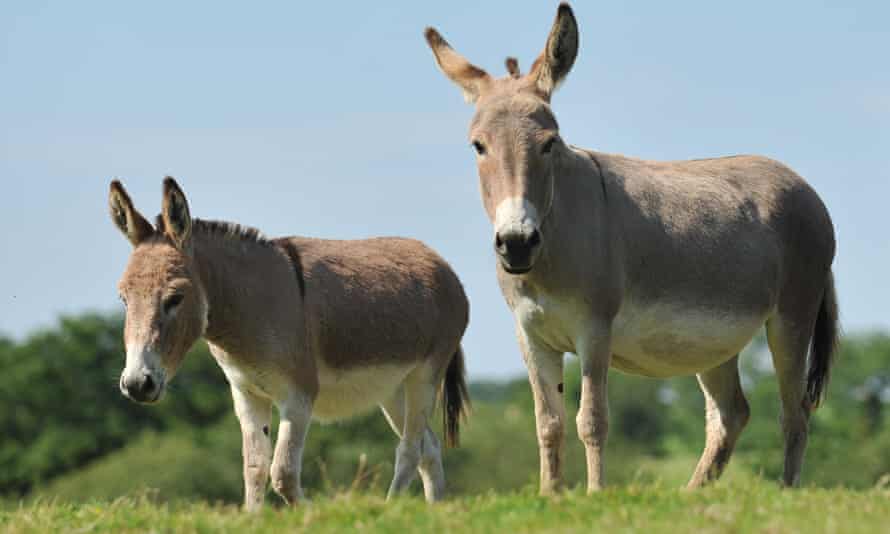
The donkey has performed many roles: carrying Jesus, giving seaside rides to children and being the butt of many jokes over thousands of years of domestication. Now an unfamiliar job can be added to the list: ecosystem engineer.
The hard-working animals will help re-establish one of Britain’s rarest wild flowers by trampling over specially seeded plots.
More than 20,000 seeds of the small-flowered catchfly have been sown on farmland at the Devon headquarters of the Donkey Sanctuary, the international animal welfare charity.
The sowing is part of the Colour in the Margins project led by the charity Plantlife seeking to restore rare arable plants such as the small-flowered catchfly, which has vanished from about 70% of its former range.
The seeds, which have been sown alongside other wild flowers and grains, will also help provide food for threatened birds such as the linnet, yellowhammer and skylark, which have been recorded at the sanctuary.
If they germinate successfully this summer, the Donkey Sanctuary will host a trial next spring to discover if donkeys can assist the germination process by walking across specially seeded plots, a technique known as “treading in”.
Ruth Angell, the ecology and conservation manager at the Donkey Sanctuary, said: “Increasing biodiversity is essential for an enriched and resilient environment which can support rare species as well as our resident herds of donkeys.
“It is important to us that our donkeys benefit from different types of activities and experiences. Our donkeys will be able to enjoy a walk with our grooms and benefit from one to one time while they walk over the plots.”
Other animals including wild horses and cattle are widely used as “conservation managers”, with their trampling and grazing helping wild plants to flourish and flower. Tamworth pigs have also proved extremely useful in “ploughing” wild turf with their snouts and making space for annual wildflowers to germinate at the rewilded farm of Knepp in West Sussex.
Cath Shellswell at Plantlife said: “We’re incredibly grateful to partners like the Donkey Sanctuary who are helping these fantastically rare wild flowers come back from the brink of extinction by giving them a helping hand in one of their original regional strongholds. We look forward to seeing small-flowered catchfly return and working with the sanctuary to ensure this tiny plant has a thriving future.”
Nature looks after nature; it is only the human that destroys it.
Artificial insemination (A.I.) is the most common method of breeding dairy cows in the United States, accounting for nearly 80% of all dairy cow pregnancies. (1) Like all mammals, cows must give birth in order to produce milk.
Around 10 months after calving, the quantity of milk that dairy cows produce decreases substantially. (2) In order to achieve profitable milk yields, dairy producers re-impregnate cows once a year after a short period of “drying off.” (Cows, like humans, carry their babies for nine months.) According to the USDA, “Reproduction practices on dairy operations are crucial to maintaining consistent milk production and creating replacement heifers…[C]ows should produce a healthy calf every 12 to 13 months (referred to as calving interval)…Decreasing the calving interval will result in more calves and greater milk production over a cow’s lifetime.” (3)
This constant cycle of impregnation creates a huge surplus of calves. Most female calves are used to replace the millions of still-young dairy cows slaughtered each year when their total milk yields decline, but male calves cannot produce milk and are sold to be slaughtered for veal or beef. In order for humans to take the milk that dairy cows produce for their babies, calves are stolen from their mothers and raised in isolation; 97% of dairy calves in the U.S. are permanently removed from their mothers within the first 24 hours of birth, and this is common practice worldwide. (4)
The typical dairy cow endures this cycle of sexual violation and traumatic separation from her baby at least 3, and up to 7, times in her short life as a milk producer. The following excerpt from an article entitled “How to Artificially Inseminate Cows and Heifers” explains the invasive procedure by which dairy cows are forcibly impregnated year after year. (5)
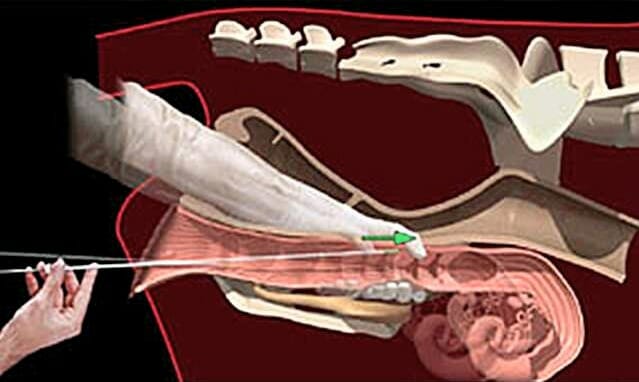
This diagram illustrates the process of artificial insemination. One arm is inserted into the rectum of the animal to position the uterus. The other hand inserts an instrument containing the semen and injects into the uterus
Inseminating the Female Bovine
Move the tail so it’s on top of your left forearm or tie it up so it will not interfere with the AI process. Raise the tail with one hand (preferably the right) and with the other (which should be gloved and lubricated), gently reach inside the cow to clean out any feces that may interfere with the process of feeling for and inserting the AI gun into the cow’s vagina.
Clean the vulva with a clean paper towel or rag to remove excess manure and debris.
Take the gun out of your jacket or overalls, unwrap it, then insert it at a 30 degree angle into the cow’s vulva. This is so that you avoid going into the urethral opening into the bladder.
With your left hand in the rectum of the cow (which should have been there to begin with), feel with your finger tips through the wall of the rectum and vagina the location of the end of the AI gun until you reach the cervix.
Grasp the cervix with the hand in the rectum of the cow (like you would hold a bar that is below your hand) and hold it steady while you thread the rod into and through the cow’s cervix.
When the rod is all the way through the cervix, check the location with your index finger. The rod should be only 1/2 to 1/4 of an inch into the uterus.
Slowly depress the plunger at the end where your right hand is so that 1/2 is deposited.
Recheck the location of the semen to make sure you are in the cow’s uterus and not in any of her “blind spots” (see tips below), and deposit the other half of the straw’s contents.
Slowly remove the AI gun, your hand and arm from inside the cow. Check for any blood, infection or semen “feedback” from inside the sheath.
Recheck the straw to see if you used the right bull semen for the cow.
Dispose the straw, glove, and towels in the proper place.
Clean the AI gun if necessary.
Record breeding information on any record keeping system you have on hand.
Release the cow (if necessary, depending on the breeding set-up you have) and restrain the next one to be inseminated.
“Just months after the investigation’s release, Perdue, with praise from Mercy For Animals, the Humane Society of the United States, and Compassion in World Farming, committed to the most comprehensive animal welfare policy of any U.S. poultry company.”
The journey from adversaries to allies required conversation and compromise and often caused tension, but ultimately proved rewarding, write Perdue’s Mark McKay and Mercy for Animals’ Leah Garcés.
The following is a guest post from Mark McKay, president of Perdue Premium Poultry and Meats, and Leah Garcés, president of Mercy For Animals.
If you had told us years ago that we would be writing this together –– a president of one of the largest chicken companies and the president of one of the largest animal rights groups –– we would have been incredulous. Historically, meat companies and animal rights organizations have been more foe than friend.
This is certainly how the relationship began between Perdue and Mercy For Animals.
In 2015, Mercy For Animals released an undercover video of a Perdue chicken farm showing abuse by contract workers. All too commonly, companies go into defense and denial mode when faced with such footage.
But if you flip the coin, a business can find opportunity in this sort of exposure. It is a rare moment when a company humbly embraces the harder — but ultimately more rewarding — path.
Perdue knew that what the video had shown represented not only an opportunity but also a responsibility to animals, customers, and consumers to uphold the company’s standards.
So Perdue picked up the phone and did something meat companies rarely do: It called Mercy For Animals.
A stunned Mercy For Animals sat at the other end of the call.
Here was Perdue thanking the organization for the investigation that had exposed animal handling contrary to the company’s standards — and promptly acting to remedy it. Perdue also invited Mercy For Animals, along with other animal advocacy organizations, to a discussion about continual improvement to animal-raising practices.
Perdue Farm
First we needed to build trust. The divide was great, and no past collaborations of this kind existed to guide us.
But over time, through honest and open communication, we found that we had more in common than we had thought. Often, when facing the so-called opposition, people focus on areas of disagreement and difference rather than common ground. In this case, both organizations recognized our shared goals and understood our duty to work together.
But working together had its pitfalls. Mercy For Animals risked looking like a sellout. Perdue took a risk by admitting it had “gotten away from the farm.” That’s a lot of risk — and tension — bundled into one situation. But sometimes taking risks pays off enormously
Mark McKay Permission granted by Perdue Premium Poultry and Meats
Our conversations were challenging, especially in the beginning, but the tension felt reassuring. Tension is the sense of the gap between where we are and where we’d like to be. This tension facilitates conversation and drives change.
Just months after the investigation’s release, Perdue, with praise from Mercy For Animals, the Humane Society of the United States, and Compassion in World Farming, committed to the most comprehensive animal welfare policy of any U.S. poultry company. Perdue didn’t claim to be perfect but charted a path toward industry leadership and continual improvement in animal welfare.
Leah Garcés Permission granted by Mercy For Animals
Each year, through ongoing conversation, Perdue moves up the ladder of animal welfare; nearly 52% of Perdue’s conventional farms are now windowed — and as the No. 1 supplier of USDA organic chicken, Perdue provides 25% of its chickens with outdoor access. Perdue made a promise, and Mercy For Animals works closely to provide feedback through informal meetings and participation in Perdue’s Animal Care Summit.
The relationship is sustained by our firm mutual commitment to ongoing progress. Everyone involved is benefiting.
Each year, Perdue publishes an animal care report and hosts a conference to report progress toward existing goals and share new ones, and invite feedback and ideas for continual improvement.
Chickens benefit from Perdue’s dedication to the Better Chicken Commitment, a set of animal welfare standards supported by animal advocacy groups. This commitment requires companies to meaningfully reduce animal suffering by giving chickens more space and a better environment, minimizing their suffering during slaughter, and using breeds not prone to painful and debilitating conditions.
Images of a alleged Perdue supplier. (Courtesy MFA)
We hope the food industry and those working to improve it will be inspired by our collaborative approach. The journey from adversary to ally requires conversation, sometimes compromise, and certainly discomfort for both sides.
But without these — and the coming together of different stakeholders — no one wins. We must always search for the place where our goals align. This is the critical path to progress that will lead us all to a better food future (!!!)
And I mean…The pattern is familiar: An animal rights group films an undercover video that allegedly captures animal abuse at a well-known meat supplier; then…
1) the supplierr denies the video is accurate, or
2) tries to spin it for its own purposes; for meat-lovers the world over reluctant to give up their favorite dishes, life goes on.
After a video released showed apparent mistreatment of chickens at Perdue, an agribusiness giant, this pattern may be changing.
First, Perdue claims that these are isolated cases and that the worker has been laid off. Hands and guilt are washed away
Perdue did not condemn MFA’s potentially embarrassing efforts.
The company praised the undercover investigation and the subsequent involvement of the police.
Instead, Perdue even expressed its gratitude to MFA and the chicken company appeared ready to work with a group that is interested (and believes) they can get them out of business.
Mercy for Animals (MFA), founding member of the World Federation for Animals (WFA) and an organization which aims at the “end of factory farming”, claims that all parties involved will benefit from this deal.
Some believe it, some don’t.
Not because some reject the small steps and others don’t.
But because many years of experience have shown us that the meat industry is not trustworthy and not fair.
And because, last but not least, the meat industry has always achieved its goals with deviousness and fraud.
On May 21, the Osnabrück (north Germany) Administrative Court put economic interest above the welfare of the animals and allowed the currently discussed transport of 528 cattle from Lower Saxony to Morocco!
Lower Saxony’s Agriculture Minister Otte-Kinasthad prohibited the planned transport of breeding cattle by decree.
The cattle breeding company defended itself against this and won the case: a ban on transport had been overturned by the court!!
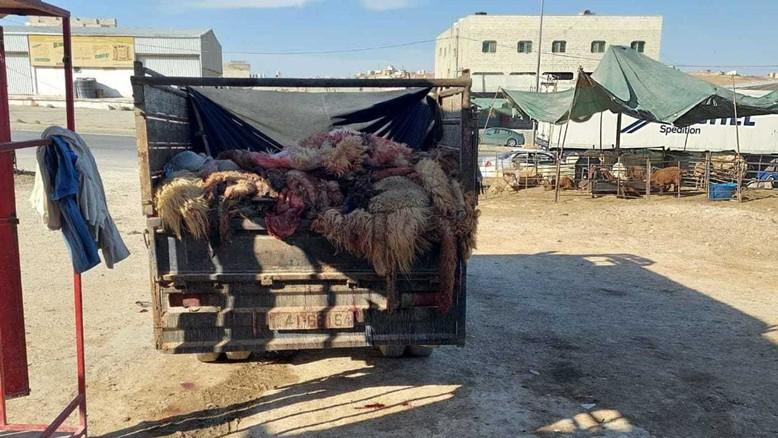
Now new recordings show the terrible mistreatment of European sheep in Jordan.
But this is not an isolated case – the system behind it has assumed frightening proportions.
Videos were leaked to the global animal welfare organization “Four Paws” showing dozens of sheep being brutally killed in a ditch near Amman,Jordan.
Meanwhile, their conspecifics have to watch their murder in a crowded paddock next to it.
Jordan
Sheep from Romania and Spain were among those killed, as their ear tags revealed.
These are gruesome recordings that are now coming to light: The videos that “Four Paws” has now received show how a sheep is herded to the butcher, past other sheep that are already dead and lying on the ground in their own blood.
Another clip shows the last spastic movements of a half-dead animal while the butcher is skinning another sheep directly above it.
Right next to the slaughterhouse, in an overcrowded paddock, dozens of sheep are waiting for the same fate, full of fear and no possibility of hiding, and have to watch their conspecifics being murdered next to them.
Once again the German Animal Welfare Office uncovered massive animal cruelty in a pig fattening facility. The recordings from the halls of the facility are difficult to bear.
Many of the animals have curly tails.
Some have bloody injuries on their legs, so that the animals can only move with great pain.
In some animals, abscesses the size of a handball have already formed, which are clearly not treated by a veterinarian.
The extent of neglect is unimaginable.
Many of the animals seem apathetic, others are dying.
The recordings come from one of the largest pig fattening facilities in Lower Saxony, in the municipality of Merzen.
Particularly spicy: the owner and co-operator of this facility is the deputy mayor of the municipality of Merzen (!!!).
Over the years, the conservative politician has built up an opaque family-company network.
He and his family members operate various mast systems.
More than 100,000 euros in EU funding are received every year.
These are financed by taxes that we all pay.








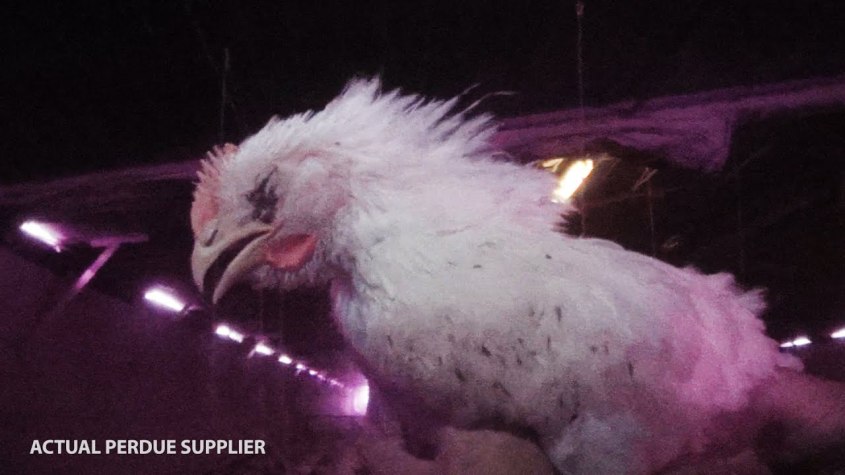
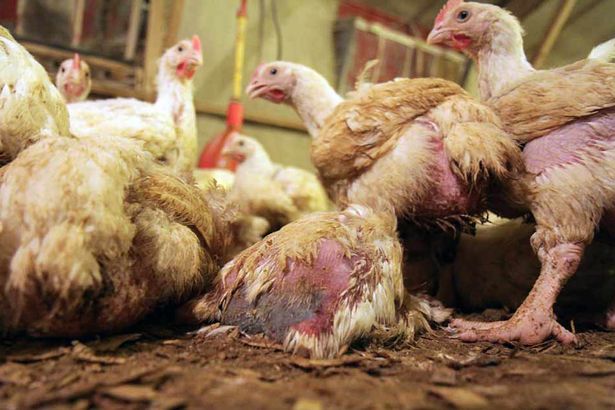


 Images of a alleged Perdue supplier. (Courtesy MFA)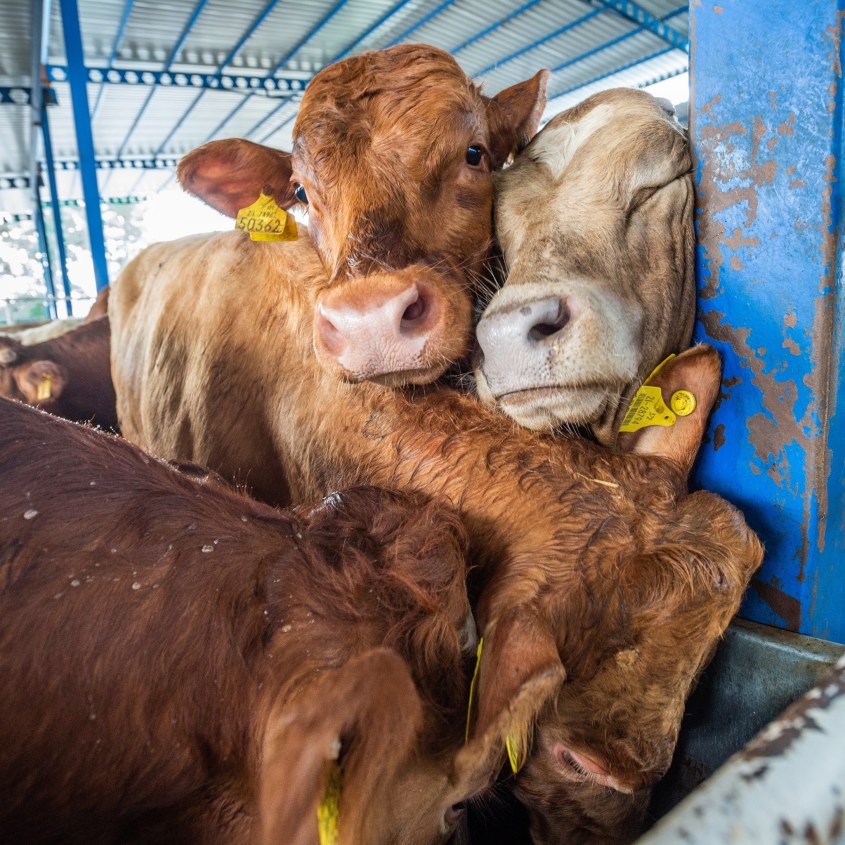
 Jordan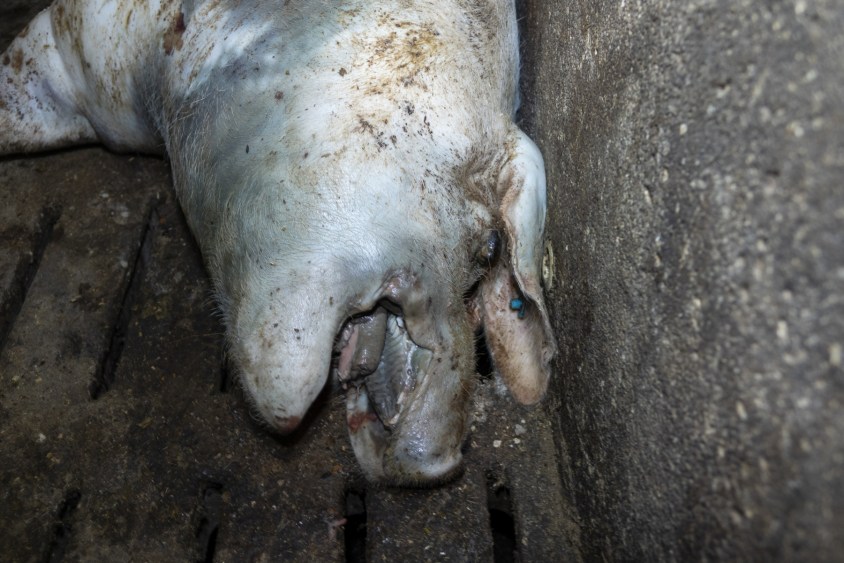
 The extent of neglect is unimaginable.
