This investigation was carried out at the breeding facility and the pig slaughterhouse at Kibbutz Lahav ** New Covert Investigation 2020 **
This investigation was carried out at the breeding facility and the pig slaughterhouse at Kibbutz Lahav
Operating for about 60 years!
This historical record tells the reality in which the pigs live
And the variety of practices and experiences they go through to the last day of their lives.
Feel free to watch and learn about this industry
And of course anyone interested in making a change
And stop eating animals
The 10 best countries for vegans and vegetarians India Israel Taiwan Australia Greece Italy Indonesia Jamaica Poland Canada
we read on …”When it comes to pure vegan food, Israel could also be at the top. There is the highest per capita rate of vegans in the world and there are more and more. Accordingly, the selection of vegan food and vegan restaurants is huge. As in other countries in the Middle East, falafel, hummus, couscous, and tabouli are part of everyday life and are vegan anyway”
On Facebook, we also read from Yair Netanyahu, son of the country’s president:
“Have mercy on animals!Please don’t eat meat!🐄🐐🐓גלו רחמים כלפי בעלי החיים!בבקשה אל תאכלו בשר!”
Most of the people in the country don’t know about such crimes or they just don’t care.
There are about 200,000 pigs on the land of the State of Israelkilled for the pork industry in the same or a similar way.
Of course, German investments also show similar situations at German slaughterhouses.
But Germany is not even in eleventh place among the vegan countries.
And apart from that!The fact that the same animal torture happens elsewhere does not make the bad conditions in this country any better.
India, too, the first country on the list, is not on the right track and is becoming more and more capitalist and therefore worse and worse.
But Israel has received much praise from many media and animal welfare websites for the allegedly increased vegan awareness of the Israelis and is very often reported on the latest developments in animal welfare in the country
Apparently, it is purely media and travel- industry propaganda. This is how media propaganda works.
P.S: Following this investigation, a criminal complaint has been filed into the location.
As you read this, Cam is desperately waiting to get out of his tiny cage. He is trapped in a bile bear farm in Hai Phong province in Vietnam.
When we visited him at the farm, he was pacing around in the cage, climbing up and down and biting the bars, trying everything to escape this sad and barren environment.
We don’t know anything about his past but can see he is pretty young. He still has his whole life ahead of him.
Without help, his life would consist of nothing but the bars of this cage.
Never getting the chance to feel the grass under his feet. Never climbing up a tree. Never playing with another bear.
Nothing would make us happier, than bringing him to our beautiful BEAR SANCTUARY Ninh Binh. How excited would he be, when he discovers the huge outdoor enclosure for the first time? Experiencing all the lush vegetation, trees, climbing platforms and pools to swim in. Experiencing what a bear life can look like.
Mark, we can’t leave Cam behind, right? Will you help to free the young bear from his tiny cage?
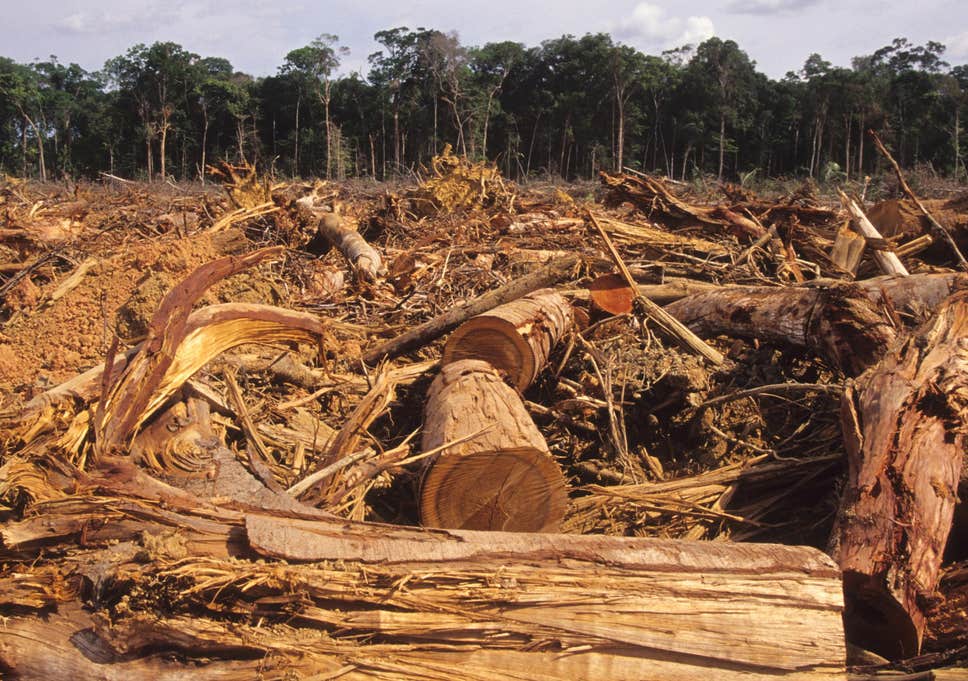
Beef production drives deforestation five times more than any other sector
22 April 2021
A research published in the World Resources Institute in March 2020 found that two of the main products responsible for deforestation are beef and soy, the latter being used for animal feed. The EU, as net importer of these products, should address the impact of such imports on the environment and on animals to ensure coherence between EU trade policy and the EU Green Deal.
According to a research by Global Forest Watch, the total loss of tropical forest increased by 12% overall between 2019 and 2020. Agriculture is the top source of worldwide deforestation (40%), and among the top commodity-drivers of deforestation, beef holds the first place.
Overall, beef is responsible for 36% of all agriculture-linked forest-replacement. The huge responsibility borne by the beef industry is due to the conversion of forests into cattle pasture, which amounted to 45.1 Millions hectares of lands deforested between 2001 and 2015 – a rate that is five times higher than for any other analysed products.
Soy also ranks seventh in the study, as it is responsible for the destruction of 8.2 million hectares of forests between 2001 and 2015. Soy is widely produced to serve as animal feed, notably in the poultry (37%) and pigs sectors (20%). Therefore, the role played by the meat industry in global deforestation largely exceeds the role played by the beef sector itself.
The findings by Global Forest Watch are deeply alarming, as rampant deforestation has clear impacts on wildlife and their habitats and can lead to the extinction of species that only exist in one specific region. 80% of terrestrial species live in forests, and the world is currently undergoing the sixth great mass extinction of species, which is mainly due to agriculture, according to Global Forest Watch’s report. Deforestation is also a source of many welfare-related concerns. With the increase in wildfires, animals -wildlife, but also pets – are suffering and many do not manage to escape. For the surviving wild animals, many are displaced and will generally suffer from starvation and social disruption.
Whilst hot spots of deforestation vary by sector, the beef industry related deforestation is highly concentrated in the Amazon, which is home to millions of species.In Brazil alone, which hosts the largest part of the Amazon, over half of the deforestation came from pasture in the last twenty years. The responsibility borne by agriculture (including the beef sector) on the Amazon’s deforestation is much higher than in other parts of the world, reaching 56% in 2020 whereas agriculture is generally responsible for 40% of deforestation.
Considering that agriculture-driven deforestation is permanent (whereas lands that suffer from deforestation caused by fires may regenerate), this adds a sense of urgency for the EU to uphold its sustainable agenda. Mercosur is already the largest supplier of beef to the EU, accounting for 73% of total EU beef imports. If the EU-Mercosur trade deal was implemented as it stands, imports of beef would increase between 30% and 64%. The Ambec report – the impact study commissioned by the French government – concluded that, as it stands, the EU-Mercosur agreement would generate an extra 25% of deforestation in the Amazon in the six years following its entry into force.
As Eurogroup for Animals has been continuously advocating, the unconditional liberalisation of animal products foreseen in the EU-Mercosur trade deal would fuel intensification of animal farming, which not only is extremely detrimental to animal welfare, but would also highly contribute to fuel deforestation. We thus call on the EU to uphold the objectives of the Farm to Fork Strategy, which are to use trade policy “to obtain ambitious commitments” from partners in key areas such as animal welfare.
The EU must take the opportunity of the EU-Mercosur agreement to negotiate the adoption by Mercosur countries of EU-equivalent legal standards in key sectors (beef, but also broiler chicken and laying hens), as well as in terms of transport, or to agree on conditions to access tariff-rate quotas or liberalisation in animal products, including the respect of EU-equivalent animal welfare standards.
Several cases of bird flu have been discovered in Denmark. The authorities ordered the animals concerned to be slaughtered.
After a new outbreak of bird flu, 19,000 geese and ducks have to be killed in Denmark. As the veterinary and food authority announced on Wednesday, they want to start culling the animals on Thursday in order to prevent the pathogen from spreading further.
“We were on the verge of lifting the restricted zones after the recent outbreaks in West Zealand and were looking forward to an end to the epidemic,” said Deputy Head of Department Tim Petersen.
“So it is unfortunate that we have a new outbreak.”
The H5N8 avian flu is a deadly disease for birds. Poultry flocks could be infected by wild birds foraging for food.
Bird flu has been affecting Danish poultry farms for five months.
The current outbreak was the 15th since November, the message said. Due to the epidemic, chicken and poultry owners across Denmark are required to keep their animals under or locked away.
In addition, each outbreak creates additional local restricted areas for owners of chickens and other birds.
And I mean…First tons of fur animals and now the poultry. Just the expression “they want to start culling the animals …” reminds us of the mass murder of fur animals and shows what fascism we live in when it comes to other animals.
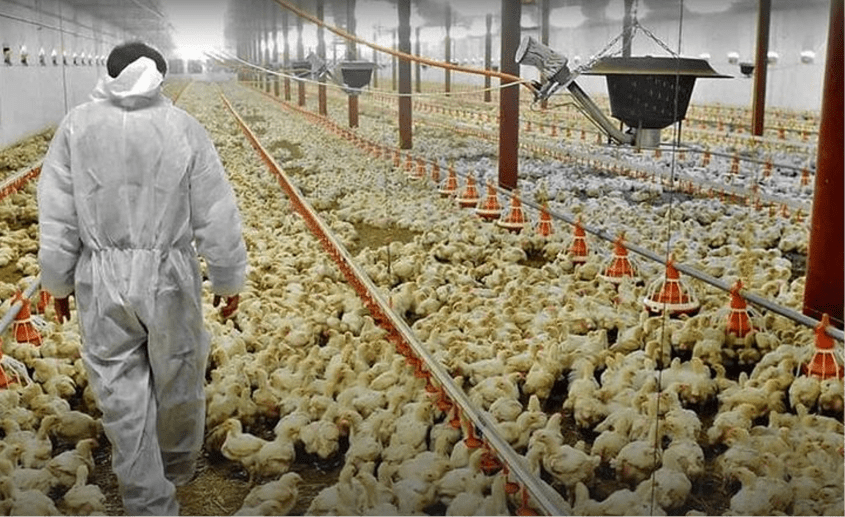
Just take a good look at the picture above for 1 minute.
Concentration camp – that is the cruel and torturous factory farming.
Thousands upon thousands of animals in a confined space in artificial light.
No wonder when epidemics break out, such animals are very often pumped full of antibiotics. With such animal husbandry, the risk of epidemics and severe diseases increases enormously.
First with animals and then with humans.
And then we banish the danger for us, human animals with – as always – the mass murder of the innocent.
Wouldn’t it have been a good strategy for Corona to “cull” too?
EARTHDAY.ORG’s mission is to diversify, educate and activate the environmental movement worldwide. Growing out of the first Earth Day in 1970, EARTHDAY.ORG is the world’s largest recruiter to the environmental movement, working with more than 75,000 partners in over 192 countries to drive positive action for our planet.
Our world needs transformational change. It’s time for the world to hold sectors accountable for their role in our environmental crisis while also calling for bold, creative, and innovative solutions. This will require action at all levels, from business and investment to city and national government.
That’s where you come in: As an individual, you yield real power and influence as a consumer, a voter, and a member of a community that can unite for change.
Don’t underestimate your power. When your voice and your actions are united with thousands or millions of others around the world, we create a movement that is inclusive, impactful, and impossible to ignore.
Every Earth Day can drive a year of energy, enthusiasm, and commitment to create a new plan of action for our planet
What’s the real cost of meat? New Italian report sheds light on the 36.6 billion euro bill, in terms of damage to the environment and to the health of consumers
19 April 2021
LAV
Press Release
New report on the hidden costs of meat consumption in Italy reveals the environmental and health impacts which fell on society. If we were to include the hidden costs, one kilogram of beef would cost on average 19 euro more.
The environmental and health costs of meat production and consumption are not included in the price paid when buying it. Citizens pay the price of these hidden costs which have now for the first time been scientifically quantified.
LAV, commissioned the first independent scientific study on the environmental and health costs of meat consumption in Italy, focusing on the most consumed meat in the country: poultry, beef, and pig. The emissions generated at all stages, rearing, slaughtering, processing, packaging, distribution, consumption and waste treatment, have been converted into economic costs for society through a life cycle assessment (LCA) approach.
The environmental costs are obtained assigning a monetary value to the impact assessed via the LCA on 11 environmental categories (1). In one year, the emissions associated with the beef life cycle alone amount to over 18 million CO2 equivalents, with a hidden annual cost of over 1 billion euro. This is equivalent to the amount of greenhouse gases emitted by the largest and most polluting coal-fired power stations in Europe.
In addition to emissions of greenhouse gases, there are also the ones from particulates and acidifying gases in stables, and emissions of nitrates and pesticides into the soil. Together they generate the indirect cost of damaging ecosystems, for example agricultural losses due to acid soils and lack of pollinators due to pesticides.
The healthcare costs are estimated in DALY (Disability-Adjusted Life Year) and are based on the average daily consumption in Italy. Approximately 350,000 years of life are calculated to be lost each year in Italy due to meat consumption. The risks cover contracting colorectal cancer, type 2 diabetes, and stroke, and this is likely a conservative estimate, since the damage caused by other diseases associated with meat consumption, such as antibiotic resistance or cardiovascular diseases, were excluded due to the lack of a robust scientific literature.
In Italy, on a yearly basis, the hidden environmental and health costs amount to 36.6 billion euro with the average cost almost equally divided between environmental (48%) and health costs (52%).
The report shows the unsustainability of meat consumption in Italy and the same situation could easily be mirrored in other Member States. But alternatives exist: 1kg of chicken or pork generates 8 times more costs for society than the same amount of legumes; 1kg of beef generates costs multiplied by 23 times.
Eurogroup for Animals and LAV, based on the evidence found by the study, believe that it is time to bring forward the hidden costs of meat and implement policies to support the uptake of proteins of plant origin as an alternative to animal proteins. In order to move in this direction, it is essential that the numerous subsidies supporting the livestock industry, in different phases of the production cycle, are soon eliminated.
The results of this study are worrying and we also need to consider the suffering to animals the meat industry creates. In line with the Farm to Fork strategy, the EU has the ultimate opportunity to move away from harmful and pollutive intensive livestock farming systems and transition to a food policy that truly embraces humane and sustainable proteins production.
Reineke Hameleers, CEO, Eurogroup for Animals
At a historic time when, after the COVID-19 pandemic, attention to the devastating potential of animal food production has increased, and when numerous international bodies warn that an urgent reduction in meat consumption is necessary, the results of this study must represent an inescapable fact for political actors, also with a view to achieving the Sustainable Development Goals of the 2030 Agenda and the Paris Climate Agreements. Thinking that we can achieve an ecological transition without immediately initiating a decisive food transition is illusory, or worse, it is false.
Notes 1) The environmental impact categories considered are: climate change; ozone layer reduction; land acidification; eutrophication (divided into freshwater and marine); human toxicity; photochemical smog formation; particulate formation; eco-toxicity (divided between terrestrial, freshwater, and marine); ionizing radiation; land occupation; and water consumption.
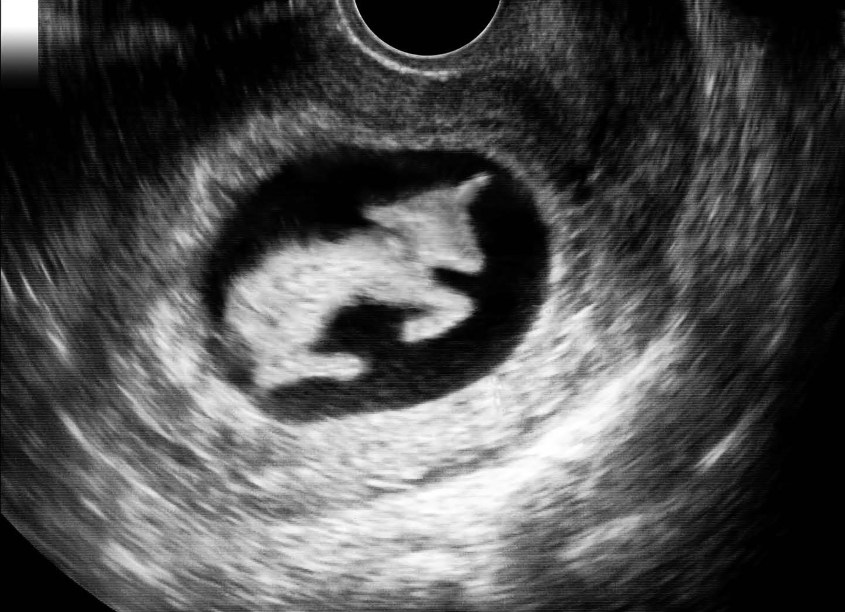
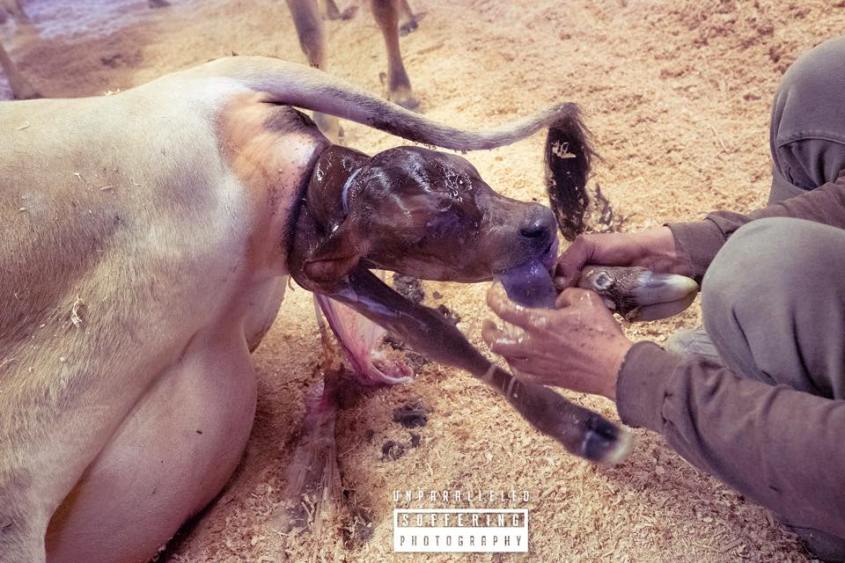
740 tons of calf blood ordered and not collected The serum is taken from the unborn calves of slaughtered pregnant cows.
Such slaughtering is not welcome in Switzerland, which is why the substance, which is important for pharmaceuticals, is imported by the ton.
It’s all about this
-Because a Basel pharmaceutical company went bankrupt, a Dutch importer is now stuck with 740 tons of calf blood.
-The blood serum is obtained from unborn calves from slaughtered dams. The practice is controversial.
-The substance is important for the pharmaceutical industry but has to be imported.
What to do with 740 tons of frozen calf blood that nobody wants?
This is the question asked by a Dutch freight forwarder who was supposed to import the substance for a pharmaceutical company in Birsfelden (municipality in the canton of Basel). The buyer went bankrupt at the end of last year, now the shipping company has stayed on the load, as the «Basler newspaper» writes.
The original value of 1.3 million euros has now shrunk to just 35,000 euros (!!)
Even destruction would cost twice as much.
But why does a Swiss company need hundreds of tons of calf blood from abroad?
According to the “«Basler newspaper»“, it was used in Birsfelden to produce Solcoseryl, an adhesive paste for use in the mouth.
The blood serum obtained from unborn calves is rich in enzymes and nutrients and is often used where small organisms are artificially bred, for example in the development of vaccines (!!)
Controversial practice
In order to get to the substance, however, you first need an unborn calf.
This is removed from the uterus after the pregnant mother has been slaughtered.
Because the slaughter of pregnant cows is not welcomed in Switzerland, the material has to be imported.
According to the “New Zealand Herald”, the blood is removed from the heart of the fetus with a needle, which gives around 300 milliliters.
The liter is then exported from New Zealand around the world for the equivalent of around 1,600 francs.
The slaughter of pregnant cows and the taking of blood from their unborn calves are repeatedly criticized by animal rights activists. «Forbes», writes that it is unclear whether the calves feel pain.
The “Herald” quotes an anonymous insider, according to which the dams suffer because they are transported during the gestation period.
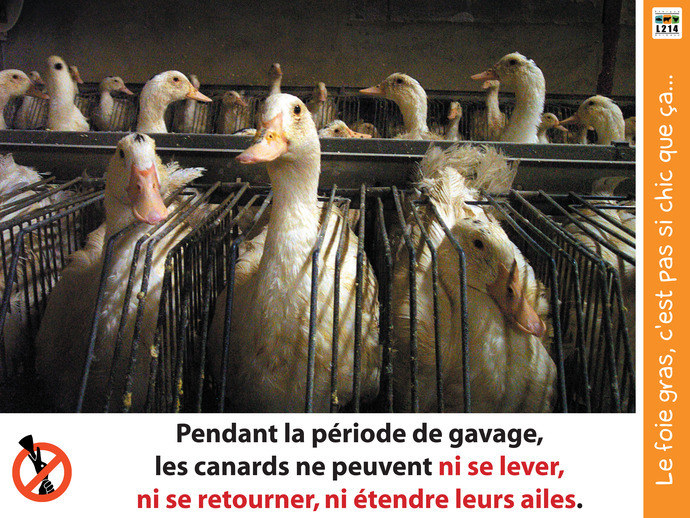
‘We love foie gras’: French outrage at UK plan to ban imports of ‘cruel’ delicacy
UK officials are exploring restrictions on product after minister described it as ‘unbearably barbaric’
The head of France’s foie gras producers’ association has said she is “shocked and outraged” that the British government is considering banning imports of the product.
And she has invited MPs to visit French farms producing foie gras to see the force feeding of ducks and geese and judge for themselves whether it is “cruel and torturous”, as animal rights campaigners claim.
Marie-Pierre Pé, director of the Comité Interprofessionnel des Palmipèdes à Foie Gras (CIFOG), which represents about 3,500 foie gras producers, said: “I am shocked and I deplore the fact that the freedom to sell a perfectly healthy product defined under international conventions is threatened.
“For a country that promotes freedom of trade, it is not only paradoxical but shows a lack of understanding of our production as well as the problem of judgments based on anthropomorphic perceptions that the animal used in the production is suffering.
“Clearly, they don’t know how we do our job. Before taking this decision I invite them to visit a foie gras producer so they can make a rational decision. We have nothing to hide and we operate with complete transparency.”
Asked about the gavage, the most controversial aspect of foie gras production, where long tubes are pushed down the birds throat to pump food into the digestive system, causing the liver to swell to several times its natural size, Pé said campaigners were anthropomorphising – attributing human characteristics to animals – by claiming this harmed or hurt the ducks and geese.
“People have to stop imaging a tube being inserted in their own throat, because a duck and goose’s throat is nothing like yours. For a start, the duck’s throat is elastic and at the base there is a pocket that allows them to stock food – called gésiers, which is like our stomach,” she said.
“It does no harm to them. Of course, you have to know how to insert the tube, but if done properly the animal does not suffer and scientific studies have been made into the possible effects of the gavage, so we know.”
“The gavage is done twice a day respecting the digestive rhythm of the animal. We cannot force the digestive cycle because if we did it would then get blocked and you wouldn’t get the foie gras.
“We cannot say there are no accidents from time to time, but it is exceptional. A farmer has no interest in harming his own animals because that would kill them – and his production.”
A cross-party group of British MPs has written to ministers urging them to ban sales of foie gras in the UK. The letter to the environment secretary, George Eustice, and the animal welfare minister, Lord Goldsmith, was coordinated by the campaign group Animal Equality.
“Over the coming months, thousands more ducks and geese will endure torturous treatment for this cruel product,” the letter states.
The (UK) Department for the Environment, Food and Rural Affairs said it was “exploring further restrictions” to the delicacy following reports that Goldsmith was determined to ban sales in the UK, having described it earlier this year as “unbearably barbaric”.
Abigail Penny, executive director of Animal Equality UK, said: “Foie gras is the definition of animal cruelty and people are clearly united in their hatred for this wicked product. We simply cannot tolerate this any longer. A ban can’t come soon enough.”
However, opponents of a ban disagree. Richard Corrigan, who runs several Mayfair restaurants, has said that a ban would take the UK into “nanny-state territory”, while George Pell, the co-owner of L’Escargot, said there was a “paradox between people happily eating industrially farmed food products and advocating the ban”.
Pé said the legality of foie gras production had been examined “several times” and had been found to conform with European food regulations.
“Yes, there have been videos with shocking images from farms but they are exceptions and those farms do not reflect our sector and our profession,” she said. “Our farms are controlled by the authorities and the producers pledge to guarantee the welfare of the animal.”
She added: “I can understand if people don’t like foie gras, or they don’t want to eat animals or animal products, but there is respect for the animals in our production. I have no problem stating this because I know it is true.
“I am outraged and sad,” Pé said. “Surely the British government will not pass a law based on one-sided arguments. I personally invite them to come and see for themselves.”
Pé said foie gras had been singled out for a ban, “because foie gras is a gastronomic symbol of France. I think we are an easy target.
“It’s a recurrent theme and strategy by the animal rights groups. They produce sensational images to influence economics. We should ask ourselves, ‘are we being manipulated?’”
France is the world’s largest producer, consumer and exporter of foie gras. CIFOG says French farmers produced 15,000 tonnes of foie gras last year – down on the 18,800 tonnes produced in 2019 – mostly in and around the Périgord region, in south-west France. Up to 5,000 tonnes are exported annually, with up to 200 tonnes a year coming to Britain.
Pé said that despite Covid restrictions that shut winter markets and hit sales before the Christmas holidays – a period when foie gras is traditionally eaten – producers reported 1.2 million new French buyers in 2020. The sector has since been hit by outbreaks of avian flu.
“There is no problem in terms of support for our products in France,” she said. “The French love foie gras, there is extraordinary support for it,” she added.
Cruelty in a Jar – Foie Gras
Regards Mark – from ‘The Guardian’ London; Brilliant article as always;
The Intergroup on the Welfare and Conservation of Animals is calling to replace live export with a trade in meat, carcasses and genetic material
16 April 2021
In view of the announced revision of the Council Regulation (EC) No 1/2005 (Transport Regulation), Members of the European Parliament (MEPs) joined forces and set up the Animal Transport Working Group within the Intergroup on the Welfare and Conservation of Animals.
There is a growing concern around the sustainability of live transport from animal health and welfare, environmental, societal and economic perspectives.
Taking stock of all the violations to the current animal transport legal framework, as well as the evidence about the unfitness of such a system, MEPs decided to publish a Manifesto to outline the main changes that should be translated into law.
Among others, the MEPs are calling for:
Trading meat, carcasses and genetic material instead of live animals, with non-EU countries Setting up species specific journey times for the intra-EU trade, within a maximum journey time of 8 hours for adult mammals
Introducing species-specific requirements for the commercial movements of fish and invertebrates, laboratory animals, equidae, cats and dogs
Effective monitoring and enforcing mechanism to foster legal compliance
The Manifesto follows up on the recommendations made by Eurogroup for Animals in its White Paper on the revision of the Transport Regulation, published in January 2021.
POTUS Joe Biden is being urged to shift to a plant-centered food system to ‘combat climate change‘.
To mark Earth Day (April 22) the politician is hosting his first climate summit as President. There, he will discuss the ‘urgency of stringer climate action’ with 40 world leaders.
POTUS Joe Biden
Biden has also announced a $2 trillion proposal to ‘strengthen infrastructure while also tackling climate change’.
However, the plan does not include the promotion of animal-free food or support farmers in transitioning from traditional animal agriculture to plant-based production.
At the time of writing, the petition has garnered more than 1,500 signatures already.
‘A terrifying prospect in climate change’
Moreover, Michael Webermann is the US Executive Director of ProVeg International. In a statement sent to PBN, he said: “To discuss environmental crises without centering food production is to wilfully avoid the facts.
“What we eat affects not just climate change, but the biggest issues facing the planet, including pandemic risks, deforestation, antibiotic resistance, and food insecurity.
“For instance, the FAO tells us that if 40 percent of all crops produced for feeding animals were used directly for human consumption, we could feed nine billion people by 2050. One has to ask when policy will reflect the urgency of this situation?”
Webermann then concluded: “We’re facing a terrifying prospect in climate change, but in diet change lies a real solution.
“Plant-centered diets, if adopted by many, could be the key to this crisis. We have scientific consensus. Biden’s plans must reflect it.”
 Symbol picture: Instagram