Animal Equality has published harrowing footage of chickens suffering on a German farm used by the country’s largest chicken producer, Wiesenhof.
The company’s products are distributed widely, including by major German retailers Edeka and Rewe.
THE DETAILS: During undercover research at a broiler chicken farm in the German state Saxony-Anhalt from February to April 2020, numerous violations of animal welfare regulations were documented.
The resulting material was leaked to Animal Equality and on December 11, 2020, we filed a complaint against the farm with the relevant German authorities. The images captured by activists are disturbing:
– The animals are brutally kicked and aggressively pushed through the hall by the workers.
– The workers repeatedly perform so-called emergency kills in violation of regulations and animal welfare. The animals’ necks are twisted, and these attempts to kill them take place without anesthesia. In many cases, the animals are disposed of alive in buckets.
– Many of the animals writhe in pain after the cruel killing attempts, sometimes for several minutes until they slowly die in agony.
BACKGROUND: In this operation alone, approximately 210,000 animals are affected by such cruel conditions.
The PHW Group, which includesWiesenhof, is Germany’s largest poultry breeder and processor and one of the largest companies in the German food industry, slaughtering 354 million birds annually.
Wiesenhof: It is routine practice in the poultry industry to dispose of animals while they are alive.
CREATING BREEDING GROUNDS FOR DISEASE: In today’s world, the impacts of inadequate hygiene measures on farms are more important than ever.
WAV Comment – This is fantastic news. And take it from me (Mark – Englishman); to have Mike Mansfield involved could not be better. He has been a plant based foodie for a very long time; and is one of, if not the, most respected legal people in the country – a legal genius. He has always been dedicated to improving animal welfare, which is probably why he has decided to become involved with this case; especially if it against the government for the better of animals.
I would guess that now, government legal people must be quaking in their boots a bit; regardless of the outcome; which we all wish will be positive; Mike will ensure the issue gets maximum publicity. Win win !!
Regards Mark
Below – Mike Mansfield QC. Legal Genius and Non Meat Eater; Animal Rights Defender.
RSPCA calls for cut in meat and dairy as activists launch legal fight to end factory farming
Exclusive: Case believed to be the first of its kind worldwide will challenge ministers over intensive animal agriculture
Animal-welfare activists are planning a legal challenge to the government to force ministers to end factory farming in the UK to halt damage to the environment and human health.
And RSPCA members have also called for a major cut in meat and dairy consumption in what has been hailed a landmark decision after years of debate over how much the charity should speak out on climate issues.
In the legal case, believed to be the first of its kind in the world, members of a group called Humane Being are crowdfunding with the aim of raising £60,000 to force ministers to curb intensive animal agriculture.
They say it is a major cause of greenhouse gas emissions and risks starting new pandemics by spreading viruses, as well as causing deforestation, animal cruelty and antibiotic resistance.
Phasing out intensive animal farming would end the harm and help create systems of producing food that are more sustainable to feed the world’s population in the long term, they say.
The legal team includes Michael Mansfield, the human-rights lawyer who has acted in cases from the Stephen Lawrence murder to Hillsborough and the Grenfell disaster.
The group has already written to George Eustice, the environment secretary, asking whether the issues have been considered and whether there are any plans to ban industrial farming or remove subsidies.
Earlier this month, RSPCA members voted at their AGM by 88 per cent to call for an end to intensive animal agriculture in the UK and for a significant cut in meat and dairy consumption to achieve the country’s climate targets.
Jane Tredgett, a former board member of the charity and the founder of Humane Being, said: “It is great to see the RSPCA getting on board with this messaging.
“I spent 10 years urging the RSPCA to be more progressive. Under the new chief executive, Chris Sherwood, the society is now moving forward (and closer to the vision of the original bold founders) and this vote symbolises that.”
Peta Smith, another campaigner, said: “We hope this proves to be a landmark decision for the RSPCA. Slavery abolitionist William Wilberforce co-founded the society in 1824.
“We are trashing our planet for a dangerous and short-term fix of cheap meat and dairy.”
The RSPCA resolution acknowledged “the serious immediate and long-term issues linked to factory/ intensive farming of animals” and calls for an end to UK-based intensive animal agriculture.
It cited climate crisis targets, environmental pollution, pandemic risks, antibiotic resistance, global food security and farming systems that “deny sentient, intelligent animals any sense a normal life, whilst subjecting them to painful mutilations with no anaesthetic or pain relief”.
The vote is not binding but Ms Tredgett said they were looking to the board to take concrete steps to promote a ban on factory farming.
The World Health Organisation and other UN experts have pinpointed animals or food of animal origin as a starting point for emerging diseases, such as Covid-19, and some of the world’s leading scientists have warned future pandemics are likely to be more frequent, spread more rapidly and kill more people if humanity continues to exploit animals.
Livestock account for 14.5 per cent of global greenhouse gas emissions, according to the United Nations’ Food and Agriculture Organisation.
A report last month warned a new bird flu virus with “high transmissibility” would make Covid-19 appear mild, with factory-farmed chickens exposed to a “cocktail” of infections, creating a “near-perfect breeding ground” for a disease outbreak of pandemic potential.
David Finney, of Humane Being’s Scrap Factory Farming campaign, said: “We are sitting on a pandemics timebomb. Factory farming – with huge numbers of animals in cramped and unhygienic conditions – is the perfect breeding ground for these diseases.
“We may eventually get control of Covid-19 but we are doing nothing about the conditions that created it in the first place.”
Asked by The Independent whether realistically the government would shake up an entire industry, Mr Finney said: “While of course there is a possibility they may not, the risk of deadly zoonotic diseases hitting factory farms makes the challenge more serious; if they don’t seek to bring about the end of factory farming, the government is not adequately protecting its citizens; 14 outbreaks of avian flu hit British farms just before Christmas.”
He said he was confident the £60,000 needed for the full legal challenge would be raised. So far, nearly £5,000 has been raised.
“The scale of factory farming is also incredibly cruel,” he added. “Pregnant pigs are confined in metal crates before giving birth; they have no room to turn around for up to 12 weeks a year. Calves are removed from their mothers within days or even hours of birth.”
Lorna Hackett, of the legal team, said: “Dietary over-reliance on animal products produced by intensive means has created an environmental and human health imperative.
“This case, which we believe to be a global first, starts with a key mitigator – the banning of cruel factory farming. That is breeding and risking incidences of disease that pose a health risk that the authorities cannot continue to ignore.”
Mr Sherwood said the RSPCA had a goal of seeing at least half of all farm animals in the UK reared to RSPCA welfare standards, and encouraging the public to reduce the amount of meat they eat, choosing higher welfare options and laboratory-grown meat when it is commercially available.
A spokesperson for the Department for Environment, Food and Rural Affairs said: “We’re proud to have some of the highest animal welfare standards in the world, and we are fully committed to strengthening them further to ensure all animals avoid any unnecessary pain, distress or suffering.
“That is why we will be bringing in new laws on animal sentience and are currently reviewing slaughter welfare regulations.”
A bunch of crazy vegans got together and decided to do something amazing: convince the public to chip in and buy a plot of land once used for grazing dairy cows to turn it towards something plant-based. Is their crowdfunding victory a fluke, or is it a sign that the world is finally changing? Jackie Norman looks at other projects at the vanguard of alternative land use.
A landmark purchase is ‘just the beginning’ for an organisation whose mission is to acquire land currently used for animal agriculture, and give it back to nature and the sentient life that depends on it. The Vegan Land Movement made history in September when they successfully won an auction for 3.3 acres of dairy grazing land in the UK, purchased with donations to their funding platform, Global Vegan Crowd Funder.
From the outset, support for buying out the land was high, with donations flooding in on social media from those eager to be a part of something which collectively could make a big difference. The land, at Earlake Moor in Somerset went under the hammer for £16,000 and promises to become a fertile haven in an area surrounded by dairy farming. This huge milestone is a powerful indication of the public desire for change, resulting in another inspiring example of how many areas of farmland are being transformed around the world.
Growing oats with ease
With sales of plant-based alternatives increasing by 25% last year alone, more and more dairy farmers in Switzerland are recognising the extent of animal suffering and working on transforming their land into kinder, more sustainable enterprises where a variety of crops can be grown to benefit both animals and people. One such example is Urs Marti, whose family milked cows for generations. Today, Urs and wife Leandra Brusa are responsible for producing some of the country’s first organic oat milk and also grow polenta corn and lentils:
“We no longer wanted to be part of this eternal cycle in which the cow is inseminated, the calf is taken away, the cow is milked, the calf is fattened and slaughtered – and then everything starts all over again. The animals no longer have to do anything here, except grow old, fat and happy.”
In return, the cows aid the growing process by simply being themselves, helping to cultivate and fertilise the land.
A cow’s milk can only flow when calves are born. Therefore, dairy cows have to be inseminated and give birth all the time. The new-born calves are shredded into dog food or sold abroad. The screams of mothers for their children are bloodcurdling.
Hazelnuts and hiking
Fellow countrywoman Danique Kottelenberg has been instrumental in encouraging her parents, Gerard and Joke, to convert their dairy farm from animals to plants. A sixth-generation farmer, Danique has her eyes firmly set not on milking cows like the generations before her, but using the land to grow hazelnuts and almonds:
“Why are we buying hazelnuts from other countries when they can be grown well here?”
The family’s new sustainable farming plan also includes an edible native forest of almost four hectares, which will produce berries, fruit and nuts. They even plan to create hiking trails in the forest for overnight hikers and would-be foragers, demonstrating there is no shortage of options for those who want to truly make the most of their fertile and beautiful land.
From slaughterhouse to sanctuary
In Beat and Claudia Troxler’s eyes, there is no difference between farm animals and pets. ‘They are all equally valuable and individual’. Until recently, the Troxler farm was like any other ‘normal’ farm. Pigs were fattened and taken to the slaughterhouse every few months. Cows gave birth and their babies were taken and sold. No more, however. Today the farm is a ‘farm of life’, where the only milk in its future is oat milk and if space allows, the couple also hope to take in other animals rescued from the slaughterhouse. ‘Our cows are no longer inseminated and the calves are allowed to stay with their mothers and drink their milk. We have pigs, horses, alpacas. Everyone is happy and will be allowed to live here forever’.
Choosing kindness over cruelty
Shutting the gates permanently on his dairy farm may have been a gamble but for Pierre Zocher and his 110 cows it was worth it:
“A cow’s milk can only flow when calves are born. Therefore, dairy cows have to be inseminated and give birth all the time. The new-born calves are shredded into dog food or sold abroad. The screams of mothers for their children are bloodcurdling.”
Pierre wanted his animals to be treated with the respect and love they deserved, rather than as ‘goods’. There was one major obstacle however – how would he manage to maintain the costs of feed, water, electricity and other essentials for them and the land? Just like the Vegan Land Movement, Pierre discovered there is no shortage of people wanting to help make a difference and he was able to find sponsors for his entire herd, who support his project with EUR 50 per month. The ex-dairy farmer now operates organic agriculture and his cows have a safe home all together for life.
Keeping one step ahead of the plant protein demand
Sixth-generation cattle rancher Richard Traylor is living proof it’s never too late to change. He and his wife Cindy became vegan in 2018 after one of their cows, Honey, became injured and Cindy tried to find a sanctuary where she could live out her days, rather than being sent to slaughter. After reaching out to several sanctuaries with no luck, Cindy connected with fellow Texan Renee King-Sonnen, founder of Rowdy Girl Sanctuary. Not only did Renee find a home for Honey, she was also able to establish positive conversations with the couple about veganism. Today, instead of farming animals, Richard and Cindy are looking into growing all manner of different crops, including fava beans and peas, to keep one step ahead of the increasing demand for plant-based protein.
A lifeline for animals, and farmers
Fellow American Mike Weaver left behind 15 years of poultry farming after becoming disillusioned with welfare and practices and instead repurposed his chicken houses for growing hemp and extracting CBD oil. Both he and the Traylors have embraced the support and inspiration offered by animal welfare groups such as Mercy for Animals, Miyoko’s Creamery and the Rancher Advocacy Program, who are all committed to helping farmers transition away from livestock farming.
Swiss-based agricultural consultant Sarah Heiligtag has noticed a huge increase in farmers wanting to make the change, almost all of them dairy farmers:
“As many as five get in touch every week. The decisive factor is usually animal suffering.”
There is also the climate aspect: cattle farming is responsible for a large part of the emissions in agriculture. To help combat some of these effects in the Netherlands, the government launched an initiative last month in which livestock farms with high nitrogen emissions can apply for financial support to give up animal husbandry. Participation is voluntary and is part of the government’s goal to achieve a ‘healthy nitrogen level’ in at least half of its protected Natura 2000 areas by 2030. It plans to provide a total of 1.9 billion euros over the next 10 years to buy out companies who are willing to stop keeping livestock and instead use the land for nature conservation or other sustainable farming methods.
Dutch farmers already successfully implementing their own initiatives include brothers Bart and Tom Grobben, who began converting their dairy farm to soy and soy milk production in 2017:
“Our ancestors back then went with the times by producing cow’s milk. We as the youngest generation are also now responding to the developments of this time. With our own Dutch soy, we can continue to build on the foundation that the generations have laid before us. Together with consumers and other Dutch farmers, we are building an entirely new galaxy.”
So, what’s next for Earlake Moor?
With the land now safely tucked under their belt, the Vegan Land Movement say they are in no immediate hurry to redevelop:
“We are currently exploring a range of options; most likely the land will be rewilded and perhaps, in conjunction with local groups/volunteers we could consider establishing a community orchard or allotment. We want to see what already grows and flourishes naturally, which will steer us to enable the land to achieve its full potential with our assistance. This first land buyout is the start of what will hopefully be a powerful and transformative change to the way we live, eat and view the world. We are also working on creating a trust structure to protect Earlake Moor and any further buyouts in perpetuity. Other countries have developed structures to do just this and we are taking guidance from these pioneering examples.”
“Our vision is to unite people around this simple idea, which has begun with this small 3.3 acre plot of land. Then we may begin to see more and bigger land buyouts, more rewilding of our Earth, more veganic produce for us all to benefit from and less species’ declines. Imagine for example, the possibility of converting an intensive animal factory farm into veganic mushroom production? This is where the power of the Vegan Land Movement lies, in building a community to effect real change.”
Take PETA’s Cruelty-Free Shopping Guide along with you next time you head to the store! The handy guide will help you find humane products at a glance. Order a FREE copyHERE
Searching for Cruelty-Free Cosmetics, Personal-Care Products, Vegan Products, or more? Click HERE to search.
Free PDF of Vegan & Cruelty-Free Products/Companies HERE
Want to do more than go vegan? Help others to do so! Click below for nominal, or no, fees to vegan literature that you can use to convince others that veganism is the only compassionate route to being an animal friend:
These recordings all come from the turkey farm in Canton Aargau,Switzerland, which was shown in the Rundschau on June 24th, 2020.
The pictures were taken on two different dates in the same week in which the Swiss television and radio were present.
Unfortunately, these bad pictures were not published during the broadcast.
This is what turkey farming really looks like in Switzerland!
These are some of the unpublished videos of the turkey farm in the canton of Aargau, which was not shown in the Rundschau of 24.06.2020.
We would be very grateful if this video could be shared as often as possible so that many people can see the whole truth.
Under this link,- https://www.1individuum.ch/juni -you will find the complete investigation video from 4 different turkey farms in 3 cantons which shows that this is not an isolated case but the cruel standard in Swiss farms!
Text in the video:
1) Two nights later, the chicks were no longer in the “lounge”. We found them like disposable items in a chest between spray cans and tractors.
2) This individual was also no longer there two nights later.
3) This turkey was disposed of in a plastic bag in the shed outside the farm.
His head was already covered with maggots.
All of them were free-range companies with a label. Labels must be abolished.
Labels are only good for your conscience, but not for animal welfare
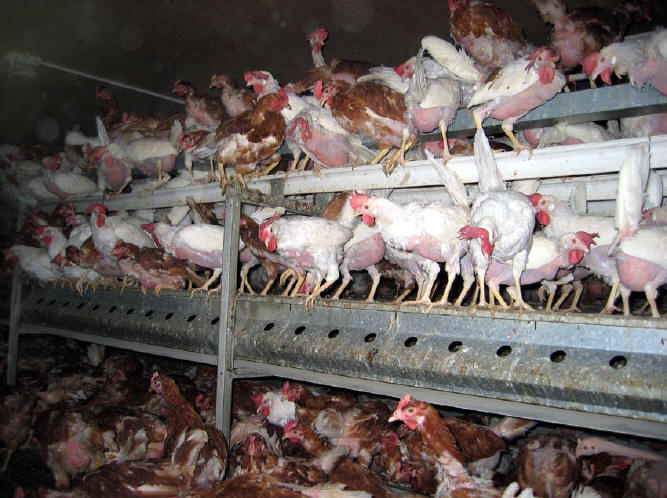
Typical Swiss chicken concentration camp with so-called floor-keeping
So…Swiss meat – the subtle difference? We say: Swiss meat – no difference
And I mean…By the way: Germany is the most important turkey supplier for Switzerland.
(Some information on general poultry farming in Switzerland according to Four Paws Organisation):
-“In Switzerland, over 7 million chickens are slaughtered for chicken meat every year.
Most of these chickens live in what is known as conventional husbandry. In concrete terms, this means in Switzerland: Floor keeping in a hall with little litter and no access.
These animals never feel the natural ground beneath their feet and cannot breathe fresh air. In addition, they are crammed into the smallest of spaces, according to the motto: Always more, always faster, always cheaper.
In Switzerland, around 15 adult animals can be kept with a final fattening weight of 2 kg per square meter. There is hardly more space than an A4 sheet of space for a single chicken.
In conventional fattening, a broiler chicken reaches its slaughter weight of 2 kg in a record time of 35 days (weight gain of 60 g per day). Some of the animals are even slaughtered early after 22 days and processed into “dung scratches”.
The mass production and high-performance breeding of broiler chickens have serious health consequences: Many of the animals suffer sudden cardiac death or cardiopulmonary failure (“ascites”) and suffer from joint damage.
Due to the rapid and violent weight gain, the animals can hardly stand upright and walk towards the end of the fattening period – they only eat and lie around.
The damp, fecal-contaminated litter often causes skin damage and inflammation and diarrheal diseases (“coccidiosis”) are not uncommon-”
Apart from the fact that factory farming is perverse, cruel, and absolutely unethical, it creates new diseases (mutated bacteria because the animals get antibiotics, etc. to eat, making the pathogens immune to them) and the drinking water is polluted.
“Eating meat is my human right, is a principle of life, is species-appropriate “.
That is the most widespread fascist ideology of the human species
Nobody has to eat meat.
Veganism is a very promising way to soon be able to feed 10 billion people adequately without completely destroying the earth.
But education is often uncomfortable. That doesn’t fit into the comfortable consumer life.
WAV Comment: Don’t rely on government for making changes; or you sometimes wait forever; it is people power that brings about change. Be a power person and defend the animals.
Dear Mark,
I would like to take a moment to thank you for all of your generositythis year and to wish you a safe and relaxing Christmas.
In a year which has brought us much uncertainty and loss, we have continued our fight for animals thanks to your support. Despite the challenges this year has brought, we are proud of our achievements and accomplishments.
We launched our documentary,HOGWOOD, on Amazon Prime and racked up an impressive accolade of awards and reviews.
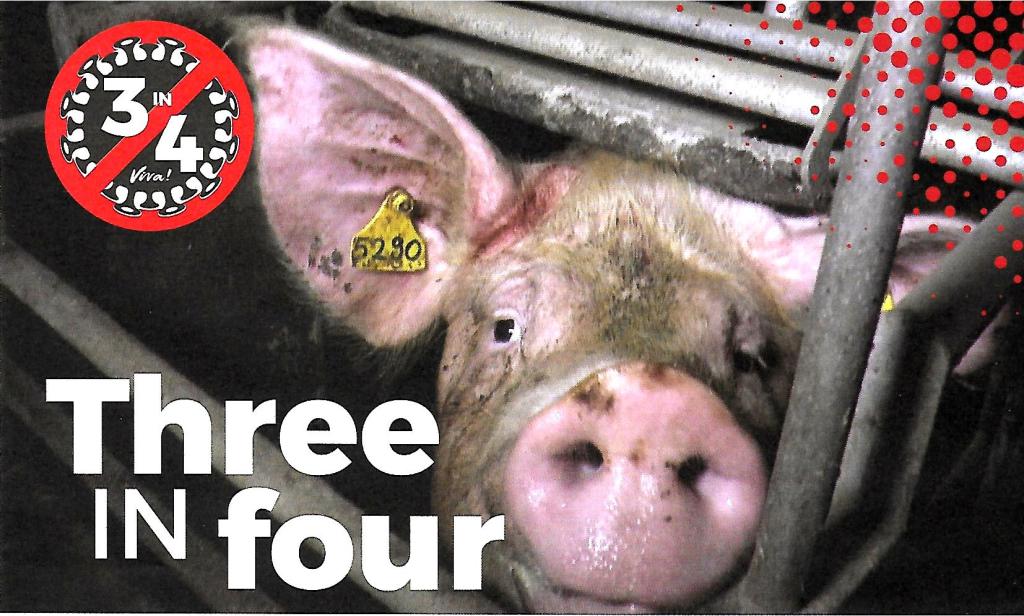
We made waves with our 3 in 4 campaign – connecting pandemics to the exploitation of animals with our videos going viral and fantastic national coverage – and continued sharing the vegan message with Slash the Risk.
We went undercover on 13 factory farms– broadcasting the footage on national media with major exclusives.
We launched our one week vegan challenge, V7, with incredibly positive success and feedback.
You’ve been with us through it all.
A special Christmas message to wish you our sincerest thanks, from myself and everyone at Viva!.
WAV comment: we have just had this Christmas message, and video of the rescued bears from Jill – Animals Asia founder. We are attaching a link below, so if you can give anything to support their rescue work this Christmas; please do.
We have tried on this site to cover some bear rescues this year; Cotton Blossom is one I especially remember; and it is great to see several of them having their first Christmas without cruelty; away form the suffering they endured in their confinement and bile extraction. Lets wish them all a super cruelty free first Christmas; but also; remember that there are hundreds of bears out there for whom Christmas Day will be just like any other – bad food, cage confinement; no medical attention; all topped with the suffering of bile extraction. It wants to make you continue and bring this terrible cruelty and suffering to an end – the sooner the better,
Regards Mark
——————————————————–
I’m so thankful for you, Mark.
It truly warms my heart that despite everything the world has thrown your way this year, you’ve continued to support our work to improve the lives of Asia’s abused animals. You should feel proud.
I want to wish you and yours a bear-y merry Christmas, on behalf of everyone here at Animals Asia, including, of course, the beautiful rescued bears whose lives you’ve filled with so much joy – 11 of whom will be celebrating their first-ever Christmas!
I know that it’ll be a Christmas unlike any other. But I hope that after such a turbulent year, you’re able to spend some time with those you care about most and can enjoy some festive cheer.
As a small token of our appreciation, we’ve put together a special Christmas video for you.
You see, Mark, not a single one of our rescued bears was on Santa Paws’ Jill Robinson, MBE, Dr med vet hc, Hon LLD Founder and CEO, Animals Asia
naughty list this year. Not even cheeky Sunshine who likes to give her furry friends a nudge on the bottom and quickly run away before they notice. So he paid our brave, beautiful rescued bears an early visit.
Watch as Cotton Blossom, Alice, James and more precious bears open their Christmas gifts and fill up those big round bellies with some of the most delicious festive treats…
Once again, thank you so much. Your love and compassion for Asia’s animals have been a warming ray of sunshine in these dark and uncertain times.
Wishing you and your family good health and so much happiness this special festive season,
Jill Robinson, MBE, Dr med vet hc, Hon LLD Founder and CEO, Animals Asia
BANS, NEAR-BANS AND CLOSURES… but tens of millions of animals are still dying
Dear Friend and Supporters,
Our campaign against the cruel fur trade is advancing. Many parts of the fur industry are in serious trouble and even retreat, as a result, far fewer animals are likely to suffer next year.
But we must not be fooled into thinking these tragic events herald permanent change. In fact, the long term for animals could be even worse – unless we act forcefully right now.
Whilst mink farmers and the auction house have been devastated in Denmark as a result of the COVID virus, the fur trade is already lobbying very hard to secure a revival of the industry and, ominously, Chinese fur breeders and dealers are planning to fill the void created by the European declines.
2020 has been an extraordinary and tragic year. It did, however, mark both the 20th anniversary of the UK ban on fur farming and the 10th anniversary of the EU ban on the import of commercial seal products, the latter saving the lives of some 2 million baby seals whilst the UK ban set the precedent for fur farming bans all over Europe. Incredible reminders of what can be achieved by us working together.
With so much news to take in and digest we at Respect for Animals are working flat out, despite the current crisis, to end this cruel and abysmal industry and to adapt our campaigns to the changing circumstances.
BUT WE NEED YOUR HELP – URGENTLY.
Please can you help out by making a donation to our Special Christmas Appeal to help us make 2021 a special year for the anti-fur campaign and, therefore, for the animals that are depending on us.
Thank you to all of you in the UK who have contacted your Member of Parliament urging support for Early Day Motion 267 for our Fur Free UK campaign. The Motion now has the second highest number of signatures for this session of Parliament and it would be great to see it at Number 1! If you have not already contacted your MP, please do so as soon as possible, asking her or him to sign.
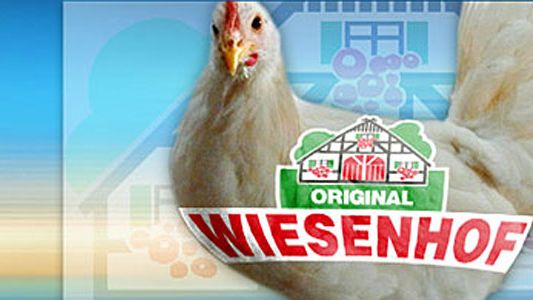
 Wiesenhof: It is routine practice in the poultry industry to dispose of animals while they are alive.

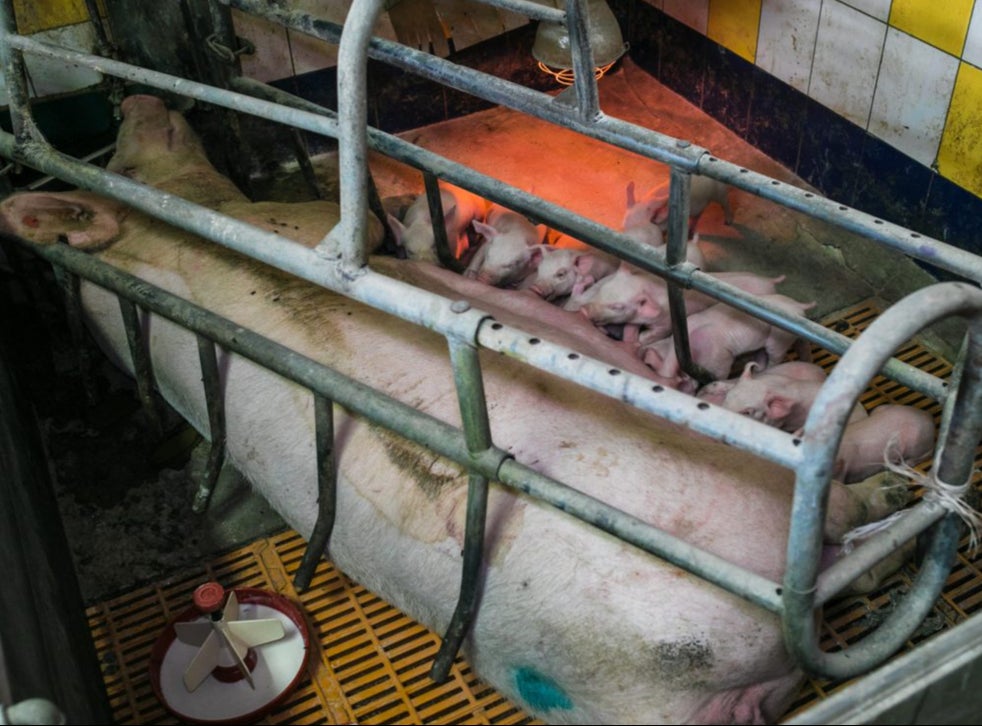



 Typical Swiss chicken concentration camp with so-called floor-keeping