We have never been fans of Phil Hogan – he is pro live animal exports and as the ex Agriculture Commissioner at the EU; disregarded anything that the EU Parliament did with regard to amending live animal transport regulations.
Bye Phil – take a well deserved and very very long hike – you have never done any animal any favors and as far as we are concerned you have now got your just rewards.
We are only sorry that it took so long for people like you to get hit.
We are sure that all the animals will be rejoicing along with us at the news today.
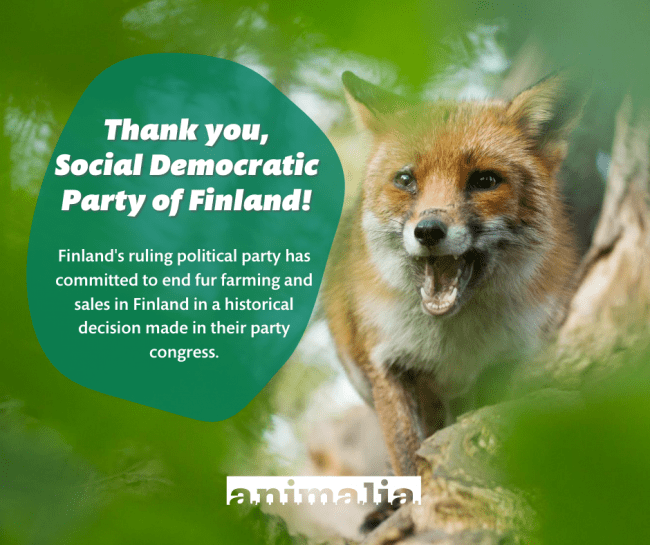
Finnish Social Democrats take a historical stand against fur farming, Animalia and Justice for Animals rejoice
25 August 2020
We expect Sanna Marin’s Government to take the necessary steps to end fur farming. The next logical move would be to propose legislation to prohibit fur farming.
Heidi Kivekäs, Executive Director of Animalia
Finnish Social Democrats take a historical stand against fur farming,
In a historical vote, the Social Democratic party of Finland (SDP) committed to working towards ending fur farming and fur sales both in Finland and in the EU within a reasonable transition period. News on the decision broke on 24 August during the Social Democrats’ party congress, held in Tampere, Finland.
Finnish animal rights organizations Animalia and Justice for Animals thank the Social Democrats for their forward-thinking conclusion. The SDP is Finland’s largest party, and their newly confirmed party leader Sanna Marin is Finland’s current Prime Minister.
The ruling party’s decision comes at a time when the acceptability of fur farming is increasingly questioned both among EU citizens and in daily politics. Out of the five parties in Government, the Green Party and the Left Party are also officially against fur farming.
“74 % of Finnish citizens oppose current fur farming practices. For years, animal advocacy organizations have been working hard for a ban on fur farming in Finland. It is brilliant that Finland’s largest party has updated their position in line with the popular opinion.
The majority of the Government parties are now in favour of a fur farming ban. We expect Sanna Marin’s Government to take the necessary steps to end fur farming. The next logical move would be to propose legislation to prohibit fur farming”, Heidi Kivekäs, Executive Director of Animalia, comments.
Initiatives to ban fur farming have entered the parliamentary process in several European countries. Many countries have already introduced full bans, one of the latest being another Nordic country, Norway. A ban is highly possible in Finland now that three out of five Government parties are committed to ending fur farming for good.
“We are extremely pleased with SDP’s freshly formed stance. Animals need everyone for their defense, and an important new ally has now joined the ranks. There are politicians opposing fur farming among other parties too, even if there is no official party line yet. There is still a lot of work to be done so that this party position does not turn into an empty promise”, says Kristo Muurimaa of Justice for Animals.
Both Animalia and Justice for Animals are members of Fur Free Alliance (FFA), a European anti-fur organization. FFA have congratulated the Finnish organisations on this historical win.
Further inquiries: Heidi Kivekäs Executive Director, Animalia tel. +358 (0) 50 384 5072 heidi.kivekas@animalia.fi
Kristo Muurimaa Campaigns and Communication, Justice for Animals tel. +358 (0) 44 722 3352 kristo.muurimaa@oikeuttaelaimille.fi
Other (our) WAV posts relating to Finnish fur farming:
Joaquin Phoenix has launched a campaign calling on people to ‘reject animal cruelty … [and] explore the many benefits of being vegan’.
The Oscar-winning actor has partnered animal protection charity PETA to promote the ‘Change the World From Your Kitchen’ initiative.
Phoenix stars in a video created by PETA, featuring footage from both UK and US farms, which shows the conditions birds live in. The video shows animals packed into loud, dirty sheds.
“We are not a society that believes it’s okay to abuse animals,’ he says in the video. “We intuitively recoil at the very thought of animal abuse because the suffering of an innocent being is too much to bear.
“Recent undercover footage exposes how the factory farming industry maligns our values and exploits our trust. These animals are in a living hell and under the guise of deceptive unregulated labels like cage-free and free-range consumers are led to believe that they are making a kinder choice.”They are not. There’s so much pain in the world that we are powerless over, but being party to animal suffering is not one of them. It’s easy to escape personal responsibility by actively avoiding the truth. But I hope you will join me in rejecting animal cruelty … [and] explore the many benefits of being vegan.”
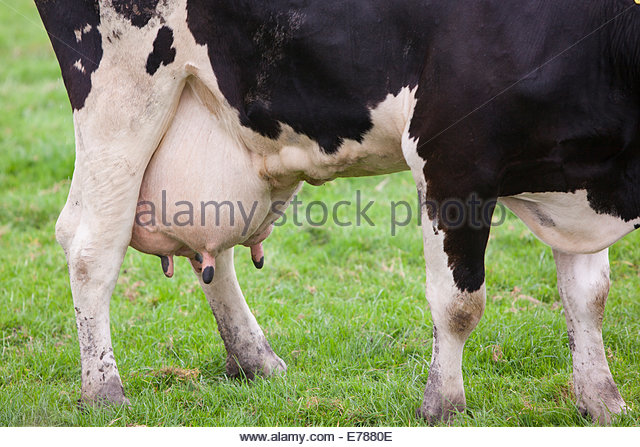
WAV Comment – see for yourself ! – and this is JUST Dairy – nothing else !!
In August 2020, the Stanford School of Medicine published the first significant study to directly compare plant-based meat to animal-based meat—a critical milestone for alternative proteins.
The 16-week randomized crossover trial, published in the American Journal of Clinical Nutrition, compared consumption of Beyond Meat’s chicken, beef, and pork to organic, animal-based versions of the same products. Participants in the SWAP-MEAT study consumed two or more servings per day of plant-based or animal-based meat every day for eight weeks each.
The authors found that consuming the plant-based meat products led to statistically significant positive impact on bad cholesterol and weight. Notably, lead author Dr. Christopher Gardner, a professor at Stanford School of Medicine and director of the Stanford Prevention Research Center, pointed out that the authors didn’t expect to see a statistically significant impact on weight in just eight weeks, with participants losing two pounds with consistent caloric intake after the plant-based meat portion of the study.
The study indicated that overall dietary levels of protein and sodium were the same on both diets, that fiber consumption was higher when eating plant-based meat, and that saturated fat consumption was lower when eating plant-based meat instead of animal-based meat.
The study’s results will not have surprised anyone who was paying attention. Where nutrition science is concerned, there is a general consensus that we should cut back on saturated fat and cholesterol and eat no trans fats at all. We should also eat more complex carbohydrates and more fiber, avoid excess sodium, and maintain a healthy weight.
Plant-based meat products have no cholesterol or trans fats and almost always have the same or less saturated fat than their animal-based counterparts. They also have complex carbs and fiber, where animal meat has neither. They are usually higher in sodium, but generally not by much when compared to prepared animal products. This is why the Stanford study found no difference in sodium intake based on the consumption of animal as opposed to plant-based meat.
The Stanford study focused on Beyond Meat, which joined the National Institutes of Health in funding the trial, but it’s worth noting that Impossible Foods’ products are similarly better than their animal counterparts in terms of macronutrients.
For example, the Impossible Burger has the same amount of protein as 80 percent lean beef, the same amount of saturated fat, less overall fat, and about twice the iron. Impossible Sausage and Impossible Pork offer 50 to 70 percent more protein as a percentage of calories and more than three times the iron when compared to conventional sausage and pork. All Impossible products also contain no trans fats or cholesterol, both of which are inherent in conventional beef, and plenty of complex carbs and fiber, where conventional meat has neither.
Although this is the first significant study to directly compare plant-based to animal-based meat, macronutrient analysis has long supported the study’s findings. That’s why Dr. Kim Williams, former president of the American College of Cardiology, frequently talks about the positive results he experienced when he switched from chicken and fish to plant-based meat in 2003, including an LDL cholesterol level that dropped 80 points once he made the switch.
Williams writes, a decade into his plant-based meat journey, “One of my favorite sampling venues [is] the new Tiger Stadium (Comerica Park) in Detroit, where there are five vegan items, including an Italian sausage that is hard to distinguish from [animal] meat until you check your blood pressure.”
Dr. Williams’ experience has been supported by the new Stanford School of Medicine SWAP-MEAT study. As Dr. João Pedro Ferreira from the Clinical Research Center of Nancy, France, explained, “the weight reduction also points towards the overall metabolic benefit of plant-based meat vs. animal meat.”
If eight weeks of plant-based meat instead of animal-based meat can have such a positive impact on heart disease indicators and weight, imagine what a permanent switch could do.
At GFI, we hope this Stanford School of Medicine study will be the first of many to study the health benefits of plant-based meat. To read the results of the study in the American Journal of Clinical Nutrition, please click here. For Stanford Medicine’s press release, please click here.
Emergency Legal Petition Filed with USDA to End Cruel Farm ‘Depopulation’ Methods
Ventilation shutdown and water-based foam methods used to kill animal populations during the pandemic are among the cruelest ways to kill farmed animals
WASHINGTON, D.C. — Today a coalition, led by the Animal Legal Defense Fund, filed an emergency petition with the U.S. Department of Agriculture (USDA) to prevent COVID-19 relief funds, resources, and any other forms of support from facilitating or compensating for the costs of ventilation shutdown or water-based foam “depopulation” — the mass killing of animals on factory farms — and to withhold COVID-19 relief funds, resources, and any other forms of support from integrators, processors, and meatpackers that order or permit ventilation shutdown or water-based foam depopulation.
Ventilation shutdown is executed by shutting off all fans and closing vents to create an airtight environment while animals suffocate and are baked alive in rising temperatures over multiple hours. In some circumstances, steam is also pumped into the barns to speed the process. Water-based foam depopulation, typically used to kill birds, is executed by filling a barn with shaving cream consistency foam to cover the animals, resulting in suffocation over an estimated 15-minute period.
COVID-19 has sickened thousands of slaughterhouse workers across the country, which has forced many slaughterhouses to shut down for periods of time and slow their processing rates, resulting in a backup of millions of animals on factory farms. This backlog leads to the mass killing of animals because, in an effort to maximize profits, the industry’s business model leaves no room to accommodate delays in the supply chain. This “just-in-time” model means new herds and flocks are scheduled to arrive at farms just in time to replace those who have reached slaughter weight and are being trucked to one of very few slaughterhouses.
“Some of the cruelest depopulation methods, like using ventilation shutdown — which was recently revealed by a worker to have occurred at Iowa Select Farms — can leave animals suffering for many hours before they suffocate or are cooked alive,” says Animal Legal Defense Fund Executive Director Stephen Wells. “We’re taking this initial action urging the USDA to prevent these extreme measures.”
The petition also requests that the USDA create affirmative and enforceable standards for depopulation and for the agency to establish an online database of animal agriculture industry recipients of COVID-19 relief.
Depopulation as a result of COVID-19 is likely to continue. Slaughterhouses are backed up for months, and current corporate and government policies — which force workers to stand close together on slaughter lines while also speeding up those lines — make it more likely that the virus will continue to rage in these facilities, causing more temporary closures, supply-chain disruptions, and gruesome depopulations, all culminating in the animal agriculture industry turning to the USDA for monetary relief for a problem of its own making.
To address this untenable situation, the coalition — which is made up of the Animal Legal Defense Fund, Animal Equality, Animal Outlook, Animal Place, Association of Irritated Residents, Center for Biological Diversity, Compassion in World Farming, Farm Forward, Farm Sanctuary, Mercy for Animals, PETA, The Humane League, Woodstock Sanctuary, and World Animal Protection — is proposing a solution that incentivizes responsible, forward-thinking policies to avoid some of the cruelest outcomes for animals.
The Animal Legal Defense Fund continues to seek whistleblowers who can report safety issues, animal cruelty, or other concerns anonymously through an online tip portal —ReportAnimalAg.com. The mass killing of animals and other side effects of animal agriculture’s fragile supply chain can strain the mental health of workers tasked with carrying out such cruelty.
Red Tractor ‘appalled’ by barbaric conditions exposed in Viva!’s latest undercover investigation into British pig farming. The disturbing footage highlights a clear lack of care for severely sick and dying animals, housed in squalid conditions that pose a serious public health risk.
‘Appalled’ by Barbaric Conditions Found on Leicestershire Pig Unit
Red Tractor suspends Flat House pig farm in Leicestershire, claiming to be ‘appalled’ by barbaric conditions uncovered in our latest investigation into British pig farming.
Captured over the course of four months, the disturbing footage highlights a clear lack of care for severely sick and dying animals, housed in squalid conditions that pose a serious public health risk.
Sick and Dying Animals Left to Suffer
Our team found animals with a range of serious ailments causing them acute pain – including bleeding hernias, prolapses, deformed trotters, rectal strictures and pot bellies.
Other animals were covered in lacerations and grotesque bites, injuries inflicted on them by other pigs who are driven to insanity by the barren environment.
Feral cats Pick off the Weak
Dismembered body parts were found on every visit, as well as numerous dead piglets alongside confined sows. Hidden camera footage from the crates captured cats picking off sick piglets, eating them alive and dragging their limp bodies into the walkways to feast.
During each pregnancy, sows at Flat House Farm are confined to a barbaric farrowing crate for five weeks at a time. Four of which are after she gives birth, restricting her natural maternal instincts to physically bond with her young. These cages are widely used on British factory farms and are entirely legal.
Brutal Mutilations and Ruthless Killing
Workers were filmed carrying out routine mutilations – docking tails and clipping teeth of newborn piglets – all without pain relief. These cruel acts are supposed to prevent tail biting, a behaviour that manifests from a lack of stimulation. Most distressingly one farm worker was filmed ‘knocking’ a piglet – killing them by slamming their tiny head onto the bars of their mother’s metal prison – and feral cats were found picking off the weak and eating the dead.
How You Can Help
As part of our overarching End Factory Farming campaign, we’re urging Prime Minister Boris Johnson to take action.
During the next phase, our plans include: An innovative YouTube ad campaign, featuring a range of footage from our undercover investigations Greater social media promotion with targeted messaging on how and why to go vegan The launch of our brand new seven-day vegan initiative, V7 And a range of billboards throughout the country, as and when lockdown allows for maximum impact
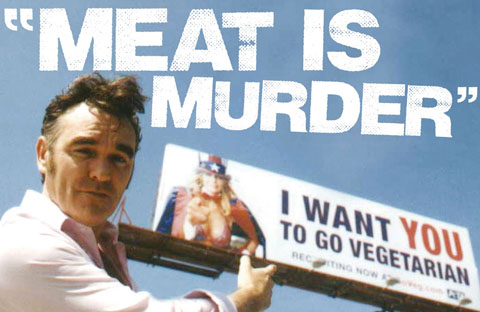
‘Meat is Murder’ by the Smiths – and frontman Morrisey; dedicated animal rights campaigner; is now a famous song that has probably converted more people to vegetarianism in the UK than anything else over the years.
Morrissey; or ‘Mozza’ (as he is known to all); promotes animal rights and a meat free diet all the time. A very well known and brilliant musical artist with a massive fan following.
For the past fifteen years, my work as an animal photojournalist has taken me through the world of dairy production, far beyond the marketing campaigns, and taught me an entirely different story about milk.
When I was a kid in the ‘80s, cow’s milk was ubiquitous in school life. Parents paid a token amount so that their child could have a personalized carton of milk every day at lunch. We needed cow’s milk so that our bones would have a fighting chance at growing strong, and preventing later-life diseases such as osteoporosis. Since 1942, Canada’s Food Guide promoted milk and dairy products as a standalone food group that we should consume, ‘as available.’
However, in early 2019 sweeping changes to the Canada Food Guide provided an evolved understanding of our nutrition needs; gone are the pictures of milk and dairy products floating across the food guide rainbow, and they are no longer included in the long list of healthy options for school snacks. Milk and milk products are now lumped into the ‘protein’ food group and surrounded by disclaimers: “Among protein foods, consume plant-based more often”, and “Make water your drink of choice.”
Today, Dairy is still the largest sector of agriculture in Ontario, where I live, and according to the Dairy Farmers of Ontario, the elementary school milk program serves 70% of Ontario schools.
For the past fifteen years, my work as an animal photojournalist has taken me through the world of dairy production, far beyond the marketing campaigns, and taught me an entirely different story about milk.
In my twenties I took a deep dive into understanding animal use and food production, but even then, dairy was not on my radar.
I understood dairy to be healthy all around; that no one was hurt in the making of it and certainly no one died. I had absorbed pictures of dairy cows living in pastures from the side of milk cartons and on TV, and had fond memories of meeting cows on a visit to The Central Experimental Farm in Ottawa. I was an animal lover from a young age, and my family is particularly fond of this photo of me, aged three, admiring the Jersey cows.
I had been a vegetarian for a few years before I decided to do a one-month internship at Farm Sanctuary in Watkins Glen, New York. The Farm was the first of its kind: a sanctuary for animals who had been rescued from all areas of factory farming.
Interns at Farm Sanctuary are asked to participate in a vegan lifestyle out of respect for the animals. I felt that this was extreme, but I’d do it, and resume vegetarianism upon my return to Toronto.
It was there where I learned that animals do get killed in the dairy industry. Cows are killed when their bodies are broken down, or “spent”, from the constant cycle of pregnancies, and then typically slaughtered for cheap hamburger before the age of six.
I learned that a healthy cow can live twenty and even thirty years, but that their health, and therefore milk productivity, declines with each pregnancy until they are replaced by younger cows. Cows are also incredible mothers. When given the chance to stay together, they share an unbreakable bond for life.
And about that pregnancy. I believed that dairy cows just produced milk. I didn’t consider the baby involved.
In 600 PMU farms in the USA and Canada, around 75,000 mares live cooped up on factory farms.
The estrogen-rich urine of pregnant mares (PMU = Pregnant Mare Urine) is a lucrative source of income for the 600 PMU animal factories.
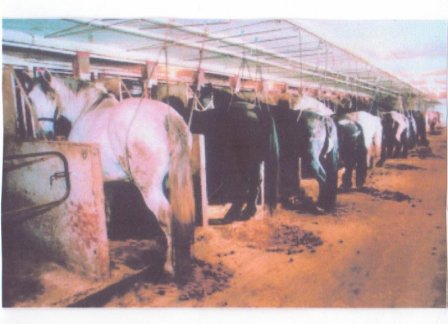
The 75,000 mares in these PMU animal factories spend the majority of their long pregnancies tied up in small boxes, connected 24 hours a day to a device that collects their urine. The mares can barely move, lie down comfortably, roll on their side or lay their head on the ground and rest. Many mares have to be slaughtered because they become lame as a result of the lack of exercise.
Suffering for menopause
Pregnant mares have to stand in very narrow stall compartments of about one and a half meters wide and two meters high to collect their urine. Between the third and ninth month of pregnancy, the urine of mares contains a particularly high amount of estrogens.
A rubber collecting container is attached to the vulva of each mare and collects the urine. The urine flows through a hose into a plastic canister. The mares are tied up in the stable compartments and can hardly move.
The mares have to stand there for up to six months. The urine collection device causes inflammation, chafing and open injuries. Due to the permanent standing, the mares suffer from severe pain and even bone changes.
Thousands of horses around the world are tortured for the pharmaceutical industry.
Hormones, so-called “conjugated estrogens”, are extracted from their urine for the treatment of symptoms during and after the menopause. Most of the approximately 75,000 foals that are born each year are taken from their mother gone after four months. The foals are sold at meat dealers or fattened on the farm and later brought to the slaughterhouse
Autorided by Martina Kummer
——————————————————————————————————–
My comment: A few years ago, most of the production farms were still in Canada and the United States. There are now only a few left there. A large part of the production was relocated to other countries with presumably even lower control frameworks, for example to China or India.
Hormone preparations made from mare urine such as “Premarin” have been on the market since 1942, although the equal effectiveness of herbal substances and various alternative treatment methods have been known for many years.
Since then, pharmaceutical companies have made billions in sales. When it became known in 2002 that the drug “Premarin” significantly increased the risk of cancer, heart attacks and strokes in women, demand initially collapsed. In 2012, it was also determined that taking PMU preparations can promote breast cancer. The patent holder of this active ingredient, Pfizer,the world’s second largest pharmaceutical company, has responded very cleverly to public concerns and is back in the PMU business thanks to a new drug.
“Duavive” (in the USA “Duavee”) is the name of the “magic drug” that is supposed to prevent osteoporosis in addition to menopausal symptoms such as hot flashes and sleep disorders.
In truth, however, it is just a PMU drug with the same composition as Premarin. In Germany the preparation is sold under the name “Presomen”. Online providers even sell the “good old” Premarin without a prescription. The mare urine business is still worthwhile for the pharmaceutical industry.
But women who need something like this can do without PMU-containing medication, since PMU preparations are referred to as “conjugated oestrogens” on the package insert. When hormone treatment is essential, there are numerous preparations that can do without PMU.
Put your doctor under pressure to prescribe preparations that are not produced with the suffering of other mothers.













 Suffering for menopause


