Category: Farm Animals

UK: Goats Milk Supplier Filmed Undercover Abusing Animals At Farm.

WAV Comment: More proof of how cruel the ‘dairy’ (animal milk) industry is.

Watch the video on the Independent link below.

Statement from St Helen's Farm - St Helen's Farm

https://www.independent.co.uk/news/uk/home-news/goats-milk-st-helens-farm-yoghurt-hit-kick-animal-cruelty-video-a9639021.html

Goats punched, hit, kicked and ‘left lame’ at farm supplying milk to Tesco, Sainsbury, Waitrose and Ocado, video shows

Animals were subjected to a string of brutal attacks at a farm that sells goats’ milk to Tesco, Sainsbury’s, Waitrose and other supermarkets, footage from hidden cameras has revealed.

Goats were seen on video being punched, kicked, hit with a pole and slammed onto their backs at a plant that supplies St Helen’s Farm, in east Yorkshire.

The animals were also filmed crying in pain as they were held by their necks, had their ears tagged or their tails twisted.

Goat milk, yoghurts, cheese and ice cream sold by the St Helen’s Farm brand are the best-known goat milk products in the UK and are stocked by major supermarkets including Tesco, Sainsbury’s, Waitrose and Ocado. Demand has risen amid a switch away from cows’ milk in recent years.

Tesco immediately suspended the brand when shown the footage by The Independent. Waitrose and Booths, which has grocery stores around the north of England, followed suit.

About an hour’s worth of video was passed to the Surge animal rights group, which then showed it to a vet and to lawyers at Advocates for Animals, who it said “highlighted many serious issues”.

People filming using secret cameras told Surge that at one supply farm, they saw goats being:

  • Kicked and punched
  • Hit with a pole
  • Held by the throat
  • Having their tails twisted
  • Shoved and roughly handled
  • Left lame and struggling to stand or walk after the rough handling

Goats were also slammed onto their backs on a conveyor belt before their hooves were roughly trimmed, the video showed.

One was seen being dragged by one leg along the ground while struggling.

Animal suffering was also prolonged when injuries went untreated, the witnesses said after reviewing the footage.

The people behind the footage also reported seeing workers letting goats fall off an operating bed and become stuck between fences. In one case, a worker “played the drums” on a goat’s stomach after a procedure. The footage also shows farm employees dragging dead animals away in front of live ones, and Surge was told that dead and dying animals had been seen around the farm.

St Helen’s, which is a brand rather than a single farm, also buys goats’ milk from other farms in Yorkshire and the midlands. A spokesperson confirmed the footage was taken at one of St Helen’s supply farms, and as soon as the company was alerted by The Independent to the treatment of the animals, it cut off the supplier.

The Animal Welfare Act 2006 states animals, including farm animals, must be protected from pain, injury, suffering and disease.

Ed Winters, the co-founder and director of Surge, said: “St Helen’s is the most prominent and well-known goat company in the UK. They are regarded as being the best of the best when it comes to goat farming. But that means nothing to the animals.

“Goats are sensitive, curious and gentle animals, but the animal-farming industries treat them as commodities they can exploit for profit.

“St Helen’s say on their website the milk is a reward for looking after the goats and that their staff have a genuine interest and love for the animals. But it is obvious that the opposite is true at one of their supplying farms.”

He added: “These animals are thrown around and dragged and when they’re no longer producing enough milk to be considered profitable, they’re killed.”

Surge says about 50,000 mostly male dairy kids are slaughtered each year.

Cows sexually abused and hit at farm owned by NFU deputy chief

St Helen’s Farm told The Independent it was supplied by farms that were expected to comply with a rigorous code of conduct and that it had several animal-welfare accreditations, adding: “Today we have been made aware of allegations that one farm has infringed animal welfare standards, which we would find totally unacceptable if true.

“We have immediately ceased all milk supply from this farm and launched a full investigation to determine the facts of this matter.”

A Tesco spokesperson said: “We require high animal-welfare standards from all brands sold at Tesco, so these claims are deeply concerning. We have immediately suspended supply whilst we investigate the matter further.”

A Waitrose spokesperson said the chain was suspending St Helen’s after reading this article.

The Independent has also asked the other supermarkets to respond.

A spokesperson for the British Retail Consortium (BRC), representing supermarkets, said: “Our members take their responsibilities to animal welfare very seriously and work closely with trusted suppliers so that high welfare standards are upheld.

“They have strict processes in place and will thoroughly investigate any evidence of non-conformity to ensure that any problems are immediately addressed. The BRC continues to support unannounced audits on farms to ensure compliance with all farm standards, particularly animal welfare.”

Germany: Brandenburg suspends live transport to third countries.

Germany:

Brandenburg suspends live transport to third countries

27 July 2020

News

Until the allegations are clarified, the Oberspreewald-Lausitz, Teltow-Fläming and Prignitz districts will no longer handle cattle transport to third countries. That was coordinated with the Ministry of Consumer Protection.

The media and animal welfare organizations once again highlighted grievances in long animal transports to third countries. 

Minister of Consumer Protection Ursula Nonnemacher said: “We will not ignore these grievances. Animal transport can only be carried out if absolutely necessary and if it is carried out in compliance with the requirements of the animal transport law. We must finally end animal suffering. Transport companies must demonstrably ensure animal welfare during transport. Otherwise, animal transport is not possible.”

Brandenburg already tightened the requirement for the handling of long, cross-border animal transports in March of the year. “We will continue to increase the requirements for the plausibility check for handling animal transports using the options available to us, without having any legislative competence in the country,” said Nonnemacher .

Researchers Predict Plant-Based Food Market Will Be Worth $74.2 Billion By 2027. Great News !

https://www.plantbasednews.org/lifestyle/plant-based-food-market-worth-74-billion-by-2027

Researchers Predict Plant-Based Food Market Will Be Worth $74.2 Billion By 2027

Drivers for the increase include a larger vegan population and ‘increasing incidences of intolerance for animal protein’

LIAM GILLIVER

JUL 26, 2020

Market researchers have predicted the plant-based food market will be worth more than $74 billion by the year 2027. 

In a new report conducted by Meticulous Research, the plant-based market is expected to grow at a CAGR of 11.9 percent from 2020 for the next seven years. 

Drivers for the increase include an ‘increased’ vegan population, ‘significant investments in plant-based product companies, and ‘increasing incidences of intolerance for animal protein’.

‘Unprecedented demand’

“[COVID-19] has led to some best practice models for plant-based products industry as the pandemic has conveyed to the forefront the connection between public health and animal meat consumption, which provides consumers a ground to go for a plant-based diet,” the report states.

“From a manufacturing and distributing point of view, this industry has faced unprecedented demand from manufacturers as well as consumers, particularly for some products such as meat analog and plant-based milk. 

“Many companies in the space of alternative protein products have already started changing their strategies, owing to the sudden growth in demand.”

COVID-19

Recently, U.S vegan meat sales skyrocketed by 280 percent amid the coronavirus pandemic.

The crisis, which has resulted in meat shortages and temporary closure of slaughterhouses around the world, is said to have boosted the sales of plant-based meat as more people are afraid of ‘animal-borne illnesses’.

Many high-profile experts and celebs have also warned of the link between factory farming and zoonotic disease outbreaks

You can read the full report here

https://www.theguardian.com/lifeandstyle/2020/jul/25/uk-demand-for-new-vegan-food-products-soars-in-lockdown

UK demand for new vegan food products soars in lockdown

Trademarks registered double in a year as supermarkets and restaurants eye fast-growing sector

The number of trademarks registered for new vegan food and drink products in the UK more than doubled to a record high last year.

Latest figures reveal that companies successfully applied for 107 trademarks in 2019 for everything from ice cream to meat-free burgers – a 128% increase on the 47 recorded in 2018 – as consumer demand for vegan alternatives continued to soar.

They were filed prior to lockdown, but supermarkets have meanwhile reported strong sales of plant-based ranges since the coronavirus outbreak began, highlighting the fragility of the traditional food chain.

The vegan halo: how plant-based products are transforming British brands

Read more

The ongoing trend reflects people paying closer attention to their diet during lockdown, increasingly adopting “flexitarian” diets – cutting down on meat and dairy while eating more plant-based foods.

The new trademark figures are compiled by law firm EMW, which says the fast-growing vegan food category is now attracting interest from large multinational businesses with the resources to invest heavily in branded products.

Among them are consumer goods giant Unilever, which has trademarked vegan ice cream for its Magnum and Ben and Jerrys brands.

With further innovations in the pipeline, two manufacturers – Upfield and Beyond Meat – have trademarked product names based on variations of “Beyond Butter”, “Beyond Cheese” and “Beyond Mince”. Upfield, the owner of Flora, bought the vegan cheese producer Violife for a reported €500m (£455m) earlier this year.

Daisy Divoka, an associate at EMW, said: “There are now more vegan products on supermarket shelves than ever before. Multinational corporations have identified this as a fast-growing sector and are competing to register their trademarks with the aim of capturing and defending a share of the market.”

Discount supermarket chain Lidl has trademarked a range of vegan products including pastries and baguettes, while restaurant chains Honest Burger and Leon also entered the fray for meat substitutes and plant-based condiments. The furniture chain Ikea will next month start selling “plant balls”; versions of its eponymous meatballs made from pea protein.

Sainsbury’s, which has trademarked its mushroom-based “shroomdog”, reported double-digit growth of its plant-based and meat-free range. Rosie Bambaji, plant-based buyer at Sainsbury’s said: “We expect to see this area continue to grow as we emerge out of lockdown.”

Tesco said it had launched more than 30 new plant-based products across its Wicked Kitchen and Plant Chef ranges in June, including BBQ, Asian-inspired and meal kits. Plant-based barbecue options had proved very popular during the recent hot weather, it said.

Companies can also apply to use the Vegan Society’s sunflower logo, for which they pay a licensing fee based on turnover. A spokeswoman said: “We have only recently starting reporting by category but the number of fashion products registered has doubled so far in 2020. Drinks, household and toiletry products are our next biggest growth categories.”

Spain: The coronavirus pandemic could wipe out Spanish bullfighting – but bulls are now going for slaughter instead.

The coronavirus pandemic could wipe out Spanish bullfighting

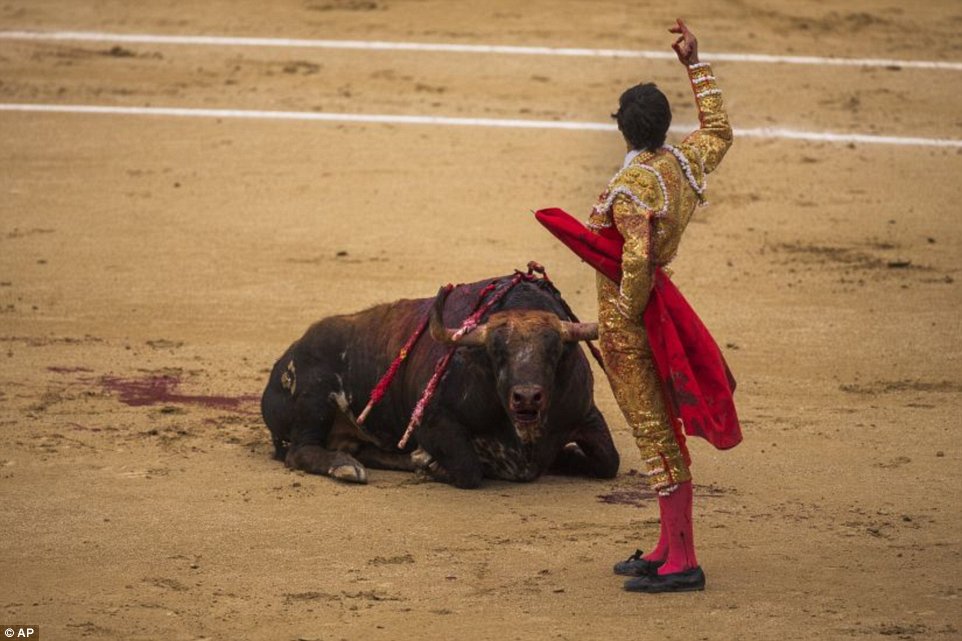
The coronavirus pandemic has affected sports across the globe, and in Spain, it could wipe out the age-old sport of bullfighting altogether.

Why it matters: For years, an increasingly vocal contingent of Spaniards have been pushing for the end of what they see as “torturing animals as a form of spectacle.” Now, the economics are such that the bullfighting industry could die out regardless of the opposition.

The backdrop: As countless fights and festivals were cancelled, many breeders were forced to sell their bulls for slaughter, which only recoups about 10% of the investment required to rear a fighting bull.

  • With that math failing to add up — a month ago, industry losses were already estimated to be ~$800 million — bullfighting supporters have staged protests across the country to demand government subsidies.
  • “We want them to treat us as they would any other cultural industry,” said breeder Victorino Martín, who also heads the Fundación del Toro de Lidia, a group charged with defending the industry.

The other side: Over 160,000 people have signed a petition aiming to block any subsidies, hoping the pandemic can serve as a form of natural selection for an industry they’ve tried to squash for decades.

The big picture: Spain officially began reopening bullfighting rings over the weekend, but it remains to be seen what the long-term fallout of the past three months will be.

  • The industry is still furious over the government’s lack of financial support, and the restrictions in place as the country tries to responsibly reopen will make it impossible for them to meaningfully recoup what’s already been lost.
  • Meanwhile, those who oppose bullfighting see a unique opportunity to rid Spain of something they view as a “national shame” and a “barbaric cruelty.”

The bottom line: The centuries-old tradition of bullfighting may need to find a way to evolve with the times, or else it could meet the same fate as the nearly 10,000 bulls each year that die in the ring.

UK: CARNATION TO LAUNCH VEGAN CONDENSED MILK IN UK.

https://vegnews.com/2020/7/carnation-to-launch-vegan-condensed-milk-in-uk

VegNews.VeganCarnation

CARNATION TO LAUNCH VEGAN CONDENSED MILK IN UK

After 18 months in development, Carnation releases a new oat- and rice-based vegan condensed milk made especially for use in pie, fudge, and cheesecake. 

by ANNA STAROSTINETSKAYA

In September, dairy brand Carnation will release a vegan version of its condensed milk at supermarket chain Ocado in the United Kingdom.

The new product will retail for slightly more than its animal-based counterpart and was created to be used in baking for “an extra fudgy flavour and texture to banoffee pie, fudge, brownies, and cheesecake.”  

Carnation parent company Nestlé developed the new vegan condensed milk, made with oat and rice flour, over the course of 18 months. “It has been a challenge for vegans to find suitable alternatives to make dairy or caramel-based sweets treats or desserts, without having to compromise on taste, texture, or appearance,” Vittoria Simms, Nestlé Marketing Lead for Dairy Brands UK, told The Grocer.  

The new vegan Carnation condensed milk will also be available at Tesco and Morrisons supermarkets in October.

mark 3

Please do NOT give your support to this abuse below by doing dairy: there are now dozens of vegan cruelty free milk alternatives.

It is a disgusting, dirty, animal abusing business – been there and got the T shirt. Read more at:

Regards Mark

Ireland: Sending Live Animals To Libya (A War Zone) May Breach EU Welfare Laws. Does the EU Care ? – Probably Not.

WAV Comment:

Excellent report by the ‘Guardian’ (UK national press) as always:  https://www.theguardian.com/environment/2020/jul/24/sending-animals-to-war-zones-irish-cattle-export-to-libya-may-breach-laws

Phil Hogan https://en.wikipedia.org/wiki/Phil_Hogan  was the European Commissioner for Agriculture and Rural Development between 2014 and 2019. 

He is PRO live animal exports; and with his position at the EU, we would go as far as to say he (Illegally for his position) promoted Irish farming – something any Commissioner of the EU should NOT be allowed to do.

What do commissioner do?

Commissioners are given a portfolio which is their area of responsibility. It is up to the President of the Commission to decide which commissioner will be responsible for each policy area/portfolio and to change these responsibilities (if necessary) during the Commission’s term of office. Commissioners act independently in the interests of the EU. They do not represent the interests of their own Member State.

Source Ref –  https://www.citizensinformation.ie/en/government_in_ireland/european_government/eu_institutions/european_commission.html#l8b20b

https://www.thejournal.ie/phil-hogan-love-exports-texts-1978127-Mar2015/   –   The Commissioner began his response by telling the woman that he would not be “bullied by 500 text messages I’ve got on my phone during the course of the day on animal farming and animal welfare issues”.

“If you think that will work with me you can certainly forget about it. That’s a campaigning tool that should be well gotten rid of at this stage.

————————————-

https://www.theguardian.com/environment/2020/jul/24/sending-animals-to-war-zones-irish-cattle-export-to-libya-may-breach-laws

‘Sending animals to war zones’: Irish cattle export to Libya may breach laws

Next week’s planned shipment of 2,000 bulls could contravene EU welfare regulations, campaigners say

Animal welfare groups have warned that an upcoming shipment of young bulls from Ireland to Libya could contravene live export laws.

The shipment, which is expected to consist of 2,000 bulls, would be the fourth this year from Ireland. It is set to leave on Wednesday next week from the port of Cork in south-west Ireland. Previous shipments of livestock have arrived in the Libyan port of Misrata.

The news comes as a European parliament committee of inquiry, announced last month, begins to look into alleged failures to enforce EU rules on protecting transported animals across the EU and beyond, and “to act upon the evidence that EU rules on moving live animals across the EU and to third countries are being seriously and systematically infringed”.

NGOs objected to live animal exports to Libya in a recent letter to the European commission and EU agriculture council. The country has been in chaos since the Arab spring uprisings and a Nato bombing campaign that toppled its leader, Muammar Gaddafi, in 2011.

Animals have died on previous shipments to Libya from Ireland, a voyage of about nine days. Caroline Rowley, founder of Irish welfare organisation Ethical Farming Ireland, said she believed the Libya shipments breached several regulations including (EC) No 1/2005, which covers the protection of animals during transport and related operations, the European communities (protection of animals during transport) regulations 2006 and Ireland’s 2013. Animal Health and Welfare Act. All say animals must not be treated or transported in a way likely to cause injury or unnecessary suffering.

“Sending livestock on a long sea journey, where there will be illness, injuries and fatalities, to a country in a state of chaos and lawlessness is unacceptable,” Rowley said.

Olga Kikou, head of Compassion in World Farming EU, said the shipment also appeared to contravene the treaty on the functioning of the EU, with regard to welfare and the security situation in Libya.

The treaty states that “since animals are sentient beings” full regard must be paid to their welfare requirements “while respecting the legislative or administrative provisions and customs of the member states”.

“The EU should not be sending animals to war zones, it would be impossible to guarantee even the most basic level of protection there. This cannot happen for humans, and it is certain that for animals it would be even worse,” Kikou said.

Ireland has exported a reported 5,647 cattle to Libya this year, up from 4,211 in the same period last year. The total for 2019 was 13,122 animals.

The Irish government says live export within the EU and beyond is a “vital component” of its livestock industry, increasing competition and boosting animal prices. The latest available figures show live exports earned the country more than €458m (£417m) in 2019.

Responding to the claims its live exports to Libya breached regulations, Ireland’s Department of Agriculture, Food and the Marine (DAFM) said in an email it was “satisfied that exports are not in contravention of Article 13 and that journeys certified for export are done in compliance with EU legislation” and in “full compliance with the legislative requirements of EU Regulation No 1 of 2005”.

The DAFM email added that the mortality rate over the three previous shipments to Libya this year was 0.19% and said the date of the upcoming shipment had already been delayed to “late next week dependant on several factors including weather conditions”.

Regards Mark

Germany: Feces and fur residues in the meat

Do you remember the scandal in the slaughterhouse of the German pig baron Tönnies?
https://worldanimalsvoice.com/2020/06/20/tonnies-empire-is-for-14-days-closed/

tönnies Logopg“Tönnies meat… what you can rely on!!!”
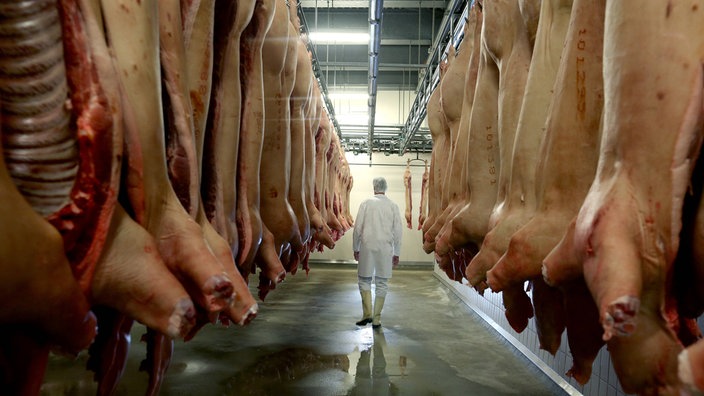
 

After a corona outbreak with hundreds of sick employees (most of them from Eastern countries), the Tönnies plant in Rheda-Wiedenbrück had to close for weeks. Now there is bad news again.

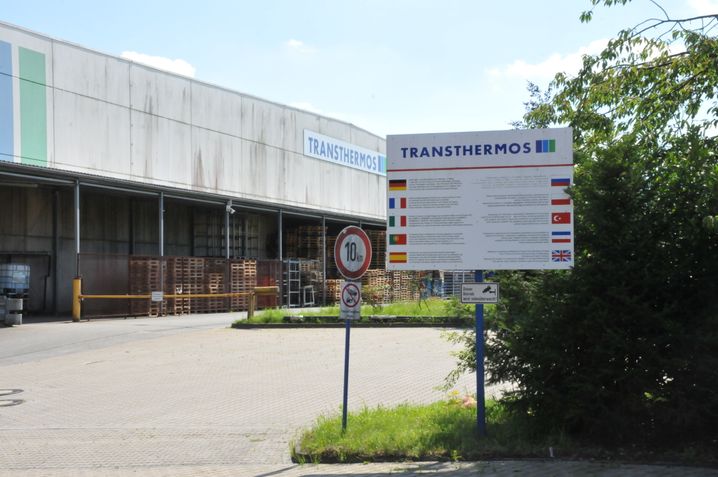
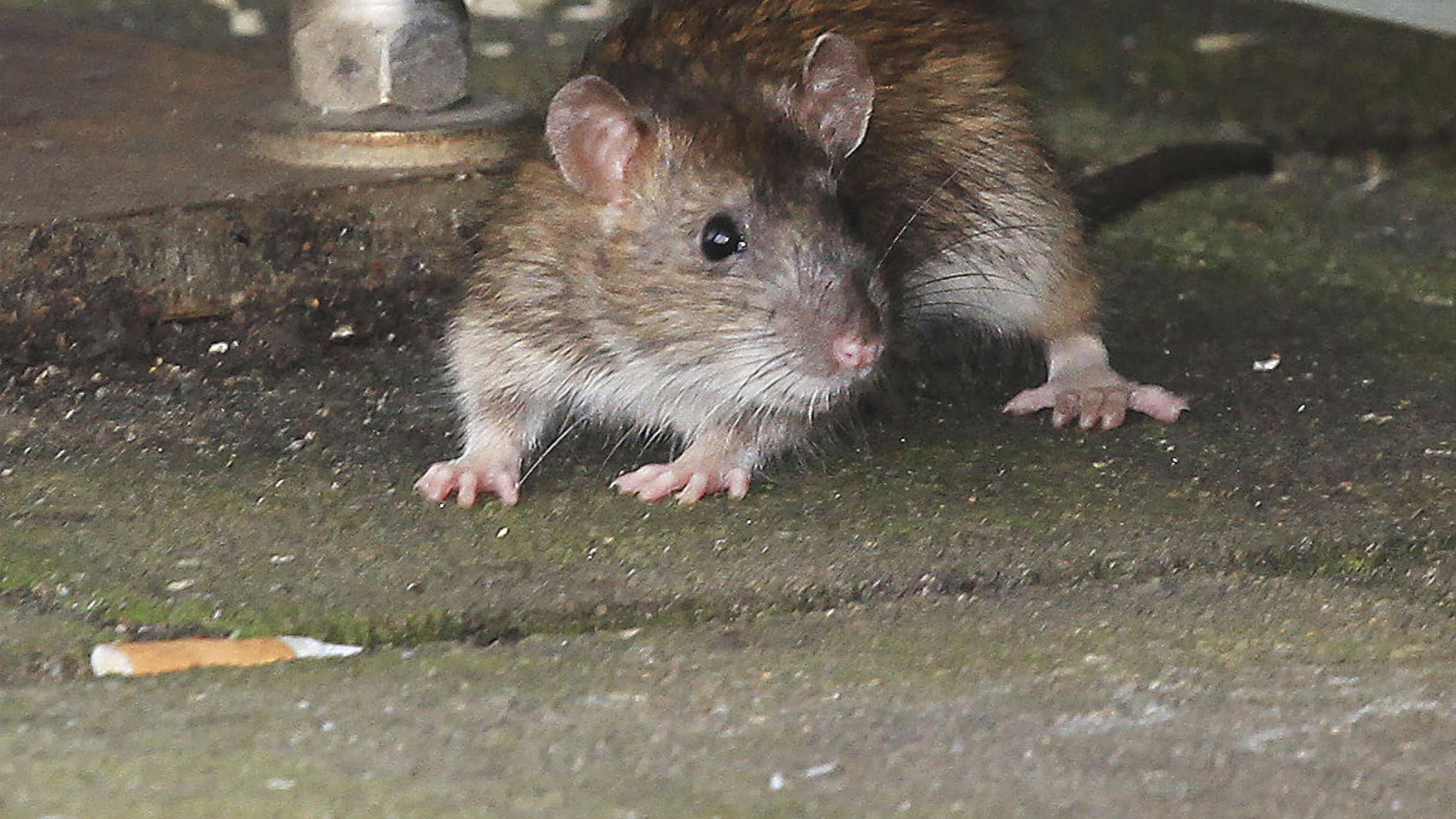
A cold store of Nagel Transthermo GmbH in Dissen, Germany, was cleared due to a rat infestation. Meat from the Tönnies company was also stored there. The animals had apparently been active and able to reproduce there unhindered for more than 5 months.
Been active?

Transthermos
Transthermos

Yes!! the meat was cut up there, i.e. a real cutting plant.

Local newspaper journalists wanted to know more. The local newspaper asked more closely, and the spokesman for the Tönnies Group admitted that the cold store was “used sporadically (!!) to a limited extent, for example for storing goods”.

schweine-schlachtung-tönnies100~jpg

In a press release dated July 22, 2020, the Osnabrück Administrative Court announced:

“In view of the photos submitted and according to the findings made by the specialist company for pest control, there is no doubt that the products which were produced therefrom the cut-off date are unsuitable for consumption.
Fecal pills, walking paths, fur remains and signs of nest building in the rats were found to an extent that indicated a very large rat population”.

rattenjpg

But it gets interesting when you take a closer look at the data !!
Because obviously this problem had been known since January.

According to the findings of the veterinary service, rats have been in increased numbers in areas of the cold store since mid-January, the local newspaper quotes. Control measures have so far been unsuccessful, the rodents “populated” the entire building.

Ratte jpg

Cold store operator Nagel-Transthermos has announced that it will close the affected site in Dissen.

https://www.spiegel.de/wirtschaft/toennies-fleisch-lag-in-von-ratten-bevoelkertem-kuehlhaus-a-921cc8cc-5458-4c8b-878f-2d36966fb268

And I mean …Well, thank God I cover my purchase of meat products in a village shop”, a commentator wrote.

Naturally! Anyone who still consumes meat after all the reports from the recent past cannot be scare off by the few rats …..
The meat scandals are not getting smaller, the greed for profit and the shamelessness are becoming clearer.
Slaughterhouse workers are exploited, consumers cheated and endangered, but the real victims are the animals.

Just stop lying to yourself and don`t support this shit financially. Don’t buy it.
Not to caress your conscience or to make you feel better, but because it’s the right thing to do.

My best regards to all, Venus

France launches a referendum for animals.

From CIWF, London:

https://www.ciwf.org.uk/news/2020/07/france-launches-a-referendum-for-animals

France launches a referendum for animals.

On the 2nd July, France launched the first Shared Initiative Referendum for animals in the country’s history.

We joined journalist Hugo Clément and some of France’s most-prominent business leaders in launching the Initiative. Alongside other organisations and numerous high profile individuals, we are attempting to transform animal legislation in France.

The Shared Initiative Referendum calls for six measures to protect animals.

These measures consist of a series of bans on:

  • fur farming,
  • hound hunting and other “traditional” hunting methods such as bird traps,
  • live wild animal shows,
  • animal research where alternative research methods can be followed,
  • caged farming from 1 January 2025,
  • factory farming by 2040. This measure also includes an immediate moratorium on any new intensive animal farms; any new farm planning permissions will have to guarantee animals have outdoor access.

Léopoldine Charbonneaux, our Director of CIWF France said: “We are honoured to be a part of this referendum. Alongside our partner organisations, we could end the cage age in France and become one of the first countries to bring in a ban on the building of new intensive farms, bettering millions of farm animals lives.”

A Shared Initiative Referendum allows citizens to change the law.

It requires four million signatures to be gathered within nine months of its launch, and needs to be endorsed and submitted by at least 185 members of the French Parliament. It’s a participatory democracy tool, similar to the End the Cage Age European Citizens’ Initiative (ECI) we launched in September 2018.

With more than 1.5 million signatures, the End the Cage Age ECI has been the most successful ECI for farmed animals. Such a huge wave of support proves that the welfare and protection of animals is a priority for citizens on a national and European level and, therefore, it should also be a priority for national Governments and EU Institutions. 

Find out how close each country is across Europe to a 100% cage-free future and how you can help End the Cage Age.