Category: Farm Animals

South Korea: Koreandogs.org Newsletter 16/3/2019.

South Kores

korean dogs header

Koreandogs newsletter 16/3/2019.

Lots of actions to take.

To view please click on the following link:

http://koreandogs.org/newsletter-march-16-2019/?utm_source=sendinblue&utm_campaign=Busan_the_second_largest_city_in_South_Korea_has_dirty_industry__Help_make_them_stop!&utm_medium=email


Please follow up some of the actions if you can; Thanks;

Regards Mark.


korean 1


zerissene EU-Flagge am Stock


European elections to select new Members of the European Parliament (MEP’s) are taking place between Thursday 23 May and Sunday 26 May 2019.

Venus and I; both as Europeans; will be presenting posts onto this site relating to the animal welfare situation within the EU. We hope that by using our posts; which will be informative; along with your obvious concerns for the welfare of animals; you will be better equipped on this issue prior to going out to vote in May.

Regarding the UK and European elections; what will happen in May is currently unknown due to Brexit. If there is a request by the UK government to extend Article 50; then it is possible that the UK will have to have candidates for the elections. If the UK can finalise with Europe in the next few weeks, then EU elections will not be required in the UK, as it will no longer be an EU member state later in the year.

We have already produced a few posts which relate to intensive farming in the EU:

Rabbits – https://worldanimalsvoice.com/2019/03/16/rabbit-farming-in-the-eu-a-shame-on-eu-subsidies/

And Salmon – https://worldanimalsvoice.com/2019/03/16/the-poison-from-the-salmon-farm-industry/

… and we will be connecting with national animal welfare campaign organisations to inform more in the lead up to the May elections.

Here below is an article which recently appeared in the respected ‘Guardian’ newspaper from the UK.

Link: https://www.theguardian.com/environment/2018/nov/14/farm-animal-abuses-widespread-across-europe-warn-auditors


Article:

Abuse of animals rife on farms across Europe, auditors warn

Europe-wide investigation says intensive farming systems increase the risks of poor animal welfare

Farm animal abuses are widespread in the European Union, with pig tail docking, long-distance transport and slaughterhouse stunning all areas of immediate concern, according to a report out this week.

Intensive farms are particularly problematic, the report by the European Court of Auditors (ECA) reveals, with economic interests often trumping welfare rules. “Our audit and other reports show it’s difficult to introduce improvements on intensive farms and enforce laws,” Janusz Wojciechowski, the ECA member responsible for the report, told the Guardian.

“In intensive farming systems the risk for animal welfare is increased. When there are 100,000 pigs it is very difficult to control. Small farms are easier places to achieve high animal welfare standards.”

Inherent system failures are equally to blame. Unnaturally high number of animals living together leads “to aberrant behaviour in laying hens such as feather pecking and cannibalism, aggression and tail biting in pigs and aggression in calves”, according to the report. To address that behaviour “it is common practice to perform painful physical alterations … in particular beak trimming, tail docking, castration and teeth clipping.”

Clear evidence of pig tail docking was found on German and Romanian farms, and has been seen in many other countries by other observers, including the UK and Italy. Docking pigs’ tails has been illegal in the EU since 2001, but it is still widespread. One Romanian farm visited by the ECA had evidence of tail docking, but was simultaneously receiving EU funding to improve animal wellbeing.

Just two countries in the EU – Finland and Sweden – have properly controlled pig tail docking and provided useful ‘enrichment materials’ to ease boredom, according to the report. Dr Joanna Swabe, public affairs director for animal lobby group Humane Society International, said proper environmental enrichment, good stockmanship and simply providing straw would all help avoid mutilations.

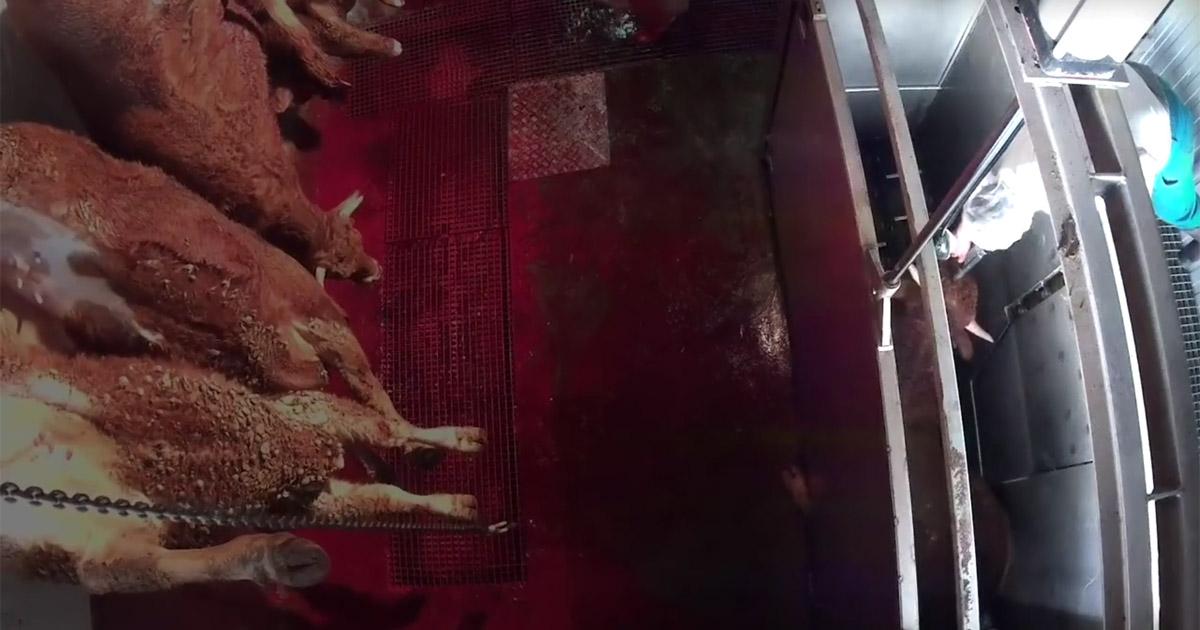
Slaughterhouse processes were a problem too. One abattoir in France visited by the ECA team was using the less reliable back of the neck ‘occipital stunning’ on calves rather than front of head stunning. Their aim, said the report, was to reduce bone splinters in brains sold for food. Inadequate ‘waterbath’ poultry stunning (where a hen is leg-shackled to a moving line and pulled head down through electrified water) is another risk area, auditors found, as is excessive use of non-stun killing.

Using a supposedly limited EU derogation, slaughterhouses can quicken their line speeds and process more animals by skipping stunning – the part of the slaughter process which renders the animal unconscious and therefore unable to feel the actual killing. Although there is a shortage of data, non-stun derogation overuse appears to be a problem around Europe, other than the few countries where it is currently banned.

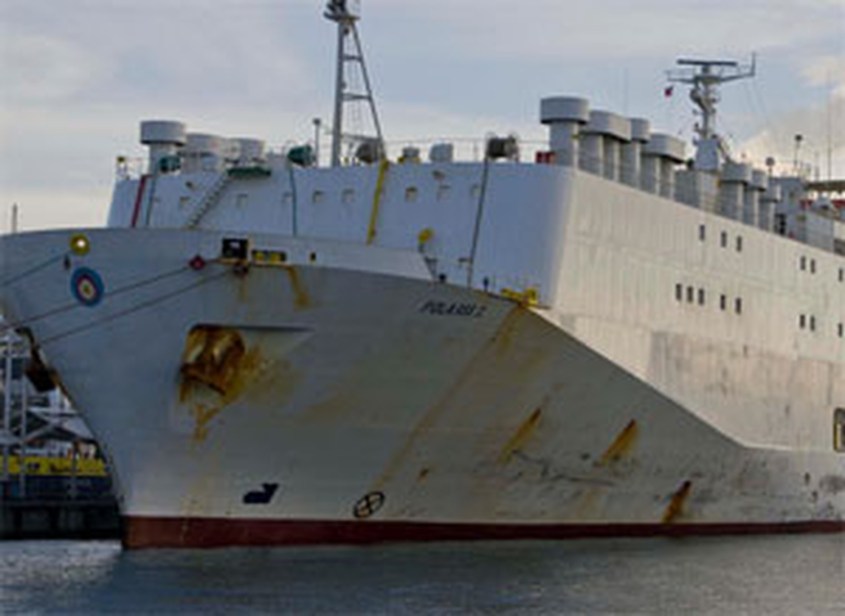
Live animal transport was also a significant issue. The French authorities had still not carried out a 2009 promise to improve their inspection procedures, while other countries, according to campaigners, were simply ignoring rest stop recommendations altogether. As a result, say campaigners, young animals that normally feed regularly they may spend 18 hours in trucks in a ship’s hold, or even more sealed up in a truck on the road.

Achingly slow response to European guidance was a regularly cited issue. Italy, for example has taken 13 years to tackle forced moulting, where hens are starved, dehydrated and deprived of light, until they lose all their feathers. The practice is used to boost egg production but, along with the suffering involved, forced moulting has been linked to salmonella infection risks. Asked if the ill treatment was now under control, Wojciechowski said “at the time of our visit to Italy, the European commission recommendation on forced moulting was still open, which might mean that this issue was still problematic.”

A significant number of the EU’s farms are also excluded from controls because they are too small: the report estimated that as many as 40% of farms fall outside the EU’s remit. Another control loophole noted in the report is the issue of ‘landless farms’ – these are often intensive pig farms, which do not use agricultural land and therefore do not benefit from Common Agricultural Policy (CAP) subsidies, setting them free from related controls and fines.

Entitled Animal Welfare in the EU: closing the gap between ambitious goals and practical implementation, the ECA report is one of about 30 published by the auditors each year, as part of their responsibility for making sure that EU funds are correctly spent. With farm subsidies accounting for about 40% of the EU’s budget, the ECA regularly examines agriculture issues. This topic, it said, was chosen because EU citizens are increasingly concerned about farming’s effects on animal welfare, and the impact on both public and animal health. ECA reports are used by various EU select committees and the parliament as a basis for policy and legislative development.

On a broader level, Wojciechowskione said the EU lacks long term agricultural vision. Given the EU’s current CAP overhaul, due to be completed by 2020 for the 2121 to 2027 period, the next two years will be pivotal. “We need a long term vision. Not for seven years, but for 30. If that vision is of intensive farming, the risks animals will be badly treated is higher.”

Describing his feelings about the welfare risks animals face in the EU, Wojciechowski said he believed the words of Mahatma Gandhi. “That the greatness of a nation can be judged by the way its animals are treated.

I would say the greatness of the EU could also be judged on this.”

To address the failings identified, the report proposes multiple actions. These include improvements to enforcement, compliance, the animal welfare portion of EU rural development programmes, inspections and the penalty system. The European commission has accepted almost all the recommendations and the report will shortly be presented to the EU parliament and agriculture committee. From there, debates on legislative and other actions will follow.


Regards for now

Mark and Venus.


The poison from the salmon farm industry


Lachszucht_in_Norwegen

Salmon has been bred for about 40 years in farms for mass consumption. These fish farms are mainly in Norway, Chile and Scotland. But you should also know that:

The aquaculture industry is growing faster than any other part of the agricultural industry and already accounts for half of the fish eaten.

Did you know that farmed salmon has been proven to be five times more toxic than any other food tested? Farmed salmon should even be one of the most toxic foods in the world and not just a disaster for the environment, but also for human health!

The salmon available here in Germany comes mostly from Norway, but salmon is one of the main import products from Canada, and it is now in Canada, in the Canadian province of British Columbia (BC), that can now be used up to 2.3 Millions of liters of a pesticide called Paramove 50 to remove sea lice from salmon in 14 salmon farms. Cermaq Norway AS is 100% owned by Cermaq Group AS, one of the world’s largest salmon and trout farms, with operations in Norway, Chile, and Canada.

The company Cermaq Group AS  has its headquarters in Oslo, Norway.

almon-farms-in-norway

The demand for salmon is also reflected in their breeding. More and more salmon live in confined spaces in the open net cages.

Salmon farms are generally considered a major environmental problem. Due to the high fish density, parasites such as salmon lice can multiply rapidly.  With its antennae, the lice attaches to the salmon and feeds on skin, blood and body mucus.

The pesticide Paramove 50, which stuns sea lice, is used instead of antibiotic insecticides in feeds because sea lice become resistant to antibiotics worldwide.  Not only is the chemistry used in factory farming underwater a problem, but another problem facing salmon farms is the enormous feed requirement of predator fish: While some farmed fish are able to live on a diet of corn or soybeans, others need fish to survive – and plenty of them: two to five kilograms of fish must be fed to produce one kilogram of salmon. In turn, this fish food is still traditionally caught in the sea. Feeding the fish with pork and chicken excrement is much cheaper than one with standard fish food.

Fatal Result: Aquaculture contributes to the overfishing of the oceans.

fishery sea bass

Animal rights activists also fear a threat to the wild salmon, which can be found in this region at exactly this time. Paradoxically, salmon are farmed in fish farms, so that the wild salmon does not die out, but it is just the farmed salmon that threaten the wild salmon.

Lachs Karikaturjpg

During the epic documentary film “Fillet-Oh-Fish” by director Nicolas Daniels, a study of salmon farms on the Norwegian fjords revealed a 15 meter high layer of bacteria, drugs and pesticides. Because the farms are located in the open sea, it is impossible to control the pollution.


A dramatic investigation Documentary “Fillet Oh Fish” about healthy food…or maybe not? Just what exactly is inside – the Fillet of Farmed Fish!


According to Dr. Joseph Mercola: “Today’s fisheries face a number of serious problems, from overfishing to chemical pollution and genetic mutation through toxic exposures.”

salmon-fish-farm

The catastrophic conditions of salmon farms are hushed up by the media.

“I do not recommend pregnant women, children or adolescents to eat farmed salmon. It is not clear how much toxins salmon contain and how these drugs affect children, adolescents and pregnant women, “said Drs. Anne-Lise Birch Monsen, biologist at Bergen University in Norway.

She adds that pollutants found in farmed salmon have a negative impact on brain development, are linked to autism and affect other organ systems in the body’s immune system and metabolism.

According to Living Tradition, eating more than one meal a month from a farmed salmon can increase the risk of developing cancer-causing chemicals and high dioxin levels. It is associated with many diseases including cancer, diabetes, arthritis, coronary heart disease and Alzheimer’s disease.

More than ever before, it is incredibly important to not only pay attention to what we eat, but also to know where it comes from and what it contains. Our health – and our lives – depend on it.

https://netzfrauen.org/2018/05/10/57695/

My comment: In fjords or bays in Norway, floating fish farms are crowding thousands of fish in confined spaces, just as in the animal tortured mass animal husbandry in agriculture.

More than 10 million tons of fish are already grown worldwide. These are mostly salmon species, which are fed with fishmeal, which is mainly supplied from South America.
The salmon, which are “produced” in such an attitude, can be bought in Germany partly in organic stores as salmon from organic farming!!!

As with any form of factory farming, diseases and parasites spread quickly. In fish farms, too, medicines and chemicals are added to the feed. All these substances are driven by the current in the sea and endanger there other animals and plants. On the seabed beneath fish farms, all life has died.

This salmon feed is mixed with a chemical antioxidant called ethoxyquin, which has been banned for years, for example, as a plant protection product in the EU.

It is a criminal economy branch, totally profit-oriented, with catastrophic consequences for the entire maritime ecosystem.

My best regards, Venus


Rabbit Farming in the EU – A Shame on EU Subsidies.

zerissene EU-Flagge am Stock


Did you know that Rabbit farming is the No 1 farming practice in the EU ? – nations such as France, Italy and Spain.  Rabbit farming even outweighs chicken farming. Here are a selection of words and undercover video investigations from Compassion In World farming who are based in London.

https://www.ciwf.org.uk/our-campaigns/investigations/caged-farming-investigations#rabbits


A dirty business

Our investigators documented appalling suffering, with rabbits confined in tiny cages of bare wire, causing injuries and stress, and leaving them unable to express their natural behaviours of hopping, moving freely, digging or hiding.

In many farms the cages were coated in the fur of rabbits long gone, and in some cases dead rabbits had been left to rot outside sheds in digger trucks, in the walkways between cage rows, on top of the cages or in the cages with other young rabbits.


Underneath the cages, there were mounds of faeces that in some farms generated horrifically overpowering ammonia smells and made it hard to breathe. In one farm our investigator had to wade through the waste just to check on the rabbits’ welfare, so long had it been since a clean out.

Some of the farms visited were heavily reliant on antibiotics to treat the animals and prevent disease spreading like wildfire through the cramped cages. One farm was spending €25,000 per year on treatment alone to keep the production line alive long enough to reach the slaughterhouse. Other farms didn’t even attempt to treat the sick and injured rabbits – and there were many falling victim to eye and fungal infections and respiratory conditions.

End the Cage !


England: Saturday 6th April 2019 – National Demonstrations Against Foie Gras Imports. Read Below for More Info.

England


All pictures are from our own archive – WAV.


From Animal Equality (UK):

https://animalequality.org/

https://animalequality.org.uk/

On Saturday 6th April, we’ll be taking to the streets to demand a ban on foie gras imports! 

foie gras abuse

We’ll be holding a peaceful protest outside a restaurant which serves foie gras in central London, and events will be happening in towns and cities across the country in solidarity.

If you’re interested in joining us, just click the link below and respond to our Facebook event to receive more information in the coming weeks.

https://www.facebook.com/events/1114144238787429/

Despite foie gras being illegal to produce in the UK due to the cruel force-feeding involved, we still import around 200 tonnes of it every year. Although feedback from the government about the possibility of a ban has been positive, we have yet to receive a firm commitment.

foie 2

Now is the time to up the pressure and ensure the import of this barbaric product is banned as soon as possible!

Events are taking place in Bath, Cambridge, Cheltenham, Grimsby, Peterborough, Portsmouth and Worthing, as well as the protest in London.

foie 3

Activists will be gathering petition signatures and encouraging people to send postcards to Michael Gove to show their support for a foie gras-free Great Britain.

If you’d like to organise an event near you, just email us and we’ll provide you with everything you need to make it a success!

foie 4

Thank you for your support,

Dr Toni Shephard

Executive Director – UK


A PETA ad:

foie gras human.png


Best Regards – Mark.


Great News x2 From Belgium. Flemish Parliament approves ban on fur farming and force feeding (Foie Gras).

Belgium


https://press.gaia.be/flemish-parliament-approves-ban-on-fur-farming-and-force-feeding#


Press Release from our animal friends at GAIA in Belgium.


Flemish Parliament approves ban on fur farming and force feeding


Thursday, March 14, 2019 — Brussels, 14 March 2019 

“It’s a great day for hundreds of thousands of minks who suffer each year in Flanders and are gassed for their fur. Flanders will also end the cruel practice of foie gras production.”

Global Action in the Interest of Animals (GAIA) applauds yesterdays unanimous decision by the Flemish parliament to ban fur farming and force feeding for fois gras production. The members of the Flemish parliament unanimously agreed the decision proposed earlier by the Flemish government on the initiative of Flemish animal welfare minister Ben Weyts (N-VA). GAIA president Michel Vandenbosch, who was involved 30 years ago in founding the very first anti-fur association in Belgium ‘Comité Anti Fourrure’, witnessed this reward after more than a quarter of a century of actions and campaigning against the suffering and abuse of hundreds of thousands of minks and ducks. Michel Vandenbosch: “Yesterdays agreement to forbid the practice in Flanders follows bans in Wallonia (in 2015) and the Brussels Region (in 2017) and means that the entire country will be free of fur farming by 2023 at the latest. Moreover, by banning force feeding, Flanders also joins the European top when it comes to animal welfare.”

By 1 December 2023 at the latest, the last of the 17 remaining fur farms and the only company in Flanders still to force feed ducks for the production of foie gras will have disappeared. The companies concerned will receive degressive compensation from the Flemish government.  The sooner they stop, the higher the compensation will be. The government is to provide a total of 10 million euros for this purpose.

Image result for mink fur farming

Image result for mink fur farming

No support for fur
Wallonia and Brussels already banned mink farming in their regions back in 2015 and 2017 respectively. In Flanders there are still 17 active mink farms holding an annual combined total of around 200,000 minks (mothers and young) in captivity. The animals live for 7 to 8 months in a tiny cage before being gassed and ending up as a garment or accessory in the shops. These are wild animals and display highly neurotic behaviour in captivity (incessantly jumping up and down, self-mutilation, etc.). “It pays to persist. Breeding and killing animals for their fur alone is completely outdated”, stresses GAIA president Michel Vandenbosch. “A great majority of the Flemish people shares this opinion.”

The fact there is no social support for fur production is repeatedly demonstrated in surveys. The last survey, conducted by Ipsos in 2015 on behalf of GAIA, showed that 85% of the Flemish people agreed to the ban on the breeding and killing of animals for fur.

Jean-Claude Van Damme and Pamela Anderson 
GAIA stepped up its fight against mink farming in Flanders over the years with numerous campaigns. In 2011, the organisation teamed up with Jean-Claude Van Damme to launch the campaign ‘The Victims’. At the end of December 2017, none other than Pamela Anderson wrote a letter to the Flemish minister Ben Weyts calling him to take urgent action on the ban.

So far a ban has been enforced in eleven other European countries: the United Kingdom, Austria, the Netherlands, Norway, Croatia, Slovenia, the Republic of Bosnia and Herzegovina, Serbia, the Republic of Macedonia, the Czech Republic and Luxembourg. Big fashion labels like Gucci, Armani, Hugo Boss, etc. are also excluding fur from their collections. The list keeps growing. “Fashion and ethics go increasingly hand in hand. We are delighted that Flanders will now contribute to a fur-free world”, says Vandenbosch.

Ban on force feeding
The ban on force feeding calls a halt to a cruel form of animal abuse in Flanders which remained in only one West-Flemish company. The Brussels Region already enforced a ban on force feeding for the production of foie gras in 2017. Resistance to force feeding is also growing across Europe: 12 European countries have already launched a formal ban or interpret the law for the protection of animals in such a way as to condemn the practice. Only 5 EU countries are still producing foie gras (France, Spain, Bulgaria, Hungary, Belgium). “We are committed to continue our campaigning in Wallonia, where 9 producers continue the use of force-feeding methods.”

foie gras abuse.jpg

foie 5

— End of press release —


Regards Mark


UK: I Animal -Do YOU Want to See The Modern Animal Farming Systems Through the Eyes of Farm Animals ? – If Yes, Read On.

UNKG0001

We have covered this project before but feel it is worth looking at again as the 360 degree panorama made available gives un an insight directly into the world of the animal at the facility.  At the end of this post we give details on how to view in 360 degrees if you are not familiar;

Regards Mark – WAV

—————————

Dear Mark,

In 2016 we launched our virtual reality project iAnimal. This innovative project provides a unique and immersive view behind the scenes of the meat and dairy industries.

To see the world through the eyes of an animal, to feel their fear and desperation, to share their suffering – iAnimal has the potential to change our attitude towards animals permanently.

iAnimal is narrated by our famous animal-loving friends: Evanna Lynch, Amanda Abbington and Peter Egan. The modern 360° technology literally places the viewer in the world of a farmed animal. For many people it is a life-changing experience.

With the help of our generous supporters and volunteers, we take iAnimal to events, festivals, universities and other public places to raise awareness about farmed animal suffering.

Education is the first step to helping animals.

For the animals,

Dr Toni Shephard

Exec Director – UK.


WAV Comment – To Use:


Click on this link – https://ianimal.uk/

Click on the Yellow box – 360

Then you can hold down the LEFT button of your computer mouse, and move your mouse left, right, up or down to get a wider view of the situation.

On the left side of the screen there is a box where you can select to watch other videos if you wish.