
Posted by Carly Day | November 27, 2018
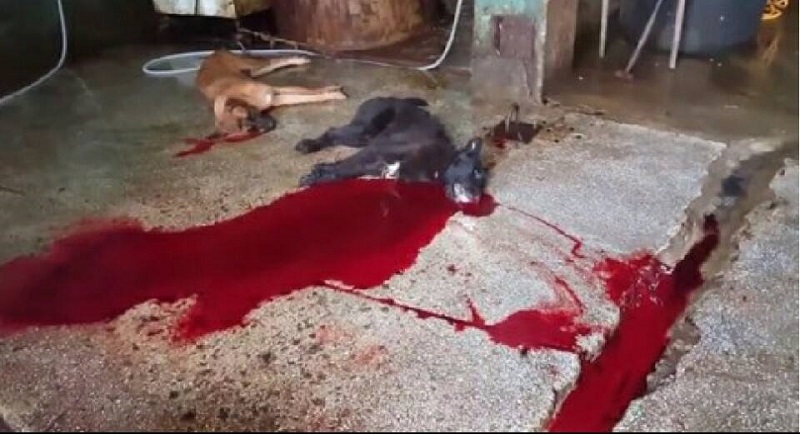
It was the largest dog slaughterhouse in South Korea, a hellish place where hundreds of cramped metal cages confined terrified dogs, suffering as they awaited a painful and traumatic death courtesy of the dog meat trade.
But last week saw the closure of the notoriously brutal Taepyeong slaughterhouse in Seoul, as animal activists gathered to witness the bulldozing of the site.
Humane Society International, Korea Animal Rights Advocates and the Korean Animal Welfare Association worked with the Seongnam City Council to shut down Taepyeong, a move that signifies a growing willingness within South Korea to put an end to the cruel trade.
“Both as a Korean citizen and an animal campaigner, it was incredibly moving for me to be a part of the historic closure of this notorious dog slaughterhouse,” said Nara Kim, HSI/Korea’s dog meat campaigner. “This really feels like a landmark moment in the demise of the dog meat industry in South Korea, and sends the clear message that the dog meat industry is increasingly unwelcome in Korean society.”
Five of the six slaughterhouses at Taepyeong were to be bulldozed immediately, with the sixth to follow once permits are acquired. The site is destined to be converted into a community park.
In further positive progress, the renowned Moran Market — once the largest dog meat market in South Korea — closed down its last permanent dog meat vendor. This market was once estimated to provide 30-40% of the dog meat in the nation and was responsible for the death of around 20,000 dogs every year.
South Korea has long been targeted by animal activists for their dog meat trade, in which an estimated 700,000 to one million dogs are slaughtered every year. Although the consumption of dog and cat meat is widespread throughout Asia, this is the only nation where dogs are intensively farmed for their meat.
With Taepyeong out of action, activists are optimistic that other slaughterhouses will suffer the same fate, spelling the end for this horrifically cruel industry in South Korea.
“Taepyeong’s closure is an historical event, and hopefully may trigger the closure of other illegal dog slaughterhouses throughout the country,” said Hyunji Kim from Korea Animal Rights Advocates. “Until we achieve this, we really appreciate the support of both Korean people and global citizens who love animals, for helping our campaigns to completely end dog meat in Korea.”
We are giving extra time to live animal exports at the moment. We have plenty of campaign experience for over 27 years to support this. Live exports, and the time that animals have to endure suffering on transporters is the ultimate shame of the EU and its so-called legislation; Regulation 1/2005 on the ‘protection of animals during transport’.
Believe us; there is no protection offered by this legislation; and many EU member states do not even bother to apply the rules of the regulation anyway. In summary it is a complete and utter joke; causing untold suffering to the animals which endure transportation across Europe on a daily basis. Only when the rules are changed to a maximum journey time of 8 hours or less will we see any improvement in the rules.
There was an article in the British press last week about Scottish calves being shipped to Europe (Spain, for further fattening) via Ramsgate; Kent: England: https://www.mirror.co.uk/news/uk-news/veal-calves-trying-suckle-peoples-13432873?fbclid
We also covered early shipments with our other post: https://worldanimalsvoice.com/2018/11/15/november-2018-scottish-farmers-now-exporting-calves-via-ramsgate-england-with-help-from-dutchman-oderwater/
We feel the need to give a bit more information on the export business from Ramsgate.
All photos are by official photographer and activist, Valerie Cameron.
The animal export trade changed from operating mainly from Dover Harbour in Kent to the smaller facility at Ramsgate mainly because of the amount of ferry traffic that was using Dover to run scheduled services to Europe did not really make it possible for additional ships to take up berthing space.
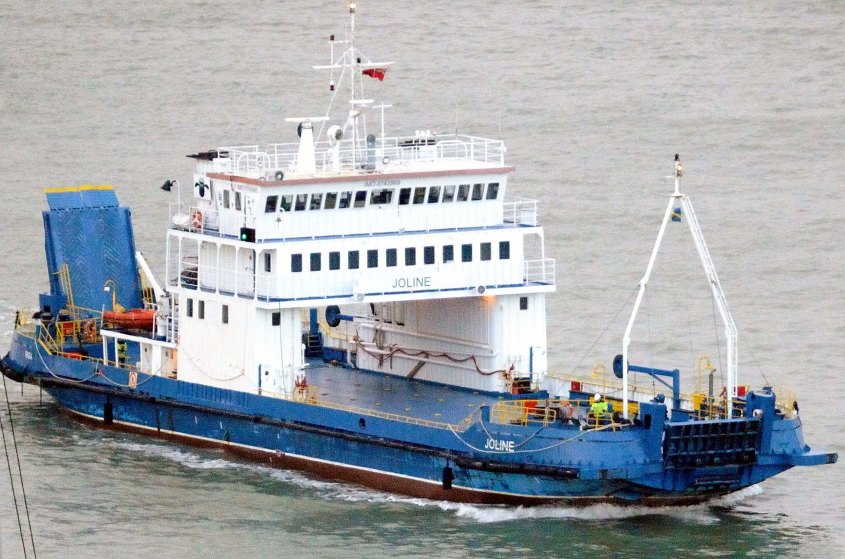
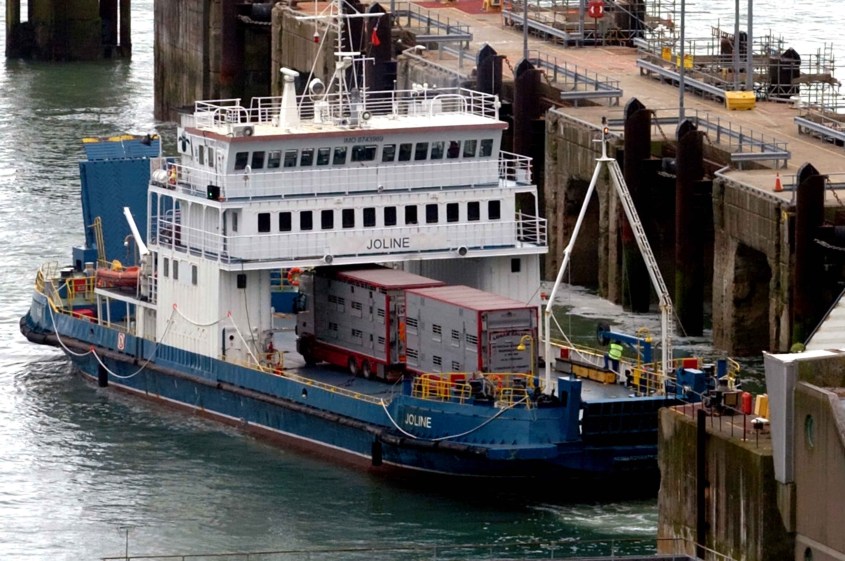
The ‘Joline’
Although it was nothing more than a cheap and nasty ‘bathtub’ – or to be more precise; an ex Russian battle tank carrier to used only on rivers; and not in the English Channel; the vessel; named the ‘Joline’; could not berth at Dover and load animal transporters; and then depart in the time available that was given to it. Hundreds of trucks could load onto ferries for each sailing within the hour; but when it came to the Joline; it was unable to load four, five or even six animal transporters; such was the inability of all those involved with its operation.
Here are a few pictures of the Joline trying to operate at Dover. Note its size compared to the normal cross Channel ferries doing the same route to Calais. The normal ferries would not take livestock transporters due to a massive and very successful campaign asking them to stop over the years. They stopped taking slaughter animal transporters; and so another way had to be found by the farmers to get animals across to Europe.
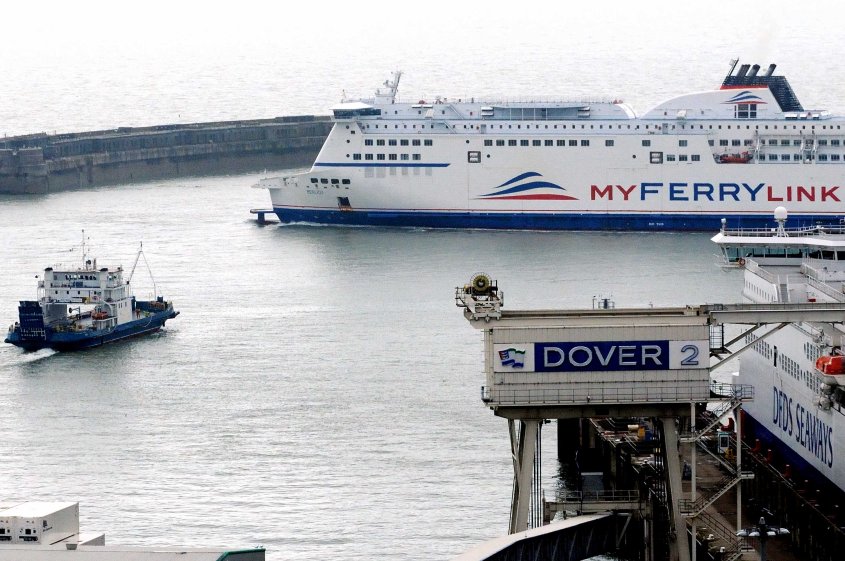
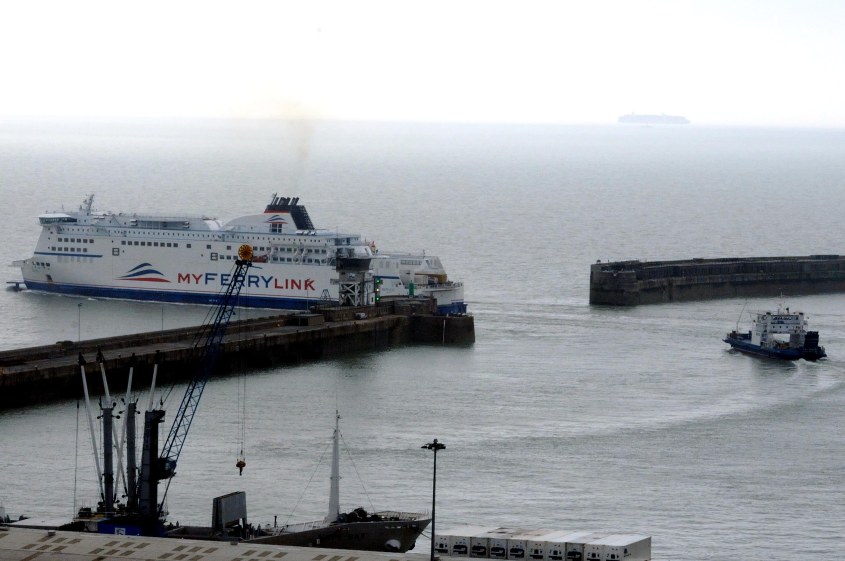
The Joline at Dover – Note its size compared to standard ferries. Even so, the normal ferries could load trucks much quicker !
The ‘Joline’ came on the scene as the ‘solution’ to this. It is operated by a Dutchman named Johannes Onderwater. The vessel is registered in Riga, Latvia, which is an EU member state. Onderwater has his own fleet of livestock vehicles; but many other (mainly) Dutch hauliers also use the Joline to get UK animals in to Europe.
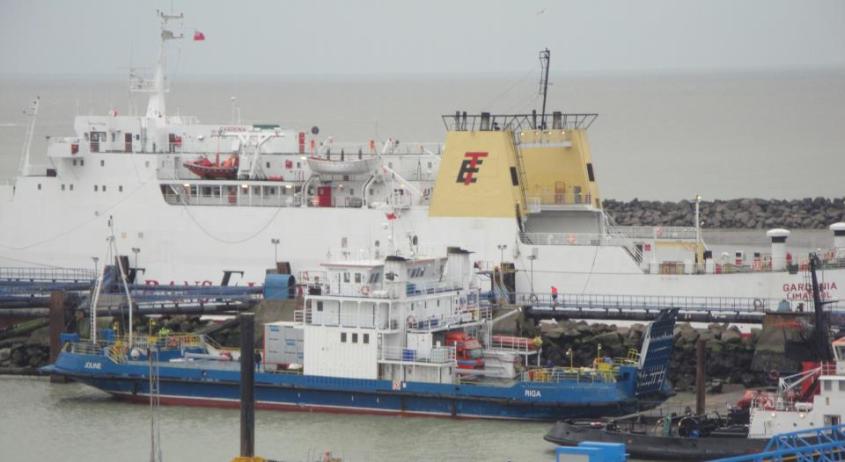
The Joline at Ramsgate harbour
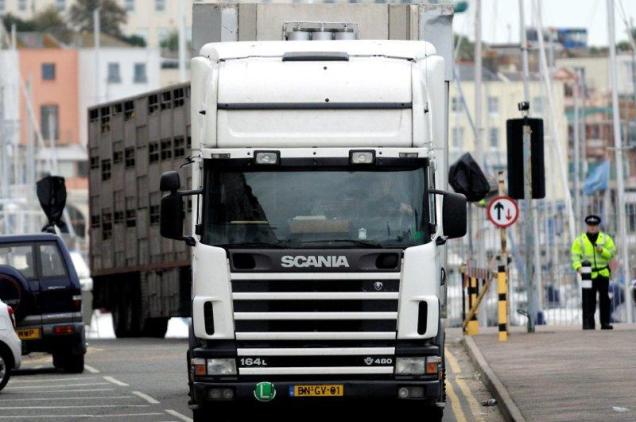
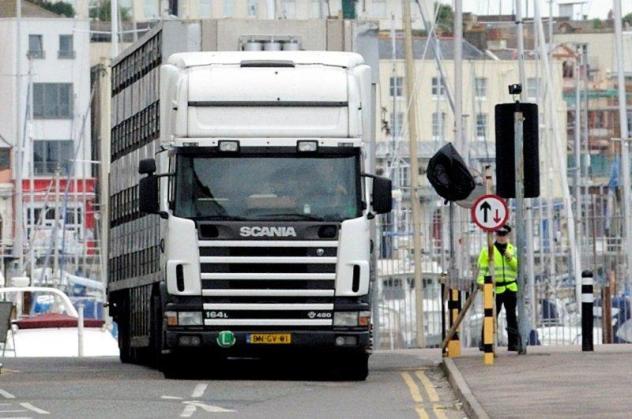
Above – Onderwater’s own white (Scania) trucks carrying livestock en route to the harbour
Although many do not know; we can confirm that until recently; Onderwater operated another live animal transportation business out of Riga, Latvia. We have many details on this. Mr Onderwaters official Dutch registered company is called Onderwater Agneaux BV; and we do have the name of his Latvian business; but we are not going to divulge it.
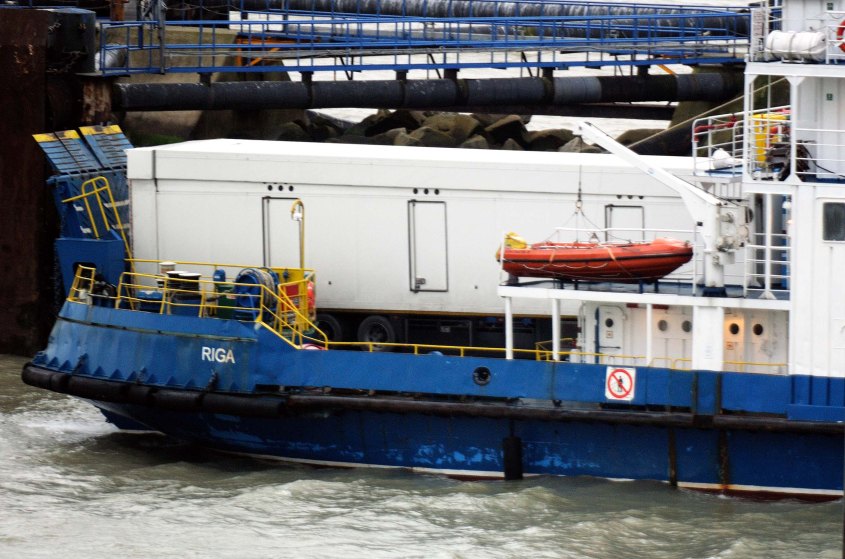
Confirmation that the ‘Joline’ is registered in Riga, Latvia
Onderwater is very well known to the animal rights movement in Kent, England. He first surfaced several years ago when he (personally) attempted to export animals from the UK to mainland Europe. Using a sealed box type ex refrigerated trailer; Onderwater attempted to deceive his way to Europe by declaring to customs that his load in the trailer contained ‘Boxed Meat’. As such, the vehicle and its contents were allowed to board a P&O ferry for shipment to Europe – via Calais to be precise.
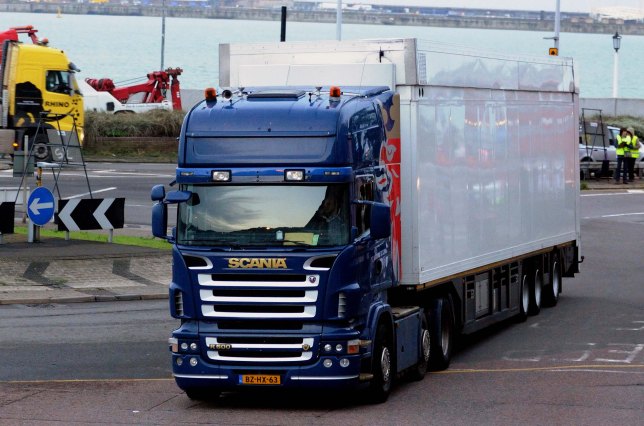
A typical ‘Box Trailer’ arrives at Dover carrying live sheep
Very observant and on the ball crewmen on the (P&O) ferry noticed that things did not seem quite right with the trailer whilst it was on the ferry. Fluid was seen to be dripping from the trailer – this later turned out to be urine. They reported this situation with the trailer to the Captain of the ferry who immediately demanded that the rear of the trailer be opened up.
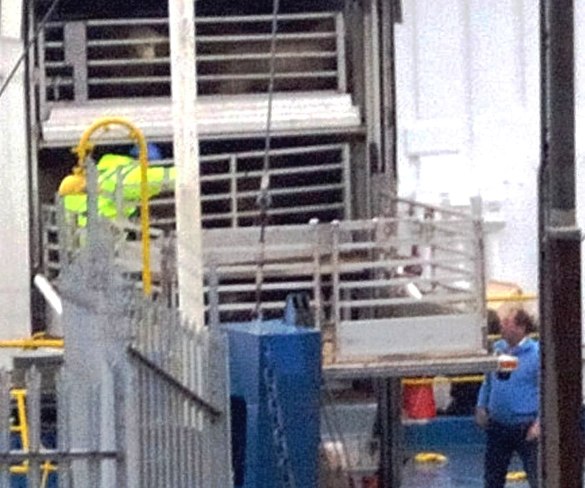
A rare shot by activists taken of the inside of the ‘box trailer’. Sheep can clearly be seen standing on the top deck.
Rather than find loads of ‘boxed meat’ inside as declared on the paperwork; the P&O crew actually found that the trailer contained over 300 LIVE sheep; and it was their urine that was dripping onto the ferry flooring. This issue thereafter went much further with Kent based AR organisations who got Kent Trading Standards involved with taking up prosecutions. After a lot of work by all parties, the ‘Boxed Meat’ case (as it became known) went to court at Folkestone, Kent on 5th July 2010.
At the trial; Onderwater Agneaux BV (Onderwaters Dutch company) pleaded guilty to no less than six (6) offences under the Animal Health Act 1981 of causing the transport of sheep in contravention of the Welfare of Animals (Transport) (England) Order 2006 and EU Council Regulation (EC) 1/2005 (Protection of animals during transport).
As a result, Onderwater’s company, Onderwater Agneaux BV (of the Netherlands), was fined at Folkestone a total of £10,370. And so, under UK law, by being prosecuted in this way, and pleading guilty to offences, Onderwater became a formally convicted criminal. With Kent AR informing Dutch friends in Europe; Onderwater was also prosecuted by the Dutch authorities. In the Netherlands he was given 2 out of 3 ‘strikes’ on his operators license. If he was caught again and given a 3rd strike; then his Dutch hauliers operating license was to be removed; meaning that he would be unable to continue transporting live animals as a business.
So – forward to the current time. The Joline is seen very infrequently at Ramsgate as UK live exports have almost been stopped by very positive campaigns by the animal rights movement. Onderwater now deals primarily with getting UK sheep to Europe at the times of Eid, the Muslim festival of sacrifice. For the rest of the time shipments are very haphazard; often carrying just a few transporters. With the Joline running between Ramsgate and Calais; the cost of fuel, berthing fees and crew employment costs; the question has often been asked how he can make this operation pay ? – it is still a mystery today.
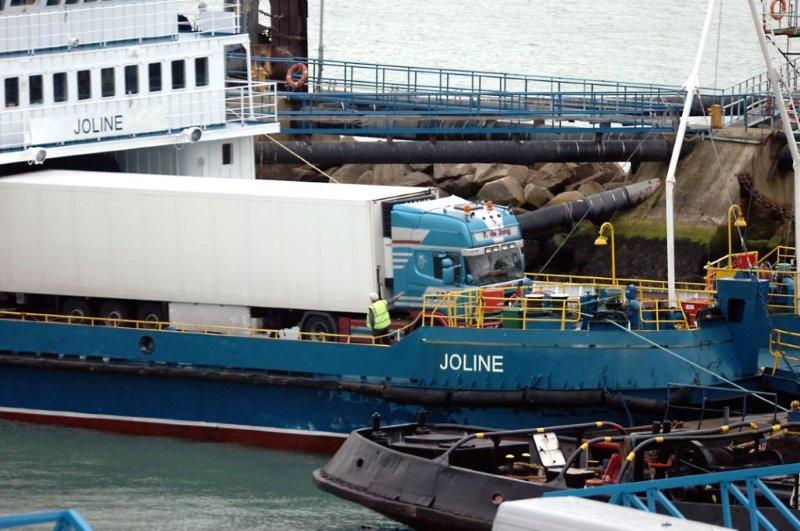
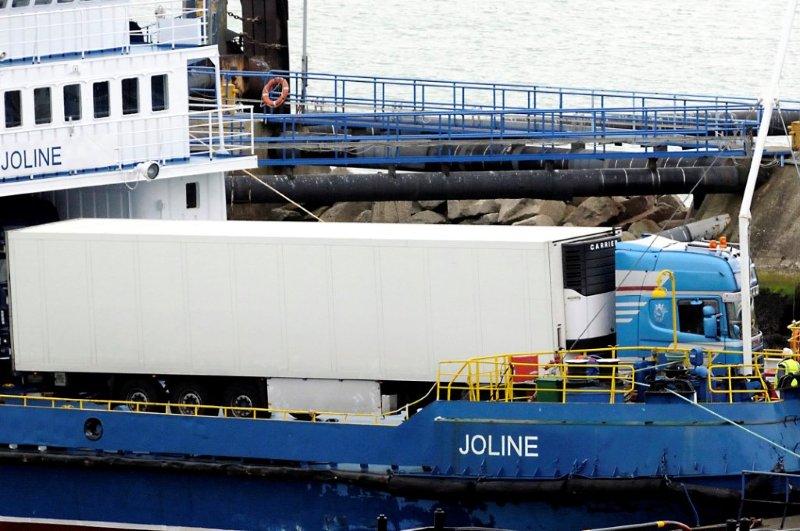
Above – A Box trailer loads onto the ‘Joline’ at Ramsgate, England
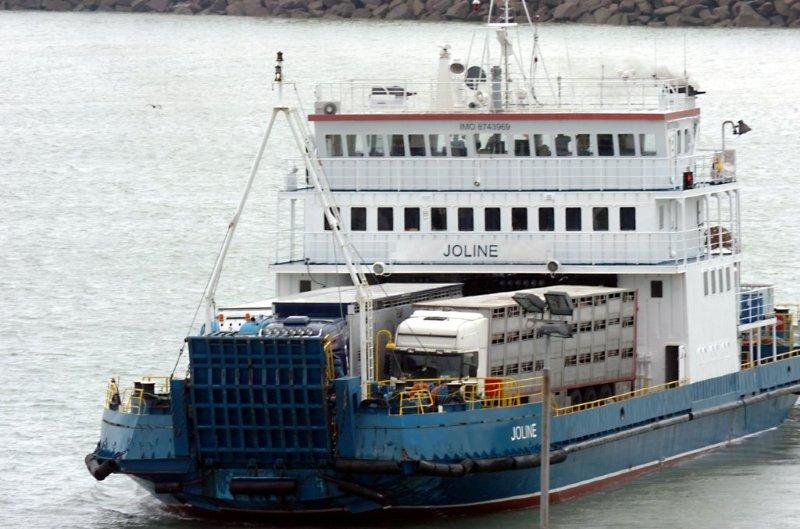
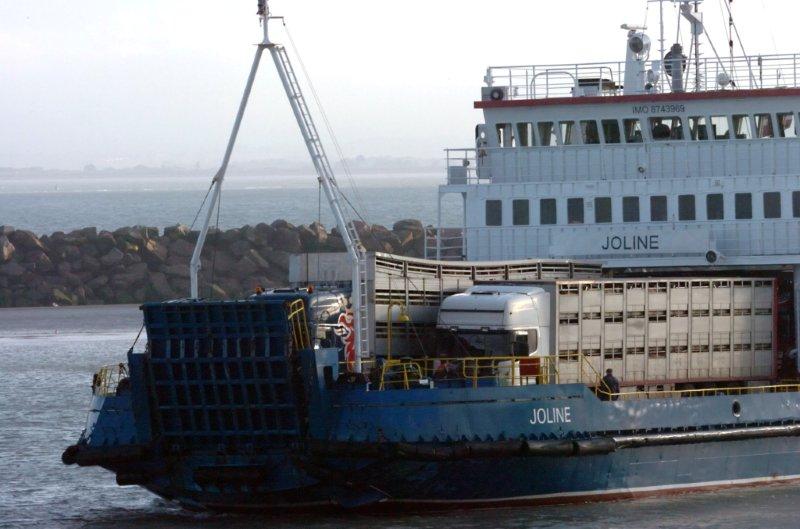
Livestock transporters depart on the Joline – note the ‘wonky roof’ on the truck shown left above. How does this comply with the Regulation standards set by the EU ? – the trailer should be scrapped !!!
Now the opportunity to take calves from Scotland has arisen; mainly because the ferry operator which used to ship them to Ireland for onward movement via Cherbourg (France) decided to close down the trade after an expose of the business was made and published on UK television; Onderwater has stepped in as the lifeline for the Scottish farmers wanting to export calves live. It must be remembered that these calves are males; an unwanted by product of the dairy industry as they do not produce milk and so are basically unwanted. They are shipped into Europe for further fattening; where they are usually slaughtered after just 6 months of age. Think about this trade the next time you have cows milk in your tea – convert instead to plant based milk and avoid all of this animal suffering.
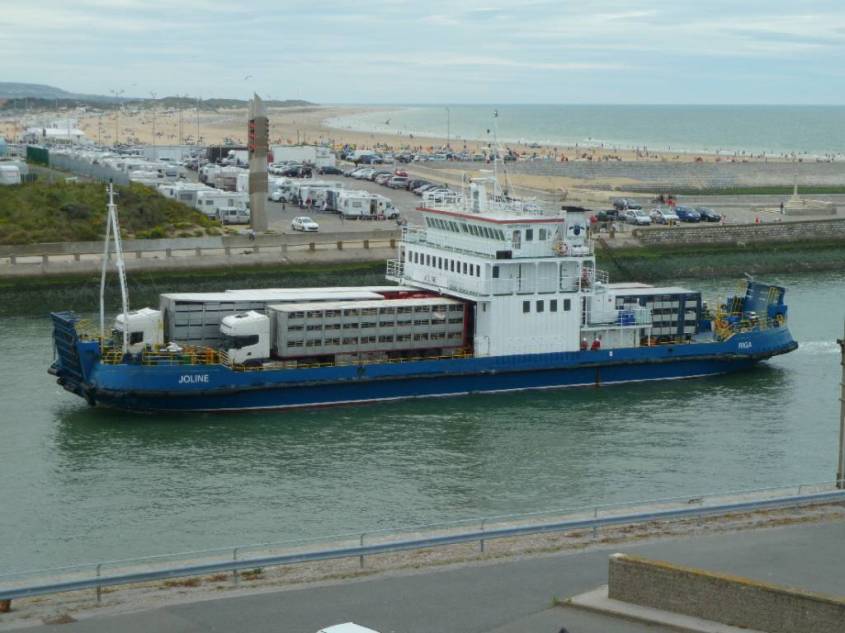
Arrival at Calais, France – note the white Scania cabs of the Onderwater fleet of trucks at the front
We will be publishing another post very soon on British exported calves and their final destinations. We think it will come as a surprise to many of you. Watch this space.
Regards Mark

We did not forget
One year ago 2,400 slaves died in a mobile ship coffin en route from Australia to Middle East crematoria.
The slave dealer of the company still has transport license.
And we remember… and we promise the victims that we will use all means to put an end to the dirty business of the transport mafia.
Best regards to all, Venus
Teach your children to eat the right food, to wear the right one.
Empathy for the other beings and respect for their rights; These are the first moral principles that children must learn.
Best regards, Venus

DIRECT ACTION IN PROGRESS AT THE BELL SLAUGHTERHOUSE (SWITZERLAND): INCREASE OFFENSIVE COMPLICITY AGAINST THE SPECIESIST ECONOMY!
❌10 HEURES DE BLOCAGE : ÉVACUATION POLICIÈRE LANCÉE !
Blockade of the Bell slaughterhouse (Switzerland) by 134 antispecies activists from Angletterie, Belgium, France, Italy and Switzerland. Our place is between the knives and the victims. 17 hours of solidarity between activists to co-resist with the 600 animals killed every day in one of the biggest places of the speciesist massacre in Switzerland. Photographs: Julien Derreux # 269AnimalLiving #SmashSpeciesismByMakingARevolution #JusticePourLesAnimaux

The 134 activists come from England, Belgium, France, Italy and Switzerland and start on 21.11.2018 their ninth hour of blocking at the Bell slaughterhouse (Switzerland).
Despite the terrible and delirious repression of antispeciesists activists practising direct action, they have chosen to continue along this path.
We should all show them our support and above all show, as they do, solidarity with the oppressed who resist alone in these places.
By intervening between the knives and the victims, these 134 antispeciesists activists practice a new form of “defense for others” and break this speciesist dividing line between bodies worthy of defense and those who, disarmed or made abusable indefinitely, are left defenseless.
They have shut down one of Switzerland’s largest slaughterhouses and bent the speciesist industry. No individual will lose his/her life in this place today, no one will be pushed into this terrible “death row” stained with the fear and blood of the victims.
Have we experienced so many of those moments when the balance of power reverses to neglect them when they occur?
The real radicality is taking action.
Direct action brings efficiency and power; what are you waiting for to join them?
https://www.facebook.com/269LIBERATION.ANIMALE/
My comment: “Exploitation has become obsolete as an evolutionary strategy” Colin Tudge said.
And that is what we, who fight against the exploitation of animals, must enforce and prove by all peaceful means.
My best regards to all, Venus

Our undercover operative who worked for 8 months inside the Haifa slaughterhouse speaks for the first time exactly one year after the broadcasting of the investigation.
Special thanks to the ‘Animals’ association which concurrently conducted their own undercover investigation inside the same slaughterhouse. Their recordings are incorporated in the operative’s testimonial. The operative has asked to remain anonymous for fear of reprisal. What he did was incredibly brave and he is a hero for the animals. For 8 months he had to witness the horrors in silence in order to bring them to light, for the world to see.
If you have been affected by this video and would like to make a change, please click on the following link for a 22-day vegan experience (International) where you will receive support every step of the way.
bit.ly/GoingPlantBased
From me: For this video, I miss the words to write a correct comment.
I have only one message, to all countries, and especially to the country that has suffered the most under fascism, Israel: Abolition of all Dachau for animals, no fascism for animals in slaughterhouses and in everyday life! Such crimes against animals in slaughterhouses revive times that were a disgrace to humanity.
Israel knows it best!
Best regards to all, Venus

South Korean authorities have announced they have shut down the Taepyeong-dong complex, the country’s largest dog slaughterhouse, following pressure from animal rights activists to end South Korea’s custom of eating dog meat.
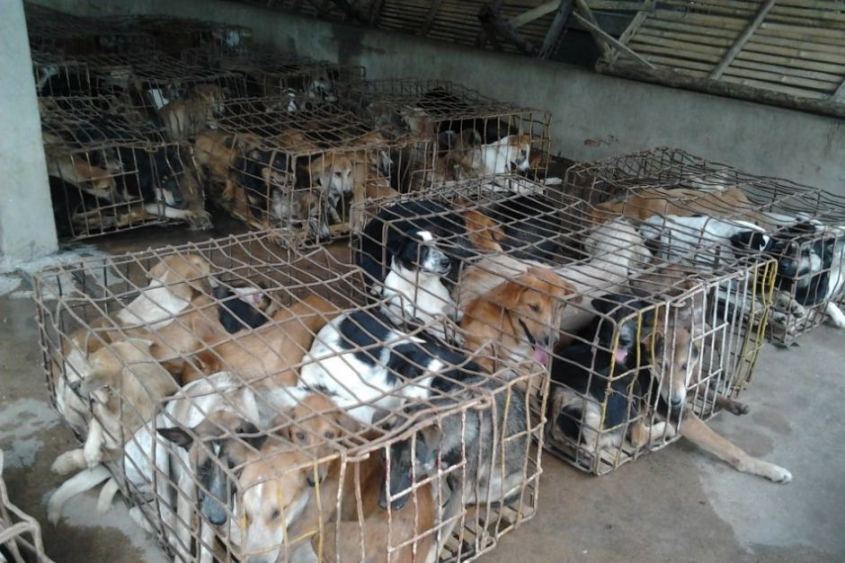
In a press release, Human Society International (HSI) announced the city council of Seongnam, where Taepyeong is located, intended to build a community park where the slaughterhouse once stood, „creating a fun public space where once hundreds of thousands of dogs a year were gathered from the country’s thousands of dog meat farms to be killed by electrocution.“

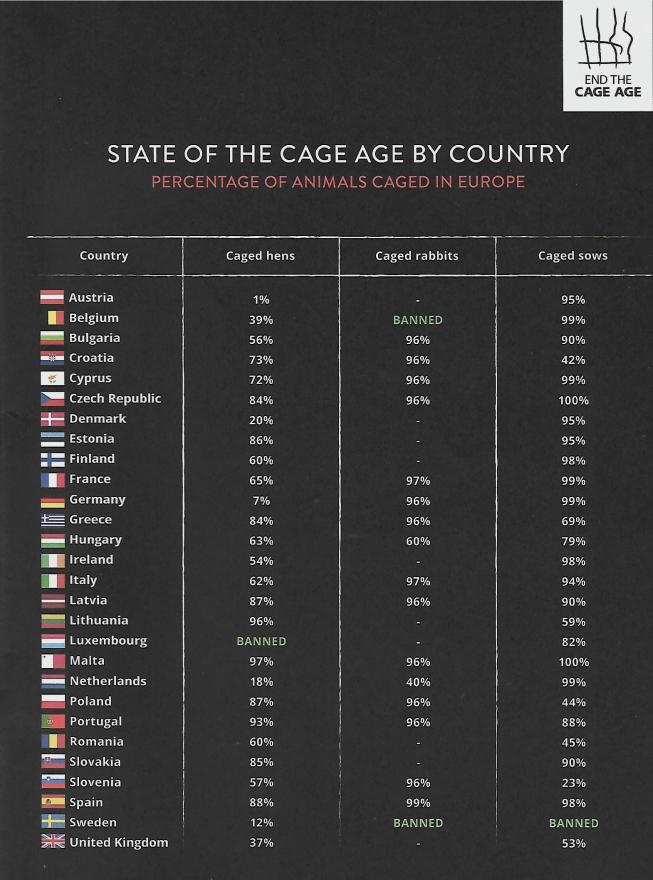
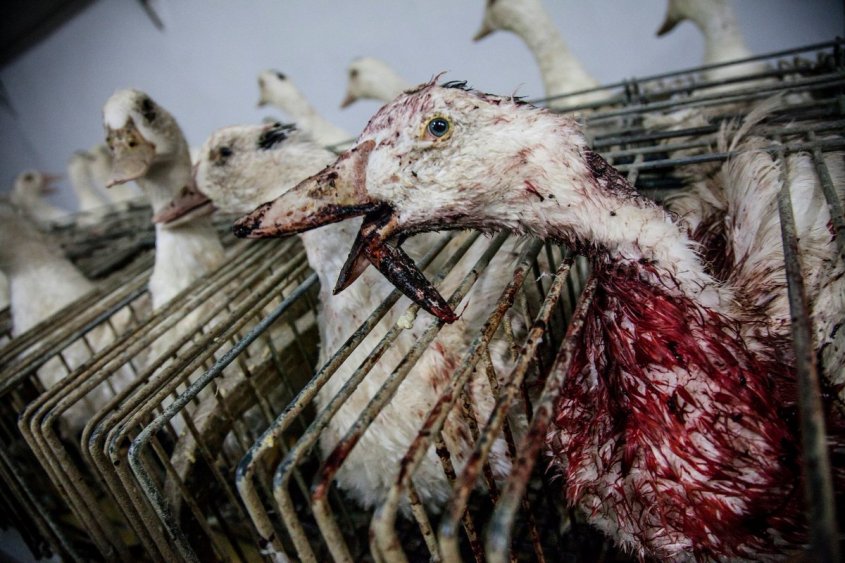
Caging animals is cruel: animals are sentient beings, capable of feeling pain and joy. Caged animals endure immense suffering because they have no control over their lives, experience extreme frustration, are severely restricted in their movement, and are prevented from performing almost all natural behaviours.
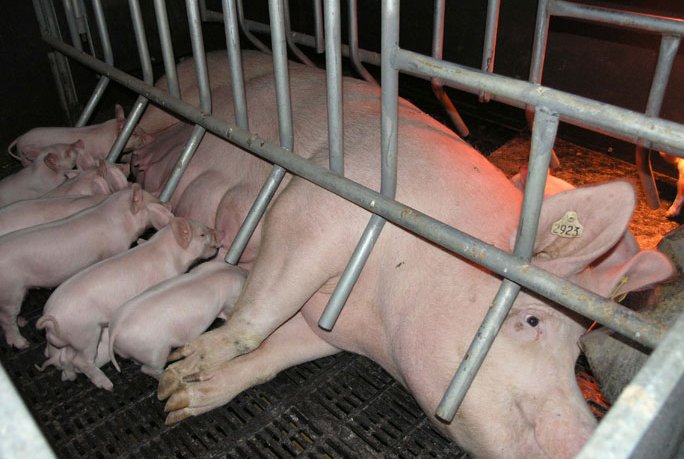
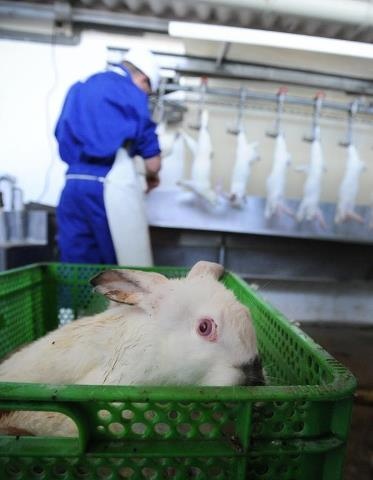
Hundreds of millions of farm animals across the EU are forced to live their entire lives imprisoned in tiny, barren cages. This extreme confinement is routinely inflicted on many different species. Sows are forced to nurse their piglets in crates, rabbits and quail endure their whole lives in barren cages, and ducks and geese are caged for force feeding to produce foie gras.
Click on the following link to see the state of caged animal cruelty across all EU member states – https://worldanimalsvoice.com/2018/11/22/eu-member-state-percentages-of-farm-animals-caged-in-europe-the-shame-of-the-eu/
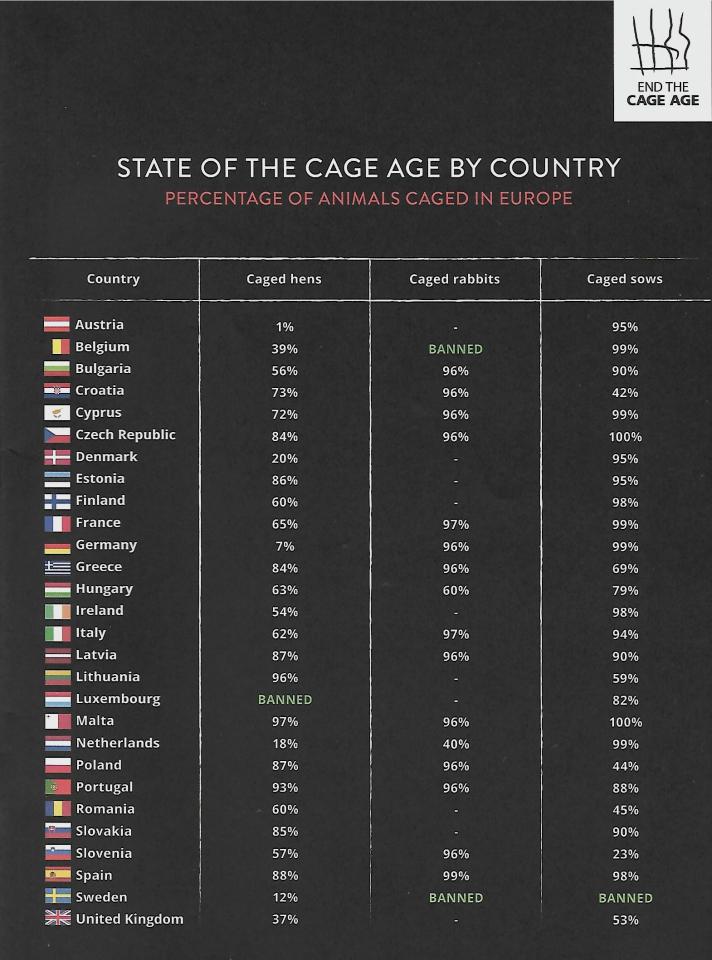 y to finally End the Cage Age.
Together, united, we have the opportunity to rid Europe of these cages. Start today – join up and sign our ECI (European Citizens’ Initiative) demanding that the European Commission bans the use of cages in animal farming. If one million of us raise our voices together, we have the opportunity to finally End the Cage Age.
Here is more information about caged farm animals that relate to the EU caged animal link provided above::

Cows – https://www.ciwf.org.uk/farm-animals/cows/
Sheep – https://www.ciwf.org.uk/farm-animals/sheep/
Turkeys – https://www.ciwf.org.uk/farm-animals/turkeys/
Fish – https://www.ciwf.org.uk/farm-animals/fish/
Quail – https://www.ciwf.org.uk/farm-animals/quail/

Above 2 pictures – Val Cameron.


We are hoping to do more specific posts on EU caged animals in the near future – WAV.