Category: Farm Animals

Global: Momentum Builds For Further Live Export Bans.

14 June 2024

CIWF

Citizens and activists are making a stand for animals, calling for a ban on live animal exports across the globe.

Ban Live Exports International Awareness Day, on 14th of June, marks the same day in 2015 when 13,000 sheep tragically lost their lives during a long sea journey from Romania to Somalia. Since then, campaigners have continued to call for an end to this practice, in which animals endure horrific conditions such as overcrowding and extreme temperatures causing enormous pain and distress. Millions of live animals are transported each year by road, rail, sea and air across continents on journeys lasting up to three weeks.

Great Britain introduced a ban on live exports for fattening and slaughter just weeks ago, while Australia announced that live sheep exports by sea would be banned from 2028. New Zealand introduced a ban on live animal exports in 2023, but the legislation is currently in jeopardy as a new coalition government has vowed to repeal the law. In Brazil, the federal court also ruled last year that no live animals should be exported from the country’s ports.

The EU’s promised comprehensive review of animal welfare legislation offered hope for a ban on live exports, yet last year the Commission missed the opportunity to switch to a carcass-only trade, announcing weak amendments to transport regulations.

Across the world, the tide is turning. Governments are waking up to the unnecessary cruelty this barbaric industry inflicts on millions of sentient animals transported across the world each year like cargo.Our message is clear – we call on the European Commission to end this unnecessary trade and switch to carcass-only exports.

Susanna Blattner, Farmed Animals Programme Officer, Eurogroup for Animals

This is the ninth consecutive annual awareness day, organised by Compassion in World Farming.

A video shared for this day captures some of the suffering these animals endure, including stress, dehydration, exhaustion, overheating and injuries.

This Ban Live Exports International Awareness Day, people are being urged to stand up for animals by sharing the video on social media, using the hashtag #BanLiveExports.    

Regards Mark

Three recent investigations put Lidl’s treatment of animals under fire.

Three recent investigations put Lidl’s treatment of animals under fire

10 June 2024

AWO

Animal Welfare Observatory’s investigations reveal significant animal welfare abuses across several farms in Spain and Germany connected to Lidl.

The seriousness of the breaches uncovered emphasises once more the urgent need for EU policy-makers to revise the Kept Animals Regulation, as countless sentient beings are shown to be suffering in the most egregious conditions.  

[VIEWER DISCRETION ADVISED]

Three investigations from the Animal Welfare Observatory, published between 2023 and 2024, shows both broiler chickens and pigs (including sows, piglets and fattening pigs) enduring illnesses and malformations while living in disgusting conditions across farms in Spain and Germany, connected to the supermarket chain Lidl. Workers are displayed showing very little care for these sentient beings, and in places, even revelling in the discontent of the animals. 

Fast-growing broiler chickens cannot cope with their growth rate

The first of the three investigations consists of footage recorded between September 2022 and 2023, taken at large-scale farms in northwest Germany. 

The footage shows fast-growing broiler chickens experiencing physical and mental distress due to their unnatural growth rate which, as we have explored in a recent article and report, makes it impossible for them to live comfortable or satisfying lives. 

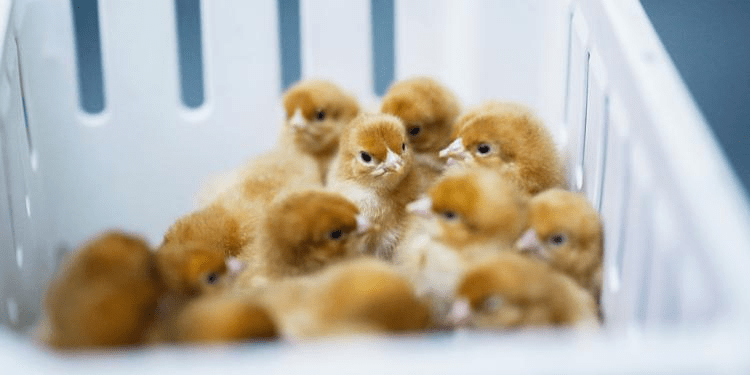
As the recordings reveal, these fast-growing birds are barely able to move. Elsewhere in the video, day-old chicks are shown being roughly thrown to the ground and mishandled, while deformed chickens struggle to walk, and display twisted necks and other malformations. Coexisting with dozens of corpses, several birds show signs of “botulism”, a debilitating condition that can be passed on through contact with dead birds. 

Diseased pigs are living in squalor and agony 

Subsequent investigations published in November 2023 and May 2024 show pigs living in gruesome conditions on various farms in Burgos, Spain. 

In the first of these investigations, the Animal Welfare Observatory recorded the living conditions of 5,000 pigs spread across five sheds. Extreme physical ailments make life for these pigs very difficult:

  • Breeding sows are so thin their spines are showing, and have infected and gangrenous wounds due to spending all their time behind bars;
  • Piglets are shown to be trembling, sick and malformed while being abused by workers;
  • Fattening pigs live with hematomas, abscesses and skin lesions that are compatible with scabies. Several also have hernias – in the footage, one has a hernia so large it scrapes the floor, weighing about seven kilos. 

The horrors captured on this farm were mirrored by one further investigation published by the NGO in May 2024, showing pigs living in similarly filthy confines – the footage captures feeders full of insects, worms, rats and spider webs. Here, several pigs are also shown to be suffering from hernias, deformities and infections, and are suffering from severe abuse: in one capture, a worker delivers blows with a spiked hammer to mark the pigs that are to be taken to the slaughterhouse.

Animal welfare policies must be enforced to stop this kind of suffering

These kinds of animal rights abuses should not be slipping through the cracks in the EU’s farming industry. Not only do we need better laws to protect all kept animals, but standards must be put in place to ensure these laws are enforced, to truly safeguard the welfare of these sentient beings. 

Regards Mark

EU: Improve pig welfare standards, demand animal rights advocates.

Pig producers across the EU should deliver higher welfare standards than the EU Pig Directive currently requires, say activists who are now calling for better practices and additional measures to ensure pig welfare.

“The legislation that exists right now, the EU Pig Directive, is seriously out of date, and it really needs to be brought up to date with current understandings of animal welfare science,” says Jo Swabe Senior Director of Public Affairs at Humane Society International Europe (HSI/Europe).

As the ‘End the Cage Age’ row rages, removing cages within pig husbandry is a significant part of the issue. “Pigs can still be isolated in an individual crate for up to 28 days of the gestation period,” said Swabe, adding that preventing the mutilation of piglets, through castration, tail docking and earmarking is also a top priority.

Continue reading at

Mark

USA: The Changing Face of Animal Rights and Legislation in the US.

What does the evolution of animal welfare laws tell us about our society’s values and priorities?

The legal environment regarding animal welfare has seen a substantial change in the United States within the last ten years.

Driven by both public demand and evolving ethical standards, state and federal governments have enacted numerous laws aimed at protecting animals from cruelty and enhancing their living conditions. Let’s take a closer look.

Continue at https://business-review.eu/business/the-changing-face-of-animal-rights-and-legislation-in-the-us-261599

Regards Mark

USA: Animal Rights Want End To Utah Gestation Crates.

Agnor Mark Rayan/Agnormark – Stock.Adobe.Com

Since 2002, 11 states have restricted or banned gestation crates but Utah is not among them. Pork producers keep sows in these cramped crates throughout their lives, artificially impregnate them and take away their young to keep up with the demand for meat.

As of December 2021, Utah farms accounted for just over 1% of the total U.S. hog inventory, according to the National Pork Producers Council.

Devon Dear, institutional outreach manager for the group Animal Equality, said improvements have been made, but more needs to be done.

“We’ve seen some really big players in this industry move away from crates; McDonald’s, Wendy’s, Jack in the Box, Chipotle, Shake Shack, Panera Bread,” Dear outlined. “These companies have significantly reduced or eliminated crates from their supply chain, so we know it can be done successfully.”

Dear added around 60% of pigs in the U.S. are crated for their entire pregnancies and will spend, on average, 74% of their lives in crates. The report lists corporations like Denny’s, Chick-fil-A, Dunkin’ and KFC among others as not being aggressive enough in reducing their crate usage. Dear hopes the Farm Bill currently being debated in Congress can help advance the issue.

Continue reading:

https://www.upr.org/utah-news/2024-06-06/animal-rights-group-wants-to-end-use-of-livestock-gestation-crates

Mark

EU: EU Elections: 1000 candidates take the pledge for animals.

7 June 2024

Press Release

Over 1000 candidate MEPs have committed to work towards better animal welfare in the EU, should they be elected in the current European Elections.

The Vote for Animals campaign, run by Eurogroup for Animals and its members, asks candidates to take a pledge committing to do more for better protection of all animals at EU level.

Candidates spanning the entire political spectrum across 27 Member States have made the commitment. Spain, Italy, Finland and France have the largest number of candidates supporting the pledge.

The Vote for Animals pledge calls for:

  • New species-specific legislation for all farmed species, and a transition to non-cage systems within five years, as promised in response to the End the Cage Age ECI.
  • An end to the suffering of animals during live transport, moving away from live animals towards transporting meat products.
  • Higher standards for aquatic species, both farmed and wild, in farming, transport and slaughter; and a ban on the introduction of octopus farming.
  • A Common Agricultural Policy that supports a sustainable food system, and a transition to higher animal welfare, and a shift towards plant-based diets.
  • Trade requirements that respect the same standards as those established by revised EU legislation.
  • Raised efforts and resources to accelerate the transition to non-animal methods in research, and support the scientific community to shift towards animal-free testing. 
  • Better legislation for wild animals, including a positive list of animal species allowed to be kept as pets, strengthened EU legislation for zoos, action against wildlife trafficking, and humane methods in wildlife management.
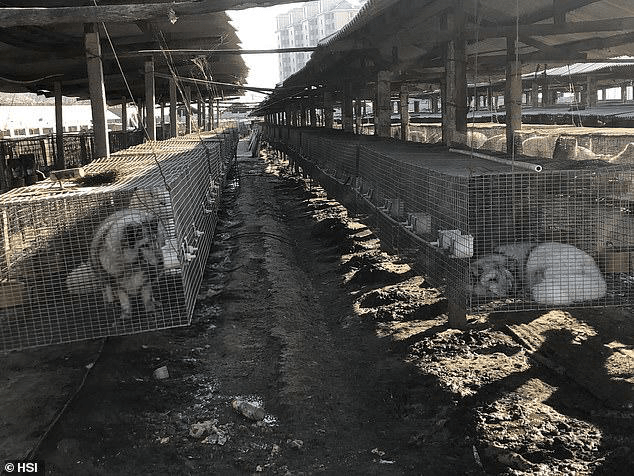
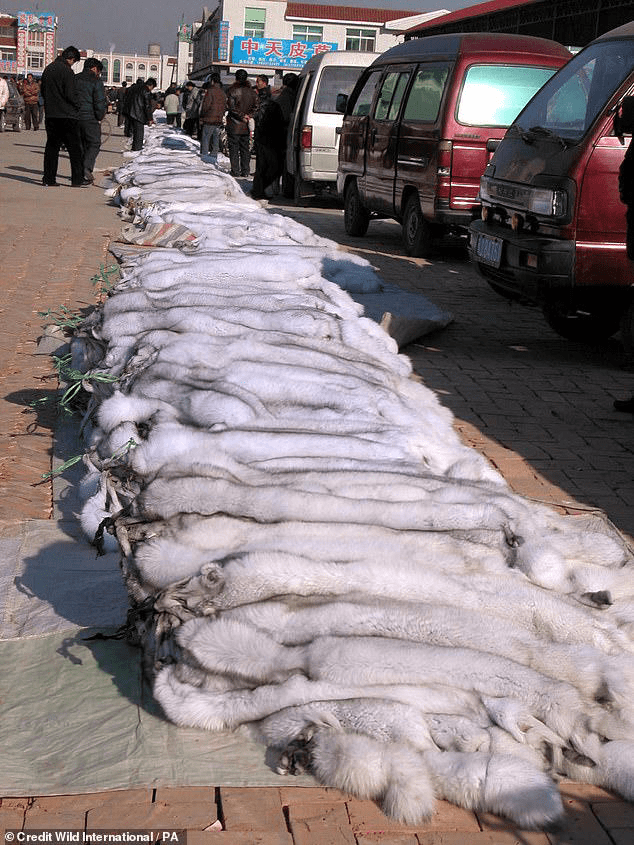
  • A ban, without delay, of fur farms and fur products on the EU market, as per the demands of the Fur Free Europe ECI.
  • Full traceability, improved breeding practices, stricter controls on sales and transportation, and better treatment of companion animals.
  • An EU commissioner responsible for animal welfare, to ensure consistent attention and action in this area.

The feedback to our Vote for Animals campaign is reflective of the demands of EU citizens for better protection for animals. It is now time to go and vote, to help shape an EU that will place animal welfare at the forefront, and ensure revised and better legislation that is fit for a progressive Europe

Reineke Hameleers, CEO, Eurogroup for Animals.

Regards Mark

EU: Unique mobile exhibition for better animal protection to tour Europe.

5 June 2024

Project 1882

The conditions of animals in factory farms will be put under the spotlight in a mobile exhibition set to tour in 15 European cities in the coming months. The mobile truck, which will make its way across Europe, transforms into an interactive exhibition place, offering a unique experience to visitors.

The initiative For the Animals, by Project 1882, will allow citizens to witness first-hand the mistreatment endured by animals in factory farms around Europe and emphasise the urgent need for stronger EU legislation to protect them.

The mobile exhibition will offer visitors informative, knowledge-building and engaging activities that will help to inform them about current animal welfare issues, as well as opportunities for change. It also seeks to urge policymakers to prioritise animal welfare at the EU level, particularly by pushing for the long-awaited animal welfare legislation, which is yet to be published. 

The unique mobile event acts as a meeting place in large European cities, where both the public and elected officials have the opportunity to meet and share information.

How we treat animals is one of the great existential questions of our time. With our tour across Europe, Project 1882 will shed light on the systematic suffering endured by animals in factory farms every day. The European Commission has failed to deliver on its promises. Proposals for new animal welfare legislation exist, but they are not being presented, which is a betrayal of both citizens and animals.

Benny Anderson, CEO, Project 1882

Since its establishment in 1882, Project 1882 has been working to improve the lives of animals who are widely exploited and suffer most. The For the Animals tour marks the organisation’s latest effort to elevate animal rights issues on the Commission’s agenda.

The tour will start in Helsinki on 6 June, followed by visits to cities such as Berlin, Madrid, and Lisbon, before finally reaching the EU headquarters in Brussels in the fall.  

The list of tour stops will be regularly updated here.

Mark

England: This English Village Might Soon Be Overrun With a Megafarm.

Petition link  petition: This English Village Might Soon Be Overrun With a Megafarm (thepetitionsite.com)

Please support this petition thank you.

This English Village Might Soon Be Overrun With a Megafarm

In a troubling move, the food producer Cranswick is proposing an aggressive expansion of its operations in Norfolk, England, aiming to build one of the UK’s largest industrial farmsThe plan includes adding millions of chickens and tens of thousands of pigs on a site formerly known for its serene landscapes and vibrant wildlife. Local residents are understandably deeply concerned about the increased traffic, pollution, and the inhumane treatment of animals that such a massive scale of operations would entail. It’s simple: We cannot let this project continue.

Sign the petition to urge West Norfolk Council to reject this mega-farm proposal and protect our community and natural environment!

This massive farm expansion threatens to disrupt the local ecosystem, diminish residents’ quality of life, and could potentially create a hotspot for diseases due to the high concentration of animals. Industrial-scale farming practices like this one not only undermine animal welfare but also pose significant risks to public health and our environment.

Also, the impact on local infrastructure and the natural beauty that attracts tourists to Norfolk could be devastating. With increased traffic and foul odors emanating from animal waste, the character of this beloved village is at risk. 

Sign this petition to demand that West Norfolk Council prioritize the welfare of our communities, the protection of wildlife, and the integrity of our environment over the interests of big business.

UK: Some Positive Actions / News.

Dear Friend,

We are delighted to welcome the Pet Abduction Act 2024. Under this new law – which was a Private Members’ Bill sponsored by our Patron Anna Firth and Lord Black of Brentwood and supported by the Government – anyone found guilty of stealing a pet in England or Northern Ireland will face up to five years in prison, a fine, or both.

The new law recognises that cats and dogs are not inanimate objects but sentient beings capable of experiencing distress and other emotional trauma when they are stolen from their owners or keepers.

Evidence from the Pet Theft Taskforce suggests around 2,000 dog and over 400 cat theft crimes were reported to police in 2020, causing considerable distress for owners and their pets alike. With an estimated 28% of UK adults owning a dog and 24% owning a cat, pet theft is a major concern to the public.           

 <https://mcusercontent.com/39260baecf6044e1f26ef4f9d/images/908aee09-9ac7-a6c0-ca21-11ed0c0985b3.jpeg>          

 Anna Firth, Lord Black

Support for the Act builds upon wider action to protect pets from theft, including making the microchipping of cats compulsory from 10 June 2024. This makes it easier for lost, stray or stolen pets to be reunited with their owners and returned home safely.

Anna Firth commented: “As a nation of pet-lovers, it is vital that the law recognises the emotional impact the theft of a pet can have and brings the perpetrators to justice in a way that correctly reflects this. Pets are not merely items in our lives, they are sentient beings, and it is not right that the law does not distinguish this. My thanks to Lord Black, Debbie Matthews, Dr Dan Allen, Pet Theft Alliance, Tilly’s Angels, the Conservative Animal Welfare Foundation and Cats Protection, the Dogs Trust, Battersea Cats and Dogs Home, Refuge and Pet Theft Awareness, all of whom have provided invaluable insight on my Bill.”

Lord Black of Brentwood commented; “I am delighted that the Pet Abduction Act is now on the statute book.  We have seen a great deal of important animal welfare legislation in this Parliament – and it seems fitting that it should end with this vital step forward. It will make a real difference to millions of families, like my own, who love their pets. I am so grateful to the Conservative Animal Welfare Foundation, as well as all the other charities in the sector, who have given such strong support. This is a victory for all of you.”

Lorraine Platt, Co-Founder of the Conservative Animal Welfare Foundation, commented: “We are delighted our Patron Anna Firth’s Pet Abduction Act which will tackle the growing issue of pet theft has become law.  This Act delivers a key component of Defra’s Action Plan for Animal Welfare (2021) and address an issue close to the hearts of the British public. Our pets are members of the family, often providing much-needed companionship and stability throughout our lives. That the theft of a treasured pet was treated no more severely under the law than that of a mobile phone was simply unacceptable, and we look forward to seeing this new legislation provide an effective deterrent against such offences. We would like to thank Anna Firth and Lord Black for the hard work and time they have spent on this important new law and our Prime Minister Rishi Sunak and Secretary of State Steve Barclay for their strong support for the new legislation to protect animals.”

Live Exports Ban

We are thrilled that the Animal Welfare( Livestock Exports) Act is now law after receiving Royal Assent- it has been an important time for animal welfare! This new historical law bans exports of live cattle, sheep, pigs, goats and horses for slaughter and fattening abroad and is the first in Europe to do so.

These two new laws follow other notable Conservative Party achievements for animals since 2019  and include; the Animal Welfare (Sentience Act) including crustaceans and cephalopods, the Animal Welfare (Sentencing Act), the Glue Traps (Offences) Act, the Animals (Penalty Notices) Act, The Ivory Act, the Animal Welfare (Service Animals Act), the Animals (Penalty Notices) Act 2019, a ban on keeping primates as pets, a ban on third-party puppy and kitten sales, a ban on wild animals travelling in circuses, a ban on microbeads to protect marine life, mandatory CCTV in slaughterhouses, mandatory microchipping of cats, the Animals (Low-Welfare Activities Abroad) Act, and the Shark Fins Act.

 <https://mcusercontent.com/39260baecf6044e1f26ef4f9d/images/df2d47e7-6048-a4e6-ce62-d2baf7a8a3ba.jpg>            

Politicians and CAWF team:( left to right top to bottom). Giles Watling, Damian Green, Rebecca Harris, Sir Roger Gale, Louie French, Mark Francois, Kevin Foster, Theresa Villiers, Sir Roger Gale, Selaine Saxby, Sir Roger  Gale, Louie French, Dame Tracey Crouch, Theresa Villiers, Rebecca Harris, Kevin Foster, Peter Gibson, Paul Howell,  Chris Platt( CAWF) Baroness Hodgson, Baroness Fookes, Lorraine Platt and Jenny Lewis( CAWF) Theresa Villiers, Chris Platt( CAWF) Rebecca Harris, George Eustice, Lorraine Platt, Chris Platt and Dame Andrea Jenkyns          

The General Election

Now, with the 2024 General Election underway, it is crucial the Conservative Party continues to build on the positive momentum gained thus far in its upcoming manifesto. We like to call ourselves a nation of animal lovers, and we know that animal welfare is an important focus for the public. It is essential that the Conservative manifesto contains pledges on issues that the voting public care about. We know that there is increasing concern on the lives of billions of farm animals on intensive industrial farms. Our campaigns focus on ending cruel systems where farm animals are confined to small cages and crates, unable to exhibit any of their natural behaviours or see natural daylight or even feel a blade of grass under their feet for their entire lives.            

 <https://conservativeanimalwelfarefoundation.us12.list-manage.com/track/click?u=39260baecf6044e1f26ef4f9d&id=7389e84bb8&e=57f5095601>

Our  Conservative Animal Welfare Foundation 2024 Manifesto for Animals <https://conservativeanimalwelfarefoundation.us12.list-manage.com/track/click?u=39260baecf6044e1f26ef4f9d&id=fb4815b4c4&e=57f5095601> outlines the following primary asks, which are critical for the advancement of animal welfare.

1.         Commit to a fixed and fair phase out period of the use of farrowing crates for sows and gilts in the UK with ongoing transitional support for farmers during the phase out period.

2.         Commit to a fixed and fair phase out period for enriched cages for laying hens in the UK with ongoing transitional support for farmers during the phase out period.

3.         Introduce mandatory animal welfare labelling on all meat products for human consumption.

4.         Legislate to ensure that farmed fish have the equivalent legal protection to that of terrestrial farmed animals, including at time of slaughter.

Additionally, our Manifesto includes asks to ban the commercial importation of foie gras, ban fur imports, trophy hunting imports, prohibit the remote sale and shipping of live animals for food to non-commercial customers, ban the importation of cats or dogs that have been mutilated in ways that are illegal in the UK (such as tail docking, ear cropping or de-clawing), ban the use of snares and introduce a close season for brown hares in England and Wales to align with existing legislation in Scotland and Northern Ireland. It’s important to enshrine core standards for animal welfare in all future trade agreements, in order to safeguard the UK’s existing animal welfare standards and to protect British farmers.

We know that animals matter to the public and we hope that our proposals are considered for the General Election Manifesto.

Thank you for your kind support

Best wishes

Lorraine, Chris and the Team

Regards Mark

“The greatness of a nation and its moral progress can be judged by the way its animals are treated.”

― Mahatma Gandhi

EU: End the Cage Age: Case To Be Heard In Court, Ombudsman Complaint Closed.

31 May 2024

The legal action brought against the European Commission (EC) before the General Court on its failure to uphold the commitment to the European Citizens’ Initiative End-the-Cage-Age will now supersede the complaint made to the European Ombudsman on the same matter.

The complaint

In November 2023, 57 animal protection NGOs submitted an official complaint to the European Ombudsman on the EC’s failure to uphold governing rules. Despite having generated legitimate expectations on acting on the ECI, the EC failed to come forward with a legislative proposal, putting into question the purpose of this democratic tool. This was the first time in which a large number of NGOs submitted a complaint to this inter-institutional European body.

Subsequently, an inquiry was open, in which the EC was asked to send an official reply to the complainants. The delayed response of the EC was however unsatisfactory to the complaints, providing no clear timeline or action plan on when the proposal will be published.

The court case

In March 2024,  the Citizens Committee of the ECI launched a landmark legal action against the EC at the European Court of Justice of the EU over its failure to act on its commitment, ignoring the demands of 1.4 million EU citizens.

What happens now?

The complaint at the European Ombudsman has now been closed, and animal protection NGOs will focus their efforts on the official court case. The court case has been officially logged on the 6th of May, and further details on next steps are expected in due course.

What’s at stake?

Over 300 million farm animals, including hens, quails, rabbits, sows and ducks, are confined in cages on farms in the European Union each year, with many kept like this for all or most of their life. Animals are severely restricted in their movements, prevented from exhibiting natural behaviours, with detrimental effects on their health and welfare.

Without the promised legislative proposal, the phasing out of animals in cages in the EU remains on hold, and animals continue to suffer in millions.

Mark

Further reading https://www.euractiv.com/section/agriculture-food/news/improve-pig-welfare-standards-demand-animal-rights-advocates/