Category: Farm Animals

India: December 2023 Animal Aid Unlimited.

Dear Mark,   

Our team of fabulous women staff is growing! We currently have 35 incredible women employed in Animal Aid who are essential in making Animal Aid the love-filled place that it is.

Many of our women employees come from rural backgrounds and traditional families where it’s not always encouraged for women to work outside of the house. Indeed, in our early years when we only had male employees we had almost no applications from women. But one by one as women joined, they helped encourage others to do the same. Many of our female staff have overcome many obstacles and are the sole bread-winners of the family, and working at Animal Aid gives them independence. They excel at their jobs here because they understand nurturing from having cared for their own children, and they understand how to get a job done from having managed their households.

Thank you, supporters, for not only saving animals, but also giving employment that has improved so many human lives.

Daffodil was a wilting flower. When she healed from mange, she bloomed. Daffodil was a wilting flower. When she healed from mange, she bloomed.

Daffodil’s red encrusted face looked almost like burn scars from a distance. But once we got closer we could see that her face, throat, chest and arms were fiery red because of an extremely ravaging case of mange. She could barely open her eyes, because the parasites had advanced to her eyelids, and she seemed to be wearing a mask of pure pain. She wouldn’t survive much longer without treatment. We took no chances of her getting away from us and caught her using the net.

But by the time we gently lifted her to the treatment table her exhaustion made her completely docile. She could barely stand. We immediately treated her for pain, and applied soothing cream over all the hurting skin, and then gave her a few hours in the sunshine to rest and adjust to her new surroundings. We treated her with mange medicine including weekly medicated baths. She was an extremely shy girl–at first! But watch this transformation to withdrawn and afraid, to falling in love, beaming in joy. Completely pain-free and all healed, meet delightful Daffodil now!

Bring to their despairing hearts pure delight – make a donation today for street animal rescue.

When he healed, this boy became the world’s sweetest Saber-Toothed Tiger! 

When Saber emerged from his hiding place under a car, our rescue team gasped. This beautiful old street dog’s lower jaw at first seemed simply–gone. The skin was entirely detached in a tangled confusion of flesh and maggots. We lifted him gently and hurried back to Animal Aid where our team began assessing his horrible maggot-filled wound. We were extremely worried that the wound could never heal, but he had such a fighting spirit, we knew we had to try. We were surprised and so relieved that his appetite was incredible, and his courage to eat despite the pain humbled our hearts.  

This frightful beginning turns into one of THE HAPPIEST endings–or should we say, new beginnings! Meet Saber now, and check out the single tooth on his jaw–you’ll know why we named him Saber. It’s short for Saber-Toothed Tiger! 

Instead of giving up, let’s give – Make a donation today.

Shy Melvin’s secret strength!

Courage can best be measured in relation to someone’s fear. This dog had good reason to be afraid, and he showed incredible bravery after a forehead wound became a massive hole filled with life-threatening maggots.

He didn’t give up, although we had to see through his shyness to fully grasp his strength. Melvin remained shy throughout his 6 healing weeks, but the gradual emergence of his smile told us the story in his heart.

For the shy ones who need bold help, please donate.

Follow in their footsteps and volunteer with us! 

Rita (Germany) is travelling with an appetite for the unexpected and spontaneous. We were so all so lucky that when she “stopped in” at Animal Aid to experience volunteering here, she found such a sweet fit that she gave the animals almost two months of the most loving care. We were thrilled to see Rita transform into an Animal Aid “regular” and eagerly await her return.

Stefanie (Germany) has volunteered numerous times over the last 8 years. She returned last month and warmed the hearts of everyone here–such a gentle soul with unbelievable patience, focus, and caring for animals and the people who care for them. We feel so lucky to have amazing Stefanie in the lives of so many dear animals.

Jen (USA) has been a delightful multi-time addition to our volunteer crew, and took time off from her job as an EMT helicopter pilot to swoop down to help the animals once again. We thank Jen for her unwavering good cheer, her deep sensitivity to what animals need one by one, and for brightening all our lives every day she was with us.

Rachel (UK) has graced these newsletter pages several times before; she is a mainstay among our volunteers and can be easily mistaken for staff, given her growing knowledge of our systems here, her charisma with newcomers, and the loving help she lavishes on animals and all the people here.

…Just cuz!

It’s always a great reason to buy a gift

for a friend, or for yourself!

Cuz your purchase here is always a gift of love for the animals. 

100% of the proceeds go to our street animal rescues.

Animal Aid Unlimited Shop

We thank you deeply for all you do, are, and inspire for animals

Founding family Erika, Claire and Jim, and the Animal Aid Unlimited team.

Regards Mark

EU: What does the EU’s new transport proposal mean for fish?

15 December 2023

Last week, the European Commission published its long-awaited proposal on animal welfare rules during transport. While the transport of terrestrial farm animals is a well-recognised issue, what are the key issues fish face during transport, and to what extent does the new proposal cover them?

Our Post – https://worldanimalsvoice.com/2023/12/11/eu-animal-transport-proposal-fails-to-make-significant-improvements-for-animal-welfare/

Fish are particularly sensitive to disturbance and experience stress while being handled during farming, being moved with nets or pumps, or being transported between sites or to slaughter. Inappropriate transport of fish can result in injury, pain, distress and suffering. A brief period of stress for fish can result in long-lasting effects such as increased disease incidence, reduced appetite, impaired development, deformities and increased mortality. 

The most critical aspects of welfare in the transport of fish are:

Handling and loading procedures;

Equipment for monitoring and maintaining water quality;

Feed withdrawal prior to loading;

Monitoring of fish after unloading. 

Until now, EU transport legislation was very weak on fish transport, and implementation was difficult. Fish were included within provisions on planning and documenting journeys, but no standards or practices were set. Certain provisions were also detrimental to fish welfare, such as the requirement to inspect fish at border control points, which means increased light exposure, changes in ambient noise causing stress and stationary periods affecting water quality.

The new proposed legislation includes aquatic animals (fish, cephalopods such as octopuses, and decapods such as crabs and lobsters) in its scope. Unfortunately, it excludes fish used in aquariums or ornamental fish as “the transport of ornamental fish rarely represents a major risk for animal welfare“.  

Annex two of the proposal outlines basic principles for the transport of aquatic animals, recognising that aquatic animals have specific welfare needs that have to be protected by law. For example, conditions for crowding and loading fish, ensuring that water quality is appropriate for the species, and reasons for considering aquatic animals as not fit for transport are included.

The aquatic annex provides positive recognition of the importance of aquatic animal welfare during transport. The proposal calls for specific provisions for aquatic animals to be set and updated based on new science when the relevant EFSA opinions are available. This follow-up work is essential to ensure specific and implementable requirements for fish and other aquatic animals.

Now that the European Commission has published the proposal, the European Parliament and the Council of the EU will have a chance to review and propose amendments to the text. 

Eurogroup for Animals calls for the text to include deadlines for adopting the delegated acts with more species-specific requirements following the scientific opinions. 

Regards Mark

England: Talking Turkeys.

We were enjoying a curry indoors last night and Pauline was talking about this;

Here is the link https://benjaminzephaniah.com/books/talking-turkeys/ 

Adult male wild turkey (Meleagris gallopavo intermedia) strutting at Deer Island Open Space Preserve near Novato, Marin County, California

Here is our recent link to Benjamin’s passing –  England: Breaking – Animal Rights Advocate Benjamin Zephaniah dies. – World Animals Voice

Here is the link to all of Paulines wonderful photos – Search Results for “pauline” – World Animals Voice

Regards Mark

https://en.wikipedia.org/wiki/Turkey_(bird)

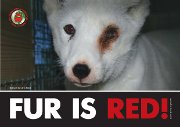
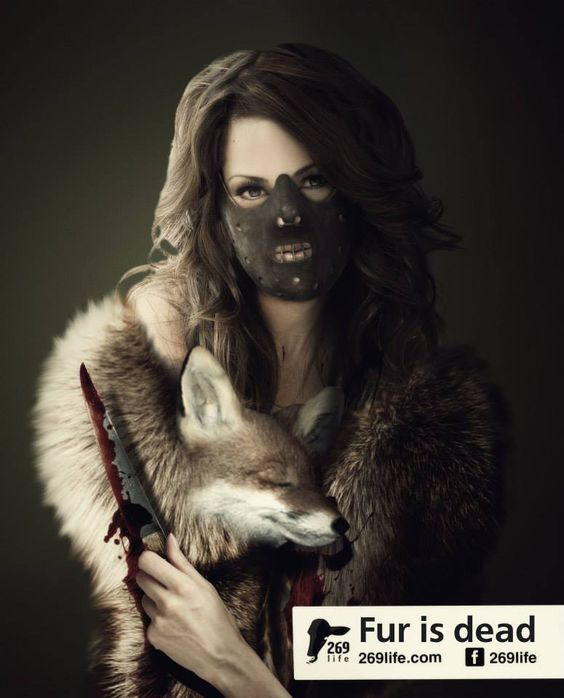
Fur Free Europe ECI: Pending EFSA Opinion Too Far Away Fur Farms in Europe Could Finally Be Banned (sometime, if ever ? !!) – Read On – Disgusting.

WAV Comment – Here we go again; the gutless, spineless and many other ‘less’ European Commission fails to make a decision; and instead passes the buck over to the EFSA to undertake a ‘scientific opinion’ on the subject. The evidence is there – https://worldanimalsvoice.com/?s=fur – how much longer do we have to wait for opinions to tell us the bleeding obvious ???

So now what ? – ‘after evaluation of the EFSA opinion to be put forward by March 2025’. 2025, that equals another 18 months of animals being subjected to on going abuses on fur farms – https://worldanimalsvoice.com/?s=fur – before any wind down period is even started to be enforced. So how long in reality ? – 2030, 2035 ?? !!!

This gives full justification to the fact that the European Commission is nothing but an un elected body of complete and utter nothing who individually can do nothing, and then together decide that nothing can be done.

Mark

7 December 2023

Press Release

Fur farming and the placement of farmed fur products on the European market could finally be banned by EU law, but the European Commission (EC) failed to take a decision, instead opting to first await a scientific opinion by the European Food Safety Authority (EFSA).

The communication published by the European Commission comes in response to Fur Free Europe, in which more than 1.5 million citizens called on the EU to ban fur farming and the placement of farmed fur products on the European market once and for all.

The reply mentions a possible prohibition of fur farming and placement of farmed fur products on the European market, or alternatively other measures, after evaluation of the EFSA opinion to be put forward by March 2025.

The request for an EFSA opinion comes despite the fact that there is already a vast body of scientific evidence that concludes that the housing system in fur farms, cannot under any circumstances, meet the needs of species kept and killed for fur.  

However, we (not WAV) welcome the news of a consideration of a ban, and trust that the scientific opinion will reinforce the well-established scientific basis. 

While the Commission asked EFSA to “assess whether these welfare consequences can be prevented or substantially mitigated under current farming conditions”, the opinion should start from the animals’ specific needs, the main premise of this citizens’ call, as opposed to the infrastructure of the system, as several studies have concluded, consistently, that no level of cage enrichment can maintain animal welfare

Moreover, the mentioned EFSA mandate appears focused on the four main species kept and killed on EU fur farms: mink, foxes, raccoon dogs and chinchillas, while the ECI Fur Free Europe calls for a ban on keeping and killing all animals only or mainly for the purpose of their fur, regardless of the species. 

In conjunction with an EFSA opinion, the EC will evaluate several other areas which are impacted by the practice of fur farming, namely public health, environment, social, legal and economics. This comprehensive assessment will be conducted by March 2026, when a final decision is expected to be communicated.

The EC also plans an evaluation and assessment on the revision of the Textile Labelling Regulation, including a public consultation. Adopting labelling rules for fur products does not, in any way, catalyse any difference for the way animals are raised on fur farms and should not be considered as a solution to the welfare problems on fur farms. 

Since its peak in 2014, the fur industry in Europe has been in constant decline.

In 2022, around 8.5 million animals were kept and killed for fur production in the European Union. 20 Member States have already totally or partially banned fur farming or implemented stricter measures on grounds of animal welfare, environment and public health. The call to ban fur farms in the EU has been supported by MEPs from all political groups and Member States joined the call at the Agriculture and Fisheries Council (AGRIFISH) in 2021 and 2023.

Above – Fur Killing Boxes; Denmark.

It is disappointing that the European Commission failed to take a decisive decision today, while millions of animals keep suffering while this horrendous practice continues to be legitimate in a ‘progressive’ Europe. The welfare of animals on fur farms cannot be improved, and the only option is a full ban, as asked by more than 1.5 million citizens, and reflected in the decision of many Member States.

We trust that the EFSA opinion and the whole evaluation will reflect this, and that we will see a full prohibition, sooner, rather than later.

Reineke Hameleers, CEO, Eurogroup for Animals

Regards Mark

EU: Animal transport proposal fails to make significant improvements for animal welfare.

11 December 2023

Press Release

The long overdue proposal on animal transport is far from enough to protect the billions of animals transported each year, and fails to acknowledge several EFSA opinions on critical issues, presenting a missed opportunity by the European Commission (EC) to improve animal welfare.

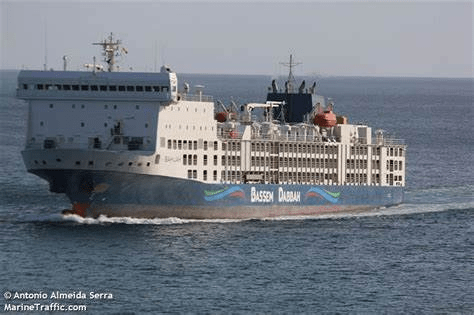
Most notably, the proposal still allows for animals to be transported live to non-EU countries, on very long journeys, in which they are unable to benefit from the legal protection they receive in the EU. It is also deeply concerning that the proposed regulation allows for animals to be transported at sea, with no time limit, as, shockingly, sea journeys are exempted from any restriction on this. 

The text does not provide sufficient protection for vulnerable animals such as pregnant ones and unweaned calves. These animals are still going to be transported when they are in very vulnerable states such as late pregnancies, or too young to be able to find food for themselves, or endure incredibly stressful situations like long journeys.

The text does not provide for adequate measures to protect animals in extreme temperatures and humidities, nor does it provide measures on actions required in the case of disruptions. 

Another concern is that many animals are excluded from the new measures, including animals transported for scientific purposes, companion animals and aquatic ones, all of which should have legislation specific to their needs.

The proposal does have some positive aspects, notably, a commitment for real-time traceability for road journey times, updated space allowance and maximum journeys to up to nine hours, however this time limit only applies to animals being transported to slaughter. Animals transported for breeding and fattening can be transported for 42 hours over three days, a limit which is excessive and inconsistent with EFSA’s opinions. Moreover, ships flying “black flags” (severely sub-standard), which at the moment constitute 55% of the EU-approved livestock transport fleet, would no longer be allowed to operate. 

For the first time, the EC made reference to the transition to meat and carcasses, in the objectives of the Regulation. This is particularly timely, following a recent report which shows that switching to this type of export, as opposed to live transport, would not only benefit the animals, but could save up to 2.5 times the costs, and reduce environmental externalities.

Despite its commitment to come forward with a full set of regulations to improve animal welfare by the end of this year, the EC has now failed to publish the three other legislative proposals, most notably the Kept Animals Regulation (KAR), through which the phase out of cages was promised. 

Only updating the live transport rules, and publishing the new proposal on cats and dogs, leaves billions of animals at the mercy of outdated legislation, while it ignores the ask of millions of European citizens for better animal welfare.

This proposal comes only one week after the publication of a report that highlights how official records on live transport are often masked, and the suffering endured by billions of animals each year is much worse than imagined.

It is concerning that after such a long wait the European Commission comes forward with only one of the promised proposals, and one that lacks ambition and fails to protect the welfare of animals during transport, despite the ever-growing evidence of the immense suffering that they endure. The proposal evidently embraces a “business as usual approach” favouring economic benefits over the welfare of the animals. It is now time for the Council and the Parliament to truly reflect the wishes of EU citizens in the legislation.

Reineke Hameleers, CEO, Eurogroup for Animals

Read the full proposal here.

Business case: the benefits of a carcass over a live animal tradeBusiness case: the benefits of a carcass over a live animal trade

9 November 2023

Report

Eurogroup for Animals commissioned Human Behaviour Change for Life (HBCL) to write this report: ‘Business case: the benefits of a carcass over a live animal trade’.

This document considers the business case for a change to the export of carcass meat instead of live animals from the European Union (EU) to third countries. It includes the current economic, environmental, and societal challenges and opportunities that these different approaches present.

The research provides a unique insight into the costs of the trade through the development and use of innovative modelling, frameworks, case studies and evidence-based approaches. It enables the consideration of how a move from live animal export towards a meat and carcass trade could be advantageous for the agricultural sector, the environment, and wider society.

BROWSE TO THIS PUBLICATION

A data dump of suffering: The EU’s long-distance trade in farm animals exposed

28 November 2023

Compassion in World Farming

Report

A cache of unpublished records obtained in summer 2023 reveals disturbing new evidence on the extent and nature of the EU’s trade in farm animals.

The data comprises official planning records relating to more than 180,000 consignments of animals, moving between EU countries and to non-EU countries between October 2021 – April 2023. It clearly shows that the rules for live transport are not robust or detailed enough to truly protect the welfare of animals in the sector.

A joint report by Eurogroup for Animals and Compassion in World Farming.

A data dump of suffering: The EU’s long-distance trade in farm animals exposed | Eurogroup for Animals

Regards Mark

USA: Wayne Hsiung Given 90 Jail Term.

After days of discussion, California’s Sonoma County Superior Court Judge Laura Passaglia slapped a high-profile animal rights activist on the wrist with 90 days in jail, followed by an additional two years of probation for his trespassing and conspiracy convictions. 

Wayne Hsiung, animal rights activist, lawyer, and co-founder of the group Direct Action Everywhere, was convicted in November for his extreme antics on poultry farms, and faced up to three years in jail for his convictions. 

Continue reading:

Co-founder of Animal-Rights Group Sentenced to Jail in Poultry Farm Case (msn.com)

Animal rights activist Wayne Hsuing gets 90 days in jail over protests that shut Sonoma farms – CBS San Francisco (cbsnews.com)

Regards Mark

UK: Election Looming – So MPs Attempt to Revive Animal Welfare Measures – Anyone With Any Sense Would !!

MPs attempt to revive animal welfare measures – BBC News

Animal-loving backbench MPs are trying to breathe new life into welfare legislation quietly dropped by the government last year.

Plans to ban trophy hunting imports, live animal exports and crack down on puppy smuggling were included in the 2019 Conservative election manifesto.

Three MPs are now attempting to get some of these policies into law.

Labour’s John Spellar has launched a Private Members Bill (PMB) to ban hunting trophies.

Two Tory MPs – Selaine Saxby and Anna Firth – have launched separate PMBs to ban live animal exports and make pet abduction a criminal offence.

These two measures were originally included in the Kept Animals Bill, which was dropped by the government over fears it could be used to force a vote on hunting – a deeply divisive issue in the Conservative Party.

On Wednesday, Ms Saxby tabled a PMB to restrict the import of dogs, cats and ferrets to crack down on pet trade.

The RPSCA thanked Ms Saxby for “rescuing” the plans, which they say are crucial for ending puppy farming – where dogs often kept in terrible conditions which would be illegal in the UK, and used to breed multiple litters.

David Bowles, head of public affairs at the RSPCA, said: “Buying an imported puppy leaves new owners open to the very real risk that they are supporting cruel overseas puppy farming.

“We are delighted that Selaine Saxby’s Bill will give the UK government another opportunity to support an end to this cruel trade.”

Ms Firth introduced a PMB to specifically criminalise abducting cats, dogs, and other common pets.

PMBs rarely become law without the support of government, as they do not get the same amount of time dedicated to government businesses.The government has been under pressure to dedicate government time to fresh legislation to fulfil a manifesto commitment to ban the import of hunting trophies into Great Britain.

Every year, hunters from the UK travel abroad, often to southern Africa, and pay thousands of pounds to legally shoot animals, such as lions and elephants.

Under current rules, with the right paperwork, they can then bring trophies, such as stuffed heads or horns, back to the UK.

The measures had been expected in government legislation but ministers instead backed a PMB from Conservative MP Henry Smith during the last parliamentary session.

It passed the Commons comfortably, but ran out of time as its face opposition in the House of Lords.

Time for PMBs are allocated by a lottery – 20 MPs are randomly chosen for a chance to debate their bill on one of seven Fridays set aside for this purpose.

The top seven MPs get priority for these debating slots.

Julie Elliott, Labour MP for Sunderland Central, won the top spot in the ballot, giving her first priority. Her PMB seeks to level the banking sector’s competitive field by modernising rules that currently restrict building societies’ lending abilities.

Regards Mark

You bet they are under pressure ! – we will continue to make this an issue right up until election day – about 1 year max away.

The government has been under pressure to dedicate government time to fresh legislation to fulfil a manifesto commitment to ban the import of hunting trophies into Great Britain.

EU: NGOs demand action for sustainable food systems.

6 December 2023

On Sunday night, the European Commission headquarters in Brussels were lit up with bright lights beaming a clear message to EU policymakers: fulfil your promises on the Farm to Fork Strategy and the urgent transition toward sustainable food systems.

Against the backdrop of the EU Agricultural Outlook conference, a major European Commission event on food and farming, some of Europe’s largest green NGOs and consumer associations joined forces to call out the European Commission on its failure to deliver both its promised proposal on the framework law for sustainable food systems (SFS) and its revision of the outdated animal welfare legislation. 

As a cornerstone of the EU Green Deal, the Farm to Fork Strategy included a series of vital policies and initiatives to address the growing overlapping crises surrounding the state of our environment, people’s health, and the welfare of animals.

The action’s name “Broken Promises” hints at the State of the Union speech Commission President Ursula von der Leyen delivered last September. The speech’s motto was “Promises kept”, which is only partly true. While the Commission has shown partial commitment to delivering on some policies, two major promises remain glaringly absent: the framework law for sustainable food systems (SFS Law) and the revision of the animal welfare legislation.
 

Intensive unsustainable farming systems are the cause of immense animal suffering. Chickens, fish, pigs, and many more species are being treated as commodities and products in order to produce cheap and unhealthy meat and dairy as quickly as possible. Evidence shows that this industrial system harms everyone: animals, the planet and humans. As showcased by many ECIs and polls, citizens want change. And the good news is that change is perfectly possible if policymakers dare to take the right decisions and challenge the harmful status quo. Frontrunners in animal farming are leading the way. The time is now for the European Commission to make a firm commitment and make progress on the legislation.

Reineke Hameleers, CEO, Eurogroup for Animals

A food system which is making unhealthy diets the norm is not only causing ill health for consumers across Europe, it is also harming our planet. This same system has allowed food waste in Europe to pile up to record levels, at a time when more and more Europeans are going to bed hungry. The EU must do everything it can to make the sustainable food choice the easy, attractive, and affordable one. And the SFS law is the first step to do so.

Monique Goyens, Director General, European Consumer Organisation (BEUC)

Instead of promoting the health of people and planet, our food systems contribute to a huge burden of ill health and early death, it massively increases the risk of anti-microbial resistance, and contributes to climate change and environmental degradation. The EU must urgently recraft its food systems so that human and planetary health are protected. Making healthy sustainable food choices the easy, default option IS an option.

Dr Milka Sokolovic, Director General, European Public Health Alliance

A key pillar of the European Commission’s Farm to Fork Strategy, the SFS Law is a unique opportunity for this European Commission to pave the way for a future where everyone has access to healthy and sustainable food, farmers are supported, ecosystems are protected, and animal rearing is not defined by suffering. The Commission must fulfil its duty to people and planet and deliver this vital proposal – as well as its promised revision of EU animal welfare legislation – before the end of its mandate.

Faustine Bas-Defossez, Director for Nature, Health and Environment at the European Environmental Bureau

Regards Mark

EU: Opinion – Leaked transport regulation draft fails the animals for “business as usual” – By Reineke Hameleers – Eurogroup for Animals.

From Mark – there is a lot to absorb here from Reineke – I started to underline and bold main points; but almost ended by doing everything !! – thus I stopped. Bad news all round whatever, but what else would you expect from the EU ? – Regards Mark

Photo – PMAF (France)

1 December 2023

Opinion

Written by Reineke Hameleers

A revised Regulation on live animal transport, possibly together with rules on cat and dog breeding, is the only piece of updated legislation that will be put forward in this political term. This is at a time when we, and millions of European Citizens, fully expected the European Commission to deliver on its firm commitment to revise all animal welfare rules.

It is, therefore, all the more striking that the leaked Commission’s legislative proposal on the transport of animals is even less ambitious than we could have imagined.

The general tone is that ‘animal welfare is a common good, but business is business and as few obstacles as possible must be put in its way. Perhaps the most evident proof is that the extremely controversial live exports to non-EU countries are here to stay, albeit with more restrictions, most notably on the vessels that can be authorised for sea consignments. There is even an explicit recognition that this is a lucrative sector and that someone else would profit from it if the EU decided to withdraw. 

The draft Regulation appears to ignore the European Court of Justice Ruling (C-424/13) establishing that animals must be protected according to EU legislation until their final destination, within or outside the EU territory. According to the new draft rules, the operators who should be reporting any animal welfare problems are the same people in charge of the animals during the journey. The same people who are profiting from the business. We can only imagine how eager these operators will be to report their own violations to the competent authorities.

For the rest, the alignment with the recommendations of the latest scientific opinions commissioned to the European Food Safety Authority (EFSA) is inconsistent, and some of the requests of the Animal Transport Committee of the European Parliament (ANIT) have been disregarded. True, the leaked draft includes some positive elements, among which the most important are the proposed lower maximum journey times for most species, updated space allowances, compulsory real-time traceability of all road journeys, and the minimum age of five weeks for transporting unweaned calves. But, as is often the case, the devil is in the details, and those details are concerning. 

To start with a striking example, unweaned animals (calves, lambs, foals, etc.) are recognised as vulnerable but, thanks to a derogation, can still be transported for two consecutive 9h periods with a 1h period of rest in between (so 19h in total) if the trucks are equipped with specific feeding devices – whose effectiveness the Commission intends to “verify”. As if this weren’t enough, when the journey of unweaned calves is roll-on, roll-off (RORO, meaning that the trucks are partially transported by sea), the time spent at sea is not included in the total journey calculations – as if hunger, dehydration, and exhaustion in unweaned animals (and indeed, in all animals) were not time-dependent. This provision, which is so damaging it beggars belief, to all effects legitimises the Irish dairy calf export trade, which in 2022 involved 153.000 calves (for 2023, the numbers have already increased by 30,000 animals). Dairy calves are sent on 18h RORO crossings to be further transported to fattening or slaughter to international destinations. The current requirement to rest the animals for 12 hours after a long RORO crossing apparently disappeared from the new draft Regulation. Another favour to the industry in plain sight. There is also no real consideration for end-of-production (ie, cull) or pregnant animals, two additional vulnerable categories. 

Only animals that are fit for transport should start a journey. However, although fitness for transport is a prerequisite before an animal can be loaded (and it should be guaranteed for the entire journey), the proposal does not provide any concrete and species-specific ways to assess this fitness. EFSA had proposed a series of animal-based indicators in its last scientific opinions: for instance, severely lame poultry or poultry with open wounds/prolapses, broken legs or wings should not be transported. Similarly, severely lame cattle or cattle with pneumonia should be considered unfit for transport. The operators cannot make informed decisions without clear and species-specific indicators of reasons for excluding a vulnerable animal from starting a journey. The draft Regulation only mandates the use of (yet-to-be-defined) indicators at the destination, but this is insufficient to protect animal welfare for the whole journey. 

Other shortcomings concern the allowed minimum and maximum temperatures for transporting animals. Again, looking at the most recent EFSA recommendations, the proposed ranges of temperatures, particularly the maximum allowed ambient temperatures (30 degrees) for transports during the daytime, are inadequate to guarantee animal welfare. For farmed animals there is no mention of minimum and maximum allowed temperatures inside the trucks or containers, nor does the draft mention compulsory monitoring systems for microclimate inside the vehicles (again, ignoring EFSA’s recommendations). 

All the while, contingency plans, while mandatory, are not described in any detail, posing another hazard to animal welfare in case of traffic disruptions, extreme weather conditions, accidents, disease outbreaks, etc. Throughout the text of the new draft, there is a strong emphasis on the responsibility of organisers, drivers/transporters and staff at the final destination for the welfare of the animals in their care. This is also present in the current Regulation, and it begs the question of why commercial operators should denounce themselves to the competent authorities if their failure to enforce the Regulation leads to animal welfare problems.

Is it all doom and gloom, then? This proposal does have some progressive elements, particularly concerning the real-time traceability of each live animal consignment (which would become compulsory) and the recording of relevant data for enforcement purposes. Additionally, we welcome the proposal that ships flying “black flags” (severely sub-standard), which at the moment constitute 55% of the EU-approved livestock transport fleet, would no longer be allowed to operate. Only ships flying a white or grey flag (good or average performance) would be able to obtain the relevant authorisation certificates. The Commission intends to exercise more control over live animal transport data, but how the data will be used is still unknown, also because they will not be publicly available. The scope is extended to aquatic animals and recognises the most important aspects for their welfare, however, a delegated act will be required to introduce measurable and species-specific requirements, or there will be no impact on aquatic animals from the text in this draft. 

When it comes to companion animals (cats and dogs) the draft presents new species-specific criteria but some provisions are generic and vague. While it’s good to see that the minimum age has been set at 15 weeks, it’s astonishing that there is still no maximum journey time. This means that cats and dogs, even pregnant ones, can be transported for days and days, and the only requirement is to feed them “at least every 24 hours”. 

For animals transported for “scientific purposes”, the details remain again vague. There are limitations: only a proportion of these animals would benefit from such protection. The animals used in projects authorised under Directive 2010/63/EU would remain unprotected. Animals that are transported by air, as non-human primates that are imported to EU laboratories, and vulnerable animals, as for example certain genetically altered animals, and animals that have undergone surgery also seem to miss protection under this proposal.

Will animal welfare be substantially improved should this draft become legislation? From our analysis, the answer is no. 

Regards Mark

India: 1/12/23 – Latest From ‘Animal Aid Unlimited’.

Dear Mark,   

We try to avoid using the word “miracle” in our newsletter and social media posts, even though there are plenty of times when we’re tempted to use it–when we thought a cut was too deep, the cancer too advanced, the damage from maggots too pervasive for the animal to heal. But we usually choose not to say “her healing was a miracle” because we feel it discounts all the effort and hundreds of combined hours of human help that make the healing possible. But yet, there is something more than the sum of its parts, taking place in the relationships that make everyone coming together to help animals a family, a team, a group of friends, whose affection is sealed by our shared love of animals.

And now we want to use that very word: the miracle of friendship. There is an unspoken understanding between all who care for animals, many who have sometimes been deeply misunderstood. Your love, our love of animals, is not casual. It hovers within us at all times. An animal’s smile turns our hearts to mush; the abuse of an animal astonishes and ignites us. These are what forge this miracle of friendship we experience together.

May all the blessings of peace rain down upon us all as we continue rescuing these vulnerable animals from injuries, illnesses, and abuse, and may our hearts, too, find deep happiness in their recoveries. Thank you for your gifts of help, and for your gifts of friendship to Animal Aid and to the thousands of others weaving this beautiful blanket of compassion.

A mere rubber band almost ended Chicky’s life.

We were stunned to see that a rubber band could so horribly injure this puppy’s neck. The rubber band penetrated deep into the tissue and caused a horribly painful and deep wound.

As soon as we had Chicky on the treatment table of course we cut the rubber band off, and although the removal stung a bit, we suspect that relief was almost immediate. We then treated the wound like any other serious laceration, and supported her with antibiotics, a hydration drip, food and–yup, cuddles! It took her a couple of weeks to no longer need the bandage, but we were thrilled at how quickly her little body healed.

Turned out, to no one’s surprise, that Chicky is a huge love bug, eager to forget her weeks of pain, ready to leap into a long happy life ahead.

Help us say “We can fix this!” – make a donation today for street animal rescue.

Pihu’s sparkling eyes say “I survived cancer!”

If you’d just looked at Pihu’s eyes, you wouldn’t know she was dying. But the advanced cancerous tumor on her backside was slowly taking this beautiful street dog’s life. The cancer type is called a Transmissible Venereal Tumor, (TVT) and it usually affects the reproductive areas.

A several months’ course of weekly chemotherapy was necessary to shrink the tumor. But such therapy is not always successful, and the more advanced the tumor is, the more difficult the recovery. If a dog’s overall condition has been greatly weakened by the cancer, he or she cannot always be saved. But Pihu is as strong as she is sweet, and she inspires love to last a lifetime–and hers, we hope, will be a long one.

For the ones who need so much more than just medicine to recover – Make a donation today.

Haldi’s tail thumped in hope, just when her life was in gravest danger…

Beyond Haldi’s huge neck wound, her tail wagged, as if pleading for help. When our rescue team arrived, we found her unbelievably gentle despite her terrible pain. She would need surgery as soon as possible, so once back in our hospital we cleaned and put on a temporary bandage at the site of the worst of her wounds (she also had a less serious wound on her hind leg).

Once the operation was complete, Haldi’s rapid healing simply galloped along. And Haldi made her wound dressings a breeze, she was just so full of trust and love. All healed, meet the strong, radiant Haldi now!

When surgery is their only hope, let’s be there.  Please donate.

…These are a few of your fav-o-rite things….

Your purchase is a gift to your friends, yourself, and best of all, to animals.

100% of the proceeds go to our street animal rescues.

Go shopping here –  https://shop.animalaidunlimited.org/

We thank you deeply for all you do, are, and inspire for animals.

Founding family Erika, Claire and Jim, and the Animal Aid Unlimited team.

Regards Mark