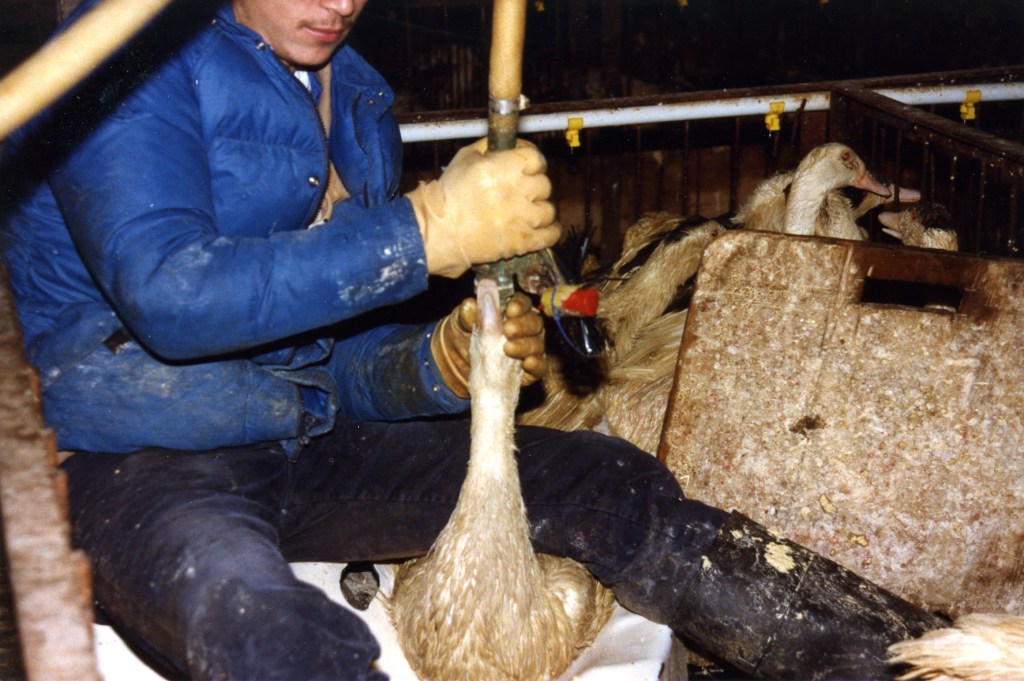
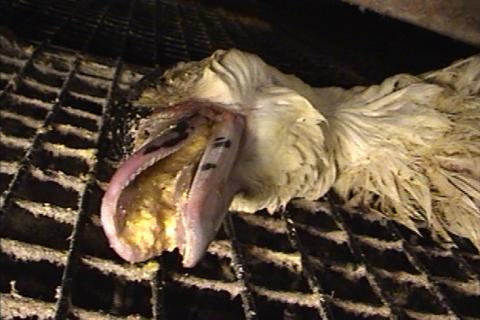
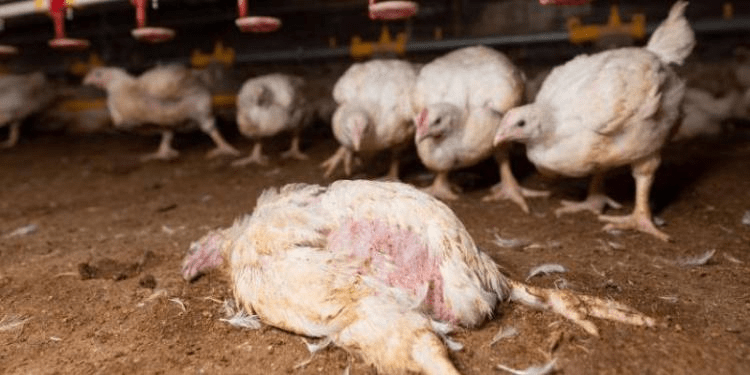
Peta Investigation – Ducks stabbed in the neck, and legs cut off for ‘responsible down’.https://investigations.peta.org/vietnam-responsible-down/?utm_source=PETA::E-Mail&utm_medium=Alert&utm_campaign=1222::veg::PETA::E-Mail::Ducks%20Stabbed%20in%20the%20Neck%20and%20Dismembered%20Help%20Stop%20It::::aa%20em::rs1
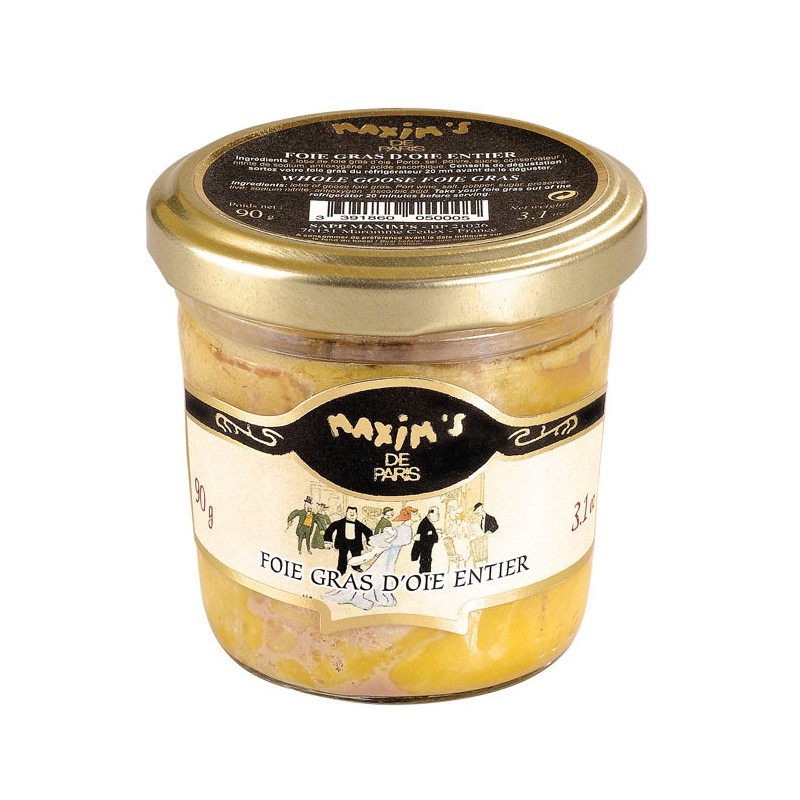
Nestlé has launched a vegan alternative to foie gras amid growing concerns surrounding animal welfare. The product is being made available first in Switzerland and later in Spain.
There will be no foie gras served in royal residences, a letter from Buckingham Palace to animal rights campaigners has confirmed.
King Charles is understood to have been a longstanding opponent of the food, made from the liver of a duck or goose, that campaigners say is cruel.
The King’s household wrote to the Peta campaign group that foie gras was not bought or served in royal residences.
There have been protests about force-feeding used to produce foie gras.
King Charles, when he was Prince of Wales, had been an advocate of higher welfare standards in farming and for over a decade had stopped the use of foie gras in his own properties and had been instrumental in a wider ban across royal residences.
Now as King he has reaffirmed this opposition – with the luxury food staying off the menu.
A letter received by Peta (People for the Ethical Treatment of Animals) confirms that a foie gras ban is in place across the Royal Household and for all royal residences, which would include Balmoral, Sandringham, Windsor Castle, Hillsborough Castle and Buckingham Palace.
Elisa Allen, vice president of the animal welfare group, welcomed this saying others should “follow the King’s lead and leave foie gras off the menu this Christmas and beyond”.
“Video footage of birds being painfully force-fed is enough to make anyone lose their lunch,” she said, describing how the livers of animals are engorged to produce the food.
The animal rights group has backed a “cruelty free” alternative called “faux gras” and is sending some of this to the King, which it says is in recognition of his “compassionate policy”.
There is a ban on the production of foie gras in the UK, but not a ban on its sale or importation.
But it will certainly not be on the menu next week for the first state visit of King Charles’s reign, when he hosts a state banquet in Buckingham Palace for the South African president, Cyril Ramaphosa.
The Peta group is also campaigning for the use of fake fur instead of ermine for robes at the King’s coronation next May.
‘The judicial system must act against animal factory farms like these’, says President of Djurens Rätt
After receiving the content, Djurens Rätt promptly filed a police report against the farm for aggravated animal cruelty: which they were able to do so with help from an amendment made in July. The amendment states that those who cause animals to suffer copiously can be prosecuted.
‘The judicial system must act against animal factory farms like these’, says Camilla Bergvall, President of Djurens Rätt. ‘We will continue to remind legislators, law enforcement and consumers that animals suffer in animal factories. It is beyond all criticism that sentient individuals are treated in this way in a country that claims to have the world’s best animal welfare.’
No more animal cruelty – we need stronger animal welfare legislation
‘Promises’ made by corporations and suppliers to care for animals are not enough. We need tangible action, including robust legislation and more pledges made to the European Chicken Commitment, to see real change in the sector. We must stop suffering from slipping through the cracks.
NEWARK, NJ — Vegan turkey roasts are coming home to roost in the Brick City this Thanksgiving season.
Advocates from Newark Animal Save and PETA said they’ll be handing out free Field Roast Celebration Roasts at 11 a.m. on Saturday, Nov. 19 outside the Whole Foods store in Newark, 633 Broad Street.
According to a news release, the giveaway event is being held to encourage people to “keep intelligent, inquisitive and sensitive birds off the table” and celebrate “ThanksVegan” instead.
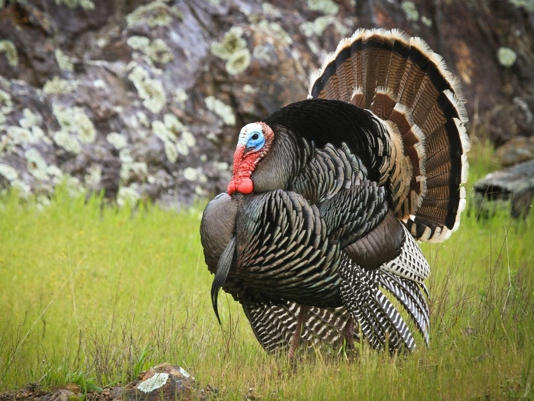
“Turkeys are gentle individuals who love their families, feel pain and fear, and want to live as much as humans do,” PETA Executive Vice President Tracy Reiman said.
“PETA is encouraging everyone to see the similarities among all sentient beings, eat vegan and spare turkeys – more than 45 million of whom who are slaughtered every year for Thanksgiving alone,” Reiman said.
Food systems transformation is brewing at UNFCCC COP27
17 November 2022
While food systems does not yet have the place it deserves on this year’s COP27 agenda in Sharm el-Sheikh, it was addressed in important side-sessions.
The United Nations Framework Convention on Climate Change (UNFCCC) held an event on ‘Climate Resilience in Food Systems – why act now?’ where it was recognised that food systems, despite their significant impact on emissions, have been lacking at the climate meetings. The panel projected that food systems would get a stronger place on the COP agenda next year.
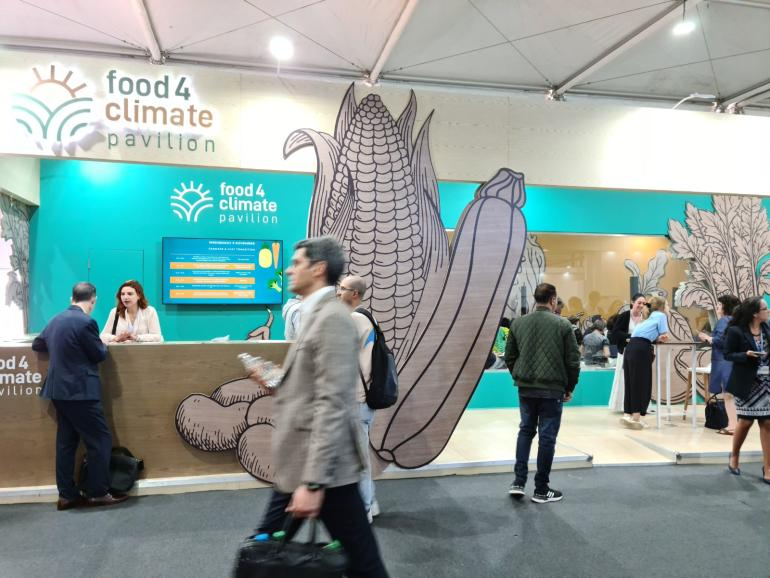
In fact, COP27 was the first time that the UNFCCC has endorsed food systems pavilions to be set up in the ‘Blue Zone’ and that 12 November was a thematic day dedicated to agriculture. The extensive programme in the Food4Climate pavilion, sponsored by a number of organisations including Eurogroup for Animals’ members’ Compassion in World Farming, FOUR PAWS and World Animal Protection, addressed a series of important topics related to animal agriculture and plant-based diets.
Compassion in World Farming launched the new global petition ‘End of the Line for Factory farming’, calling on the UN and global leaders for a UN global agreement to end factory farming and reduce the consumption of meat and animal products.
Without ending factory farming, we simply cannot tackle the growing climate emergency” – Ben Williamson, U.S Executive Director of Compassion in World Farming
Above – CIWF Campaign Launch
Compassion in World Farming together with FOUR PAWS arranged the event ‘Tackling Climate Change through better Livestock Management Systems’. Martina Stephany, International Director Farm Animals and Nutrition at FOUR PAWS, gave examples of how the meat and dairy industry seeks to reduce methane emissions through techno-fixes such as feed additives.
It shows that the industry wants to further adapt the animals to a sick system rather than let the animals live the way they normally would live”, she said
Martina Stephany also called on governments to stop financing factory farms and to use public money to help farmers transition to better animal welfare systems or to produce more plant-based food.
World Animal Protection presented the new report ‘Climate change and cruelty – the true impact of factory farming’ in a session that showcased the impact of intensive animal agriculture on climate change in Africa as well as U.S farmers applying the principles of a just transition and showing that there are alternative ways of producing food.
Below – Food 4 Climate Pavillion
World Animal Protection, together with Eurogroup for Animals, also hosted a side-event on ‘Transitioning agriculture systems for sustainability and climate resistance’ bringing together experts in food, climate and animal welfare to discuss why a Just Protein Transition to plant-based proteins and agroecological farming is critical. James Yeates, CEO of World Federation for Animals, spoke about how improved animal welfare and more plant-based diets have climate change mitigation benefits, stressing also the role of marine animal welfare.
Above – World Animals Protection and Eurogroup for Animals
Other signs that food systems are gaining traction at the climate talks could be seen in the Nordic Pavilion, hosted by the Nordic Council of Ministers, which had a ‘food systems take-over’ on agriculture day to bring food production, agriculture and diets to the front and centre of climate action.
On the same day, the Singapore pavilion had an event on ‘Alternative Proteins: Boosting Sustainable Food Security Resilience through Science’ addressing both plant-based food and cellular agriculture. Singapore is the first country to have started serving cultivated meat and Low Teng Yong, Branch Head for Risk Assessment and Communications from Singapore Food Agency, spoke about Singapore’s innovation programme and the regulatory process for bringing cultivated meat to market.
In short, food systems transformation is brewing at COP27 but it still has to make its way up on the agenda to get the attention it deserves in order for the world to limit global warming.
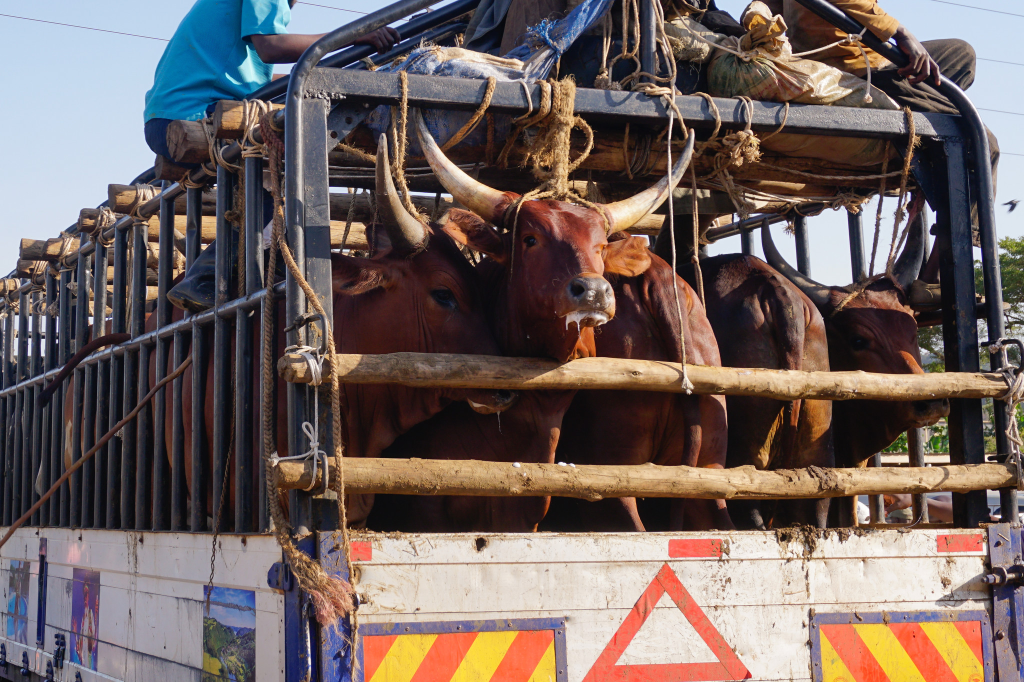
Above – A truck with tightly packed cattle arrives at the unloading yard of Kampala City Abattoir. Animal rights advocates want the government to enforce laws that require humane treatment of animals during transportation.
All photos – EDNA NAMARA, GPJ UGANDA
KAMPALA, UGANDA — As soon as the truck pulls up, Joseph Lubwama jumps out and starts unloading 24 tightly packed cattle he has brought to Kampala City Abattoir. He begins by untangling a web of ropes used to tie the cattle’s long horns to the rails of the truck bed to keep them still. They have been on a 250-kilometer (155-mile) journey from Kiruhura, a rural district in southern Uganda. One by one, the cattle step out of the truck. They look tired.
“For the animals to travel that long tied to one position by the horns and tail, it is uncomfortable,” says Lubwama, as he begins to herd them off the truck.
What seemed like genuine concern vanishes when Gaju, a bull with the majestic horns typical of the Ankole breed, wobbles, falls in the middle of the truck bed and can’t get up.
“Get up, Gaju! Go, go, go, Gaju, go,” Lubwama shouts as he kicks the animal and mercilessly strikes it with a cane.
When Gaju doesn’t budge, Lubwama finds support on the frames of the truck’s cargo cage and kicks the animal hard using both legs with his heavy gumboots. The apparent pain forces Gaju to gather strength, stand up and stagger out of the truck.
Kampala’s steady population growth over the last three decades has created high demand for beef. But the city doesn’t permit raising cattle within its limits, meaning that people like Lubwama have to bring in cattle from ranches hundreds of kilometers from the city’s abattoirs. But the inhumane way cattle are transported has led to a debate between animal rights activists and veterinarians who are calling for government intervention, and cattle dealers who contend that they would lose money if the current laws were enforced.
Since 1992, the capital city has averaged an annual population growth rate of at least 5%, raising the number of residents from around 830,000 to more than 3.6 million in 2022, according to data from the United Nations World Urbanization Prospects. The average Ugandan consumes about 9 kilograms (20 pounds) of beef a year, with Kampala district accounting for the largest portion, 7% of the country’s annual production of 185,709 metric tons, according to a report by the Food and Agriculture Organization of the United Nations.
David Kakooza, a veterinarian’s assistant who keeps records of the overcrowded trucks of cattle arriving daily at the abattoir, says he doesn’t feel good seeing animals arrive so fatigued. He wishes the government could enforce existing laws and regulations that are supposed to ensure animals are not tortured during transportation.
“Animals have rights, too,” Kakooza says as he inspects a truck carrying 21 head of cattle.
Standing orders of the Uganda National Bureau of Standards stipulate that trucks “shall have enough space for the comfort of slaughter animals during transit, cattle placed crosswise on a lorry shall allow 50 cm to 60 cm of the truck length for each animal.” Transportation of animals for slaughter “shall be carried out in a way that minimizes stress, pain and suffering,” according to the guidelines. There is also the Animals (Prevention of Cruelty) Act, which states that any person who “cruelly beats, kicks, ill-treats, overrides, overdrives, overloads, tortures or infuriates any animal” is guilty of the crime of cruelty.
Siraj Katangawuzi, the imam of Nansana parish, says he wants to see these laws and regulations strictly enforced to ensure that animals are transported without suffering. He says one simple change the government could make is to require the use of timber instead of ropes to prevent cattle from falling during transportation. The government should also educate Ugandans on the importance of being kind to animals and revoke the licenses of those who refuse to follow the law.
“Ugandans need to realize that everything that breathes has feelings,” Katangawuzi says. “It is impossible for humans to travel all that distance without changing position, but cows, too, have feelings, so they should not be tied so mercilessly.”
Dr. Dickson Tayebwa, an animal welfare advocate and veterinarian who lectures at Makerere University, says existing laws are not enforced because “big men” — powerful government officials who own extensive cattle ranches and many of the trucks that transport animals to Kampala’s abattoirs — dominate the meat industry.
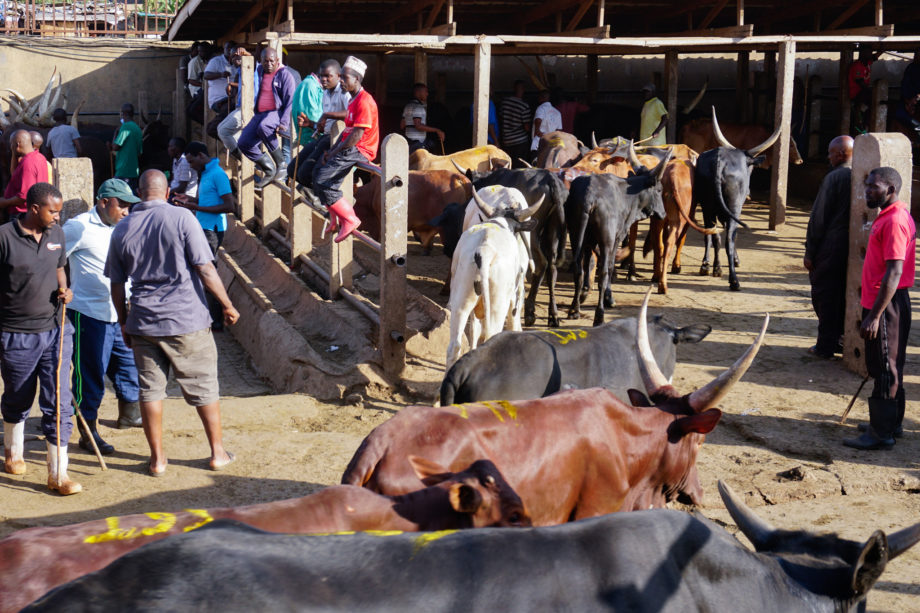
Above – Cattle dealers and herdsmen watch as a load of cattle is led to a resting area at the Kampala City Abattoir. Kampala’s growing demand for meat means cattle must be transported from far away, raising concerns about animal cruelty.
“Their trucks have papers indicating that they are special,” Tayebwa says. “So, the officers manning roadblocks cannot say anything, even when it’s clear that laws are being broken.”
An officer at the Ministry of Agriculture, Animal Industry and Fisheries, who wants to remain anonymous for fear of retaliation, acknowledges that the presence of powerful people in the industry makes government regulation difficult.
“They are untouchable,” the officer says.
David Kasura Kyomukama, the permanent secretary at the ministry, says he cannot comment on the issue of top government officials impeding the enforcement of laws. But he says the ministry is trying to convince people in the industry that obeying the laws and regulations would be in their best interest.
“Animals are animals, so they can’t be treated like people, but they can be treated well on the journey so that we get money out of them,” Kyomukama says. “If you treat animals in a way that stresses them, you won’t get their full worth, as some might lose weight, or even die.”
Kyomukama says the ministry plans to set up abattoirs in regions across the country so that animals are slaughtered closer to where they are raised and their meat transported to Kampala and other urban centers. He doesn’t say when that might happen.
Dr. Hannington Katumba, a Kampala city council veterinarian, agrees that treating cattle well would benefit the beef industry and consumers because healthy cows produce high-quality meat. He explains that when a cow is reacting to high levels of stress, its body excretes lactic acid, which increases acidity and makes meat fail to settle.
“That is the ugly meat we sometimes see in stalls. It looks beaten,” Katumba says.
The fact that Ugandan culture doesn’t generally value animal welfare has made ending cruelty against animals more difficult. Samuel Bwanakweri, a herder from western Uganda who has been in cattle trade and transportation for 21 years, laughs when asked why animals are treated so cruelly during transportation to the abattoirs.
“What is all the fuss about? They are heading to the slaughterhouse,” he says matter-of-factly. “Isn’t it ironic to feel pity for an animal you are going to kill?”
Bwanakweri says that he spends a lot of money to transport the cattle from as far away as 320 kilometers (almost 200 miles) to the abattoirs and that following the regulations would not make economic sense. To break even, he says he needs to get 23 cows on each truck because he must hire four handlers at 100,000 Ugandan shillings ($26) each. He also pays the truck owner and the bank that gives him business loans.
Although he’s not as dismissive as Bwanakweri about animal welfare, Bonny Katambula, a committee member of Kampala City Abattoir, agrees that if the current laws and regulations were to be strictly enforced, many dealers would be out of business. He says the ideal number for the large trucks should be 20 cows.
“A man cannot hire a truck for 1 million shillings [$260], drive it upcountry for cattle and return with only 10 cows,” he says. “That defeats the economic purpose.”
Above – Workers inside Kampala City Abattoir weigh and cut meat to buyers’ specifications.
Lubwama says his goal is to work his way up in the beef industry. As a cattle handler, he earns 100,000 shillings ($26) for each of the three trips he makes weekly. He is working hard to save money and be able to have one of his own cows on the truck.
“My dream is to slowly build my business and be able to fill a truck with my cattle,” he says as he leads Gaju and several cows to the yard for fodder, water and rest.
After 12 hours, he will herd Gaju to the slaughterhouse, where the bull’s journey will end. The meat will be processed, and the health inspector will stamp it to certify that it has been checked for disease and deemed healthy for human consumption. Lubwama will head back to Kiruhura and load the truck with more cattle for his next trip to Kampala to help quell the city’s hunger for beef.
Edna Namara is a Global Press Journal reporter based in Kampala, Uganda.
Compassion in World Farming (CIWF), addressed the attendees of COP27 this morning to call for a Global Agreement on Food and Farming, as part of a new campaign they’re calling the ‘End of the Line for Factory Farming’.
Their goal? To ‘bring factory farming and high meat consumption to the end of the line once and for all’.
It’s an ambition we share. At Eurogroup for Animals, we’ve been lobbying to reduce meat consumption by 70% by 2030 in the EU/UK, as well as for food system transformation that shifts away from industrial agriculture to agroecology: a farming system in which nature is respected and high animal welfare standards are prioritised.
CIWF’s amazing initiative is therefore one that we’re delighted to support… and it’s off to a powerful start. Representatives from the NGO called on policymakers today at this year’s global climate conference to take action urgently, with evidence showing that intensive farming systems pose a huge threat to the planet.
A leading source of suffering for farm animals across the world – not to mention a key driver of greenhouse gas emissions and deforestation – industrial farming systems are at the heart of significant issues that world leaders can no longer afford to ignore.
Use your voice: call for the end of intensive farming systems
A report commissioned by CIWF last month, covering 13 UN regions and surveying over 14,000 participants, indicates that an overwhelming majority of the public has a negative view of factory farming. Among other things, they believe that industrial systems put profit ahead of:
“The science is clear that we need to reduce the number of animals farmed and eat more plant-based products if we are to have a chance to limit global warming to 1.5°C,” says our Political Adviser for Food Policy, Camilla Björkbom. “Ending factory farms is also important for the sake of animals themselves, as they suffer greatly within them. We need a farming system which focuses much more on plants, and respects the needs of all animals.”
We’re excited to help this movement grow. Will you be a part of it?