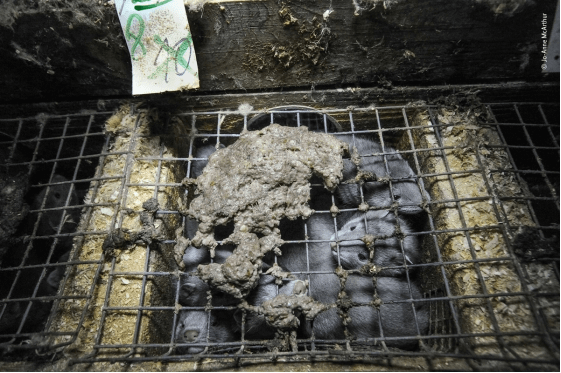
Life and Death in Fur Farming. Ten, now eight, mink kits in a nest box on a Swedish fur farm. These American mink kits fight for space and to reach their food. A sign indicates two have died. Though the legal cage size is now larger and a two-storey box a requirement for adult mink, with no more than two adults per cage, injuries still occur. Sweden, 2010. Jo-Anne McArthur / Djurrattsalliansen / We Animals Media
I think it’s striking that these images factually demonstrating abject animal suffering in the “fur industry” look exactly like the reality of abject suffering of animals in the “animal agriculture food industry” while, in the USA, the fur industry council degenerates like to boast that their victims on fur farms are executed onsite …
(via anal electrocution, for example, where humans physically restrain terrified creatures and insert rods into their anuses to electrocute them – while, interestingly, when humans get colonoscopies, for example, requiring anal insertion of instruments to capture colon images by people who must be educated, trained and certified to do so, which, by the way, is to prevent death versus causing it, humans actually get sedation)
… and therefore don’t require the horrors inherent in slaughter transportation. Imagine bragging that your death industry is marginally “better” than another death industry while ignoring the entire violent D-E-A-T-H requirement of innocent victims in both. If horrific transport is bad, actual violent killing is WORSE.
I wouldn’t expect anything other than deception and manipulation and abuse from the FAM folks in either, though. SL
This week we’ve got big news on our progress with getting animal stories in the media. Jo-Anne McArthur has been awarded Highly Commended in Wildlife Photographer of the Year for her image Life and Death in Fur Farming.
The image is one of 14 Highly Commended images announced on September 1 as a preview of this year’s competition, which attracted entries from photographers of all ages and experience levels from 93 countries. Jo-Anne is awarded in the category of Photojournalism.
Jo-Anne shares some words about the story behind this image and her hopes for its impact:
The first time I visited fur farms was in 2009. It was a shock to see the decrepit, putrid, mass incarceration of so many animals in so many sheds and tiny cages, offering me yet another of the many moments of disbelief that I experience in my career. I have since photographed fur farming extensively, especially in my home country of Canada, and it is with urgency that I wish for this unnecessary industry to end. I am so happy that we are seeing bans on fur farming in many countries, including those who have traditionally supported a large fur industry.
To say that I’m thrilled that WPY has awarded this mink farming image in their competition is an understatement, because the reason I do this investigative work is so that people can look, consider, discuss, critique, care, change. WPY offers this image of ten, now eight, mink kits and their mother in a cramped nesting box for the world to view. Many people do not know that animals are industrially farmed for their fur. They are unaware of the conditions. They are unaware that these animals are killed by gassing and anal electrocution, or that they are kept in tiny cages by the millions, globally, each year, so that we can wear fur trim, have fur pompoms on our hats, or a poof of fur on a child’s trinket.
I feel passionately about taking photos of fur farming so that the images can help campaigners and policy makers end this industry, and continue to raise awareness amongst the unknowing public. Images are a strong and crucial part of the puzzle when it comes to creating a kinder world for animals.
Mink farming is an industry where, traditionally, the welfare of these semi‑aquatic, naturally solitary mammals has not been a priority unless it affects the fur. But in 2020, mink farming came under the spotlight when it became clear that not only could mink catch the Covid-19 virus, but that the virus could mutate in mink and be transmitted back to humans. In response, Denmark – then the largest mink-fur producer after China – shut down its industry, killing all 17 million animals, and in the Netherlands and Spain, hundreds of thousands were killed. But in Sweden, after a temporary ban on breeding, the government allowed its 20 or so farms to reopen in 2022.
Djurrattsalliansen, the non-profit organization Jo-Anne was working with when she took this photograph, has played a significant role in fur farm investigations in Sweden, which have helped to bring the number of farms down significantly.
Take PETA’s Cruelty-Free Shopping Guide along with you next time you head to the store! The handy guide will help you find humane products at a glance. Order a FREE copyHERE
Searching for Cruelty-Free Cosmetics, Personal-Care Products, Vegan Products, or more?
Want to do more than go vegan? Help others to do so! Click below for nominal, or no, fees to vegan literature that you can use to convince others that veganism is the only compassionate route to being an animal friend:
“The greatness of a nation and its moral progress can be judged by the way its animals are treated.” – Mahatma Gandhi
“Animals don’t hate, and we’re supposed to be better than them.” – Elvis Presley
“Let us remember that animals are not mere resources for human consumption. They are splendid beings in their own right, who have evolved alongside us as co-inheritors of all the beauty and abundance of life on this planet.” – Marc Bekoff
“Animals are more than ever a test of our character, of mankind’s capacity for empathy and for decent, honorable conduct and faithful stewardship. We are called to treat them with kindness, not because they have rights or power or some claim to equality, but in a sense because they don’t; because they all stand unequal and powerless before us.” – Matthew Scully
“Lots of people talk to animals…Not very many listen though…that’s the problem.” – A.A. Milne
“If having a soul means being able to feel love and loyalty and gratitude, then animals are better off than a lot of humans.” – James Herriot
“Because we have viewed other animals through the myopic lens of our self-importance, we have misperceived who and what they are. Because we have repeated our ignorance, one to the other, we have mistaken it for knowledge.” – Tom Regan
“True human goodness, in all its purity and freedom, can come to the fore only when its recipient has no power. Mankind’s true moral test, its fundamental test (which is deeply buried from view), consists of its attitude towards those who are at its mercy: animals.” – Milan Kundera
Today, October 4th, is World Animals Day.
World Animal Day is an international day of action for animal rights and welfare celebrated annually on October 4, the feast day of Francis of Assisi, the patron saint of animals.
The mission of World Animal Day is “to raise the status of animals in order to improve welfare standards around the globe.
WAD is an annual event.
The MISSION OF WORLD ANIMAL DAY To raise the status of animals in order to improve welfare standards around the globe. Building the celebration of World Animal Day unites the animal welfare movement, mobilising it into a global force to make the world a better place for all animals. It’s celebrated in different ways in every country, irrespective of nationality, religion, faith or political ideology. Through increased awareness and education we can create a world where animals are always recognised as sentient beings and full regard is always paid to their welfare.
Alternative materials that can keep us cosy abound these days. In general, faux fur can offer at least as good thermal insulation as the real stuff. And no chills of shame. The fur industry is of course as smart as the animals it exploits and it has hit on promoting real fur as a natural and sustainable product as opposed to “plastic fur”.
Fake news about faux fur
Hang on. If you take into account the whole life cycle of a fur product, from the breeding of the animals to the finishing of garments, fur production can be seen to be an intensely toxic and resource-consuming business. Again contrary to fur industry claims, the main reason real fur coats are thought to last longer is they haven’t been seen outside a wardrobe that often in recent decades. And even if they did stand up that well to daily use, this would be nowhere near long enough to compensate for the environmental impact.
As well as constantly reminding consumers that faux fur is derived from fossil fuels, the industry has also focused on biodegradation. In fact, according to a study commissioned by the International Fur Federation and Fur Europe, the biodegradation of fur samples indicated that fur products were only partially biodegradable under test conditions.
Moreover, evidence shows that fur farming has a devastating effect on biodiversity, being to blame for threats to some European native species. American mink and raccoon dogs – the main species reared for fur in Europe – are considered invasive alien species.
Filthy business
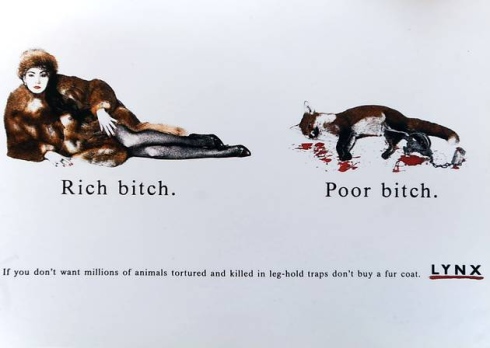
Finally, major fashion houses are wising up to the fact that, far from the glamorous image of a model wearing nothing but a dash of exotic perfume under her furs, the reality of fur farming involves a far less attractive odour for local residents – to say nothing of the flies – and fur coats are becoming as likely to disgust their customers as turn them on.
As we reported last month, many collections and entire fashion weeks are going fur-free.
WAV Comment – it is political chaos here; Liz Truss the new (but probably not for long) Prime Minster has taken many actions to oppose both the Conservative manifesto – which should outline the Party aims; with regards animal welfare and environmental issues. We have reported on a lot of this over the past few weeks, and you can see our posts by scrolling back down through the site.
I say political chaos as the Conservatives are currently in government. Labour are n opposition. Due to the actions of Truss since she took the helm of the Conservatives just a few weeks ago; the Conservatives are being led (by Labour) by a massive 33%+ in opinion polls. Everything currently looks as if Labour will form the government at the next election.
We (WAV) are not associated with any UK political party; but we are a voice for improvements in animal welfare and the environment. These are just 2 issues where Truss has kicked us, long time and evidence providing campaigners, with a good boot in the teeth. So now she is starting to witness pay back time.
Here are a couple of articles which outline the current differences between the parties:
Liz Truss (Conservative) ‘to scrap proposed bans on fur and foie gras imports’
Liz Truss is set to scrap proposed bans on importing fur and foie gras to the UK, according to a Tory insider, sparking outrage from animal lovers.
Foie Gras production Banned in the UK, but still imported !!
The new prime minister will also reportedly ditch a ban on live animal exports in her first weeks in office.
The decisions will be a massive blow to campaigners who have spent decades lobbying for the reforms to spare animals from suffering.
Production of both fur and foie gras is considered so cruel that they are already banned in the UK.
All four measures were promised in the party’s animal-welfare action plan, announced last year to wide acclaim.
And curbs on live exports were promised in the Conservatives’ election manifesto, together with an end to hunting trophy imports.
But a senior Conservative told Politico: “Banning things seems very socialist. Informing people is the way to go.”
In February this year, right-wing cabinet members including Jacob Rees-Mogg intervened to block the Animals Abroad Bill, which contained the curbs on fur, foie gras, hunting trophies, and adverts for foreign theme parks that cause animal suffering.
The Kept Animals Bill, which banned live exports and keeping primates as pets and tackled puppy smuggling, could also be dropped. It had been due to be debated on Monday, which became the day of the Queen’s funeral, and no new date has been given.
A ban on cruel exports of live animals for slaughter and fattening had been hailed as a benefit of Brexit.
It would be a huge let-down, not only for those who work for these campaigns daily but also for millions of animals
Lorraine Platt
The government says it is still looking at the fur and foie gras bans, but the source said the measures would not go ahead under Ms Truss, who appointed Mr Rees-Mogg as business secretary and promoted Mark Spencer, understood to have been another of those blocking the Animals Abroad Bill.
However, MP Scott Mann, who has spoken out in favour of a ban on live exports, has been promoted to environment minister.
Last week, Ms Truss sacked Zac Goldsmith as animal-welfare minister after he introduced reforms including an ivory sales ban and higher jail terms for cruelty. He also wanted to crack down on religious slaughter without stunning.
“A lot of his causes were very worthy, but you can be worthy when you’re the son of a billionaire,” the MP said in a bizarre comment. Lord Goldsmith’s father was financier James Goldsmith.
Lorraine Platt, co-founder of the Conservative Animal Welfare Foundation, told The Independent she was bitterly disappointed by news the bans would be dropped.
“It would be a huge let-down, not only for those who work for these campaigns daily but also for the millions of animals involved,” she said.
“Banning live exports and hunting trophies were manifesto commitments, and some people vote on manifesto commitments at elections.”
She said the foundation had often heard reports the measures could be scrapped or watered down.
Sir Roger Gale, patron of the foundation, condemned the “let them choose” argument as “a little spurious” and perverse when the UK has bans on producing fur and foie gras.
He told Times Radio he was concerned about the direction of travel of animal welfare under the new government, and millions of votes including in red-wall seats would be lost to the Tories if they reneged on animal welfare.
Foie gras production involves force-feeding ducks and geese with pipes pushed into their throats to fatten their livers.
Fur farms have been exposed as leaving animals suffering infected, bloody wounds, spreading disease and literally driving animals mad from confinement.
Claire Bass, executive director of Humane Society International/UK, said it was surprising and perplexing that senior Conservatives wanted to row back on the popular measures in last year’s animal welfare action plan.
“Animals matter to voters, and people will not be content with oft-recycled rhetoric about being a ‘world leader in animal welfare’ if it’s not accompanied by meaningful action,” she said.
“Banning fur imports is not un-Conservative, it’s simply the right thing to do in line with the British public’s moral compass.”
Under Boris Johnson, the government said it wanted to consider compulsory animal-welfare labelling on food and promised to consult on proposals next year.
The Department for Environment, Food and Rural Affairs (Defra) ran a 12-week consultation last year on new labelling standards for produce now that EU regulations no longer apply.
Ministers had at one stage said they would press ahead with the hunting trophy imports ban, but that pledge appears also to have been dropped.
Instead, they are backing a private members’ bill by backbencher Henry Smith that bans hunting trophy imports – body parts of wild animals killed by paying hunters. Mr Smith has called such hunting barbaric.
On foie gras, Defra said it was considering any further steps that could be taken, “building on the opportunities presented” by Brexit, and was still gathering information.
“The government has made clear that the production of force-fed foie gras raises serious welfare concerns,” a spokesman added.
On fur, the department said: “We are continuing to build our evidence base on the fur sector, which will be used to inform any future action on the fur trade.”
It also said the Kept Animals Bill would continue its passage through Parliament.
The Independent has also asked the office of the new Defra secretary, Ranil Jayawardena, to confirm whether the proposals will go ahead.
… and then on the other hand we have this from Labour; currently 33%+ leading in the opinion polls.
Labour will ban foie gras and hunting trophies imports if it takes power, environment boss Jim McMahon pledges
Labour would ban imports of foie gras and hunting trophies “very early” after winning power, Shadow Environment Secretary Jim McMahon has said.
Animal welfare campaigners were outraged earlier this month when Liz Truss junked a Conservative commitment to outlaw the controversial pâté.
Nature and farming groups are also dismayed that the new administration has paused post-Brexit subsidies that incentivised agriculture without saying what will replace them.
Speaking to i at the Labour Party conference in Liverpool, Mr McMahon could hardly contain his glee at the furious backlash to a threatened rolling-back of environmental protections. He says the Tories are taking their rural heartlands for granted – and will suffer the electoral consequences.
But he acknowledged that he will come under immediate pressure to make good on a host of long-standing promises cherished by Labour supporters to improve animal welfare, of which import bans on foie gras and hunting trophies are the most high-profile.
i revealed last year that Jacob Rees-Mogg, now the Business Secretary, was leading efforts to shelve the proposed ban on foie gras and last week it emerged that it had been scrapped entirely.
To produce foie gras – which translates as “fatty liver” – male ducks and geese are force fed grain and fat three or four times a day in a process known as “gavage.” The forced feeding causes the birds’ livers to swell to up to 10 times their normal size.
Asked when a Labour government would bring in the bans, Mr McMahon said: “There will be a lot to do in that first Queen’s Speech but there will be an expectation on Labour to set our stall on animal welfare very early that I am working hard to achieve.”
He added that he was exploring whether the bans could be implemented without passing new laws to free up Commons time for other high-priority legislation, saying: “It’s about the art of the possible.”
Mr McMahon said the bans are the “easier stuff” and added: “The question for us and the current Government is how do you marry higher animal welfare standards with new international trade deals.”
Ms Truss, when she was International Trade Secretary, won a Cabinet battle to force through a new trade deal with Australia despite worries it exposed British farmers to competition from producers with lower standards. Mr McMahon said the party was considering banning any future such deals and would double down on efforts to make the UK a world leader in ethical and green food.
He said he was astonished that the new Environment Secretary, Ranil Jayawardena, paused plans for post-Brexit farm subsidies, the Environment Land Management Scheme, without saying what comes next – leaving the National Farmers Union and green groups united in fury.
“I know Ranil reasonably well,” Mr McMahon said. “I’m staggered that he’s been missing in action. He should have been on the phone to the big groups like the NFU and Wildlife Trust. It’s just a matter of respect. Even if the intention isn’t to throw it all out but to pause, reflect and rebuild there’s going to be a breakdown in trust.”
The former Oldham council leader admitted his current job was not necessarily an obvious fit: “The only greenery I saw as a kid were the weeds growing through the cracks in the pavement.”
Unsurprisingly for a politician he showered praise on farmers and fishermen as “grafters” who are the best of British – but also said he wants to make townies care more about the county by bringing it into urban areas.
“Of course I am going to fight for the shires and coastal communities who have some of the most beautiful parts of the country on their doorstep,” Mr McMahon said. “But you can’t just pitch up in somewhere like Oldham and say, ‘It’s your responsibility to tackle the climate change emergency,’ when what’s their own environment like? It’s grey and it’s depressing and there’s no access to safe green spaces. There’s a huge opportunity there for Labour to fill in the gap.”
Everyone makes promises if it means them getting elected. We read of what will be done in party manifesto’s; only then to be treated as we are now by the Conservatives – how things change !
Whatever happens and regardless of all the promises and manifesto statements, we will continue to hold ALL those in politics to account for both the animals and the environment. Recent events have shown us that in reality, you never believe a bloody word; as they all come up with excuses (after they have been elected) for not doing this and not doing that.
British politics is currently having one of its biggest changes for decades – and for the animals who have been betrayed by the Tories, we say ‘bring it on’. We want and demand progressive change after all these years of campaigning and evidence providing; often at great risk to some individuals.
We fought hard to get the foie gras and fur ban issues to the top of the pile; the government is attempting to wipe the issues off the board overnight. That is why we have a wry smirk on our faces as we now see truss and the Conservatives who betrayed us attempting, but failing, to clamber out of the deep filth pit that she and they have put themselves into.
An interesting time; but we will fight for the animals whatever;
On 22 September, Latvia’s Saeima passed the final amendments to the country’s Animal Protection Law. Farming animals for the main or sole purpose of fur production will now be prohibited, with the ban is expected to come into effect on 1 January 2028.
Over the last 10 years, the animal rights association Dzīvnieku brīvība has campaigned for the ban on fur farming, backed by 42,000 citizens and 50 NGOs, who have all signed an open letter to the Saeima.
The amendments regarding farming of animals for their fur were submitted to the Saeima on September 9, 2021 by 11 MPs from different political parties. Now the Saeima has adopted the amendments to the Animal Protection Law with an overwhelming majority of votes (70 for, 3 against).
Over the course of the year, the Economic, Agricultural, Environmental and Regional Policy Committee evaluated various proposals and supported the wording of the law, which prohibits the breeding of fur animals and stipulates that fur farmers will not receive financial compensation, subject to a 5-year transition period.
Taking into account previous international cases, the members of the commission recognised this transition period as sufficient and adequate compensation for entrepreneurs, and that, in accordance with the principles of the rule of law, it would give fur farmers sufficient time to gradually end their activities and recover their investments. Accordingly, the ban will enter into force on January 1, 2028.
This is a historic moment for animal rights in Latvia – a huge victory for both animals and the people. By prohibiting the imprisoning and killing of animals for their fur, we, the people of Latvia, affirm our values and respect for animals as living beings. We show that, in our country, compassion and reason are more important than greed and ostentation. After all, our attitude towards the vulnerable – animals – is a mirror of our own humanity.
Katrīna Krīgere, Head of Dzīvnieku brīvība
Currently, at least 300,000 mink, as well as several hundred foxes and chinchillas, are killed for fur in Latvia every year. The number of fur farms operating in Latvia and the number of animals bred in them has been decreasing in recent years. For example, the total number of animals in Latvian fur farms in 2017 was 617,000, in 2020 – 580,000, and in 2022 – 274,000 animals.
Latvia has now become the latest EU member state to ban fur farming, joining Austria, Belgium, Croatia, Czech Republic, Estonia, Luxembourg, the Netherlands, Serbia, Slovakia, Slovenia, and most recently Malta and Ireland.
The European Citizens’ Initiative Fur Free Europe is calling for a ban of fur farming across the European Union, as well as a ban on the sale of farmed fur products. Do you support this ban?
Milan Fashion Week: demonstrative action at the headquarters of the Italian National Chamber of Fashion
21 September 2022
ALI
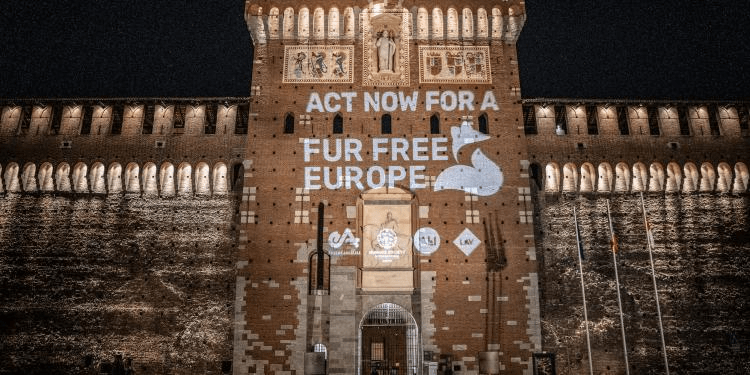
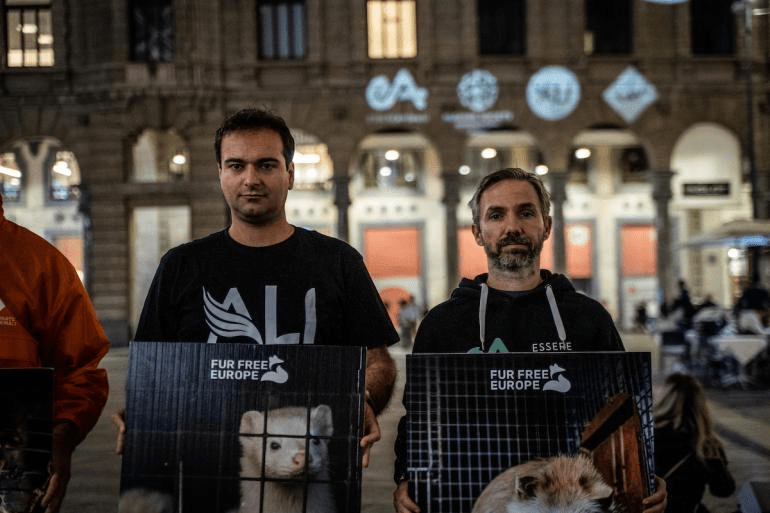
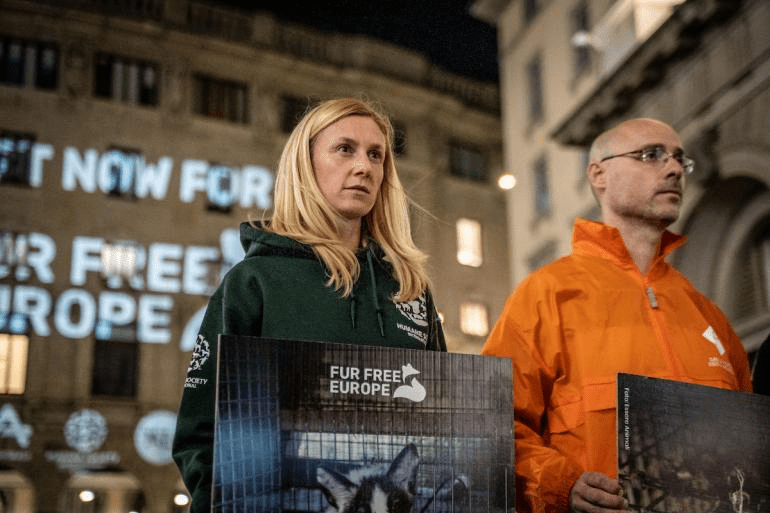
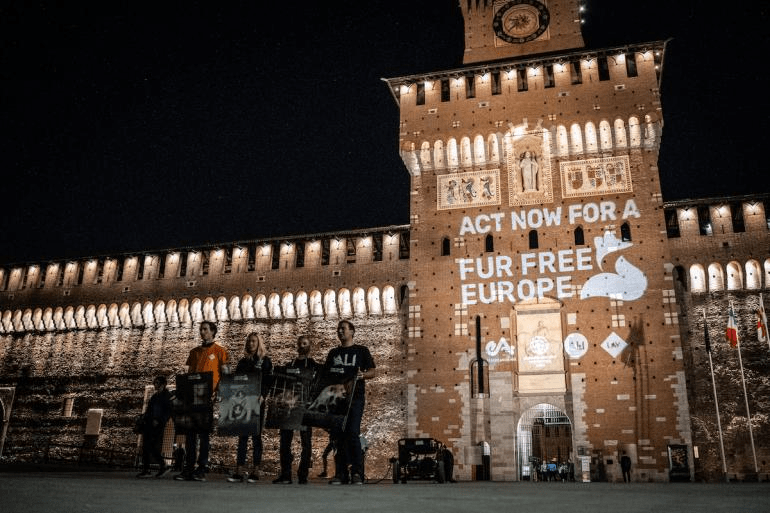
Yesterday evening, 20th September, the opening date of the Milan Fashion Week, the associations LAV, Humane Society International/Europe, ALI – Animal Law Italia and Essere Animali have projected on the building at number 31 in Piazza Duomo where it is based the National Chamber of Italian Fashion (organizer of the Fashion Weeks) an important and urgent message: “Act now for a Fur Free Europe”.
An explicit call for mobilisation addressed to all European citizens to induce the EU Commission to launch a legislative initiative aimed at extending the ban fur farming in all Member States and, also, introducing a ban on trade (and import) of fur products.
After the recent great success achieved with the European Citizens’ Initiatives “End the Cage Age” (for the stop to cages on farms, reaching 1.4 million validated signatures) and “Save Cruelty Free Cosmetics” (for the stop to experimentation animal, collecting 1.4 million signatures), animal rights associations from all over Europe, represented in Italy by Essere Animali, Humane Society International/Europe, ALI – Animal Law Italia and LAV, have already started the ECI “Fur Free Europe”, once again enjoying a wide consensus: in the first 4 months about 350,000 signatures have already been reached.
The goal is to exceed the quota of 1 million signatures required to commit the EU Commission to follow up on the European Citizens’ Initiative.
The European Citizens’ Initiative is the tool envisaged by EU law to generate a more democratic decision-making process, for this reason the requests that benefit from a broad consensus (the procedure foresees at least 1 million valid signatures collected in 12 months and in at least 7 States members) must be considered by the European Commission.
In Europe, 13 Member States have already formally banned the farming of animals for the purpose of obtaining fur (Austria, Belgium – from 2023, Croatia, Estonia – from 2026, France, Ireland, Luxembourg, Malta, Holland , Czech Rep., Slovakia, Slovenia); among these also Italy with the ban in force from 1 January of this year and thanks to which no less than 60,000 mink will be saved every year (which, according to the last useful production cycle, every year were specially bred to then be killed). Other Member States have imposed restrictions: in Germany there are no longer farms; in Spain it is not possible to start new ones. In the European area, also the United Kingdom, Norway (from 2025) Serbia, North Macedonia, Bosnia (from 2028), and also in Switzerland have banned particularly restrictive local provisions, which in fact prevent the ‘opening of farms.
For consistency, Fur Free Europe also calls for a ban on the trade and import of fur products; a ban that, in compliance with the rules of international trade, is already in force in California (from 2019) and in Israel (from 2021).
Although there are many national bans, in the European Union still 18 million animals (minks, foxes, raccoon dogs, chinchillas) are specially bred every year and then killed in order to obtain fur.
There are now many major global fashion brands that have made the fur-free choice an added value of their sustainability policies. Among the Italians: Elisabetta Franchi, Giorgio Armani, Gucci, Versace, Prada, Valentino, D&G, Zegna, and YNAP Group. A trend that is also reflected in the numbers: in Italy the turnover of the fur trade fell from 1.8 billion euros in 2006 to 814 million euros in 2018 (source: Italian Fur Association).
“Legislative action is needed at European level to harmonize fur farming bans in all Member States and to introduce a ban on the trade and import of fur products throughout the European Union” – conclude the associations promoting the ECI Fur Free Europe in Italy.
New documentary SLAY exposes the cruel use of animals in fashion
8 September 2022
Premiering today, the new documentary SLAY follows filmmaker Rebecca Cappelli as she exposes the fur, wool and leather fashion industry for its greenwashing and cruel treatment of animals. Produced by Keegan Kuhn (known for his work on What the Health and Cowspiracy), the film asks an important question: is it ever acceptable to kill animals for fashion?
From Europe to China, SLAY spans 5 continents as it uncovers the unethical practices of the fashion industry on a global scale, emphasising the horrific ways the animals are kept and killed, all in the name of fashion and profit. The documentary features interviews with animal welfare and sustainability experts, as well as representatives from the fur industry itself.
Cappelli spent the last 3 years investigating animal skins in fashion, examining the devastating impact on people, the environment and animals.
If someone would have told me even half of what I discovered doing this film, I wouldn’t have believed it.
Rebecca Cappelli
The fur industry
The documentary is bold in debunking the argument that fur is a sustainable product, and also stresses workers rights, but the real emphasis is keeping the cruel treatment of animals in focus. SLAY shares behind the scenes footage of the animals kept in confined spaces, unable to stand or move around. The film depicts the abhorrent ways that the animals are killed, with the priority given to the protection of the quality of fur, rather than the welfare of the animal.
The documentary also shines a light on the scale of mis-labelled fur products on the market, including within the EU. Although often seen as a luxury item, fur has often been uncovered on the high street on low cost garments and accessories. Consumers are often unaware that they are purchasing fur products when they buy items such as bobble hats and fur trimmed hooded coats. Due to the mis-labelling of fur, many consumers are not given a choice and are unwittingly supporting the fur industry.
The fashion industry has been keeping animals out of people’s minds for too long, together we can change that.
Rebecca Cappelli
SLAY breaks outside of echo chambers and aims to make a real difference for the animals, for the planet, and the people who live at the mercy of the fashion industry.
From 8th September, the film will be available to watch on WaterBear Network. The free streaming platform is dedicated to sustainability, activism, and conservation.
260,000 Europeans have already signed our Fur Free Europe ECI. That means we’re over a quarter of the way to our target of 1,000,000 validated signatures backing this European Citizens’ Initiative, which will oblige the European Commission to respond and take action to ban fur farms and farmed fur products on the European market.
Outfoxing the laggards
The EU-level legislation we are seeking with this ECI would compel Member States that are still lagging behind to take the necessary steps. And such steps would be popular: a majority of people in every country across the EU consider that breeding animals for fur is an unacceptable cruelty.
Malta has just fallen into line, bringing the number of EU nations with a full ban on fur farming to thirteen. Three have a partial ban, while a further five are considering their next moves. And meanwhile the fur industry is on its back paws, the latest victim being the fur garment industry in Greece, which has been forced to shut down due to EU sanctions on Russia.
Fur jumps off the catwalk
And, in Denmark, once one of the biggest fur exporters in the world, this month’s Copenhagen Fashion Week followed Amsterdam, Helsinki and Oslo in going fur-free, after several luxury brands including Gucci, Alexander McQueen, Balenciaga and Moncler announced fur-free collections. Next month, we will look more closely at how we must keep fur-free trending in fashion.
So now is the time to act!
Make sure you have added your signature to the campaign. And if you can get three other people to sign then we’ll soon have the further three-quarters of a million we need!
Start of the collection period
2022-05-18
Registration number
ECI(2022)000002
FUR FREE EUROPE
Fur farming is inherently cruel and it is widely rejected by EU citizens.
It is impossible to improve the welfare of animals on fur farms. Whilst no animals should live in a caged environment, the keeping of inherently wild species in cages can only be defined as abject cruelty.
The keeping and killing of animals solely for the purpose of fur production is ethically unacceptable.
Numerous outbreaks of SARS-CoV-2 on mink farms have evidenced the veterinary-public health risks associated with the production of fur.
The existence of production bans in some Member States has a distorting impact on the market for the supply of farmed fur products. This favours traders in those Member States where there is no production ban, to the detriment of those EU countries where outright bans are already in place.
The placing of fur products on the internal markets of several territories and jurisdictions has already been prohibited. This includes dog and cat fur within the EU.
Echoing the calls from many Member States we, EU citizens, invite the Commission to prohibit by law, throughout the Union, the:
keeping and killing of animals for the sole or main purpose of fur production.
placement of farmed animal fur, and products containing such fur, on the EU market.
274,665 have signed. Let’s go to 500,000
Act Now – please sign the ECI
NOTE THIS IS A PETITION WHICH CAN ONLY BE SIGNED BY CITIZENS OF EU MEMBER STATES – Nobody else sadly.
Whilst there are currently no operational fur farms or foie gras production in the country, this move will help to prevent these farming methods that disregard animal welfare from being practised in the future.
The Ministry for Agriculture, Fisheries and Animal Rights published a new legal notice, LN 187 2022, amending the Regulations on the Protection of Animals kept for reasons related to Agriculture.
This legal notice adds regulations regarding the prohibition of the forced feeding of birds and the prohibition of raising animals for fur in Malta.
Though such practices are not the norm in Malta, it is still crucial to prohibit them to ensure the protection of these animals.
Ministry for Agriculture, Fisheries and Animal Rights, Malta
Malta now joins 12 other EU countries that have prohibited fur farming.
Whilst this is a great step forward, there is currently no ban on the placement of farmed fur products on the market in Malta.
Eurogroup for Animals is calling for a ban on fur farming and farmed fur products across the European.












 World Animals Voice
