Category: Fur and Fur Farming

Poland: the Eldorado for gigantic animal factories

Undercover recordings by “SOKO Tierschutz” (SOKO animal welfare) and Polish animal rights activists from VIVA! pl and Otwarte Klatki shows the killing of minks with gas.

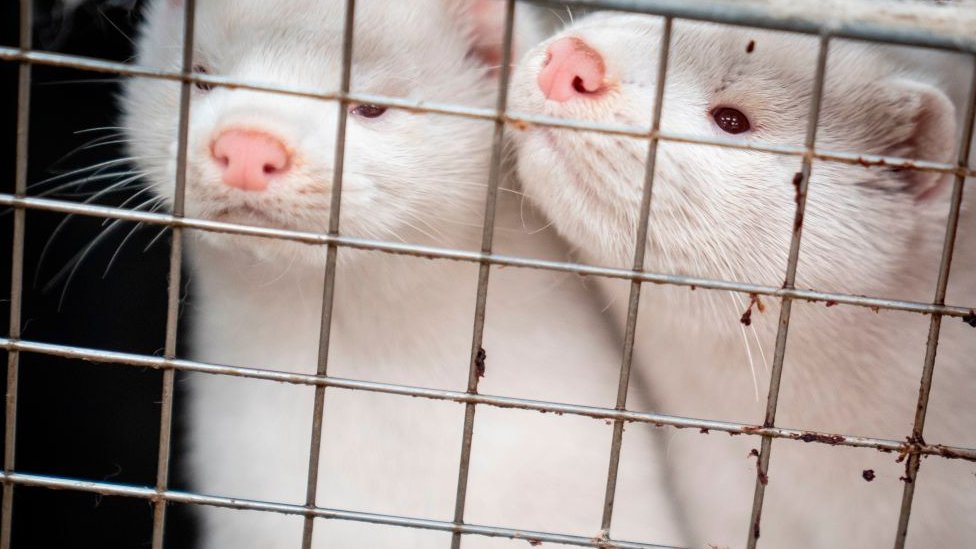
On two farms in Poland, the third-largest fur producer in the world, exclusive recordings show how minks survive gassing, are brutally slain, and slowly die among carcasses.
It is the world’s first recordings from the gasification boxes.

Although a new animal welfare law has been introduced in Poland, millions of minks are again being killed for the fur trade – in a cruel way.

The so-called harvest in a Polish fur farm: rows of minks are thrown into a gas box that is filled with carbon dioxide.

A hidden camera in the box proves the horror.

The animals, which are good swimmers, can hold their breath for up to five minutes and run around in the box in a panic. The bloodied walls of the box are silent witnesses of the agony.

After forty minutes the box is opened. Several animals are still alive. The workers try to crush them or to kill them. Even after this ordeal, breathing minks end up on the carcass heap.
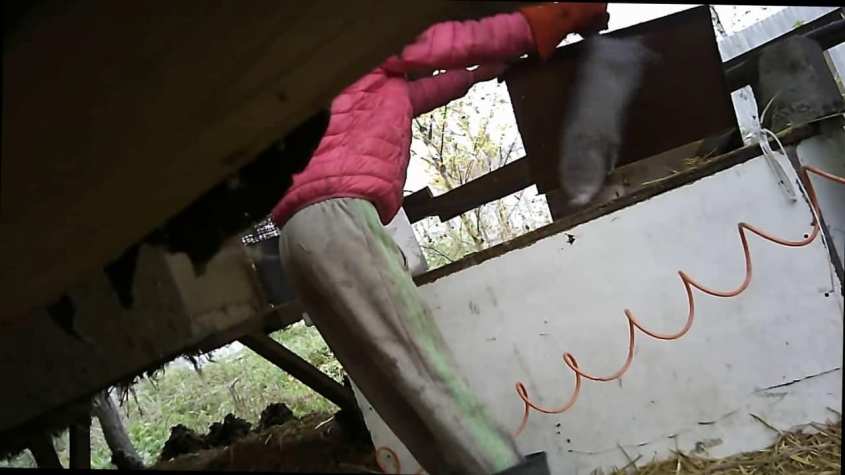
The minks are put in boxes for killing, into which gas is then passed. The animals suffocate in agony. (Photo: Soko Tierschutz)

They will slowly die with their bones shattered. Everyday life for the workers, who cynically comment on the suffering of the animals: “There are two more alive. Beware of those who are alive, they will bite you”. A worker who wants to kill a mink with a kick is admonished not to destroy the head and thus the fur. The animal is then hit against a wooden edge.

The drama repeats itself on a second farm with over 10,000 animals.

Here, too, animals are hit against an edge, the animals fight desperately in the gas and under the corpses, there are minks that come out of the box alive after the gassing and are gassed again.

In both cases, the gas comes from the Linde Group. The logo of the company, which produces a large part of the CO2 in Germany, is emblazoned on the gas bottles.

Image: SOKO Tierschutz

SOKO Tierschutz calls on Linde to immediately stop supplying the entire fur industry with gas.
“Linde is complicit in these tortures. It is no secret how terrible it is to live and die for the useless furs. Linde is part of this barbarism. We will remind the company of its responsibility with a campaign,” explains Friedrich Mülln, Spokesman for “SOKO animal welfare”.

In the meantime, Linde has declared that it does not want to supply any gas to fur farms in Poland. SOKO animal welfare is pushing for a worldwide delivery stop for the killing gases of the fur industry.

“We will also take action against Linde’s competitors in the next few months,” the SOKO spokesman announced.

“SOKO animal welfare” appeals to the Polish government to end the fur industry and to continue the path that has already been taken towards a ban on fur farms, despite massive opposition from the fur lobby.
For fur-breeders from the Netherlands, Denmark, and Finland, Poland has become an Eldorado for gigantic animal factories, where you can do what would be forbidden in your home countries or not possible due to high environmental standards.
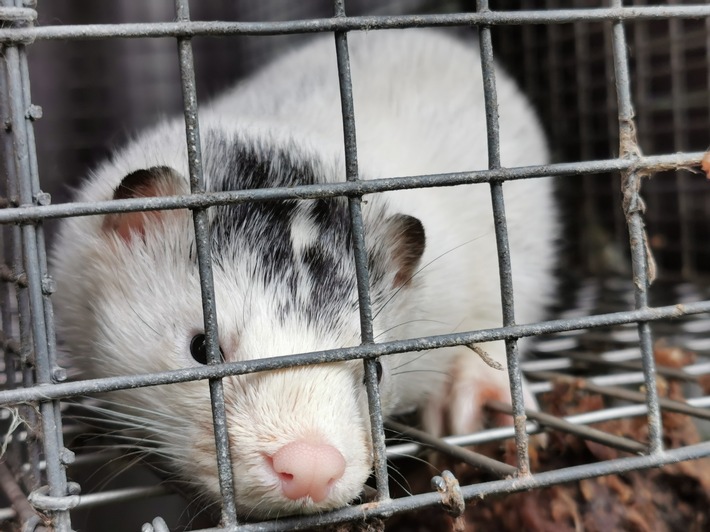
image: “obs/SOKO Tierschutz e.V.”

“That must have an end.
The EU first needs a ban on cruel fur farming and then an import ban on furs, because this is the only way to effectively prevent these crullers from escaping to third countries and to protect the lives of animals worldwide, ” said Mülln

https://www.presseportal.de/pm/110736/4792220

And I mean…Poland, along with Denmark and Finland, is one of the largest exporters of fur in Europe, especially of mink.
Unlike in Denmark, where many mink will be killed this year because they may transmit the coronavirus, the regular “fur harvest” is currently taking place in Poland.

The pictures in the video show that the minks do not pass out quickly and die quickly, as the agricultural lobby likes to claim.

Fur farming has long been banned in many European countries. Corona made a great contribution to this.

In Germany, the “Animal Products Trade Act” came into force in 2017, which introduced such strict rules that the last fur farm soon closed.
In many other countries – Austria, the Czech Republic, France, or Norway – keeping them is prohibited or it is expiring.

The Netherlands is now ending prematurely because of Corona.

In Poland, on the other hand, according to animal rights activists, five to six million minks are killed on several hundred farms every year.

The agricultural lobby is strong in the country and in parliament because several thousand people work in the industry.
And so the mink breeding and torture continues for the time being.

“Humanity is waging war against nature. That is suicidal. Nature always strikes back with full force and fury,” said UN Secretary-General Antonio Guterres this week at a meeting of the United Nations.

Yes, it is! With factory farming (in any form) we have created situations where it is very easy for a virus or other pathogen to jump from one species to another.
But human animals (unlike other species) never learn from their mistakes.
We will not be able to prevent pandemics in the future either, and it is our own fault.

My best regards to all, Venus

USA: First case of coronavirus detected in wild animal.


Mink at a farm in Denmark
Picture – Getty Images

 The virus spreads rapidly on fur farms.

WAV Comment: The fur industry has a lot of questions to answer regarding its abuses and what has resulted from this sick trade. Fur out now ! – globally.

First case of coronavirus detected in wild animal

By Helen Briggs
BBC Environment correspondent

The first known case of coronavirus in a wild animal has been reported, leading to calls for widespread monitoring of wildlife.

The US Department of Agriculture (USDA) said a wild mink had tested positive around an infected mink farm in Utah.

Coronavirus outbreaks at fur farms in the US and in Europe have killed thousands of the animals.

As a consequence, millions of farmed mink have had to be culled across Europe.

The USDA said it had found one positive case in “free-ranging, wild mink” in Utah as part of wildlife surveillance around infected farms.

Several animals from different wildlife species were sampled and all tested negative, the agency added.

It said it had notified the World Organisation for Animal Health, but there is no evidence the virus has been widespread in wild populations around infected mink farms.

“To our knowledge, this is the first free-ranging, native wild animal confirmed with Sars-CoV-2,” the USDA said in an alert to the International Society for Infectious Diseases.

The discovery raises concerns that the infection could spread between wild mink, said Dr Dan Horton, a veterinary expert at the University of Surrey, UK.

The case “reinforces the need to undertake surveillance in wildlife and remain vigilant”, he added.

Mink are known to escape from mink farms and become established in the wild. In the UK, a population of mink that escaped from fur farms many years ago is thought to exist, but they are sparsely distributed and rarely come into contact with people, Dr Horton added.

The virus has also been found in zoo tigers, lions and snow leopards in the US, and in a small number of household cats and dogs.

First case of coronavirus detected in wild animal – BBC News

Action – Urge Italy to Ban Fur Farms – Do It Here !

Animals in Italy need our help. The country has suspended fur farming amid COVID-19 outbreaks on mink farms. This is a great step forward, but we must urge the prime minister to shut down the industry permanently:

Fur farms have been hotspots for COVID-19 outbreaks in Italy, Canada, Denmark, France, Greece, the Netherlands, Poland, Spain, Sweden, and the US.

When stressed animals are confined next to each other in filthy, unsanitary conditions, it’s no surprise that diseases spread easily. As minks are particularly susceptible to respiratory illnesses, mink farms around the world are dangerous breeding grounds for diseases including COVID-19. Indeed, a mutated version of the coronavirus originating in minks is posing a risk to the effectiveness of future vaccines.

For the sake of the animals who are suffering terribly and the humans whose lives are being put at risk by these festering cesspools, PETA is appealing to Italian Prime Minister Giuseppe Conte to close the country’s remaining mink farms permanently. Will you send him a message, too?

Urge Italy to Ban Fur Farms

Around 200,000 minks a year are still imprisoned on Italy’s 13 remaining fur farms. It’s time to shut these facilities down.

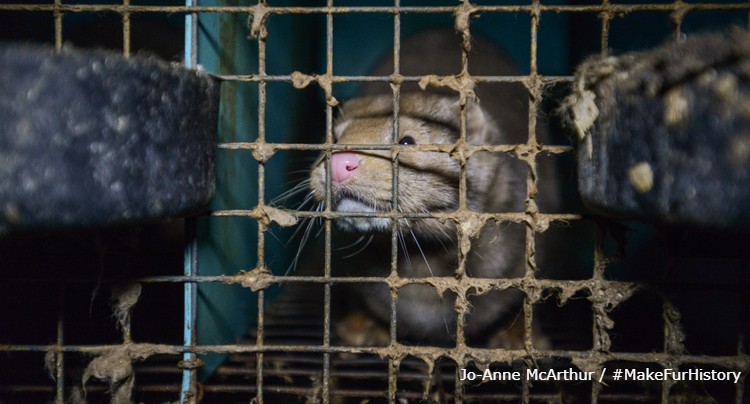
Investigations into Italian mink farms have found that animals spend their short, miserable lives in wire cages, with no access to grass or water to swim in. Many were severely injured, and some were driven to self-mutilation or cannibalisation of their cagemates by the stress of captivity.

The minks are killed when they’re only about 6 months old – crammed by the dozens into a box and gassed to death.

These fur farms are putting public health at risk, too. When it comes to the risk of disease, they’re no different to the live-animal market in which the novel coronavirus is believed to have originated. It’s very easy for infectious diseases to spread on fur farms through the exchange of urine, excrement, pus, and blood. Minks with infections, sores, and festering, open wounds caused by the wire flooring they stand on are a common sight. Fur farmers and handlers are among those who most commonly suffer from the zoonotic bacterial disease tularaemia.

Following reports that minks tested positive for COVID-19 on fur farms in the Netherlands and workers are believed to have contracted the virus from the animals, the Dutch parliament voted by an overwhelming majority to bring forward the implementation of a fur-farming ban in the country. Such bans are already in place in Austria, the Czech Republic, Israel, the UK, and several other countries.

Italians know that fur belongs in the history books, not in our wardrobes. Over 90% of the country’s population is against fur farming; iconic Italian designer brands such as Armani, Gucci, Elisabetta Franchi, Prada, and Versace are all fur-free; and in the past 30 years, the number of fur farms in Italy decreased from 125 to 13.

Take Action:

Urge Italy to Ban Fur Farms | People for the Ethical Treatment of Animals (peta.org.uk)

Regards Mark

EU Related: Leading animal protection organisations call for the permanent closure of fur farms in Europe.

Members of Danish health authorities assisted by members of the Danish Armed Forces dispose of dead mink in a military area near Holstebro in Denmark, 09 November 2020 (issued 10 November 2020).


December 8, 2020

Leading animal protection organisations call for the permanent closure of fur farms in Europe

Humane Society International

BRUSSELS—In the wake of COVID-19 outbreaks on mink farms throughout Europe – which have also laid bare the cruel conditions under which these animals are intensively confined – leading animal protection organisations today held an online conference to address the animal welfare and public health concerns associated with fur production. This event was organised in collaboration with the European Parliament’s Intergroup on the Welfare and Conservation of Animals.

Hosted by MEPs Anja Hazekamp (GUE/NGL) – pictured below, Niels Fuglsang (S&D) and Anna Deparnay-Grunenberg (Greens/EFA), this timely event brought together politicians and policymakers with prominent experts on animal welfare, veterinary epidemiology, NGOs and even a former fur industry insider to consider the animal welfare and disease risk problems related to exploiting fur-bearing species, such as mink and foxes, for their pelts. Recent footage from fur farm investigations was also screened to illustrate the inherent welfare problems involved in fur production.

Above – the brilliant Anja Hazekamp – a strong voice for animals,

Dutch MEP, Animal Welfare Intergroup President and Vice-Chair of the Parliament’s Environment Committee, Anja Hazekamp said:

“Confining wild animals in small wire cages for the trivial purpose of fur production should be consigned to the past. The horrific footage from Polish and Finnish fur farms, which we have seen at today’s meeting, are far from unique. We saw exactly the same kind of images of animal suffering on fur farms in the Netherlands over a quarter of a century ago when the political debate on banning fur production began. In the past days, the very last mink on Dutch farms were gassed to death and the cages stand empty after the industry phase-out was brought forward to eliminate potential coronavirus reservoirs. Fur farming is now over in my country. I look forward to the day when we can end the suffering of all animals on fur farms and see a completely fur-free Europe”

Dr Joanna Swabe, senior director of public affairs for Humane Society International/Europe, added:

“In the past months, the public has been confronted with the fact that fur farms are not only places of enormous animal suffering, but they can also act as virus factories. The living conditions on fur farms, which confine wild species at high densities and in close proximity, fail to satisfy the animals’ most basic welfare needs, leaving them highly stressed, which can lead to their immune systems being compromised. The outbreaks of the SARS-CoV-2 virus on fur farms have confronted us with the terrifying reality that fur factory farms create ideal conditions for diseases to propagate from one animal to another, and for viruses to mutate into forms potentially virulent to humans. We don’t need frivolous fur fashion. And we certainly don’t need these unnecessary reservoirs for coronaviruses. More than ever, it is time to make fur history.”

Reineke Hameleers, CEO, Eurogroup for Animals, noted:

“Given the urgency of the situation we believe it is high time for the Commission to show leadership and introduce measures to suspend fur farming across the EU. The potential risks of the SARS-CoV-2 virus further spreading and potentially mutating, pose serious threats across borders and require an EU approach. We trust that this proposal will be made at the forthcoming AgriFish Council meeting. In the longer term we believe the moment is ripe to phase out this sector once and for all. Several EU surveys have shown that the vast majority of EU citizens do not approve of fur farming and 11 EU countries have already banned or restricted this industry or are in the process of doing so. The pandemic has put the spotlight on the vulnerability of fur farming which end is long overdue.”

Facts:

  • Eight EU Member States have officially identified COVID-19 positive animals on mink farms: Denmark (289 farms), France (1 farm), Greece (12 farms), Italy (1 farm), Lithuania (1 farm), Netherlands (70 farms), Spain (1 farm), Sweden (13 farms).
  • Researchers at the Medical University of Gdansk also found eight COVID-19 positive mink on a fur farm in Poland.
  • SARS-CoV-2 virus has also been found in mink on 16 US fur farms and one Canadian mink farm.
  • Mink-to-human transmission was first identified in the Netherlands through whole genome sequencing and has also been found in Denmark. The emergence of a new mink variant of the SARS-CoV-2 virus was detected in Denmark leading to fears that this COVID-19 mutation moving from mink to humans could jeopardise future vaccines. This variant had already been found in 12 people in northern Denmark.
  • On 4th November 2020, the findings of the State Serum Institute led to Danish government announcing the radical step of culling all mink on the remaining fur farms and a temporary ban on mink production in the country.
  • In 2013, the Netherlands adopted a ban on fur farming. The industry was due to be phased-out by 1st January 2024. However, the Dutch government forced an early shutdown of its mink industry due to continuing outbreaks of COVID-19 – despite the adoption of strict biosecurity measures and preventative culling of all affected mink herds – on its remaining fur farms.
  • The Irish Department of Agriculture recommended that farmed mink in Ireland should be culled and restocking prohibited on its remaining three fur farms. A ban on fur farming was already pending.
  • Fur farming has already been prohibited and/or is in the process of being phased-out in various EU Member States, such as Austria Czech Republic, Croatia, Slovenia, Slovakia, the Netherlands, Luxembourg and Belgium.
  • Legislative proposals to ban fur farming are currently also under consideration, or have been announced, in 6 countries including Poland, Lithuania, France, Ireland, Bulgaria and Estonia.
  • In addition to these fur farming bans and industry phase-outs, Germany adopted stricter regulations, which have effectively eliminated the breeding of all animals for fur; Sweden similarly eliminated fox and chinchilla production in this way. Denmark has also prohibited and is phasing out the breeding of foxes on animal welfare grounds.
  • Hungary has also just announced a ban on mink, fox, ferret and coypu production as a precautionary measure due to animal welfare and COVID-19 concerns to prevent fur producers from moving their operations there.

ENDS 


Denmark: Danish Prime Minister Breaks Into Tears Over Mink Culling – But Not Tears for the Mink.

WAV Comment: Denmark has made a 110% hash up of this right from the very start. A vote of no confidence in this woman sounds like a positive move. Does she shed tears for the 17 million Mink that have been murdered by her nations blood lust for a dying financial business ? – no; not for the mink but for the 6,000 fur farmers who are now being seen by the world for what they are.

UPDATE – 8/12/20 – this may be a good time to tell you, as we are on the subject of Danish mink; that we have still had NO reply from the Danish Ambassador in London re our letter of 12th November.

England: WAV Writes to the Danish Ambassador In London re Denmark’s Mass Mink Murders. – World Animals Voice refers.

We are nearly a month on from when the letter was sent. What is wrong with them we ask ? – does the lack of reply from a Danish official overseas (in the UK – London) maybe tell us that they do not know what to say really ? – all we want is a reply to our letter, but they seem unable to even do that.

Culled minks with COVID-19 mutation literally ‘rise’ from their graves in Denmark.

Culled minks with COVID-19 mutation rise from their graves in Denmark

By Jan M. Olsen  The Associated Press

Some of the thousands of mink culled to minimize the risk of them re-transmitting the new coronavirus to humans have risen from their shallow graves in western Denmark after gases built up inside the bodies, Danish authorities said Thursday.

“The gases cause the animals to expand and in the worst cases, the mink get pushed out of the ground,” Jannike Elmegaard of the Danish Veterinary and Food Administration said. He said it affected “a few hundred” animals.

Members of Danish health authorities assisted by members of the Danish Armed Forces dispose of dead mink in a military area near Holstebro in Denmark, 09 November 2020 (issued 10 November 2020).

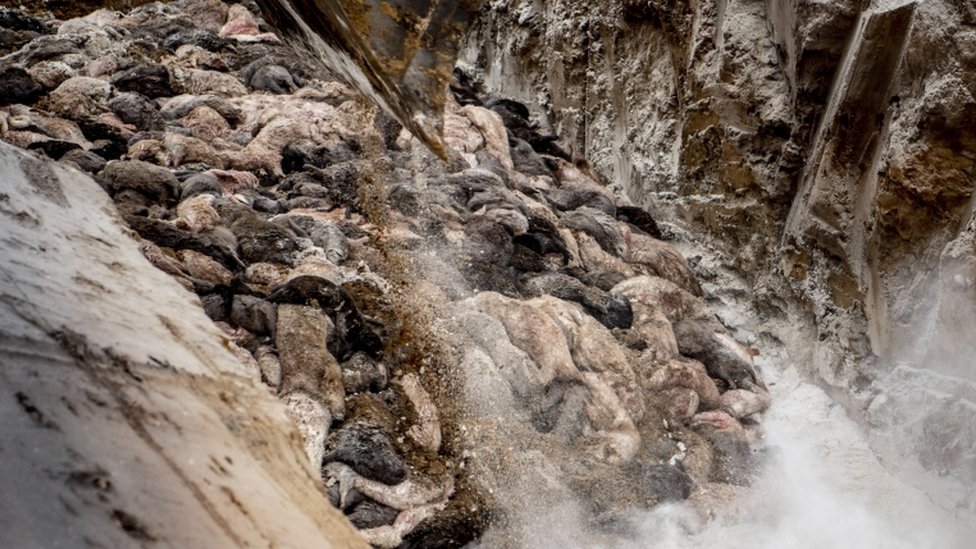
The mink are buried in trenches that are 2.5 metres (8.25 feet) deep and 3 metres (10 feet) wide. A first layer of about 1 metre of dead mink are then covered with chalk before another layer of animals is laid, covered again with chalk and then with dirt, Elmegaard told The Associated Press.

But because the soil where they are buried is sandy, some have re-emerged. “We assume it is the mink that were in the upper layer that pop up,” he added calling it “a natural process.”

“Had the earth been more clayish, then it would have been heavier and the mink would not have resurfaced,” he told the AP. The animals who resurface are reburied elsewhere, and authorities guard the site to keep away foxes and birds.

Members of Danish health authorities assisted by members of the Danish Armed Forces dispose dead mink in a military area near Holstebro in Denmark, 09 November 2020

Denmark culled thousands of mink in the northern part of the country after 11 people were sickened by a mutated version of the coronavirus that had been observed among the animals.

Earlier this month, the Social Democratic minority government got a majority in parliament to back its decision to cull all of Denmark’s roughly 15 million mink, including healthy ones outside the northern part of the country where infections have been found. The proposed law also bans mink farming until the end of 2021.

The government had announced the cull despite not having the right to order the killing of healthy animals, an embarrassing misstep that caused it to scramble to build political consensus for a new law.

The coronavirus evolves constantly as it replicates but, to date, none of the identified mutations has changed anything about COVID-19’s transmissibility or lethality.

Culled minks with COVID-19 mutation rise from their graves in Denmark – National | Globalnews.ca

Click here to see all of our past WAV posts on the Danish Mink cull:

Search Results for “denmark mink” – World Animals Voice

Canada: COVID-19 outbreak declared at mink farm in B.C.’s Fraser Valley.

COVID-19 outbreak declared at mink farm in B.C.’s Fraser Valley

(1) COVID-19 outbreak declared at mink farm in B.C.’s Fraser Valley | Globalnews.ca

Health officials have declared a COVID-19 outbreak at a mink farm in B.C.’s Fraser Valley.

In a media release Sunday night, Fraser Health said eight people at the farm had tested positive, and that it was screening employees and contact tracing.

READ MORE: Culled minks with COVID-19 mutation rise from their graves in Denmark

Affected staff were self-isolating, it said.

The health authority did not identify the community or the farm.

A spokesperson for the health authority said “the information bulletin is all we have to share at this time,” when asked for more specific information.

The farm has been ordered to stop transporting animals, products and goods from the farm under the BC Animal Health Act, Fraser Health added.

WorkSafeBC is contacting other mink farms to discuss requirements under their COVID-19 safety plans, it said.


USA: Pamela Anderson Urges Danish Prime Minister To ‘Protect’ Public Health And Ban Fur.

Pamela Anderson Urges Danish Prime Minister To ‘Protect’ Public Health And Ban Fur

‘I hope you’ll respond by banning fur farms in Denmark, which would protect public health and spare countless animals miserable lives and violent deaths’

Celebrity actor and vegan advocate Pamela Anderson is urging the Danish Prime Minister to ban fur. 

The Baywatch star’s demand follows multiple COVID-19 outbreaks on mink fur farms across Europe and the States. Moreover, the COVID-19 mink variant found on a Danish fur far could spark a new coronavirus pandemic, experts warn.

Anderson’s letter

Anderson has therefore written Mette Frederiksen a letter, saying ‘now is the time for action’. 

She wrote: “Like many people around the globe, I was alarmed to hear that a new, mutated strain of the novel coronavirus—one that could have ‘devastating consequences worldwide’ as you rightly pointed out—has been found in minks on Danish fur farms and that this strain has infected several humans.

“I hope you’ll respond by banning fur farms in Denmark, which would protect public health and spare countless animals miserable lives and violent deaths.”

‘Out of favor’

Anderson continues, describing fur as ‘out of favor’ even before the current pandemic. She says most designers and retailers such as Prada, Gucci and Ralph Lauren have already banned mink fur.

“Now is the time for action,” the star added. “Please, for everyone’s sake, ban [these] cruel, dangerous fur farms.”

Pamela Anderson Urges Danish Prime Minister To Ban Fur (plantbasednews.org)

You can read the full letter here

WAV Comment – we have still not had a reply from the Danish Ambassador in London when we wrote to him on the same issue recently.

Here is the link to our letter info:

England: WAV Writes to the Danish Ambassador In London re Denmark’s Mass Mink Murders. – World Animals Voice

Netherlands: Video shows mink pulled from cages and thrown ‘like rubbish’ into gas chambers on Dutch fur farms.

Video shows mink pulled from cages and thrown ‘like rubbish’ into gas chambers on Dutch fur farms

Old news from 23 November 2020

Mink were pulled from cages by their tails or hind legs and hurled into mobile gas chambers on fur farms in the Netherlands, video footage has revealed. The rough handling of the animals breaks EU animal-welfare regulations.

Animal rights campaigners said the video shows a behind-the-scenes view of the cruelty of the Dutch industry, which is closing next year. It also highlights the need for the UK to stop sales of real fur, they added.

The footage, secretly shot on two farms last week by Dutch group Animal Rights, shows the animals being pulled roughly from cages and thrown one after the other towards mobile gas chambers, sometimes from a great distance.

In one clip, the mink are heard screeching with alarm or pain.  

And workers are seen with their anti-coronavirus masks below their noses.

Claire Bass, executive director of Humane Society International/UK said: “Live mink are seen being yanked from their cage by the tail or hind leg, in clear breach of EU regulations, and tossed like trash into the mobile gas chamber one after the other in quick succession.  

The speed with which these sentient animals are thrown in together means they will almost certainly be dying in front of each other, again in breach of the rules.”

Read more at source

Independent

Video shows mink pulled from cages and thrown ‘like rubbish’ into gas chambers on Dutch fur farms | The Independent

Regards Mark

Denmark: Escaped Infected Danish Mink Could Spread Covid in Wild.

View all our Danish mink articles at Search Results for “denmark mink” – World Animals Voice

WAV Comment – “Denmark’s health ministry said last week that the C5 mink variant was “very likely extinct”.   Well what else would you expect ? – time will tell over the coming weeks and months.  Denmark is the world’s largest exporter of mink fur, and so we would expect nothing but an ‘all is ok, no need to worry’ from the health ministry.

By the way, we have still NOT had any response from the Danish Ambassador in London re our letter of the Danish mink cull situation.  See:

England: WAV Writes to the Danish Ambassador In London re Denmark’s Mass Mink Murders. – World Animals Voice

We wonder why ? – do they not have answers or are things just so jumbled and up in the air, despite what the health ministry says ?

We also say ‘Karma’ – Denmark is now reaping what it sowed years ago by becoming involved with the fur trade.  We have no sympathy.

—————————————————

Escaped infected Danish mink could spread Covid in wild

Scientists fear fur farm animals in wild could create ‘lasting’ Covid reservoir that could then spread back to humans

Escaped mink carrying the virus that causes Covid-19 could potentially infect Denmark’s wild animals, raising fears of a permanent Sars-CoV-2 reservoir from which new virus variants could be reintroduced to humans.

Denmark, the world’s largest exporter of mink fur, announced in early November that it would cull the country’s farmed mink after discovering a mutated version of the virus that could have jeopardised the efficacy of future vaccines.

Around 10 million mink have been killed to date. Fur industry sources expect the fur from the remaining 5 million to 7 million mink will be sold.

A number of Covid mink variants were identified by Denmark’s state-owned research body the Statens Serum Institut, but only one, known as C5, raised vaccine efficacy concerns. However, Denmark’s health ministry said last week that the C5 mink variant was “very likely extinct”.

Mink are known to regularly escape fur farms and the risk that infected mink are now in the wild was confirmed on Thursday.

“Every year, a few thousand mink escape. We know that because they are an invasive species and every year hunters and trappers kill a few thousand wild mink. The population of escaped mink is quite stable,” said Sten Mortensen, veterinary research manager at the Danish Veterinary and Food Administration.

This year, Mortensen said, there was a risk that about 5% of the minks that escaped from farms were infected with Covid-19.

The risk of the escapees infecting other animals was low, he said, because mink were “very solitary creatures”. But, if they did, the animals most likely to catch the virus would include wild animals such as ferrets and raccoon dogs and “susceptible domestic animals” such as cats.

The most likely transmission route, he said, would be by an animal eating an infected mink or via their faeces.

Mink do not normally die from Covid-19, he added. “Once a mink has had Covid it usually recovers well. Some might have a few days of respiratory difficulty, but most recover and develop immunity.”

The risk of Sars-CoV-2 moving into wild populations has drawn concern from other scientists. Prof Joanne Santini, a microbiologist at University College London, said that, once in the wild, “it will become extremely difficult to control its further spread to animals and then back to humans”.

Transmission to the wild meant “the virus could broaden its host-range [and] infect other species of animals that it wouldn’t ordinarily be able to infect”, Santini said.

Prof Marion Koopmans, head of viroscience at Rotterdam’s Erasmus University, in an email to the Guardian, said: “Sars-CoV-2 could potentially continue to circulate in large-scale farms or be introduced to escaped and wild mustelids [weasels, badgers, otters, ferrets, martens, minks, and wolverines] or other wildlife” and then “in theory, as avian flu and swine influenza viruses do, continue to evolve in their animal hosts, constituting a permanent pandemic threat to humans and animals.”

In the US, there are hopes a mink vaccine will soon be ready. Dr John Easley, vet and research director at the Fur Commission USA said he hoped “one of three vaccine possibilities” would be available by spring for mink farmers in the US and beyond.

However, a mink vaccine is a contentious issue for animal welfare organisations. “Instead of dealing with the fact that the appalling conditions of high-volume, low-welfare fur farming make mink so vulnerable to disease in the first place, it’s easier to distract everyone with talk of a vaccine that could be used like a yearly sticking plaster to compensate for the consequences of those poor welfare conditions,” said Wendy Higgins of Humane Society International.

Sign up for the Animals farmed monthly update to get a roundup of the best farming and food stories across the world and keep up with our investigations. You can send us your stories and thoughts at animalsfarmed@theguardian.com

Brilliant articles as always: Guardian, London.

https://www.theguardian.com/environment/2020/nov/27/escaped-infected-danish-mink-could-spread-covid-in-wild