Category: General News

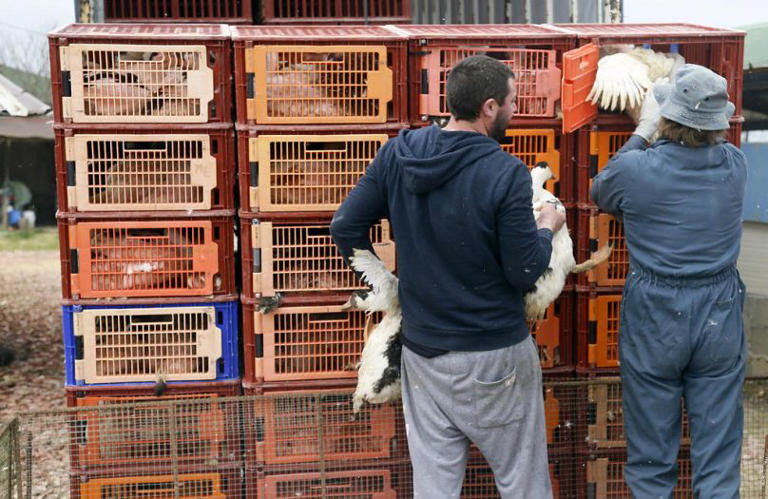
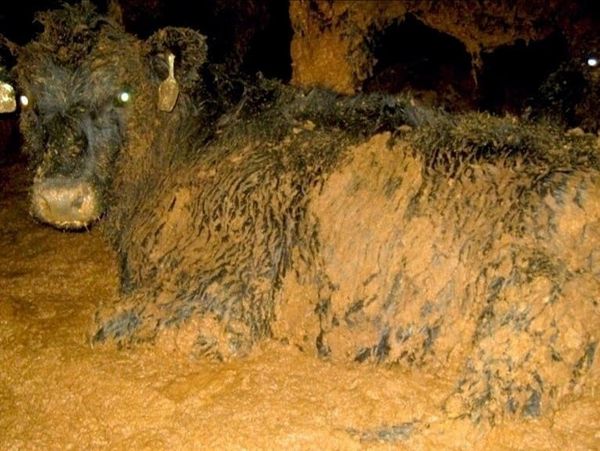
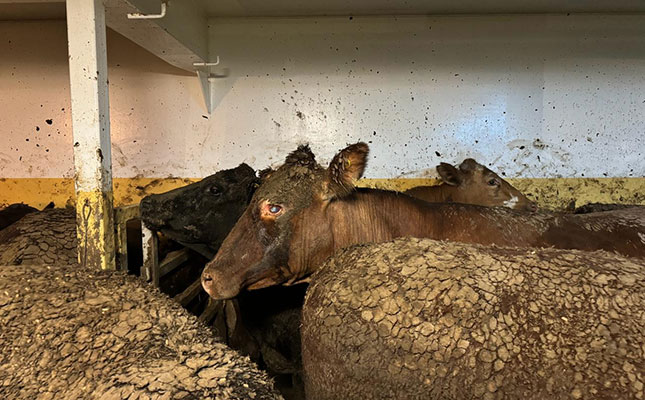
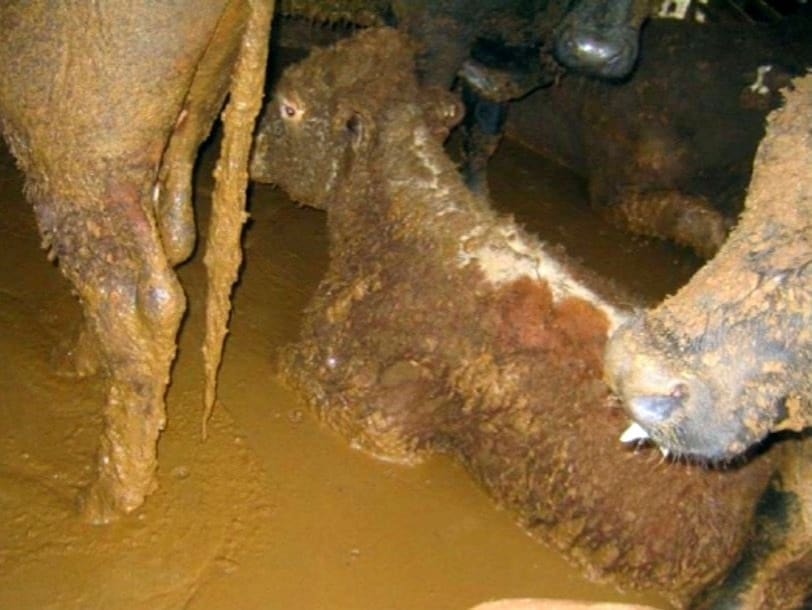
South Korea: Investigation has revealed that approximately 91.3% of cattle euthanized last year due to lumpy skin disease died in pain while conscious.

SEOUL, Jan. 18 (Korea Bizwire) — An animal rights organization’s investigation has revealed that approximately 91.3% of cattle euthanized last year due to lumpy skin disease died in pain while conscious.

The Korean Animal Welfare Association conducted a study of the euthanasia records from October 20 to November 20 of last year, the period following the first outbreak of lumpy skin disease in South Korea.

The study encompassed 34 local governments nationwide and found that out of 6,416 Korean beef and dairy cattle euthanized at 108 farms, about 5,859 (approximately 91.3%) were put down in a manner causing them suffering.

Continue reading at  Animal Rights Group Reveals High Suffering Rates in Cattle Euthanized Due to Lumpy Skin Disease | Be Korea-savvy (koreabizwire.com)

Regards Mark

England: Dog with six legs has operation to remove extra limbs.

Ariel, the six-legged dog found dumped in a supermarket car park, has had surgery to remove her extra limbs.

The 11-week-old spaniel hit the headlines after being abandoned outside a Pembrokeshire branch of B&M in September.

About £15,000 was raised by well-wishers all over the world, enabling her to have a life-changing operation.

Surgeon Aaron Lutchman managed to save all four of her working limbs after fears one might have to be amputated.

Ariel was named after Disney’s Little Mermaid because her partially fused extra back legs resembled a mermaid’s tail

“She’s doing really well, she’s bounced back and she’s a happy little dog and we’re hoping she’s going to go on to lead a fabulous little life,” said Mr Lutchman.

“She’s got her own little character and even though she’s had a tough start in life she really has done well to come through this as she has… if we can do what we can to help then that’s just absolutely brilliant.”

Dog with six legs has operation to remove extra limbs – BBC News

Mikey Lawlor is the founder and manager of Greenacres Rescue near Haverfordwest, which took in Ariel after she was discovered alone, skinny and in a state of distress.

“The vet who initially assessed Ariel noted that, in addition to her two surplus back legs, she also had an additional vulva,” said the 42-year-old.

He added that a CT scan later revealing she only has one kidney upped the complexity of the medical treatment required.

“And, due to having two hip joints on one side, Ariel’s pelvis never formed properly.

An early X-ray showed Ariel had two hip joints on her right side

“As a result her normal back right leg had virtually no muscle tone, so there was a possibility that might have had to come off too.

“Thankfully that wasn’t the case though as it’s shown signs of having strengthened a lot in recent months. ”Named after Disney’s Little Mermaid character, because her partially fused extra back legs resembled a mermaid’s tail, Ariel was operated on at Langford Vets Small Animal Referral Hospital in Somerset on Thursday.

“There were two procedures which lasted about two hours, but both went fine,” said Mr Lawlor.

“The next day she was up, walking around and eating and drinking.

“Now we just need to keep our fingers crossed she doesn’t get any infections, but she really is in the best hands.”

Mr Lawlor said he hoped Ariel would be discharged this weekend to return home to her foster family in west Wales.

“Then, after she’s had several weeks of physiotherapy and recovery, we’ll see about finding her a forever home,” he added

“The response we’ve had to Ariel’s story so far, including calls and emails from as far away as New York and Australia, has been incredible – so I’ve no doubt she’ll be snapped up.

“I just can’t say enough of a thank you to everyone who’s contributed to helping her.”

Langford Vets’ hospital director Vicki Black added: “Ariel was a complicated little dog whose care required close collaboration across a number of our specialist teams, including orthopaedics, soft tissue surgery, anaesthesia and radiology.

“As part of the University of Bristol we are a centre committed to career-long learning and are proud to innovate and treat pets like Ariel.

“We are delighted such a lovely animal has recovered well from her surgery.”

Great story – am sure thousands will want to adopt her.

Regards Mark

EU: What does the EU’s Transport Regulation proposal mean for animals used for scientific purposes?

19 January 2024

In December 2023, the European Commission published its proposal for a Regulation on the protection of animals during transport. The proposal explicitly recognises that animals transported for scientific purposes are covered by the Regulation. However, the lack of species-specific provisions addressing crucial factors such as fitness for transport and journey times raises deep concerns.

Since the implementation of Council Regulation (EC) No 1/2005, the European Commission has not taken specific actions concerning the welfare of animals transported for scientific purposes. Despite the stress, suffering, and elevated risk of injury that these animals may experience during transport, there has been a notable absence of measures to ensure their welfare. 

Data on the transport of animals used for scientific purposes to and within the EU has been scarce, with only minimal information available in EC and Member State reports on statistics.

The Commission’s proposal now explicitly includes the transport of animals used for scientific purposes within the scope of the Transport Regulation. The proposal acknowledges that “while a distinction can be made with regard to the purpose for which these animals are transported, their welfare should be guaranteed”.

However, the Commission continues to leave these animals unprotected, arguing that “due to the strict requirements on the quality of animals needed for research and testing”, and because “scientific procedures may require the use of animals that can potentially be considered unfit for transport according to this Regulation”, “it would be neither coherent nor acceptable to include them completely in the scope of this Regulation”.

In particular, species-specific provisions relating to fitness for transport, watering and feeding intervals, journey times, temperatures and rest periods, and the assessment and recording of conditions of animals on arrival do not apply to the transport of animals used for scientific purposes. These exemptions are particularly alarming in the context of animals transported over long distances. 

Regardless of the purpose for which animals are being transported, the needs and welfare concerns of a particular species remain the same. Whether they are categorised as farm animals, companion animals, or animals used for scientific purposes, individuals of the same species with comparable physiological conditions have common requirements in terms of journey times, resting periods, temperatures and access to water and food. The exception is made for vulnerable animals such as genetically altered animals, animals that have undergone surgery, animals that are disease ‘models’, pregnant animals, and lactating and newborn animals which require special provisions. 

Proper assessment and recording of the condition of animals on arrival is also missing. These aspects include elements such as the number of animals that died and any health or physical problems, including injuries that occurred during the transport, which are crucial to increase the traceability and transparency of transport operations, and to enable the enforcement of the Regulation.

The proposal also lacks provisions addressing the air transport of animals, including non-human primates. Most non-human primates used for scientific purposes in the EU are born outside of the EU, mainly in Africa and Asia, and imported. These animals suffer long journey times by air and by road in small crates that leave little room for the animals to even turn around. Travel times of up to 58 hours are not uncommon, and in some cases may exceed 70 hours. Directive 2010/63/EU recognises that an increase in transport times may negatively impact on the welfare of animals used for scientific purposes bred outside the EU. Animals transported by air may face different challenges, including extended waiting periods with restricted access to water and food, exposure to high temperatures, stress-inducing loading and unloading, and the risk of incorrect handling by untrained staff.

While we recognise the positive step forward in bringing the transport of animals used for scientific purposes within the scope of the revised Transport Regulation, we are deeply concerned by the limited protection proposed.

Eurogroup for Animals calls for the following amendments:

  • All provisions outlined in the Transport Regulation, including fitness for transport, watering and feeding intervals, journey times, temperatures, rest periods, and assessment and recording of conditions on arrival, must apply to the transport of animals used for scientific purposes, providing for certain exemptions where necessary;
  • Species-specific provisions must be included in Annexe I;
  • The needs of vulnerable animals must be addressed;
  • Appropriate provisions for animals transported by air must be included.

Regards Mark 

Trophy hunting helps conservation? The industry’s biggest myths debunked.

18 January 2024

Four Paws

Despite the ever-growing biodiversity crisis, it is still legal to hunt endangered species for trophies, with elephants, rhinos, leopards, lions and polar bears often falling victim to this cruel practice.

The EU is the second largest importer of hunting trophies worldwide, with nearly 15,000 hunting trophies of individual animals imported between 2014 and 2018 alone. The industry often uses misguided messaging to justify their actions, but a new report, published by 30 NGOs from across Europe and Africa, scientifically addresses these myths. Here are just a few:

Myth: Trophy hunting helps in conservation efforts

Fact: It negatively impacts populations of endangered and protected species

Hunters often target large or strong animals, jeopardising the gene pool of a population and negatively affecting long-term survival. This also undermines efforts by local communities towards conservation and co-existence, as it normalises the killing of animals for personal pleasure.

Myth: It benefits local communities

Fact: For communities it is a lose-lose situation

The trophy hunting industry is riddled with corruption and mismanagement, maximising profits for hunting officials, hunting tour operators and government officials. Local communities benefit by as little as USD 0.30 and USD 5.90 per capita per year, depending on the country. Often, hunting fees do not even reach local communities.

For most communities, trophy hunting is a lose-lose situation. They lose their wildlife to the rifle of foreign hunters, and fail to profit from the money produced by this deadly business. Trophy hunting not only exploits wildlife and nature, but also robs local communities of their heritage and future existence.

Nick Clark, Wildlife Programme Leader, Eurogroup for Animals

Myth: Trophy hunting prevents poaching

Fact: Poaching and illegal practices are rampant in hunting areas

Evidence shows high poaching incidents in hunting areas, leading to depleted animal populations. This has been especially evident in the Selous Game Reserve in Tanzania, the largest

hunting area in Africa, where approximately 55,000 elephants were poached between 2007 and

2014, leading to a population decline of 80 %. In some instances, animals migrate from protected areas to reoccupy empty territories in hunting areas, only to end up victims of trophy hunting.

Myth: Trophy hunting reduces human-animal conflicts

Fact: Trophy hunting exacerbates conflicts between humans and animals

Trophy hunters often target large and more mature males, which often disrupts social dynamics, exacerbating conflict with people. As an example, elephants from populations that have been subject to illegal hunting over a period of time often become more responsive towards humans, and may express aggressive behaviour. Hunting can also encourage predators to venture more frequently into human settlements, preying on farm animals as an easily available food source.

There is increased opposition to trophy hunting from the public, member states and NGOs.

The European Parliament has called for an import ban on trophies from protected species, and Belgium, the Netherlands, France and Finland have already implemented, or are in the process of, import restrictions. 81% of citizens from major European trophy importing countries oppose the practice and call for an import ban.

Regards Mark

England: 18/1/2024 Goldfinches.

https://www.rspb.org.uk/birds-and-wildlife/goldfinch

18/1/24. Went out into the garden this lunchtime with my camera whilst waiting for someone to arrive.

Beautiful Winters day – very cold, but clear with fantastic blue skies. I decided to take some photos of the Goldfinches that come into the garden each day to feast on the Sunflower hearts I put out for them in the feeders, and which you can see packed into the clear feeder tubes in the pictures. Got some ok photos which you can see below. Goldfinches are one of my favorite birds; colours are just amazingly beautiful.

Regards Mark

China: ‘Crush’ Information.

Hi all;

Regarding our most recent post about ‘Crush’ videos; China: Did You Hear the One About the Sick Pervert of a Doctor Who Lures Teenage Girls Into Pornography and Then Uses Them In An Animal ‘Crush’ Video Website ? – World Animals Voice

We stated that:

“Just in case you did not know; “Crush” videos refer to live, struggling and screaming animals being crushed, tortured and killed under women’s feet! – very often with them wearing stiletto heels to inflict the most damage on the innocent and defenseless creatures, to the point where bodies rupture, intestines are spread and even eye balls dislodge … with the animals still living.

Here is some proof:

Subject: I want to report Cao Shan from “Blue Studio” in Mudanjiang City

Letter: I want to report Cao Shan from “Blue Studio” in Mudanjiang City, who has been engaged in pornography for several years and sells bloody and violent videos. He registered as a women’s shoe store in Lanlingxue, but it was actually a studio selling pornographic and bloody violence videos! He made a huge profit. He renovated a large-scale offline SM erotic service venue and even prepared a wall full of shoes for male customers to choose from!

Not only is Cao Shan engaged in professional animal cruelty and profit-making work, but he also recruits two or three people to join him in customizing pornographic videos of trampling and torture for male customers to watch, and also customizes SM services offline. This has violated China’s criminal law, and the police comrades are requested to investigate thoroughly.

Diana has found a few issues and images today which support what we say.  The images are very disturbing but show what we are up against and trying to close down.  It must be remembered that all this abuse is given to ‘subscribers’ using the dark web; as in many places it would be considered illegal, and legislation (not in China) exists to tackle this.

Regards less of the legislation, through the dark web it still happens; usually linked in with pornography, sometimes child abuse and making lots of money by those who operate such sites.

We are trying to do our bit to highlight the abuse and those involved; but it is extremely difficult, especially when some nations where this continually happens do not want to step up to the plate and take action – by this we mean China !

We are going lots of places (on the computer) to research this and we face the continual threat of being hacked or shut down by computer specialists in these groups.  We are constantly aware of how vulnerable we are as a site and what could happen.  So far so good; but who knows what the near future may bring.

We ned to get this abuse and the perpetrators identified; also reported to authority to enable them to take further actions.  Also, we need your support and help to expose.

Finally, positive things do happen; and the arrests in Turkey, associated with Chinese cat torture are something we must close on as very positive news. 

For the animals;

Regards Diana and Mark

Further Information:

Links to our recent posts on Chinese cat abuse and torture:

EXPOSING AND COMBATING CAT TORTURE NETWORKS. 6/1/24. – World Animals Voice

China: Cat Torture Actions Follow Up – No. 1 – World Animals Voice

China – Cat Torture – Major Information and Actions – Follow Up No. 2 – World Animals Voice

China: Did You Hear the One About the Sick Pervert of a Doctor Who Lures Teenage Girls Into Pornography and Then Uses Them In An Animal ‘Crush’ Video Website ?

It’s not a joke – very sadly it’s true.

A Surgeon in China Xi’an has been exposed for making crush videos, in which teenage girls were lured by him into complicity in torturing and killing small animals for the sick gratification of a global audience.

Animals used include rabbits, guinea pigs, small dogs/puppies and young cats. The underage girls were taken to the same hotel rooms Wang uses for these purposes himself to produce “Animal Crush and pornography videos”.

Just in case you did not know; “Crush” videos refer to live, struggling and screaming animals being crushed, tortured and killed under women’s feet! – very often with them wearing stiletto heels to inflict the most damage on the innocent and defenseless creatures, to the point where bodies rupture, intestines are spread and even eye balls dislodge … with the animals still living.

According to a reliable source, Wang Zhenhua is a surgeon currently working in Xi’an Baoshi Huachangqing Hospital.

He is a funder and customer of the ‘cat torture ring’ previously discussed on our page (please see links below).

To report this abuser, please send an email to xaswjwmsqzlyjb@163.com

1-click email to report the abuser is available for you at 👇:
https://sites.google.com/view/savecatsinchina/take-action

Criminal Profile:
Name: Wang Zhenhua
Profession: Doctor
Employer: Xi’an Baoshihua Changqing Hospital
Current residence: No. 4, Gate 2, 14th Floor, Railway East Village, Erma Road, Xincheng District, Xi’an
Abuser Mobile number: +86-18309227760

Complaint Hotline to report him:

Xi’an hotline: +86 29-12345

Xi’an Public Security Bureau Tel: +86 29-87442836

Changqing Oilfield Workers Hospital: +86 29-86022769

Xi’an Municipal Health Commission reporting hotline: +86 29-86787671

Additional:

Man lures underage girls to film animal cruelty and killing videos for profit

New link to report Wang:
https://bit.ly/3NZZyAS

A man in Xi’an, Shaanxi Province has long been luring underage girls to film bloody, violent animal cruelty and pornographic videos, and use this to spread and make profit

According to the source, the man is Wang Zhenhua, an employee of Baoshihua Changqing Hospital (Changqing Oilfield Workers Hospital) in Xi’an, Shaanxi Province.

In October 2023, Wang was exposed in the act of trying to seduce an underage girl: Just watching (Crush) videos is no longer enough. Sources found a 16-year-old girl who shoots “bloody pornographic” videos in hotel rooms at least 8 times a month, paying the other party 300 yuan ($42 USD) each time.

The hotel room became a place of bloody and violent killings, and even became a “studio” for Wang’s “bloody pornographic” video recordings.

Wang also claimed that he and the 16-year-old girl had committed the above-mentioned act in the dormitory provided by the hospital. He claimed that he had invested 30,000 yuan ($4,222 USD) as the “finance owner” to order videos of young women torturing and killing animals.

Wang also spread bloody and violent videos of a 16-year-old girl and him torturing and killing animals through WeChat, QQ, and Baidu cloud!

It can be seen from the video that Wang spread through the Internet and that the animals they tortured and killed included cats, dogs, rabbits, birds, pigs, sheep, etc.  In order to make the video footage bloody and violent, they often used “dissection” of internal organs or “trampling” until the flesh and blood became bloody.

In addition, Wang also disseminated and sold videos through Internet channels, claiming that after making profits, he gave the money to the girls. Wang is one of the so-called “financiers” of the animal cruelty and killing gang.

Repost from Companion Animals Working Group (Weibo)

In one of the conversation screenshots, Wang said that he was not exposed to the public then, and that he only got a visit by the police for “spreading violence”. Will the police in China take it seriously this time?

ALSO

Video from Companion Animals Working Group (weibo)

Cao Shan, a shoe seller in disguise, is associated with the ‘Blue Studio‘ in Mudanjiang City. She is allegedly engaged in cruel activities, including animal abuse and online violence. Portrayed as a goddess of cruelty, she reportedly profits significantly from the ruthless killing of animals such as cats, dogs, pigs, and sheep. Furthermore, she has recently renovated an offline venue for sadomasochistic and violent services. Not only is she directly involved in these acts, but she is also accused of recruiting others, potentially leading to criminal offenses.


Drawing parallels with the infamous ‘Deep Blue Studio’ exposed in Heilongjiang in 2006, there are claims of a connection between Cao Shan and the current ‘Blue Studio’ in Heilongjiang, sharing a commonality in the brutal method of inserting objects into cats’ brains while those are still alive.

As we uncover and investigate the depths of the cat torture ring on Telegram, the grim reality behind the scenes is deeply distressing. The sheer magnitude and severity of these incidents demand immediate attention. The continuous spread of new content on the internet (due to a lack to Chinese animal welfare legislation) coupled with a potentially significant number of overseas/global customers, raises an alarm at an SOS level – this is a matter that requires immediate intervention.

Please report Cao Shan to the Mudanjiang authorities by emailing

mdjsxxzx@126.com, mdjrmjyzjb@126.com

1-click email to report is available on our website at: 

https://sites.google.com/view/savecatsinchina/abuser-list/cao-shan?authuser=0

Regards Mark and Diana.

Note – we are still working on this and hopefully will obtain more information. This post will be updated accordingly.

Further Information:

Links to our recent posts on Chinese cat abuse and torture:

EXPOSING AND COMBATING CAT TORTURE NETWORKS. 6/1/24. – World Animals Voice

China: Cat Torture Actions Follow Up – No. 1 – World Animals Voice

China – Cat Torture – Major Information and Actions – Follow Up No. 2 – World Animals Voice

Mexico: Bullfighting Returns To Mexico City After Ruling (Ban) Overturned.

MEXICO CITY (AP) — In the center of a desolate and cold Plaza Mexico stadium, a young matador raises a red cape and leaps to the right as he gets charged — not by a bull, but by a bull’s head on a cart.

A bellowing colleague is pushing the wheeled contraption to breathe a bit of realism into training in anticipation of bullfighting’s return to Mexico City.

The traditional spectacle took a critical blow when a judge banned it in the city in June 2022. Now that the country’s Supreme Court of Justice has overturned the ban, the capital that is home to what is billed as the world’s largest bullfighting ring plans to host “fiesta brava” events once more.

Continue reading at:

https://uk.news.yahoo.com/return-bullfighting-mexicos-capital-excites-050826305.html

Regards Mark

South Korea: Clamps Down on Controversial Animal Cafes.

Caged behind glass, a plump raccoon runs for a few seconds on an exercise wheel before flopping back down on the floor. In the next enclosure, a pair of prairie dogs perch on logs under the glaring artificial light of an overhead lamp.

A woman takes a selfie with a sheep at a cafe in Seoul, South Korea on February 17, 2015. – Ed Jones/AFP/Getty Images© Provided by CNN

On the other side of the partition, delighted customers sip lattes and snap selfies with the animals in a scene that is playing out across South Korea.

Animal cafes have exploded in popularity in the country over the past decade – first with cats and dogs, then to increasingly unusual wildlife species in the age of online virality.

In this cafe alone, in Seoul’s trendy university district Hongdae, there are more than 40 species – including porcupines, snakes, foxes and ferrets – according to a sign on the door advertising it as a unique date spot.

But the cafes have also stoked controversy, with animal welfare advocates long pushing for tighter restrictions or even an outright ban on such businesses.

The growing pushback prompted the South Korean government to clamp down with a set of new laws that went into effect in December, effectively prohibiting cafes from displaying live wild animals unless they are registered as zoos or aquariums.

Continue reading at:

Raccoons, foxes, meerkats: South Korea clamps down on controversial animal cafes (msn.com)

Regards Mark

UK / England: UK RESIDENTS ONLY – Can You Help By Taking Part In The Big Garden Birdwatch ? One Weekend, 1 Hour No Record All Birds In Your Area. Join 300,000+ Others To Date.

Photo – Pauline

When – 1 Hour Between 26 and 28 January

What is Big Garden Birdwatch?

I (Mark WAV) have tried to attract Goldfinches – See Picture below; into my garden. It worked after a few months of trying; now I get up to 6 on the feeders at the same time. They are beautiful birds as you can see – a host of colour !

Big Garden Birdwatch is the world’s largest garden wildlife survey. Every year, hundreds of thousands of nature lovers like you take part, helping to build a picture of how garden birds are faring.

It’s easy to be part of Big Garden Birdwatch. Simply choose an hour between 26 and 28 January and count the birds you see in your garden, from your balcony, or in your local park. Only count birds that land. Then tell us what you saw. Even if you saw nothing, it still counts.

Big Garden Birdwatch FAQs (rspb.org.uk)

Telling us what you saw

When do I need to send you my results?

Please tell us what you saw at www.rspb.org.uk/birdwatch before 18 February. By giving us your results online, you’re helping us to spend more on saving nature as it reduces our costs. However, if you prefer to post us your results, you can print and complete the form found in the guide, and send it back to reach us by 13 February. Please take a look at the guide before printing, as it may be that you don’t need to print it all. Every piece of paper saved is better for nature!

Free Guide and ID chart

You can take part in the Birdwatch by simply counting the birds for one hour then going online to tell us what and how many you saw. However, we know some people prefer to use a guide. You can download this year’s free guide below.

big-garden-bird-watch-how-to-english.pdf

Birds of conservation concern

The UK Red list for Birds keeps track of population trends in 245 species, with birds listed as ‘Red’ deemed most at risk. In 2021,Greenfinches moved onto the Red List for the first time. 

Photos – Pauline

Back in 1979, when Big Garden Birdwatch began, Greenfinches first came in at number seven, but in 2023 they were down to 18. This demonstrates the devastating population declines seen in these charming little finches, caused by a disease called trichomonosis. We now know that Chaffinches are affected too. 

You can help stop the spread of this disease by removing old food and cleaning your bird tables, bird baths and feeders weekly. Check here for guidance on cleaning feeders to keep you and your garden birds safe.

Big Garden Birdwatch | Register (rspb.org.uk)

Regards Mark

Who knows what else you might see ?

Photo – Pauline