The Belgian Presidency does not plan to address the proposal for animal transport in its term according to the programme of legislative files that will be worked on. The presidency of the Council is responsible for setting the agenda and facilitating dialogue between the Council and other EU institutions. It is now Belgium’s turn to take on the role until June of this year.
In December the European Commission published a proposal for the transport of live animals, but the proposed text failed to recommend actions that can make significant improvements for animal welfare, ignoring several EFSA opinions. Most strikingly, it still allows for animals to be transported live to non-EU countries, despite the ever growing concerns on the consequences of such journeys.
It was hoped that the Council could work on the topic and strengthen the proposal. However, with the Belgian Presidency deciding to kick the can down the road, the EU will not be in a position to adopt new welfare standards for the transport of live animals any time soon. The programme only mentions the drafting of a progress report on animal transport, and will only be worked on “if there is time”, which according to news reports, is highly unlikely.
At the beginning of its term in 2019, this Commission under President Ursula von der Leyen committed to improving the lives of farmed animals by coming forward with a number of proposals, of which transport is just one.
It was expected that this whole package could come into force and start improving the lives of millions of animals across the EU as soon as 2027. So far the Commission has only brought forward the proposal on transport, which could now be further delayed, and a proposed regulation on cats and dogs which the Council is expected to adopt a general approach on.
The breeding and trade of cats and dogs within the EU is a profitable economic sector; valued at over 1.3 billion € annually, it’s riddled with fraudulent activities that jeopardise the health and welfare of animals, compromise public health, undermine consumer protection and distort the internal market.
These risks have been given the attention they deserve at EU level through a coordinated Action Plan involving relevant stakeholders, among which are Directorate Generals of the European Commission, EU non-governmental organisations and Europol.
The sale of dogs and cats is increasingly growing through online platforms and social media, with an estimate of around 60% of dog and cat owners purchasing their pet through the Internet, representing 4,8 million dogs and 1,2 million cats. We expect the new Proposal for a Regulation on the welfare of dogs and cats and their traceability to address fraudulent operations via mandatory identification and registration of dogs and cats circulating on the internal market.
Lack of enforcement is a major issue due to lack of prioritisation of the illegal pet trade, in spite of it bearing all the hallmarks of organised crime. There is a compelling need for a deeper collective and structured cooperation at EU level between law enforcement, custom tax authorities, magistrates, European institutions and agencies and, where relevant, third countries, international organisations and the private sector.
The Action Plan has also discovered ineffective, disproportionate and non dissuasive penalties for fraudulent practices that underestimate the large amounts of money moving through the illegal pet trade.
Companion animals moved for commercial purposes from non-EU countries to the EU must be declared to customs authorities to prevent tax evasion. Commercial movement has been found to be largely disguised as private travel, hence undeclared for custom purposes, making the origin of the animals unverifiable.
Other disturbing findings pointed towards illegal trafficking of dogs through shelters, for example in Romania, without the necessary permits and incorrect data in health certificates of passports. This highlights the need to include animal shelters in the scope of the new Regulation.
The primary suppliers of illegally traded animals within the EU were Romania and Hungary, and from outside the EU were Turkey, Serbia, Ukraine, Russia and Belarus with 45% of the Action Plan cases originating from non-EU countries.
The insights from this EU Action Plan should be used to implement more targeted and effective controls, stronger penalties, effective law enforcement and the need for unified regulations in Member States. Special attention should be granted to the online side of the illegal pet trade, which would benefit from an enhanced collaboration between all relevant national authorities (veterinary, customs, police and judicial), as well as a larger focus on public awareness campaigns to empower consumers to make informed choices.
Photo – Mark (WAV) – A Dutch Horse Transporter heads out of Dover UK.
The Animal Welfare (Livestock Exports) Bill will have its Committee of the Whole House and Remaining Stages in the House of Commons on Monday 15th January.
This means if the Bill passes (WAV Comment – Sure it will as it has full Cross Party Support) it will be ready to enter the House of Lords to complete its passage.
This important Bill will ban the export of cattle, sheep, goats, pigs and horses for slaughter and fattening from Great Britain, stopping unnecessary stress, exhaustion and injury caused by exporting live animals. In doing so, it will deliver a key Conservative Manifesto commitment and part of Defra’s Action Plan for Animal Welfare.
During live export animals may end up in countries with far poorer welfare standards than our own, enduring practices which are illegal in the UK such as veal crates. Calves placed into the Dutch white veal pen systems, where they are unable to perform natural behaviour, are barely able to turn around.
UK ACTION – We are asking our supporters to contact their local MP and ask them to attend these important final stages of the Bill in the House of Commons. To make this easier for you, we have drafted a template below which you can copy and paste.
We hope you will join us in the mission to end live exports for fattening and slaughter.
With warmest wishes,
Email to: your MP
Dear (name of MP),
I am contacting you to ask you to support the Animal Welfare (Livestock Exports) Bill which will enter its final stages in the House of Commons on Monday 15th January. Ending live exports for fattening and slaughter was included in the Conservative Manifesto and Defra’s Action Plan for Animal Welfare.
With a General Election this year, I am keen to ensure this important Bill becomes law as soon as possible. I therefore ask you to attend and vote in favour of the Bill during its final stages on Monday, to prevent the cruelty of live exports from continuing in the future.
Historically the UK has exported thousands of sheep and calves abroad to France and as far afield as Spain. Overcrowding means that some cannot lie down at all, while those who do may be injured or trampled to death. They can be in transit for days, suffering extremes of temperature and often without sufficient food, water or rest. Please help to end live exports for fattening and slaughter for good.
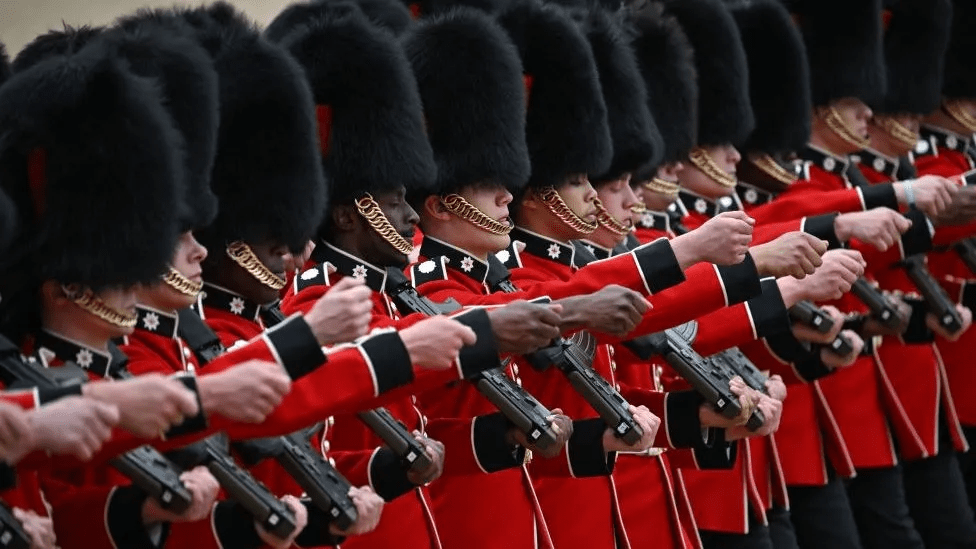
It is excellent that Stephen wants to now support the campaign to stop guards using real bear fur in their hats.
For non UK residents; Stephen Fry is primarily a television actor and celebrity; but also a broadcaster and writer, as well as being an incredibly intelligent man who has hosted a television show called ‘QI’ which has run for years and asks celebrities about different issues – take a look as he (quizmaster in middle with yellow tie) attempts to keep the rest of the celebrity rabble in order; and seriously fails !!
And now Stephen Fry wants King’s Guard to ditch bear fur in support of the bears and animal welfare campaigners who have campaigned about this for years.
Stephen Fry has called for an end to the use of real fur in the bearskin caps worn by the King’s Guard on duties such as guarding Buckingham Palace.
The actor has backed an animal welfare campaign calling for fake fur to be used rather than real bear fur.
Quite a big story from the BBC; read it in full here:
As campaigners we very much welcome the support given by Stephen – now this issue for many years may move on more with celebrity backing.
We say – Disgusting that beautiful bears are still being killed for soldiers hats. Ministry of Defence (MoD) you have a real fight on with us all now !
Our respect and congratulations go out to ‘Korean Dogs’ and to ‘Korean Animal Rights’ (KARA) and also ‘HSI’ for their tenacity in fighting this issue. As we know with live exports (UK); it can take a long time to achieve victory – rewards don’t get delivered on a plate; they have to be fought for sometimes over many years. But as here, good wins over evil !
I can hear some people saying ”yes, but a 3 year phase out period ?” – 3 years too long as far as I am personally concerned; but now we have a completion date, something which has eluded campaigners for so long. Also, as in the BBC report, ne dog farmer, Joo Yeong-bong, told the BBC the industry was in despair. Great ! – personally I think and hope that very quickly the industry will realise it is now heading towards history books and will quickly take the government money on offer, stop the dog farming, and move to basic traditional farming or something else. I personally think this is the most wonderful news for all the South Korean (and other international) campaigners who have battled for so many years. Thanks also must go to the current South Korean President Yoon Suk Yeol and First Lady Kim Keon Hee who are both are known animal lovers, having 6 dogs themselves. First Lady Kim has called for the practice of eating dogs to end. Now we are witnessing it happen !
Once again, congratulation to ‘Korean Dogs’, ‘KARA’ and ‘HSI’; EVERYONE ! for all their long work and providing the evidence of suffering.
Regards Mark
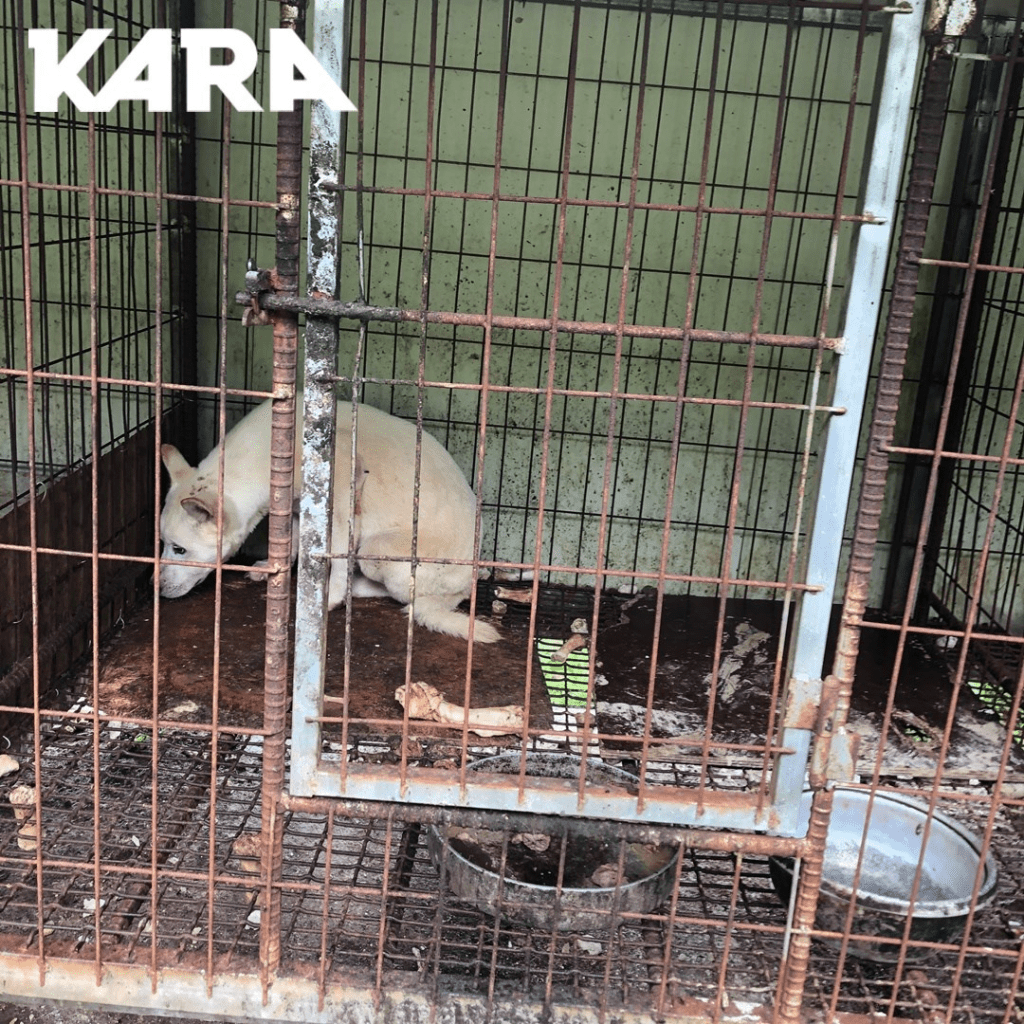
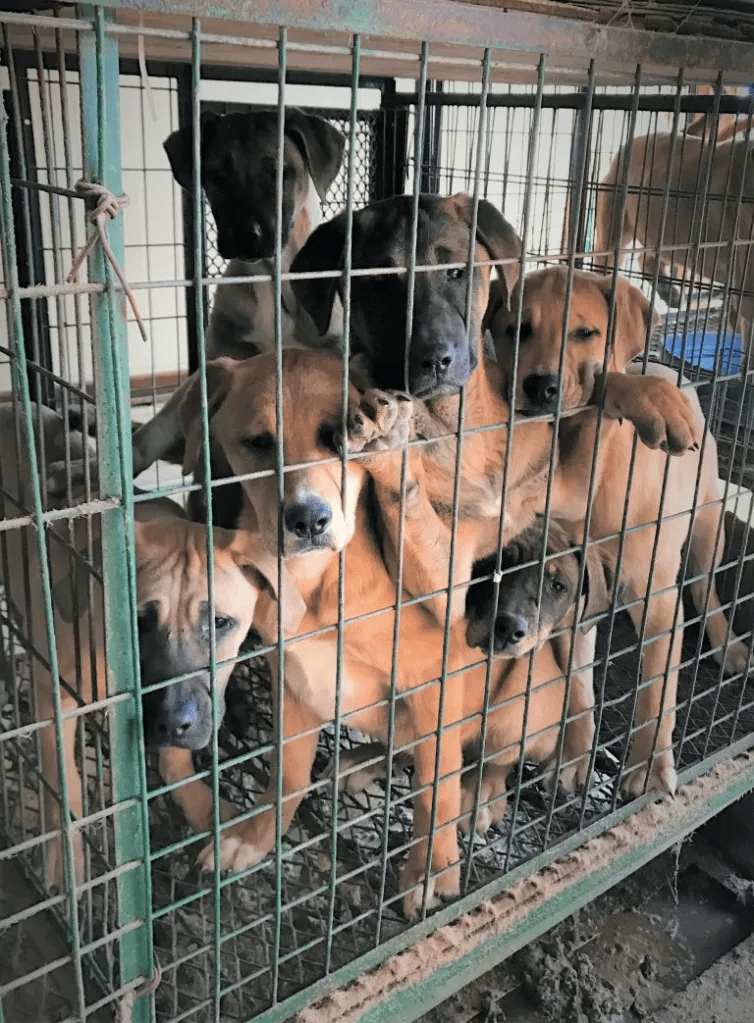
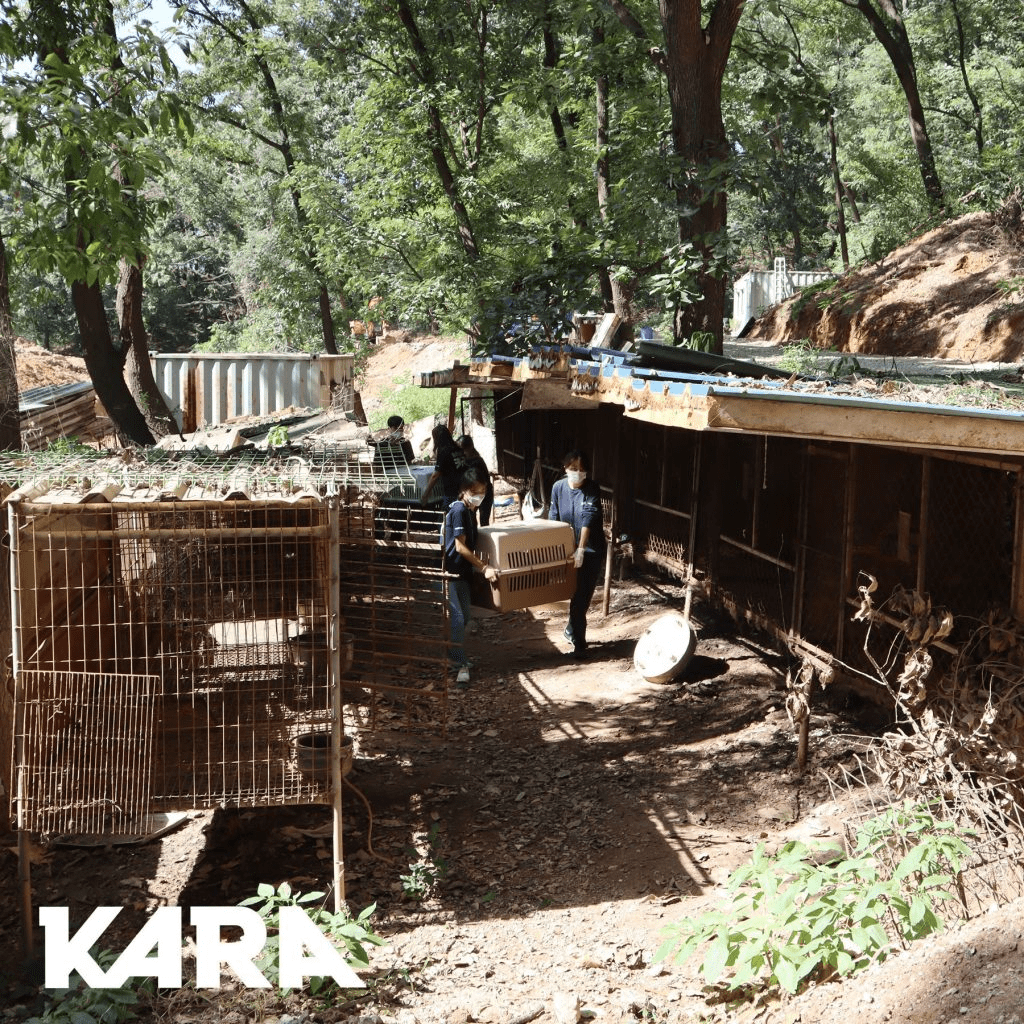
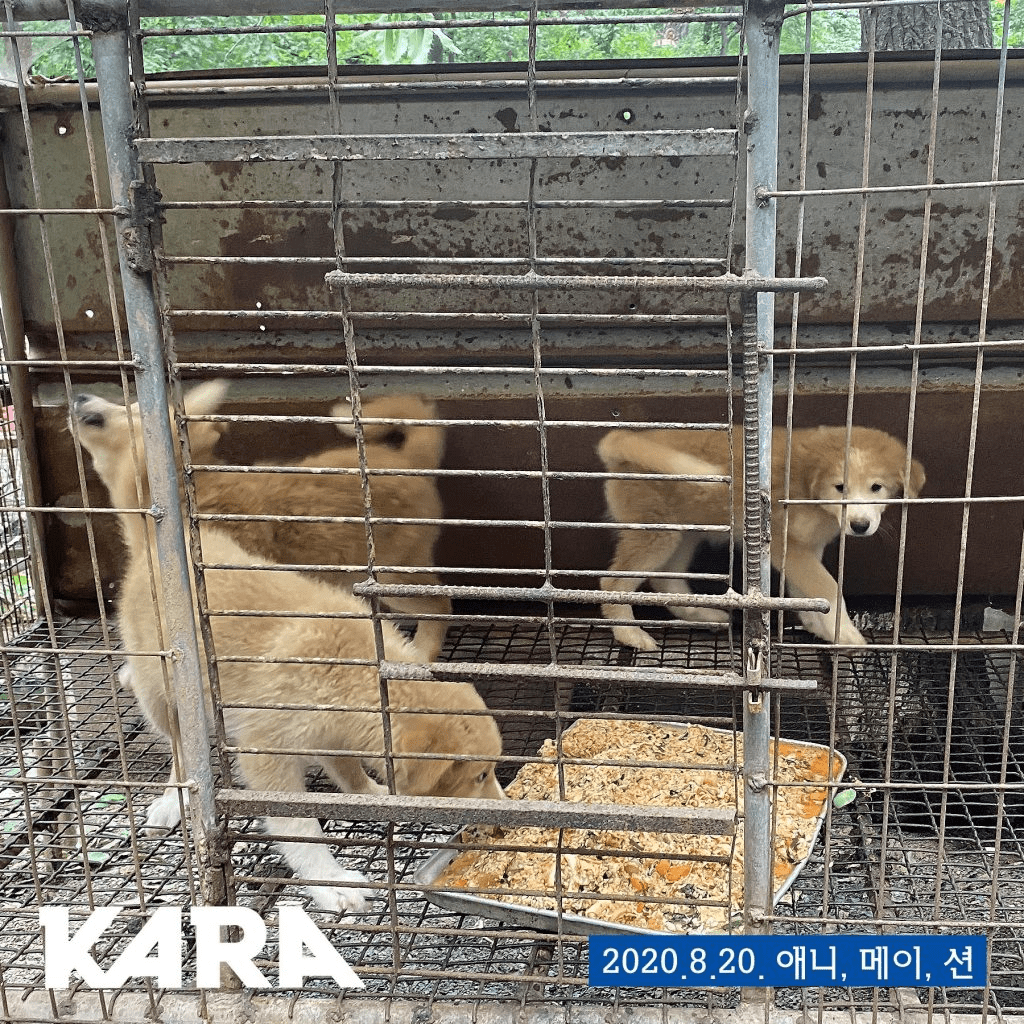
The ‘Korean Dogs’ action header and photos provided by KARA of dog meat farms suffering:
The slaughter and sale of dogs for their meat is to become illegal in South Korea after MPs backed a new law.
The legislation, set to come into force by 2027, aims to end the centuries-old practice of humans eating dog meat.
Dog meat stew, called “boshintang”, is considered a delicacy among some older South Koreans, but the meat has fallen out of favour with diners and is no longer popular with young people.
Farmers and restaurant owners have three years to find alternative sources of employment and income before the legislation comes into force.
According to government statistics, South Korea had around 1,600 dog meat restaurants and 1,150 dog farms in 2023, all of which will now have to submit a plan to phase out their businesses to their local authorities.
Animal rights groups, which have long been pushing for the ban, praised the outcome of Tuesday’s vote.
Jung Ah Chae, the executive director of the Humane Society in Korea, said she was surprised to see the ban in her lifetime. “While my heart breaks for all the millions of dogs for whom this change has come too late, I am overjoyed that South Korea can now close this miserable chapter in our history and embrace a dog friendly future,” she said.
One dog farmer, Joo Yeong-bong, told the BBC the industry was in despair.
Select any embassy – then click on the box which says ‘Create E Mail’.
Once you do this you should see an e mail addressed to ‘that’ particular embassy; along with a letter. OR USE THE NEW ONE BELOW – but everything else is the same
You can add your name and country at the end if you wish.
Then just send the e mail in the normal way.
Job Done – but don’t forget to select as many embassies individually as you can
I should, respectfully, like to draw your urgent attention to a number of Online groups in China who have succeeded, and continue to do so, in drawing China’s international reputation in the dirt.
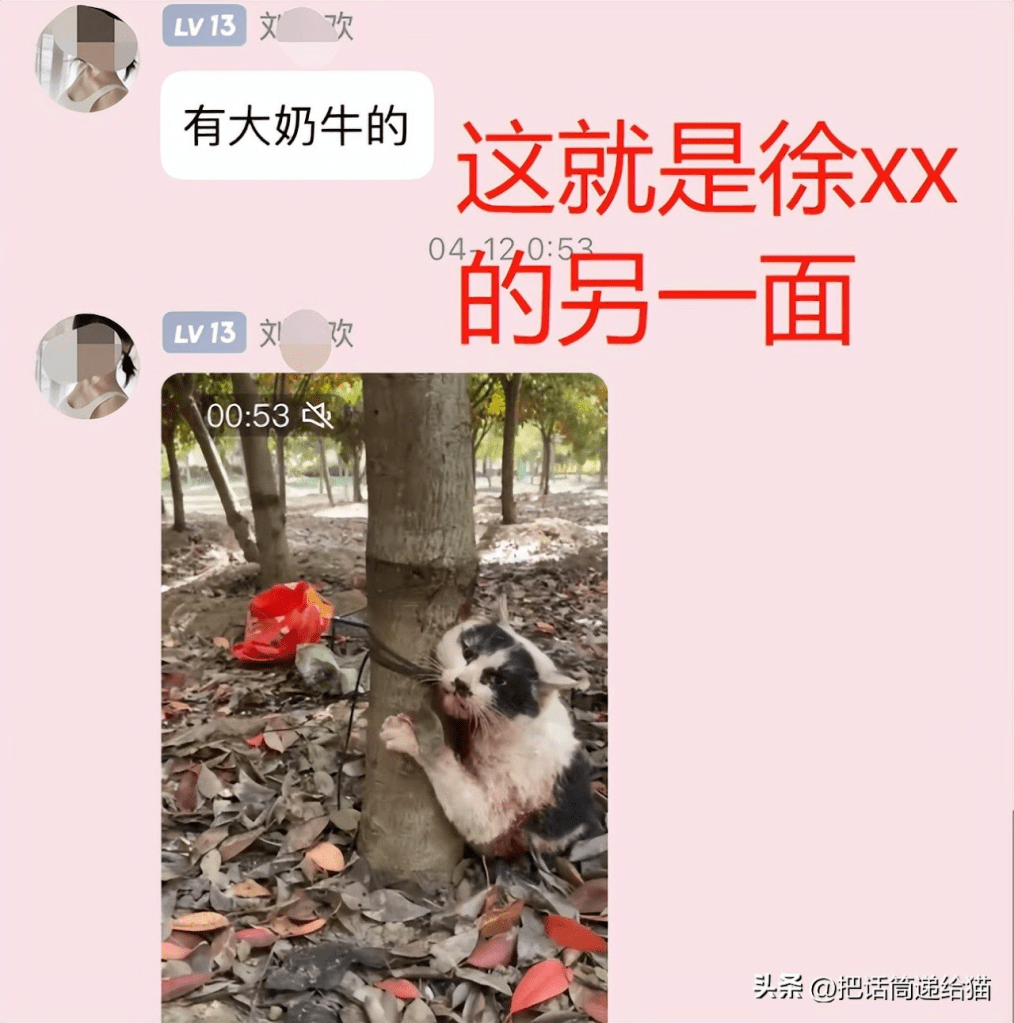
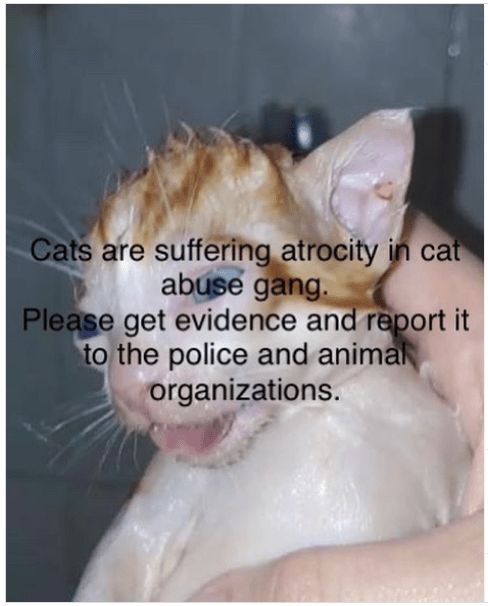
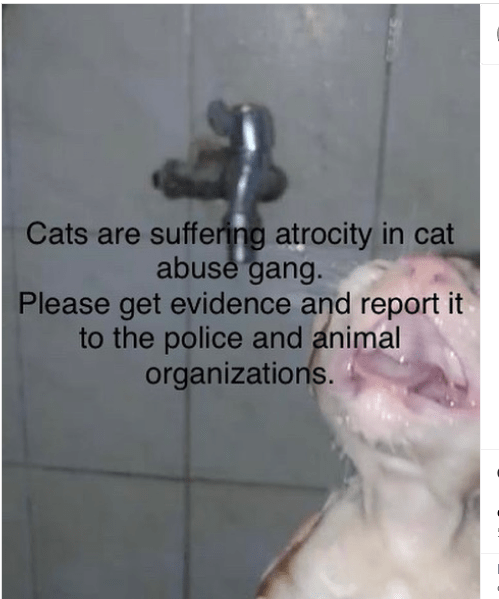
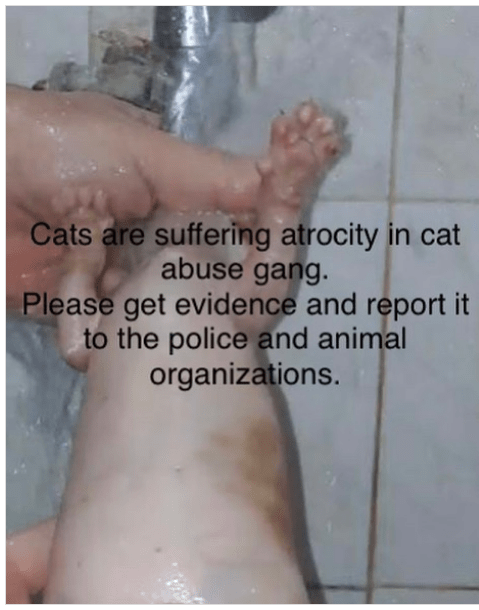
These individuals – Chinese citizens – have been found out to brutally torture and kill cats, recording these heinous perverted acts, and distributing/selling them online, on platforms such as Telegram, Twitter, TikTok, and CloudFlare.
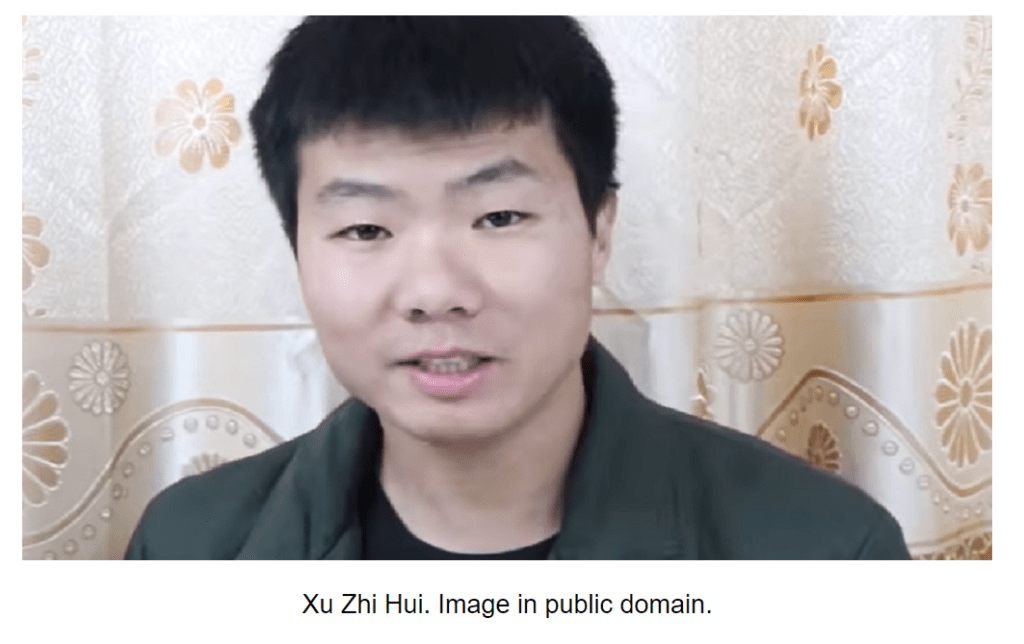
Some of these individuals are known by name: Wang Chaoyi, Zhong Jiaqing, Li Yizhuo, “Jack Latiao” Xu Zhi Huie, Yi Liu and others.
These acts include killing kittens/adult cats in blenders, microwaves, dissecting pregnant cats, burning alive, mutilating, scalping, often as part of live torture championships with a large number of equally disturbed participants.
This begs the question, of course, what is wrong in Chinese society for it to produce such monsters.
Unfortunately, China has no animal welfare legislation to be applied in these crimimal acts against defenseless living beings. It goes unpunished, and if anything happens at all, then efforts are undertaken to hush up the issue, and make sure it doesn’t become public. Protests, as a rule, are forbidden.
This is UNWORTHY of a country and society that sees itself as modern, and wishes to be taken seriously internationally as a leader. There is far more to this than economic success.
We, an international community working on the issue, call for the urgent PUNISHMENT of the perpetrators and for the establishment of ANIMAL CRUELTY LAWS in China.
China cannot, we believe, wish to be seen as an outcast of civilized and enlightened society in the 21st century – this cannot go on, nor be in China’s interests internationally and in the pursuit of productive cooperation with other countries, the majority of whom see the described acts of certain of your citizens as the criminal perversions of highly disturbed individuals, who have no place in modern society, and must be “removed” and punished accordingly, also for reasons of deterring others pot. following their example.
I, and we, expect you to act.
This will continued to be monitored very closely, and and a great many individuals and organisations internationally are involved. It will be neither forgotten nor forgiven.
For Evidence: Child abuse, fraud, extortion, money laundering, anti-government activities, and illicit gains through these hideous videos. Dossiers: https://is.gd/CRIMES
Response To Diana from Animals Asia who have also been contacted about this;
Dear Diana and Mark,
Thank you for your email and for your efforts to stop this horrific abuse against cats. Unfortunately, animal cruelty content on social media is becoming an ever-increasing problem and it’s important we all work together to help bring it to an end.
In May 2020, the Asia for Animals Coalition – of which Animals Asia is proud to be a founding member formed the Social Media Animal Cruelty Coalition (SMACC) with the aim of bringing organizations together to get a handle on the situation of animal cruelty content being promoted, shared and often monetized on social media platforms, and to approach social media platforms as a united front to tackle these issues. SMACC was formed as a result of the many enquiries we, and many of the other coalition’s member organizations, receive from the public regarding animal cruelty content and the lack of successful campaigns in stopping this issue.
I have attached a helpful graphic below detailing what you can do to help and you can also find further information at this link – www.smaccoalition.com/public-advice
——————————————————–
Please take this information on board !:
CHANNELS THAT HOUSE CRUELTY CONTENT
Research has found that:
2 of the most popular channels documented had between 30 million and 45 million followers each
15 channels have followers between 1 million and 5 million
24 channels have followers between 500,000 – 999,999
75 channels have followers of between 100,000 – 499,999
77 channels have followers of between 50,000 – 99,999
305 channels have followers of between 1,000 – 49,999
Most importantly, please always report cruelty content to the platform it has been published on and (optionally) report it to SMACC too. You can learn more on why reporting such content to platform is crucial, how it works, and how to report to the platforms if you need guidance: www.smaccoalition.com/report-it-hub
All reports received will enable SMACC to continue to work directly with the social media platforms to end this cruelty.
Thank you so much for your kindness and support. Please let me know if I can help with anything else.
We now need to ask you to contact Chinee embassies all over the world about this. Here below you will see a couple of links which enable you to do this easily.
Please click on the link to see a list of Chinese embassies around the world.
Work your way down the list as applicable. Each mail takes only around 10 seconds to complete.
WE NEED TO BOMBARD EMBASSIES ABOUT THIS ABUSE AND GET THEM TO ACT.
Select any embassy – then click on the box which says ‘Create E Mail’.
Once you do this you should see an e mail addressed to ‘that’ particular embassy; along with a letter.
You can add your name and country at the end if you wish.
Then just send the e mail in the normal way.
Job Done – but don’t forget to select as many embassies individually as you can
Important – By using this single link BELOW you can copy and send to all your global contacts, asking them to pass on or / and take actions as necessary.
Well both Di (in Germany) and I (Mark – England) have been working hard to establish better communication and links with the cat abuse campaign group in China. We have their full permission to reproduce all their information, actions and links.
They are called ‘Save Cats In China’. We have pledged our support to help them with their campaign work and we are also relying on you, our wonderful supporters, to help us spread the word about this terrible suffering and abuse worldwide. We have no objection to the WAV posts on this subject being copied and forwarded on if you so wish.
As you can see they are calling for international help; we are up for it and hope you are also.
It cannot be stressed enough though, that these people are dangerous – as all criminals of this type are – and are not above threatening or blackmailing people. Some (female) activists who have had direct contact with certain individuals have been faced with demands for nude photographs of themselves in return for a cat going free.
Please be aware that this DOES NEVER work, and should never be agreed to.
Also be careful with personal data – the internet forgets nothing.
We have broken down the Save Cats in China (google.com) site into different sections which you can access by simply clicking on the associated link here.
Cats are being tortured and killed for entertainment by an online community of psychopathic cat abusers in China, who disguise themselves as ‘Cat Lovers‘ – they pose as adopters, and so gain access to the animals.
They refer to the brutal killing of cats as ‘Loving Cats’. These gruesome videos are shared on their cat abuse websites, as well as in public and private groups on Telegram & Instagram and various other social media platforms native to China.
As animal abuse is not illegal in China, they face no legal punishment. They are influencing young adults and children worldwide to engage in these heinous acts. The Chinese authorities, for the most part, are more intent on silencing the issue, and preventing it becoming public knowledge.
Save Cats In China – OUR MISSION
To STOP the distribution of Cat Torture Videos online.
To EXPOSEindividuals who are involved in the Cat Abuse Gangs in China.
To ADVOCATE for laws against Animal Cruelty in China so individuals who are involved can be convicted.
To RESCUEcats that are victims of these gang members. Chinese Volunteers are working tirelessly on the grounds of China to locate and rescue cats that are stolen and abused. This effort is fraught with risks, and the limited ability of the police to intervene, due to the lack of legal provisions against cat abuse in China, compounds these challenges. Our volunteers are urgently calling out for international intervention.
To RAISE AWARENESSinternationally about the disturbing online community of the Cat Torture Cult in China.
To PREVENT the influence of Chinese Cat Abuse Groups to other countries of the world.
To SEEK HELP from Local and International Organizations to launch an official investigation into the Cat Torture Ring.
To SAVE future stray and pet cats from being kidnapped and tortured by members of the online Cat Abuse Groups.
This is a list of exposed Cat Abusers from independent investigations by the Feline Guardians group, some of them involved in official investigations by Chinese Police. Please report to officials in China and your local Cyber Crime Unit as these individuals who are involved in the Cat Torture Ring are a dangerous influence to adults and children on a global scale. They pose a direct threat to pet cats and stray cats locally and internationally.
Copycats of these acts/individuals may surface anywhere, anytime. It is an International business. This must be prevented at ALL costs, and if evident, be reported to relevant national authorities (police etc) forthwith and made public online.
Abuser Sub Links – includes a lot more information about each abuser:
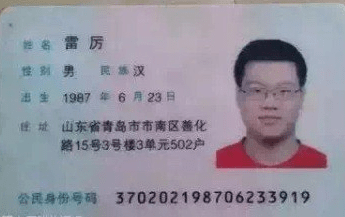
Cats Abused: Lei Li has reportedly tortured and murdered hundreds of cats.
Status: ACTIVE (currently still engaged in cat abusive acts and is an active member/administrator of online cat abuse groups.)
Conviction: Exposed on National TV. No Charges for cat abuse/murder.
Active member of cat abuse gangs on Telegram. Tortured cats for more than 20 years, exposed 3 times with no consequence. Middle-school educated, unemployed. Father is (retired) CPC member covering him up. Makes China infamous of “legally torture cats”.
Lei Li, notorious for torturing cats for over 20 years, often provocatively claims that “it’s legal to torture cats”. There is a
wealth of evidence of Lei Li and his cat abuse gang committing the torture acts on Chinese Internet.
In 2010, the first time Lei Li was exposed. He issued an apology statement on Baidu Tieba, claiming he would no longer engage in cat torture. However, he did not keep his promise and continued his misconduct, even live-streaming it online. He uploaded cat abuse videos, and invited his cat abuse gang to watch.
On March 29, 2015, Qingdao TV’s “Today” program exposed Lei Li’s atrocity. Lei Li later provoked by uploading three new videos online, containing extreme graphic. On March 31, his cat abuse gang drove away three stray cats in a certain neighborhood. Lei Li’s father, LEI Yuantong, formerly the Secretary of Party General Branch of Qingdao Science Technology Information Institute, and a member of the Communist Party of China, under the username “雷厉父亲-雷远同” (“Lei Li’s Father – Lei Yuantong”) on Sina Weibo, loudly declares that animal cruelty is innocent, covers up his son’s crimes, and is suspected of being involved in the cruelty.
In December 2023, Lei Li was rediscovered to be actively engaging with other cat abusers on Telegram, continuing to upload cat torture graphic, provoke and boast about “legally torture cats, evade justice“. Lei Li letting the world know that torturing cats is legal in China, tarnishing China’s international reputation.
Evidence of Lei Li torturing cats and provoking Chinese police:
Conviction: Reported by neighbors, news was once trending on Weibo. No Charges for cat abuse/murder.
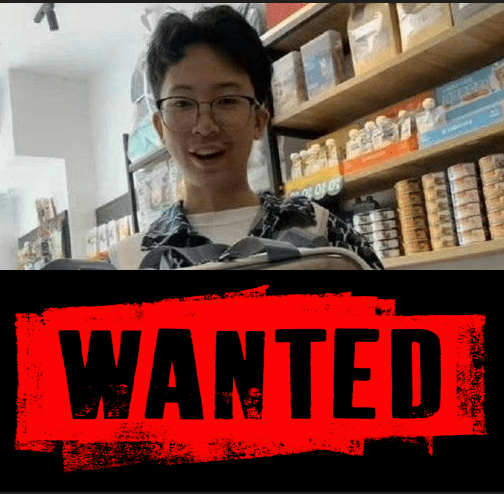
17-year-old mainland Chinese teen’s sadistic abuse of cats exposed, banker parents criticised for repeatedly adopting pets for cruelty. Mom Liu Ya assisted in purchasing and adopting cats and disposing of the bodies of abused and killed cats (discarded randomly in residential areas or at the entrance of stores). Liu Yi tortured and killed them and shot videos to post on the Internet to show off. Despite of community volunteers came to intervene, Liu Yi continued to called the shelters and asked to adopt cats. Liu Ya sent the volunteers away on the pretext that her son might have mania. After exposed on Weibo, Liu’s family were suspected to pay Weibo to censor all relevant posts.
Status: ACTIVE (active member and administrator of online cat abuse groups.)
Conviction: No Charges.
Chen Xilin has been identified as the administrator for multiple cat abuse groups across Telegram. He films and promotes these horrific videos to members of the cult.
Location: Funan, Anhui, China. (Currently in Hiding)
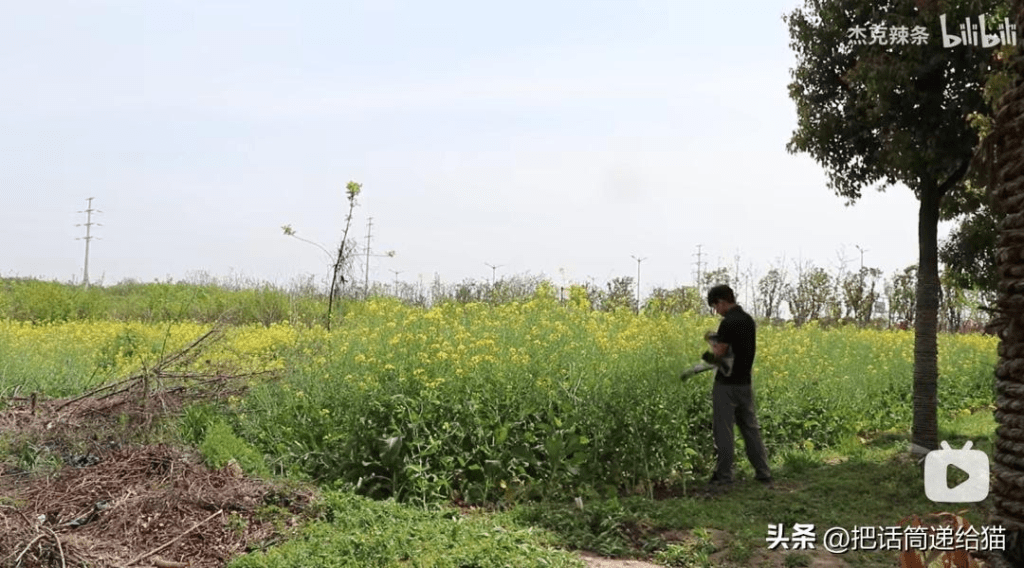
Cats Abused:Xu has reportedly tortured and murdered thousands of cats.
Status: ACTIVE (Xu is currently still engaged in cat abusive acts and is an active member/administrator of online cat abuse groups.)
Conviction: Detained for 14 Days in August, 2023 for the illegal capturing of property (cat). No charges for the abuse of cats.
On March 14th 2023, Xu captured a cow-patterned stray cat and mercilessly tortured it for 36 hours until the cat died. He recorded the event and shared it to “Cat Abuse Groups” on QQ – a Chinese social media app. During official investigations, his phone was found with hundreds of other gruesome videos of cats being tortured. Xu’s wife is aware of his torture acts.
We urgently request coverage about the Cat Torture Gang in China. Innocent Cats and Kittens are suffering atrocities every day at the hands of these cult members. Please use your Social Media to help us raise awareness. Special Thank you to those who have made contributions!
Help us reach major media and news outlets to cover this story.
Connect us with journalists, law enforcement authorities (police, FBI, Interpol), lawyers experienced in international crime, ethical hackers, celebrities, and other influential figures who may be able to help with this cause.
Metro Animal Care and Control (MACC) attributes that spike to the growing population in Nashville, saying there are more concerned citizens calling in complaints about animals facing abuse and neglect.