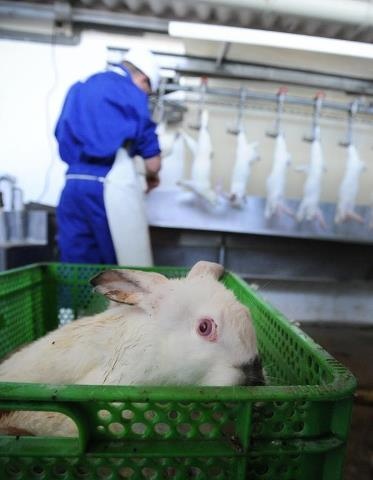
Category: General News

USA: Our Compass.

Hi all;

Things are not brilliant with me – still having real problems with the ‘hug’ – England: Good Hugs; Bad Hugs. – World Animals Voice – the video here tells you about it.

I started to group together a few articles which Stacey had sent; some of them are below; but I think it best is you go directly to ‘Our Compass’ to get all the latest links and news from Stacey;

Here is the ‘our compass’ link:  Our Compass | Because justice directs us … (our-compass.org)

Regards Mark

It’s not the alarm, it’s you …

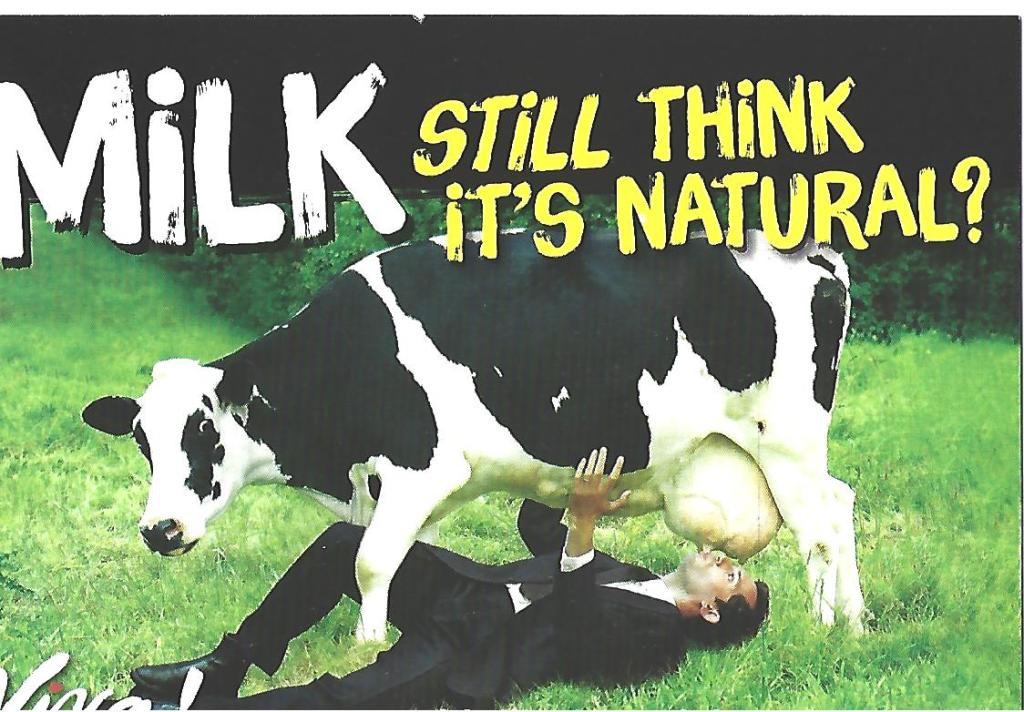
  Stacey Apr 12   How come the people who need to attempt to challenge veganism with “plant suffering” never admit to or watch actual, factual, documented animal suffering? We know that animals, human and non-human, are sentient and have the capacity to experience emotion, pain, and suffering, but antivegans will double-down on idiocy by suggesting that vegans cannot legitimately be opposed to animal suffering because radishes are oppressed. If you’re honestly traumatized by the thought that terrified celery cannot run from danger because evolution has a cruel sense of humor, just remember that nonvegans eat both animal suffering AND “plant suffering” in copious amounts, more than vegans ever could, based on the massive quantities of plants that the animals, who humans consume, consume. My plant-based food requires ZERO disingenuous, fake, fraudulent, deceptive “humanely processed” labels. This is just, yet again, another example of “human intellectual superiority” from the “intellectually superior species” that also believes in “humane slaughter” and “ethical vivisection”, as well as being unable to understand the difference between cow’s milk and oat milk. (The death industry is taking advantage of humans’ willful ignorance by establishing that humans are really just ignorant, ie., not intelligent.) And I gotta add, I saw many comments praising the interviewer for admitting he’s a hypocrite. Excuse me, what??? Admitting you’re flawed but not changing the flaw, is no different from the people who know animals suffer but don’t care that animals suffer. To the animal victims, both “points of view” cause animal suffering. Vegans have to stop accepting crumbs. I know we are often bombarded with horrible, hateful, cruel rhetoric, so much so that “not being wished dead” seems equivalent to “decent nonvegans”, but the animals would not agree. One more point: to the nonvegans who praise vegans for not being “preachy/righteous/loud/etc”: vegan attitudes aren’t the problem, the problem is your conscience; when you don’t want to hear the fact of animal suffering you effortlessly cause and excuse, rather than admit the “wrongness” of nonveganism, you project that onto the “messenger”. It’s like being awakened by a loud, brash noise that you respond to with anger or denial: it’s not that the alarm is agonizingly loud or painfully irritating, it’s that you don’t want to hear the alarm, and despite being the cause of the alarm. So yes, typical non/antiveganism: anything to desperately deflect from the animal suffering people effortlessly cause but, once again, could easily NOT. SL I’m going to link a couple previous articles that establish the suffering animals are required to endure, in each “phase” of “animal agriculture” as documented via exposes and predominately industry data from the USDA. I suspect that the people who need to read/watch/be educated, won’t, it might disturb their fantasy of “humaneness”, and then what would you do? Do remember that dairy farmers reproductively exploit cows and then deny the maternal bond they facilitated, and then boast that cows love to be milked (versus habit, fear of punishment, desire for relief) but then experience ZERO emotion when being violently killed. Tell me more… One of These Things Is Not Like the Other If your god demands unrelenting suffering and death, maybe you should invent another god NOT offended by nonviolence and least harm… Download Your FREE Vegan PDF HERE Order a FREE vegan kit HERE Dairy-Free Info HERE Take the Dairy-Free Challenge HERE Click HERE for more Dairy-Free Fish alternatives can be found HERE Learn about eggs HERE Find bacon alternatives HERE and HERE Take PETA’s Cruelty-Free Shopping Guide along with you next time you head to the store! The handy guide will help you find humane products at a glance. Order a FREE copy HERE Searching for Cruelty-Free Cosmetics, Personal-Care Products, Vegan Products, or more?
Click HERE to search. Free PDF of Vegan & Cruelty-Free Products/Companies HERE Click HERE to find out How to Wear Vegan Want to do more than go vegan? Help others to do so! Click below for nominal, or no, fees to vegan literature that you can use to convince others that veganism is the only compassionate route to being an animal friend: PETA HERE Vegan Outreach HERE Get your FREE Activist Kit from PETA, including stickers, leaflets, and guide HERE

One of these things is NOT like the other …

One of these things is NOT like the other … | Our Compass (our-compass.org)

So today we’re going to talk about the differences between a SANCTUARY and a SLAUGHTERHOUSE because I’ve come across people (in denial) who want ONE to apply to the OTHER and seem reallyreally confused and say something that only applies to a SANCTUARY but not to a SLAUGHTERHOUSE contradicting their “beliefs” (ie., spreading misinformation or propagandized disinformation because NOT abusing animals is “extreme”).

A notably important distinction is that only ONE benefits animals and only ONE consistently practices a least-harm principal.

If, after the facts, you’re still confused, you let me know and I can see about getting you some helpful flash cards or maybe I can make a colorful flow chart.

“Animals are cared for!”

Question: In which environment will you find dying and dead animals who were/are mass bred and who exist in a state of exploitation for HUMANS’ benefit, versus their OWN benefit, whose “journey” ends in premature and violent death for HUMANS’ benefit and who are often condemned due to illness, disease, and squalor inherent in numbers confined and killed?

Answer: Slaughterhouse

Source

USDA: Millions of animals are “condemned” each year in just the USA because of the diseases and squalor they’re forced to exist with and in. The below link demonstrates ONLY 2 months for just chickens, page 6 includes reasons for condemnation, including leukosis, septicaemia, tumors, contamination, and overscalding (which includes being boiled alive), none of which suggest “care” but rather human apathy and cruelty for cheap flesh requiring incalculable animal suffering:

Poultry Slaughter 02/22/2023 (cornell.edu)

Question: In which environment will you find animals who are ALIVE, nonexploitatively, for THEIR benefit, who are not abused and not eaten, who receive necessary treatment with the goal of EXTENDING their lives versus destroying them.

Answer: Sanctuary

“Animals get a humane death, quick and painless!”

Question: In which environment will you find animals in fear, where they can see, smell, and hear other animals dying, where stunning is often required to protect employees who are killing animals, employees who aren’t required to have any formal education or experience in killing, but where stunning often fails and animals experience excruciating and terrifying death? And in which environment, the footage of which will not be watched by fragile people who cause the footage, but of which the industry never has, nor will ever, release due to its inherent violent nature, but still calls it “humane”?

Answer: Slaughterhouse

Sources

Click for slaughterhouse exposes, data, and sources including USDA)

How Effective Is Captive Bolt Stunning?

Chickens freezing to death and boiled alive: failings in US slaughterhouses exposed

Inside the slaughterhouse: an investigation on the industrial slaughter of animals

Regarding the Tras los Muros horrific expose into Spanish slaughterhouses, what I think is interesting is, even though I never scale suffering as it’s all unethical, the World Animal Protection rated Spain HIGHER than the USA in “animal welfare”.

Question: In which environment will you see some animals who may be suffering from old age or disease, many rescued from “humane” farms and slaughterhouses, who are in an as-comfortable position and area as possible, with people who genuinely care about them, and who are euthanized by a licensed individual using injectable medications specifically for the purpose of least-pain, efficacy, and quickness?

Answer: Sanctuary

“I don’t pay for cruelty!”

Question: In which environment will you see cats and dogs who are being unwillingly, violently killed, using torturous methods, for people who buy their flesh and body parts?

Answer: Slaughterhouse

Question: In which environment will you see other animals, not cats and dogs, who are being unwillingly, violently killed, using torturous methods, for people who buy their flesh and body parts?

Answer: Slaughterhouse

Let me explain the different format I’ve used in case it was vague: People get unhinged when cats and dogs or other “worthy” animals are violently killed, but they don’t exercise that condemnation when other “unworthy” animals are killed, animals who also all have the capacity for fear, pain, and suffering. Furthermore, when you claim to NOT pay for cruelty, it’s as if you’re saying you’re paying for KINDNESS and CARE, but you really ARE NOT. It’s a SLAUGHTERHOUSE where nothing good happens, do you understand that? It’s not a nice, happy, warm-and-fuzzy place. It’s terror, blood, screams, violence, and pain.

Conversely, when people volunteer for or donate to a SANCTUARY, they’re NOT paying for the animals to violently die, be dismembered, eviscerated, and eaten.

Please tell me if you don’t understand, I know the concept of least-harm can be difficult to grasp by some.

Sources

Click for slaughterhouse exposes, data, and sources including USDA)

Question: In which environment will you see many animals who are not violently killed for human profit and where money, including donations, is used for animals’ benefit, to feed, shelter, and provide medical care for THEM (and NOT as part of an exploitative scheme where animals are “artificially” bred and rapidly grown using the cheapest ingredients?)

Answer: Sanctuary

“Get animals from small farms where they are treated well!”

Question: In which environment will you find dead animals, violently killed and at a fraction of their lifespans, following brief existences of reproductive exploitation, separation of infant and mother, mutilation, squalor, confinement, and lack of choice, who come from all-sized operations?

Answer: Slaughterhouse

Sources

USDA: It is legally required that animals used for “commercial purposes” in the US are killed in an inspection- regulated slaughterhouse. (Regardless of being from one of the four “small farms” in the US. SL)

99% of U.S. Farmed Animals Live on Factory Farms

Regulatory Definitions of Large CAFOs, Medium CAFO, and Small CAFOs

Concentrated Animal Feeding Operations

Source EPA

Question: In which environment will you find alive animals not required to perform bodily duties for human benefit, who don’t violently die at a fraction of their lifespans, where the goal is their comfort, happiness, longevity, and peace after being rescued from predominantly exploitatively abusive (“farms”, slaughterhouses, zoos, labs, etc.) conditions?

Answer: Sanctuary

“It’s illegal to abuse animals!”

Question: In which environment will you find dead animals, violently killed and at a fraction of their lifespans, following brief existences of reproductive exploitation, separation of infant and mother, mutilation, squalor, confinement, and lack of choice, where all animals are expressly exempt from the (meager) Animal Welfare Act and where ZERO LAWS “protect” them from violent death, including animals from “farms” where historically, people protest anti-bestiality laws because “cheese tho”?

Answer: Slaughterhouse

Sources

USDA Animal Welfare Act

The Meat Industry’s Bestiality Problem

Question: In which environment will you find alive animals not required to perform any bodily “duties” for HUMANS’ benefit, who don’t violently die at a fraction of their lifespans, who have ZERO REQUIREMENTS for “protection”?

Answer: Sanctuary

“So you’re pro-life?”

Question: In which environment will you find dead animals, violently killed as infants, including calves both in utero and as young as three weeks; chicks if they’re male; fetal pigs sold for “science”; males and females reproductively exploited for AI, and mothers following brief existences of THEIR reproductive exploitation, forcibly separated from their infants?

Answer: Slaughterhouse

Sources

Birth and Motherhood in a Slaughterhouse: Charlotte’s Story

Why the US egg industry is still killing 300 million chicks a year

Where do animals used in dissection come from?

Boe’s Story – Boar Semen Collection

Source Animal Liberation Queensland

Upwards of 4 million calves, many as young as 3 weeks, are routinely killed because males are considered worthless to the death industry. 

USDA: “Male dairy calves are used in the veal industry.  Dairy cows must give birth to continue producing milk, but male dairy calves are of little or no value to the dairy farmer.”

Page 6, USDA slaughter totals:

Livestock Slaughter 2021 Summary 04/20/2022 (cornell.edu)

USDA, pages 43 and 67, deaths in calves not due to slaughter; second link begin page 20 for sheep and lambs (2015 is most recent date for compiled data):

Death Loss in U.S. Cattle andCalves Due to Predator andNonpredator Causes, 2015

Sheep and Lamb Predator and Nonpredator Death Loss in the United States, 2015

Question: In which environment will you find alive animals, including infants rescued from the “political pro-lifers”, “political pro-lifers” who think it’s ok to abuse animals including babies because some humans have abortions?

Answer: Sanctuary

“Animals have good lives and one bad day!”

Question: In which environment will you take your kids to see the finality of your dystopian drama “Good Lives and One Bad Day!”

………………………………………………………………

Yeah, I thought so.

Trillions of animals are butchered yearly on Earth, none of whom come from “good lives” that is concluded with unmitigated fear and violence whose realistic nightmare include existences primarily on wretched places of disease, filth, and darkness. Animals are bred to be dead, nobody cares how they “live”; animals are considered disposable objects, I’ve demonstrated the delusion of “care is necessary for them to be profitable” via the fact of condemned and trashed animals.

Animals suffer for human deception.

So, folks, allow ME to tell YOU before the end of this song …

Question: Which is the ONLY option for being humane and causing least harm?

Answer: VEGANISM.

Visit, or donate to, rescued animals on sanctuaries:

Beneath The Wood Sanctuary

Farm Animal Sanctuary Guide: Visit, Volunteer, & Meet the Animals

Australia: Vegan farmed animal sanctuaries

Slaughterhouse exposes, data, and sources

The USDA recently released 1000s of pages of slaughter “violations” that proves that animals are relentlessly subjected to torture. Notably, the USDA had to be sued to release these records. Why? Since nobody hesitates to share “humane” information, the USDA acknowledges the utter failure of “humane” slaughter. Even the “quick” – and rare and unproveable – death doesn’t nullify the inherent unethical quality of killing including required animal suffering.

Click here to jump directly to the USDA Scribd pdfs

Globally pigs are routinely stunned using CO2, a process that is unarguably torturous; the UK acknowledged more than 2 decades ago the suffering involved but still uses CO2. It’s important to recognize that undercover and whistleblower footage is meaningful because the industry will never release its own footage based on the terror and violence required of animal victims.

Pigs ‘burn from the inside out’ in gas chambers: Why carbon dioxide is the meat industry’s best-kept secret

Spy Cams Reveal the Grim Reality of Slaughterhouse Gas Chambers | WIRED

Slaughterhouse pigs choke on gas meant to stun them

Hidden Video and Whistleblower Reveal Gruesome Mass-Extermination Method for Iowa Pigs Amid Pandemic

Chickens freezing to death and boiled alive: failings in US slaughterhouses exposed

Inside the slaughterhouse: an investigation on the industrial slaughter of animals

Inside grim lives of farmed pigs forced to live in squalor and left for hours to die:

Notable: “Former pig industry vet Dr Alice Brough said the footage shows ‘the epitome of squalor and unfortunately represents the norm for a large proportion of Britain’s pig farms.’ “

View this document on Scribd

View this document on Scribd

Belgium: No Animal Left Behind posters take over Brussels’ EU district.

12 April 2023

As part of Eurogroup for Animals’ ‘No Animal Left Behind’ campaign, posters can be found in Brussels’ EU district this week targeting the European Commission in light of the “once in a lifetime opportunity” to change history for farmed animals with its imminent revision of animal welfare legislation.

EU animal welfare rules remain limited, poorly enforced, and plagued by loopholes, leading to widespread suffering in the farming sector. From the cruel handling of broiler chickens to chaining the back legs of dairy cows, our recent exposé reveals how the EU’s farmed animals are being callously treated by those who are meant to care for them.

At the end of March, Eurogroup for Animals launched the second phase of the ‘No Animals Left Behind’ campaign together with its over 80 member organisations around Europe and beyond. The campaign aims to expose existing animal welfare shortcomings in EU legislation and offer feasible solutions to the unnecessary suffering of the EU’s farmed animals that could be incorporated in the revised legislation due by the end of the year. 

Posters were strategically placed around Brussels’ EU district to raise awareness about the upcoming revision of the EU’s animal welfare legislation and remind policy makers about EU citizens’ expectations in light of the mass public response to End the Cage Age European Citizens’ Initiative, Fur Free Europe European Citizens’ Initiative and the first No Animal Left Behind campaign.  

Regards Mark

England – Fighting For Calves !

You know; fighting for the welfare of calves has always had a special ‘box’ within me.

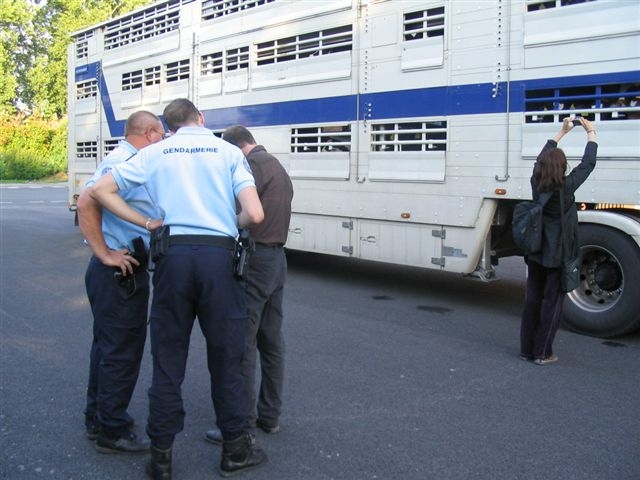
In my 35+ years of live animal transport investigation work, the suffering of these babies on the road really used to get my goat more than just about anything.

As British calves were being exported to the NL at the time; we took some time out of our schedule to ‘sniff around’ and find out a little more about places they were being sent to.

We shared many hours on the road; laughing, talking and generally trying to have a good time in work that we both knew the live animal export business caused immense suffering to – innocent, sentient beings.  Calves“.

England: Another Terrible Loss – John Callaghan. – World Animals Voice

With calves, you often hear them long before you actually see the truck – they are babies, and they bellow immensely for the milk produced from the mothers that they have been torn away from at what ?, often ages of just 1 day old.  Cow milk is for baby cows, NOT humans; yet the systems today try to make people think that humans are in need of cow milk, not the cow babies.

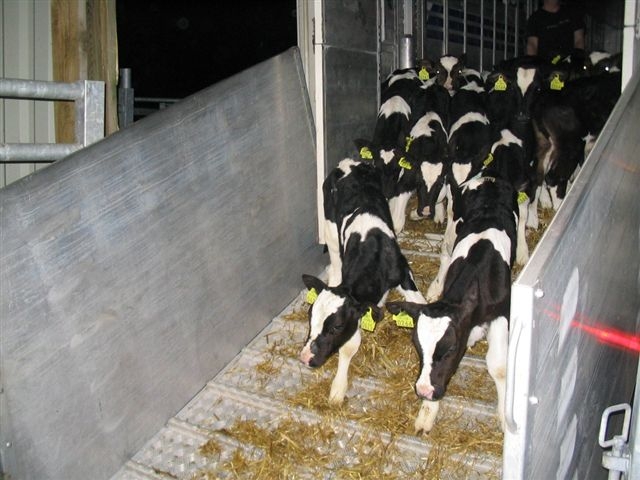
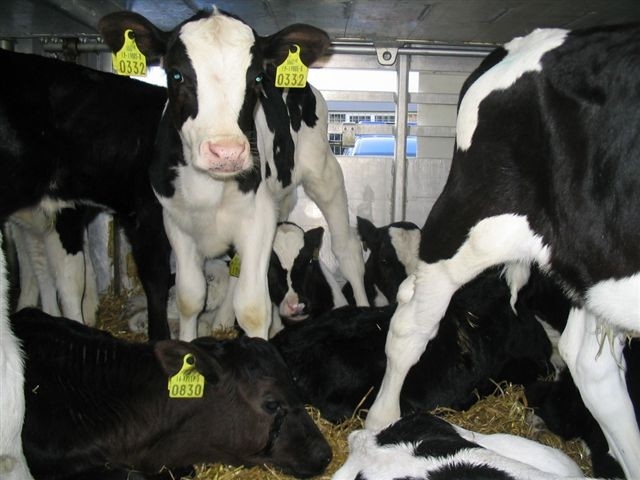
I took this picture above decades ago of British calves being exported to the veal systems of France and the Netherlands,  you can just make out the calves suckling the bars of the transporter; desperate for milk held within their mothers.  This is the reality of live animal transport; and just one reason of thousands why it needs to stop now.

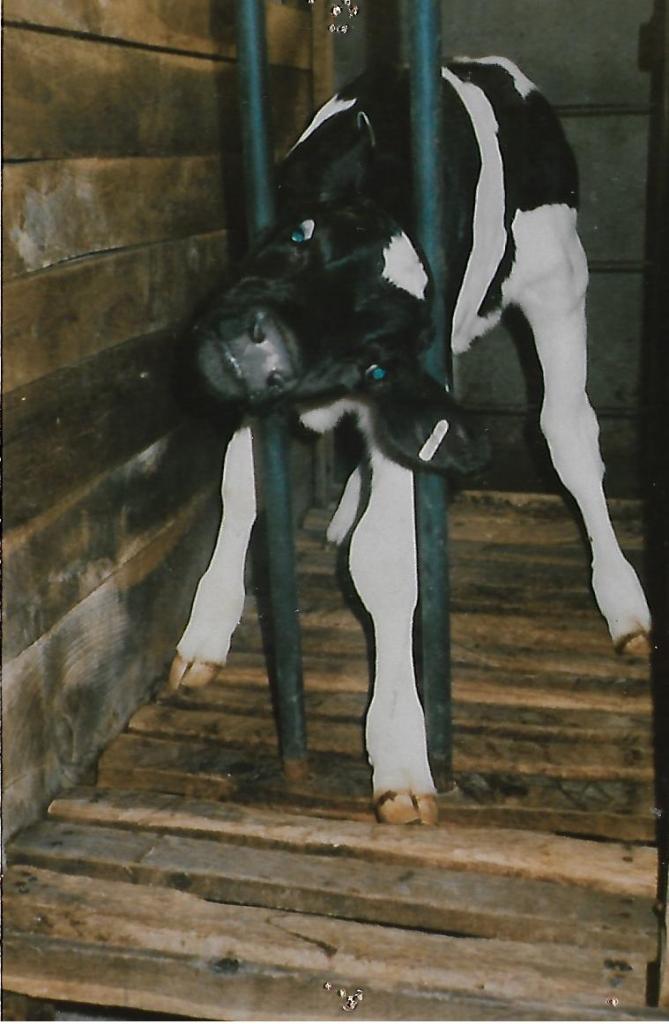
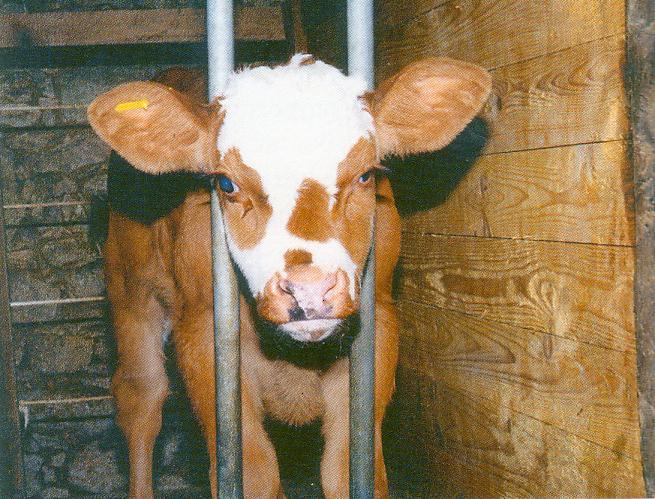
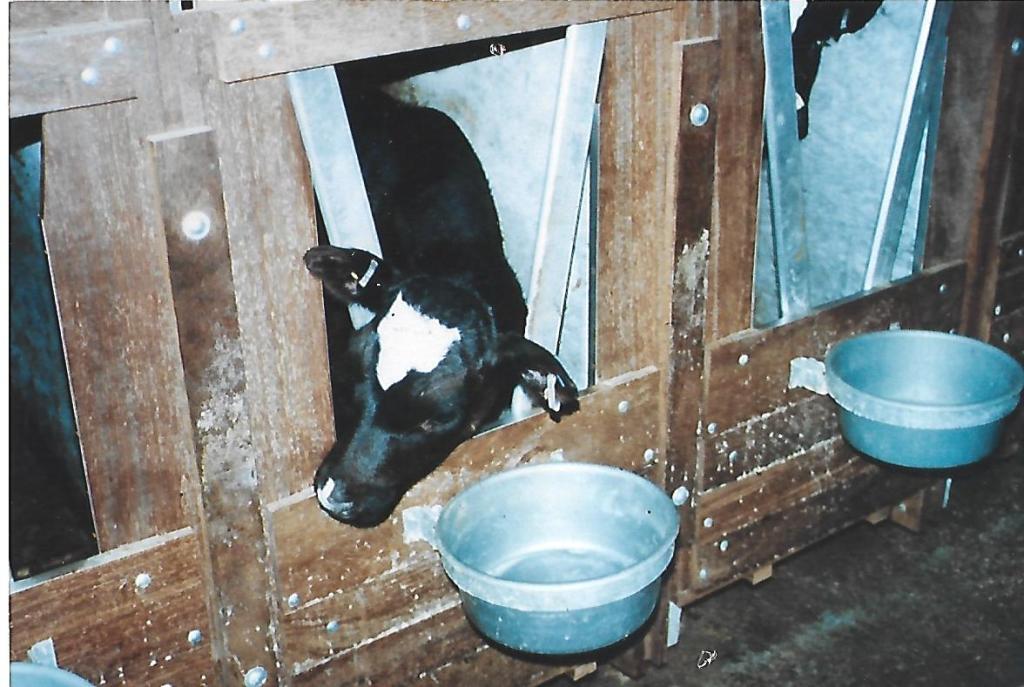
In the past calves were held in individual ‘crates’ until they reached slaughter age of around 4 to 6 months.  During their short lives in the crates; they were deprived of any iron in their food; to make them anemic and thus make their flesh ‘white’ as required by the gastronauts of Europe.  What humans do to animals in the name of ‘food’ just really bums me off.

Anemia is defined as a low number of red blood cells. In a routine blood test, anemia is reported as a low hemoglobin or hematocrit. Hemoglobin is the main protein in red blood cells. It carries oxygen, and delivers it throughout the body. If you have anemia, your hemoglobin level will be low too.

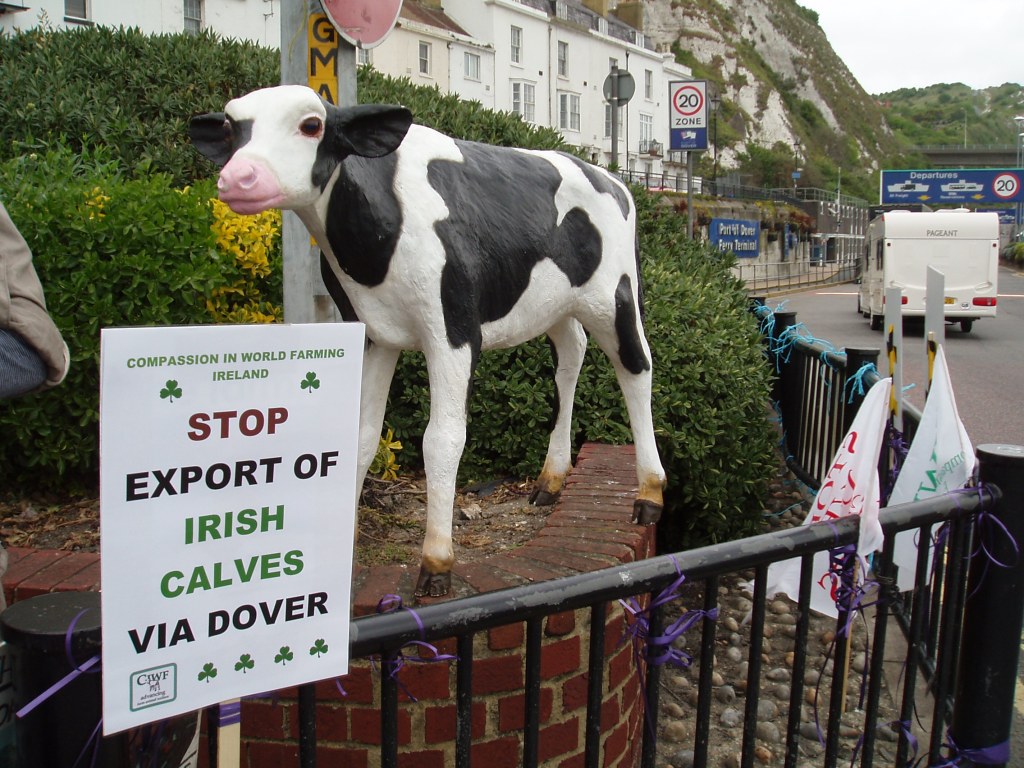
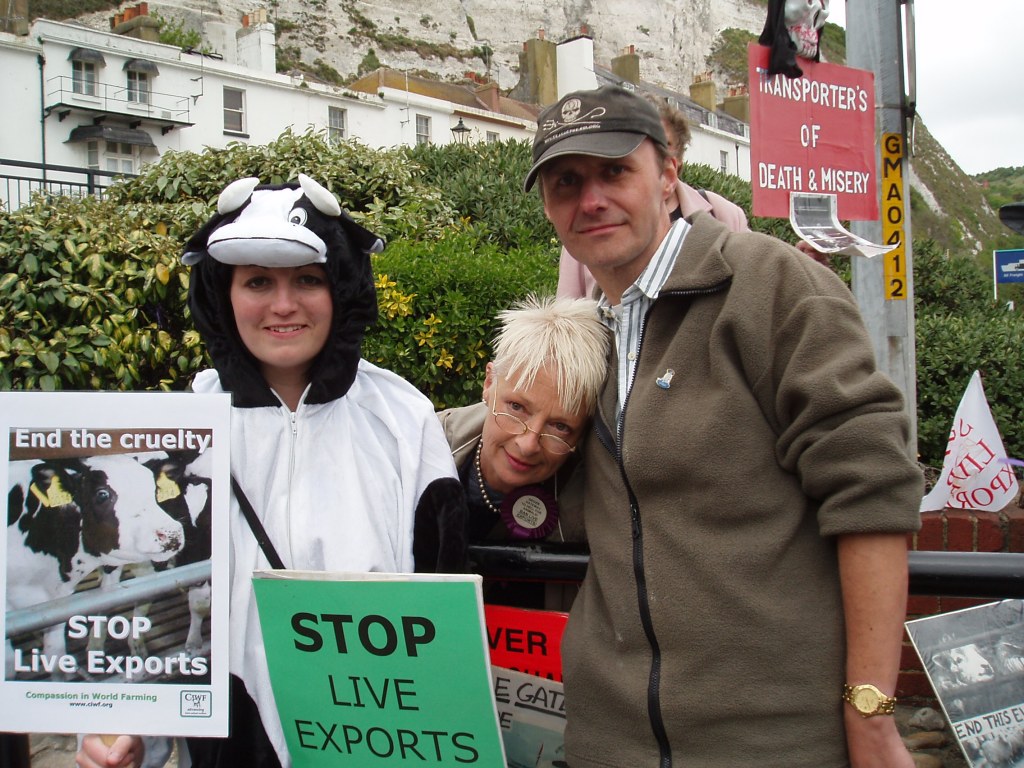
We fought hard for the calves – (above) here I am (with Barb, a hunt sab) at Dover port (where calves were exported from) after we had put the British Prime Minister (at the time John Major) into the crate to get a feel for what he was approving.  You can see the liberated calf standing alongside.

Here are some pictures of real calves suffering in the crate systems.  Every one a valid reason why I fight tooth and nail for the calves;

Above – an investigation showed British calves were being exported to Hungary and that they were still being crated individually years after the EU ban came into place !

Above – with our tour truck in Holland teaching the Dutch about live veal systems.

Above – great campaigning days in the Netherlands for the calves.

Here – photographs from a PMAF investigation which I used in the compilation of an EU Parliament investigations report on calves being transported to France.

Above – Dover demo with animal buddies fighting live calf exports.

Often it feels like you are running up that hill – but a positive end makes it all worth it:

Regards Mark

EFSA opinions on the welfare of calves

The European Food Safety Authority (EFSA) published today their scientific opinion on calf welfare. The EFSA was mandated to describe the most used systems, their welfare consequences and measures to prevent and mitigate those consequences.

EFSA also looked at three specific issues: 

Welfare of calves reared for white veal (including requirements for space, group housing and iron intake), 

Risk of limited contact between mother and calf 

What type indicators can be measured in slaughterhouses to monitor the welfare on farm. 

A species-specific Directive already exists to protect calves in the EU (Council Directive 2008/11/EC), yet it is extremely outdated, and fails to take into account new science published since it was adopted in 2008. Proof of this is that EFSA identified several hazards connected to these systems ranging  from respiratory and gastrointestinal diseases to inability to perform natural behaviours or even calves experiencing group stress. 

They have advised several solutions that Eurogroup for Animals welcomes: 

Group housing from the first week of life (between 2 to 7 calves) and keeping them in stable groups.

Increased space allowance – 20 m² is recommended so calves can express their full behaviour and 3 m³ is the minimum recommended per calf (all in group housing)

In regards to feeding: Good colostrum intake, increased amount of milk provided, and good quality roughage availability from 2 weeks of age. 

Several welfare indicators can be collected in the slaughterhouse, but they should be complemented with behavioural ones collected on farm

Regrettably, although the available science already points towards a need for a longer period of cow-calf contact and bonding, EFSA took a conservative approach, only recommending a minimum 24 hours of cow-calf contact. We strongly oppose this conclusion. Cow and calf contact can reduce stress of both adult females and calves, it increases the vitality and resilience of the calves and leads to an increase in body weight gain of the calves. Furthermore, it provides a better social behaviour for the calves in the long run that is prolonged until adult age. It also leads to an increased expression of positive behaviours for both. Eurogroup for Animals recommends that contact between the calf and the mother should be allowed for at least the first eight weeks of age. During this period, calves and cows shall be kept in a half-day contact system – at least – with suckling permitted.   

Furthermore, Eurogroup for Animals would like to see a more science-driven, animal welfare approach when it comes to iron levels in the calves’ blood. For acceptable blood levels of iron, we recommend a blood haemoglobin concentration of at least 6,0 mmol/L throughout the life of the calf, as already required by the German Directive 2008/119 (EFSA is recommending 5.3 mmol/L).

The science demonstrates that business as usual for calves is not going to work anymore. We urge the Commission to listen to the science and seriously improve the species-specific legislation to protect calves in the EU and beyond.

Welfare of calves kept for white and rosé veal production

 DOWNLOAD PDF 240.21 KB

Regards Mark

EU: Take Action (Link Below) – An ambitious Nature Restoration Law is needed for an EU where wild animals can thrive.

29 March 2023

In 2022, the European Commission published its proposal for an EU Nature Restoration Law.

This is landmark legislation for the conservation of wild animals habitats in the EU and the time to act is now!

Add your voice to the thousands of citizens calling on the EU to adopt an ambitious EU Nature Restoration Law.

The proposed EU Nature Restoration Law sets an overall target of restoring 20% of the EU’s land and sea area by 2030 and all ecosystems in need of restoration by 2050. This is an ambitious and appropriate target, essential for the EU’s wild animals which are suffering from a decline in the quality of their habitats. 

Indeed, rich and undisturbed habitats are key for the well-being of wild animals. In a world where all animals and species, including humans, are interdependent and rely on healthy ecosystems, nature restoration and conservation is a priority. 

Eurogroup for Animals therefore calls for the EU Nature Restoration Law to fulfil three objectives:

It must effectively protect and restore all natural habitats to safeguard the well being of millions of wild animals and humans;

It must recognise and take into account the interdependence of living beings in line with the One Health and One Welfare approaches;

It must fully integrate the welfare of wild animals as an indicator and objective of conservation and restoration activities.

In this context, the well-being of wild animals must be addressed in the definitions of “sufficient quality of habitat” and “sufficient quantity of habitat”. Similarly, the legislation should ensure that a “favourable reference area” for the given habitats is defined as more than the minimum required, so that wild animals can thrive rather than simply survive. The proposal should also ensure connectivity between habitats so that wild animals do not encounter obstacles to their movement on land or water. The ethological requirements of species must also be adequately taken into account in restoration activities.

If you agree with these statements, tell your decision-makers to keep high ambitions and fully integrate animal welfare considerations in the EU Nature Restoration law to protect the habitats and ecosystems on which humans and wildlife depend.

Regards Mark

Photo – Mark

EU: New statistics shows science in the EU still impacts on millions of animals.

7 April 2023

In the year of the onset of the pandemic, many scientific projects that had planned to use animals were cancelled or postponed, though a number of new studies involving animals were carried out for projects studying COVID-19.

The European Commission has published its statistical report on the use of animals for scientific purposes in the 27 EU Member States and Norway in 2020. This is the first year that data from the United Kingdom – a major user of animals – are no longer included. Four of the 12 countries that saw an increase in the number of animals used, attribute the increase to additional research projects related to COVID-19. 

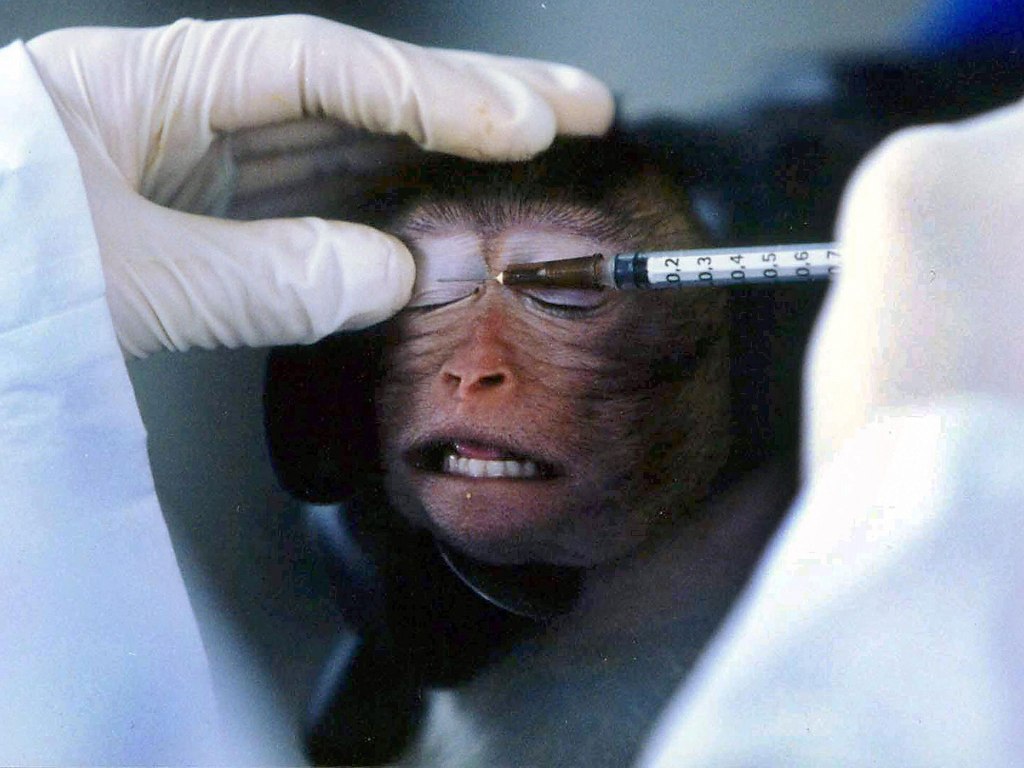
In 2020, 7,938,064 animals were used for the first time in research, testing and education in the EU-27 and Norway. Although this represents a decrease of 7.5% compared to 2019, multiple factors relating to the COVID-19 pandemic makes comparisons with previous years difficult. National measures due to the COVID-19 pandemic were at least partly responsible for the decrease in the number of animals used for scientific purposes in 11 Member States. 1.8 million animals used for scientific purposes were genetically altered, including mice, zebrafish and other species of fish, rats, amphibians, domestic fowl, rabbits, and pigs.

Another 686,628 animals were reported to be used for the creation and maintenance of genetically altered (GA) animal lines, representing an increase of 4% from 2019. In contrast to previous years, marmosets and tamarins were not reported to be used for the creation of new GA animal lines in 2020. It should be noted, however, that animals used for the maintenance of GA animal lines not displaying a harmful phenotype or not genotyped using an invasive method remain outside the scope of the annual statistical reporting. Also, the European Commission acknowledges that the accurate reporting of animals involved in the maintenance of existing GA lines continues to be particularly challenging.

The report describes considerable new increases in uses of many species. The use of horses, donkeys and cross-breeds increased by 176%, and the use of cats continued the upward trend, increasing by a further 15%. The use of hamsters and other carnivores increased by 66% and 59% respectively. The use of dogs and non-human primates, however, decreased by 16% and 10% respectively. There was also a significant decrease of 90% in the use of cephalopods, which had seen a major increase in 2019.

The main species used for scientific purposes were mice, fish, rats and birds, which together represented 91% of the total number of animals. As in previous years, more than 70% of animals were used for research purposes, of which approximately 40% were used for basic research and 30% for translational and applied research. A further 17% of uses of animals were for regulatory purposes to satisfy legal requirements. The percentage of uses that caused ‘severe’ suffering remained around 10% (796,750 uses). 

Non-human primates continue to be used in the largest numbers to satisfy regulatory requirements for medicinal products for human use (59%), and also for routine production, mostly for blood based products (13%), for studying human infectious disorders (11%), and for other basic research (4%). 81% of the non-human primates used for scientific purposes were born in Asia and Africa, before being transported to laboratories in the EU. Although the Directive encourages movement towards only using non-human primates who have been bred, ultimately, in self-sustaining colonies, the proportion of non-human primates coming from self-sustaining colonies is still low, and decreased by 15% from the previous year. However, inaccurate reporting of information, and a misunderstanding of the term ‘self-sustaining colony’ may have resulted in some fluctuation in numbers over time. 

The use of an animal in any procedure where a validated alternative method, that either avoids the use of animals altogether, or reduces their use and suffering, will always be of particular concern. Nearly 42,000 mice were used in 2020 for the production of monoclonal antibodies using the mouse ascites method, mainly in France (95%). The continued use of this method is of serious concern, even more so as the figure actually represents an increase of 12% from the previous year, and because alternative approaches are available to replace the mouse ascites method. A more positive trend is seen in the uses of rabbits for pyrogenicity tests, which decreased by 21%, but it is clear that more efforts should be made to speed up the transition to non-animal methods.

As in previous years, Germany, France, Spain, Italy, Belgium, the Netherlands, Sweden and Denmark remain the EU Member States with the highest number of animals used for scientific purposes, with more than 5.3 million animals used between them in 2020. However, a recent opinion poll carried out in these 8 Member States highlighted the public’s strong desire to accelerate the full replacement of animals used for scientific purposes and transition to non-animal science.

Regards Mark

Italy: Essere Animali shines a light on the experiences of lambs during live transport in Italy.

6 April 2023

Essere Animali

Press Release

Essere Animali, recently collected footage that exposed the conditions lambs face while being transported during Easter. Their investigation was raised to the Chamber of Deputies at the Italian Parliament during yesterday’s ‘question time’ by Agriculture Minister Francesco Lollobrigida.

Poor and ineffective controls. The rules on animal transport in Italy are not respected

This was said by Eleonora Evi, deputy of Alleanza Verdi e Sinistra, who tabled a direct question to the Minister precisely to highlight the dramatic problems that still affect live animal transport, particularly long-distance transport.

‘Italy is a country much affected by the long-distance transport of lambs and young sheep, especially during the Christmas and Easter holidays.

In 2022 – out of a total of 2,199,832 lambs slaughtered in Italy (source: Istat) – 653,303 came from Eastern Europe (mainly from Hungary and Romania). These transports often involve animals that are only a few weeks old, which have to endure traveling up to 30 hours inside trucks. 

Last March, Essere Animali, along with members from the police, carried out road checks from Gonars to the province of Bologna and Florence to monitor the transport of lambs arriving from Romania, Hungary and Slovakia. Six out of seven lorries were traveling in violation of the rules, with serious cases of overcrowding, lambs stuck in the partitions of the lorries, unusable watering systems and being generally unsuitable for the transport of this species.

In one case in particular, the lorry stopped near Altedo (Bologna) had 200 animals more than the permitted load, and three lambs were slaughtered by the Italian authorities because they were no longer able to continue the journey. Ultimately, current regulations are inadequate to guarantee the protection of animals during transport, one of the most stressful phases and cause of suffering for animals raised for food’.

It’s time to change the trend – and call for this cruelty to end 

The images and complaints collected by Essere Animali and the police once more show how the transport of live animals is a practice that must be overcome, and how important it is to robustly revise the rules that should protect animals during journeys.

When questioned on the revision of the European Regulation on the transport of live animals during the Question Time in the plenary session, Minister Lollobrigida confirmed that he did not support Portugal’s proposal, contrary to what was previously stated. Portugal’s briefing note, strongly contested by many other Member States, in fact re-proposes the status quo and calls for ‘continuing to facilitate intra-EU trade and the export of live animals, without focusing on measures to ban or restrict certain types of transport’. 

Evi adds: ‘This position is frankly unacceptable, considering that the current European Regulation is not only incomplete – a condition unexpectedly noted by the Minister himself – but also outdated and very weak as well as constantly violated by the Member States… [it] is disavowed day after day by the incredible amount of analyses and scientific opinions that confirm what we have been advocating for some time: the need for rules that protect animal welfare starting from species-specific needs’. 

‘We therefore take note of a possible change of position on the part of Italy, which has until now been ambiguous in its positions at European level, and certainly not vocal against maintaining the status quo unlike many other EU states. We therefore expect to see, in line with what the Minister has said, our country lined up with those countries that play a proactive role at European level in support of ambitious and courageous positions to provide the EU with a transport regulation that seriously focuses on animal welfare, starting with listening to scientific recommendations, greatly reducing traveling hours, banning long journeys and exporting outside the EU, banning the transport of unweaned animals and creating the conditions for a transition to transporting meat, carcasses and genetic material instead of live animals,’ she concludes.

Regards Mark

EU: 77% of EU citizens want a transition to non-animal science.

4 April 2023

A new poll, carried out by Savanta ComRes in 8 EU countries last November, reveals the public’s concerns about the use of animals in research, testing and education.

In particular, the survey highlights the need to do more to accelerate the full replacement of animals used for scientific purposes, and to move towards animal-free science and innovation.

The poll revealed that: 

73% agree that they are very concerned about the use of animals in scientific research, testing and education. 

76% agree that more needs to be done to accelerate the full replacement of animal experiments in scientific research, testing and education. 

77% agree that the European Commission and its Member States should develop a coordinated strategy to transition to scientific research, testing, and education without the use of animals.

75% also agree that the European Union should be a global leader in moving towards science and innovation without the use of animals.

A similar percentage is found among Finnish citizens, according to a 2021 opinion poll conducted by Taloustutkimus, which shows that 78% of Finns agree that animal testing should gradually be replaced by non-animal methods.

The results of these surveys reinforce the public’s strong desire to move away from animal testing as illustrated by the recent European citizens’ initiative “Save Cruelty Free Cosmetics – Commit to a Europe Without Animal Testing” which gathered over 1.2 million signatures, and passed the minimum threshold in no less than 21 EU Member States. It also echoes the 2021 European Parliament’s resolution, which calls on the European Commission to coordinate together with Member States a concrete plan to accelerate the transition to non-animal testing.

Other European countries, such as Switzerland and Norway, also support a transition to non-animal science, with the new poll showing that 68% of Swiss and 64% of Norwegians agree that their country should commit to transition to scientific research, testing, and education without the use of animals.

Recognising the scientific and ethical concerns associated with animal-based research, several European countries have in recent years declared their intention to reduce and replace the use of animals in science. The Netherlands has a well-defined and transparent initiative in place to transition to non-animal science. The new German government is committed to implementing a strategy to reduce animal experiments, and promote research on non-animal methods. In 2021, and the Flemish Parliament launched a project to develop an action plan to reduce the use of animals for scientific purposes. In the same year, the Swedish 3Rs Centre published a preliminary strategy to limit the use of animals in research, testing and teaching, as requested by the Swedish Government. In 2020, the Norwegian National Experimental Animals Committee proposed a series of steps to develop a concrete plan for a transition to non-animal science. 

Given the massive EU-wide support for moving towards non-animal science and the impressive toolbox of advanced non-animal approaches increasingly at our disposal across a number of area, the EU has the ingredients needed to increase its ambition and efforts to transition to non-animal science.

Download the country infographics:

EU overview

Belgium

English

French

Dutch

Denmark

English

Danish

France

English 

French

Germany

English

German

Italian

English 

Italian

The Netherlands

English

Dutch

Norway

English

Norwegian

Spain

English

Spanish

Sweden

English

Swedish

Switzerland

English

French

Italian

German

Download the full survey

Full survey

Regards Mark

The time is always right to do what is right: why the cage-free transition cannot happen soon enough.

All photos from WAV archive.

30 March 2023

Written by Reineke Hameleers

Featherless, panicking laying hens shoved into crates and sent to slaughter; lame mother sows, a spray mark on their backs to indicate that their time is up; and then millions of rabbits, ducks, geese, quails confined for part or all of their short lives in wire cages, in dimly lit warehouse-like barns, inhaling dust and ammonia from their own waste.

I think that by now we are all familiar with the images, the investigations, the scandals, and the misery they inexorably document. What was once considered normal, and even necessary to produce cheap animal products, has become so controversial that European citizens have asked the European Commission to stop it.

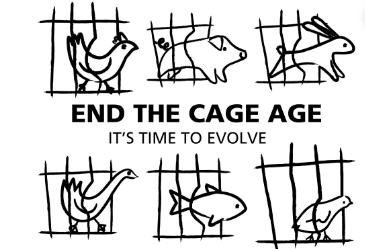
End the Cage Age, led by our member Compassion in World Farming, collected the third highest number of signatures in the history of European Citizens’ Initiatives. The request to stop caged farming was not whispered, it was shouted loud and clear.

The message did not fall on deaf ears: with a historical decision, the European Commission, in its official response to the ECI, committed to put forward a legislative proposal by the end of 2023 to phase out cages from animal farming. The proposal was included within the scope of the ongoing revision of the animal welfare legislation, a necessary step to create a level-playing field for farmers throughout and beyond Europe. The transition will require substantial public financial support to enable farmers to invest in cage-free, higher welfare systems: let us not forget that almost half of the EU egg production still derives from caged hens. As for other animals, such as sows, quails and rabbits, over 90% of the production relies on the use of cages. 

Change is scary, especially for an industry that is used to getting its own way, holding political institutions hostage with the rhetoric of ensuring food security and bringing home hefty profits from exports. But we know all too well that this is only one side of the story, specifically the one that omits the externalised costs of cheap animal products, including the looming public health threats posed by global pandemics and antimicrobial resistance. The animal farming industry’s lobbying machine is currently focused on dismantling many of the most ambitious objectives of the EU Farm to Fork strategy under the assumption that not only improving animal welfare, but also investing in sustainable food systems, will spell disaster for consumers, farmers, and the EU economic outlook at large. 

This is also one of the reasons why, according to some, the cage-free transition should be postponed as much as possible. However, while the time will probably never be right for the industry, for European citizens the time is now. I am saying this as a rebuttal to some parties who are throwing spanners in the wheels of a speedy transition: true, the current economic outlook is not rosy, but farmers can and should be vocal in demanding that, starting from now, Member States allocate as many resources as possible under CAP and national payment schemes to anticipate the legislative change ahead. Stockmanship, human-animal relationships, breeding objectives, feeding strategies, animal health programs, will all need to adapt to the new species-specific cage-free environments; many of these aspects are already eligible for financial support under various EU and/or national payment schemes. 

If sufficient financial support is provided, there is agreement among industry stakeholders that most sectors can switch to cage-free farming within 3-5 years. As shown by our recent report investigating industry stakeholders’ views on the practical and economic aspects of the cage-free transition, a staggered approach with different deadlines per sector is possibly the best way forward as it would allow for a gradual adaptation to cage-free farming.

The industry recognises that the impetus is there, and the answers to the most pressing questions – as well as technical solutions – can be found by studying the business models of many European producers who voluntarily and successfully switched to higher welfare, cage-free systems. We do not need to reinvent the wheel: our report illustrates in detail many examples of good and best practices that can be adopted to make the cage-free transition as smooth as possible, while also leaving room for continuous improvement.

For me, these are all reasons to accelerate, rather than delay, the cage-free revolution. Granting a reasonably swift transition period in the legislation can actually even mitigate the risk of creating disparity amongst Member States.

For instance, according to the latest report on the fitness check of the current animal welfare legislation, the long transition period to enriched cages led some producers to wait until the last possible moment before changing their infrastructure, which unnecessarily increased prices and created a situation of unfair competition amongst Member States.

For all these reasons, I hope that the phase-out period to shift to cage-free farming will be as short as reasonably possible and that it will be used wisely, making the most of all the forms of financial support currently available. The animal protection movement will play its part, of course, communicating to citizens and policymakers about the importance of supporting this transition in any way possible.

In my view, however, it will be equally important to promote a shift in mentality, from treating animals as commodities to seeing them for what they are, sentient beings worthy of good lives, however short we decide that these lives should be. 

Phasing out cages in the EU: the road to a smooth transition

 DOWNLOAD PDF 22.13 MB

Regards Mark