We would both like to take this opportunity to firstly thank you for your support in visiting the site; many of you very regularly; and also to wish you all a happy, cruelty free, and meat / dairy free new year in 2022
Covid has changed a lot for us all over the last few years, and we are still no nearer to finding the reality of how it emerged in the first place – shame on all in politics for not asking questions to China and demanding answers / evidence.
Please stick with us in 2022; we aim to continue bringing you animal news and actions from all around the world. If there is anything you would like us to cover more; or you have anything to ask or show us; then please send your message through the contact us link.
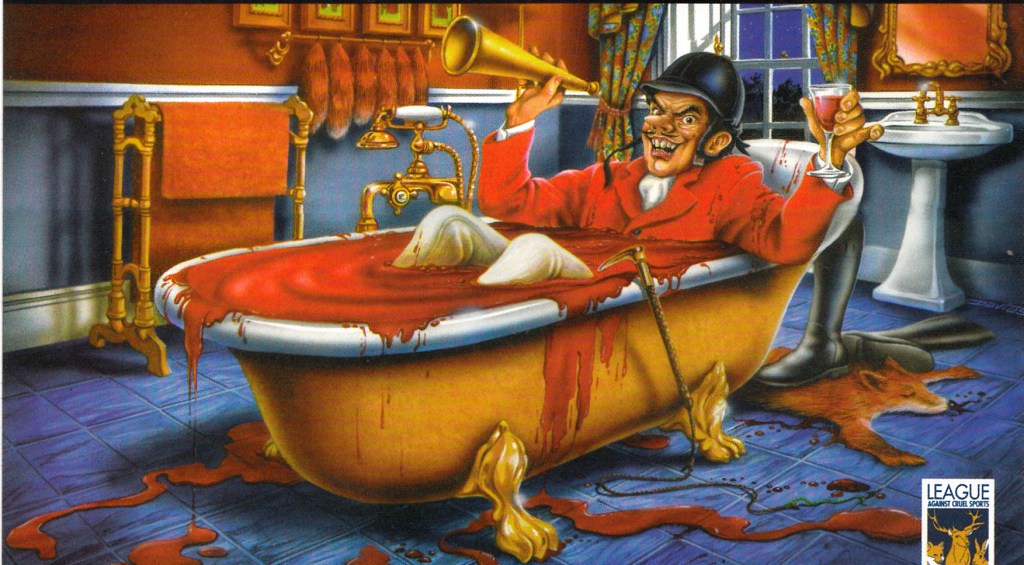
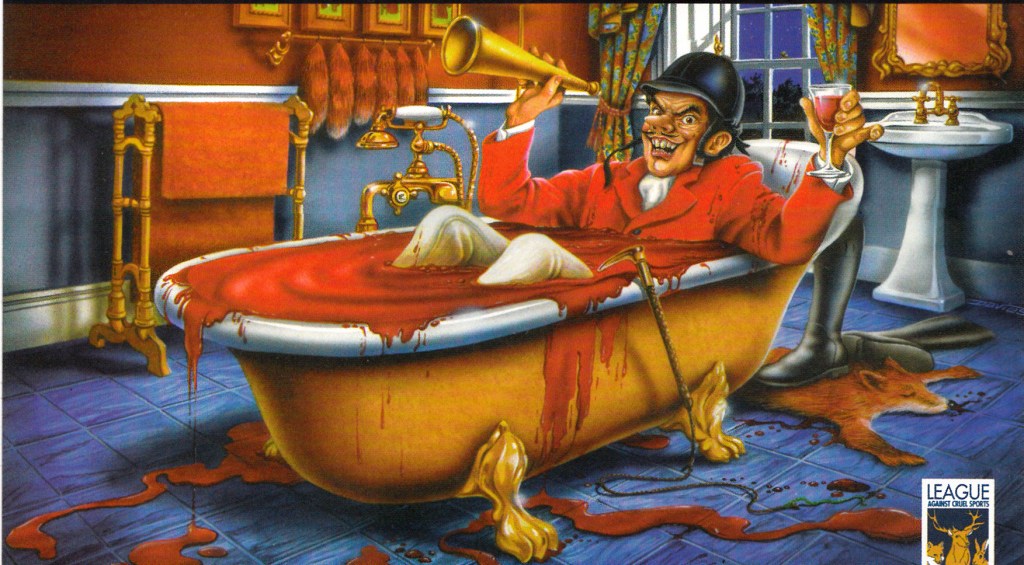
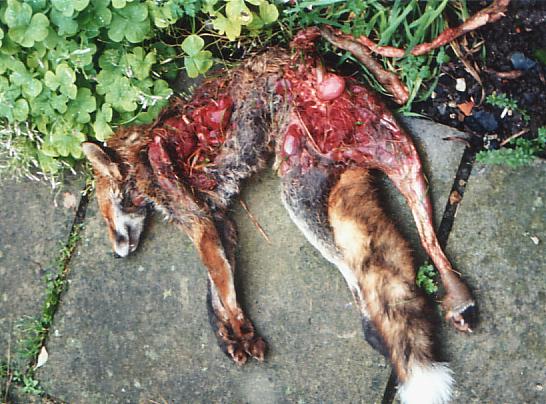
WAV Comment: They parade themselves through the villages trying to look squeaky clean; but this above is the other side reality of what hunts and its associates do.
Hidden camera shows man stab fox with pitchfork in ‘torture’ attack
Hidden camera video reveals a man repeatedly stabbing a fox with a pitchfork, leaving it writhing in agony.
The attack, which took place in east Essex, was described by a campaign group as “torture” and “some of the worst abuse” they had ever witnessed.
A man was later reported to have been arrested.
The man and a woman seen in the video visited Great Monks Wood near Braintree, according to the Hunt Saboteurs Association.
Hunts build artificial earths – an underground network of pipes and chambers – to encourage foxes into an area. The wild animals are then trapped, only to be released just before a hunt so they can be chased, it’s claimed.Activists say the artificial earth in the video was rebuilt last year, and they have been monitoring it since then with concealed cameras.
The North London Hunt Sabs said they filmed the man earlier this month arriving armed with a terrier, rods, a net and pitchfork.
The group reported the couple placed the net over one end of the earth then used the rods and terrier to force the trapped fox into the net.
The man then held the fox by its tail and repeatedly tried to stab it against a tree, including aiming at its head, before carrying it away by the tail.
The footage did not reveal whether the animal survived, but it would at least have been suffering acutely, the activists said.
A spokesperson for North London Hunt Sabs said hunting was “steeped in animal abuse” and that lawful “trail hunting” did not necessitate building artificial earths or capturing foxes.
Lee Moon, of the Hunt Saboteurs Association, said: “This is some of the worst abuse we have ever witnessed, and the wanton cruelty is hard to fathom.
“Whilst most people who watch the video will be horrified, the calm and methodical manner in which the two individuals go about catching and torturing this poor fox show how commonplace their actions are.”
He said people who carry out such violence would have been indoctrinated into such behaviour since birth.
“Cruel and psychopathic individuals who see wild animals as their playthings to be tortured for their own sick ends.
“Acts like this are sickeningly commonplace within the hunting community.”
Essex Police told ITV News it had arrested a 48-year-old man from the Bures area after receiving reports of animal cruelty, adding: “He was arrested on suspicion of offences under the Hunting Act 2004, the Animal Welfare Act 2006 and the Wild Mammal Protection Act 1996. He remains in custody at this time.”
The Independent has asked the Countryside Alliance, which supports hunting, to comment.
WAV Comment: England – Boxing Day (26/12) has always been a bit of a battleground every year. Hunts parade themselves through local towns or villages; and the anti’s (those against hunting) also turnout to try and give them a bad time. It can often erupt into violent scenes; especially as we know the hunt Terrier men like to try and give anti hunt campaigners a good kicking if they possibly can – after all; they dig out and torture foxes, so why also not abuse the anti hunt brigade also ? The following is a newspaper article on some events this year.
Footage from the event shows punches being thrown by apparent hunt supporters on foot and protesters carrying placards as the event began.
A member of the local hunt saboteur group who asked to be named as Dave, said the police presence at the event was “appalling”, with only two officers there to maintain peace between the two sides.
A local photographer told the Swindon Advertiser that the event had turned into a “nasty scene”.
“There must have been around 50 protesters and twice that number of hunt supporters and it all turned sour.”
A spokesperson for the Avon Vale Hunt said: “The hunt has been made aware of an incident that occurred just after the hounds had left the meet in Lacock today.
“We do not know the circumstances but we do not condone violence even in the case of extreme provocation by anti-hunting protestors whose sole purpose is to antagonise those supporting a lawful activity.
Most hunts in Wales were cancelled because of restrictions limiting gatherings to 50, while meets in Scotland were restricted to no more than 500 participants and attendees.
It has been illegal to hunt foxes with a pack of dogs since 2004 but the practice has been replaced with trail hunting, in which hounds follow a scent to replicate the traditional hunt without killing a fox.
The National Trust, which owns most of Lacock and Natural Resources Wales, both announced an end to trail hunting on their land earlier this year.
But groups that back the traditional hunt, including the Countryside Alliance, argue that it plays an irreplaceable role in British rural life.
Polly Portwin, director of the Campaign for Hunting at the Countryside Alliance said: “Festive meets are hugely popular and well attended by both hunt followers and local communities, for whom the event has become a cherished family tradition.
“While many meets have been smaller scale this year due to the restrictions, they have still provided a big boost both socially and economically across the countryside, as does trail hunting throughout the season.”
If you order products online from Amazon; did you know that Amazon can donate to charity every time you shop ?
Don’t buy direct from the Amazon site; instead, go to ‘Amazon Smile’,
Whenever I buy from Amazon, I make sure that I buy through ‘Amazon Smile’; it is no different to the usual site; only that a small donation is made to the charity of your choice each time you buy.
When I buy, Amazon Smile gives directly to my chosen ‘Brooke Hospital For Animals’ which is located in London; here is a bit about them:
The Brooke Hospital For Animals
Location: London
Mission:
To promote the welfare and relieve the suffering of working equines and other animals in africa, asia, the middle east and south and central america, and in any other areas outside the united kingdom that the trustees may think fit, for the public benefit, in particular, but not exclusively, by: the support, promotion and provision of veterinary and other animal healthcare services whether in the context of veterinary clinics, animal hospitals, other animal healthcare facilities or…
Programmes:Activities: Makes grants to organisations, provides services, provides advocacy/advice/information, sponsors or undertakes research, Beneficiaries: Other defined groups, Purposes: Education/training, animals
This morning through my purchases, I have been informed of my help to Brooke through Amazon Smile:
You have generated
£36.99 as of 29 December 2021
Your current charity The Brooke Hospital For Animals has received £10,417.66 as of December 2021
Over £10,000 this year (2021) just by people supporting the Brooke; slightly adjusting the way they shop.
When you shop at Amazon, just type ‘Amazon Smile’ in your web browser and then shop as usual – the only difference is a donation is made to the charity of your choice. It takes nothing of your time, but can make such a difference to charities.
Making efforts to stop live animal transport / live exports campaigning has played a large part in my life for the last 30+ years. Maybe too large a part; there have been costs in other ways for sure ! – but would I do it all again ? – you bet.
I think maybe it best to let the pictures (mainly from my own personal archive) tell some of the story themselves a little more; I have added notes to pictures where I think applicable.
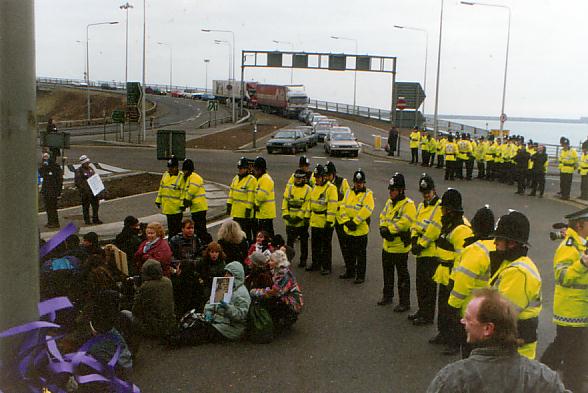
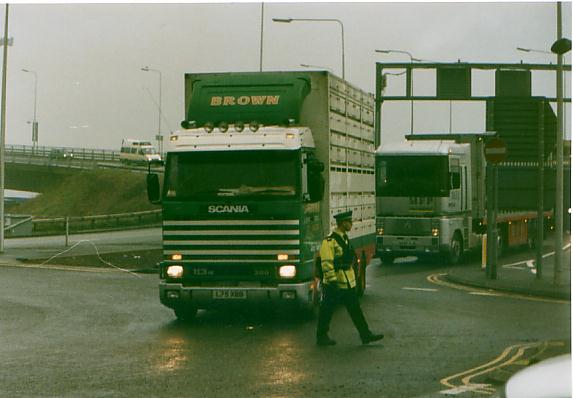
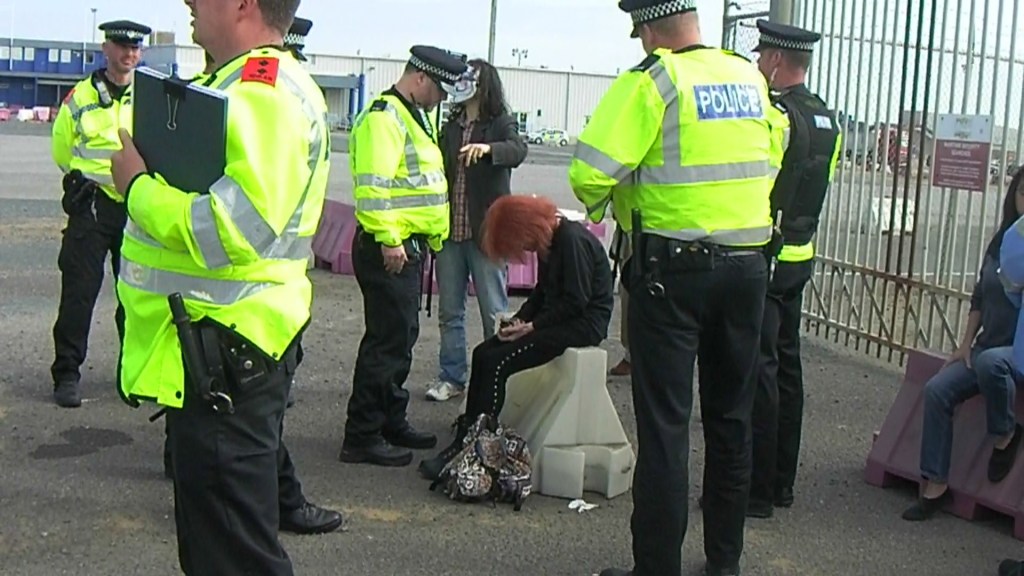
Above – ‘The Daffs’; our term for the exporter protecting police; looking like Daffodils in their bright yellow tops. Don’t you think ?
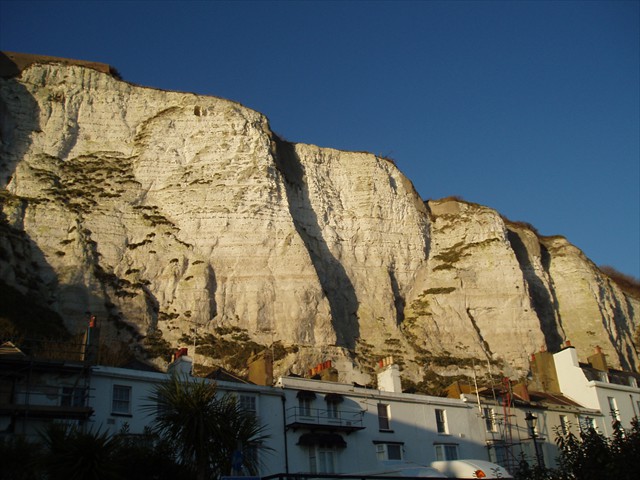
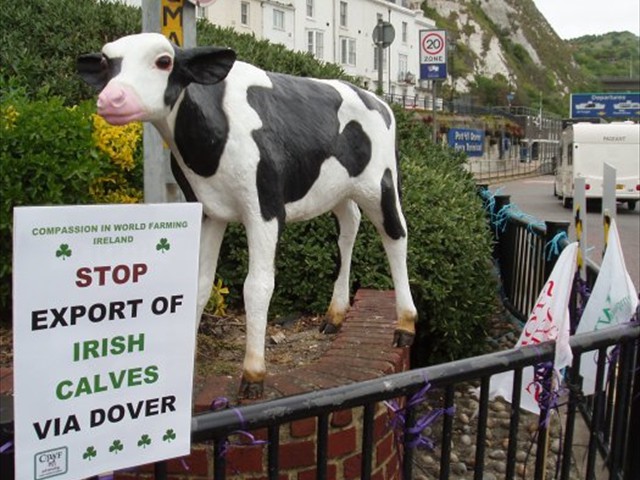
Our Dover export protests backdrop – the famous White Cliffs.
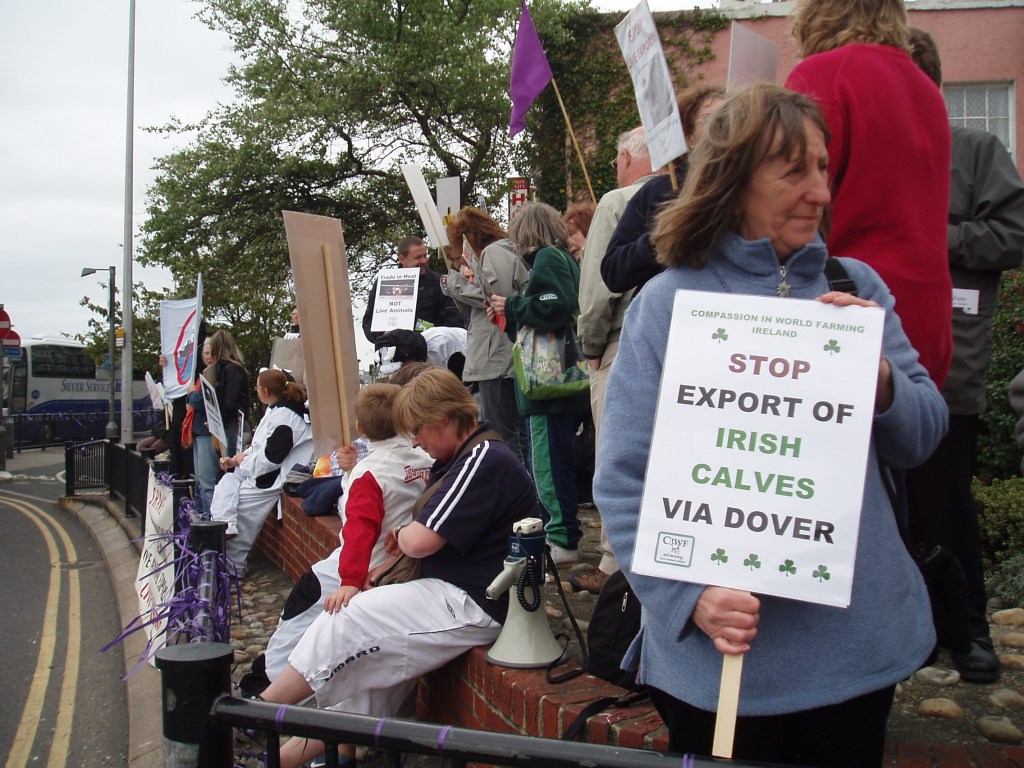
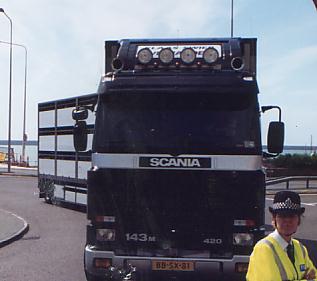
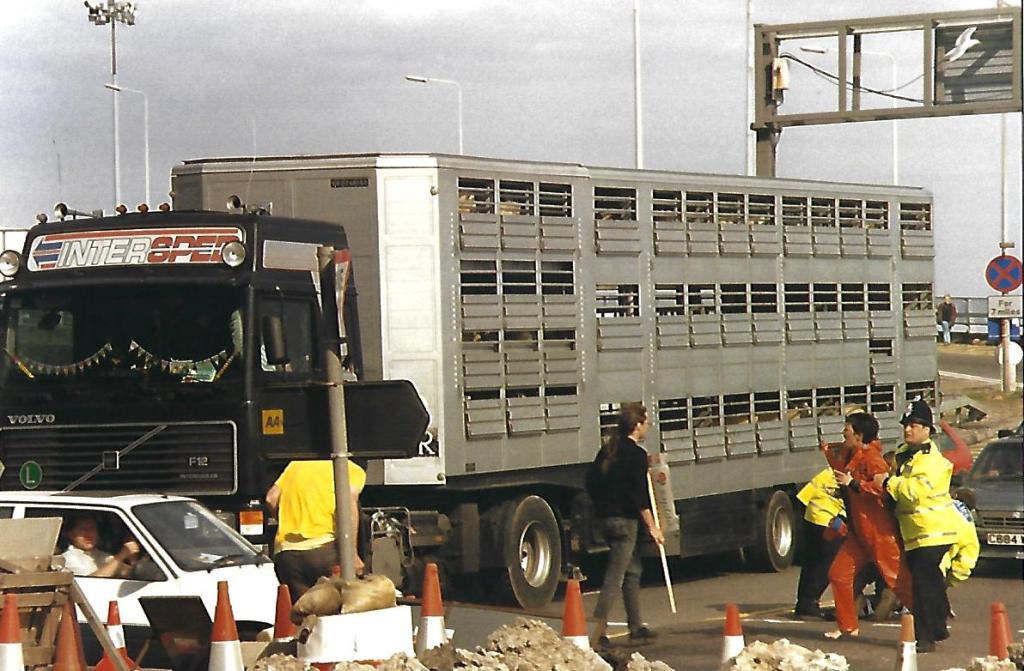
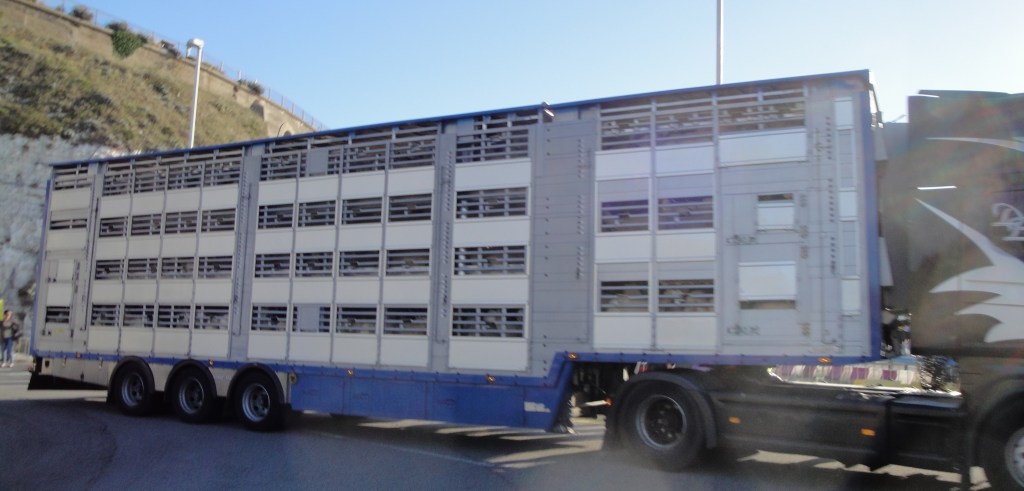
People against the live animal export trade were always at Dover in one form or other; one livestock driver famously quoted “they appear out of holes from everywhere – like bloody rabbits in the grass”; Dover was the main port used for export of live animals; until the protests eventually stopped the major cross Channel ferry companies taking the trucks as part of their business. A very big win for the anti export movement.
Mrs Plod makes sure I behave !
Dover – a battleground for live export protests.
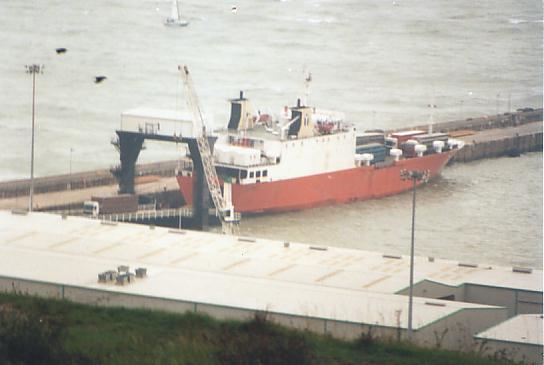
When the ferry operators shunned the trade, which always was the easy route for the hauliers over the Channel things changed drastically. They (exporters / hauliers) were then forced, with no other options, but to charter their own vessel(s) to get the livestock transporters over the water into Europe. In addition to the costs of chartering a boat, they also needed a pilot to get their ship into and out of port; so the costs mounted in several ways.
One of the ships that had to be chartered for live export trucks to be carried – see them on the top deck.
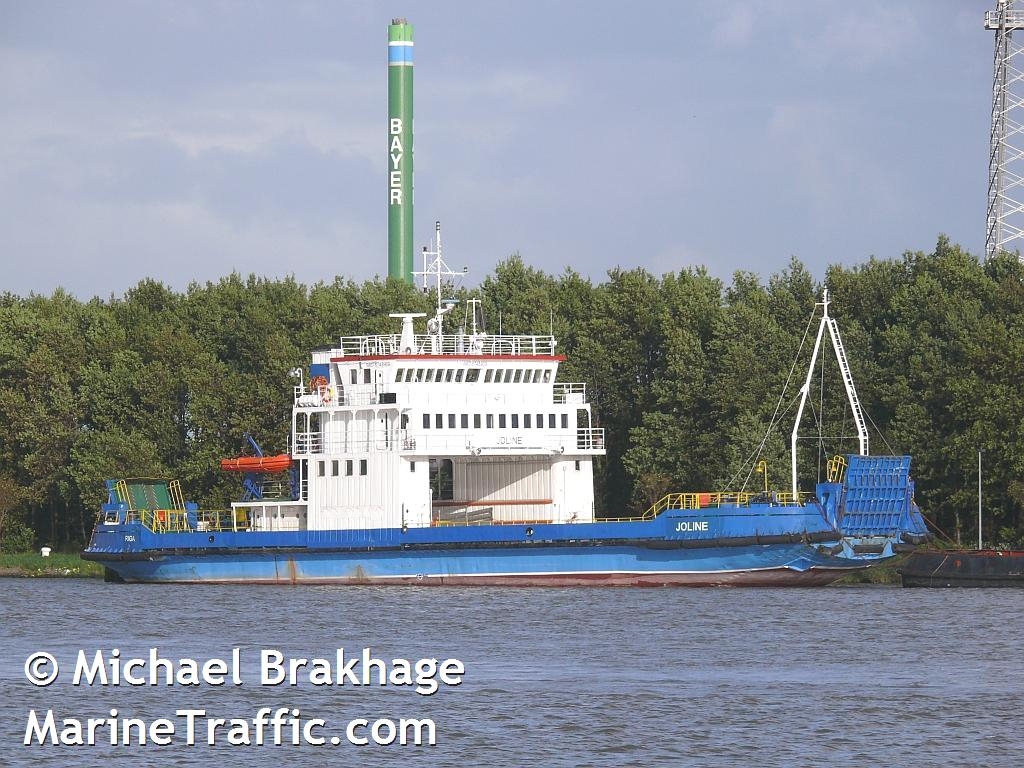
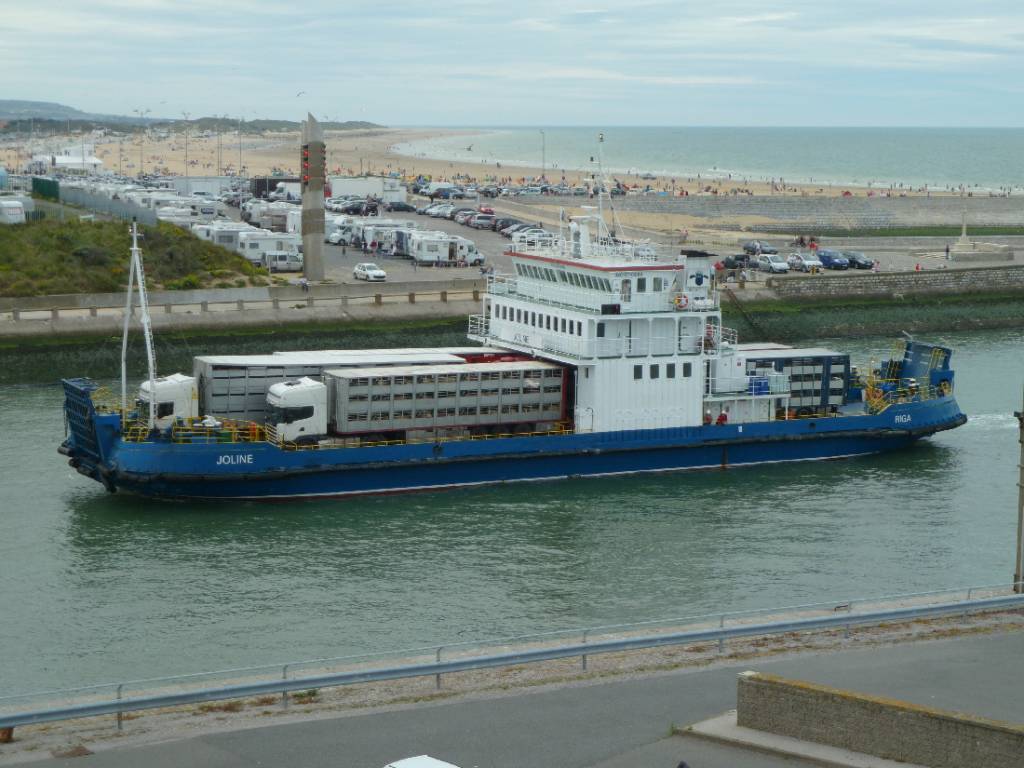
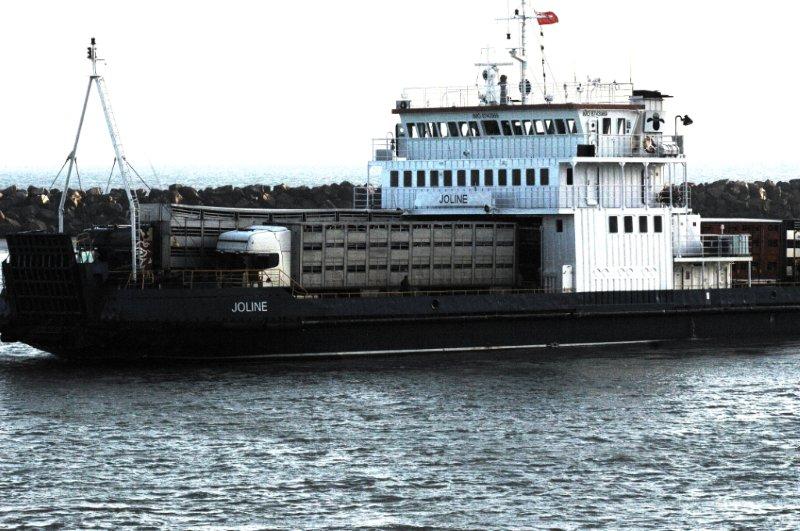
It was hoped these spiralling costs would eventually be the death knell for the trade; and it was, until Dutchman Onderwater suddenly stepped in with his own boat; an ex Russian river battle tank carrier called the ‘Joline’; to start the live animal trade from Ramsgate, another Kent port. The Joline was a bathtub of a vessel (designed for river usage) and totally unfit for carrying transporters (and their animal cargo) over the choppy waters of the English Channel. Fully loaded, it was low in the water; very low. It carried nothing else apart from livestock trucks and their drivers.
The ‘Joline’ – unfit for Channel crossings, but used to carry trucks nevertheless.
A loaded Joline arrives at Calais (France).
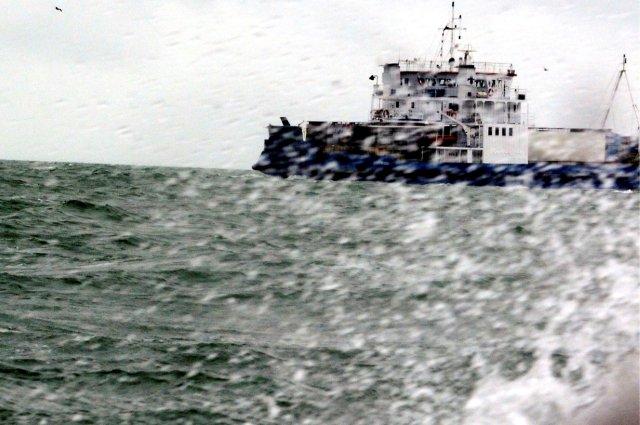
A loaded Joline in the Engllsh Channel.
As an activist at Dover, you could be in the docks yourself doing some monitoring work, when without doubt you would always without fail; bump into a fellow campaigner there also doing some ‘sniffing round’. It was a kind of brotherhood; a quick chat and then off again into the darkness to do your thing.
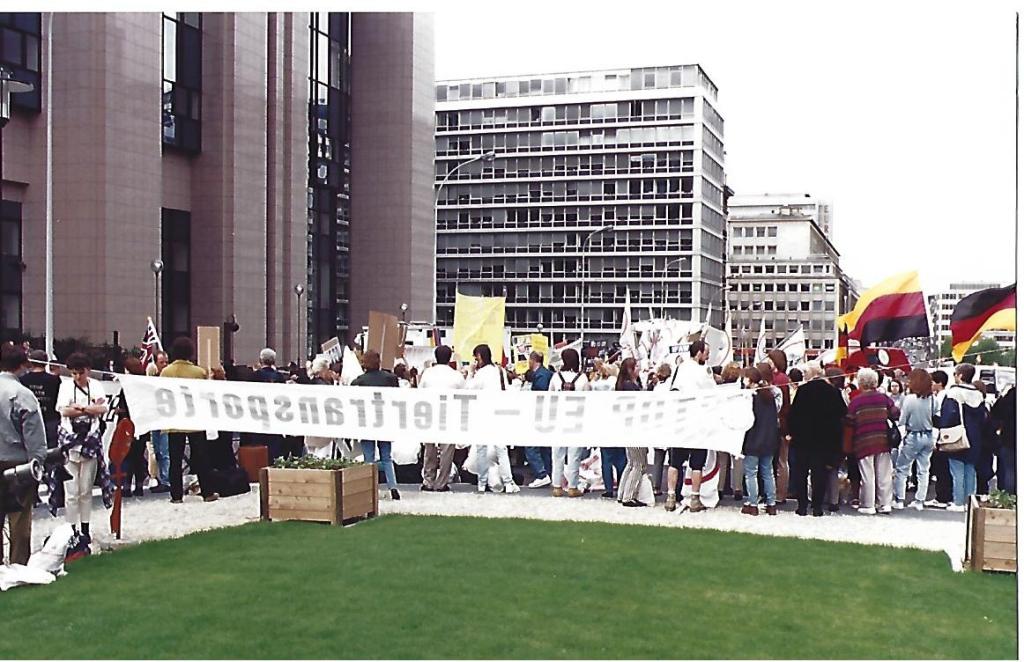
As campaigners, we also headed into Europe quite a lot, regularly going to EU Brussels to vent our anger. In one photo you can see the large German anti export contingent who protested there with us. Euro citizens with a simple united cause – to try and stop the trade.
Our friends the German anti export campaigners – Brussels.
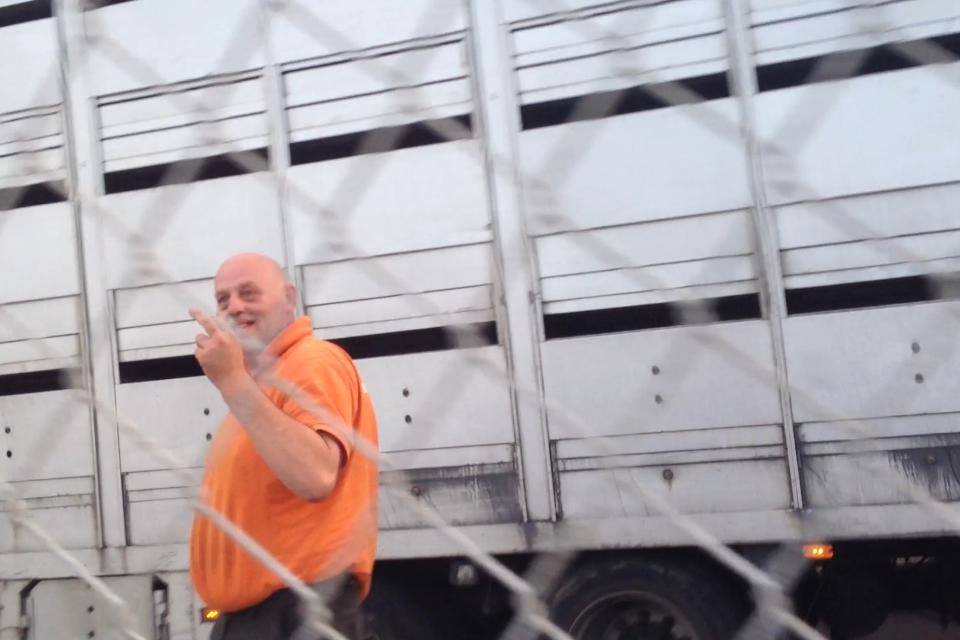
A livestock driver sends us his best wishes.
As a member state of the EU ‘club’, the UK was never allowed to ban live animal transport; even though it really wanted to due to pressure. Now it has left the EU via Brexit, it has taken back its own control rather than be dictated to by un elected Commissioners. Within a year the UK has held a consultation, and is now in the process via Parliament of banning all live animal exports.
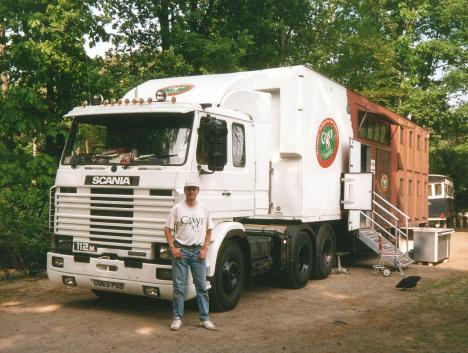
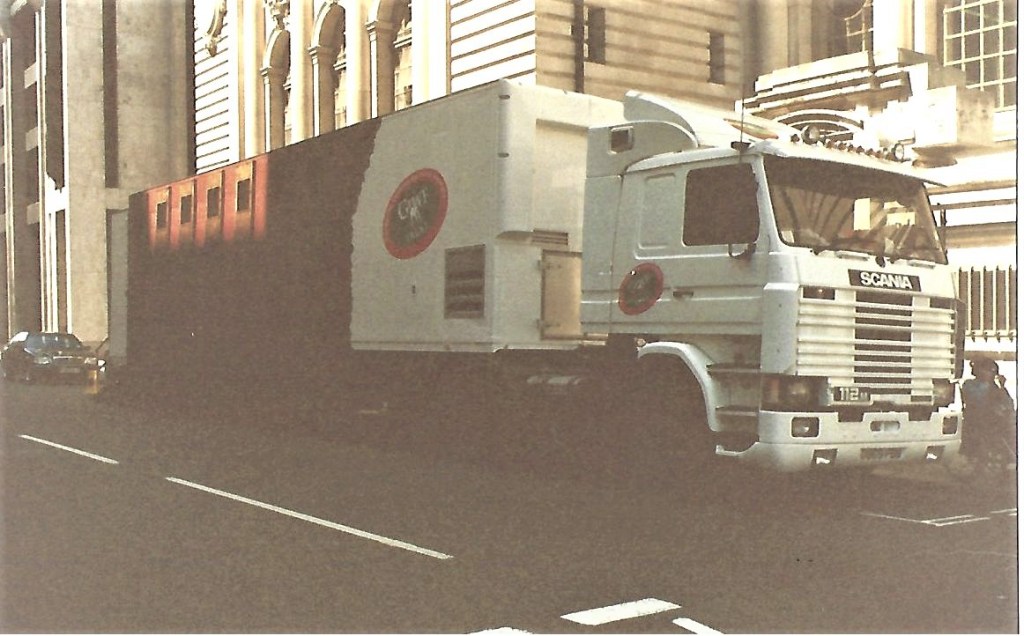
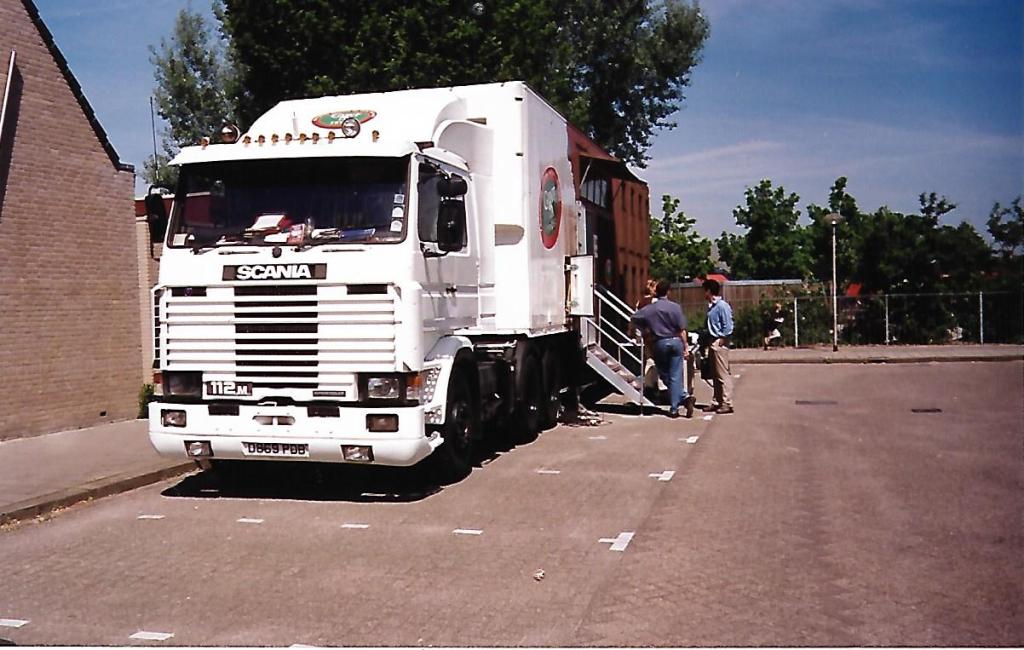
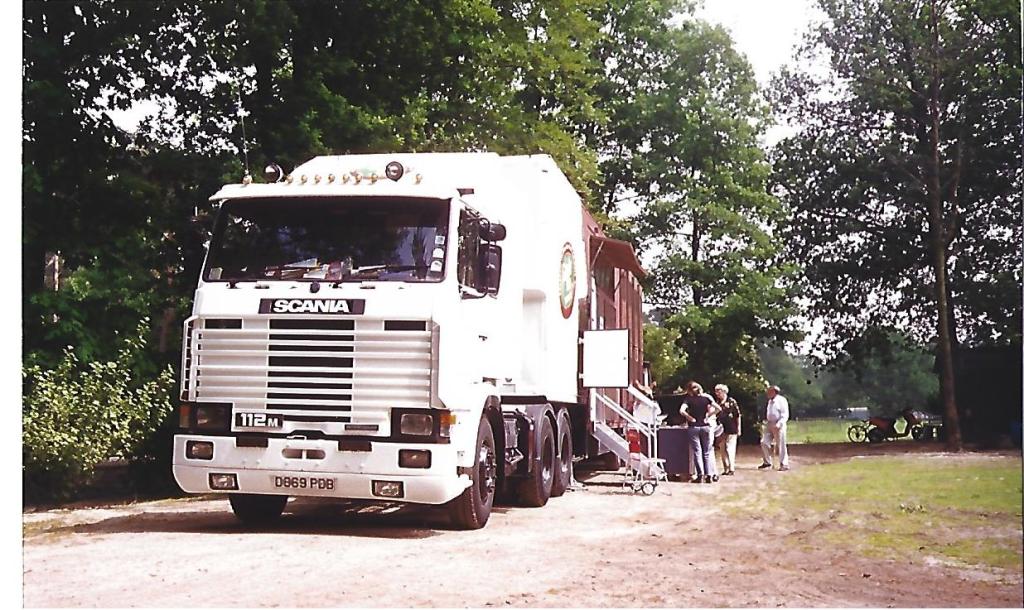
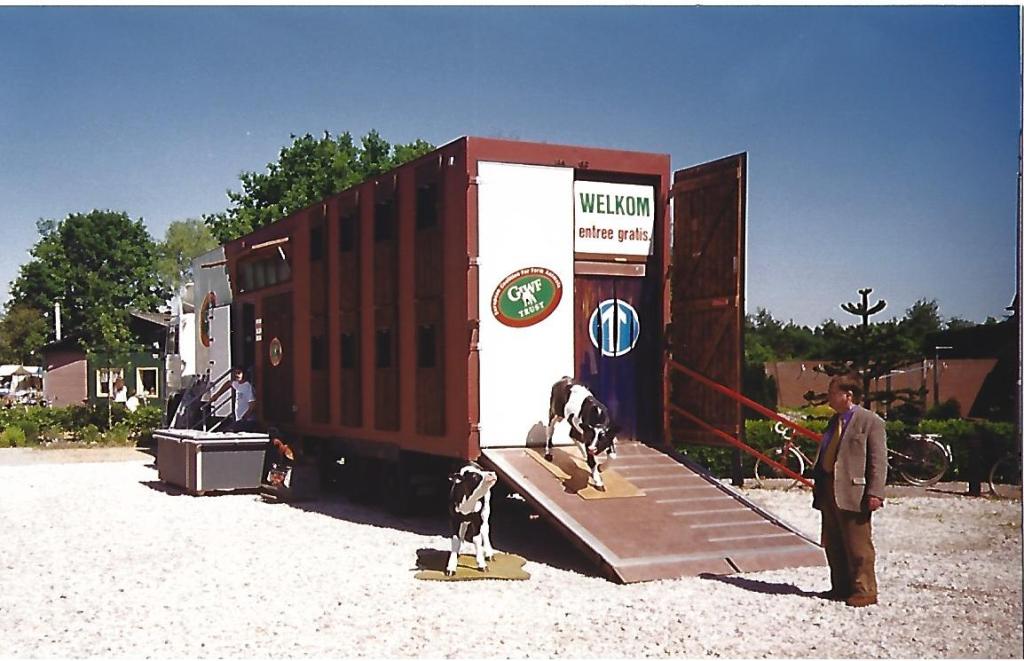
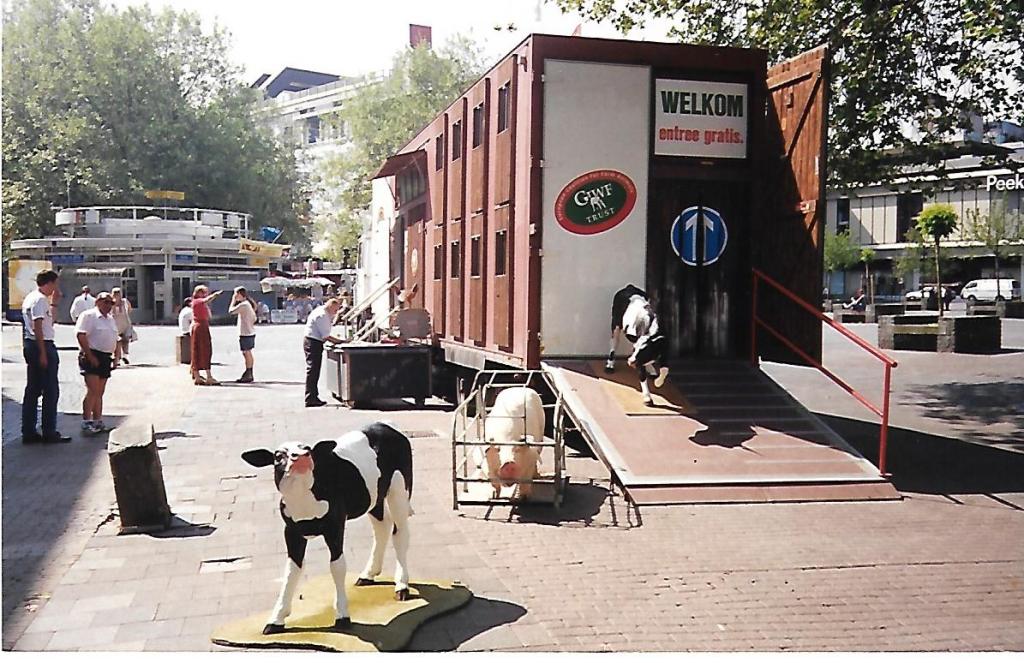
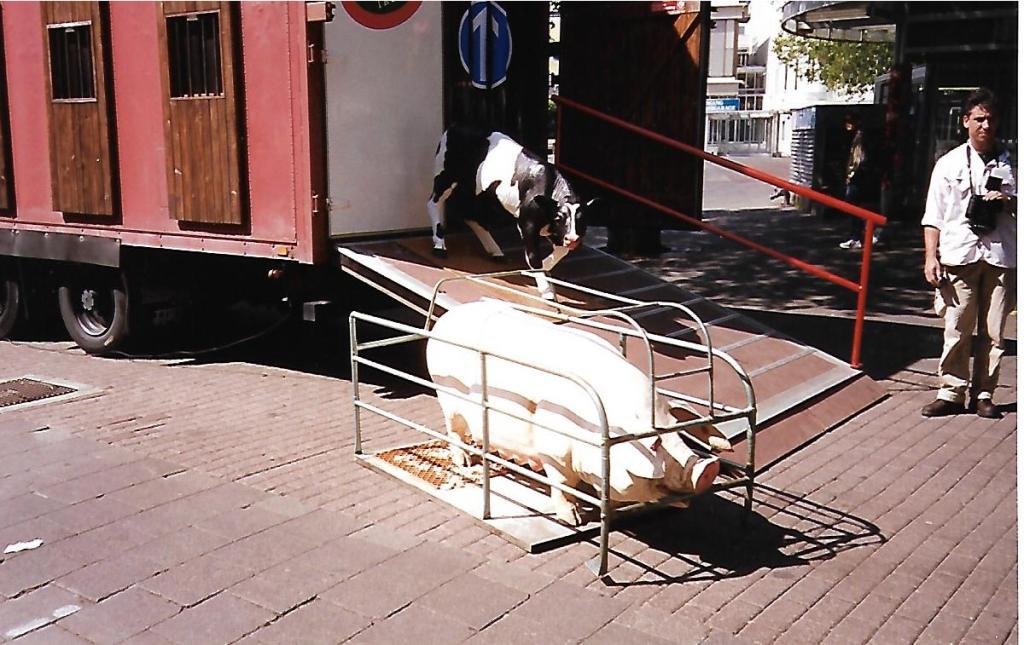
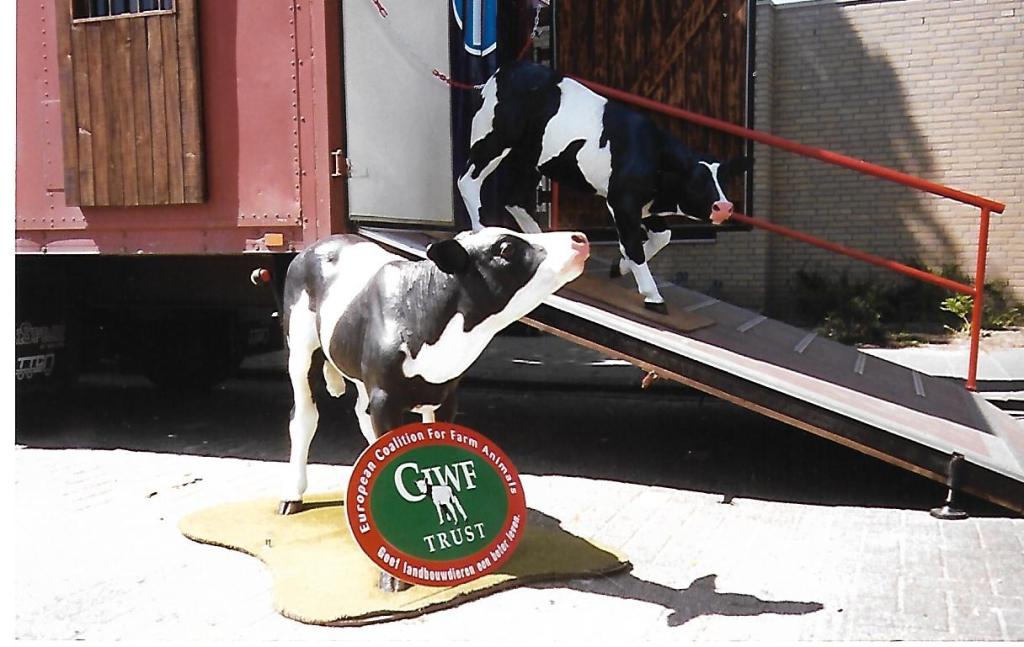
Working with CIWF who are based in London, the ‘intensive farming tour truck’ was taken all over Europe; informing people of the horrors of the systems. In the pictures you can see it in the Netherlands leg of the tour, which I took part in. In Amsterdam, we were very fortunate to be granted permission by HM he Queen to set the truck up for the display in front of the royal palace; for which were are very grateful to her majesty. With the tour truck, you always entered from the rear; immediately joined with the calves in transport; then moved into the next section which was a simulation of a typical battery farm. Then you moved on again into an intensive pig unit, complete with sow stalls and cages. Videos played all the time showing the real reality of all these systems.
The intensive farming tour truck parked up at a London demo.In the Netherlands – parked up and ready for another days school visitors.
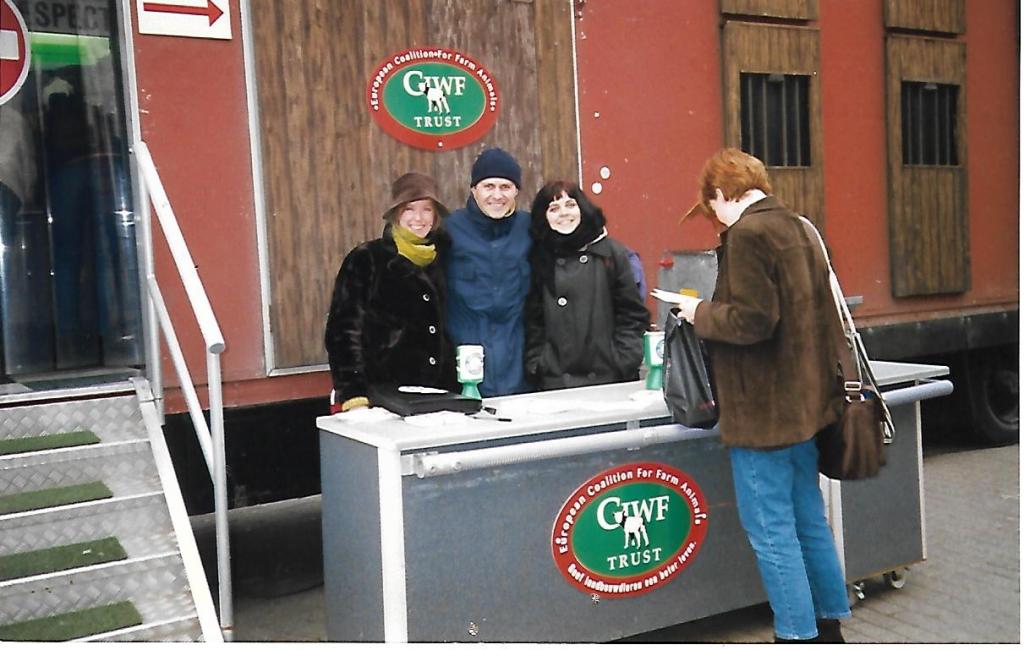
Finally as you walked to the front of the trailer, you moved into the ‘refrigeration food zone’, which showed all the veggie and vegan options for the modern shopper at the supermarket which does not involve all this cruelty. See the truck from the outside, a livestock transporter for most, moving into the meat free shopping white refrigerated section at the front. Once you had experienced it all, you came down the front steps to the desk outside and added your name to all the petitions we had.
The Tour Truck in the Netherlands.Tour Truck enter from rear.Netherlands – Nanda, myself and Monica wrapped up for the Winter tour.Welkom – Warm sunny days on the Dutch Summer tour.Enter at the rear and join the calves in transport.
The Netherlands tours were held in both winter and summer. That winter it was freezing; one of the coldest in Europe for a long time; you can see Nanda, myself and Monica getting ready outside for a cold signature session. I am in the middle with the black beanie – the thorn between the 2 roses you could say ! It was Nanda (on left) who really got me into eating Falafel; which is still a favourite food of mine today. But the summer tour was oh so great with constantly good weather; we even took some time out to sniff around and investigate the veal facilities that British calves were being exported to at that time. I have some great memories of being on the road with John C; who like all the best people, went fer too soon: England: Another Terrible Loss – John Callaghan. – World Animals Voice
John – one of the kindest blokes.
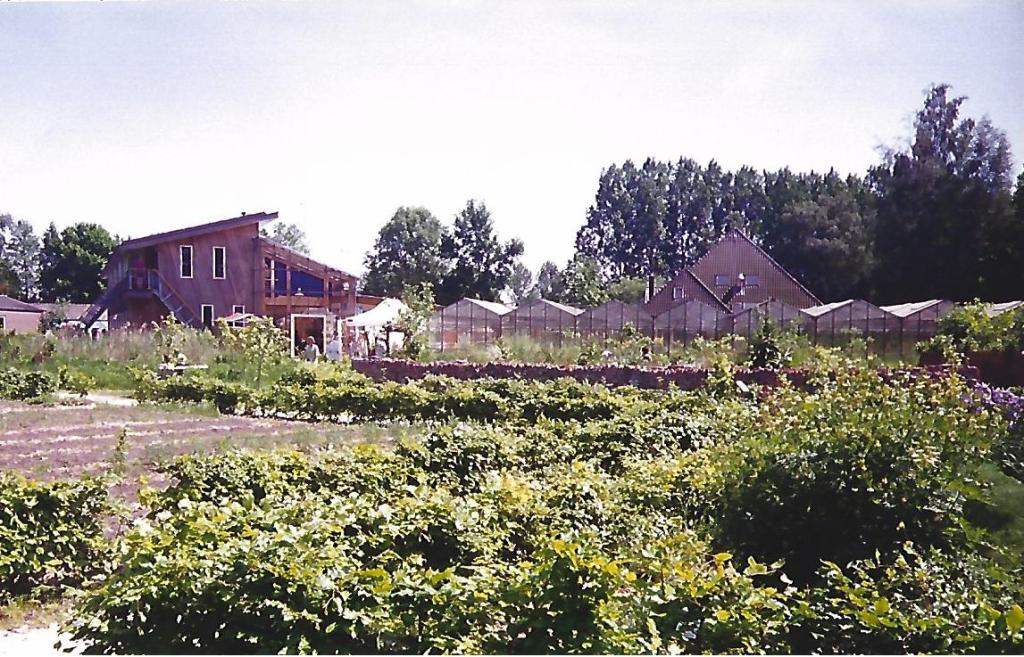
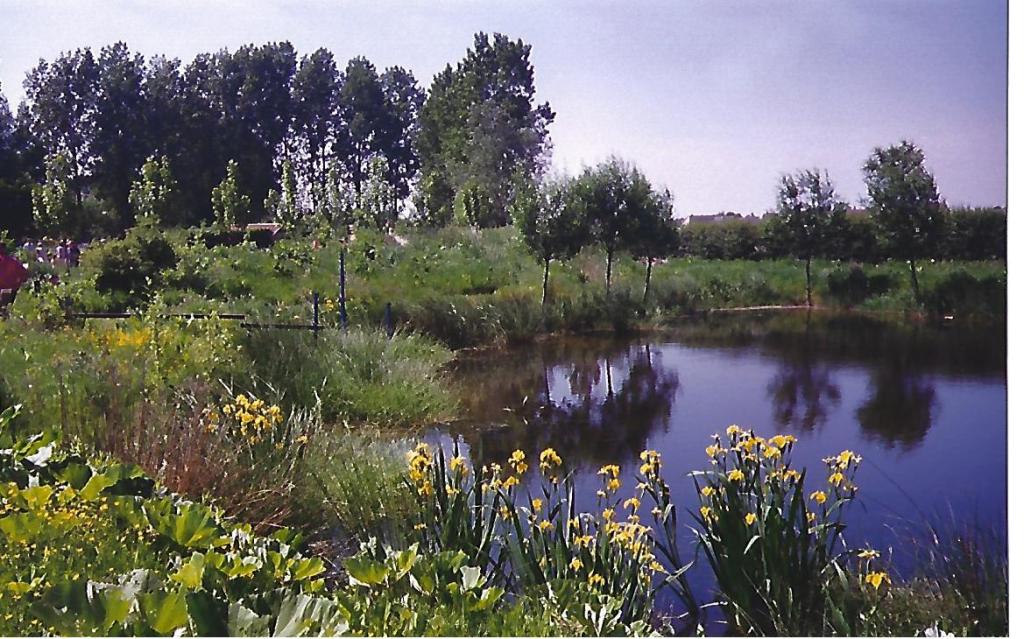
We had a busy schedule with the truck at the many pre arranged events – visiting schools, colleges and other facilities to inform students and the public about the realities of the intensive farming business. On some days, we visited (under invite) major eco facilities such as the wonderful ‘De Kleine Aarde’ to inform people, and also to see their wonderful ways of being ‘eco’. de kleine aarde – Bing images
De Kleine Aarde 1
De Kleine Aarde 2
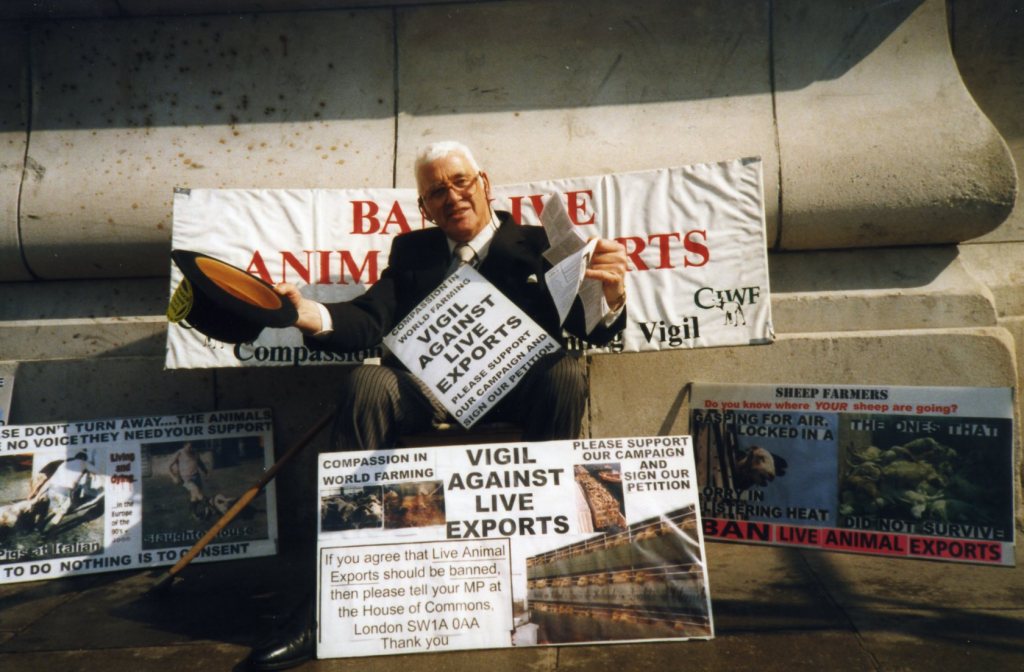
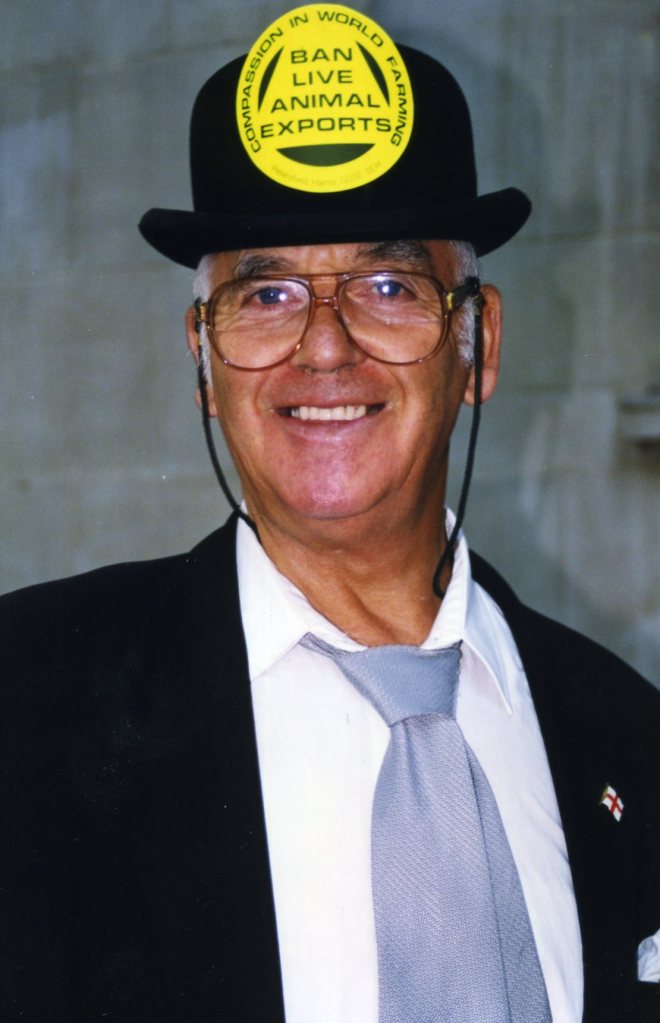
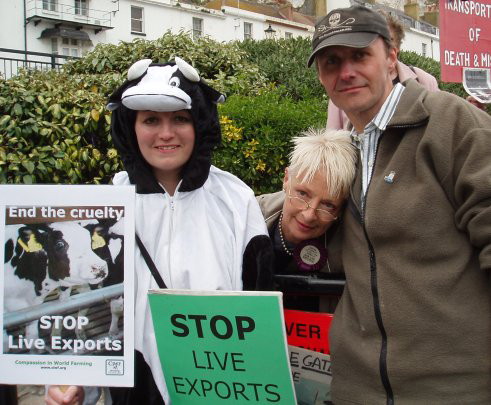
Back in rainy ol’ London town; organised by friend Liza; we also kept the daily vigil against live animal exports going at the bottom of the steps of the Ag. Ministry in Whitehall. A very regular was my good friend Mike who used to dress up as a city gent, whilst mopping down the front steps of the Ministry, telling then to ‘clean up their act’ when it came to live animal transports.
Mike does his bit in London with the daily ban live export vigil.
Wonderful Mike (RIP)
Liza (middle) – the London Vigil Organiser (Blonde middle) with me and Ellie.
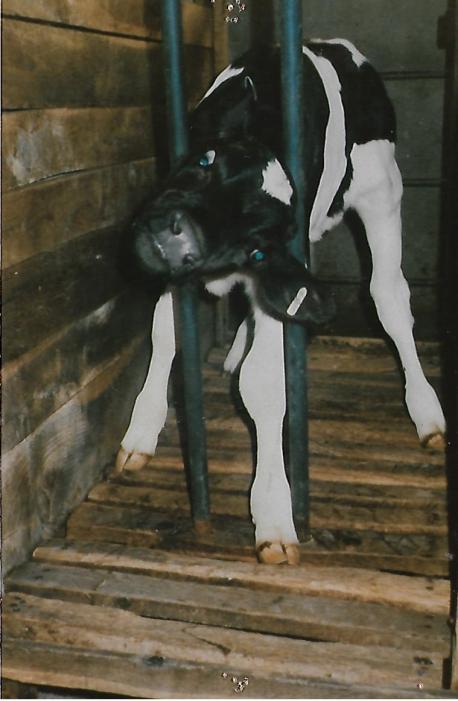
Why do it ? – well take a look at the photo of the British (exported) calf being restrained in a foreign veal crate. I don’t need to say any more, other than that is why we did what we did.
This is why we do it !!!
Photo – Jane
My great campaigner friend Jane – surrounded by Daffs !
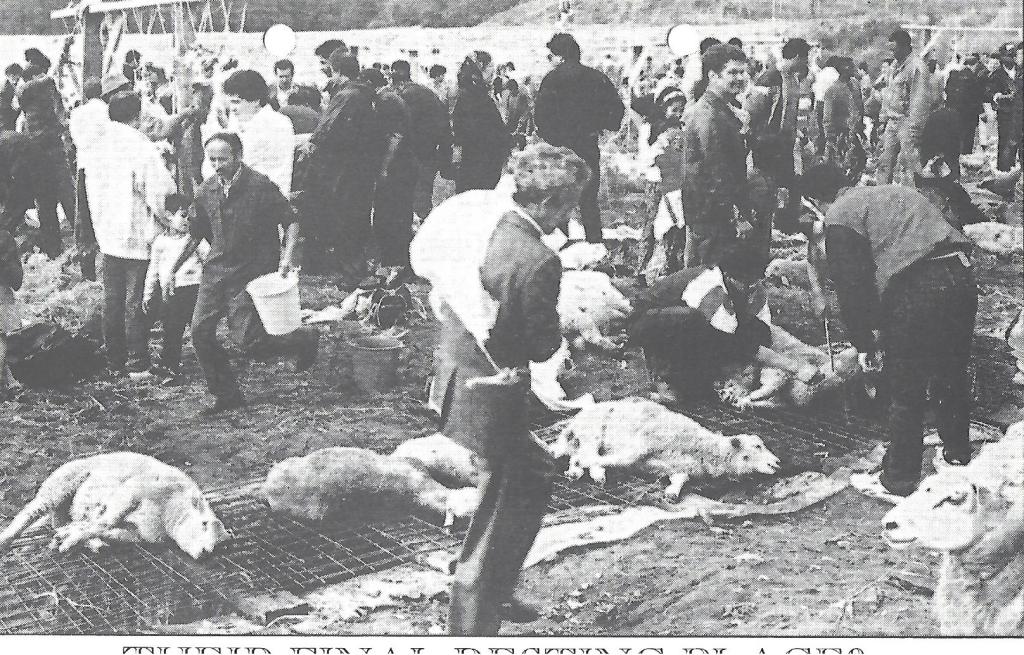
The festival of Eid (still goes on each year, but not as shown now); saw thousands of British sheep being exported to France for ritual slaughter. As you can see in the black and white photo; simple trenches were cut into the fields, wire laid across, and the sheep put onto them. The sheep’s throats were cut without any stunning, and the blood left to soak away into the field trenches. Citizens would attend these events and buy sheep meat to take back home for their Eid meals. Friends of mine who were there to witness the situation, often spoke of being on public transport buses, and witnessing blood dripping out of black sacks onto the bus floor from the sheep carcasses they had just purchased and bagged up. Eid was a very bad time for live export campaigners; and has been until very recently, with Dutch exporters coming to the UK to purchase live sheep for Eid festival celebrations.
British sheep are ritually slaughtered in the French (Eid) killing fields.
Fortunately, now the UK has left the EU, we can make our own laws, and are currently waiting for new legislation to get approval in Parliament which will see all animal’s being stopped from being exported live to Europe, for both slaughter and also for further fattening.
The Joline sails with transporters – Val C
Has it been worth it ? – after some 35 years of campaigning; I say that every minute was worth it for the place we (UK) have arrived at now. Things in the EU are still bad, so much effort is to now be shifted there.
Education of people and exposing the realities is the real thing now; 20 years ago we did not have the internet at our door, petitions were not online; but in todays world we can now show everyone at the flick of a button the real abuses and suffering. Education is key to change – so please get out and educate !
Regards Mark
Brussels export demo.
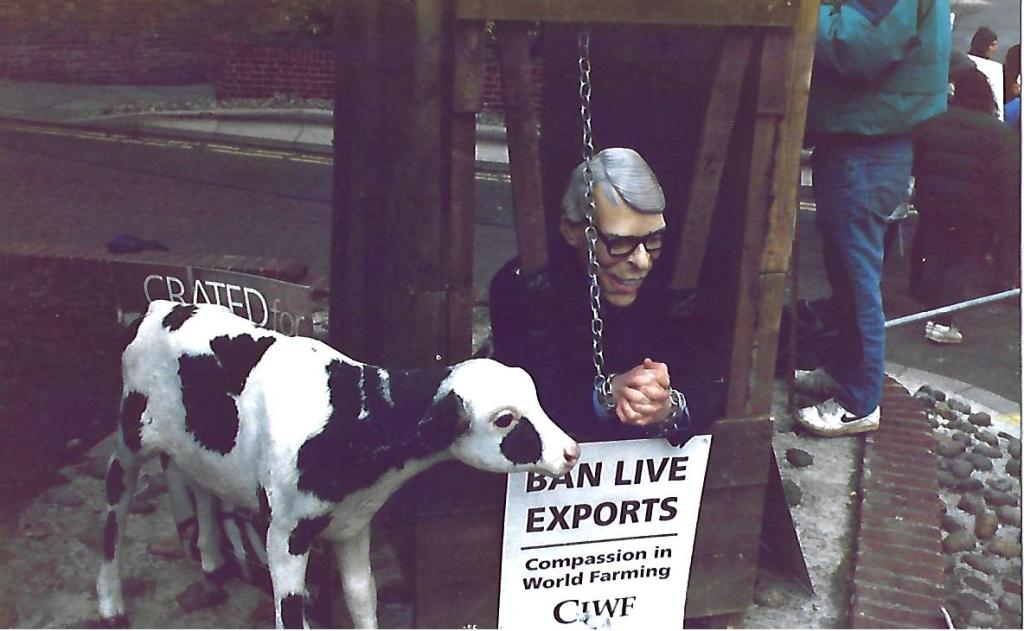
Dover – we liberate the veal calf from the crate and stick the British PM John Major into it instead.
You can read a bit more about live export work and my seal / horse export work; and see the Serbian stray issue at my old Serbian animals campaign site:
Beef from Brazil and other South American countries has been criticized for some time, as deforested areas are often converted into pastureland in a timely manner!
Now the first supermarket chains are listing beef from deforestation regions!
Brazil is the world’s largest beef exporter.
The South American country exports around 2 million t of beef annually, including to the European Union.
But export success is in jeopardy because Brazil has a problem, an image problem.
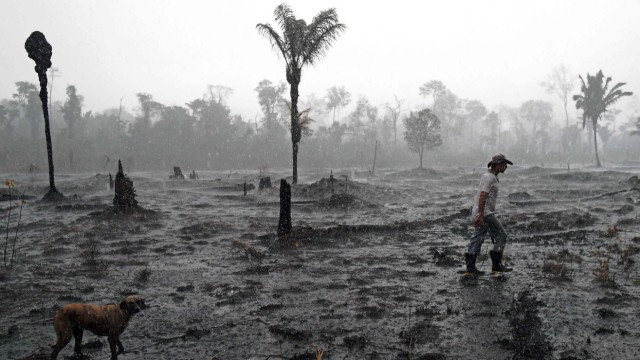
His agricultural exports are repeatedly associated with the illegal slash and burn in the #Amazonas and in other rainforest areas. Some large retail chains from the Netherlands, France, Belgium and Great Britain, including Albert Heijn and #Lidl Netherlands, have now pulled the emergency brake.
They are deleting beef and beef products from Brazil in whole or in part.
The “Reporter Brasil”, a network of investigative journalists, and the environmental organization “Mighty Earth” got the ball rolling.
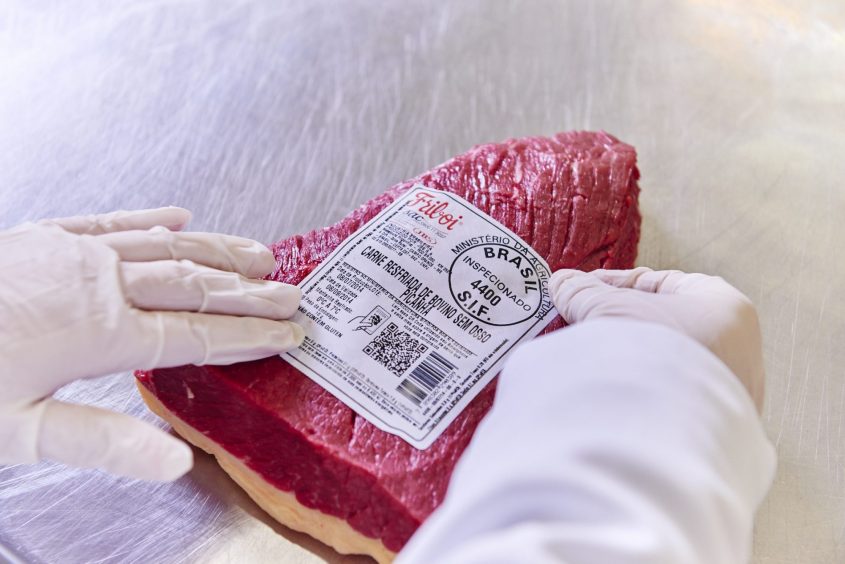
Together they have traced the origins of beef steaks, corned beef and dried meat on the shelves of Albert Heijn,Lidl,Carrefour and Sainsbury’s back to the farms in Brazil.
The reporters uncovered a system they call “Cattle washing ,” based on laundering money, for example, from drug trafficking revenues.
When washing cattle, the animals are briefly kept on farms in regions where there is little or no deforestation in two JBS*plants in São Paulo before they are slaughtered.
This gives them a “clean” origin.
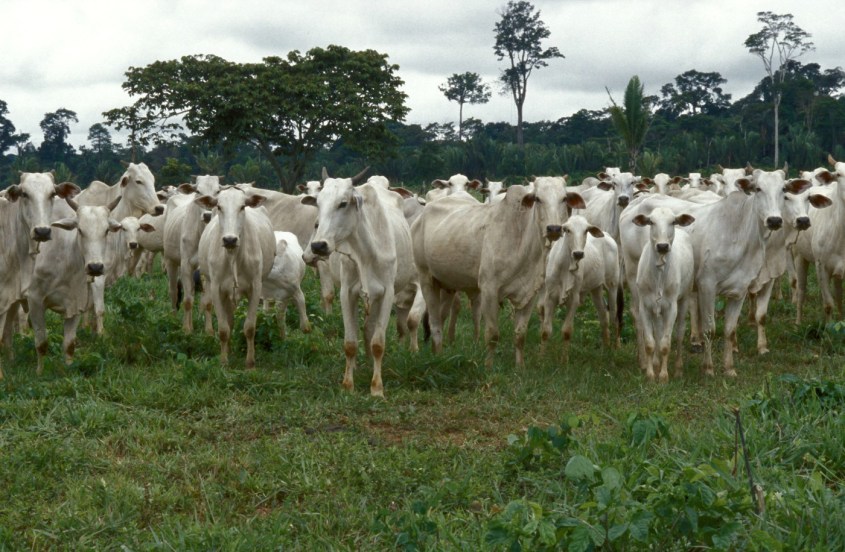
Vale do Jamari settlement, Candeias do Jamari, Rondônia. There are more cattle than people in the state of Rondônia.
However, these cattle had previously been raised on farms created by illegal slash and burn.
Some of the operators of these farms have been convicted under Brazilian law for illegal logging of rainforests and the destruction of protected areas.
I don’t normally do this, but I need to start this post with a WARNING.
The shocking viral video I’m about to share is harrowing to watch. It shows upsetting scenes of violence, cruelty and abuse towards vulnerable animals.
However, I believe it must be watched. I believe it must be shared and viewed by as many people as possible in order to expose the horrific cruelty which is inherent within the animal agriculture industry all over the world. Because, as terrible as this footage is, what is most upsetting is that these are not isolated incidents. Thousands of hours of undercover footage from hundreds of random farms and abattoirs in dozens of countries show that this kind of abuse is inherent throughout the industry. Animal agriculture is rotten to its core and this video shows why. I know how hard it is to watch but I beg you to watch it if you can and to share it with as many people as possible, because we can only tackle this abuse if we are aware of it.
After the video, I’ll drop a link so you can take action to help stop this abuse. For the animals in this footage it is too late, but with your help we can prevent millions more from suffering the same fate. So for now, please set aside a few minutes, brace yourself, and prepare to expose these horrors to the world… Once you’ve watched the video, there are three things I want you to do: Share this page like crazy with everyone you can think of — this cruelty needs to be exposedIf you’re not already vegan, take the 22 Day Vegan Challenge — this horror show will only stop when we stop paying for it.
Sign up HERE for notifications about future posts to keep you inspired and informed — together we are stronger. Together we can change the world.
Download Your FREE Vegan PDFHERE Order a FREE vegan kit HERE Dairy-Free Info HERE Take the Dairy-Free Challenge HERE Click HERE for more Dairy-FreeFish alternatives can be foundHERELearn about eggsHERE Find bacon alternativesHERE and HERE Take PETA’s Cruelty-Free Shopping Guide along with you next time you head to the store! The handy guide will help you find humane products at a glance. Order a FREE copyHERE Searching for Cruelty-Free Cosmetics, Personal-Care Products, Vegan Products, or more? Click HERE to search.Free PDF of Vegan & Cruelty-Free Products/Companies HERE Click HERE to find outHow to Wear Vegan! Want to do more than go vegan? Help others to do so! Click below for nominal, or no, fees to vegan literature that you can use to convince others that veganism is the only compassionate route to being an animal friend: PETA HERE Vegan Outreach HERE Get your FREE Activist Kit from PETA, including stickers, leaflets, and guideHERE Have questions? ClickHERE