Category: General News

EU / UK: Live Animal Transport. Europe Needs to Listen (Hard) To Its Citizens Requests, and Then Act For A Complete Ban, If It Wants To Keep Any Kind Of Credibility.

Ok, we will take back our own control and stop live animal exports !

In 2019 over 1,600,000,000 (One thousand, six hundred MILLION) ovines (sheep), bovines (caattle), poultry and pigs were transported alive across the European Union and to non-European (EU) countries. Journeys can last several days or even weeks, exposing animals to exhaustion, dehydration, injury, disease and even death.

Routinely, investigations on live transport both via sea and road find serious breaches of the utter farce which is known as Council Regulation 1/2005 (Transport Regulation); supposedly for the ‘protection’ of animals in transport.

Official audits confirm NGOs’ investigations findings. In 2017, 2018, and 2019, DG SANTE audited 11 Member States and visited Turkey: shortcomings with different levels of severity were found in the majority of them concerning transport both via sea and by road. For instance, the audits carried out in France, one of the biggest EU exporters of live animals, concluded that “the measures in place do not provide satisfactory assurances that exports of live animals operate smoothly and that these journeys are correctly planned and carried out in line with animal welfare requirements to prevent causing unnecessary pain, suffering or injury to the animal”. Particularly problematic is when trucks and vessels load very young animals that are still on milk dietary (unweaned animals). 

WELFARM and AWF followed a truck loaded with 155 young calves being transported from Poland to the Franco-German border. Investigators found that the animals were kept in the truck for 20 hours, with no breaks or unloading and no access to water and food, in clear breach of the Transport Regulation detailed above.

It’s even worse in the summer months, when temperatures as high as 30 degrees Celsius create hellish conditions, causing even more health and welfare problems to the animals being transported. Over this period the demand for live animals by third countries increases due to the ‘Festival of Sacrifice’. As a consequence, large numbers of live sheep and cattle are sent to the Middle East via European ports (Cartagena, Midia, Rasa, and Sete are the major exit points for live export) and the Bulgarian/Turkish border, which remains a hotspot with crisis happening every year.  

In the past years we have seen the ineffective EU Commission sending letters to the ineffective EU competent authorities warning them about the risk for animal welfare related to the high temperatures. With some exceptions, its calls remained unheard over the years.

The case of Romania is emblematic: a DG SANTE audit revealed how poorly the country is implementing the EU Transport Regulation, moreover it exported 70,000 sheep in disregard of legally binding animal welfare standards and the call of the then EU Commissioner V. Andriukaitis to stop that operation. 

View our section on Romanian live exports by Visiting and selecting from  Search Results for “live export romania” – World Animals Voice

In addition to these long journeys impacting the animals welfare, they’re also badly treated by operators with  inadequate equipment. Recently we witnessed what happens if one of these ships perishes: the death by drowning of both animals and human beings. Also, organisations have shown that upon arrival in third countries, the majority of the animals are handled in a brutal manner and slaughtered without stunning.

A recent investigation revealed the cruelty with which French farm animals are treated when they reach slaughterhouses in Morocco and Lebanon. 

The transport of live animals to non-EU countries is particularly problematic. Besides the problems at departure, the animals have to endure very long journeys in countries where they cannot benefit from the legal protection they receive in the EU. As confirmed by the cases of the animals on board the vessels Karim Allah and Elbeik, very often contingency plans do not exist, regardless they are mandatory by law. 

Despite the verdict by the Court of Justice of the European Union (CJEU) establishing mandatory compliance with the EU Transport Regulation provisions until final destination regardless of this being outside the European Union, it is impossible to monitor such a compliance.

De facto this trade continues regardless of the lack of information by Member States and the EU Commission on whether these countries implement EU animal welfare transport standards

Photo – Mark (WAV)

SO, WHAT DOES THE PUBLIC THINK?

Live animal transport emerged as one of the top concerns for EU citizens “for the future of agriculture, fishery and food production in Europe”, in the latest Future of Europe survey.

This was also demonstrated by the success of Eurogroup for Animals’ StopTheTrucks campaign in 2016-2017, which exceeded its target of one million signatures.

POLICY – CURRENT STATE OF PLAY

To allegedly ‘protect the welfare of animals during transport’, the EU set a series of requirements in the Transport Regulation, which entered into force in January 2007 and applies to all the transport across and from the EU. As recently confirmed by the EU Parliament Implementation Report on this matter, the Transport Regulation is outdated and very unevenly implemented.

To shed light on this situation, in 2020 the EU Parliament set up a Committee of Inquiry on live transport to assess the responsibilities of the EU Commission and the EU Member States in implementing and enforcing the Transport Regulation. 

Meanwhile, the EU Commission announced the revision of the Transport Regulation in the framework of the EU Farm to Fork Strategy. To make sure the revised text will enhance animal welfare and support the building up of a sustainable food production chain, Eurogroup for Animals wrote a White Paper ‘Live animal transport: time to change the rules’. The paper provides the EU Commission and the EU co-legislators with species- and category-specific provisions and ad-hoc definitions, to ensure the welfare of all the animals transported alive.
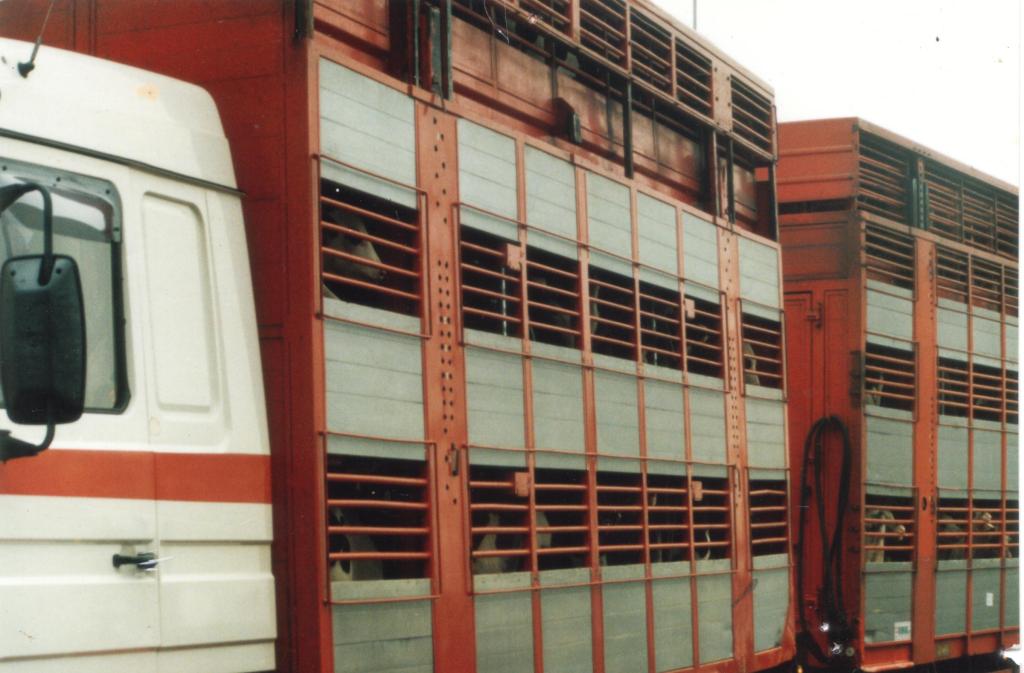
Photo – Mark (WAV)

What we (Eurogroup for Animals) want.

Eurogroup for Animals urges the EU to use the revision of the Transport Regulation to introduce both a ban on the transport of live animals outside its borders, and stricter species-specific requirements for transport across the EU (including species-specific maximum journey times).

Additionally, the EU should work on a strategy to shift from live transport to a trade of meat and carcasses as well as genetic material.

What we at World Animals Voice (WAV) want.

At the very least, a complete end to all animals being exported live outside of EU borders.

A priority to be made for trade in carcass meat ‘on the hook, not the hoof’ to take maximum priority over live animal transport to be initiated by the EU.

A one off maximum journey time throughout the EU of 8 hours or less to be applicable for ALL species destined for live transport.

Major emphasis to be placed on a shift throughout the EU for meat and carcass to replace the transport of live animals.  Empahasis t be made on plant based foods.

A much needed major review of the paltry regulations defined in Reg 1/2005 on the so called ‘protection’ of animals in transport for animals undertaking an8 hour one off maximum journey.

Guarantees from the EU that all member states will comply with animal transport regulations.  Words are not enough, we want actions – member states such as Romania, who are shown to be non compliant, must be banned from the transport of all live animals.

Now that the UK has left the EU (Brexit), and become an independent state once again able to make its own legislation free from the EU, it is currently progressing with an introduction of formal parliamentary legislation which will end the export of live animals for slaughter and further fattening.

Like all UK parliamentary actions, the draft legislation passes between the House of Commons and the Lords, and is scrutinised and amended, until both houses are happy with the draft, which then moves to become formal legislation (law).

Obviously, these actions take time, but they are currently in progress, and soon we hope to announce that the UK has formally stopped the live exports of animals.

But the work for campaigners does not stop with this, which will be seen as a massive victory for animals.  Under the EU, live farm animals will continue to be exported.  So major attention and actions have to be give to EU campaigner friends to get the ban across the EU.

Pipe dreams ? – maybe, but then a few years back if anyone had said that there was going to be an EU act to ban the caging of farm animals, they would have been laughed out of town.  Now it has formally been decided n by the EU, so the hope for very serious actions re live animal transport in Europe is another major campaign.  We are confident; like the cages, the EU has to listen and act to its citizens if it wants to retain any credibility.

Like the cage ban, for live exports, it’s time to evolve !

Regards Mark

Aid for companion animals affected by flooding in Germany.

Aid for companion animals affected by flooding in Germany

29 July 2021 Deutscher Tierschutzbund News

The storms in North Rhine-Westphalia, Rhineland-Palatinate and in other regions of Germany such as Saxony and Bavaria are devastating. The flood caused great damage and also hit animal welfare associations, animal shelters and companion animal owners in the affected regions. Our member organisation Deutscher Tierschutzbund put initiatives in place to help victims.

Animal shelters that got off lightly started aid campaigns at short notice and offered other animal shelters and evacuated animal owners to temporarily take in their pets. Many private individuals also offered their support. 

Deutscher Tierschutzbund has put together lists of groups, organisations and other useful information for flood victims and their animals on their website. They also set up a hotline for animal-related emergencies as well as FAQs .

People who find animals on site as well as affected animal owners from the flood crisis areas, whose animals urgently need help, can contact the organisation. Read more at sourceDeutscher Tierschutzbund – Tiere und Menschen in Not

Regards Mark

Exploring EU-China cooperation to improve animal welfare and food systems.

Exploring EU-China cooperation to improve animal welfare and food systems

22 July 2021

News

On 13 July, Eurogroup for Animals and the Good Food Fund hosted the 9th UNFSS China Dialogue. The event, which gathered participants from the political, business, academic and NGO sectors, explored how the EU and China could cooperate to improve animal welfare, and therefore transition towards more sustainable food systems.

During the webinar, experts stressed the growing importance of animal welfare for consumers, both in China and the EU, paving the way for the EU and China to collaborate on the topic.

Participants also highlighted the importance of animal welfare in achieving sustainable trade and the UN Sustainable Development Goals, as well as the interlinks between animal welfare and human health.

With the publication of the EU’s “Farm to Fork” strategy aiming to foster the transition towards Sustainable Food Systems, and the subsequent announcement made by the European Commission on a future ban of caged productions – which should be applied by 2027, including possibly to EU imports –  the momentum has never been so high for the EU and China to put animal welfare high on their agenda for cooperation.

As noted during the event by Zhao Wanping (NPC delegate), animal welfare draft bills are now submitted every year in China, suggesting that the country is willing to achieve progress on animal welfare. In that context, experts noted that the EU animal welfare requirements for imported products may serve as a catalyst for improving the welfare of farm animals in China, rather than a trade barrier.

Topics of discussion further focused on how to improve food systems through policies and regulations. Increased animal welfare standards were identified by experts as a way to deliver not only sustainable food systems, but also consumer health, ecological balance and food security. From a trade perspective, experts noted that aligned animal welfare standards between the EU and China would grant a competitive advantage to businesses on both sides. The last part of the event was centered on the role of public awareness, with speakers emphasising the significant increase of animal welfare awareness among Chinese consumers, particularly among the young generation.

Want to learn more? Read our brochure

Regards Mark

This Is ‘Bed’ In A Battery Cage. Outlaw Them Now – Stop the Abuse and Suffering !

Imagine never being able to rest or get comfortable, night after night, day after day… 24/7.

For animals in factory farms, lockdown is for life.

Mexico: Huge Victory For Slaughterhouse Legislation – Read The Great News Here.

Hi Mark,

There is more historic progress for animals to celebrate!

Today, I’m writing to you with great news coming from Mexico, and its impact is more far-reaching than you might think.

The problem of intensive farming and slaughterhouses is so widespread that it’s necessary to take strategic global actions to fight it effectively. Animal Equality is based in eight countries all over the world for precisely this reason.

For example, our team in Mexico is committed to pushing its institutions to enact laws to protect animals raised and killed for food, and we’ve worked for years to get results like what I’m about to tell you:

The Congress of the State of Puebla has approved a bill banning unregulated slaughterhouses and the slaughter of animals without stunning with overwhelming, almost unanimous support.

Thanks to this resolution, which comes after a series of meetings Animal Equality had with government authorities, more than 100 million animals will no longer be brutally killed in illegal facilities without stunning.

Read the news here:

This reform will impact countless animals and brings us one step closer to a world in which all animals are protected.

Puebla, Mexico to Outlaw Unregulated Slaughter of Animals (animalequality.org)

In a historic move for animal protection, Puebla, Mexico voted to pass a law that will criminalize unregulated slaughterhouses (also known as “backyard” or “underground” slaughterhouses) and slaughter at live animal markets. The new law will also make it illegal for land animals in the state to be slaughtered without being stunned prior.

Under the new law, which was passed after Animal Equality Mexico participated in talks with various agencies of the Government of Puebla, any unregulated slaughter operations will be shut down and anyone caught slaughtering an animal without prior stunning could face one to four years in prison and a fine.

Following Jalisco, Puebla slaughters the most animals in Mexico and approximately 70 to 80 percent of the meat comes from unregulated slaughterhouses. This reform will impact countless animals and is the second initiative of this type, after a similar ban was put in place in Jalisco in 2019.

The horror of backyard slaughterhouses – video:

But that’s not all.

All unregulated slaughtering operations will be prohibited and sanctioned, and violators of the new law will face criminal charges with a prison sentence of one to four years. 

This is not the first time that a state in Mexico has approved such a revolutionary reform because of our efforts.

In 2019, following our investigations inside several Mexican slaughterhouses, the state of Jalisco approved a historic reform of its criminal code and adopted new laws to protect more than 200 million animals raised for food in the area.

This means that in just three years, our work in Mexico has impacted more than 300 million lives!

These victories show that institutional change is possible thanks to the investigative work and political pressure of Animal Equality and our supporters.

Billions of farmed animals suffer every day without the ability to defend themselves. We have the power and the responsibility to demand they are protected under the law.

Tomorrow, I will tell you about the work we’re doing around the world to expose what slaughterhouses try to hide from you.

In solidarity,

  Sharon Núñez President

P.S. Mark, the Mexican state of Puebla has approved a law that prohibits unregulated slaughterhouses and the slaughter of animals without stunning. This is a huge step forward that will impact the lives of more than 100 million animals!

Read the historic news.

Regards Mark

Lopburi: monkeys conquer city in Thailand

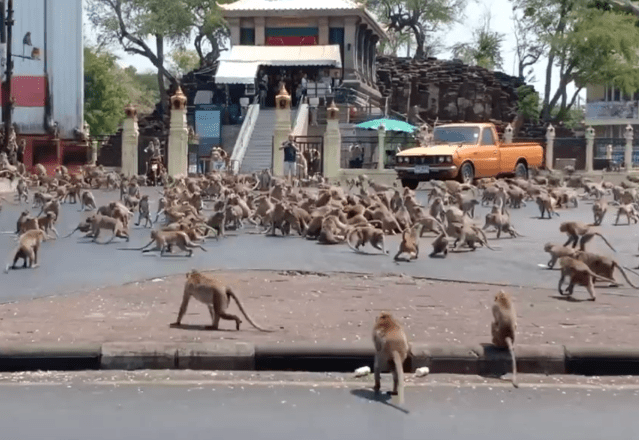
In the videos that are circulating on the Internet, two large groups of monkeys can be seen attacking each other and terrifying commuters at an intersection.

As the monkeys continued their fight, people were seen waiting on motorbikes and cars while some tried to avoid the commotion, fearing they might get involved in the fight.

The insane incident took place near Prang Sam Yot, in front of Phra Kan Shrine in Lopburi, a popular tourist destination in the country that is home to thousands of monkeys.

Food was very difficult for the monkeys to find due to restrictions keeping tourists out of town and a lockdown that kept even most of the locals in their homes.
It appears that hunger led to the struggle between the two groups.

“Monkey fights are common in Lopburi. It’s not unusual. It’s about the power struggle, the food struggle, the fertilization of the females, “ said a spokesman for the Department of National Parks.

He said it was impossible to stop the monkeys when they attacked each other and when people started honking their horns louder to scare them away it only made matters worse.

“Several monkeys were injured as a result of this incident.  The road was covered with blood. And only when the leader of the losing side gave up did they withdraw “.

However, it is not the first time something like this has happened. In 2020, two gangs of monkeys were engaged in a fight in the same city and the video sparked a serious discussion about how to deal with animals during the pandemic.

Many had argued that tourism changed the behavior of these monkeys as they now expect to be fed by humans.

The government speaks of sterilization as a solution and wants to sterilize 500 monkeys, but capturing them is not that easy

https://wildbeimwild.com/kunterbunt/affenkaempfe-in-thailand-legen-verkehr-lahm/46834/2021/07/27/

And I mean…When monkeys pick coconuts from the trees in Thailand and stay chained to a short leash for life, it is believed to be useful and economical.

Before Corona, these same monkeys were tolerated by the locals as tourist attractions: The tourists fed the animals, paid money for photos – the city had around 6,000 monkeys under control!
Wildlife across the country annually attracts over 35 million tourists who come here every year and make up around 20 percent of the economy.

But then Corona came, the tourists stayed away, and of course the monkeys are now hungry and aggressive!
It’s about survival!
And man is looking for a solution!

Human animals wage bloody wars against their weaker conspecifics, even when they are not hungry.
In this case, however, we are not looking for a “solution”, but we are financing the arms industry on top of that.

We are also against wars wherever they take place, which is why we propose the following solution: Sterilization for all arms dealers and operators of the war industry.

My best regards to all, Venus

Is that a fine world?

There is already a lot of meat coming to Europe from South America, where the animals are kept up to 40,000 in a loth of cattle and you can imagine what is being cut down there because we Europeans buy their meat.

(to see the video, click on the picture)

A large part of soy production is not used to make tofu, but to feed animals:
In order to manage their 30-40 liters + a day, the cows have not been given grass for a long time but also high-energy soy.

Less than 10% of the soy produced worldwide is also consumed by humans.
Most of the rest goes as fodder for the cattle of the rich countries

Therefore: When carnivores accuse vegans and vegetarians of being responsible for rainforest deforestation, it shows clear cynicism.

There is no basic right to eat meat every day.
We are by no means dependent on meat, otherwise we would probably have been extinct long ago or would never have been able to spread as we actually did.

We can turn ourselves upside down, search for and invent exceptions, but today with a world population of 7.5 billion and an economic system designed for competition and profit, there is no longer any product for which animals are domesticated and which do not suffer infinitely.

And because this system cannot be reformed in the short and medium term, it is entirely up to the consumer to reduce and end this endless suffering through his consumption.

Meat consumption is one of the greatest ecological problems on the planet.
Those who deny this are lying to themselves consciously and shamelessly.

Veganism, on the other hand, is a promising way to soon be able to feed 10 billion people adequately without completely destroying the earth.

It would be time to pull the emergency brake, otherwise a potentially catastrophic climate change and the sixth mass extinction of biodiversity can no longer be prevented.

Best regards to all, Venus

Crocs goes vegan- the vegan industry is growing

The shoe brand Crocs has announced that it will be completely vegan by the end of 2021! 👏
We are happy about this animal-friendly decision. ❤
Do you also stand up for people, animals and the environment and choose vegan shoes in the future. 🙌

PETA Germany

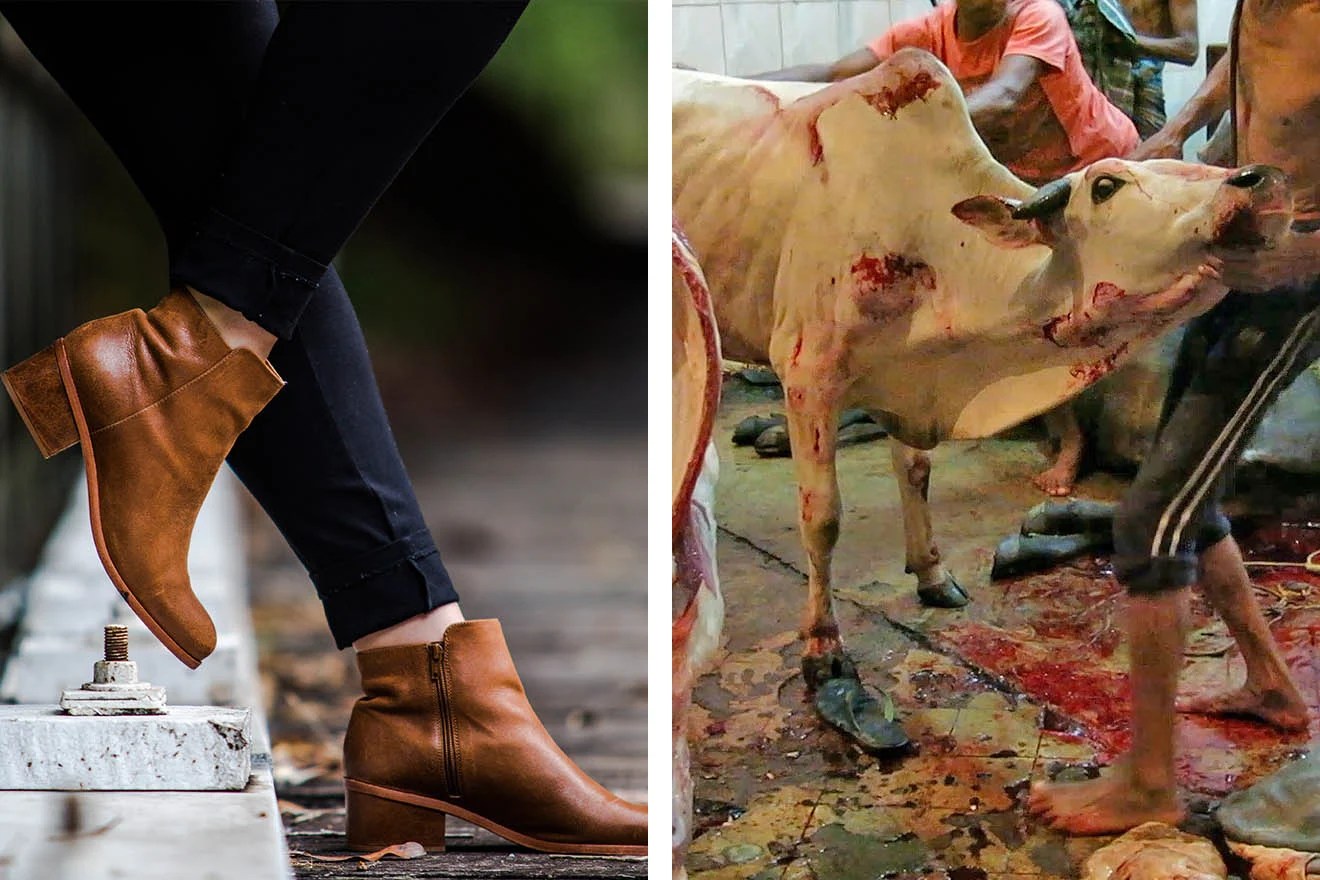
And I mean…“Nowhere is the lack of sustainability in the shoe industry more evident than in leather production”.

This quote is from the book “Foot Work. What your shoes are doing to the world ” by Tansy E. Hoskins.

According to Hoskins, around 24.2 billion shoes – especially sneakers – are produced each year, the majority of which are made of leather.

One cannot imagine how many animals have their faces marked with a branding iron and the throats cut with a knife in the slaughterhouse.
In her book, Hoskins describes how many cattle are simply sold to the highest bidding slaughterhouse – no matter how far away it is.
We recommend this book.

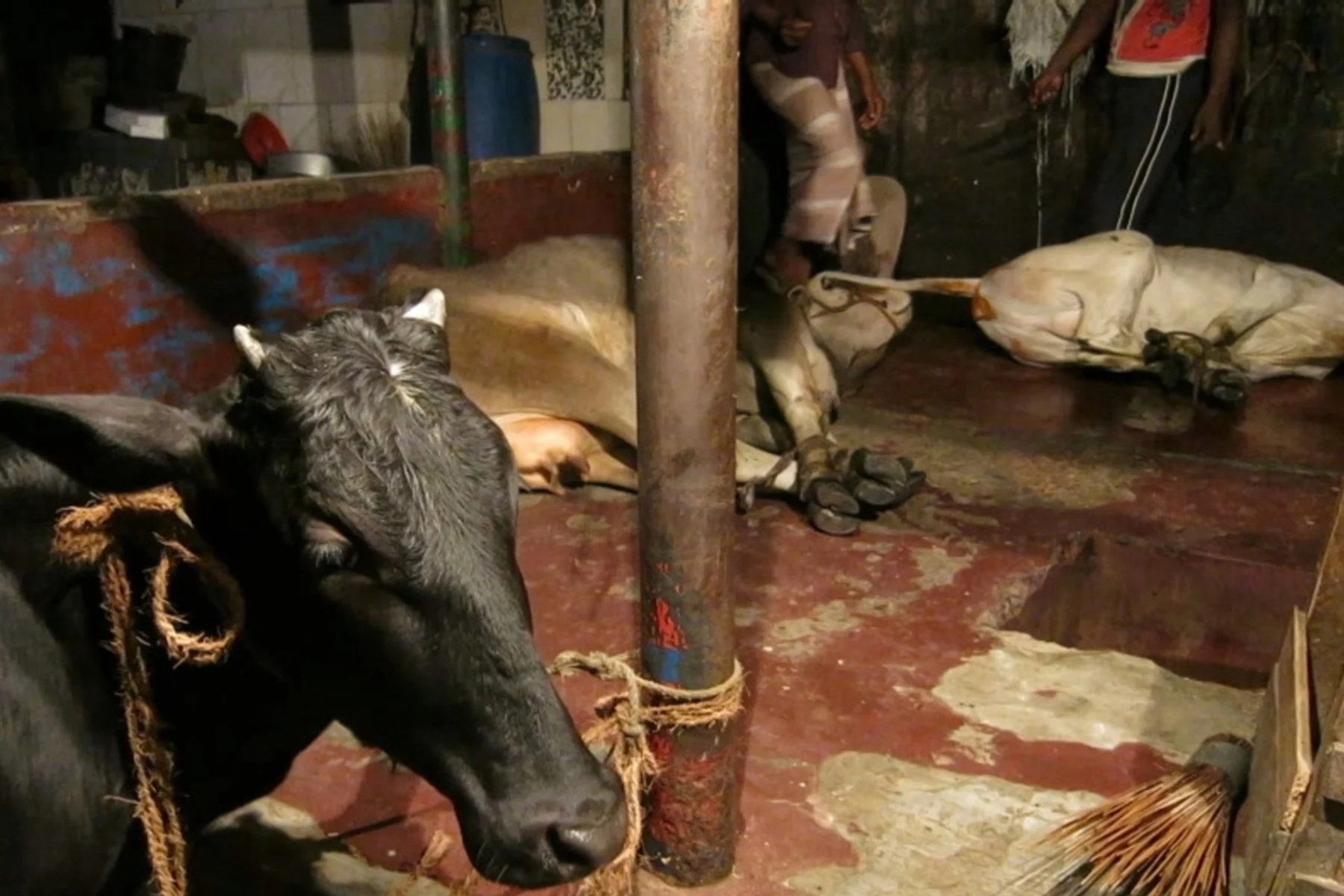
For the production of leather, animals are transported from Brazil to Turkey, Iran or Lebanon and killed there – including animals from Germany and Austria. During transport, they stand in their own feces and urine for weeks without adequate food and water.
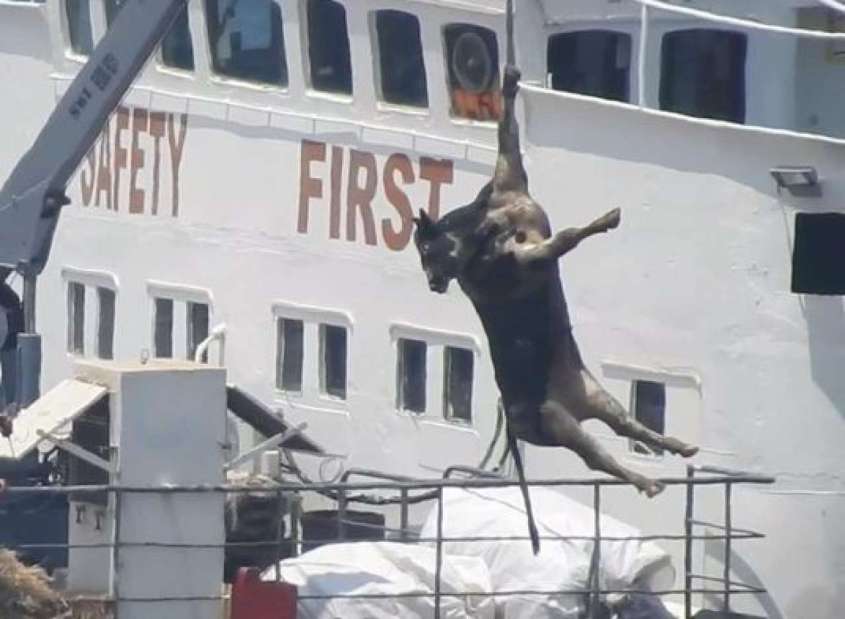
Weakened animals that can no longer stand or walk are forcibly dragged from transporters and, when unloading ships, are even lifted from board with cranes hanging on one leg.

The hides that are processed in the shoe and bag industry today come to a large extent from cattle, but not only. The hides of sheep, horses, goats, pigs and even cats and dogs (from China) are also used.

According to research by the animal welfare organization PETA, the growing leather industry in India is perhaps one of the cruellest in the world.
Here the spectrum ranges from beatings, chillies in the eyes to slaughter with full consciousness amidst dead animals.

Europe is one of the main importers of cheap Indian leather. Even the shoe made in Italy is very likely made from a non-European animal skin.

We are pleased with the decision of the shoe label Crocs, and we hope that many other companies will soon make the same decision.

Anyone who buys leather should be aware that they are supporting this unethical cycle.
Every purchase of leather goods promotes criminal factory farming and the meat industry. And since factory farming is one of the biggest causes of global warming, every leather shoe makes its contribution to climate change.

Animal-free leather alternatives based on apples, cork or polyurethane (PU) are a thorn in the side of the leather industry.
They are now an increasingly popular alternative to animal skins.
Vegan leather is significantly more ecological and, above all, is produced without animal suffering.

vegan eco-shoes NOAH

With the large and varied selection of vegan shoe and bag products that already exist on the market, the topic of previous leather shoe procurement has been shelved.

My best regards to all, Venus

EU: stop subsidizing bullfighting

As more and more people realize how cruel bullfights are, the interest in the sadistic events decreases and with it the income.
But the bullfighting industry is kept alive, among other things, by EU subsidies.

The EU continues to promote the breeding of “fighting bulls” – and with it the suffering and death of countless animals.

Millions of euros from Germany for the bullfighting industry

Agricultural businesses in Spain that breed “fighting bulls” receive around 130 million euros in agricultural subsidies for their land from the European Union.
These subsidies contain around 31 million euros in tax money from Germany, as it contributes 24 percent of the EU budget.

This means that German taxpayers – whether intentionally or unintentionally – help finance the cruel bullfights in Spain.
Austria also supports the horrendous subsidies.

Bullfights are against the European Convention

The European Convention for the Protection of Animals in Agriculture stipulates that animals must not be exposed to unnecessary or prolonged pain.
However, the breeding of “fighting bulls” means that the animals are slowly tortured to death with great pain and suffering.

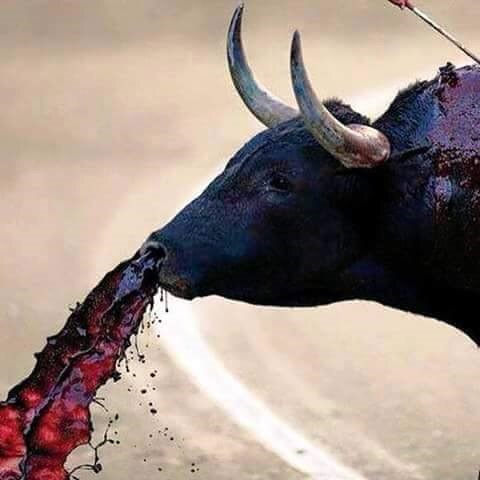
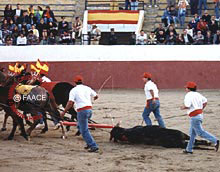
In bullfights, the bulls are beaten to exhaustion with lances and wooden sticks with barbs.
In their agony, they are incited again and again and chased through the arena.

The supposedly redeeming stab in the back does not kill the animals immediately. Conscious, paralyzed in pain, they are dragged out of the arena by their horns with chains.

They are then hung upside down and their necks cut open so that they slowly bleed out.
Many thousands of bulls are tortured to death in arenas in Spain every year.

PETA hands over petition to MEPs

In October 2015 we from PETA Germany handed over a petition with over 11,000 signatures to the German and Austrian MEPs for an end to EU subsidies for the bullfighting industry.
At the end of October 2015, the EU Parliament voted on whether Spanish fighting bull breeders would continue to receive agricultural subsidies from the EU.

Unfortunately, the amendment intended to abolish subsidies for the bullfighting industry was rejected in November 2015.

Continue reading “EU: stop subsidizing bullfighting” →