The moment one rabbit sees what’s about to happen and tries to hide is so hard to watch😢pic.twitter.com/ALEXKRkRvg
— PETA UK (@PETAUK) July 25, 2021
Category: General News


WAV Comment – Sounds better than it has been, but we want more than words; like actions ! – we will be watching and reporting any issues that do not take animal welfare to ‘the next level’. Do things right – stay out of the news; do them wrong, make headlines for all the wrong reasons – simple really.
Tyson takes animal welfare to next level with its ‘Five Domains’ platform
SPRINGDALE, ARK. – After making the decision to take the next step in its animal welfare approach from the industrywide adoption of the “Five Freedoms” framework, Tyson Foods Inc.’s Office of Animal Welfare team is leading the company’s global transition to adopting the “Five Domains” science model, which focuses on assessing the mental state of animals to determine their needs and improve animal welfare practices.
By implementing the Five Freedoms across the company’s global operations officials from Tyson’s Office of Animal Welfare said the company can realize its vision to lead the industry in animal welfare by combining compassion with science.
“Part of being a leader means being open to creative thinking, innovation, and evolving knowledge and practices,” Tyson said.
While the Five Freedoms focused on avoiding the negative aspects of animal care, the Five Domains focus on how nutrition, physical environment, health and behavioral opportunities ultimately play a role in the mental state of animals.
“For decades, the Five Freedoms have provided an essential foundation for conceptualizing animals’ welfare needs,” said Candace Croney, PhD, professor of animal behavior and well-being and director of The Center for Animal Welfare Science at Purdue University. “As animal welfare science has advanced, however, the importance of promoting positive (physical, behavioral, and mental) states of welfare in addition to minimizing negative states is increasingly recognized. Incorporation of the Five Domains reflects the leadership mindset needed to facilitate thought processes, actions, and outcome measurements aligned with achieving these goals.”

According to Tyson, research-based learning and the evolution of ideas is part of continuous improvement, and the Five Domain program facilitates a better understanding of assessing how a range of factors effect animals’ mental state and how they influence anima welfare outcomes.
“Incorporating the Five Domains into our daily conversations and actions is essential for Tyson Foods to drive continuous improvement in our welfare program and culture throughout our global operations,” said Ken Opengart, DVM, vice president of global animal welfare at Tyson Foods.
The Five Domains spotlight positive opportunities versus the emphasis on the negative experiences of animals that have been the hallmark of the Five Freedoms for the past 25 years. The new approach focuses on the components effecting the mental welfare of the animal to assess its overall welfare and apply the knowledge-based science to each species’ behavior, biology and ecology.
“Tyson’s adoption of the Five Domains represents an admirable commitment to embrace animal welfare improvements in a scientifically sound, evidence-based way,” said Dorothy McKeegan, PhD, senior lecturer in animal welfare and ethics at the University of Glasgow. “The Five Domains model represents the forefront of current efforts to conceptualize and assess animal welfare.”
For more information on Tyson Foods’ animal welfare and sustainability practices, please visit tysonsustainability.com.
Tyson takes animal welfare to next level with its ‘Five Domains’ platform | MEAT+POULTRY
Regards Mark


‘They had a date to kill the cow. So I stole her’: how vegan activists are saving Spain’s farm animals
Spain may be famous for its love of meat – but sanctuaries across the country are coming to the rescue of its doomed cows, bulls, pigs, sheep and geese
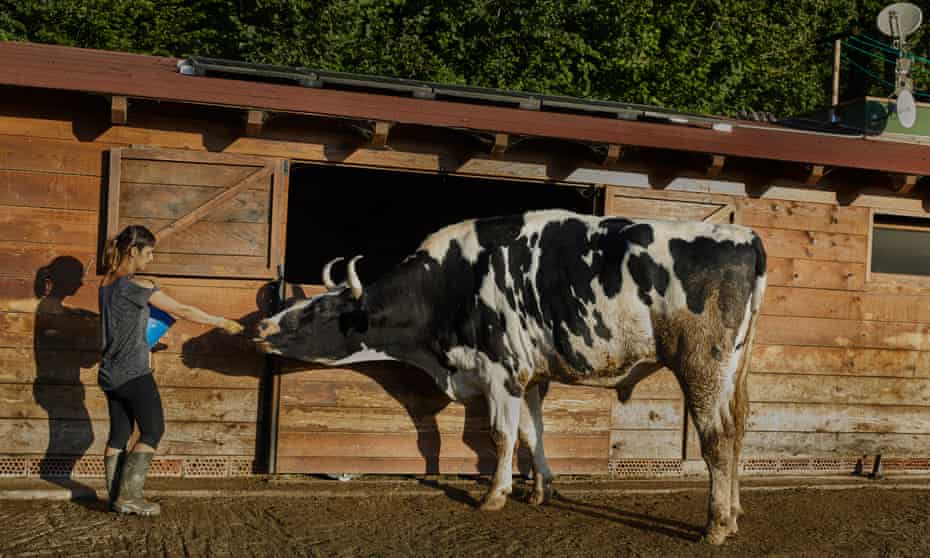
In the north-east Spanish region of Catalonia, an enormous bull called Pedro is poking his head over a barn door to look at some sheep. He’ll stay there for two hours if the sanctuary volunteers let him; he’ll have to be tempted away with treats so that the sheep can be let out to graze. Pedro knows the routine; he’s been here since he was a calf, when he was bottle-fed by volunteers. He lives a charmed life – he is fed, he roams, he watches sheep, he sleeps; and when he dies, it will be of natural causes.
“He’s enormous!” I say to Olivia Gómez de Zamora, a veterinary assistant from Madrid who spends a lot of time coaxing Pedro from the barn.
Gómez de Zamora tells me this type of cattle is bred for its milk. “The adult males are slaughtered for meat,” she says. “So we never see them.”
Fundación Santuario Gaia, where Pedro lives, and El Hogar are two of about 20 animal sanctuaries in Spain where vegan activists dedicate themselves to rescuing animals, creating a place where they can live without being put to work or slaughtered. The employees and volunteers spend a huge amount of time in each other’s company. Some might call it intense: they live and work together, cook and eat together, and there are leisure activities such as movie nights and debates. The sanctuaries are connected via WhatsApp, where they share veterinary information and coordinate animal rescues.
We’re used to seeing dogs and cats saved from abuse or neglect, but at Gaia and El Hogar – around two hours’ drive apart on either side of Barcelona – most of the animals are pigs, cows, goats and chickens. Gaia co-founder Coque Fernández Abella, 43, an animal rights activist and vet, says: “We wanted it to be for so-called farm animals because they are the most forgotten. No one takes care of them because they’re seen as products.
“Growing up,” he adds, “it was typical to kill pigs to eat at home. Since I was small I had to help with it – it was horrible, because of the screams, but you had to do it. I remember when we rescued our first pig, the memories of the killings came back to me. After everything bad I’ve done in the past, it’s right that I should help animals now.”
The sanctuaries are havens for animals that, rather than being killed for meat or shackled for dairy production, live happily and freely. They are fed and exercised, given medicine if they’re sick, rehabilitated if they’re injured and – the main privilege denied to most farm animals – allowed to live long lives.
Veganism and such care for animals may seem surprising in Spain. Matador directly translates as “killer”. Surely animal-rescuing vegans are an oddity in the land of bullfighting and pata negra?
“It’s true we are very much into ham and bullfighting,” says photographer Ana Palacios, who stayed at both sanctuaries for two weeks, capturing their daily goings-on. “But in the UK, you guys hunt foxes!” While the carnivorous tradition is there, especially in the south, “it isn’t that popular among young people,” Palacios says. But veganism is increasing in popularity in many countries – even the ham capital of the world. Between 2017 and 2019, Spanish study the Green Revolution found a trend towards plant-based eating. In 2017, 0.2% of Spaniards identified as vegan; by 2019, it was 0.5%. Vegetarians account for 1.5% of Spain’s population. Animal welfare was the second most common reason cited for going vegetarian or vegan (23.8%) after health (67%).
Gaia employee Marta Sampaio, 24, says her parents were concerned when she made the decision to stop eating meat, aged 15. Now, any time she’s ill, her enthusiastically carnivorous father is convinced her diet is to blame. She travelled to Spain from Lisbon to find a place to work with animals. After training for a few months as a veterinary assistant, she Googled vegan sanctuaries in Spain, and started as a volunteer at Gaia. She found herself empathising, unexpectedly, with chickens. Her first was a chick called Angie, brought in by a girl who found her wandering alone in the road. Because chickens are bred to produce eggs every day, all year round (rather than in cycles of a week or so, two or three times a year), they’re frequently sick. Sampaio has gained a reputation as the “crazy chicken lady” for her habit of taking the sick ones home. “Angie was a baby and didn’t have any brothers or sisters, so she couldn’t be with the other chickens,” she says. “I kept her at home and she slept with me, in the crook of my shoulder.”
Gómez de Zamora left her veterinary assistant job in Madrid to work at Gaia, and stayed for two years. Now back in Madrid, she still collaborates with the sanctuary, but is filled with grief for one animal she cared for there. Her eyes well up and her voice cracks as she remembers Juana the goat, who had a mass on her spine that caused paralysis. “The time I spent with Juana was very beautiful and very painful, because we were aware of her complicated prognosis and that the moment was coming when we wouldn’t be able to do any more,” she says. “It was hard: you had to be OK for her, because her mind was still OK, even if her body wasn’t. You had to make sure she was still enjoying life, and going out in the sun in her wheelchair.”
It’s easy to imagine vegan animal sanctuaries as soft, emotional places, but there is a steely side. Animals aren’t just rescued from the sides of roads: sometimes they’re swiped from state execution. In 2017, the El Hogar sanctuary made headlines after rescuing a bullfighting cow called Margarita.
Margarita had an irresponsible owner. “When he got drunk with his friends, they would chase her on horseback,” says El Hogar founder Elena Tova. “She is still afraid of men.” The authorities discovered he hadn’t legally registered Margarita; under Spanish law, unregistered cows must be killed as without a vaccine record, there is a risk their meat could make people ill, or even cause a pandemic.
“They couldn’t be reasoned with,” says Tova, who explained again and again that she wanted to take Margarita to a vegan sanctuary to live out her natural life; they could guarantee she would never be used for meat. “They didn’t want to change the law or make exceptions. So we created a page on change.org calling for Margarita not to be killed. It got 190,000 signatures in less than a month.” She convinced the owner to let them take Margarita. “But it wasn’t enough: the vets still wanted to kill her. They made excuse after excuse and drowned us in red tape, until a judge who felt for us wrote to me to say, ‘They’re not going to give you the cow’ – they already had a date to kill her. So I went one night, under cover of darkness, and stole Margarita.”
Continued on Page 2

WAV Comment – Here we go, MBR also sorting out Covid 19 – everyone is on this bandwagon to justify their actions.
I (Mark – WAV co founder) have lived with Multiple Sclerosis (MS) for the last 22 years; and around 15 years ago I was told by the MS Society / Neurologists that it (the cure) would all be sorted within 5 years. 10 years after the ‘closing date’ and I still have MS; like many other sufferers, waiting for the day.
Talking of good ‘Cure’ – here is one of my favourite English bands – ‘The Cure’ live at ‘Pinkpop’ in the Netherlands:
Worthy of note – Animals DO NOT suffer from MS, which is an illness where your immune system wrongly attacks the nerves of your body, instead of protecting them. It is called ‘demyelination’. So why artificially make animals have MS (when they naturally dont) and then use them to find a ‘cure’ for humans ? – it makes no sense, never has and never will. For me, positive research would find out why animals dont get MS and humans do get the illness. Even as a sufferer who wants a cure, I will NEVER support the use of any animals in any medical research to find that golden fleece cure. Medical cures will only come through non animal research; the last 15 years of bullshit about a MS cure have told me that animals suffer in research for nothing. Big Pharma keeps the bucks rolling in with the promise, but never really delivers. You could say that they have got it all wrong and are making big bucks by thrashing out false promises to us all.
I have and take NO medication for my MS. I control things by living a vegan diet, well away from meat and dairy. I think it works – I think I can still do things on WAV !
Regards Mark.
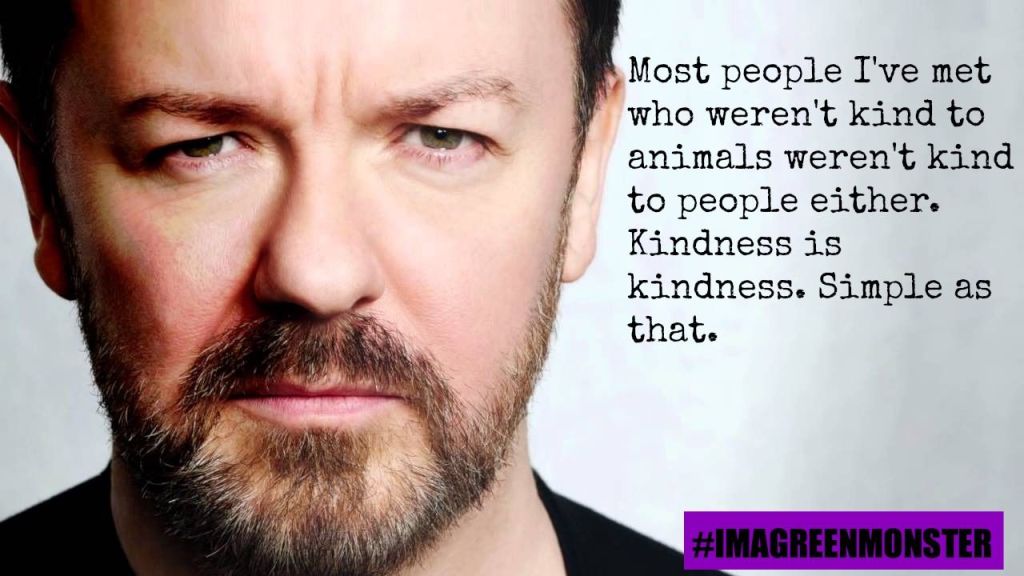
Ricky Gervais lobbies for ban on all animal experiments after calls for breeding centre to close
Fellow actor Peter Egan calls for inflicting suffering on laboratory animals to be made illegal
Animal rights campaigners set up a protest camp at a “factory farm” that breeds puppies for laboratory experiments after comedy actor Ricky Gervais launched a campaign to ban all tests on animals in the UK.
The protesters said they wanted to close down the site in Cambridgeshire, which breeds beagles that are sold when they are 16 weeks old for chemicals and drugs testing.
The centre denied claims that it trains the puppies to be “laboratory-ready”, including offering a paw for injections and accepting paper cups on their faces, ready for wearing gas masks.
Animal rights campaigners set up a protest camp at a “factory farm” that breeds puppies for laboratory experiments after comedy actor Ricky Gervais launched a campaign to ban all tests on animals in the UK.
The protesters said they wanted to close down the site in Cambridgeshire, which breeds beagles that are sold when they are 16 weeks old for chemicals and drugs testing.
The centre denied claims that it trains the puppies to be “laboratory-ready”, including offering a paw for injections and accepting paper cups on their faces, ready for wearing gas masks.
Gervais and fellow actor Peter Egan are lobbying against all animal experimentation and calling for laboratory animals to be included in the Animal Welfare Act, which outlaws causing animal suffering.
Activists who monitored the breeding site at Huntingdon for more than a year described “harrowing” scenes.
They said they saw workers grabbing dogs by the scruff of the neck and piling them into overcrowded trolleys, and dogs in crates cried “pitifully” as they were loaded onto a lorry.
The site, called MBR Acres, owned by US company Marshall BioResources, breeds up to 2,000 puppies every year, most of which are sent for toxicology tests at UK laboratories.
Toxicology testing often involves force-feeding animals with chemicals or making them inhale pesticides.
Critics say this can be done every day for up to 90 days with no pain relief or anaesthetic, before the dogs are killed.
But the company says most experiments are mild, such as taking a blood test, and the results are used to develop vaccines, such as the Covid-19 jab.
He is patron of a group called For Life on Earth (Floe), which wants the government to launch a pioneering “public scientific hearing” on whether animal experiments can predict responses in human patients, with independent scientific experts as judges.
Renowned primatologist Jane Goodall has backed the idea, and SNP MP Lisa Cameron has tabled an Early Day Motion calling for the hearing.
Louise Owen, founder of Floe, told The Independent that if the science hearing took place, animal experiments would end “because the government would recognise they were out of step with current scientific knowledge and harmful to human patients”.
She pointed out that the government’s new Animal Sentience Bill enshrines in law the ability of animals to feel joy, suffering and pain.
Gervais said: “I’m deeply shocked to learn that thousands of beautiful beagles are intensively bred, right here in the peace of the British countryside, for painful and terrifying toxicity experiments that are also now proven to entirely fail the search for human treatments and cures.”
Mel Broughton, of the Free the MBR Beagles campaign, said: “Increasingly, there is scientific opinion that these experiments are not valid in terms of finding cures for human diseases, and these dogs suffer greatly in toxicity tests. They’re poisoned to death slowly.”
A spokeswoman for MBR said the company bred animals raised to be healthy, content and comfortable in laboratories, adding: “It does not undertake regulatory toxicology or other experiments and has only animal care staff working on its sites.
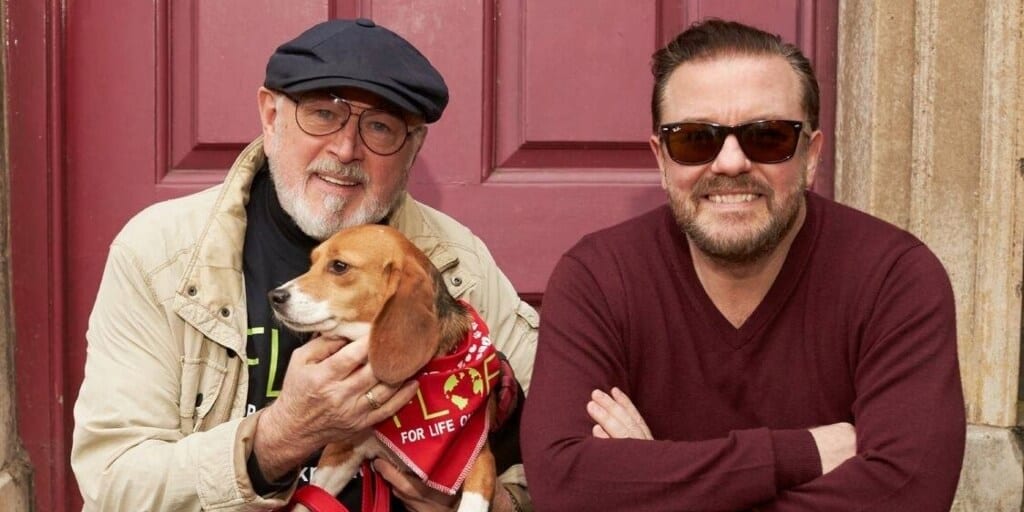
See the short video with Ricky and Dr Ray Greek here:
25/7 – a comment from Celia:
‘Animal experiment are utterly useless and cruel.
Signed by a person who became a life member of the Lord Dowding Fund for Humane Research and the National Anti-Vivisection Society in 1972′. = Celia – Woking, Surrey, UK

WAV Comment. The UK has high animal welfare standards and should be proud of that. Most people dont want antibiotic ridden meat on their plates and produce that comes from nations which employ lower welfare standards. In the end cost is probably one driving factor, but another issue is that all meat products should be clearly labelled to inform the buyer of the standards that ‘their’ chunk of meat was produced around – was it UK or overseas produced ? – if overseas, then where from ? – was it from a non EU caged system ? – was it ritually slaughtered or stunned (properly) at the time of slaughter ?
Thus, clear labelling on food products thus gives the consumer a clear choice about what they purchase. If it bad welfare and cheap, from the far east then the consumer will know. If it is more expensive, but from cage free systems, and with less antibiotics and water in the meat, and killed to an acceptable standard, then the consumer still has the knowledge to buy a product which will cost more. In the UK, research shows that consumers are prepared to pay more for meat which is produced to better welfare standards.
If lower welfare US produced meat does not sell well in the UK, then the British customer has sent a message to the US – simple.
At the end of the day, it should be down to the well informed (clear labelling) consumer to decide. Personally, I think the UK consumer will pay more for higher welfare standards – it has been shown. Farmers, supermarlets, the government, get a grip and tell people the reality about products.
Regards Mark
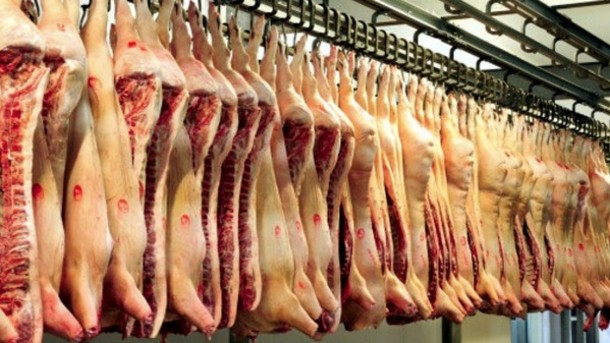
Saving the bacon: will British pig farmers survive a ban on cages?
An end to UK pig confinement is in sight, but producers fear they will be left carrying the cost of high-welfare options in the face of cheap imports
After more than a decade trialling the removal of pig cages on her Yorkshire farm, Vicky Scott has lost confidence in being able to make it permanent.
Doing so would require building a new shed to create enough space to freely house all her pigs, she says. “No one will pay for this. They [the retailers] want products as cheap as chips and consumers want cheap meat.”
Yet, the UK and EU are expected to ban all forms of confinement in pig rearing.
In June, the European Commission confirmed it would table a proposal to phase out the use of farrowing crates, which are used to confine sows before and after birth, by the end of 2023. The UK – and Boris Johnson himself – have made clear that the long-term aim is to do the same.
Crates are used to confine expectant sows until their piglets are weaned after four weeks. They restrict the sows’ movement, reducing the risk of crushing the piglets.
However, as well as restricting sows’ natural behaviour and movement, including nest-building and interacting with her piglets, there is also evidence the crates increase the risk of stillbirth.
The pig whisperer: the Dutch farmer who wants to end factory farming
Piglets are vulnerable to being crushed by sows if they are not in a crate, but the overall mortality rates can be managed, says pig specialist Emma Baxter, from Scotland’s Rural College. Outdoor pig systems, where pigs are not confined, consistently return average piglet mortality rates similar to indoor ones where the pigs are confined, she says.
Given the majority of pigs in the UK are reared indoors because outdoor rearing is limited by soil type, producers will need to be able to adopt high-welfare indoor alternatives to farrowing crates, says Baxter.
Continued on Page 2
I think Starling murmurations are a really wonderful sight of what nature is about.
Sit back and enjoy – Chill !
Regards Mark
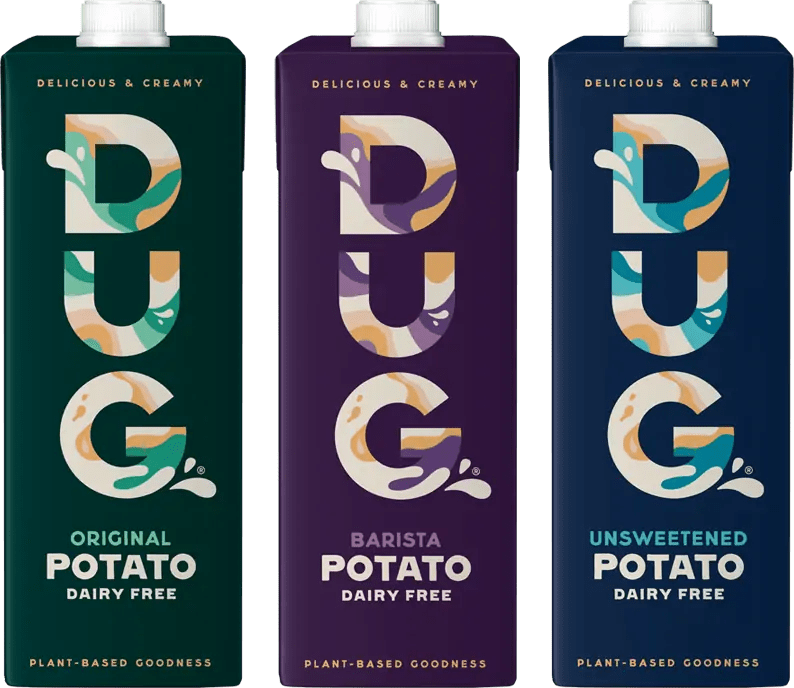
The Swedish food innovators from Veg of Lund and Professor Eva Tornberg from Lund University recently developed and launched an innovative potato-based milk alternative (DUG®).
The product brings Veg of Lund closer to its goal of helping more people live a plant-based lifestyle that benefits their health, society and the future of the planet.
The company’s products are designed to make it easy for everyone to choose an uncompromising, plant-based, tasty and sustainable option.
In particular, the Swedish company is committed to environmental sustainability and minimizes its climate footprint through efficient land use, low water consumption and low carbon emissions.
The company’s products also play a major role here.
According to Veg of Lund, potatoes dug out of the ground are the perfect basis for a milk alternative thanks to their ingenious properties (tasteless, very nutritious and super sustainable).
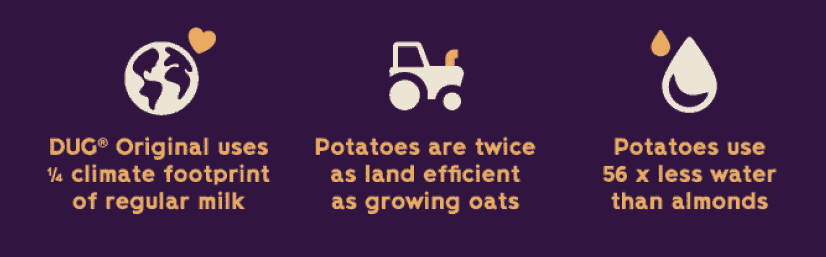
In addition, potatoes are naturally free from common allergens such as those found in soy, nuts or wheat products, which are often used as the basis of many milk alternatives on the market.
Due to its “free from” status, DUG® was recognized as the best allergy-friendly product at the latest World Food Innovation Awards 2021.
It was also awarded a “Highly Commended” in the “Best Herbal Drink” category.
DUG is available in 3 delicious variants: Barista, Original and Unsweetened. It was recently launched online (June 2021) at http://www.dugdrinks.com, Navesu, and Amazon.
Negotiations are also ongoing with several food retailers.
https://vegconomist.de/food-and-beverage/dug-die-erste-milchalternative-auf-kartoffelbasis/
And…We are very happy about the new product!
It’s nice if we can soon enjoy our cappuccino with potato milk.
My best regards to all, Venus
It may feel like the events of Netflix’s documentary “Tiger King” were ages ago, and that the dramatic abuses of both human and animal life have been resolved — Joe Exotic is locked up, his horrific Greater Wynnewood (GW) Exotic Animal Park shuttered, and his criminal partners Doc Antle and Jeffrey Lowe facing charges for various offenses of dealing with and exploiting vulnerable wild animals without proper permitting, licensing, or care.
 The psychopath “Tiger King” -Joe Exotic
But even though he is tied up with the law, Jeffrey Lowe has continued to exploit, abuse, and neglect animals that were transferred to his care when Joe Exotic was sentenced to prison time.
Even though the GW Eoxtic Animal Park was closed, Jeffrey Lowe took its poor imprisoned animals to a new “Tiger King Park” — shamefully named, no doubt, in order to capitalize off of the documentary — where unthinkable cruelty continued.
Sign the petition and demand that the U.S. Fish and Wildlife (USFWS) and United States Department of Agriculture (USDA) save each and every animal from Tiger King Park! If it comes to it, President Biden must get involved!
Luckily, the big cats at Tiger King Park were recently saved from their lives of misery under Lowe’s imprisonment.
Lowe was found to be in violation of the Endangered Species Act for many reasons after USFWS and USDA inspections, which led to the seizure of 69 big cats.
 Rescued big cats from the Tiger King Park
The Justice Department described them as “harmed and harrassed.”
Specifically, many of them were underweight. Some were riddled with worms. Their paw pads were rubbed raw, irritated and deteriorating from completely unsuitable enclosures which also caused lesions and ulcers on other parts of their bodies.
And those were the cats that were saved.
One USDA inspector noted that three young cats, babies just under a year of age, died from malnutrition before they could be rescued from the Tiger King Park, and two others “died under suspicious circumstances during the same time.”
And now, news of the continued and rampant animal abuses towards the poor creatures left behind at Lowe’s facility come from an investigation by the animal welfare non-profit SHowing Animals Respect and Kindness, or “SHARK”.
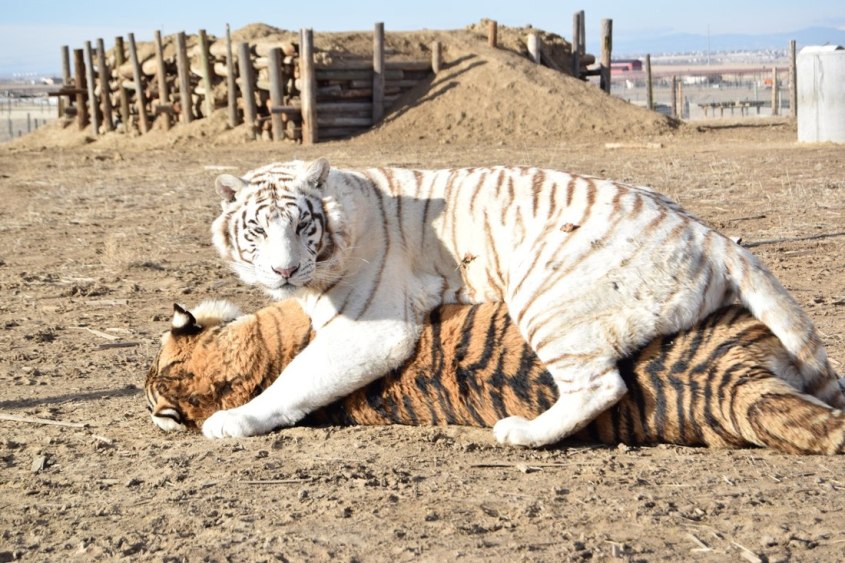 Rescued big cats from the Tiger King Park
You see, the big cats were able to be rescued since they are protected under the federal Endangered Species Act. But many, many other animals still imprisoned there are not so lucky.
SHARK decided to take drone footage of the Tiger King Park after federal authorities left because they had a feeling Lowe would not stop his cruelty.
And they were right. Horses, ponies, goats, wolves, primates, tortoises, lemurs, emus, foxes, and even a camel — the list goes on and on — were filmed in deplorable conditions.
Someone was rarely present to care for the many animals.
The property was littered with garbage, “used cans of oil and bleach,” and worst of all — decaying animal carcasses, piled high and shimmering with flies.
The shelters and enclosure appeared barren and rundown; the camel on the property was filmed lying flat on a dirt floor, straining its poor neck under a metal fence to try and get the blades of grass just beyond its reach.
SHARK president and founder Steve Hindi wondered, “If the camel was really being properly and adequately fed, why does he need to do that?”
Neighbors of the park noticed that some of the animals have literally been let loose, left to fend for themselves instead of being properly cared for — a porcupine, peacock, and albino raccoon were all observed in this way.
Jeffrey Lowe clearly will not stop abusing, exploiting, and neglecting animals for as long as he is allowed to keep them.
That’s why the USFWS and USDA must not stop at saving the big cats from Tiger King Park — they need to remove and save every single creature from Tiger King Park and stop the suffering!
Sign the petition and demand that U.S. leaders including President Joe Biden see that Tiger King Park be completely shut down, and all of its animals rescued!
https://www.thepetitionsite.com/de/280/233/487
And I mean...Joe Exotic, whose real name is Joe Maldonado-Passage, was sentenced to 22 years in prison in January 2020 for an assignment to murder and violate animal welfare regulations.
During his tenure as the owner of the Zoss Greater Wynnewood Exotic Animal Park, he has done some horrific deeds.
He is said to have hired a hit man to kill Baskins, an animal rights activist with whom he had a long-standing feud.
A project that he did not succeed.
Baskin and her organization Big Cat Rescue accused the criminal private zoo owner of serious animal cruelty.
In addition, Exotic is in jail for further offenses, as he is accused of mistreating his animals, among other things.
Although its owner is behind bars, the zoo continued to operate and reopened its doors in early May 2020 after being closed due to the coronavirus pandemic.
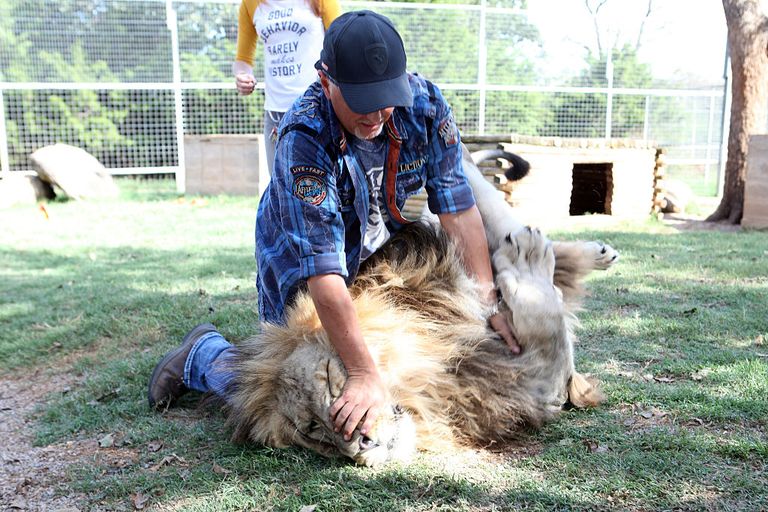 Jeff Lowe
Joe Exotics former business partner Jeff Lowe had taken over the responsible company Greater Wynnewood Development Group, though a federal court in Oklahoma City awarded Joe Exotic’s big cat zoo to animal rights activist Carole Baskin.
After years of litigation, Baskin has taken over the six-acre facility south of Oklahoma City. However, the animals are not included, they have to be relocated.
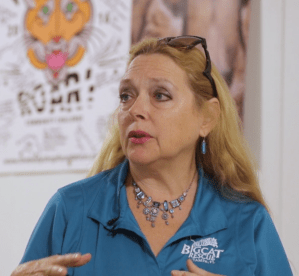 Carole Baskin
Rick Kirkham, producer who worked with Exotic for several months, says: “I saw with my own eyes how he shot two tigers for no reason just because he was mad at them. Exotic threw live chickens into the cages of the big cats when he was having a bad day.
“He was just like that. He enjoyed seeing people and animals suffer. He truly enjoyed it,” recalls Kirkham.
In addition, a former employee raises serious allegations against the self-proclaimed Tiger King.
He is said to have brutally killed at least 100 tigers.
The sadist is also said to have hit baby tigers if they misbehaved.
Please sign the petition.
Experience has shown several times that when the pressure from us, from the public, becomes strong, the authorities do their duty and finally take action.
These animals only have us.
My best regards to all, Venus

News:
Crocs Goes Vegan To Become A Net Zero Company
Crocs said it will no longer use leather in its designs in an effort to cut carbon emissions
Crocs Goes Vegan To Become A Net Zero Company | Plant Based News
Food:
Faux fish looks to ride the growing wave of alternative meats
The Beyond Meat, Impossible Foods of fake fish are surfacing (cnbc.com)
How Black-Owned Restaurants Are Transforming The US Vegan Scene
Figures indicate Black Americans are more likely to be vegan than their white counterparts. Despite this, the movement has long been accused of being elitist. But Black-owned restaurants are turning the tables…
How Black-Owned Restaurants Are Transforming The US Vegan Scene (plantbasednews.org)
Why Going Vegan Is The Most Effective Step To Save The Planet
VEGAN TUNA SALAD FROM JACKFRUIT
Vegan Tuna Salad From Jackfruit | Jane Unchained News
SQUISHO: creating sustainable, ethical and eco-friendly products
SQUISHO: creating sustainable, ethical and eco-friendly products — Plant Shift
And ….
Vegan clothing: tips and reviews
Hiking: where to find vegan clothes, boots and more
How to create a vegan wardrobe
Is it really faux fur?
How to find out if what you’re buying is made from animals
Myth-busting: “It’s hard to find summery clothes that aren’t made of animal products!”
The Compassionate Closet
Vegan tees and tops: samey, boring or hard to find? No way!
The Vegan Mafia
Compassion Co
True Icon
Edelji
Simple Animal
Why vegans don’t use wool
What’s wrong with silk?
Myth “Vegans struggle to find dressy clothes which align with their ethics”
Threads for Love
Compassion Co
Lookie Lou
Compassionate Closet
Meet Hsuan, who creates ethical clothing with awesome messages
Why don’t vegans use or buy fur?
Vegan shoes
Vegan shoes
Vegan shoes for any occasion
Will’s Vegan Shoes
Bourgeois Boheme
Vegetarian Shoes
Beyond Skin
Ethical Wares
Eco Vegan Shoes
Green Shoes
Vegan shoes and accessories by Vegan London
Vegan shoes that won’t break the bank
Vyom London: British made shoes for men
Simple Veganista:
1 BOWL VEGAN PEANUT BUTTER COOKIES
Vegan Peanut Butter Cookies – Easy to make and easier to eat, thick, soft and chewy homemade peanut butter cookies made in 1 bowl with peanut butter, flour, sugar, vanilla and almond milk are the best!
1 Bowl Vegan Peanut Butter Cookies – The Simple Veganista (simple-veganista.com)
RECIPE INDEX
Find hundreds of simple, healthy, tasty vegan recipes, from breakfast, lunch and dinner, and everything in between! Browse from newest to oldest: All Recipes
Vegan Recipes – The Simple Veganista (simple-veganista.com)
Regards Mark

Our Head of Wildlife, Dr. Jan Schmidt-Burbach Sets the Record Straight on the Dolphin Smile
This month, we’re releasing a new video titled Breaking the Myths narrated by Dr. Jan Schmidt-Burbach, our Global Head of Wildlife Research and Animal Welfare.
Jan is an expert on the captive dolphin industry and the author of our report, Behind The Smile. In the video, Jan addresses a common misconception that dolphins smile. We don’t want to give too much away so watch now!
Sincerely,
Nicole Barrantes
Wildlife Campaign Manager
World Animal Protection
PS Looking for more information? Read our Behind the Smile report published in 2019
Additional
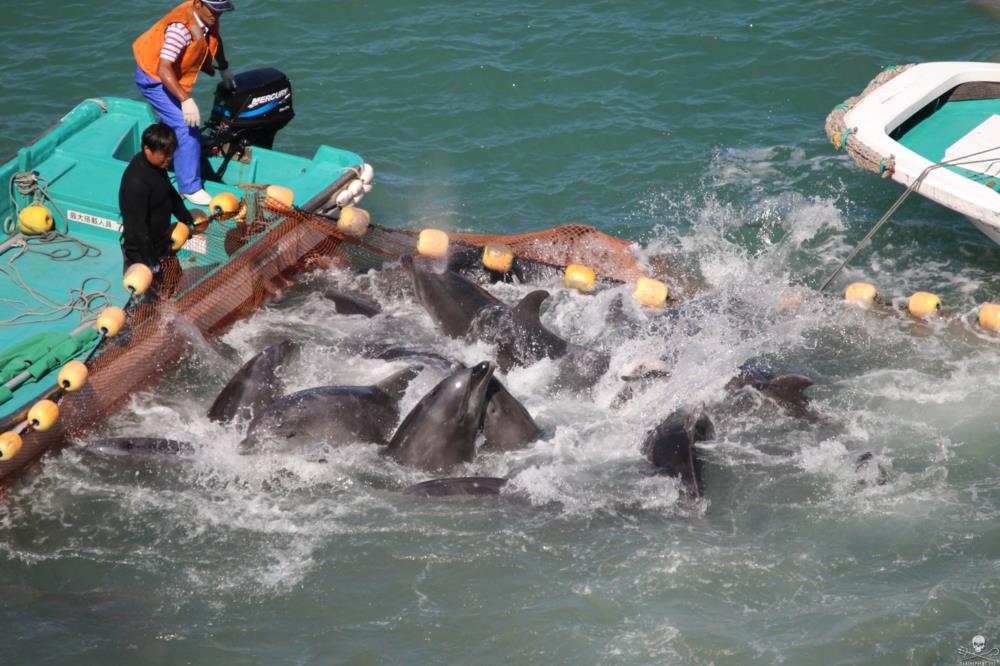
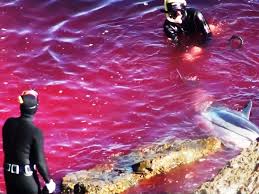
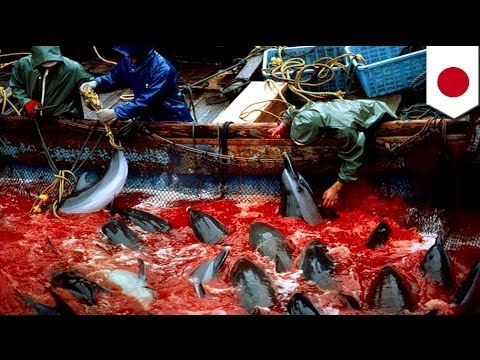
With the Summer Olympics currently taking place in Japan; is it not time to remember what Japan does to dolphins each year, re thee Taiji Hunt ?

Here are a few past links (all under one heading – take your picks to view) of ours (WAV) relating to this massive disgraceful abuse of very intelligent animals.:
Search Results for “Taiji” – World Animals Voice
Regards Mark
Pictures: the Taiji Hunt, Japan.