Category: General News

EU: Finally After Decades of Asking, The EU Consumer May Now Be Given More Detailed Information On Their Food Products – Production; Transportation; Slaughter Method Etc.


WAV Comment:  For decades, we (in past forms), along with other massive numbers of animal welfare groups across Europe, have been calling for this.  Are we now going to see the EU Commission finally wake up and listen to what people have been asking for years ?

One EU wide labelling system is drastically needed, rather than the current dozen different labelling schemes that include farm animal welfare criteria in at least six European countries.  Consumers need to know how their food is produced; is it free range or intensive ? (hopefully cages will go but we need this info earlier); stunned in a slaughterhouse or to religious standards (non stunning / ritual) only ? – we would like to see the country of origin and the country of slaughter; as this will no doubt involve the consumer if the animal involved has suffered live transportation. Labelling needs to apply to ALL products, and to an informative standard, rather than the yukspeak people have had so far. If people knew the facts; we think shoppers would amend their shop drastically. Is this why the EU has never moved on this issue ?

It is time for change, as it was time for change twenty years ago, but then, the EU considered itself above us / more important to bother with issues such as this.  People power is now demanding change, and they want it now; as we have seen with the cage systems; consumers want to know where their food comes from.  We regard this one standard labelling system as a positive move, but ALL aspects of animal welfare must be given / included to a nowdays much informed consumer. 

The days of buying products and not being given any useful information on them has passed, it is now time for change.  Bring it on !

Regards Mark

Close up food label on egg box from ASDA explaining UK Egg Codes. Food  packaging, nutrition labels, food labelling, British produce, food Stock  Photo - Alamy

BVA is campaigning for the introduction of mandatory method of production labelling of meat

Lidl trials new meat 'production method' labelling | Food and Drink  Technology

European Commission gives green light for a comprehensive labelling system displaying the well-being of animals over the whole animal food production cycle

7 July 2021

Today, the European Commission’s Subgroup on Animal Welfare Labelling published its final recommendations giving green light for an EU-wide label on animal welfare which will create greater transparency, better opportunities for farmers and a progression framework to improve animal welfare. In order for the labelling system to be effective, it is, however, important the European Commission commits to a mandatory Method Of Production + (MOP+) label which guarantees a harmonised uptake across food industries in the EU.

MOP+ is the most transparent, progressive and fair labelling method. It gives clear and transparent messaging to consumers about how animals are reared as well as allowing for a benchmarking platform amongst existing labels. It also allows for a progression on animal welfare standards by stimulating improvements on animal welfare and providing a full range of products with different levels of welfare to the consumers. On top of that, it provides farmers with a transparent way of demonstrating their achievements on animal welfare, allowing for a fair compensation of their efforts.

The conclusions foresee the labelling to start off as voluntary and state that the possibility of becoming mandatory should be evaluated at a later stage. They also state that a voluntary label represents a great risk to the impact of the label, since not only could the uptake be low but it would also be likely to only be adopted by producers already committed to higher animal welfare standards. The impact of a voluntary label on animal welfare would therefore be lower than of a mandatory label. This would not serve the purpose of providing full transparency to consumers and a fair level playing field for farmers and certainly would not serve the purpose of improving animal welfare across the EU.

Further to that, the recommendations do not mention the coverage of the label in terms of range of production systems. It states animal welfare labels should cover as many individuals as possible. Eurogroup for Animals asks for the scope to be from minimum EU standards to premium standards, also clearly indicating products that do not comply with the minimum EU animal welfare standards, to guarantee the label’s effectiveness. 

Other positive key points of the recommendations:

  • EU animal welfare label should also protect the use of terms and claims indicating a better welfare for animals.
  • The scope should include not only the rearing but also the slaughter and transport phase. Standards used in animals that are directly involved in the production as sows or cleaner fish should also be included in the label.
  • Besides fresh products, processed products or products used in food services should also be covered.
  • The EU label should help harmonise and take existing labels into consideration, helping the consumer gain more clarity on those. 
  • Active participation of all stakeholders is necessary in the creation of an EU wide animal welfare related label and its development should be monitored and evaluated.
  • Animal welfare is an important part of sustainability, but in case of labelling integration, animal welfare can never be diluted.

Currently, there are a dozen different labelling schemes that include farm animal welfare criteria in at least six European countries, risking the Single Market to becoming fragmented.The European Commission aims to counter this trend and is expected to put forward a proposal for a harmonised food labelling scheme in the context of its Farm to Fork strategy (F2F). At the end of last year, the Council of the European Union on Agriculture and Fisheries also adopted Council Conclusions which had called for an EU-wide animal welfare label aimed at improving animal welfare for as many food producing animals as possible. 

File

Animal Welfare and Food Labelling1.84 MB


ENGA pushes for non-GMO food labelling across Europe


Country-of-Origin Labelling, Food Traceability Drivers and Food Fraud:  Lessons from Consumers' Preferences and Perceptions | European Journal of  Risk Regulation | Cambridge Core
For Shoppers - Global Animal Partnership Animal Welfare Food Labeling

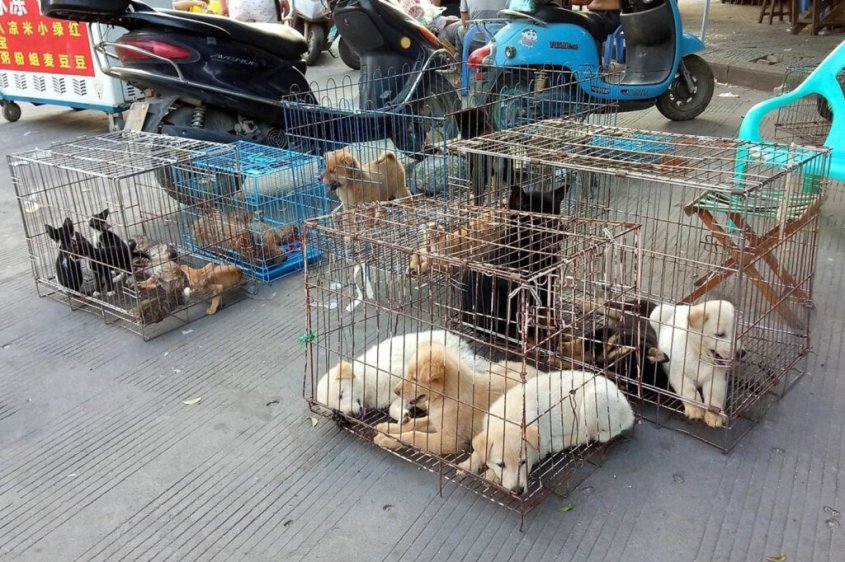
South Korea: KARA rescues 33 dogs from a dog slaughterhouse in Goyang Yongdu-dong.

KARA rescues 33 dogs from a dog slaughterhouse in Goyang Yongdu-dong

Early yesterday morning, Korea Animal Rights Advocates (KARA) raided the slaughterhouse in Yongdu-dong, Goyang City, and, with the help of the Goyang Animal Protection Department, officially took ownership of a total of 33 dogs at that site.🙏

While some of the dogs at the slaughterhouse were extremely afraid of people, others were so happy to see their rescuers it is clear they were once pets. When we leashed the dogs, there were some that walked right next to people. Pitbull, who appeared to have been tied up to protect the slaughterhouse, was also friendly to activists.🐕

Activists who stayed at the front of the slaughterhouse throughout the early morning immediately rescued all of the dogs as soon as abandonment of ownership was decided.

Inside the slaughterhouse, a dog was lying with an illegal electric skewer in his mouth. He was immediately taken to a nearby animal hospital and given CPR, but because of the electric shock the poor dog’s heart had stopped and he couldn’t be revived.😭

The slaughterhouse in Yongdu-dong, Goyang, had been feeding dogs the boiled organs of unknown animals. In the front yard of the slaughterhouse, a plastic bag filled with hair from the bodies of dead dogs was found. Inside the slaughterhouse, many different leashes from dogs that had been caught gave rescuers an idea of how many dogs died there in pain.😢

KARA will file a formal complaint against the animal abuser in Yongdu-dong, Goyang, on charges of beating dogs with golf clubs; slaughtering dogs brought to him by individuals; feeding livestock waste to animals; and slaughtering dogs with illegal electric iron skewers. 

The journey with the 33 dogs rescued from the slaughterhouse has just begun. It may not be easy to domestically adopt out many of those dogs, especially the large ones. There are also dogs who appear to be very unhealthy, and the time and costs to treat these dogs and restore them to health so they may be adopted will be significant.

KARA recently rescued 10 young puppies from a dog farm in Namyangiu, so the 33 dogs just rescued will need to be placed elsewhere due to the lack of a protected space at the KARA’s The Born Center.

💙 Your love and support is desperately needed to help protect and care for the dogs rescued from the slaughterhouse and give them the opportunity for a new chance at life. Won’t you please help KARA care for these poor animals?💗🙏

Learn more and updates at:

KARA rescues 33 dogs from a dog slaughterhouse in Goyang Yongdu-dong – Stop the Dog and Cat Consumption in S. Korea! (koreandogs.org)

Donate to KARA:

동물권행동 카라 (ekara.org)


Past Newsletters:

Newsletters – Stop the Dog and Cat Consumption in S. Korea! (koreandogs.org)


Read this article, combined with more actions to take at:

https://r.newsletter.koreandogs.org/alabj8odtht7e.html?utm_source=sendinblue&utm_campaign=_KARA_rescues_33_dogs_from_a_dog_slaughterhouse_in_Goyang!_&utm_medium=email

Regards to all

Mark

The Baltic Sea Campain-Sea Shepherd in Germany

Sea Shepherd GermanyThe BALTIC SEA CAMPAIGN 2021 started with great success.

During the first weeks of the campaign on Fehmarn and Rügen, eleven ghost nets with a salvage weight of more than 900 kilograms and hundreds of fishing lures were recovered from the Baltic Sea.

These nets, fish hooks and lines will no longer kill marine animals.

Sea Shepherd Germany returns to the Baltic Sea again to fight for the survival of harbor porpoises and many other threatened sea creatures.

In July 2017 Sea Shepherd Germany launched its first ship-based campaign in Germany.

From July 1 to the end of September 2017 and from April to June 2018, the EMANUEL BRONNER and the SIERRA speedboat patrolled various areas in the Baltic Sea. The aim of the campaign was to protect the threatened harbor porpoises, which often perish as bycatch in fishermen’s gill nets.

Illegal networks were documented and reported to the responsible authorities. The patrols also served to record the threat to harbor porpoises and to rescue deadly ghost nets.

Bycatch remains the greatest threat to animals, but fishing with gillnets is allowed, even in marine protected areas.

It is the first Sea Shepherd Germany campaign to use an ROV to effectively monitor networks in protected areas.
Although harbor porpoises, seals and seabirds are known to get entangled in set nets, fishermen deny this and report false bycatch rates.

They are aware that their fishing method is unsustainable and may be banned in the near future if too many undesirable species end up in the nets.

This is why they often disguise bycatch from protected porpoises.

Despite the ban on driftnets from 2008, the number of harbor porpoises caught has not changed, only the number of reported cases.

On the Polish coast alone, ten porpoises were found dead within a short period of time in June. For some of them, attempts had been made to cover up the cause of death with bycatch, for example by cutting open the body.

The harbor porpoises are part of the critically endangered Baltic population. With only 500 animals left, there is no time for weak regulations that allow loopholes.

In areas such as the Putziger Wiek, which are important for the porpoise to survive, all types of fixed nets, such as gillnets, must be banned.

WDC / harbor porpoises // Foto: Duncan Murrell

The harbor porpoise population in the Baltic Sea does not have much time left.

For decades, scientists have agreed that gillnets pose the greatest threat to harbor porpoises in the Baltic Sea due to the high risk of bycatch.
Nevertheless, this fishing gear is also allowed in marine protected areas.

In June 2018, a ruling by the EU Court of Justice (case C-683/16) changed everything.
Several German nature and environmental protection associations tried to obtain a ban on fishing in German marine protected areas, but the request was rejected.
Because a ban would also affect fishermen from other EU countries, it would be a matter for the EU, if at all.

After years of trying to get a state-level fishing ban to implement EU nature conservation law, the EU is now claiming that the ban is incompatible with other EU legislation.

Once again, the interest in profit is higher than the interest in nature conservation. But there are no winners in this situation: gillnet fishing has declined sharply over the past few decades.

It just doesn’t bring enough profit anymore, because the biodiversity in the Baltic Sea is decreasing by humans.
The question now is, what will die out sooner – the Baltic porpoises or gillnet fishing?

If this game of shifting responsibility to other institutions continues for the next decade, the losers will be the porpoises.

https://sea-shepherd.de/kampagnen/baltic-sea-campaign/

And I mean...Pollution, overfishing, warming and acidification are just a few of the issues affecting the ocean as a habitat. The consequences not only endanger life in the water, but also change the climate on land. And our life.

“If the ocean dies, then we all die”.
We are faced with a choice of either doing nothing or trying the impossible.
When consumers order fish in a restaurant or buy fish from the market, they are helping to destroy marine ecosystems around the world because they are also helping commercial fisheries, which are hideous and killing the planet.
Rethink and leave carcasses out of your plate.

My best regards to all, Venus

India: 5/7/21 – Latest From Our Great Friends At ‘Animal Aid Unlimited’.

Homepage | Help injured animals in Udaipur | Animal Aid Unlimited

Every new patient arriving in Animal Aid needs a little time to take in the new smells, sounds and looks of the other animals and the people caring for them. But within a few short days, most have bonded with one special “other”–a new best friend with whom they feel more confident and secure. Every species has their own way of chatting with each other–a word here, a nudge there, the extension of a playful paw.

Rana was terrified and bleeding, but now he’s doing great!

Rana was overcome with fear after being hit by a car. His lower canine tooth was dislodged and bled profusely and he couldn’t stand. Although he had no broken bones, it took several days before he had the strength to stand on his own.

His broken tooth needed to be removed surgically. When he woke up after surgery, Rana was so upset that he wouldn’t eat until he was cuddled and reassured.

We neutered Rana as soon as he was strong enough, and now he’s as good as new. If courage is measured by overcoming fear, Rana proved to be a very brave little boy.

Some little heroes need extra love in order to heal. Please donate today.

Sweetheart Rollie rescued with a horrific wound

A vehicle must have slammed into this beautiful bull at high speed causing a large and painful wound.Several passing motorists called us immediately after it happened, and we rushed to the site to find one of the most gentle beings we have ever met.

From Rollie’s first wound dressing until now, fully healed, he did everything he could to make his difficult medical treatments as easy as possible. And when he healed, Rollie surprised us all by becoming a father figure to the babies.

Innocence comes in all packages. Please donate today.

Sponsor Honey, the sweetest girl in town!

We rescued Honey in 2017 after someone had thrown acid on her back. She had suffered 3rd degree burns over a large part of her back.

This loveable, bright, infinitely charming honey of a girl was so severely burned that we weren’t sure we could save her. It took months for the wound to heal; in fact there is a little portion of her scar that never fully closes which is why we have given her a forever home in Animal Aid.

Honey is playful and truly one of those brilliant dogs who misses nothing, learns in a flash, knows so many concepts and navigates with wit and unstoppable sweetness through currents of ever-changing people and animals.

Click here to sponsor Honey:

Honey | Animal Aid Unlimited

Cub is all better now, rescued after animal attack.

Beautiful puppy Cub lay unconscious after being attacked by an animal.

Worried neighbors stayed by Cub’s side while waiting for our ambulance to arrive. Completely collapsed, this puppy was close to death. We immediately started him on fluids, pain control and antibiotics, allowed him to rest and thoroughly cleaned and bandaged his wounds. At first, he was too weak and exhausted to interact with his caregivers. But when he started to recover from shock, his little tail-wag told us we had reason to hope he could survive.

Be the reason a tail wags! Please donate today.

Celebrate the lives of Annie and Chintu with us.

On Sunday, Animal Aid lost two of our precious family members. Our hearts are heavy in saying goodbye to beloved Annie and Chintu, whose completely unexpected departures on the very same day left us all deeply shocked and sad. Annie’s memorial service was held in the morning and Chintu’s in the afternoon. We took great comfort in the shared sadness between all of our AA team, and each needed extra hugs from the many thriving animals in our midst.

Annie was born by C-section in 2011 after her mother was hit by a car and her pelvis broken. Her mother died in surgery; Annie was the only surviving puppy and we nursed with syringe feeds every 2 hours as she grew and could eat on her own. During the decade to follow Annie was always on the job as a mighty alpha girl who adored attention and ruled her area-mates with an iron paw. You had the feeling that if she trusted you, she would have been a dog who would sacrifice her life to defend you. Annie died suddenly and unexpectedly after falling into a coma in the morning, without any prior signs of illness. Her absence will forever echo through the hospital.

Chintu–well, now, Chintu was a different kind of hero. Partially paralysed from the neck down after surviving canine distemper as a puppy 6 years ago, Chintu’s astounding sparkle shined so brightly that even though he had major mobility issues, he convinced us that he would “manage” and boy, did he ever. A charmer of the highest order, one simply could not pass through Chintu’s area without being stopped by his insistent eyes and delightfully big ears, always laying flat in an attitude of utter gratitude–grateful for the day; grateful to be caressed; grateful for your love. Chintu became extremely ill with an acute systemic infection. We did everything we could to save him, including giving him the strongest antibiotics we could, oxygen, hydration drips and love, but his little body gave up Sunday. We will never stop missing him.

(20+) Watch | Facebook

Regards Mark

London – Global Fur Ban: Natalie Emmanuel And Dame Judi Dench Join Stella McCartney’s Calls.

Global Fur Ban: Natalie Emmanuel And Dame Judi Dench Join Stella McCartney’s Calls

The luxury designer is calling for more people to sign the global fur ban petition – and enlisted the help of the celebs to help spread the word on social media

A host of celebrities are joining sustainable designer Stella McCartney on a campaign calling for a global end to the fur trade.

They include Sir Paul McCartney, Dame Judi Dench, Natalie Emmanuel, and Leona Lewis – among others. Moreover, it’s in partnership with Humane Society International (HSI).

Global fur ban

The luxury fashion designer – that has always been fur-free – enlisted the help of the celebrities to help direct more people to HSI’s petition that calls for a final end to the ‘cruel’ practice.

It involved a video of Dame Judi Dench posted on Instagram. In it, she pleads: “Every year, 100 million animals are bred and killed for their fur to supply to the fashion industry.

“I’m Judi Dench and I’ve long been an advocate of animal rights. Please will you join Stella McCartney and me and sign a petition? Don’t let them use fur. Please join us.”

Game of Thrones star Natalie Emmanuel added: “Our time has come. Animals are our equals. Animals are friends, not fashion.”

Additionally, in another video, Stella called on people to sign the petition in a cameo with her rock legend father, Sir Paul McCartney.

Stella McCartney campaign

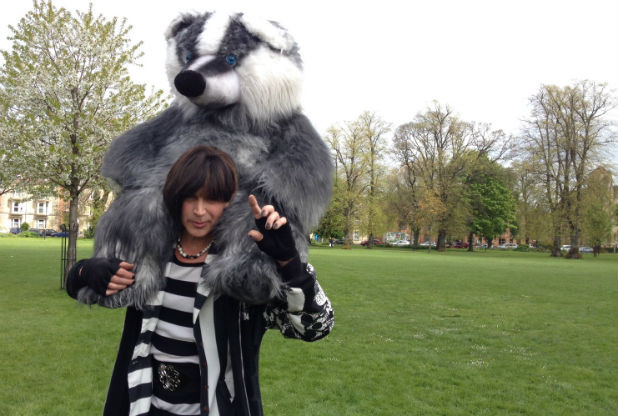
The videos feature the celebrities sporting animal head costumes in collaboration with the designer’s most sustainable collection to date.As part of the Autumn 2021 collection, models wore the animal masks to show all creatures as equals. This was promoted in a mockumentary video narrated by David Walliams.

Moreover, it comes after Stella McCartney successfully staged protests in London’s Piccadilly Circus and Duomo di Milano in Italy.

Fur Trade

Whilst Stella McCartney claims to have already prevented 60,000 animal deaths by avoiding using animal fur, leather, or feathers: the industry remains very much alive.

Claire Bass is the Executive Director of the UK branch of Humane Society International.

In a statement sent to PBN, she said: “Stella McCartney’s new campaign and brand is everything the fur trade isn’t – fresh, innovative, sustainable and cruelty-free. 

“We’re thrilled to be working with her. And, to have the support of so many compassionate celebrities, to magnify the message that the age of fur fashion is dead. 

“As the UK government considers our call for a ban on the import and sale of fur from animals who have suffered overseas, this light-hearted campaign sheds light on a serious subject.”

You can sign the global fur ban petition here

Regards Mark

Global: July 6 – Is World Zoonoses Day

July 6 – World Zoonoses Day

A zoonosis is an infectious disease that has jumped from a non-human animal to humans. Zoonotic pathogens may be bacterial, viral or parasitic, or may involve unconventional agents and can spread to humans through direct contact or through food, water or the environment

https://www.cbd.int/article/world-zoonoses-day-2020

World Health Organisation:

A zoonosis is an infectious disease that has jumped from a non-human animal to humans. Zoonotic pathogens may be bacterial, viral or parasitic, or may involve unconventional agents and can spread to humans through direct contact or through food, water or the environment. They represent a major public health problem around the world due to our close relationship with animals in agriculture, as companions and in the natural environment. Zoonoses can also cause disruptions in the production and trade of animal products for food and other uses.

Zoonoses comprise a large percentage of all newly identified infectious diseases as well as many existing ones. Some diseases, such as HIV, begin as a zoonosis but later mutate into human-only strains. Other zoonoses can cause recurring disease outbreaks, such as Ebola virus disease and salmonellosis. Still others, such as the novel coronavirus that causes COVID-19, have the potential to cause global pandemics. 

https://www.who.int/news-room/fact-sheets/detail/zoonoses


List of zoonotic diseases found in the UK – Defra:

https://www.gov.uk/government/publications/list-of-zoonotic-diseases/list-of-zoonotic-diseases

Regards Mark

USA: Ringling Bros. and Barnum & Bailey Circus is finally over!

The Ringling Brothers Circus was founded in the USA in 1884 as a family-run circus.
In 1909 the seven brothers bought another circus and the two companies eventually merged to form the Ringling Bros and Barnum & Bailey Circus.

Ringling Bros. and Barnum & Bailey Circus was long considered the largest American circus.
Again and again, the company was in the public eye for cruelty to animals – among other things, a former elephant trainer disclosed grievances.
At the beginning of 2016, the circus company announced that it would discontinue elephant training from May of the same year.
In May 2017, the circus finally gave up operations completely.

Again and again animal cruelty in what is probably the most famous circus in the USA

The Ringling Bros. and Barnum & Bailey Circus is probably the most famous in US circus history: For example, the Barnum & Bailey Circus served as a template for the musical film “The Greatest Showman”, in which the background is played down, however.
The Ringling Bros. and Barnum & Bailey Circus failed even to meet the US state minimum standards for the keeping and care of animals in the circus set out in the American Animal Welfare Act (AWA).

In November 2011, it was announced that the parent company of Ringling Bros. and Barnum & Bailey Circus had to pay a record $ 270,000 fine for a number of alleged animal welfare violations.

PETA USA has been denouncing the grievances at Ringling Bros. and Barnum & Bailey for over 30 years and has also released video recordings showing elephants being beaten by circus employees.
The list of the sometimes serious grievances is long, the circus has repeatedly violated the American animal welfare law, and deaths and outbreaks of animals for which the US circus company was responsible were not uncommon.

Animal suffering at Ringling: animal trainer reports of diseases and cruelty to animals

Recordings from 2009 show how circus trainers from Ringling Bros. and Barnum & Bailey force baby elephants to do tricks – and not through rewards, as is usually claimed: For example, very young baby elephants with elephant hooks were forced to climb onto a pedestal while they were on Ropes were tied down – in some cases electricity was even used.

If no dressage took place, some of the animal children were forced to spend around 23 hours chained on a bare concrete floor.

In the US circus even elephants weighing around 4,000 kilograms were made to sit down or even do a headstand.
In order for the elephants to perform these “feats” on command, trainers break the will of these animals when they are still vulnerable young animals that should actually be with their mother.

Former elephant trainer Sam Haddock, who repeatedly worked for the company between 1997 and 2005, made serious allegations against the circus.
He himself trained baby elephants for the circus and later regretted this decision badly.
The elephant keeper provided the unpublished images to PETA USA to educate the public about the suffering of the animals and to help the elephants.

Continue reading “USA: Ringling Bros. and Barnum & Bailey Circus is finally over!”

London promotes veganism!

Foto: Lesley Denman

Veganism goes just a little further:
As soon as this something is recognized as someone, it must also get its rights, which we have robbed it.

We fight for animal rights and are optimistic that we can soon damage or weaken this system of exploitation

My best regards to all, Venus

Australia: PETA Sends Meat-Themed Crossword to Scott Morrison and Barnaby Joyce – But, Do They Understand ???

WAV Comment – we have taken liberty and snatched a few images from our archives (from Animals Australia etc) just to add what this is about. We still dont think that they have the capacity to understand what this whole issue is about.

We will leave it to our Patron, Philip Woolen to make it clear:

14/6/21 – Mr Philip Wollen Becomes The First WAV Patron; We Are (More Than) Delighted, and Welcome Him To The Group. – World Animals Voice

Home – Winsome Constance Kindness (kindnesstrust.com)

PETA Sends Meat-Themed Crossword to Scott Morrison and Barnaby Joyce

Amid increased discussion about ways to mitigate farmed animal-generated methane – a greenhouse gas that’s up to 30 times more potent than carbon – PETA has sent a unique meat-themed crossword puzzle to Prime Minister Scott Morrison and Deputy Prime Minister Barnaby Joyce, among others, urging them to “get a clue” when it comes to the problems with meat.

The puzzle’s clues include, “A small, native marsupial facing extinction, largely because of land clearing for meat production” (koala) and “A slab of muscle, cut from the corpse of an animal who wanted to live” (steak).

In an accompanying letter, we warn leaders of placing all their focus on changing cows’ diets and digestive systems, saying, “No matter what ‘solution’ is latched onto next, be it tinkering with cows’ feed or their microbiomes, it’s always only going to be part of the puzzle.”

As scientists warn that carbon dioxide and other greenhouse gases must fall by between 25% and 50% to limit global warming to below 2°C, it’s little wonder that animal agriculture and governments are scrambling to try anything – from seaweed to vaccines – to limit the sector’s methane output.

However, we can’t help but notice that by zeroing in on this one problem with meat – when there are so many others – Australia is overlooking the simplest solution: making the transition to a kinder, greener vegan future.

Click the link below for the solutions to the crossword.

Can Morrison and Joyce work it out, or do they need to be given the answers ?

Solution_Final.pdf (peta.org.au)

Regards Mark

BREAKING: Argentina Becomes The First Country In The World To Ban Salmon Farming.

BREAKING: Argentina Becomes The First Country In The World To Ban Salmon Farming

New legislation has outlawed salmon farming in Argentina following concerns about sustainability

The Argentine province of Tierra del Fuego approved a bill this week that bans salmon farming. The practice has come under fire due to concerns about sustainability.

The decision follows a proposal to begin farming in the Beagle Channel in Tierra del Fuego. According to MercoPress, it’s the only area that Argentina could feasibly farm salmon in.

Lawmakers unanimously approved the bill to ban salmon farming. The decision is the first of its kind globally.

Estefanía González of Greenpeace told the publication that ‘Argentina is making history’.

“This is very important because once this industry is installed it is very difficult to combat it, even when they commit illegalities and environmental disasters. The impacts they leave can be irreversible.

“In the eyes of the world, it manages to take a tremendous step towards protecting the ecosystem and also its culture,” she said.

Is salmon farming sustainable?

Salmon farming has attracted criticism for its impact on the planet and animal welfare. Fish farms spread parasites like sea lice to each other but also wild fish.

To combat this, farmers use antibiotics. However, these then enter the surrounding waters, contributing to antibiotic resistance in both marine life and the people consuming them.“There is no right way to do the wrong thing,” González commented. “Salmons are an exotic species in the seas of Argentina and Chile, they are not a species that is present naturally.”

“Therefore the amount of chemicals and antibiotics that are needed for their production and the impact they generate on the ecosystem makes it is practically impossible for this activity to be carried out without environmental consequences.”

Argentina Becomes The First Country In The World To Ban Salmon Farming | Plant Based News

Regards Mark

One of my favourite bands – ‘The Cure’ (England) – Enjoy