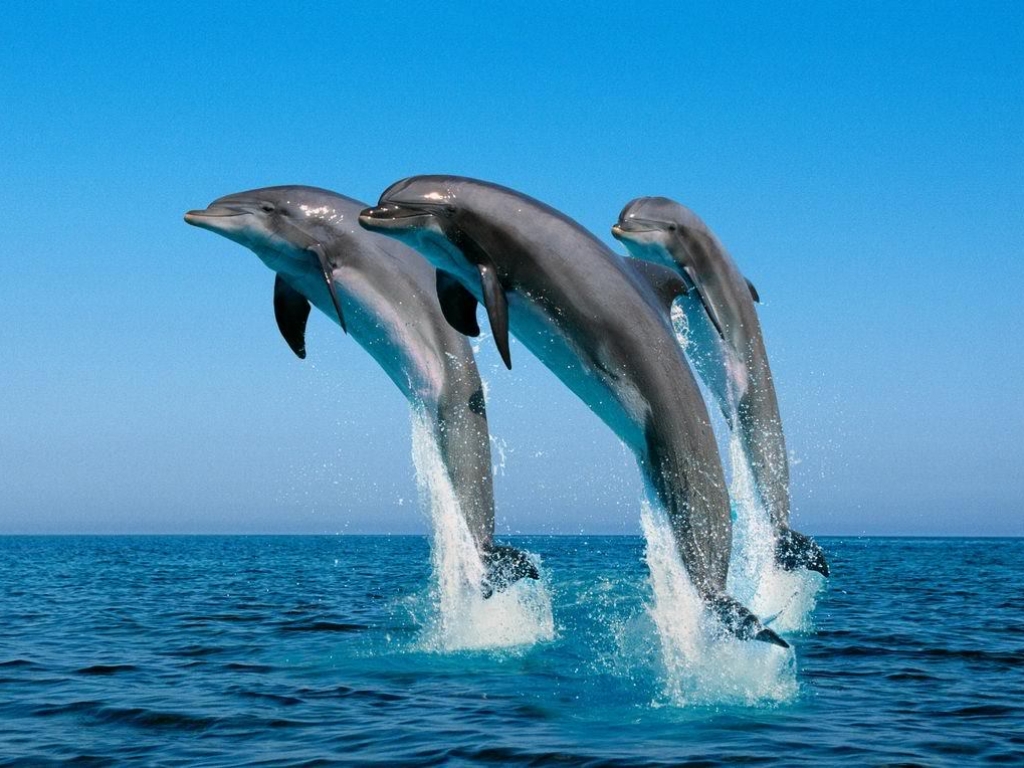
How they should be – Dolphins swim free in the Oceans.
The rapid closing of dolphinariums poses a threat to dolphins
22 April 2021
Sea First Foundation
Public opinion around dolphins in dolphinariums is clearly changing.
But what happens to dolphins when the parks get closed? Talks with policymakers are underway and several dolphin rehabilitation programs are getting implemented in Europe, but none are yet operational. The very complex nature of such a pilot project may be to blame.
As long as no appropriate alternative is found, the dolphins are relocated to other marine parks. Unfortunately, this causes a great deal of animal distress, and is often fatal. For example, in 2016, three dolphins were moved from Finland’s Särkänniemi Zoo to Attica Zoo in Athens, where one of the animals died after a short period of time.
Dolphin attractions were also closed with immediate effect in France, Spain, and Switzerland as a result of government decisions made in response to pressure from protestors who probably just meant well.
Dolphins become ill from time to time and may not survive such abrupt changes or transportation. The animals’ extreme stress and anxiety can be fatal.
Many who survive the transport are relocated to other parks in countries where public pressure is less severe. This results in ever-increasing dolphin numbers in Europe’s remaining dolphinariums, causing overpopulation and additional stress for the animals.
The marine parks in China are still developing, and it is likely that the next step will be to export European animals to China.
In conclusion, before we start putting more pressure on governments to close sea parks in Europe, it is important that we get our rehabilitation projects fully operational as soon as possible.
Beef production drives deforestation five times more than any other sector
22 April 2021
A research published in the World Resources Institute in March 2020 found that two of the main products responsible for deforestation are beef and soy, the latter being used for animal feed. The EU, as net importer of these products, should address the impact of such imports on the environment and on animals to ensure coherence between EU trade policy and the EU Green Deal.
According to a research by Global Forest Watch, the total loss of tropical forest increased by 12% overall between 2019 and 2020. Agriculture is the top source of worldwide deforestation (40%), and among the top commodity-drivers of deforestation, beef holds the first place.
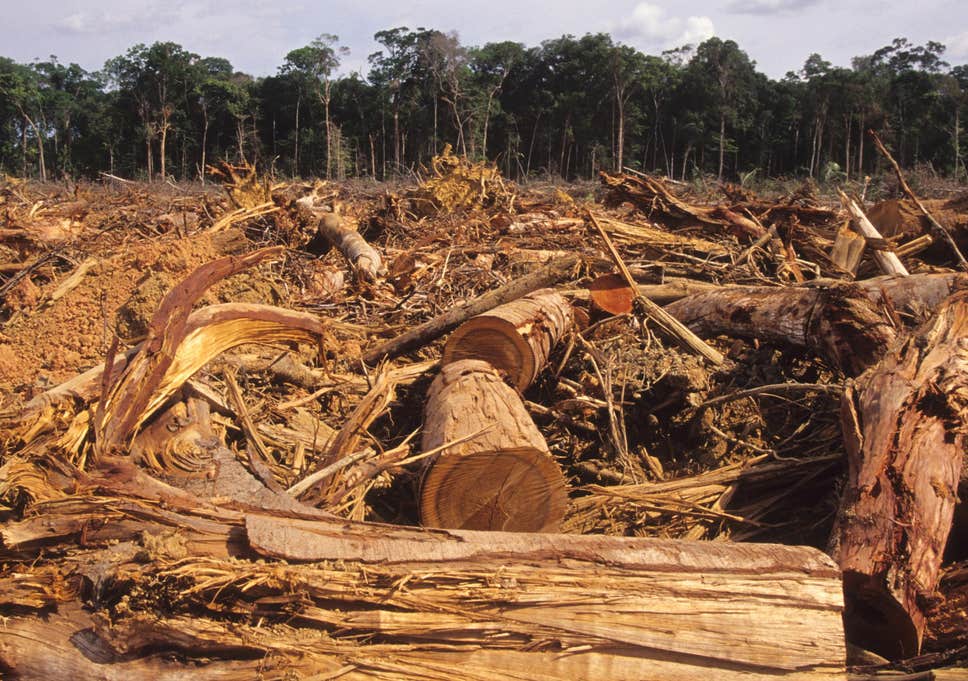
Overall, beef is responsible for 36% of all agriculture-linked forest-replacement. The huge responsibility borne by the beef industry is due to the conversion of forests into cattle pasture, which amounted to 45.1 Millions hectares of lands deforested between 2001 and 2015 – a rate that is five times higher than for any other analysed products.
Soy also ranks seventh in the study, as it is responsible for the destruction of 8.2 million hectares of forests between 2001 and 2015. Soy is widely produced to serve as animal feed, notably in the poultry (37%) and pigs sectors (20%). Therefore, the role played by the meat industry in global deforestation largely exceeds the role played by the beef sector itself.
The findings by Global Forest Watch are deeply alarming, as rampant deforestation has clear impacts on wildlife and their habitats and can lead to the extinction of species that only exist in one specific region. 80% of terrestrial species live in forests, and the world is currently undergoing the sixth great mass extinction of species, which is mainly due to agriculture, according to Global Forest Watch’s report. Deforestation is also a source of many welfare-related concerns. With the increase in wildfires, animals -wildlife, but also pets – are suffering and many do not manage to escape. For the surviving wild animals, many are displaced and will generally suffer from starvation and social disruption.
Whilst hot spots of deforestation vary by sector, the beef industry related deforestation is highly concentrated in the Amazon, which is home to millions of species.In Brazil alone, which hosts the largest part of the Amazon, over half of the deforestation came from pasture in the last twenty years. The responsibility borne by agriculture (including the beef sector) on the Amazon’s deforestation is much higher than in other parts of the world, reaching 56% in 2020 whereas agriculture is generally responsible for 40% of deforestation.
Considering that agriculture-driven deforestation is permanent (whereas lands that suffer from deforestation caused by fires may regenerate), this adds a sense of urgency for the EU to uphold its sustainable agenda. Mercosur is already the largest supplier of beef to the EU, accounting for 73% of total EU beef imports. If the EU-Mercosur trade deal was implemented as it stands, imports of beef would increase between 30% and 64%. The Ambec report – the impact study commissioned by the French government – concluded that, as it stands, the EU-Mercosur agreement would generate an extra 25% of deforestation in the Amazon in the six years following its entry into force.
As Eurogroup for Animals has been continuously advocating, the unconditional liberalisation of animal products foreseen in the EU-Mercosur trade deal would fuel intensification of animal farming, which not only is extremely detrimental to animal welfare, but would also highly contribute to fuel deforestation. We thus call on the EU to uphold the objectives of the Farm to Fork Strategy, which are to use trade policy “to obtain ambitious commitments” from partners in key areas such as animal welfare.
The EU must take the opportunity of the EU-Mercosur agreement to negotiate the adoption by Mercosur countries of EU-equivalent legal standards in key sectors (beef, but also broiler chicken and laying hens), as well as in terms of transport, or to agree on conditions to access tariff-rate quotas or liberalisation in animal products, including the respect of EU-equivalent animal welfare standards.
Shocking video! Dog dragged behind car! Now in safe hands.A shocking video emerged last night – dog dragged behind car for kilometers!
Outrage as videos emerge of a dog being dragged behind a car with a rope tied around the dog’s neck to the car.
The dog could obviously not keep up with the car, had fallen on his side, and was being choked to death as the rope cut into his neck. Caring people forced the car to stop, but the dog continued to struggle to breath even once the car stopped and the rope was removed. Many people saw the horrific scene and were so appalled they reported to authorities.
The ISF were quick to act, the driver was arrested and investigation was opened.
Animals Lebanon had continuous phone calls with relevant authorities to figure out the actual facts and ensure the dog is taken for emergency care. Late at night, we were able to transport the injured dog to the vet. The dog Leo suffered from severe trauma, hyperventilation, and the skin on his paws has been degloved leaving open wounds that needs daily care. On top of the physical damage, he is also extremely stressed out.
As the ISF continue their investigation and follow up, Animals Lebanon will ensure the dog is brought back to health and in good hands. This is the second case this month of a dog being dragged by a car, the animal welfare law completely forbids such actions. The law came into effect in 2017 after years of effort, and in such extreme cases the law must be enforced by the authorities to ensure that the sanctions and penalties are applied.
We will continue to care for Leo to ensure fully recovery and make sure to know he is safe and loved.
Thank you all for making the cat trip happen! We were finally able to send 15 special need cats to the states last month. Blind, two legged and even cases with complicated wounds got this second chance. Thanks to Tabby’s Place, Lambertville Animal Welfare & Monmouth County SPCA – USA these 15 special cats finally have the life they deserve!
Lebanon is going through a very tough period. The unstable political situation, the lack of a government, the deteriorating economic situation, the coronavirus pandemic, the lockdown and the Beirut Blast have taken their toll on the country. So many people are leaving the country and leaving their pets behind and so many abuse cases are occurring. The high number of such cases and the care and follow up they need is a huge task.
We are trying our best to help as much as we can, but with the current dire situation it is getting more and more difficult.
And I mean…“Education is key and we were taught that eating animal products was good for us but we’ve been lied to for 100s of years,” said the Formula 1 world champion.
So many celebrities advertise openly and with conviction against meat consumption!
Who would have believed 30 years ago that we would still experience all of this?
… everyone thought of a utopia.
Many thanks to the vegan Lewis Hamilton for fighting for animal rights
EARTHDAY.ORG’s mission is to diversify, educate and activate the environmental movement worldwide. Growing out of the first Earth Day in 1970, EARTHDAY.ORG is the world’s largest recruiter to the environmental movement, working with more than 75,000 partners in over 192 countries to drive positive action for our planet.
Our world needs transformational change. It’s time for the world to hold sectors accountable for their role in our environmental crisis while also calling for bold, creative, and innovative solutions. This will require action at all levels, from business and investment to city and national government.
That’s where you come in: As an individual, you yield real power and influence as a consumer, a voter, and a member of a community that can unite for change.
Don’t underestimate your power. When your voice and your actions are united with thousands or millions of others around the world, we create a movement that is inclusive, impactful, and impossible to ignore.
Every Earth Day can drive a year of energy, enthusiasm, and commitment to create a new plan of action for our planet
Team Olympic champion Dorothee Schneider mourns the loss of her championship horse Rose.
The 17-year-old mare collapsed at the Dressage Grand Prix in Pforzheim (Germany) during the award ceremony and died on the spot. The veterinarian who was called suspected in an initial diagnosis of an avulsion of the aorta.
Rosi and her dressage rider Schneider
The essentials in brief
-At a riding tournament in Germany, a mare dies in shock. -Dorothee Schneider’s horse collapses at the award ceremony and dies.
-The mare Rosi was 17 years old.
Minutes later, only the death of Rosi can be determined by the veterinarians present. As German media report, the cause of death has already been diagnosed: an aortic tear, which caused internal bleeding.
Dramatic.
And too disturbing for the former team Olympic champion from 2016: Schneider suffers a shock. She will be admitted to a local hospital after the events.
On Instagram, the German addresses her fans with emotional words. «Rest in peace beloved Rosi. You are forever in our hearts », writes Dorothee Schneider.
And I mean...It is very likely that Rosi was ridden to death.
The horse belonged to the victorious one Schneider and she could organize any fucking circus with him.
This is usually the case with dressage horses nor is it the first time that a dressage horse dies in the same way.
Her emotional farewell to Rosi is ridiculous because the relationship between a dressage horse and its owner is that of a slave and its owner.
We cannot, therefore, speak of a real partnership, because when it comes to doing business with horses, all that counts is money and a career, not the animal. Horses in the racing business are being exploited to the last drop of their blood.
It’s just perverse to rush animals over obstacles and call it a sport.
We are very saddened by the terrible death of Rosi and we are not interested in the hypocritical Instagrams of her tormentor.
WHO Calls for a Ban on Sale of Live Wild Mammals for Consumption
To prevent the emergence of new diseases, the World Health Organization (WHO) has just called for a ban on the sale of live wild mammals in food markets worldwide.
THE RECOMMENDATION: The WHO published a guide in which they acknowledge the significant risks involved in allowing the sale and slaughter of live animals at food markets, a move that Animal Equality has been pushing for since the beginning of the COVID-19 outbreak over a year ago. The WHO is asking that each country’s government take action as an emergency measure to suspend the trade in live, wild, mammalian animals for consumption or breeding purposes. They’re also calling for the closure of shops within food markets that engage in such activity.
“Animals, particularly wild animals, are reported to be the source of more than 70% of all emerging infectious diseases in humans, many of which are caused by novel viruses,” the report says. “Traditional markets, where live animals are held, slaughtered and dressed, pose a particular risk for pathogen transmission to workers and customers alike.”
THE RESEARCH: The WHO’s recommendation comes after their research revealed that some of the earliest known cases of COVID-19 are linked to a wholesale traditional food market in Wuhan in China, with many of the initial COVID patients being stall owners, market employees, or regular visitors to the market.
ANIMAL EQUALITY’S CAMPAIGN TO BAN LIVE ANIMAL MARKETS: In April of 2020, Animal Equality launched a global campaign, which garnered more than half a million signatures, calling on the United Nations to recommend a ban on markets that sell and slaughter live animals. Our investigators documented live animal markets in China, Vietnam, and India, both before and during the pandemic, revealing not only extreme animal cruelty, but also unsanitary conditions that posed a threat to human health.
The markets, many of which continued operating despite orders to close, held captive animals such as deer, raccoons, crocodiles, and dogs. Our footage reveals animals languishing in cramped, filthy cages suffering from dehydration, hunger and disease. In many cases, the animals were slaughtered while fully conscious and in full view of each other.
WE NEED TO GO FARTHER: Since COVID-19 transformed the world, the risks associated with eating wild animals has been a topic of conversation, but little has been said in the mainstream media about the great risks to human health from the consumption of more “traditionally” farmed animals in the United States. The Centers for Disease Control and Prevention has said that three out of every four infectious diseases in humans came from animals. Diseases like swine flu (H1N1), bird flu (H5N1 and others), and mad cow disease (BSE) all evolved on factory farms, and scientists are warning that it’s only a matter of time before the animal agriculture industry produces the next major pandemic.
The WHO’s recommendation is a step in the right direction, but it needs to include all species, not just wild mammals, and should include recommendations about not only food markets, but industrial farming as well.
WHAT WE’RE SAYING: “Animal Equality welcomes the guidance of the WHO, OIE, and UNEP to suspend the sale of wild animals at food markets. However, this progress is just the beginning. To ensure another pandemic virus does not emerge again, we ask that these organizations also recommend a ban on the sale of all live animals at wet markets. Until that happens, both animals and people will remain at risk,” says Sharon Núñez, President of Animal Equality.
WHAT YOU CAN DO: Animals raised for food, whether at markets or on farms, can experience pain and suffering in the same capacity as humans. We can spare them from a lifetime of misery and also help reduce the risk of future pandemics by simply avoiding animal-derived foods. And with all of the great alternatives available nowadays, going plant-based is easier than ever. By choosing a compassionate lifestyle, you can spare millions of animals from harm. You can also make a difference by signing our petition to end the atrocities that happen at wet markets. With your signature, we can tell the world that enough is enough.
What’s the real cost of meat? New Italian report sheds light on the 36.6 billion euro bill, in terms of damage to the environment and to the health of consumers
19 April 2021
LAV
Press Release
New report on the hidden costs of meat consumption in Italy reveals the environmental and health impacts which fell on society. If we were to include the hidden costs, one kilogram of beef would cost on average 19 euro more.
The environmental and health costs of meat production and consumption are not included in the price paid when buying it. Citizens pay the price of these hidden costs which have now for the first time been scientifically quantified.
LAV, commissioned the first independent scientific study on the environmental and health costs of meat consumption in Italy, focusing on the most consumed meat in the country: poultry, beef, and pig. The emissions generated at all stages, rearing, slaughtering, processing, packaging, distribution, consumption and waste treatment, have been converted into economic costs for society through a life cycle assessment (LCA) approach.
The environmental costs are obtained assigning a monetary value to the impact assessed via the LCA on 11 environmental categories (1). In one year, the emissions associated with the beef life cycle alone amount to over 18 million CO2 equivalents, with a hidden annual cost of over 1 billion euro. This is equivalent to the amount of greenhouse gases emitted by the largest and most polluting coal-fired power stations in Europe.
In addition to emissions of greenhouse gases, there are also the ones from particulates and acidifying gases in stables, and emissions of nitrates and pesticides into the soil. Together they generate the indirect cost of damaging ecosystems, for example agricultural losses due to acid soils and lack of pollinators due to pesticides.
The healthcare costs are estimated in DALY (Disability-Adjusted Life Year) and are based on the average daily consumption in Italy. Approximately 350,000 years of life are calculated to be lost each year in Italy due to meat consumption. The risks cover contracting colorectal cancer, type 2 diabetes, and stroke, and this is likely a conservative estimate, since the damage caused by other diseases associated with meat consumption, such as antibiotic resistance or cardiovascular diseases, were excluded due to the lack of a robust scientific literature.
In Italy, on a yearly basis, the hidden environmental and health costs amount to 36.6 billion euro with the average cost almost equally divided between environmental (48%) and health costs (52%).
The report shows the unsustainability of meat consumption in Italy and the same situation could easily be mirrored in other Member States. But alternatives exist: 1kg of chicken or pork generates 8 times more costs for society than the same amount of legumes; 1kg of beef generates costs multiplied by 23 times.
Eurogroup for Animals and LAV, based on the evidence found by the study, believe that it is time to bring forward the hidden costs of meat and implement policies to support the uptake of proteins of plant origin as an alternative to animal proteins. In order to move in this direction, it is essential that the numerous subsidies supporting the livestock industry, in different phases of the production cycle, are soon eliminated.
The results of this study are worrying and we also need to consider the suffering to animals the meat industry creates. In line with the Farm to Fork strategy, the EU has the ultimate opportunity to move away from harmful and pollutive intensive livestock farming systems and transition to a food policy that truly embraces humane and sustainable proteins production.
Reineke Hameleers, CEO, Eurogroup for Animals
At a historic time when, after the COVID-19 pandemic, attention to the devastating potential of animal food production has increased, and when numerous international bodies warn that an urgent reduction in meat consumption is necessary, the results of this study must represent an inescapable fact for political actors, also with a view to achieving the Sustainable Development Goals of the 2030 Agenda and the Paris Climate Agreements. Thinking that we can achieve an ecological transition without immediately initiating a decisive food transition is illusory, or worse, it is false.
Notes 1) The environmental impact categories considered are: climate change; ozone layer reduction; land acidification; eutrophication (divided into freshwater and marine); human toxicity; photochemical smog formation; particulate formation; eco-toxicity (divided between terrestrial, freshwater, and marine); ionizing radiation; land occupation; and water consumption.
This is the unimportant story of an unimportant cow and her unimportant baby.
This cow, who cared about no one, once gave birth to a baby that didn’t seem much more interesting.
What was of interest was the poor cow’s milk, because it brings profit – “white gold”, so to speak.
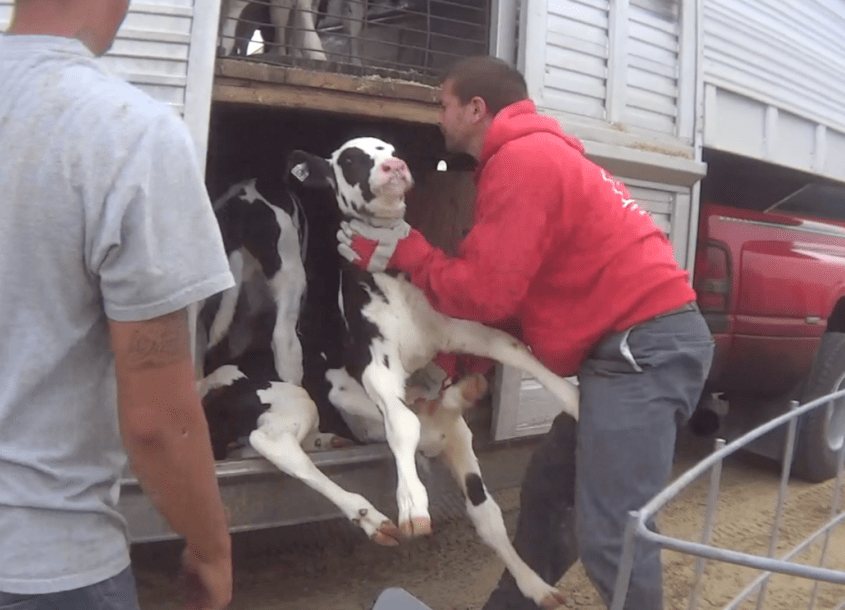
But to do this, the unimportant calf had to get away from its unimportant mother.
Men came and dragged the unimportant baby from its unimportant mother onto a truck.
The unimportant cow reacted like any mother by trying to save her beloved child.
She screamed like mad with grief and suffering, tried to get to her unimportant child, but the men denied her this wish and prevented her from doing it.
The truck with the unimportant baby animal onboard started relentlessly and started moving.
The unimportant mother cow instinctively ran after the truck.
(This video is chosen symbolically and does not depict the death of the cow in Italy)
The distance between the unimportant animal and its unimportant offspring grew larger, but she ran, and ran, and ran with pain and profound despair.
She ran, and ran, and ran as fast as she could.
But then the unimportant cow lost her strength.
They could no longer carry their legs.
She collapsed helplessly, her strong mother-heart was at the end and failed any further heartbeat of the unimportant cow.
Life slowly but surely escaped the unimportant body of the unimportant mother while her unimportant child drove away in fear, panic, and cries for help.
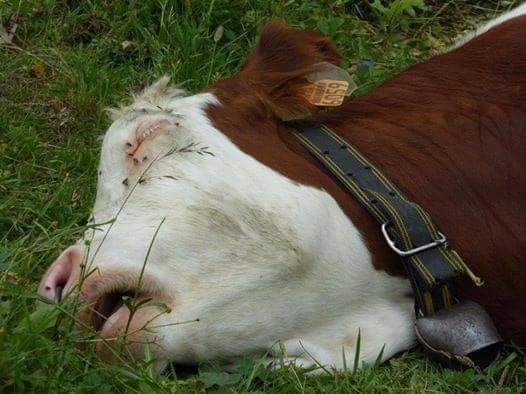
The unimportant cow died of heart failure.
Soon the ruthless men would come back and remove the unimportant cow from the side of the road.
And no one will ever remember this unimportant story of an unimportant cow and her unimportant baby, for this is the fate of innumerable animals whose lives, in view of the beckoning profit, mean nothing to many wicked men and women.
But is this story that happened in Italy really unimportant?
Does the life of a living thing really not matter just because it was born in the body of a species exploited by mankind?
Is the world really so cold and dull that the fate of the two of them and that of billions of other pain-sensitive creatures is nothing but unimportant and does all of this leave us cold?
She doesn’t leave me indifferent.
Their lives are just as precious as those of any other species.
Their fate is just as tragic as that of all other animals in the world that are exploited, abused, tortured, and killed by society.
Nothing gives a person the right to categorize the life of these tortured animal souls as unimportant, absolutely nothing.
For me, this mother and her child is not something, but SOMEONE whose story touches me.
It is in our hands that such unimportant stories gain weight and initiate a global rethink.
And for this initiation, I want to be the catalyst.
If you think the same way, then I ask you to share this “unimportant” story of the “unimportant” cow and her “unimportant” baby, because the poor animal and all those who met and unfortunately will, have met the same fate it deserves their story to go around the world.
Rest in peace, important cow, and rest in peace for all you animal souls, exploited and murdered by humans
Text: Markus Freisinger
And I mean… A New Zealand animal welfare organization posted this video on their Facebook page with a comment: “There are millions of reasons to go without milk. Here is one of them”.
To see this as a reason, one has to evaluate animals as individuals and not as things.
With the right to their freedom, life, happiness.
If, after a long period of blindness and denial, you have managed to turn your back on this fascist system and eat and live vegan, then it is barely tolerable to endure the suffering of animals, and even more tolerable is the fact that the most people don’t even give a shit about this suffering.







 Rosi and her dressage rider Schneider