We suffer from the law as much as we suffer from crime.
We have a criminal-friendly judiciary, a “tolerant” society, and corrupt systems that promote both.
Injustice and violence threaten the weak on all sides.
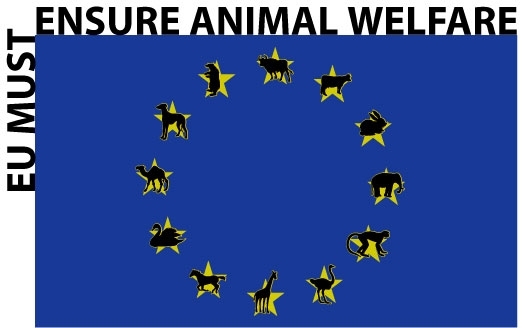
That’s why we decided to fight for animals.
No god or law will care about their rights.
We do it.
It is also known as cognitive dissonance. What is cognitive dissonance?
First of all, Leon Festinger’s theory: cognitive dissonance is an emotional state that is perceived as unpleasant, and that arises when one has several cognitions that are not compatible with one another.
Let’s take a few examples of cognitive dissonances, e.g.
-Animal welfare is important to you, but you still continue to eat meat
-You don’t have a lot of money to spare, but still buy the new cell phone.
-Your health is important to you, but you still smoke 1/2 packet a day, etc….
We mostly know what is right and what is good, but we’re still doing the wrong thing!
When it comes to dissonance in our behavior towards animals, it gets the name “meat paradox”.
The “meat paradox” is the “psychological conflict between people’s dietary preference for meat and their moral response to animal suffering”.
The meat-eaters argue that “bringing harm to others is inconsistent with a view of oneself as a moral person. As such, meat consumption leads to negative effects for meat-eaters because they are confronted with a view of themselves that is unfavorable: “how can I be a good person and also eat meat?”
This moral conflict doesn’t just threaten our enjoyment of eating meat, it threatens our identity.
To protect our identity, we establish habits and excuses that make us feel better:
Eating meat is part of social life, you can’t celebrate holidays if you can’t eat meat with friends and family. Some call it a signal of masculinity or that we humans have evolved into super-predators that need to eat meat
And finally, “our” meat only comes from the farmer next door!!
In addition to our own attempts to justify eating meat, advertising and marketing can make this easier for us.
This is why the meat industry goes to great lengths to ensure that “animals ” and “meat” appear different and not related to each other.
We call it “veal” instead of a baby cow, “ham” instead of pork, “game” instead of hunted wild animals.
We pack our dead animals in pretty packages – physically, verbally, and conceptually we distance ourselves from the real origin of our food.
It is time for a revolution.
In how we deal with human beings, animals, and the planet, it is time to fight our own hypocrisies.
Rather than doing mental gymnastics to justify unethical behavior, we must actually change it.
Recognizing and treating our own inability to consistently tackle animal suffering will make us useful human beings for human, non-human animals, and our planet.
The Nuremberg zoo is considering killing the male lion Subali.
The animal is apparently sterile. In the zoo, they speak of a “species protection dilemma”(!!)
Rescue for the lion is still possible.
The male lion Subaliwith his dark mane is one of the biggest attractions in the Nuremberg zoo. Since the lion came to the zoo in August 2018, the zookeepers have been waiting for offspring.
So far in vain.
Because the lioness Aarany is much younger, the zoo assumes that it is Subaliand that the 14-year-old lion is sterile.
Subali the lion is threatened with death
The Nuremberg zoo may therefore be forced to kill Subali. Zoo boss Dag Encke brought this up in an interview himself.
He justifies this with the lack of space in the zoo and a “dilemma of species protection”.
It is a statutory mandate of zoos and zoos to “manage populations in order to be able to preserve species in the long term,” said Encke.
If an animal is sterile and you can’t breed, that’s a problem (!!!)
A decision has not yet been made.
It has not yet been decided whether the Lion Subaliwill be killed. Zoo boss Dag Encke speaks of a “highly emotional topic”.
Before a decision is made, it must be checked whether the lion is actually sterile. If necessary, they will try to move the animal somewhere else, says Encke.
If this does not succeed, killing is a “realistic scenario”.
Sharp criticism from PETA
The animal welfare organization PETA criticizes the deliberations of the Nuremberg Zoo in the strongest possible terms.
To justify the killing of the Subali lion with the protection of species is “pulled by the hair,” said Nadja Michler from PETA.
Such infertility measures are not justified. In fact, animals are repeatedly killed in zoos and zoos because they are “not profitable”.
The fault lies in the system, according to the animal rights activist.
If the Nuremberg zoo actually kills the Subali lion,PETA wants to file a criminal complaint.
And I mean: Since when has murder been publicly discussed?
Since when have zoos been responsible for species protection?
Since when have the zoos been breeders?
By the way: the zoo in Nuremberg is extremely outdated, for this reason, the zoo director has no right to talk about species protection.
The animals cannot be kept in a species-appropriate manner.
The griffin cannot fly, the cheetah lies in the sand all day, surrounded by walls, the giraffe has only 30 meters to run. Really tragic.
So far, no other zoo wants to take Subali.
It is possible to transfer the animal to another zoo.
But which zoo makes room for an old and sterile lion that is no longer making money?
Now the Circus Krone has intervened!!
Which still makes money in wildlife shows and has a very bad reputation as a business.
“I wrote an e-mail to the zoo director. I’ll try to save the lion,” said Martin Lacey, the circus lion trainer.
We can imagine what the trainer understands by rescue.
Some from the zoo business want to kill Subali, others from the circus business want him with whips hit, train, and cart through the country.
And so we give the animal only two alternatives, euthanize or trained and tortured for the rest of his life.
Both are just shit!
WAV Comment – Mulesing is one of the most hideous and barbaric practices undertaken on living sheep today, In Mulesing, farm workers force live sheep onto their backs, restrain their legs between metal bars, and cut chunks of flesh from their backsides. This is alleged to prevent ‘flystrike’; something which can be done with medication nowdays, but which the industry refuses to use because of costs involved for better animal welfare.
Not only does Australia still undertake chopping chunks of flesh off of living animals; it is still very involved in transporting live animals across the globe re live exports. One has to question the Australian approach to animal welfare when they are still heavily involved in practices from the dark ages.
The Peta proposed mulesed lamb statue sounds like a great idea – as they say; surely the industry would welcome a statue designed to inform people about this element of wool production, given how hard it has fought for decades to continue mulesing, even in the face of public outcry and worldwide designer boycotts?
What has the industry got to hide ? – it either stops mulesing or it has a statue to inform the world that it still undertakes carving up live animals. They have a choice.
In the following you can see pictures of mulesed sheep.
Posted on 27 October 2020 at 8:16PM by PETA Australia
Following news that a parliamentary inquiry in New South Wales has failed to recommend ceasing the practice of mulesing sheep in the state, PETA has written to the Mayor of Goulburn, home of the “Big Merino”, and asked permission to erect a new statue for the area – a giant mulesed lamb.
More than 70% of Australia’s wool comes from sheep who are mulesed, a barbaric practice in which workers force live sheep onto their backs, restrain their legs between metal bars, and cut chunks of flesh from their backsides. This is terrifying for prey animals like sheep, who cry out in fear and pain. It also leaves them with open wounds – which, ironically, are prone to flystrike, which mulesing ostensibly aims to prevent.
When PETA US first exposed mulesing to the world back in the early 2000s, the Australian wool industry promised to phase it out by 2010. Since then, numerous celebrities, consumers, fabric buyers, and fashion houses worldwide have called for an end to mulesing.
In 2018, New Zealand has made mulesing illegal, and yet it remains prevalent in Australia.
Surely the industry would welcome a statue designed to inform people about this element of wool production, given how hard it has fought for decades to continue mulesing, even in the face of public outcry and worldwide designer boycotts?
Sheep Need Your Help
Not only does the Australian wool industry mules lambs, it also cuts off their tails and castrates males without any pain relief. Shearers, who are paid per fleece, work roughly and violently, pinning petrified sheep down, punching them in the face with metal clippers, cutting them open, and shoving them down chutes. Over the past six years, PETA’s affiliates have visited 43 farms across New South Wales, South Australia, and Victoria and have found cruel treatment of animals at every single one.
With so many animal-free, environmentally friendly fabrics now available, there is simply no need to continue inflicting so much pain on sheep.
The wool industry and the government have both failed sheep, so it’s up to each of us to act. Now, more than ever, we must vote with our wallets and leave wool out of our wardrobes.
Happy World Vegan Day! We’ve put together some of our favourite recipes from around the world to celebrate this amazing international cuisine.
We’ve just launched our incredible new programme V7 where users can try vegan for a week! You’ll receive a complete shopping list for seven days of delicious recipes, plus handy tips and advice.
Our guest chef this month is the incredible TJ Waterfall (Meat Free Fitness) – specialising in vegan sports nutrition, he has provided us with some healthy and incredibly delicious recipes: win, win!
We’d like to whet your appetite for when international travel is back on the agenda – take a vicarious journey to Paris with our guide to this plant-based city of delights!
Sending you lots of love during this challenging time.
Happy cooking, eating and reading ♥ The Vegan Recipe Club Team
Check out all the Viva ! Podcasts on a whole range of animal / vegan issues by clicking on the following link:
You can see one lemur spin his head in psychological distress while trapped in a cramped cage 😔
Zoos deprive lemurs of their freedom and sometimes even their families.
Never visit them!!
And I mean…It is collective nonsense to believe that zoos help protect species.
It is only prisons with live animals that parents visit with their children so that they learn that innocent and completely defenseless animals have to live in loneliness, suffering, and deprivation of liberty for a lifetime.
Zoos are commercially operated entertainment establishments that breed for their own display needs.
The zoos bring the argument about conservation, research, and education for children only to justify their existence
But as soon as children see that orangutans and monkeys live in the tropical rainforest at all and that almost exclusively high up in the trees where they build their nests, then they understand it has nothing to do with the animal that is apathetic in the zoo crouching behind a pane of glass on a bare concrete floor and bored to death.
A zoo is and remains an amusement for the visiting people. Nothing else.
Never visit a zoo! Never take your kids to the zoo!
Every documentary film conveys more knowledge and arouses more empathy than a visit to the zoo could ever do.
NSW stud owned by Gerry Harvey among those accused in parliament of sending racehorses to slaughter
Allegations in Victorian parliament suggest slaughter of racehorses continues in NSW despite rules introduced in 2017
Billionaire Gerry Harvey has apologised after one of his studs sent ex-racehorses to a pet food factory for slaughter, a practice banned in New South Wales, vowing “it will never happen again”.
Allegations aired in Victorian parliament just days before the Melbourne Cup suggest the slaughter of unwanted thoroughbreds is continuing in New South Wales, despite public revelations last year and the NSW racing industry introducing rules in 2017 to stop retired horses being sent to knackeries or abattoirs.
Parliament heard allegations that thoroughbreds from a range of studs had been sent to two pet food factories for slaughter: Kankool Pet Foods and Highland Petfood, both in New South Wales.
Victorian Animal Justice party MP Andy Meddick said that included “a number of racehorses” from the Broombee Stud, owned by Harvey, which had been sent to Highland.
Meddick said the allegations had been brought to his attention by activists with the Farm Transparency Project.
“If you support horse racing this spring carnival, you are also supporting the wholesale slaughter of these majestic animals, who deserve so much better,” Meddick said.
Harvey told the Guardian he had been in contact with his stud and confirmed that horses were sent to pet food factories.
He said the horses were to be euthanised and had vet certificates stating they needed euthanasia. Harvey said he has now seen those certificates.
But he said the stud was not aware that NSW rules – unlike in other states – forbid sending horses to knackeries even if they were about to be euthanised. Harvey said there was no malice or intent behind the stud’s actions and it was a mistake.
“You end up unwittingly in a situation like this, not of your own making,” he said.
Well this is the best news ever to start the weekend. As many of you will know, we have been very critical of the South Korean government for not taking action on this issue several years ago – it was one electoral issue that the government campaign was won on – read more:
Regardless, now people power is getting the changes; with or without the help of governments. They should take note; especially with the issue in the USA on 3/11/20.
We at WAV have also tried to play our part and support our wonderful friends at ‘Korean Animal Rights’ (KARA) https://m.facebook.com/karakoreaanimalrights/ – ‘Korean Dogs’ and the ‘Humane Society International’ (HIS) https://www.hsi.org/ in getting these hell holes closed down. It now looks as if, with your support and actions; a much changing (pro animal welfare) stance by younger Koreans, and the fate of the suffering dogs being given world attention; South Korea is now on the way to closing down all of its dog meat farms – and that is the word from a dog farmer himself (Mr Kim), who declares that “There is no future in dog meat at all, it’s already dying and will fall apart completely,”.
So; people sometimes ask us the big question if signing a petition or sending the odd e mail; to authorities does really make a difference. Here is your proof it does, that with constant tenacity by animal welfare organisations to continue the fight; un questionable evidence showing the cruelty involved; supported by realistic video footage; be in no doubt; your actions do make a huge difference, so keep it up.
The closure of Yuliin is the next big target on the dog meat issue.
Check out some of our campaign work on Yulin by clicking on the following:
Before we go; please spare a thought for all the dogs of the meat trade who are not with us any more. They were cold, they were fed the worst scraps ever; and their end was the most despicable ever. All for the want of some human beings. Now we move on and will turn corners to stop this obscene abuse.
Regards Mark
WAV.
From ‘The Independent’ (UK national newspaper) – London;
South Korea starts to close dog meat farms as attitudes change
‘There is no future in dog meat at all, it’s already dying and will fall apart completely,’ says former dog meat farmer
A charity has closed its 17th dog meat farm in South Korea as more people in the country support a ban on dog meat consumption.
Washington-based animal rights group, Humane Society International, announced it closed a farm that had nearly 200 dogs, which were bred and raised for slaughter in the dog meat trade.
The dogs, mainly Korean jinxes and mastiffs, were rescued and taken to the US to be adopted.
The farm was operated by a farmer named Kim Il-hwan, who had been in the industry for around 40 years. In exchange for closing the farm, he was given financial compensation and career assistance from HSI.
Mr Kim said the industry was shrinking and business had been difficult for the past decade.
“There is no future in dog meat at all, it’s already dying and will fall apart completely,” he said of the industry. “And dog farming is physically hard and I’m getting old, so I want to get out. 40 years ago it was different, but now it’s over for dog farming.”
An opinion poll commissioned by HSI suggests that Mr Kim is right – 84 per cent of those polled said they do not or will not eat dog and almost 60 per cent supported a legislative ban on the trade.
The poll, conducted by Neilsen, also found 57 per cent of South Koreans believe dog meat consumption reflects poorly on the country, an increase from 37 per cent in 2017.
Nara Kim, HSI’s dog meat campaigner in South Korea, said: “More people in South Korea are interested in animal welfare and the environment, and so when they see footage of our dog farm closures on the news showing the animals suffering and filthy conditions, or read about dog meat exposés by other Korean groups, they are really shocked and upset.
“The inevitable drop in sales is leading more dog farmers to help them start a new life. But we hope in time the Korean government will adopt this type of approach to phase out the dog meat industry for good.”
The dogs rescued from this farm will arrive in the US on Friday and will be housed in temporary shelters in Washington DC and Montreal, Canada.
According to Kitty Block, CEO of HSI, the dogs will then go to animal shelter partners in Maryland, Ohio and Pennsylvania after several weeks to be adopted out to the public.
“This is the 17th dog meat farm that HSI has helped close, part of a campaign to show dog meat farmers, the South Korean government and the South Korean people that there is a better path forward for us all, humans and animals, a path that celebrates the human-animal bond in the most special of ways,” she added.
Dog meat has long been a part of South Korean cuisine and around one million dogs are believed to be eaten every year. However, the popularity of the meat has declined and consuming dog meat has become taboo among the younger generation.
In 2018, a city court in Bucheon ruled the killing of dogs for meat is illegal. The ruling was hailed by activists who said it could pave the way for outlawing dog meat consumption entirely.
Note: Regarding Protect the Harvest’s ludicrous and deceptive claim of the nonexistence of factory farms, “family” has zero legal distinction regarding farm size; indeed, a “family” can refer to Kraft, Ford, Trump, Smithfield, and Walmart. The government defines size, and anyone with even a rudimentary understanding of Google can easily find this data. To suggest that the greater than 10 billion land animals killed annually in the US alone come from Uncle Ted’s backyard hinges on desperation to continue the animal holocaust unseen and socially accepted. SL
The U.S. Environmental Protection Agency (EPA) defines AFOs as agricultural enterprises where animals are kept and raised in confined situations. AFOs congregate animals, feed, manure and urine, dead animals, and production operations on a small land area. Feed is brought to the animals rather than the animals grazing or otherwise seeking feed in pastures, fields, or on rangeland. There are approximately 450,000 AFOs in the United States.
A CAFO is another EPA term for a large concentrated AFO. A CAFO is an AFO with more than 1000 animal units (an animal unit is defined as an animal equivalent of 1000 pounds live weight and equates to 1000 head of beef cattle, 700 dairy cows, 2500 swine weighing more than 55 lbs, 125 thousand broiler chickens, or 82 thousand laying hens or pullets) confined on site for more than 45 days during the year. Any size AFO that discharges manure or wastewater into a natural or man-made ditch, stream or other waterway is defined as a CAFO, regardless of size. CAFOs are regulated by EPA under the Clean Water Act in both the 2003 and 2008 versions of the “CAFO” rule.
Veganism, at its essence, is the recognition that all animals have the right to bodily integrity. Humans do not own the bodies, families or lives of other animals – we can be guardians to animals in need of rescue, but animals are never our property or commodities.
Donald Trump has demonstrated, over and over again, that he sees animals only as obstacles to be cleared or resources to be used to serve corporate interests and generate maximum profits.
But his actions don’t reveal a detached view of other species as objects or commodities so much as a seething contempt – for the natural world, for animals and for anyone trying to protect them.
Putting animal haters in charge
At every turn, Trump has placed people who actively oppose animal welfare, wildlife and environmental protection in leadership roles at the agencies responsible for carrying out those protections. Not surprisingly, this fox-guarding-the-hen-house strategy has resulted in dire consequences for animals and their habitat.
In 2016 he selected Brian Klippenstein, executive director of a particularly vile organization called Protect the Harvest, to serve as senior advisor to the USDA – the agency charged with safeguarding animals used in commerce.
Protect the Harvest exists to “save the agricultural industry from the growing threat of the radical animal rights movement” by lobbying against animal welfare legislation, supporting ag-gag bills and promoting animal commoditization in all forms – including circuses, rodeos, dog and horse racing, horse carriages, puppy mills and horse slaughter.
One of the group’s campaigns aims to soothe consumers’ growing concern regarding confined animal feeding operations by assuring the publicthat factory farming is just a “fictional concept created by activists.”
Next, Trump chose to appease animal agriculture and fossil fuel industry elites by putting climate change denier Scott Pruitt in charge of the Environmental Protection Agency – a move that led to the rollback of several critical climate and pollution regulations, along with the U.S. decision to withdraw from the Paris Agreement.
Pruitt, once honored with an award for his contribution to the success of the beef cattle industry, has described himself as a “leading advocate against the EPA’s activist agenda” and “a big fan of beef.”
Though he resigned in 2018 under the weight of numerous legal and ethics investigations, EPA leadership continues to prioritize industry demands over keeping the country’s air and water clean. In March the agency used the COVID-19 chaos as a cover to release polluting industries from monitoring and reporting requirements.
Perhaps the most stunning hire Trump made was William Perry Pendley, a former oil and gas attorney he installed to wreak havoc on the Bureau of Land Management. That’s the agency charged with conserving public lands – such as national parks – in 11 Western states and Alaska.
Pendley, who spent the bulk of his career lobbying for oil companies’ rights to drill in pristine wilderness, does not believe public lands should exist at all.
He has joked on video about illegally killing and burying endangered animals, and tweeted that climate change is like a unicorn because “neither exists.” He also has a grotesque obsession with eradicating wild horses and burros – insisting that they (rather than cattle grazing or resource extraction) represent an “existential threat” to public lands.
A judge recently ruled that Pendley’s service violates the Constitution because he was never confirmed by the Senate, but so far he has refused to leave his post.
Please click on the above link to continue reading the full article.