Is that enough? … Come on …
I stroked you all night
They’ll wake up soon!!
Regards and a good night from Venus

Is that enough? … Come on …
I stroked you all night
They’ll wake up soon!!
Regards and a good night from Venus

Julia Gellately (Above) is the founder and CEO of English animal rights organisation ‘Viva!’. Here is her take on the Coronavirus –
04/02/2020
Wuhan, China: the sprawling capital city of the Hubei province, known for being the epicentre of culture, education, manufacturing and transportation links. Now, Wuhan has a new reputation.
It is the city which gave birth to the Wuhan novel coronavirus (WN-CoV) the viral disease outbreak which has captured headlines, shut down cities and continues to spread while the rest of the world looks on with horrified abandon.
Coronaviruses are a common type of virus that cause mild illnesses, such as the common cold, but can cause more serious problems like severe acute respiratory syndrome (SARS). Just a quick search will bring up all you need to know about this coronavirus. Where did it come from? How is the virus transmitted and what are the symptoms? Will face masks really keep you safe?
There are many discussions taking place about how we can prevent and stop the spread of disease, followed by calls from experts for better hygiene, tighter controls at airports, banning the unregulated movement of wild animals and limiting human-animal contact. But the obvious solution, the simplest, most cost-effective solution which no-one has yet to admit, is to stop eating animals.
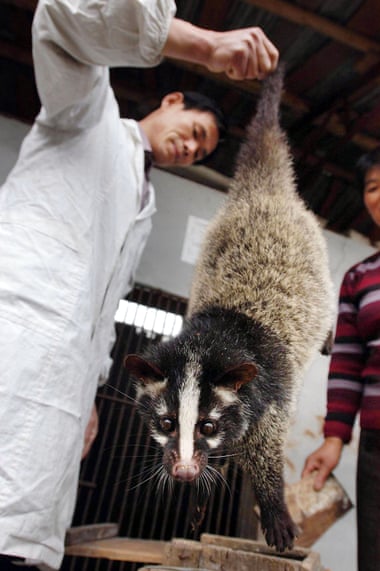
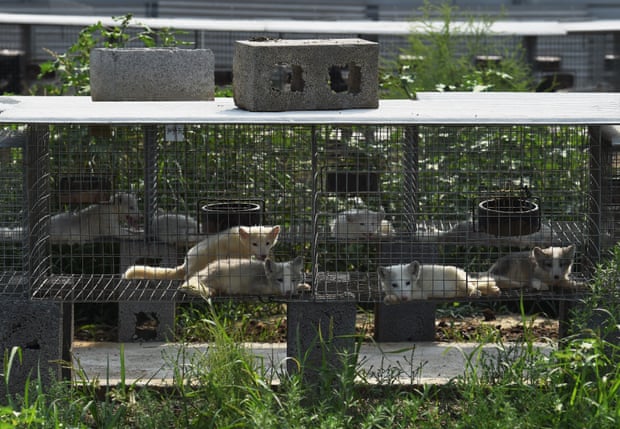
This coronavirus originated from one of Wuhan’s many live-animal markets. Over 100 different animals are sold here, including wolf pups, civet cats, poultry and snakes. These animals are kept in cramped, dirty conditions, with direct contact with humans. These markets are referred to as ‘wet markets’ – so called because animals are often slaughtered directly in front of customers. Aside from the obvious issues with having a high population density made up of humans and animals – a hotbed for disease outbreak – these markets are repulsive places. They are filled with caged, frightened souls, many of whom have been captured illegally in the wild.
The animals are skinned and slaughtered, sending a cocktail of microorganisms into the air. The dreadful, cramped conditions and mix of wild and domestic creatures, alongside the throngs of people choosing their victims, is a pandemic in the making. It was an inevitable consequence of poor hygiene, cross-contamination, and low animal welfare. We reap what we sow and – sadly, for the many people who have now lost their lives to the coronavirus – we have created a new deadly viral disease outbreak.
The saddest part of this story is that scientists saw this coming. Researchers have been stressing the link between human and wildlife health for decades and, in particular, the potential threat of coronaviruses was first identified following the 2003 SARS outbreak (also caused by a virus jumping from animals to humans). Scientists studying bats in the Yunnan Caves realised that the coronavirus was making the jump from bats to humans. It is now thought that the virus spread from bats to snakes, which are then captured and taken to live animals markets and eaten as a local delicacy. Scientists saw this coming; the Wuhan animal markets merely presented the perfect storm for disease outbreak.
As much as we can improve hygiene and as much as we can control the movement of animals, all it takes is another perfect storm to spark the next pandemic. You need only to look at the havoc we have wreaked throughout human history and our continued, damaging relationship with our precious ecosystems, to realise that we need systematic change.
We must have a societal shift in the way we view animals, the environment and our diets. We must stop eating animals. It is time to finally make the connection between animal agriculture and environmental destruction, antibiotic resistance and disease outbreak. We must stop tearing down forests to make way for animal farming or to grow animal feed. We must protect ecosystems and prioritise the safety and freedom of wild animals, leaving them to live their lives away from human contact. If we don’t take urgent and far-reaching action now, eating animals will be the death of us.
The world must wake up and shun all animal products and instead choose vegan. No cruelty, no cages, no blood and no zoonoses. It’s a no brainer.
See lots of other great articles in the Viva! Health March Newsletter by clicking on the following link:
https://mailchi.mp/viva.org.uk/vivahealth-march20?e=26c03356b8

One of the rescues we’ve featured this week is of puppies who got stuck in tar. People often want to know how is it that road tar wasn’t properly disposed, or why there is there so much garbage? The answers are not easy because so much intersects: India experienced a relatively sudden introduction of non-disposable plastics and other materials in a culture that values tolerance, even of things that are offensive. The toxins and dangers in this environment are present around the world, often more lethal, but more hidden. But wherever we live, there are beings who suffer because of human negligence. This video about removing the tar from puppies’ little bodies, however, focuses on the opposite phenomenon: human kindness. Watch the faces of the band of helpers who worked so carefully for hours and hours to make sure these little angels would be happy again.
Hours of effort saved Amber and her sisters locked in rock-solid tar.
Three gorgeous puppies were encased in hardened road tar when our rescue team arrived, and their sibling had died from the toxic hardened tar. Two of the three had made their way back to their mother with tar over half their little bodies.
But one was stuck to the earth, and to avoid pulling her skin off, rescuers had to cut and pry big slabs of stone and tar to carry with her to the hospital where all 3 puppies would undergo hours of labor as Animal Aid staff and volunteers softened the tar by soaking it in cooking oil and pulling it off little bit by bit.
The puppies’ little faces could not have looked more forlorn. By the time the tar was removed, they were soooo exhausted. But all the more WONDERFUL to see them playing in joy after a good night’s sleep in the furry warmth of their Mommy.
Removing tar is difficult, but LOVE is easy—Please donate
After we repaired her neck wound, Sunny-day glowed!
Her skin hung heavily on her throat, detached by a 4-inch cut that exposed all of this sweet dog’s neck muscles. She would need stitches to survive, and when our rescue team arrived, she let us scoop her up without the slightest resistance. We were relieved to see that the edges of the cut were clean enough that suturing was possible. When she healed, she simply glowed. We named her Sunny-day, and wow, just look at her now!
For surgery to save precious souls, please donate.
Stitching this wound saved precious Nugget’s life.
Blood from a deep wound on this sweetheart’s thigh had soaked his hind legs and tail, but that tail wagged in the most earnest announcement of trust, enabling our rescue team to gently and quietly carry him to our ambulance and stitch him up in the hospital. Meet adorable Nugget, whose cheerful and subtle little smile will charm your socks off.
For badly injured tail-waggers. Please donate.
Celebrate the Caregivers!

Himmat Gameti has for 2 years grown in his ability at a tremendous rate. He manages the care of dogs in our Spay-Neuter Center where he ensures that both routine feeding and special post-operative medical care are provided “his” 80 ever-changing surgery patients. Himmat is observant, communicative, fast and thorough. He’s also a big sweetheart and we feel so lucky to have his brilliant help as a team leader.

It’s Mark’s birthday today.
He kept it secret, only his animal comrades knew that
And today they gave him an extra portion of love and tenderness.
We wish him all the best! that he remains healthy and active and continues to be our campaigner for animal rights
All the best and love, dear Mark
Venus

I chose loneliness to defend myself.
I protect myself from the humanity around me, from this loud and intrusive humanity.
I live surrounded by animals, trees, flowers.
I have horses, donkeys, mutton, goats, pigs, chickens, ducks, geese, pigeons. Then of course dogs and cats. I don’t even know how many there are …
(Brigitte Bardot)
Regards and a good night from Venus
When you read that a lab animal with a human disease has been cured with a new drug candidate, do not get your hopes up. The stats for converting these successes into human patients are appalling. Results in animals are often the opposite of those seen in humans.
For example: corticosteroids were shown to treat head injuries in animals, but then increase deaths in new-born babies in trials.

This is a big deal. A staggering 95% of drugs tested in patients fail to reach the market, despite all the promising animal studies that precede their use in humans.
“There are lots of reasons why, but in essence we are not 70 kilogram rats and we are not inbred strains,” says Thomas Hartung, a toxicologist at Johns Hopkins University in the US.
Two industry studies showed that many key findings that triggered drug development could not be repeated.

Mice are the most popular lab animals, but their brains and biology are quite different from our own. Surprisingly, rats and mice predict each other for complex measures with only 60%. Different animals, different effects.
Newspapers headlines heralding cures for Alzheimer’s to autism, on the back of rodent studies, can be taken with a pinch of salt. Neurodegenerative disorders such as Alzheimer’s were one of the first areas to turn against the animal models, says Hartung.
“It was shown that the animal tests were misleading with respect to what is a cure and what is not,” he says.
After hundreds of human trials for promising treatments for Alzheimer’s, almost none helped patients.
This is a colossal waste of money. Industry has noticed.
“The pharma industry is now using about one-sixth the number of animals that they used in the past for drug studies,” says Hartung. “They go very late into these models.”

In a look at animal experiments, Hartung and colleagues found that pharma continues to reduce animal testing in Europe, despite rising R&D spend. From a stable 12 million used in Europe, the industry’s share dropped from 31% in 2005 to 23% in 2008, and then to 19% in 2011.
Disease researcher John Ioannidis at Stanford University in California has written that the safety and effectiveness of interventions in humans can only “be speculated from animal studies”.
Speaking at the EuroScience Open Forum (ESOF) in Toulouse, France, earlier this year, he said that “industry doesn’t want to waste money taking academic papers that promise that they have found a drug target and spend billions of dollars to develop it, and then come up with nothing”.
He pointed to just six of 53 landmark studies in cancer being repeatable and lamented that too many basic scientific discoveries are wrong.
One problem is that scientists often take a simple approach to mimicking a disease in mice, by just finding a gene that when knocked out stamps the mice with hallmarks of the human disease.

This is how the first Alzheimer’s disease mouse was created, but the animal did not reflect the true Alzheimer’s condition of most patients.
“Single gene mouse models are different from the illness that we experience in humans,” says neuroscientist Malcolm MacLeod at the University of Edinburgh, UK, who describes mouse models for stroke, high blood pressure, Parkinson’s and more as failing to reflect the complexity of the human disease.
“This has been a failed strategy,” he warns, in terms of finding therapies.
Hartung too has warned about the hype about these genetically modified animals.
Sometimes scientists discover therapies to cure mice, but not people. The record for inflammatory disease is especially striking. More than 150 trials have tested agents to block inflammation in critically ill patients. The candidates worked in animals, but all failed in patients.

With this in mind, Ronald Davis, at Stanford Genome Technology Centre in California, decided to compare how all genes in mice and all genes in people react when they encounter trauma, burns or bacterial toxins. There was almost no connection whatsoever. Mice genes did one thing; human genes did another.
The immune systems of mice and people are that different.
“Mice eat garbage,” says Davis. “Their habitat is extremely exposed to microorganisms that they eat.”
Our immune system is far more sensitive. For example, between five and 25 milligrams of endotoxin, per kilogram of body weight, will kill mice. Ten thousand times less can cause humans to go into life-threatening shock.
Davis initiated the statistical analysis after the journal Nature Medicine rejected a research paper with human results because it did not demonstrate the same effect in mice.
“It was almost as if the focus was in trying to treat mice, not humans,” he recalls. Mouse studies are valuable, but we always need to move to humans, he argues.
“We can cure cancer in mice pretty effectively, but the agents don’t work in humans in most cases,” says Davis. “These are complicated diseases and we live far longer than mice and evolutionarily we are far apart.”

He says many immunologists, who mostly use mice, criticised his findings, but industry shrugged its shoulders.
“The pharma industry said it was obvious,” he explains. “One person said we’ve known this for years, but they didn’t publish it.”
He recommends that science funders should give larger grants to those studying in humans – because it is more expensive. Another issue is that funders measure academic success by counting how many research papers a scientist publishes.
“The yardstick funders use is publications,” he says. “Whether you develop a route to curing a disease is irrelevant.”
He says more data is collected from people now, though, since it is possible to get more and more insight from a blood sample or even just a few human cells. This, at least, is promising.
Another issue is that inbred mice, often all the one age and sex, are usually used for tests.
“People are completely genetically diverse,” says Hartung. “We are different sizes, eat differently, have a disease history. This is not, and cannot, be reflected in animals.”
The animals, thus, only take us so far. Often a company will only realise a drug can cause side-effects in the liver, sometimes in one in 10,000 cases, after it goes into patients.
A final issue with animal studies is how many are carried out, often by trainee PhD scientists or lead researchers looking to publish interesting results. Sometimes outliers in results can be cherry-picked and written about.

“You then build a story of how you logically came to this result, but this is a fairy tale,” says Hartung.
He has argued that the quality of clinical trials in humans is monitored far better than in academia, so that statistics from industry are more reliable. But if the human trial is built on shaky animal experiments, then the trials will fail.
And there is a cost to failure.
“If all the money spent on biomedical research in the last 20 to 30 years had been spent instead on public health, stopping smoking and alcohol control, it would have had a greater impact on the incidence and severity of Alzheimer’s disease,” says MacLeod.
https://cosmosmagazine.com/biology/don-t-believe-the-mice
My comment: Penicillin saved human beings but caused serious damage to Guinea pig.
Arsenic is deadly to humans, not to sheep.
Asbestos causes cancer in humans, not in rats.
Cancer is a prime example of the chronic lack of success in animal experiments.
The history of cancer research is the story of how to cure cancer in mice. We have been curing cancer in mice for decades, but it doesn’t work in humans.
On the contrary: many pharmaceutical products tested in animal experiments cause sharp damage.
Interferon, immunomodulators, chemotherapy are considered to be a miracle weapon against cancer – some have been shown to be worthless, others have side effects.
There is no real cure for cancer today, in the 21st century.
Despite hundreds of thousands of substances that have been tested on millions of “cancer mice”.
“Animal experiments are the greatest and most mean cultural disgrace of the present, they are morally and intellectually equal to the madness of the witch trials” (Manfred Kyber, writer)

My best regards to all, Venus
Dear Mark
Alba, the world´s only recorded albino orangutan, is doing great in the forests of Bukit Baka Bukit Raya National Park.
Look at how confident she appears in the forest canopy!
She has also reunited with her old friend, Unyu, who was released there just a few days ago.
It’s undeniable that blue-eyed, white-haired Alba is an icon of orangutan conservation.
But, while it’s easy to single out one animal, you and I know that this is only part of the story.
Orangutans, and many other rainforest species, are facing extinction. The story is complex; the drivers of deforestation are many.
World Wildlife Day reminds us, sadly, that mankind is driving wildlife to extinction at an exponential and horrifying rate.
With this in mind, we have prepared a special video, to highlight the importance of orangutans for the conservation of Borneo’s wildlife.
Bringing you these updates on our work and stories on important wildlife topics is just one way we are playing our part.
Thank you, Mark, for reading and sharing our stories.
For the future of orangutans,
Dr. Jamartin Sihite
CEO of BOS Foundation
The self-proclaimed “dog whisperer” became known for his TV series of the same name. To help dogs with behavioral problems, their owners keep turning to Cesar Millan. We explain to you why this is not a good idea.
1. Cesar Millan’s “tools”
Millan uses electric shock and strangle collars so that the dogs do what he wants. The result is mostly scared and panicked animals.

2. Pressure and violence
Cesar Millan works with the approach of wanting to be a pack leader. That’s why he uses intimidating and violent training methods that can turn dogs into time bombs. The Hanover Administrative Court (Germany), has clarified why Millan’s methods are not compatible with the Animal Welfare Act.

3. Disrupted trust relationships
Even if Millan speaks of “communication and understanding”, he does everything to make the dogs react out of sheer fear. A relationship of trust between dog and person cannot develop if dogs are punished and mistreated.
4. Outdated methods
Millan’s methods, which are based on the pack theory, are ancient and have long been considered outdated. Dogs are family members and should be treated as such.

5. Merchandise contrary to animal welfare
Cesar Millan sells an endless strangle collar and a dog crate, which he recommends for “storing” the proteges – not just for transport, but also for the night or when the keeper leaves the house. When you take in a dog, you also have to be able to spend the time looking after it.

6. Cruelty to animals on video
There are many videos on the Internet that show that Cesar Millan terrifies the dogs and puts animals at risk. In such a video, he “trains” a dog that has already killed a pig. He lets go of the dog without a leash or muzzle on a pig that is held by an assistant. At least one animal is injured by the dog.
7. No glimmer of proper dog training
Reputable dog trainers work with positive reinforcement and, unlike Cesar Millan, have a successfully passed specialist examination. Despite interpreters in Lower Saxony (Germany), Millan did not pass them.

Please do not attend any shows and certainly not the Cesar Millan “dog school” and also clarify your surroundings about the animal torturing methods of the self-proclaimed “dog whisperer”.
https://www.petazwei.de/cesarmillan

Some information about Cesar Millan…The story of Cesar Millan is often told as a typical story of how one of washing dishes becomes a millionaire! about a young man who breaks away from a simple life on a Mexican farm and crosses the border to realize the American dream. That is exactly what happened.
He became known to millions of viewers worldwide as the Dog Whisperer over the course of nine seasons on the National Geographic Channel.

When he was 13 he had planned to be the best dog trainer in the world and he didn’t want to do it in Mexico. Inspired by the immaculately trained dogs he saw in television reviews of Lassie and The Adventures by Rin Tin Tin, Millan had his sights set on Hollywood and was convinced that his talents would be very welcome there.
Using the first English sentence he ever learned (“do you have application for work?”), Millan managed to arrange some part-time hours in a local dog groomer’s office. The owners were instantly impressed with his assertive handling of larger, aggressive dogs that had previously been impossible to control.
Millan saw the value in this and, after moving to Inglewood, decided to start charging for a group dog-walking service.
He quickly attracted attention with his unusual (and very much illegal) style of walking his group off leash, quickly earning a reputation as “the Mexican guy who can walk a pack of dogs.

He has been known to millions of viewers worldwide as Dog Whisperer for nine seasons and up to 2002 on the National Geographic Channel.
The incident with Gator, the Labrador, is not the only allegation of animal cruelty that Millan has faced.
Producer FLODY SUAREZ alleges his Labrador GATOR was nearly choked by a collar and forced to run on a treadmill at Millan’s Los Angeles-based Dog Psychology Center, resulting in painful injuries.
According to legal papers filed at the Los Angeles Superior Court, Gator had to be rushed to a vet an hour after being dropped off at Cesar Millan’s Dog Psychology Centre. The dog was reportedly “bleeding from his mouth and nose, in an oxygen tent gasping for breath with severe bruising to his back inner thighs.”
The Dog Psychology Centre was unavailable to comment and a spokesman for the National Geographic Channel said it had not been served with a lawsuit.
In his book “Be the Pack Leader”, Cesar Millan explains that he simply gives pleasure and is such a wonderful exhilaration to control a dog and to be able to command him to stay on foot and to do this and that.
How great when the dog crawls on the ground in fear when it approaches. So the desire to dominate. I am born Alpha, the pack leader, the leader of the pack, Millan’s motto.
My motto about Millan is that he’s a shit Charlatan.
And if you share his methods and principles, I would highly recommend psychotherapy.
My best regards to all, Venus
WAV Comment:
You can read our brief summary of CITES below; and then make your own decisions on how effective it is regarding the protection of animal species. We quote one statement here which may put things into perspective:
“A 2019 analysis in the journal Science found that in nearly two-thirds of cases, CITES protections lag after a species is determined to be threatened by international trade. For example, while pangolins were finally added to Appendix I in 2017, an estimated million were trafficked between 2000 and 2013. Of the eight species of pangolins, half are endangered or critically endangered. The vast majority of animals that are in the wildlife trade are not protected by CITES”.
With China responsible for not having regulations for live animal market conditions, or animal welfare standards in general; and also the global shutdown due to the result from this of Coronavirus; we really have to ask questions about the real point of China belonging to CITES. We would like to have something positive to say about China and CITES, but we also say is CITES not often a two week meeting, with lots of pats on the backs, but members going back home and then doing very little, or nothing nationally as a result ?
Again, we simply say 4 words; – they are ‘China’; ‘Pangolins’, ‘Markets’ and ‘Coronavirus’.
The world is currently full of experts on the tv and radio spreading all the doom and gloom about Coronavirus – maybe if China had paid more attention to livestock and animal welfare legislation in the past; then the world would not now be in the global shutdown that it is.
China and the rest of the world; get a grip; have and enforce legislation that stops things like this happening.
CITES should protect elephants and pangolins. Stopping the ivory trade is more than welcome; stopping the Chinese trade in Pangolins for food and ‘wonder cure’ medicines is another – what faith in CITES ?
Mark.
Above – Pangolin scales and more stopped by Hong Kong police
CITES – the Convention on International Trade in Endangered Species of Wild Fauna and Flora – is an agreement between governments designed to ensure that international trade in wild animals and plants does not threaten their survival. … The CITES Secretariat is administered by the UN, in Geneva, Switzerland
With 178 Member States, CITES is one of the world’s most powerful tools for biodiversity conservation through the regulation of trade in wild fauna and flora.
Roughly 5,800 species of animals and 30,000 species of plants are protected by CITES against over-exploitation through international trade. They are listed in the three CITES Appendices. The species are grouped in the Appendices according to how threatened they are by international trade.
China was a member on the CITES Standing Committee for over 10 years, and representatives from China have also served as members on the CITES Plants and Animals Committees. … But China also plays an active role in CITES affairs at the international level.
On February 24, 2020, the Chinese government moved to make permanent the temporary ban on the trade and consumption of live wild animals for food. The Standing Committee of the National People’s Congress, the country’s top legislative body, issued a decision that lays the groundwork for amending China’s Wildlife Protection Law, which governs the use of wildlife, to permanently criminalize wildlife as food. The decision further stipulates that the trade of wild animals for medicine, pets, and scientific research will be subject to “strict” approval and quarantine procedures.
Further reading – https://www.nationalgeographic.com/animals/2020/01/china-bans-wildlife-trade-after-coronavirus-outbreak/
What species are protected ?:
They are listed in the three CITES Appendices. The species are grouped in the Appendices according to how threatened they are by international trade. They include some whole groups, such as primates, cetaceans (whales, dolphins and porpoises), sea turtles, parrots, corals, cacti and orchids.
How effective is CITES?
CITES has plenty of critics. Some say conservationists flock to the two-week meeting every few years, fiercely debate the fate of endangered animals, and then go home, patting themselves on the back for a job well done.
Meanwhile, the actual enforcement of the CITES regulations is left to the countries themselves—some of which don’t have the resources or political will to enforce regulations.
A 2019 analysis in the journal Science found that in nearly two-thirds of cases, CITES protections lag after a species is determined to be threatened by international trade. For example, while Pangolins were finally added to Appendix I in 2017, an estimated million were trafficked between 2000 and 2013.
Pangolin for sale (for food and ‘medicine’) in Chinese markets
Of the eight species of pangolins, half are endangered or critically endangered. The vast majority of animals that are in the wildlife trade are not protected by CITES.
More Pangolin to be sold – China, CITES ???
WAV comment – see our post on Pangolins – https://worldanimalsvoice.com/2019/03/13/china-proposes-ban-on-pangolins-in-traditional-medicine/
If a party violates the convention, CITES can respond with sanctions, which prevent a country from trading in CITES-listed species. But countries are rarely sanctioned and the process can become highly politicized. What’s more, because CITES membership is voluntary, a country could simply leave CITES rather than accept sanctions.
In the United Kingdom:
UK – The spread of coronavirus should prompt a new UN taskforce to tackle the illegal wildlife trade, peers and MPs say.
In a letter to The Sunday Telegraph, campaigners argue that the current system is not fit for purpose and allows criminals to make billions from the theft and sale of wildlife, to the detriment of human health.
At the moment, trade in wildlife is regulated on a national level by the laws of each country, but is only regulated on an international level by a trade body; the Convention of International Trade in Endangered Species (Cites).
The current system has no legal teeth internationally as it is simply an agreement between countries on what they will accept in trade.
The new taskforce would include specially-trained police at borders to confiscate illegally traded wildlife and imprison those responsible. It would also have added prosecuting powers and support countries with their own policing to combat the trade within their borders….
… we need some guitar time out on the streets in London.
This post will be removed soon – So Enjoy Now !
Best – Mark