
Category: General News

England: Yes, Lets Go – A Circus with Elephants, but NO Real Animals !

England

“The kids are full of delight when ‘Peanut’ the baby elephant arrives; full of mischief !”

A Circus with Elephants, but NO Real Animals !


watch the video

See the amazing video at https://ladyfreethinker.org/video-genius-circus-elephants-none-cruelty/


Real animals have been replaced by puppets in Circus 1903, a musical that sets to recapture the golden age of circus.

These extraordinary puppets were created by the talented team behind the play War Horse.

Puppet creator Mervin Millar explains in this video that the size of the performer is the first factor taken into consideration when creating the elephants. From there on out, all the designs come from the puppeteer. Although puppeteering is difficult work, the primary goal of the creators is to make something as easy to handle as possible.

Luke Chadwick-Jones, a puppeteer in the musical, describes just how hard the work is: “It’s a lot of pressure on the back, I’m in constant plank position. And the weight kind of sits just above the head, so it puts a lot of pressure on the lower back.”

All the hard work is worth it, however. When Peanut the baby elephant (played by Chadwick-Jones) appears, the kids in the audience are thrilled by his playful antics.

With its use of puppets instead of real elephants, Circus 1903 demonstrates one major lesson, above all: it is, indeed, possible for a circus to forego cruelty without sacrificing the quality of its entertainment!

Denmark: Dairy farmers refuse £6,000 to allow filming of milk production in Denmark.

DENM0001


watch the video

https://www.independent.co.uk/news/world/europe/dairy-milk-farmers-reward-anchor-lurpak-animal-rights-butter-cheese-cows-calves-a8641881.html

Dairy farmers refuse £6,000 to allow filming of milk production in Denmark

Dairy farmers in Denmark have refused an offer of nearly £6,000 to let animal-rights campaigners film the production of milk, butter and cheese.

The country’s farmers, who supply dairy products for the firm behind British brands Anchor and Lurpak, have not accepted the cash incentive to let cameras in to record how cows and calves are treated every day.

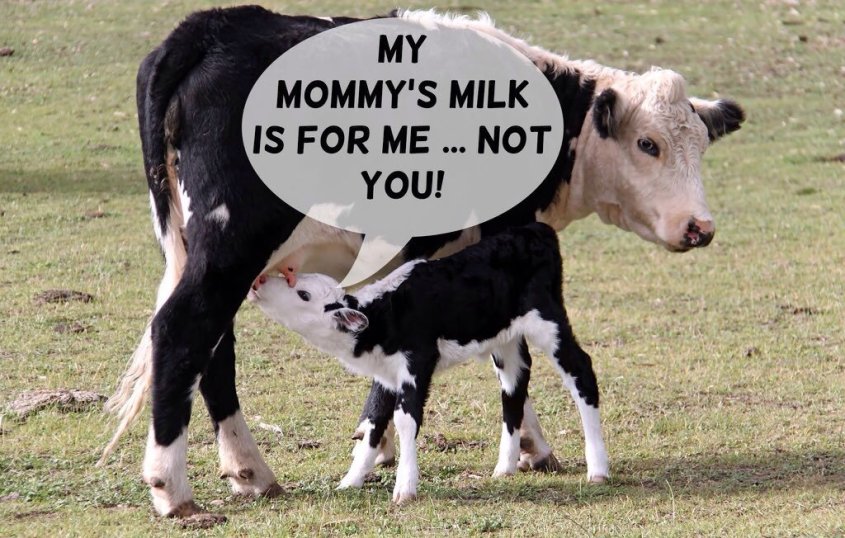
Animal-rights group Anima claims filming would reveal practices common in the UK and Denmark, such as how the young are taken away from their mothers within hours of being born, causing distress to both.

Milk 1

A video would also record how male calves are shot dead – with a bolt in the head – when they are around a day old because they are not used in dairy production, according to the activists, who say this is standard practice.

A new YouGov poll showed that less than half of the Danish public knew that cows must give birth to produce milk, and only about a third knew that calves are removed just a few hours after birth.

It’s believed about nine in 10 Danish farmers work for Arla Foods, one of the UK’s biggest dairy firms which owns the Lurpak and Anchor brands.

Anima, which is calling on Arla to be open about how milk is produced, initially asked the company to allow filming.

“We asked Arla to show us what the process of separation calf from mother was like and let us film, including when many of the calves are shot at birth. They refused, saying they couldn’t show us because they’re not the farmers,” said Kirsty Henderson, of Anima.

So the group took out full-page adverts in 11 national newspapers offering 50,000 Danish Kroner (£5,900) to any farmer who allows filming. A hotline was also set up for farmers.

Ms Henderson said about 10 so far had expressed interest but none had agreed. She said there was a report that Arla had asked farmers not to accept. 

“The fact that they are so unwilling to show the public what is going on sends a big message in my view,” she said. “Consumers have the right to know how their milk and butter are produced, and it is clear that when they are given the full story, the public don’t think such cruelty is acceptable.”

WAV Comment – Farmers refusing money ! – maybe this lack of unwillingness really shows that they don’t want to show the public what really happens on dairy farms.


Further reading:

https://www.agriland.co.uk/farming-news/arlas-uk-income-hits-961-million/


The following videos ARE NOT related to the above article; but they do show the suffering of animals associated with dairy production:

Europe: Middle Ages – Rats were not to blame for the spread of plague during the Black Death.

black-death-ala
“no copyright infringement is intended”


Rats were not to blame for the spread of plague during the Black Death, according to a study.

The rodents and their fleas were thought to have spread a series of outbreaks in 14th-19th Century Europe.

But a team from the universities of Oslo and Ferrara now says the first, the Black Death, can be “largely ascribed to human fleas and body lice”.

The study, in the Proceedings of the National Academy of Science, uses records of its pattern and scale.

The Black Death claimed an estimated 25 million lives, more than a third of Europe’s population, between 1347 and 1351.

Continue reading at  https://www.bbc.co.uk/news/science-environment-42690577


More reading – https://www.independent.co.uk/news/science/black-death-what-cause-humans-rats-fleas-deaths-bubonic-plague-a8162006.html


Fish: the sentient beings


tote Fische

Was that fish feeling pain? Fear? If a sociopath is someone who disregards the pain of others, and if someone who ignores evidence is in denial, what does that make me?

Fish have honed their skills for hundreds of millions of years; humans are just making their acquaintance. Research has shown that various fish show long-term memory, social bonding, parenting, learned traditions, tool use, and even inter-species cooperation. Compared to those, pain and fear are primitive and basic.

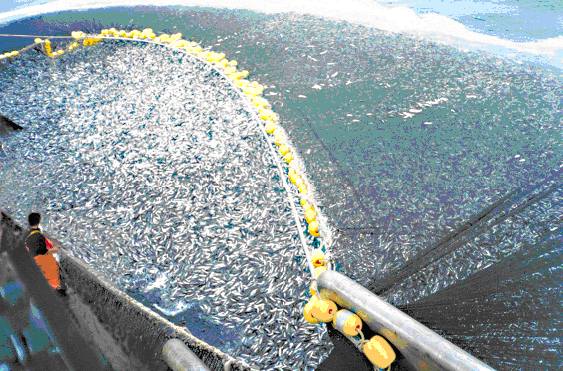
Although aquatic farms in a handful of countries, including the UK and Norway, must follow humane slaughter guidelines, there are no standards for considering the tens of thousands of wild fish caught every second.

fischfabrik

Fish were ancestors to all other vertebrates; their brains were the template for our own brains’ evolution. Lynne Sneddon, director of bioveterinary science at Liverpool University, was the first scientist to discover that fish possess nerves known to convey pain. In 2002, she identified in fish the same nerve types that, in humans, detect painful stimuli. We call such nerves “pain receptors”. Sneddon showed that pinching and pricking fish activates these nerve fibres. “My research has shown that fish have a strikingly similar neuronal system to mammals,” she told me, adding that until 2002, “it was generally believed fish did not have feelings”. Nerves are not proof that fish experience pain – but Sneddon showed that fish have the necessary hardware.

The software to match this comes in the form of brain chemicals called neurotransmitters. Mammals and fish share many identical neurotransmitters including dopamine and serotonin. In humans these are involved in pain, hunger, thirst and fear, and include opiate-like chemicals that reduce pain.

Fish anatomy, neurochemistry and behaviour all indicate that fish experience sensations including wellbeing and pain. And fear.

“How can you not feel?”, outraged the famous oceanographer Sylvia Earle!! “Fish have had a few hundred million years to figure things out. We’re newcomers. I find it astonishing that many people seem shocked at the idea that fish feel. The way I see it, some people have wondrous fish-like characteristics – they can think and feel!”

Ein Fisch hängt an einem Haken

When we ask if they can feel what a human feels, we imply that that is the best a fish might aspire to. But as Earle said, fish “have senses we humans can only dream about. Try to imagine having taste buds all along your body. Or the ability to sense the electricity of a hiding fish. Or eyes of a deep sea shark.” Many fish see four major colours; humans only see three. Some see polarised light, some see ultraviolet. Some, such as flounders, move their eyes independently, processing two image fields”!

fische-und-nerven

Nerves, brain structure, brain chemistry and behaviour – all evidence indicates that, to varying degrees, fish can feel pain, fear and psychological stress. Must we insist on denying them even that paltry acknowledgment? If we do insist, let us be honest about why: it is too painful to contemplate!

https://www.theguardian.com/news/2018/oct/30/are-we-wrong-to-assume-fish-cant-feel-pain?

https://www.ciwf.org.uk/our-campaigns/rethink-fish/

My comment: Do we want to persuade ourselves that fish do not feel pain, so that we can bring them to the plate with a clear conscience? Is our food the only criterion for deciding on the death of others? Is this the kind of people we want to be?

Think about it

My best regards, Venus

Serbia: Also Starts Off 2019 By Going ‘Fur Free’ – Great News !

Serbia fur free 2019


Serbian Flag

Following on from other wonderful news which you can read on our site – https://worldanimalsvoice.com/2019/01/01/good-news-for-the-start-in-2019/ – we have more great news as a result of many of us working hard for the last year or more.  

It is …………………………

We at WAV / SAV have worked hard over the last year with ‘Respect for Animals’ and the ‘Fur Free Alliance’; as well as Serbian activists; to provide them with lots of information relating to fur farming in Serbia.  Finally, today; 1/1/2019, we can say that all the effort has been worth it; and that as of today, 1/1/2019:

https://www.furfreealliance.com/serbia-starts-2019-off-right-by-outlawing-fur-farms/

Serbia starts 2019 off right by outlawing fur farms

SERBIA, 1 JANUARY 2019 – Animal advocates around the globe rejoice as Serbia starts off the new year by effectively banning fur farms after a 10-year phase-out. The enforcement of the ban is the successful result of a decade-long decisive and persistent struggle by citizens, experts and animal rights activist during which fur industry lobby groups consistently put pressure to reverse the ban.

The adoption of the 2009 Animal Welfare Act, that outlawed fur farming in Serbia including a 10-year transitional period, was hailed by animal protection organisations worldwide. However, ever since the ban has been continuously threatened by fur trade interest groups. Desperately seeking to reverse the upcoming fur farming ban, fur farmers upped their lobbying of the Serbian government in 2018, resulting in a debate on the cancelation of the ban in a public session last June.

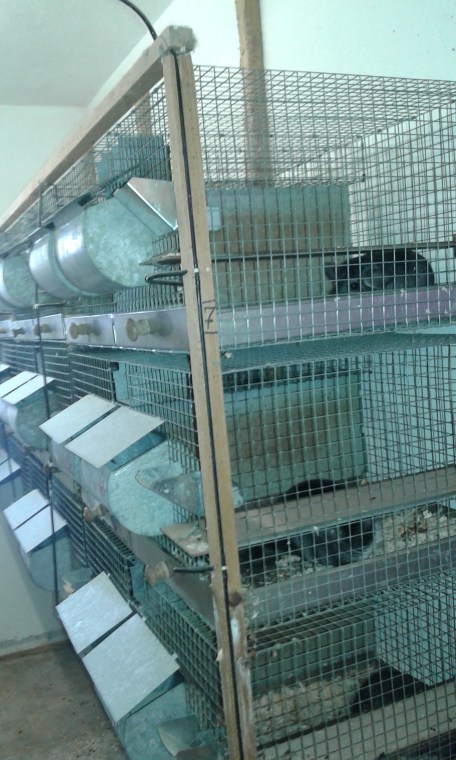
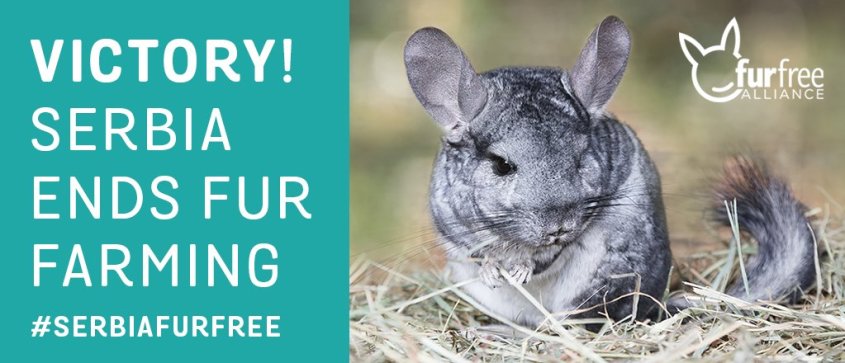
Above – Chinchilla – farmed in Serbia for their fur up until 1/1/2019.

Animal advocate groups worldwide have persistently urged the Serbian government to stay committed to the 2009 Act and make an end to the widely-condemned practice of fur farming once and for all. To counter the campaign of misinformation spread by fur trade lobbyist in Serbia, the Fur Free Alliance worked closely together with Serbian member organisation Freedom for Animals to expose the scientific facts on fur production and stress the need for a national ban.

To generate political and media interest and push back against proposed law changes, last June the Make Fur History exhibition was organised in Belgrade by Freedom for Animals, joining international experts, decision makers and journalists to address the negative impact of fur farming.

Ultimately, Serbia’s government righteously listened to the concerned public and animal rights groups and made an end to the unnecessary and cruel practice of fur production, sparing thousands of animals unimaginable suffering on Serbian fur farms.

Snezana Milovanovic, director of the Serbian animal protection organization Freedom for Animals, says:

“For 15 years now, Freedom for Animals has advocated for a fur-free Serbia by advancing and supporting legislation to abolish this brutal exploitation of animals. With the enforcement of the 2009 Animal Welfare Act, that makes it illegal to keep, reproduce, import, export and kill animals only for the production of fur, a great victory is finally achieved. Not only is this ban important for animals kept for fur production in Serbia, but also for the whole South East European region, and it signifies a major step forward for animal rights worldwide.”

Above – Inside a Serbian fur farm

Chinchillas are the only animals kept for fur in Serbia.

Each year, approximately 12.000 chinchillas were killed on Serbian fur farms by the end of the phase-out period. The intense battery cage system used on fur farms deprives chinchillas from the opportunity to express their natural behavior – such as running and jumping – and causes severe welfare problems. International studies have shown stress-related behavioral disorders, such as pelt biting and infant mortality, are highly common on chinchilla fur farms.

Learn more about welfare problems on chinchilla fur farms.

Chinchillas are rodents and are native to the Andes Mountains of northern Chile. Although often kept as pets, chinchillas were nearly driven to extinction because of the demand for their fur. To breed chinchillas for fur, the rodents were taken from their natural habitat in such large numbers chinchillas are now an endangered species. Even though chinchillas are now protected by law in their natural habitat as endangered species, the populations continue to decline. However, thousands of chinchillas are still bred commercially for their fur in several regions of Europe (i.e. Poland, Denmark, Hungary) and in South-America (Brazil and Argentina).

The ban in Serbia is in line with developments all across Europe, where in the past decades 14 countries have voted for legislation to end fur farming. In the past year alone, Norway, once world’s largest fox pelt producer, Belgium and Luxembourg adopted legislation to end fur farming. At this moment, fur farming bans are on the parliamentary agenda in Poland, Ireland, Lithuania, Denmark and Estonia.

 Some other pictures from our own archive used for the ‘ban’ campaign – WAV:

serb fur 1.jpgserb fur 2.jpg


England: 1/1/19 – New Years Day and Last Night (31/12/18) London Fireworks.

England


It’s a tradition with me personally to play this track first thing on the morning of 1st January, whatever year.

I cant say why specifically – other than I just love it – it is just a classic track from U2, even though it does not relate to anything apart from the Polish solidarity movement that was founded on 17th September 1980 at the Lenin Shipyard under the leadership of Lech Walesa. 

It was the first trade union in a Warsaw Pact country that was not controlled by a communist party.  Its membership peaked at 10 million members at its September 1981 Congress, which constituted one third of the total working-age population of Poland.

What we can hope for in 2019 is fighting your campaigns; and a lot more respect for the way in which animals are treated.

As Dr. Brian May says – “look forward with the belief that everything that has been achieved can be surpassed in the future”.

fox sake 5

This was a good year for animal rights – here are 11 of the biggest wins: 

https://www.independent.co.uk/voices/animal-rights-cruelty-free-peta-vegan-2018-meat-fur-a8704406.html

Fight the good fight !

Regards Mark – and Enjoy the music !


London fireworks – link from Diana (Germany):


OLYMPUS DIGITAL CAMERA

Thank You.


translator.png


happy new year 2.gif

Welcome everyone; (1000 hrs GMT 31/12/18)

Great to finish this year by seeing we have visitors from so many places this early in the morning –

The Netherlands; Finland; Australia; France; Chile; United States; Egypt; Algeria; Germany; UK; Ireland; Turkey; Italy; Singapore.

 Wishing you all a great new year and an even better 2019 !

 For animals worldwide – Thank You – Mark and Venus.


happy new year 3

happy new year 4


USA: A Very Positive Move – Californian law change means pet shops can sell only RESCUED animals.


USA-Flagge

WAV Comment:  California once again setting the animal welfare standard in the US.  A very positive move – well done them.  Helping rescued animals and cutting down on specifically bred animals.

Californian law change means pet shops can sell only rescued animals


California is set to become the first state in the US to ban the sale of non-rescue animals in pet shops.

The new law, known as AB 485, takes effect on 1 January. Any businesses violating it face a $500 (£400) fine.

The change means cats, dogs and rabbits sold by retailers cannot be sourced from breeders, only from animal shelters.

Animal rights groups have heralded it as a step forward against so-called “kitten factories” and “puppy mills”.

They say the current “high-volume” industries, where pets are bred for profit, can lead to inhumane treatment and long-term emotional and physical health problems in some animals.

The new state-wide law, approved in late 2017, will now require shops to maintain sufficient records of where they sourced each animal, for periodic checks by authorities.

§  The story of a dog that sparked a campaign

§  The dogs without a home for Christmas


It does not, however, affect sales from private breeders or owner-to-owner sales.

Some Californian shop owners have raised concern the law could put them out of business. The measure has also seen resistance from the American Kennel Club, which said it limits pet owners.

According to American Society for the Prevention of Cruelty to Animals (ASPCA) estimates, more than 6.5 million pets enter shelters across the country every year, of which about 1.5 million are put down.

The California assembly member who introduced the legislation, Patrick O’Donnell, has insisted the legislation is not just “a big win” for “four-legged friends”, but for California taxpayers too, as they spend hundreds of millions on sheltering animals across the state.

A couple hoping to adopt a cat from a San Diego shelter on Friday, told NBC News the move was a step forward for the state.

“It takes the emphasis off the profit of animals and puts the emphasis back on caring for and getting these cats and dogs a good home,” prospective owner Mitch Kentdotson said.

AB 485 is the first state-wide law of its kind, although other places have enacted similar regulations on pet sales on a local level.

Earlier this month, a similar ban on third-party puppy and kitten sales was confirmed in England.

Lucy’s law, named after a mistreated cavalier King Charles spaniel, also aims to combat low-welfare animal breeding.


Source – BBC News – https://www.bbc.co.uk/news/world-us-canada-46717173