Category: Hunting

Austria: Minister of Agriculture wants wolves to be shot

Austria’s Minister of Agriculture, Elisabeth Köstinger, in a broadcast called for the “removal”, i.e. killing, of wolves that keep killing sheep and goats.

This is legally possible (!!)

Elisabeth Köstinger

The wolf debate also reached the federal capital.
Agriculture Minister Elisabeth Köstinger of the Austrian People’s Party (ÖVP) took a political stand on Friday against the demands of the green coalition partner and behind those of the farmers who are calling for problem wolves to be shot down.

“If no action is taken now and problem wolves are removed, the local alpine pastures will soon no longer be able to be cultivated,” the minister said in a broadcast (!!!)

Across Austria, wolves had killed around 200 animals in the past few weeks.
In Salzburg, three wolves killed at least 75 sheep – around 25 are still missing.
The alpine farmers see it as “cruelty to animals such as would not have happened in the past hundred years” (!!!)

On Thursday they vented their anger at a rally in Salzburg’s old town.
Again and again they speak of the fact that the wolf falls into a “blood frenzy” when it rips off their animals.

Hubert Stock, the state’s wolf commissioner, describes this as a natural hunting behavior.
“It seems irrational, but as long as something is moving, the wolf hunts.”

In order to protect their animals, many farmers have not driven their sheep and goats up to the alpine pastures this year – or have already driven them down again.

Instead of in the heights, the animals are now housed on the fenced winter pasture near their farms.

ÖVP Provincial Councilor Josef Schwaiger points out the consequences for tourism: If animals no longer graze on the alpine pastures, the hiking trails would be covered with bushes.

Minister Köstinger also emphasizes the possible consequences of wolf cracks for the tourist use of alpine pastures and hiking trails.

“The peaceful coexistence of wolves and alpine farming is an illusion. Wolves are predators that often strike indiscriminately and kill alpine cattle.” (!!)

The Minister of Agriculture also points out that the “removal” – that is, killing – of individual problem wolves is legally “entirely possible”.

Even if the wolf is strictly protected according to the EU nature protection directive, the fauna-flora-habitat directive.
It says that all “deliberate forms of capture and killing” are banned in the EU.
Exceptions to this guideline are possible, however, if individual wolves would lead to “damage in particular to crops and animal husbandry as well as to forests”.
The State Council now wants to define conditions and areas of action by ordinance.
However, he should not get the necessary approval from the Greens. They spoke out against the regulation in advance.
The nature conservation organization WWF also criticized the demands of Agriculture Minister Köstinger.

“The wolf is a strictly protected species and an important part of intact nature,” says the WWF.
Instead of discussing the shooting of problem wolves, there should be nationwide coordinated herd protection programs as well as “a revival of shepherd life based on the Swiss model”.

https://www.sn.at/salzburg/politik/friedliche-koexistenz-ist-eine-illusion-ministerin-ist-fuer-den-abschuss-des-wolfes-106352221

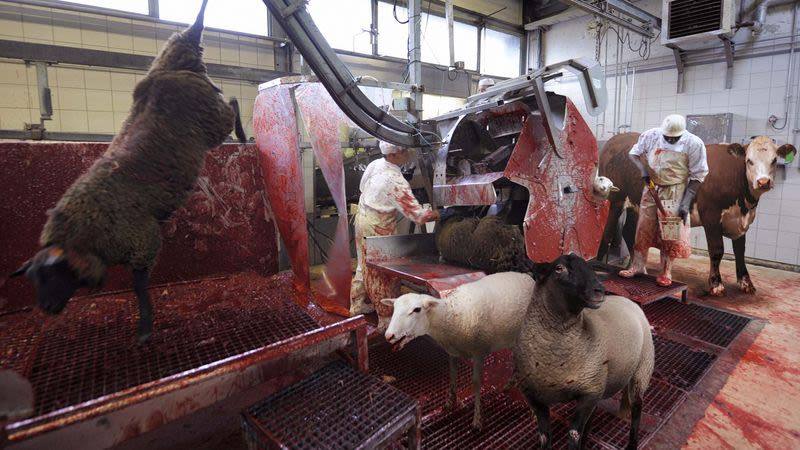
And I mean…Shepherds howl when wolves, bears or eagles steal a sheep from them, but I have never seen a shepherd cry in front of a three-story truck that carries sheep hundreds of miles on top of each other through a heat of 35 ° or even 40 °.
They are the same animals that the farmer gives for slaughter anyway.
Because the farmers keep animals for economic reasons.

Grazing animals are also ultimately brutally killed in slaughterhouses without any control and carted into the mobile coffins on all the highways of the world.
And that is also subsidized.

Wolves make grazing animals impossible?
Whta an outrageous lie!
Wild animals make up just 3% of the total biomass of terrestrial vertebrates on earth!
The rest is “useful” animals + people!

According to the Federal Statistical Office, an average of more than two million animals are slaughtered in Germany every day.
Per day!

So … not even whole wild animals around the world would be able to do that in a hundred years !!

Wolves do not practice brutal mass animal husbandry, they either eat what is there or starve to death.

But the farmer’s knitting pattern is always the same: dissemination of incorrect or incomplete information, coupled with targeted scaremongering.

Köstinger is Vice President of the Austrian Farmers’ Union.
That can explain some of the reasons why she calls for the “removal” of the wolf.
To date, no Minister of Agriculture in Austria has supported farmers and hunters as outrageously as Köstinger.

Perhaps the Minister’s “removal” would be the best choice for humans and animals.

My best regards to all, Venus

Hunting is murder

“Turning children into soldiers is deeply perverse, but don’t think we’re lagging behind Africa in anything.
We let these killers break their own children and even promote their deeds in elementary schools”.

If you want to become a serial offender in the future, you practice early!

My best regards to all, Venus


Catching with limesticks for birds is now banned in all EU countries.

It has now become a reality, what animal welfare organizations have been fighting for for years.
The catching of limesticks for birds is now banned in all EU countries. France was the last country to classify the fishing method as illegal!

It’s a breakthrough in bird conservation.
Since June 28, 2021, the controversial hunt for limed birds has been banned throughout the European Union. As the last country in the EU, France has now declared the fishing practice illegal. The French Supreme Administrative Court announced last Monday that the trapping technique for blackbirds and thrushes could not be approved in their current condition.

Eric Neuling, bird protection consultant at the German Nature Conservation Union (NABU), welcomes the verdict: “At NABU, we have been fighting against the hunting of limedrods for years. The verdict is a groundbreaking success for bird protection across Europe.”

Illegal bird trapping in Cyprus with liming rods and nets

Up until the end of the day, liming was still practiced in some areas of the south of France. Every year around 40,000 birds – including protected species – were painfully caught in France. The decision of the French administrative court now followed a ruling by the European Court of Justice in March, according to which the technology fundamentally violates EU law.

Hunting tradition is no longer placed above animal welfare

When catching limescences, bird trappers set sticky traps for birds by smearing sticky glue on branches.
If the birds perch on the prepared rods or fly close by, the animals stick to the sticky paste. As the birds attempt to escape, they begin to flutter in panic, which causes the feathers and wings to stick together even more.
Often the only thing left for the animals is painful death.

Ramifications for Cyprus after European court rules on bird trapping | Cyprus Mail

Continue reading “Catching with limesticks for birds is now banned in all EU countries.”

USA: Minnesota DNR calls off wolf hunt this year despite support from farmers, hunters.

The Minnesota Department of Natural Resources said Wednesday that there will be no wolf hunting or trapping season in Minnesota in 2021. Agency officials said they will wait until a new state wolf management plan is in place early in 2022 before deciding on any wolf harvest options. (Photo by iStock/AB Photography courtesy of the Wisconsin DNR)
The Minnesota Department of Natural Resources said Wednesday that there will be no wolf hunting or trapping season in Minnesota in 2021. Agency officials said they will wait until a new state wolf management plan is in place early in 2022 before deciding on any wolf harvest options. (Photo by iStock/AB Photography courtesy of the Wisconsin DNR) 

Minnesota DNR calls off wolf hunt this year despite support from farmers, hunters

Agency officials made the annoucement during a video meeting of the state wolf advisory committee.

Minnesota DNR calls off wolf hunt this year despite support from farmers, hunters | Park Rapids Enterprise

ST. PAUL — The Minnesota Department of Natural Resources on Wednesday, July 7, said there will be no wolf hunting and trapping season in Minnesota in 2021 as the agency continues to develop a new long-term wolf management plan.

DNR officials made the announcement during a video meeting of the agency’s wolf plan advisory committee that is helping plot the future of wolf management in the state.

Agency biologists say they won’t authorize a hunt until after a new wolf management plan is in place which they said likely won’t happen until early 2022, but no later than March.

“This morning we reiterated to the (committee) that there would be no decision on a wolf season prior to the completion of the wolf plan update,” Dan Stark, the DNR’s large-carnivore specialist, said Wednesday. “We anticipate the completion of the wolf plan process in early 2022.”

Minnesota could hold a wolf hunting and trapping season this year because the animal has been taken off the federal endangered species list, as of January, with management now in the hands of state and tribal resource agencies.

Current state law says the DNR “may’’ hold a wolf hunt when federal protections are removed. Legislation to force the DNR to hold a wolf hunt, and another bill to prevent them from holding a wolf hunt, both failed to pass the 2021 Minnesota Legislature, leaving the decision up to the agency.

Many farmers and deer hunters have pushed for a wolf season, saying the big canines are killing livestock, threatening pets and people, depleting deer numbers and need to be culled.

But wolf supporters say the animals should remain protected. Collette Adkins, carnivore conservation director at the Center for Biological Diversity and a member of the state’s wolf plan advisory committee, said the DNR is making the right decision.

“Minnesota’s wildlife managers have wisely prioritized first updating the management plan to reflect new science and the values of all Minnesotans,’’ she said. “That’s a welcome contrast to what happened just next door in Wisconsin, which rushed to hold a winter hunt and decimated their wolf population earlier this year.”

Wisconsin’s Natural Resources Board, pressed by legal action and state lawmakers, ordered a wolf hunt in February which led to 216 wolves being killed in just 72 hours, 82% more than the state goal. Supporters said the culling was long overdue. But critics said the wolf season was too much, too soon after federal delisting. Wisconsin officials are debating another wolf hunt set for November.

In June 2020, the Minnesota DNR released a report that found 87% of Minnesota residents agree that maintaining the state’s wolf population is important. That agency last summer also formed its Wolf Advisory Committee with the goal of evaluating and updating the current 20-year-old Minnesota Wolf Management Plan. Committee members include representatives of local governments, wolf advocacy groups, environmental protection organizations, hunters and trappers and livestock operators.

The DNR estimates that there are about 2,500 wolves in Minnesota currently, by far the most of any state outside Alaska.

Nationally, the Biden administration says it is reconsidering all moves by the Trump administration regarding the Endangered Species Act. Wildlife groups also have moved to sue the federal government over the decision to delist wolves in the western Great Lakes region — Michigan, Minnesota and Wisconsin.

Regards Mark

USA: Montana and Idaho (Republican-controlled states – what else ?) Have Legalized Killing Wolves on a Massive Scale.

Motivated by livestock and big game hunting interests, Idaho and Montana recently enacted a series of new laws that allow for the aggressive hunting of wolves’.  Wow – big men in camo trousers !


Montana and Idaho Have Legalized Killing Wolves on a Massive Scale

The two Republican-controlled states have passed laws that could decimate the wolf population and endanger a major conservation success story.

Montana and Idaho Legalized Killing Wolves on a Massive Scale (gizmodo.com)

Gray wolves (Canis lupus) have been persecuted in the U.S. since the arrival of Europeans. By the 20th century, they had been driven to near-extinction. Narrowly pulled back from the brink by endangered species protections and reintroductions in Yellowstone National Park and central Idaho in the 1990s, they are one of North America’s greatest conservation success stories.

Wolf recovery has had huge cultural resonance. Most Americans love wolves. Gas station t-shirts and tchotchkes featuring the species have become a fixture of kitsch Americana—a testament to our collective love for these charismatic canids.

Still, antipathy has persisted in some quarters. Now, state legislation threatens the Northern Rockies population, concentrated in Montana, Idaho, and Wyoming with smaller numbers dispersed across California, Colorado, Oregon, Washington, and Utah.

Motivated by livestock and big game hunting interests, Idaho and Montana recently enacted a series of new laws that allow for the aggressive hunting of wolves. Supporters erroneously claim that the predators threaten the livelihood of ranchers and wreak havoc on elk herds.

“[People] don’t understand the truth of what wolves do. It’s not their fault. The universities and media have brainwashed them at so many levels,” insists Steve Alder, executive director of Idaho for Wildlife, a controversial hunting advocacy organization.

Conservationists counter that this sort of antagonism is rooted in a superstitious, ideological dislike for wolves that doesn’t square with the reality of their impact. Data strongly indicates that the complaints by hunting and agricultural interest groups are exaggerated.

Predation on livestock by wolves is relatively low and elk populations are stable. In Idaho, between July 2019 and July 2020, there were only 102 confirmed livestock kills, with 28 more considered probable. Montana saw 238 confirmed kills in 2020. Both states host millions of cattle, sheep, and other ruminants, and compensate ranchers for each confirmed loss. Elk herds are thriving, with around 136,000 animals in Montana and 120,000 in Idaho. Most hunting districts meet or exceed their population goals.

“There are no data that would suggest that conflicts exist at such a level that a massive massacre of gray wolves is indicated,” said ecologist Mike Phillips, who headed the early efforts to reintroduce wolves to Yellowstone National Park and later served as a Democratic senator for Montana. “They’re ecologically illiterate.”

“Wolves have self-regulated their populations for millennia based on prey availability, habitat, and competitors,” added Michelle Lute, a conservation manager with Project Coyote, an organization that works to promote coexistence between humans and wildlife. “We just don’t need to manage them.”

Continued on next page.

France: Psychopaths on the construction hunt

A dangerous investigation, undercover in a hunting crew underground-Report of the French organization “One Voice”

We managed to infiltrate the very closed environment of underground hunting in the spring of 2019.

As part of a Hauts de France crew, our investigators witnessed several massacres: that of badgers and fox cubs.


They attended the search for foxes in this basement of Hauts-de France for hours.


Accepted by the huntsmen, they filmed the abominable spectacle that unfolded before their eyes, so that the unvarnished reality bursts into the faces of those who allow this cruel hunt.
For everyone, too, kept in the impossibility of imagining what is hidden in the woods of France by simple ignorance!

When the French learn that underground hunting is allowed, they want to ban it. Now they know as precisely as possible what this means for the animals concerned.

Unearthing, an unbearable horror

Continue reading “France: Psychopaths on the construction hunt”

Solidarity for Brigitte Bardot

The former star actress Brigitte Bardot reported on the website of her animal welfare foundation against the French hunting association. She now has to pay several thousand euros for her statements.

Because acting icon Brigitte Bardot insulted the head of the French Hunters Association, she has to pay a fine of 5000 euros. As a court in Arras in northern France decided, she also has to pay compensation and pay the court costs.

According to the public prosecutor’s office, the former star actress must also delete offensive statements from 2019 about the hunters’ association from the website of her animal welfare foundation.
She had called hunters, among other things, “terrorists of the animal world.”
She called the French hunting association chief Willy Schraen a “blatant example” of this.

Willy Schraen, de la FNC : "La chasse rend heureux"

Bardot has to pay a total of 7,000 euros

The hunting association therefore received death threats and sued Bardot.
In addition to the actual fine of 5000 euros, Bardot has to pay 1000 euros in compensation to the hunting association chief Schraen and pay 1000 euros in court costs.
The 86-year-old reportedly did not appear in court.

The prosecutor had demanded a fine of 6000 euros in the process.
Bardot has been committed to animal welfare for a long time.

https://www.spiegel.de/panorama/justiz/brigitte-bardot-wegen-jaeger-beleidigung-zu-geldstrafe-verurteilt-a-2fb37479-0e3d-46e9-830a-46a89a918db0

And I mean…The animal rights activist Brigitte Bardot describes hunters as “sub-humans” – “Nazi jargon”!
We are of the same opinion with you, Brigitte Bardot!
The lawsuit and the fine should do little harm to the passionate animal rights activist.
Rather, have helped.

Here is a petition against the verdict and the fine.
We sign!

https://www.mesopinions.com/petition/animaux/brigitte-bardot-soit-condamnee-payer-amende/149843

My best regards to all, Venus

India: Covid escalates elephant killings in eastern India to ‘crisis proportions.

Covid escalates elephant killings in eastern India to ‘crisis proportions’

Corruption and apathy lead to mounting death toll of wild animals, say conservationists

https://www.independent.co.uk/asia/south-asia/elephant-deaths-covid-india-poaching-b1876632.html

The killing of elephants in eastern India has reached crisis proportions, magnified by the Covid lockdown, conservationists say.

In the past two years, 160 of the endangered wild animals have been wiped out in the state of Odisha, at least 40 of them in the past five months alone.

Many are deliberately electrocuted or poisoned by people who have taken forest land for farming, according to the Voice for Asian Elephants Society (VfAES).

Covid escalates elephant killings in eastern India to ‘crisis proportions’ | The Independent

The felling of forests for mining and other human activity also shrinks their natural habitats.

And poachers wanting tusks for ivory have been emboldened by an absence of forest patrols, which have been cut back during the coronavirus pandemic.

The VfAES accused authorities of using Covid “as a shield to avoid their responsibilities” in carrying out patrols and cracking down on corruption.

Sangita Iyer, a biologist and the organisation’s founder, said: “There is a silent catastrophe unfolding across India.

“The situation in Odisha is dire. Apathy, complacency, dereliction of duty and a significant lack of accountability by certain forest officials are some of the core issues on the ground.”

Ms Iyer accused ministers of failing to investigate the problems behind the “senseless and preventable” deaths.

She said elephant tusks have been seized from the homes of corrupt officers who know where elephants can be found and tip off poachers.

“What chance do these animals have if the very people entrusted to care for them actually end up betraying these voiceless animals?” she said.

Records show at least 82 Odisha forest officials have been accused of corruption in five years, according to the Hindustan Times.

There are 40,000 Asian elephants in the world, officially classed as endangered, 60 per cent of them in India.

But activists say a burgeoning human population, causing “reckless” land use, such as mining and agriculture expansion, and railways and roads cutting through habitats is killing the creatures.

According to a report by Traffic, a wildlife trade monitoring charity, during the pandemic the poaching of large mammals in India has increased by 44 per cent, and that of other small mammals by 25 per cent.

It’s feared the official elephant death tally is an underestimate because villagers who normally find carcasses have been out less.

In 2012, the Odisha government announced that every unnatural death would be investigated, but Ms Iyer claimed ministers have not questioned or reprimanded any officials for failing to prevent deaths.

And she called on the government to launch a thorough investigation into the deaths.

In the longer term, underpasses and overpasses should be built for railway tracks and roads to prevent elephant deaths, she said, and drivers flouting the traffic laws should be suspended.

“The consequences of the disappearance of Asian elephants would be colossal to the forest ecosystems, not only in India, but around the world, as elephants play a vital role in climate mitigation. Their decimation simply cannot be underestimated,” she added.

Maria Mossman, founder of Action for Elephants UK, said: “This kind of mistreatment of elephants in a state that houses India’s fifth-largest population will tarnish Odisha’s reputation around the world.”

Odisha government has not responded to requests from The Independent for comment by the time of publication.

Regards Mark

EU: Leading animal protection NGOs call for EU ban on hunting trophy imports.

Leading animal protection NGOs call for EU ban on hunting trophy imports

30 June 2021

Press Release

Marking the sixth anniversary of the killing of Cecil the lion by an American trophy hunter, animal and nature protection NGOs, members of the European Parliament, and conservation experts from South Africa, Zimbabwe and Kenya are calling on the EU to ban the import of hunting trophies.

In a webinar, Humane Society International/Europe discussed a new analysis of trade data revealing that the European Union is the world’s second biggest hunting trophy importer after the United States, importing nearly 15,000 hunting trophies of 73 internationally protected species between 2014 and 2018. 

The issue of trophy hunting has become increasingly controversial over the past decade not simply for the animal cruelty, but also due to concerns about the biodiversity crisis

Momentum is growing to take action to curb hunting trophy imports. France banned the import of lion trophies in 2015 and the Netherlands banned trophy imports of over 200 species in 2016. In Germany two political parties (Greens and Left) have included a trophy import ban in their party manifestos.

The webinar, held in collaboration with the European Parliament’s interest group MEPs for Wildlife, Humane Society International/Europe, Born Free Foundation, Eurogroup for Animals and Pro Wildlife, explored how trophy hunting places unsustainable pressure on endangered and other imperiled species, and whether this practice really does make a significant contribution to wildlife conservation as claimed by its proponents. 

German MEP Manuela Ripa (Greens/EFA), who hosted the event, said:

“It is crucial that Members of the European Parliament address the issue of the killing of wild animals, endangered or otherwise, purely for the purpose of procuring trophies to hang on their walls. Especially in the wake of the EU Biodiversity Strategy it is important to consider the impact that European citizens travelling to far-flung destinations solely to shoot and bring home animal body parts may be having on wild animal populations elsewhere around the world. Instead of having tightly regulated trophy hunting, I pledge for tightly regulated photo hunting, which would have a bigger benefit for species, support ecosystems and the communities involved. I strongly urge the European Commission to address the issue of trophy hunting in its upcoming evaluation of the EU Action Plan against Wildlife Trafficking.” 

Dr Joanna Swabe, Humane Society International/Europe’s senior director of public affairs, noted:

“The shocking role of European citizens in global trophy hunting should not be underestimated. Humane Society International’s new EU Trophy Hunting by the Numbers report reveals that shockingly the EU imported nearly 15,000 hunting trophies from 73 species between 2014 and 2018, despite them being protected under the Convention on International Trade in Endangered Species (CITES). It is shameful that the EU is the world’s second largest importer of hunting trophies, bringing in almost 3,000 trophies every year, including African lions and elephants, black rhinos, leopards, zebras, cheetahs, lynx and polar bears. Germany, Spain and Denmark account for 52% of all imported trophies, and the trade data shows that trophy import numbers have actually steadily increased by almost 40% during the period studied despite opinion polls showing that the vast majority of EU citizens oppose the gratuitous practice of killing wild animals for pleasure, display and bragging rights.  The only way we should be shooting wild and endangered animals is with cameras, not guns or arrows.”

Dr Mark Jones, head of policy for the Born Free Foundation, added:

“Born Free is ethically opposed to the hunting or killing of any animal for sport or pleasure. We also challenge the claims made by proponents of trophy hunting that it delivers significant conservation and community benefits, or that it positively contributes to the sustainable use of wildlife. Studies have consistently shown that trophy hunting does not provide a significant source of income to rural people, and certainly pales in comparison to other wildlife-related activities such as ecotourism. The killing of animals by trophy hunters also causes immeasurable animal suffering, and negatively impacts wildlife conservation by removing individual animals that are key to their populations. The trophy hunting industry is wracked by corruption, with excessive quotas being set that are often exceeded. We urge European nations to take action to stop their citizens jetting off to exotic locations to kill and imperil wild animals elsewhere in the world.”

Reineke Hameleers, CEO at Eurogroup for Animals, said:

“The trophy hunting practice of primarily removing the largest and most physically impressive animal specimens, puts species conservation in jeopardy, disrupts social herd structures and weakens gene pools of species that are already threatened. In a time of global biodiversity crisis, it is urgent for the EU and Member States to acknowledge that it is irresponsible to allow rich elites to shoot endangered species for pure pleasure, and finally ban the import of hunting trophies. We need to move away from the unethical consumption of wildlife and look at how the EU can instead encourage and reward investment in wildlife so that concrete and significant benefits can be achieved by local communities through its non-consumptive and ecologically sustainable use. Wild animals should be worth more to these communities alive than dead.”

Daniela Freyer, co-founder of Pro Wildlife, added: 

“Germany has the dubious honour of being the top importing nation for hunting trophies in the European Union. It is sickening that a very small minority of my fellow German citizens still enjoy travelling to faraway places to kill animals for fun, pose with their dead bodies for tasteless selfies and hang their body parts on the walls back home. Trophy hunting is not only cruel and unnecessary, but it also poses a significant risk to wildlife conservation and biodiversity. The majority of EU citizens, including Germans, are opposed to the unethical practice of killing wild animals for trophies. It is time for Germany and other EU Member States to act and prohibit the import of hunting trophies.”

Notes

Trophy Hunting: Conservation Tool, or a Threat to Wildlife? was organised by MEPs for Wildlife in collaboration with Humane Society International/Europe, Pro Wildlife, Born Free Foundation and Eurogroup for Animals on 30th June 2021 with the participation of the following speakers and panelists: 

  • Dr Audrey Delsink, wildlife director, Humane Society International/Africa
  • Dr. Paula Kahumbu, wildlife conservationist and CEO, WildlifeDirect; Rolex National Geographic Explorer of the Year 
  • Lenin Tinashe Chisaira, environment lawyer and director, Advocates4Earth, Zimbabwe
  • Miet van Looy, International Relations Officer – CITES and EU Wildlife Trade Regulations,DG Environment, European Commission
  • Dr David Scallan – secretary general, European Federation for Hunting and Conservation (FACE)

Opinion poll results demonstrate that the vast majority of EU citizens (over 80%) oppose trophy hunting and want to end trophy imports.

HSI/Europe’s Trophy Hunting by the Numbers report reveals that Germany, Spain, Denmark, Austria, Sweden, France, Poland, Hungary, the Czech Republic and Slovakia are the top trophy importing EU Member States, with Namibia, South Africa, Canada, Russia, Argentina, Kyrgyzstan and the US representing the top exporting countries to the EU. Spain, Poland, Hungary, Germany and the Czech Republic are the top importers of captive lion trophies. EU trophy import statistics for individual animals (2014-2018), include:

  • 3,119 Hartmann’s mountain zebras 
  • 1,751 Chacma baboons 
  • 1,415 American black bears
  • 1,056 brown bears
  • 952 African elephants
  • 889 African lions (of which 660 were captive-bred lions in South Africa) 
  • 839 African leopards
  • 794 hippopotamuses
  • 480 caracals
  • 415 red lechwes
  • 297 cheetahs – the EU is the largest importer of cheetah trophies in the world 
  • 65 polar bears
  • Six critically endangered black rhinos 

Regards Mark

Canned Hunting: million dollar business for terrorists

“Canned Hunting” – the hunting of wild animals in enclosures – has become a million dollar business.
A total of 160 South African hunting farms now hold huge populations of lions.
The stock estimates vary widely.

Those familiar with the scene speak of a total of 8,000-10,000 lions. There are also extremely endangered big cats from cheetahs to leopards to Bengal tigers.
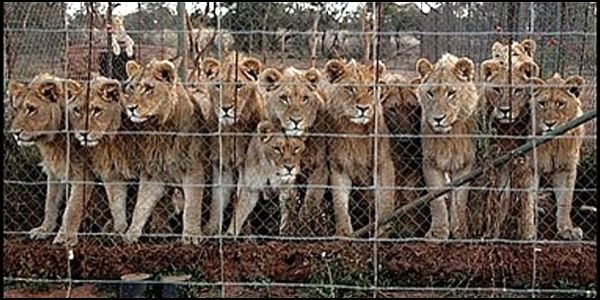
The said population of 12,000 captive lions now outnumber the wild population by almost four to one. Each day, around 50 lions get killed in one particular lion farm.
They are all just for profit.

For a high fee they can be shot or slaughtered by wealthy tourists.
The victims of the hunt very often experience their end in delirium.
So that they represent the easiest possible target for the often completely inexperienced shooters, they are injected with a mix of drugs before they are shot.
With the bullet, the execution works at least reasonably quickly.

The trend is towards crossbows or bows and arrows.
This is particularly trendy in the nouveau riche circles.
There is a feeling of Robin Hood.

One can easily imagine the torture when the first arrow does not hit properly, when the wounded animal flees and is hunted.

Continue reading “Canned Hunting: million dollar business for terrorists”