Category: Hunting

Iceland: no killing of whales this year

Wonderful news for the marine mammals in Iceland: the whaling season is slated to be canceled this year.

island

Sales problems and conditions due to the corona pandemic are causing problems for the Icelandic whalers. The hunting season should now be canceled again, a company probably wants to withdraw completely from business.

Killer whale group

For the second time in a row, Iceland is suspending the whaling season this summer. This is reported by local media and the AFP news agency.
According to the agency, one of the two still active whaling companies in the country now wants to finally withdraw from whaling: “It is no longer worth it”, said the managing director of the minke whale company IP-Utgerd, Gunnar Bergmann Jonsson.

FILES-ICELAND-EU-POLITICS-WHALING

According to Bergmann Jonsson, the boats would have had to go far out to sea to hunt minke whales because of the expansion of a no-fishing zone off the coast. That would have been too expensive.

Hvalur, a company specializing in fin whale hunting is stopping this season, according to a report, mainly due to sales difficulties in the Japanese market.

walfang

There, the regulations for food safety for meat imports are much stricter than for domestic products, CEO Kristjan Loftsson told the newspaper “Morgunbladid”.

In addition, the companies that process the whale meat have problems meeting the requirements to fight the corona pandemic, Loftsson said.

Because of the distance regulations in the wake of the coronavirus crisis, it is also almost impossible to process the meat of the marine mammals. The workers in the whaling stations would have to work very closely together.
According to the newspaper, 146 fin whales and six minke whales were caught off Iceland’s coast in 2018.

walfangschiff-s

According to the newspaper, 146 fin whales and six minke whales were caught off Iceland’s coast in 2018.

https://www.spiegel.de/wissenschaft/natur/island-setzt-walfang-im-sommer-erneut-aus-a-1c08587d-c1ac-4f3b-9e9e-11b8eb6217ec


And I mean…This is finally really good news for the whales!
Because, even this year, Icelandic harpoon cannons will not shred whale bodies.
Up to 209 fin and 217 minke whales are spared the agonizing death.

The Icelandic Marine Research Institute has recommended this number of whales as the annual maximum for hunting.

Hopefully we will soon see a ban on this cruel hunt forever.

My best regards to all, Venus

‘Filthy bloody business:’ Poachers kill more animals as coronavirus crushes tourism to Africa.

GP: Africa poaching Rhinos Black Mamba Anti–Poaching Unit

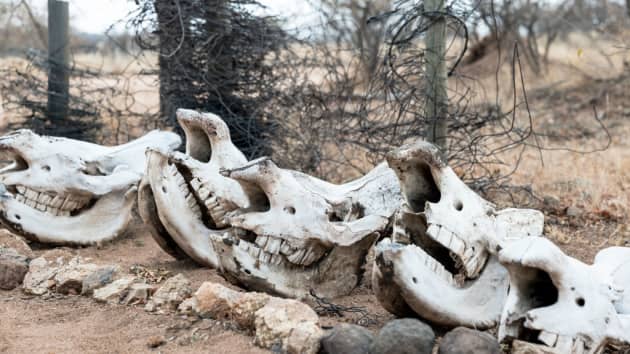
File photo of skulls of White Rhinos and the snares that have entrapped them stand as a stark reminder of the ongoing battle in South Africa to protect these majestic, gentle giants of the African bush.
Ilan Godfrey | Getty Images


‘Filthy bloody business:’ Poachers kill more animals as coronavirus crushes tourism to Africa


Key Points

As the coronavirus pandemic halts tourism to Africa, poachers are encroaching on land and killing rhinos in travel hot spots now devoid of visitors and safari guides.

In Botswana, at least six rhinos have been poached since the virus shut down tourism there. In the northwest South Africa, at least nine rhinos have been killed since the virus lockdown.

“It’s a bloody calamity. It’s an absolute crisis,” said Map Ives, founder of Rhino Conservation Botswana, a nonprofit organization.


Ryan Tate is supposed to be in South Africa right now helping to fight off poachers who hack horns off rhinos and kill elephants for their ivory tusks.

But since the country announced a national lockdown in March to slow the spread of the coronavirus, Tate is stuck in the U.S. He can’t join his team out in South Africa’s wilderness and can’t meet with private donors in the U.S. for his anti-poaching nonprofit organization, which is seeing donations dry up.

“It’s a helpless feeling,” said Tate, a 35-year former Marine and the founder of VetPaw, a group of American military veterans who fight poachers in a remote private reserve in the far north of South Africa.

“Poaching doesn’t stop just because there’s a virus — if anything, it picks up,” he said.

Although poaching is not uncommon in Africa, poachers during the coronavirus pandemic have encroached on land they wouldn’t normally visit and killed rhinos in tourism hot spots now devoid of visitors and safari guides.

In Botswana, at least six rhinos have been poached since the virus shut down tourism. Botswana’s security forces in April shot and killed five suspected poachers in two incidents. In northwest South Africa, at least nine rhinos have been killed since the virus lockdown. All the poaching took place in what were previously tourism areas that were safe for animals to roam.

“It’s a bloody calamity. It’s an absolute crisis,” Map Ives, founder of Rhino Conservation Botswana, a nonprofit organization, said of poaching across the continent.

There are still rangers in the African reserves, but the loss of tourist vehicles in parks provide poachers a significant advantage.

“The poachers have been emboldened because the playing field is in their favor and they won’t have as many problems moving around,” said Ives, who has lived on the Okavango Delta in northern Botswana for four decades but is stranded in South Carolina due to travel restrictions.

Highly organized illegal poaching threatens to send black and white rhinos, elephants and other African wildlife into extinction over the next several decades. The black rhino population has plummeted 97.6% since 1960 and the lion population is down 43% in the last 21 years, according to the World Wildlife Fund. At least 35,000 African elephants are killed each year and roughly only 1,000 mountain gorillas and 2,000 Grevy’s zebras remain on the continent.

“They are professional and adept at running off with rhino horns in minutes and dodging security forces. They are masters at evading detection,” he said. “It’s a filthy bloody business.”

Since Botswana’s booming tourism industry collapsed because of the virus lockdown, Ives has seen an anecdotal rise in rhino and bush meat poaching incidents. His company is running short of cash as donations dry up amid the global lockdown, and that may result in reduced patrols as a result.

“We lost hundreds of sets of eyes and ears in the delta,” Ives said. “I’m sure poachers know this — they watch these camps closely and see tourism activity.”

Africa’s $39.2 billion tourism industry is also vital in funding wildlife conservation efforts across the continent.

Africa received 62.5 million visitors, creating 9.1 million direct jobs in travel and tourism sectors in 2015, according to estimates from the African Development Bank.

Funding from sources like national park fees and safari rides are vital to wildlife conservation in Africa.

But now people working in tourism are being laid off because of the pandemic and national parks that provide wildlife a safe place from poachers are losing revenue. All three national parks in Rwanda have temporarily closed, along with Virunga National Park in the Democratic Republic of the Congo and Kruger National Park in South Africa.

“There’s a lot of people struggling in Africa, a lot of private reserves that have helped save a few species including rhinos,” said Tate. “Now they don’t have that ecotourism they depend on, it’s gone. There’s going to be a lot of damage done from this.”

There’s also a major concern that as the coronavirus harms African economies and sharply raises unemployment levels, people will become desperate for income streams and pursue poaching to make a living.

Africa reported a 43% jump in coronavirus cases over the last week, according to Africa Centers for Disease Control and Prevention. The World Health Organization has warned that the continent of 1.3 billion people could become the next epicenter of the outbreak, potentially pushing 30 million people into poverty.

Conservationists expect that in addition to professional poachers killing more animals, countries across Africa will experience a massive surge in bush meat poaching by average people since it’s cheaper to kill animals for meat than to buy it.

“Why do criminals commit acts of crime? They do it because they’re desperate and it’s a quick easy means for money,” Ryan said. “Poaching is no different. There’s a lot of desperate people out there because of the virus and [poaching] will absolutely pick up.”

https://www.cnbc.com/2020/04/24/coronavirus-poachers-kill-more-animals-as-tourism-to-africa-plummets.html

Sea Shepherd: The poacher’s phantom is falling apart


We remember the KUNLUN: The poacher ship expires in Dakar.
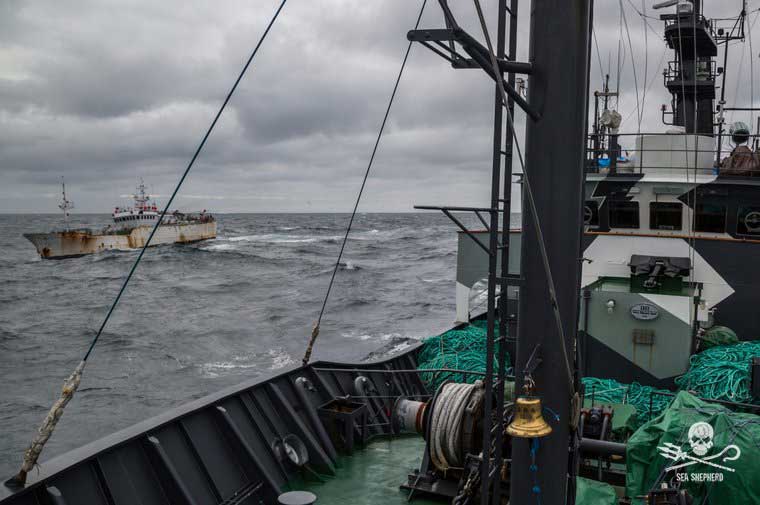
Monday, December 23, 2019: Nine months after the THUNDER sank in the Gulf of Guinea, the KUNLUN in Senegal was arrested when its crew tried to unload illegally caught Antarctic cod. The decaying ship is a monument to the worldwide efforts to smash the “Bandit 6” poaching fleet.

Commentary by Captain Peter Hammarstedt.

sea shepeard logojpg

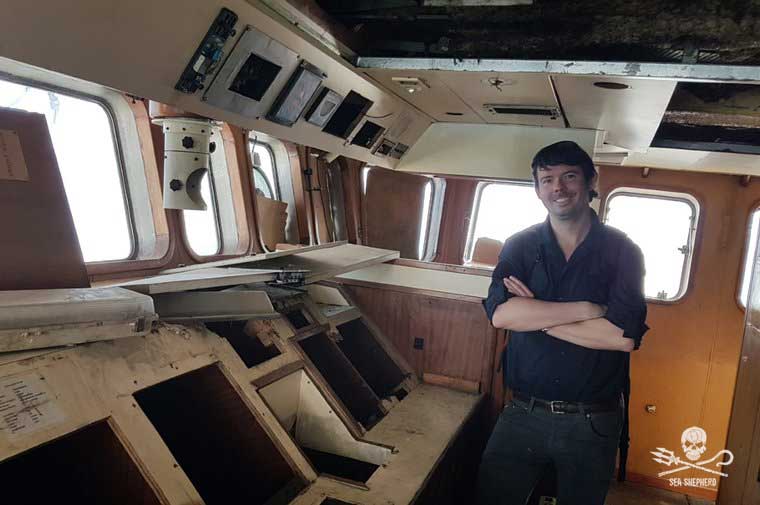
I felt the greasy layer of rust and dirt crunch under my feet as I stepped onto the deck of the ASIAN WARRIOR, known to me by its former name KUNLUN, in the port of Dakar in West Africa.

In 2014 the KUNLUN was part of the “Bandit 6”. Together with the now infamous trawl ship THUNDER, these six poacher ships looted the Arctic Ocean to Antarctica.

Nine months after the THUNDER sank in the Gulf of Guinea, the KUNLUN in Senegal was arrested when its crew tried to unload illegally caught Antarctic cod. The decaying ship is a monument to the worldwide efforts to smash the “Bandit 6” poaching fleet.

sea shepard 2

While my crew and I were chasing the THUNDER from Antarctica through the dangerous waters of the Southern Ocean to the north on BOB BARKER, Captain Siddharth Chakravarty and his crew took care of the KUNLUN hundreds of miles to the southeast on the SAM SIMON.

The SAM SIMON crew led KUNLUN out of the Antarctic fishing grounds and then handed over evidence-relevant documents to Interpol and the New Zealand authorities.

Due to their long history of violations of fishing laws and their connection to the well-known Spanish crime syndicate, Vidal Armadores, to whom the ship belonged, they also searched for KUNLUN.

Like the THUNDER, Interpol searched the KUNLUN with a purple alarm, a wanted list that alerted the police authorities worldwide. This has been requested by New Zealand, Australian and Norwegian authorities.

The sister ships of the KUNLUN named YONGDING and SONGHUA were later seized on Cape Verde.

During a routine visit to Mindelo, I reported to Interpol, the New Zealand Ministry of Primary Industry and the Cape Verde judicial authorities that they were in port. Almost four years later, the two ships still remain in Cape Verde.

To get to the KUNLUN bridge, I had to climb over a mattress belonging to the Senegalese security guard, the lonely guardian of the ship. The console on the bridge has long been an empty case. All the electronic equipment for navigation was torn out, including the radar on which KUNLUN was able to track the position of the SAM SIMON.

sea shepard 3Captain Peter Hammarstedt.


If you look ahead, the ship has a slight flip to the port, as opposed to the starboard tilt that the THUNDER accepted before sinking. The THUNDER was deliberately sunk by its own captain Luis Alfonso Rubio Cataldo, who made this unfortunate decision to destroy evidence.

The captain from Chile, Luis Alfonso Rubio Cataldo, the leading engineer Agustin Dosil Rey from Spain and the second mechanic Luis Miguel Perez Fernandez, also from Spain, were sentenced to two years and eleven months in prison and to a fine of 15 million euros for forging documents, pollution and damage, and for neglectful conduct.

Nobody appiered to request the KUNLUN. The ship remains in the custody of the Senegalese government, whose use in fixing the ship was commendable.

In its decay, the former phantom now appears very real. Everything mystical that once surrounded the ship disappears with the actual decay.

sea shepard kuhlun 4

If we ever have doubts that civil society, in cooperation with governments, is capable of stopping illegal fishing, all we have to do is look at this sad, dilapidated steel block that was once KUNLUN in Dakar.

And we remember the depths of the Gulf of Guinea, where the THUNDER lies 3,800 meters below sea level, at the same depth that the TITANIC sank.

https://sea-shepherd.de/2825


„The Sea Shepherd Conservation Society is a conservative organization.

I am a conservative. You can’t get more conservative than being a conservationist. Our entire raison de être is to conserve and protect.

The radicals of the world are destroying our oceans and our forests, our wildlife and our freedom.“ (Captain Paul Watson)

My best regards to all, Venus

Malta: a paradise for hunting mafia

Spring hunt in Malta: Despite all protests by the nature conservation associations and from the population and contrary to the requirements of the EU Birds Directive, Malta has approved the spring hunt for quail.

malta-2-x-2-cm
From April 10th to 30th, 6,000 hunters can shoot a total of 5,000 of the endangered migratory birds.

That means the hunters go on the prowl for 20 days in order to allegedly kill less than one bird on average – a hardly credible calculation.

Komitee-gegen-Vogelmord-LBV
The actual number of birds shot is likely to be much higher. The police controls, which are always too tight, have been further reduced by the corona pandemic.
As a result, the two teams of the Committee against Bird Murder, which are currently in use in Malta, observe numerous violations of hunting and nature conservation law.

komite n
The use of banned electronic lure systems and shots at protected birds of prey, hoopoes and lovebirds are particularly widespread.
The last victim of the uncontrolled spring hunt is a kestrel, which a committee team found at Birzebuggia on Easter Sunday (photo). Unfortunately, the bird had to be put to sleep – its body was full of lead shot.

kommite gegen den Vogelmord, Falke

In our video published today, we show a whole range of violations – from bird trapping with blow nets to hunters who are illegally stalking. It has received and confirmed information that the man works as a prison guard in Corradino Correctional Facility.


https://www.facebook.com/Komitee.CABS


My  comment: The hunting season in Malta lasts from September to May. There is hunting almost everywhere, and the illegal poachers don’t give a shit about the police.
Since classic game on the islands has long been eradicated, the murderers’ rage is concentrated on the migratory birds.
The list of birds officially released for hunting and fishing includes, in addition to numerous songbirds, waders and waterbirds, even highly endangered species.

A blatant case of corruption when licenses are issued for endangered species.

Bird catching is a popular sport in Malta. Unlike most other fishing areas in the Mediterranean, the captured songbirds end up as caged birds, locked up in the living room of perverted “bird friends”.
In Malta’s capital Valletta there is even a large bird market every Sunday, which is even mentioned in the travel guides as a sight.

Another big advantage of the Corona is the temporary standstill of tourism in countries that have always lived from tourism. For tourism, a lot of money is usually made with animals.

komite Poster-LR-723x1024

My best regards to all, Venus

USA: Pro-Trophy Hunting Lawyer Appointed Key Role at US Fish and Wildlife Service

american-flag-120402148


Pro-Trophy Hunting Lawyer Appointed Key Role at US Fish and Wildlife Service

Posted by Jane Wolfe | April 6, 2020


In an unconscionable move, Anna Seidman — a former lawyer for the trophy hunting group Safari Club International (SCI) — has been appointed assistant director of the U.S. Fish and Wildlife Service’s (FWS) International Affairs program.

Seidman has sued the FWS a number of times during her 20-year tenure as litigator for SCI, an organization which successfully lobbied to revoke the ban on importing elephant body parts as hunting “trophies” from Africa.

In her new role, Seidman, who replaced Eric Alvarez, will head a team focused on protecting endangered wildlife and enforcing conservation pacts worldwide. This is in sharp contrast to her lengthy employment at SCI, where, as Director of Legal Advocacy and International Affairs, Seidman fought against legislation aimed at protecting wildlife, including a 2015 regulation that banned aggressive methods of predator control in national preserves and refuges — specifically in Alaska.

A spokesperson from the FWS confirmed the engagement to HuffPost, citing Seidman as “an effective, innovative leader with 20 years of legal and policy experience, including expertise in international environment and natural resource management.”

This appointment could potentially have far-reaching negative implications for the protection of wildlife.

To voice your concern, contact Chief Officer of Public Affairs for the U.S. Fish and Wildlife Service Gavin Shire at Gavin_Shire@fws.gov.


Call To Action! Sign Respect For Animals’ Urgent Letter Asking Norway To End This Year’s Barbaric Seal Hunt With A Quota Of 18,548 Harp Seals.

Norway


Call To Action! Sign Respect For Animals’ Urgent Letter Asking Norway To End This Year’s Barbaric Seal Hunt With A Quota Of 18,548 Harp Seals.


The Norwegian government is going ahead with their sickening seal hunt yet again this year. They have announced that the seal hunt can be conducted without an animal welfare inspector onboard. The reason is said to be the risk of COVID-19.


As noted in a statement by Respect For Animals, “among the crews to go hunting without inspection this year, are members who have been convicted of animal cruelty after several offenses during seal hunting in 2009.”

In 2010, these crew members received some of the highest fines ever given for animal cruelty in Norway. The men were convicted based on documentation from an animal welfare inspectors report, and video recorded evidence.

NOAH, the Norwegian animal protection group, is gravely concerned about animal welfare during the 2020 seal hunt, and is now demanding that the Government of Norway does the right thing and cancels the hunt. “To permit seal hunting crews to kill seals without inspectors is nothing but absurd. If the inspector must take considerations to prevent infection from (COVID-19) then of course this should apply to all crew. Considering animal welfare issues, the hunt should be cancelled when an animal welfare inspector is not allowed to be onboard. Hunting seals are not an “essential service,” that could legitimate temporary changes of laws during the corona-crisis,” Siri Martinsen, Veterinarian and Executive Director of NOAH said in a statement. “On the contrary, seal hunting is highly controversial and forbidden in several countries because of animal welfare concerns.”

Respect for Animals, NOAH, and many international animal protection groups are strongly concerned that rules for animal welfare and control are being changed in reference to the corona-crisis, while exploitation of animals continues unimpeded. The seal hunt is 80% subsidized, and should now be stopped to avoid animal suffering.

“I have travelled around the world documenting the different seal hunts, tying to get them banned, and wherever they occur, the horror and brutality is the same. Canada, Namibia, or Norway, the slaughter of seals often for their fur is cruel and unnecessary,” stated Mark Glover, Campaigns Director for Respect for Animals. “Seal hunters with appalling convictions for animal cruelty are being allowed to inflict carnage on innocent, helpless seals, without observation, has shocked people around the world. We urge the Norwegian government to take action and END the seal hunt, NOW!”

In 2015, the Norwegian government decided not to grant subsidies for 2016 and there was no seal hunt that year. Sadly, subsidies were re-established in the following years.


The quota for the 2020 seal hunt is set at 18,548 Harp Seals.


petition keyboard


ACTION

Please sign Respect For Animals’ letter to the Norwegian Embassy urging the government to cancel the barbaric seal hunt in Norway, HERE!

Help us continue to bring you the latest breaking animal news from around the world and consider making a Donation Here!


https://www.paypal.com/donate/?token=_X4d_5M1mLlbdWQzefiQ1W713obguXlR_d3Jd2QQtW4OO5bKyg6G3k5eIHTltT_ynYek5m&country.x=US&locale.x=US 


Please share our articles, follow us on social media, and sign up for our newsletter! Go Plant-Based!

“One Person CAN Make A Difference”


Luxembourg: we say “thank you”!

fuchs mit kleinem

Success story: Fox hunting ban Luxembourg in the sixth year!!

luxembourg-flag jpg

With the enactment of the Hunting Season Ordinance of March 15, 2019, the Luxembourg Ministry of the Environment has extended the ban on fox hunting since 2015 not only for the 2019/20 hunting year, which will soon end.

For the coming hunting year 2020/21, foxes in Luxembourg were also protected: They are not listed as a huntable species in the current hunting regulations and therefore no hunting seasons have been set for them.

Fuchs Mama mit Welpe

No fox hunt? No problem!

The horror scenarios of sprawling fox populations or the spread of wild diseases, which the hunting association FSHCL had predicted, have of course not occurred.

Since the introduction of the fox hunt ban, the supporters of hunting have spoken out against the protection of the useful predators with flimsy arguments and massive lobbying and press work – fortunately without success, because the fox hunt ban is a true success story: nature and forest management have found no problems due to the fox hunt ban; there is no evidence of an increase in the fox population and the fox tapeworm infestation rate has decreased rather than increased since the ban on hunting.
While it only rose to 39.7% in 2014 with continued hunting, in 2017 it was only 24.6%.

Even before the administrative court, the Luxembourg hunting federation FSHCL failed miserably with its request to legally overturn the hunting ban.

Obviously there are no valid arguments in favor of the fox hunt and therefore there is no end in sight for the fox hunt ban.

The fox hunting ban in Luxembourg is in its sixth year

jagd total mit fuchsjpg

The hunt for foxes has been banned in Luxembourg since 2015.

Since then, the small country has stood as unmistakable, practical evidence of how unnecessary the massive and cruel killing of these prey, which is as useful as it is beautiful, is actually – even in the modern cultural landscape.

The Luxembourg government has kept its promise to consistently continue the success story of the fox hunting ban, because: The available scientific knowledge as well as previous experiences in Luxembourg speak clearly for the preservation of the fox hunting ban. This fact was clearly confirmed by the 2019 decree, which granted foxes protection for two years in advance.

Füchsleine
Luxembourg remains firmly on its trend-setting course, which Germany and other countries should finally join!

https://www.aktionsbuendnis-fuchs.de/post/luxemburg-fuchs


And I mean…Luxembourg has shown the peaceful, zivilized way of dealing with foxes, none of what the local hunting association FSHCL predicted has occurred.

The cantons of Geneva and Thurgau in Switzerland have shown the way and abolished fox hunting and construction hunting – because they are unnecessary and sadistic cruelty to animals.

§22 paragraph 4 of the German hunting law prohibits killing parents as long as they are necessary for the rearing of the offspring. This is to prevent young animals, which would not be able to survive on their own, to die from hypothermia, starvation or thirst.
And yet in Germany the closed season for foxes has been abolished.
Animals can be shot or trapped all year round.

The first fox pups are born from mid-January, so that during the “fox weeks” (which take place in February) there is already a risk of actually killing parent animals and condemning their pups to a terrible starvation or frostbite. Fox weeks are legal!

As a leisure activity, psychopaths kill up to half a million foxes in Germany in the most cruel way every year.

Hunting is hypocritically described in the relevant circles as “fine regulation”, “two-stage system”, “dynamic management”, “development aid”, “population control” or such inhuman propaganda. Brainwashing as we know it from National Socialism.

Hobby hunting is a huge cancer that has spread over Germany.

Fuchswoche Fackel g

My best regards to all, Venus
Germany: Wolf’s persecution


wolf-

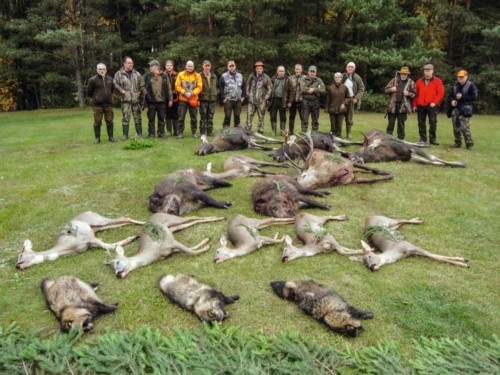
In Lower Saxony, the shooting down of three wolves is currently approved. These are two animals from the Uelzen district and one animal from the Emsland district.

After repeated livestock tears in the Uelzen region, the state, together with the local district there, examined an exceptional permit from the strict protection of the wolf in accordance with the Federal Nature Conservation Act, the Lower Saxony Environment Ministry said.
The “experts” from the Ministry of the Environment have assessed the situation in detail, taking into account the national development of the population, and have come to the conclusion that an exception is required for one wolf from three herds, according to the press release.

Wolf Bilder Zum Ausdrucken Fd32 Messianica Malvorlagen Für Mädchen with Wolfsbilder Zum Ausdrucken

The Lower Saxony Environment Minister said: “In recent years, the shepherds have made great efforts to protect their herds from wolf attacks. The state supports them as much as possible. However, if wolves overcome these protective measures, we must not leave the livestock farmers helpless. (!!!)”

erschossener-wolf-

According to the ministry, the shooting permit is valid until June 30, 2020. In the case of the she-wolf from the Escheder herd, enforcement is to be suspended from April 15 to May 15, 2020 for animal welfare reasons in order to ensure the care of possible puppies born this spring.

https://www.agrarheute.com/tier/niedersachsen-ministerium-gibt-drei-woelfe-abschuss-frei-567142


+++Update: After a shot, the hunter should remain as anonymous as possible – so that he is not threatened, said the Ministry of Environment.


And I mean…The federal government, the strongest lobby for farmers and hunters, had made it easier for wolves to be shot a year ago in order to prevent tearing of grazing animals such as sheep or calves.
According to this shameful bill, wolves can be killed even if it is unclear which animal attacked a flock of sheep, for example. It should be possible to shoot wolves until there is no more damage, even if it kills an entire herd of wolves.

In 2018 alone there were eight illegal killing of wolves in Germany, since 2000 there have been a total of 43. There is massive poaching against the wolf, with the support of the state. So far, never a single murder of Wolf has been punished!

The natural hunters, i.e. the wolves, do belong here.
They were at home here before the farmers discovered factory farming.
They are carnivorous animals, which means they have to eat meat and have always done it.

Humans can survive without meat.  After the last events, it would make sense to avoid meat.

Farmers, on the other hand, are primarily concerned with maximizing profit and not with the well-being of their herds.

Protection fences and herds protection dogs mean additional costs and the animals killed by the wolf are a loss for them; because with these animals – who keep them in farms under miserable conditions and die a violent death in the slaughterhouse anyway – no profit can be made.
That is why the corrupt German politicians are now approving an order to destroy the wolf.
But they allow to continue animal factories as usual.

Schöne Karikatur mit Jäger getötet von Wolf n“I had to act, he lost fear of the wolf”


My best regards to all, Venus
Canada: the bloodbath must stop

Right now, mother harp seals are nursing their young pups on sea ice off Canada’s East Coast.

canadajpg

But the peace on the ice is about to be shattered. Climate change is quickly destroying the seals’ habitat, melting the sea ice before the pups are strong enough to survive in open water.

Robben baby

Then, in just weeks, the seal pups who survive will be subjected to the largest slaughter of marine mammals on earth, in which they will be clubbed and shot for their fur, despite seal products being banned in many markets.
No one can reverse the impacts of climate change in the immediate term, but a responsible government can and should take urgent action to stop the commercial seal hunt.

Please ask Canadian Prime Minister Justin Trudeau to act now to save seals.

https://action.hsi.org/page/57420/action/


My comment: For millennia, female seals have been migrating from the Arctic to the east coast of Canada in spring to give birth to their young. Due to global warming, fewer and fewer ice floes are forming on which the animals can be born safely. As a result, many seal mothers have to give birth in the water and drown their baby seals.

In addition to this already precarious situation comes the annual seal massacre, which drastically decimates and endangers the seal population.

The seal hunters go on ice with firearms and barbarian clubs called hakapiks.
Hakapiks are thick wooden bats with a pointed metal hook at the end. Many seals do not succumb to the first blow.
Then the animals throw themselves wildly and scream in pain.
Other completely frightened seals facing the same terrible end must watch.

Robbenjagd-Sea-Shepherd-Global1

Hunting against seals has been on the verge of collapse since the EU banned the import of seal products in 2009. Canada has unsuccessfully opposed this ban to the World Trade Organization (WTO).

According to IFAW, the number of active seal hunters has declined dramatically since 2006: 5,594 in 2006, but by 2016 the number of active hunters had dropped to less than 1,000.
The trade ban is only a first step, a general ban on seal hunting must follow.

Robben Karikatur

The fishermen who hunt for the seals earn an average of 5% of their total income from the seal hunt. This is only a small part of their income – and is out of proportion to the damage they cause.
Canadian seal slaughter is one of the most brutal and inhumane things you can imagine.

We cannot allow this to continue. That has to stop.

Activists had repeatedly pushed Canada’s Prime Minister Justin Trudeau to completely ban the controversial seal hunt.
Seal hunting is already banned in 36 countries around the world. Canada’s Prime Minister Justin Trudeau could change it to make 37 countries.
We have to fight for that.

Please sign this Petition too: https://www.peta.de/robbenjagd-kanada-petition#anchor-Petition

My best regards to all, Venus
Coronavirus may mean Botswana’s hunting season is cancelled.

Botswana

Game Change


https://www.aljazeera.com/news/2020/03/coronavirus-botswana-hunting-season-cancelled-200324063714759.html


Coronavirus may mean Botswana’s hunting season is cancelled

First hunting season after controversial ban was lifted likely to be hit by coronavirus pandemic.


Animal rights campaigners have welcomed the uncertainty surrounding Botswana’s first hunting season since 2014, which has been hit hard by hunters pulling out because of the coronavirus pandemic.

“Everything is at a standstill. All clients that were supposed to come in have either postponed or cancelled,” said Clive Eaton, owner of Tholo Safaris, a hunting company that last month bought licences to hunt 20 elephants.

Botswana, home to the world’s largest elephant population and almost one-third of Africa’s herd, lifted a ban on hunting in May 2019, saying the elephant population had increased to the point where farmers’ livelihoods were being affected.

While the country has no confirmed cases of coronavirus infection so far, it has banned arrivals from 18 high-risk countries, including the United States, United Kingdom, Italy and Spain.

The Botswana Wildlife Producers Association (BWPA) said bookings across the industry had been cancelled or postponed and that it had asked for an extension of the hunting season, due to start in April.

But animal rights campaigners have urged the government to reinstate the ban lifted last year.

“We welcome the fact that foreign trophy hunters cannot kill elephants in Botswana, and hope that the government takes the time to reflect on and rethink its deadly strategy towards elephants and shake off this colonial pastime altogether,” Siobhan Mitchell, UK Director of Campaign to Ban Trophy Hunting, told Al Jazeera.

“People in Botswana can find peaceful ways to co-exist and benefit from elephants and ensure rural people benefit. This time of global crisis is a great time to look for new and innovative ways to benefit economically and sustainably.”

More than 16,500 people have died from the coronavirus across the world. The pandemic poses a threat to economies like Botswana, where tourism is big business. The country’s vast tracts of wilderness are a magnet for those who want to see – or hunt – wildlife.

Proceeds from hunting licence auctions, worth around 13 million pula ($1.08m) annually before hunting was banned in 2014 due to declining elephant numbers, go to community trusts used for development.

However, a resumption in hunting, to reduce the impact of elephants on people and crops, proved controversial.

A leading wildlife charity, the Born Free Foundation, urged Botswana to abandon any return to trophy hunting.

“Born Free has always maintained that commercial hunting does not offer an ethical or sustainable wildlife management tool, nor is it an effective or sustainable way of funding conservation activities or local communities,” its policy head Mark Jones said.

An auction of licences to hunt 15 elephants is due to go ahead as planned on Friday.