Category: Hunting

France and Spain: the massacre of the turtle pigeons is over!


frankreich flaggepg


spain-


Is the turtle pigeon hunt over soon?

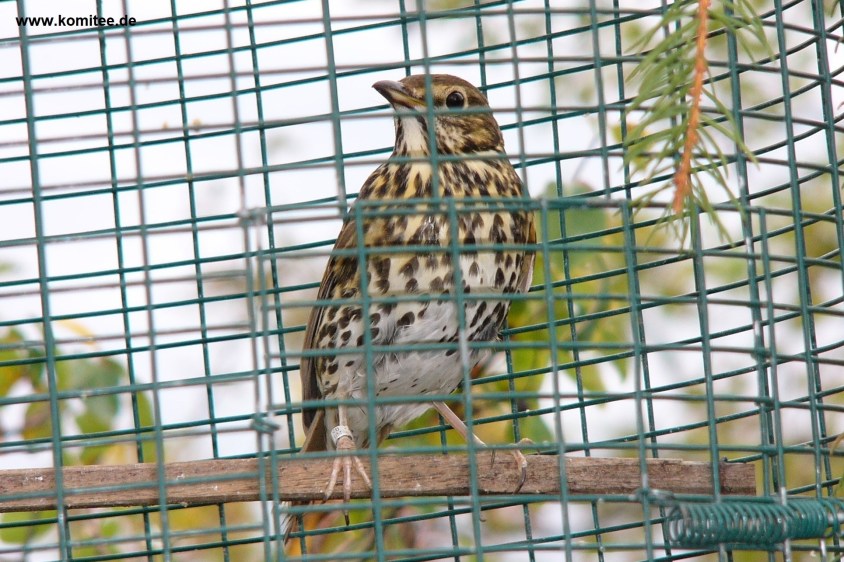
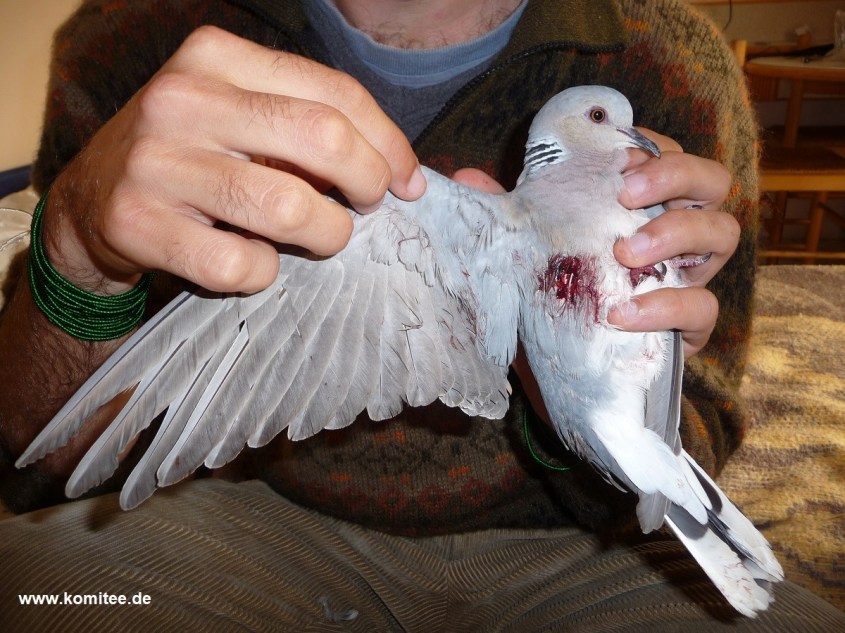
Every year in France and Spain, hunters legally shoot between 1.4 and 2.2 million lovebirdsthat’s about a quarter of the stock in the entire European Union! At the same time, the species dies out faster than protective measures can take effect.

turteltaube-

The EU has now initiated a lawsuit against both countries,  because they still release the Turtle Dove almost unlimitedly for launch.

The “Committee Against Bird Slaughter” had just published a scientific study of the current hunting statistics this spring, including fresh information on the unbelievable amount of turtle hunting.

geschossene Taube_o

The governments in Madrid and Paris now have the opportunity to explain themselves.

If they do not do so, they will be taken to the European Court of Justice. Chances are better than ever!

https://www.facebook.com/Komitee.CABS

My comment: Turtle doves are a symbol of love and happiness, and some people believe that they can cure disease.
That is why two to three million birds are killed every year in the EU alone?
The organization BirdLife International, estimates that up to 600,000 lovebirds in the Mediterranean are shot down each year.

You have to be a pathetic, underdeveloped monster to enjoy the murder of these peaceful, lovely birds.
But with this massacre it seems to be over.
At least the French and Spanish psychopaths will soon have to look for another fun in the future.

Best regards, Venus

France: Victory ! – Supermarket Owners Lose Their Store After Vile Trophy Hunting Photos Go Viral.

FRAN0001


Supermarket Owners Lose Their Store After Vile Trophy Hunting Photos Go Viral

Posted by Jane Wolfe | July 16, 2019

Supermarket Owners Lose Their Store After Vile Trophy Hunting Photos Go Viral

Picture – Facebook.

A French couple who posed with the dead animals they’d slaughtered during a trophy hunt in Africa have lost their jobs after the grotesque pictures were posted on social media, causing public outrage.

Jacques and Martine Alboud (pictured above, left and right), who ran a branch of the Super U co-operative supermarket in L’Arbresle, eastern France, were pictured standing over the bodies of a number of lifeless animals — including a zebra, lion, leopard and hippopotamus — that they had ruthlessly killed during safaris in KwaZulu-Natal, South Africa and Tanzania in 2014 and 2015.

After the images went viral on Twitter and there were calls on Facebook for customers to boycott the store, last week the supermarket group announced that the couple had given up their franchise with immediate effect.

“In the face of condemnation provoked by these actions at the heart of the co-operative and the legitimate public feeling, the store managers have decided to quit immediately the brand and their l’Arbresle store,” Super U said in a statement, adding that it did not condone safari hunting and that the couple’s actions were “in total opposition with the values defended by us.”

The French animal rights organization 30 Millions d’Amis commented that this story was reminiscent of the death of Cecil the lion — who was murdered in Zimbabwe in 2015 by an American dentist and hunter, Walter Palmer — that sparked widespread condemnation. It says that around 8,000 lions have been reared specifically to be hunted down and killed in the last decade in South Africa, and that there has been a 90% fall in the lion population over a century. “The species could disappear by 2050,” it adds.

The couple have so far declined to comment on their actions.


Austria: animal rights activists rescue 500 breeding ducks

Thousands of animals are released on the land of the Republic of Austria without any permission and clearly against the will of the majority of the population, only to be shot down! the ducks are only used for hunting fun. It is a tragedy.


-Austrian_Flag


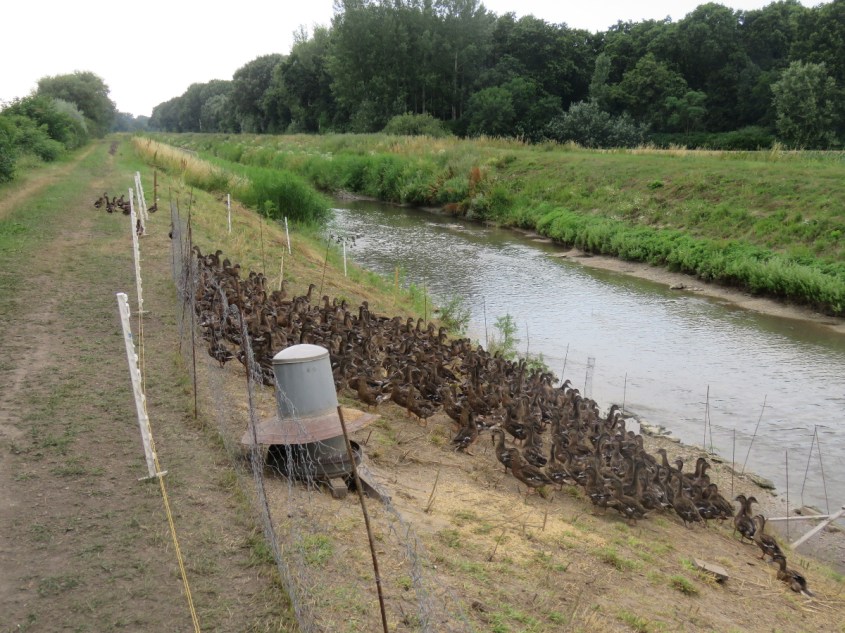
Every year, some oddly talented people expose thousands of breeding ducks from Hungary to the river systems of the Leitha in northern Burgenland, Austria.
A few years ago, they even stretched a net over the Leitha River so that the helpless animals would not be driven downstream. But that could be banned by intervention from us.
Nevertheless, the ducks regularly land at the beginning of July in temporarily built enclosures on the riverbank, in numerous places. Few days later, the fences disappear and tons of wheat, corn and other food are being released daily in the countryside.

Enten rettungpg

The landed property of these river systems belongs to the Republic of Austria, that is us. And there they are exposed to thousands of breeding cattle from factory farming, without asking us!

Through this fun the water is poisoned, contaminating the landscape. The responsible state councilor does not comment on this. Our ads were ineffective, although the mayor has publicly spoken out against this dropout.

Time to act.


Today, some “hikers” arrived at the river Leitha and accompanied more than 500 of the breeding ducks to Hungary.
The still flightless young animals without parents joined the animal rights activists.

Entenrettung 2jpg
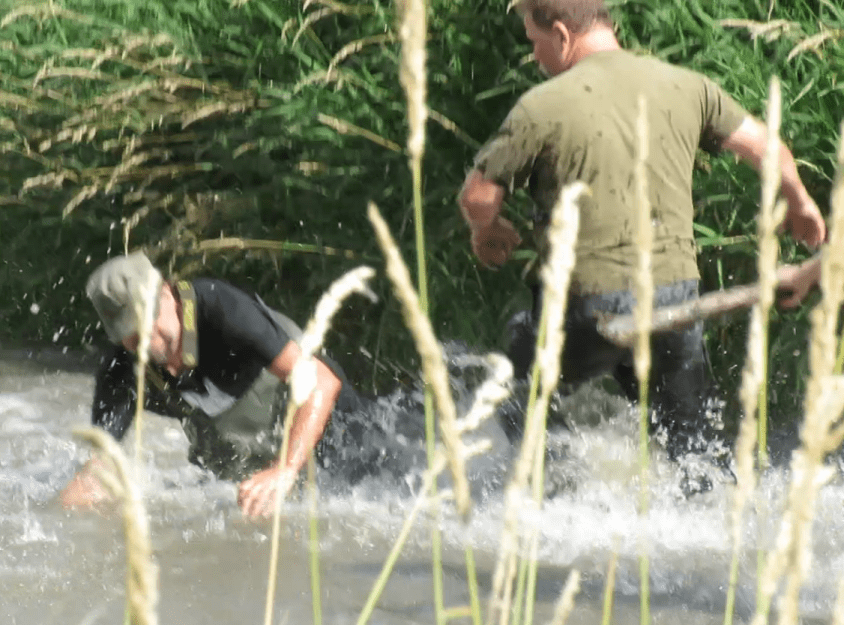
Just before Hungary, a hunter became aware of the strange processions. A little later, some hunting helpers attacked the animal rights activists.
One activist was pushed into the water twice in the river, another was to be snatched from the camera. Through the cameras and the kalmierende appearance of the peaceful animal rights activists, the excess of violence could be contained.

JägerStößtTierschützer entenrettungpng

The hunting society was also completely incomprehensible to the police officers. In any case, they told me that we had committed no crime and left again. The ads against the hunting helpers I will bring in the prosecutor.

And most importantly, the ducks meanwhile disappeared into the Hungarian undergrowth. At least 500 of them. There they can hopefully escape the access of the insane breeding hunter from Austria.

entenrettung-balluchpg


https://martinballuch.com/aktion-zuchtenten-auf-wanderschaft/


stockenten-091

Updated: The 500 ducks have now disappeared in the Hungarian riparian forests in the thicket and hopefully safe from the shotgun hunters on the Austrian side. 🐦

Thanks to the animal rights activists!

My comment:  Dr. Dr. Martin Balluch, the chairman of the “Association Against Animal Factories”  (VgT) is a longtime and very dedicated animal rights activist.

With his long and courageous commitment he was able to record to some successes  in animal welfare: the prohibition of fur farms and wild circuses, the prohibition of laying batteries, the prohibition of animal testing of apes and the caging of meat rabbits, the establishment of animal welfare as a state goal in the Federal Constitution and the ban on crates for mother pigs.

In the coming state elections, in Austria, he runs as an independent candidate for the list “Now” (JETZT) for animal welfare.
I hope that he will be elected in Parliament so that he can also exercise political influence over animal rights.

Best regards, Venus


South Africa: Trophy hunters shoot drugged, farm-raised lions – from their parked cars!

SAfrica

Another victim of canned lion hunting

In South Africa, majestic creatures are bred in captivity and then drugged and paraded for ‘trophy hunters’ to shoot from parked vehicles.
It’s sickening cruelty – the dazed lions are shot for FUN!
There are about 200 places in South Africa that breed lions in captivity for canned lion hunting. As many as 6,000 lions are ‘stockpiled’ for hunters. When a lioness gives birth, her cubs are taken from her and used for tourists to pet and pose with them in photographs.
When a lion gets bigger and harder to handle, it is moved to an enclosed area and there it stays until someone pays to shoot it.
They call it canned lion hunting because poor lions are literally served up on a plate for hunters. The lions can’t run, hide or defend themselves in any way.


Canned Lion Hunting

The lions are frequently drugged to make it easier for hunters, who often shoot the poor creature, while they sit inside a nearby vehicle. Often it takes several shots before the animal dies.
In neighboring Zimbabwe, a lion called Cecil was shot with a bow and arrow and suffered for 12 hours before dying!
it’s that horrible, that stark, that cruel. We need your help to stop it.
We want your help to fight this cruelty and have it outlawed. It’s an uphill battle because the canned lion industry is wealthy and so far, the South African government is ignoring the cruelty. We have to lobby government; we have to raise public awareness and we have to support other groups.
Every day this horror is allowed to continue means more dead lions at a time when the population is dropping throughout Africa. There used to be 200,000 lions in Africa, now there are around 25,000. Please, please help us fight the evil business that destroys their dignity and then them.

Europe: a henchman of elephant poachers


zerissene EU-Flagge am Stock


The EU is deeply involved in ivory business. Tons of ivory are traded, imported and exported within the EU. Europe is a henchman of elephant poachers.

 

slaughtered-elephant-

The idea is wrong that elephants are poached in Africa, their ivory is sold to Asia – and that Europe has nothing to do with it. Rather, Europe plays a central role as a hub for the legal and illegal trade in ivory.

elfenbein-schnitzereien

The sale, import and export of ivory is legal in Europe if it comes from old stock. An invitation to criminals! Legal trade allows them to infiltrate illegal ivory of poached elephants.

32 African countries have appealed to the European Union to stop ivory trade.

Europe is a henchman of elephant poachers.

In the EU, ivory is offered open at auctions, in stores and on the internet. Some EU companies have even specialized in the purchase and export of ivory to Asia: More than seven tons of ivory and more than 12,000 ivory carvings have been sold to Hong Kong alone in the last two years.

The international community has now called on all governments at two important conferences to close their national ivory markets.

toter Elefantjpg

The EU does not comply with this demand and undermines the global efforts to save the elephants.

Although Germany supports stricter rules than the EU Commission, it intends to continue to facilitate the trade in ivory carvings, antiques and musical instruments.

A development in Asia aggravates the situation: Elephants are also killed because of their skin, because it is believed that the elephant skin has healing properties.
In Myanmar, up to 110 skinned elephants were found within four years. One could despair.

elefant wildereipg

But in terms of ivory, we can do something – on our doorstep!

Please ask the EU to ban the ivory trade completely. Only then will the mass poaching of elephants come to an end.

Sign and share the petition: https://www.regenwald.org/petitionen/1076/elfenbeinhandel-stoppen

This is the original letter in English:

I am calling on the Commission and Member States of the European Union to ban all exports and imports of ivory and to close the EU’s domestic ivory market. The international community at the recent CITES conference and at the IUCN World Congress adopted two resolutions, calling on all governments to close their domestic ivory markets. The EU maintains an active ivory market for “pre-convention” ivory, and is the biggest exporter of ivory to China and Hong Kong, with exports of worked ivory experiencing an alarming increase in the last two years. The legal trade enables that ivory from poached elephants is laundered. It fuels demand and corruption. Moreover, EU Member States are clearly being used as transit countries to smuggle illegal ivory from elephants poached in Africa to Asia. Huge shipments have been seized in EU Member States recently and ivory is on top of the list of seized wildlife products in the EU.

As actions are increasingly being taken around the world to close domestic ivory markets and destroy stockpiles of seized and confiscated ivory, I am urging the EU to take responsibility to end its own role in the ivory trade

https://www.regenwald.org/petitionen/1076/elfenbeinhandel-stoppen


My comment: The European Commission knows very well that the EU is being used to “wash” illegal ivory, and is instrumental in ensuring that about 35,000 elephants still die each year.

When the international ivory trade was banned in 1989, the eradication of the African elephant seemed to have been averted. After a decade of slaughter, in which the number of animals worldwide halved, the populations recovered.

Unfortunately, however, the international trade ban did not last long: at the instigation of four states in southern Africa, it was eroded just a few years later.

Statistics show that poaching and ivory smuggling have seen a bloody comeback since 2008: in particular, the rapid increase in demand in China, combined with rising purchasing power, led to the poaching of about 100,000 elephants in Africa in the years 2010-2012 alone.

2008 In China, the price of raw ivory rose to as much as $ 2,100 per kilo.

At the same time, state-licensed ivory shops and carving factories sprang up in China, as did illegal business. Because of ivory were many of thousands of elephants killed, and China and Hong Kong became the largest markets for both legal and illegal ivory.

Since then, heavily armed poachers have been killing entire herds of elephants, chopping off their tusks with axes.
Masterminds are globally organized criminal gangs who hire poachers in Africa and equip them with automatic weapons. They bribe politicians, authorities and freight companies and create the “white gold” in containers, air freight shipments and personal luggage hidden through various stops in the main sales markets in Asia.

The good news is: China has already banned trade under international pressure.
The US should not import hunting trophies in the future either.

The pressure on the EU Commission must grow. The number of signatures in this petirion approaches the million, and from 1 million votes, the commission is obliged to take an official position on the subject.

My best regards to all, Venus


Namibia: the bloodshed has begun

Every year in Namibia, 86,000 Cape Fur Seal pups are butchered to death.


namibia Robben

Namibia is the only southern hemisphere country where seals are commercially slaughtered and the only country in the world where slaughter of puppies still nursed by mothers is possible.


Namibiapg


The cruel seal hunt is actually known only from Canada. And Canada has also resumed the bloody seal hunt, although demand for seal products has plummeted.
But even on another continent, seals are slaughtered by the thousands.
Between 80,000 and 100,000 dwarf fur seals, also known as eared seals, cavort at the Cape Cross on the rocks in Namibia.

Robben-Namibia

Over the next four months, as we learn, thousands of seals living in Cape Cross and Atlas Bay are brutally killed for their fur, oil and genitals. The genitals are exported to Asia. The terrible bloodshed has already begun. The hunting season lasts 139 days from July to November.

Namibia-11

The seal cubs are brutally hit on the head after being separated from their mothers. Under the cries of the mothers, they are stung, whether dead or not, in the neck and slashed with knives. By now 80,000 Robby babies are supposed to be.

The massacre of seals in Namibia is brutal for a number of reasons, including the method of killing and the effects that it has on the entire colony.

The sealers prevent the colony of seals from escaping into the sea. Seal hunters aim for bigger puppies and get away with the smaller, thinner ones – those with less chance of survival. This can weaken the long-term genetic vitality of the populations.

The puppies are killed mainly because of their fur, but also because of their bacon sold as a “food supplement”. The bones are made into pieces of jewelery and then sold with the fur as a luxury item in distant lands. To make a fur coat, it takes about 8 dead seals.

The butcher of Namibia – Hatem Yavuz


Hatem+Seals.Namibiajpg


The Turkish-Australian fur trader Hatem Yavuz is one of the main licensees.
He controls 60 percent of the fur market in the world.


Nambia

Hatem Yavuz, known as the butcher of Namibia, is the man responsible for the death of hundreds of thousands of seals – both in Canada and Namibia, according to hesealsofnam.org.

This one man has the contract to turn their fur into so-called fashionable apparel. We had pictures of what’s going on but Google banned the page for it being too graphic.

The Turkish and Australian based company Hatem Yavuz named after the owner Hatem Yavuz controls roughly 60 percent of the world’s seal market and processes 130,000 seal pelts every year in his Istanbul factory. Yavuz also has a hand in the Canadian seal market and claims to be proud of what he does. In an interview that spurred a flurry of hate mail, Yavuz told 7 News” in Australia that “It’s a job. If I don’t do it, someone else is going to do it.” He is called the King of Seal Killers.

yavuz-business-Namibiapg

Yavuz is an Australian citizen and also has Turkish citizenship. He is honorary consul in Namibia for Turkey and has as a diplomat both a luxury vehicle and offices, which are paid by the Namibian taxpayer. As a Consul of Namibia, he is a government official and benefits directly from the sale of the country’s assets, according to the organization.

Yavuz pays about $ 7 per coat and needs the fur of about 8 dead seals.

Yavuz will sell this coat for $ 30,000. Enough money to buy an exclusive townhouse in Swakopmund, Namibia. However, this money does not remain in Namibia to help the economically disadvantaged. It goes to Yavuz, who rides between Sidney and Istanbul, leading the life of a multi-millionaire.

The fur is processed in his company in Turkey.

Yavuz controls 60 percent of the world’s fur market.

As Turkey is not part of the European Union, which prohibits the import and export of seal products, hides from Namibia are shipped to Turkey, where they are processed and sold to countries such as China and Russia.

http://www.thesealsofnam.org/hatem-yavuz-the-butcher-of-namibia/
https://netzfrauen.org/2019/07/04/namibia


My comment: I read in another website that this bloody spectacle is a popular tourist attraction.
If some dull, mentally ill proletarians can find it beautiful, get excited, and enjoy how innocent and utterly defenseless animals suffer and are tortured to death like this, then they are nothing more than pathetic monsters, and they do not deserve anything like their own human rights.
The Government of Namibia allows this. The Government of Australia, Turkey and Canada allows fur trade.

And if the butcher Hatem Yavuz says massacring innocent beings is just a job, then why is he no longer burning witches, or selling slaves? That would be good business too.

For this, all he needs to do is make an offer to the governments that they can not refuse.

My best regards, Venus


Japan: 5 Whaling Vessels Have Now Set Off For A Hunt.

Japan

We first covered the issue of the Japanese return to whaling a few days ago – see our post:

https://worldanimalsvoice.com/2019/06/30/japan-is-about-to-resume-catching-whales-for-profit-in-defiance-of-international-criticism/


Well now the whaling fleet has set sail:

https://www.bbc.co.uk/news/world-asia-48821797


Japanese whalers set sail for commercial hunting


whale 1

Five Japanese whaling vessels have set sail for the country’s first commercial hunt in decades, in defiance of international criticism.

The whaling ships have a permit to catch 227 minke, Bryde’s and sei whales this year in Japanese waters.

Japan’s last commercial hunt was in 1986 but it has continued whaling for what it says was research purposes.

It has now withdrawn from the International Whaling Commission (IWC) so is no longer subject to its rules.

IWC members had agreed to an effective ban on whale hunting, but Japan has long argued it is possible to hunt whales in a sustainable way.


Enthusiasm among whalers

The fisheries ministry has set a kill cap for the season of 52 minke, 150 Bryde’s and 25 sei whales.

“The resumption of commercial whaling has been an ardent wish for whalers across the country,” the head of the agency, Shigeto Hase, said at a departure ceremony in northern Kushiro for the small fleet.

He said the resumption of whaling would ensure “the culture and way of life will be passed on to the next generation.”

“My heart is overflowing with happiness, and I’m deeply moved,” Yoshifumi Kai, head of the Japan Small-Type Whaling Association, said. “People have hunted whales for more than 400 years in my home town.”

“I’m a bit nervous but happy that we can start whaling,” one whaler told news agency AFP before setting sail.

“I don’t think young people know how to cook and eat whale meat any more. I want more people try to taste it at least once.”

Criticism by conservationists

According to the IUCN Red List of Threatened Species, minke and Bryde’s whale are not endangered. Sei whale are classified as endangered but their numbers are increasing.

Conservationist groups like Greenpeace and Sea Shepherd remain critical of Japan’s resumption of whaling but say there are no concrete plans for action against the country.

Japan “is out of step with the international community”, Sam Annesley, executive director at Greenpeace Japan, said in a statement when Tokyo announced its whaling plans last year.

Like other whaling nations, Japan argues hunting and eating whales are part of its culture.

A number of coastal communities in Japan have hunted whales for centuries but consumption only became widespread after World War Two when other food was scarce.

Didn’t Japan kill whales all along?

Whales were brought to the brink of extinction by hunting in the 19th and early 20th Century. In 1986, all IWC members agreed to a hunting moratorium to allow whale numbers to recover.

Whaling countries – like Japan, Norway and Iceland – assumed the moratorium would be temporary until everyone could agree on sustainable quotas. Instead it became a quasi-permanent ban.

Since 1987, Japan has killed between 200 and 1,200 whales each year under an exemption to the ban allowing scientific research.

Critics say this was just a cover so Japan could hunt whales for food, as the meat from the whales killed for research usually did end up for sale.

In 2018 Japan tried one last time to convince the IWC to allow whaling under sustainable quotas, but failed. So it left the body, effective July 2019.

whale 4


Japan is about to resume catching whales for profit in defiance of international criticism.

Japan

whale 4

https://www.bbc.co.uk/news/world-asia-48592682


Japan is about to resume catching whales for profit, in defiance of international criticism.

Its last commercial hunt was in 1986, but Japan has never really stopped whaling – it has been conducting instead what it says are research missions which catch hundreds of whales annually.

But Japan has now withdrawn from the International Whaling Commission (IWC), which banned hunting, and will send out its first whaling fleet this July.

whale 1


Isn’t whaling banned?

Whales were brought to the brink of extinction by hunting in the 19th and early 20th Century. By the 1960s, more efficient catch methods and giant factory ships made it obvious that whale hunting could not go unchecked.

So in 1986, all IWC members agreed to a hunting moratorium to allow whale numbers to recover.

Conservationists were happy but whaling countries – like Japan, Norway and Iceland – assumed the moratorium would be temporary until everyone could agree on sustainable quotas. Instead it became a quasi-permanent ban.

But there were exceptions in the moratorium, allowing indigenous groups to carry out subsistence whaling, and allowing whaling for scientific purposes.

whale 2

Tokyo put that latter clause to full use. Since 1987, Japan has killed between 200 and 1,200 whales each year, saying this was to monitor stocks to establish sustainable quotas.

Critics say this was just a cover so Japan could hunt whales for food, as the meat from the whales killed for research usually did end up for sale.

Why is Japan restarting whaling now?

In 2018 Japan tried one last time to convince the IWC to allow whaling under sustainable quotas, but failed. So it left the body, effective July 2019.

The fisheries ministry told the BBC it would start issuing permits for hunts on 1 July. “But the starting date is subject to decisions of the whalers, weather and other conditions.”

Whaling is a small industry in Japan, employing around 300 people. About five vessels are expected to set sail in July.

The whaling “will be conducted within Japan’s territorial waters and Exclusive Economic Zone”, Hideki Moronuki of the Japanese fishing ministry told the BBC.

whale 3

This means Japan will no longer hunt whales in the Antarctic, as it did under its earlier research programme.

Like other whaling nations, Japan argues hunting and eating whales are part of its culture. A number of coastal communities in Japan have indeed hunted whales for centuries but consumption only became widespread after World War Two when other food was scarce.

From the late 1940s to the mid-1960s whale was the single biggest source of meat in Japan but since become a niche product again.

Is Japan’s plan legal?

“Within its 12 mile coastal waters, Japan can do whatever it wants,” Donald Rothwell, professor of international law at the Australian National University, told the BBC.

Beyond that, in its 200 miles (322km) exclusive economic zone and of course the high seas, the country is bound by the UN Convention on the Law of the Sea.

Article 65 of said convention mandates that “states shall co-operate with a view to the conservation” of whales and “shall in particular work through the appropriate international organizations for their conservation, management and study”.

Having left the IWC, Japan is no longer part of any such international organisation and that “directly raises questions issues whether or not Japan would be consistent with the convention,” Mr Rothwell explains.

It’s not clear if any country would try to bring Japan to court over this – in its defence, Japan might argue that for years it did try to co-operate within the IWC without any results.

Even if there were to be a ruling or injunction against Tokyo, there’d be no mechanism to enforce it.

What environmental impact will Japan’s whaling have?

The ministry will allow for the hunting of three species: minke, Bryde’s and sei whales.

According to the IUCN Red List of Threatened Species, minke and Bryde’s whale are not endangered. Sei whale are classified as endangered but their numbers are increasing.

So in terms of numbers, Japan’s commercial whaling will have only a minimal impact.

In fact, some defenders of whaling argue that whale meat has a smaller carbon footprint than pork or beef.

Conservationist groups like Greenpeace or Sea Shepherd remain critical of Japan’s resumption of whaling but say there are no concrete plans yet to tackle the country over this.

Japan “is out of step with the international community”, Sam Annesley, executive director at Greenpeace Japan, said in a statement, urging Tokyo to abandon its hunting plans.

Besides the question of stock sustainability, a key argument against the hunt is that harpooning whales leads to a slow and painful death.

Modern hunting methods, though, aim to kill whales instantly and it backers say the near-global anti-whaling sentiment is deeply hypocritical., compared to, say, industrial meat production.

But even if Japan does defy the criticism and stick with whaling, there’s a good chance the contentious issue will gradually die down by itself.

Japanese demand for whale meat has long been on the decline and the industry is already being subsidised. Eventually, commercial whaling might be undone by simple arithmetic.

Image result for japan whalingImage result for japan whaling

Image result for japan whaling


The money machine: wildlife photos in Instagram


The reporter Natasha Daly traveled around the world to unveil the unworthy living conditions of captive wildlife in tourist areas.

A pure product of the tourism or are perhaps also social media to blame?


Bär zum Tanzen_n

The adventures of Instagram celebrity and photographer Jay Alvarrez are followed by 6.5 million people. Stressed relaxed, as if his photo accessory is just a cute puppy, he posts a picture with a lion cub in his lap. Within hours he reaps over half a million likes and thousands of admiring comments in return.

The majority of his followers envy him for this special experience.

19424868_114732662473193_2829698413665189888_n Instagram: Jay Alvarrez


What many of his fans do not want to know or admit, of course Alvarrez did not find the lion child in the wilderness. For this photo, he paid a lot of money to a company that has snatched the baby from his mother and henceforth exploits for tourist selfies. These animals are like the invisible slaves of the tourism industry.

The reporter Natasha Daly traveled the world for a year and a half for the well-known magazine NatGeo, to draw attention to the unworthy housing conditions of caged wildlife. What she found out touched hundreds of thousands in a big report.
In Thailand she saw Americans hugging tigers and Chinese brides riding young elephants for their wedding photo.
In Russia she saw how polar bears danced with wire muzzles under a circus tent, and in the Amazon she watched teenagers taking selfies with baby sloths.

tanzbärA bear in Bulgaria, who is forced to dance to the amusement of the tourists. Photo: собственная работа.


“Most tourists who enjoy these encounters do not know or are not interested in the fact that, for example, the tigers have been drugged and are clawless. Or that their young animals are taken for tourist photos just a few days after birth.
That the baby sloths die after a few months in captivity or they can only ride the elephants because their will as babies was violently broken by the caregivers.

Long before the advent of social networks, pet owners made good money through tourist animal shows – under extremely poor housing conditions.

problem-elephant-4
Tourists already wanted to be photographed with a giant python and were astonished how elephants can stand on one leg in animal shows or let balloons burst accurately.
All to the delight of the organizers, who this animal show tourism flushed a lot of money in the cash.

-c-PETA-USA_elefanten training4596-1800x1215Violent elephant training at the American Circus Ringling Bros. Photo: PETA


Today, in an age in which the digital display of his experiences is treated as a social currency, it is increasingly becoming a big problem. The tourists accept the poor living conditions of the animals for a photo that potentially increases their popularity online. Photos posted by the French influencer Mathilde Tantot – in Thailand, half-naked with an captive elephant – unfortunately are uncountable. All with the goal of generating a lot of attention and therefore more followers.

As a social network with a billion users, Instagram has a huge responsibility towards its most popular photo opportunities – whether those through the Instagram tourism run dirty resorts or the suffering baby sloths.

selfie mit wild tier2
After several years of criticism, the platform has responded to calls from numerous petitions by reputable wildlife organizations to finally tackle its known animal cruelty issue.
There are already hundreds of thousands of photos under various hashtags that are related to animal cruelty and were available to the general public for the longest time.

At the end of 2017, the platform finally worked against it.
As soon as the user wants to call one of the hashtags, this warning will stop them. For example, animal welfare organizations like World Wildlife Fund and World Animal Protection and National Geographic worked with Instagram for months on a long list of hashtags – such as #tigerselfie, #elephantride, #selfiesafari – which are now closed.

Instagram Verbotpg

If users click on “Learn More”, they will be redirected to the site on Wildlife Exploitation on Instagram.com for more information.

ausbeutung-von-wildtieren-instagram

Instagram spokeswoman Emily Cain told National Geographic that she wanted users to be more aware of animals and nature.

“I think it’s important to the community right now to be more aware. “We’re trying to do our part to educate them”.

Elefanten in Thailand gefoltert5

The comprehensive offer for tourists in foreign countries to visit animal shows, to go swimming with wild animals or to make selfies with the chained animals is almost normal for travelers. Often these facilities present themselves with the slogans “Conservation”, “Refuge” and “Rescue”, which is intended to simulate the intention to ensure the protection of the animals.

Everyone should ask themselves, what kind of “nature conservation” elephants are these, when one is allowed to ride on them.

bei-touristen-sind. elefantenjpg

Cassandra Koenen, Head of Wildlife Campaigns bei World Animal Protection:

„Even if the cruelty isn’t right in front of you, [there’s] cruelty that’s behind the scenes to get to that point“

https://www.qiio.de/die-geld-maschine-hinter-den-exotischen-tierbildern-auf-instagram


My comment: Certainly the warning Instagrams will sensitize some people to the conservation of species and nature.

However, it can not be expected to reach those who know exactly what they are doing.

Tiger-Baby-fuettern--Frank-Eidens
And first and foremost they are the mindless ignorant, the indifferent travelers who are driven by their hysterical addiction to exoticism and adventure, and therefore would even ride on animal corpses.
Most people know what’s behind it.
But as with the suffering and torture of the farm animals, they are interested in a shit about it.

ausbeutung-tier-natur-instagram

The hope of restricting trafficking on the endangered species platform is also low, as it is mostly unscrupulous businessmen who then seek other ways.

But still: we see this as a good and, above all, important step in the right direction.

My best regards to all, Venus


USA: Howl for the Wolves – They Need Your Voice.

wolf

All photos are from our archive and are not directly associated with this article – WAV.


-usa-us-flagge-

Dear Mark,

Today, my father Dr. Michael W. Fox is traveling to Brainerd, Minnesota, to join hundreds of other wolf advocates to testify on behalf of Project Coyote before the U.S. Fish and Wildlife Service (USFWS) in opposition to the Trump Administration’s proposal to strip all remaining federal protections for wolves across the lower 48 states (except for Mexican wolves in the Southwest).

As a veterinarian, canid ethologist, bioethicist and author of more than 40 books – including The Soul of the Wolf my father will speak to the many values of wolves. Read his testimony here.


howlingwolvesmoon


Project Coyote Science Advisory Board Member Dr. Adrian Treves is part of a five-member peer review panel appointed by the USFWS that analyzed the proposal to delist the gray wolf. He and several other peer reviewers found the proposal “chock full of scientific errors,” stating “it looks like they decided to delist and then they compiled all the evidence that they thought supported that decision.” Read more here and here.

wolf quote


Across the nation, today is Stop Extinction Day of Action against wolf delisting – and we need your voice!  If you haven’t already, please weigh in on this critical issue for our nation’s imperiled gray wolves. THE PUBLIC COMMENT PERIOD ENDS JULY 15th! 

Please submit comments TODAY in opposition to the proposed rule to delist wolves.

Click here to submit your comments using an online form. If your comments fit into the comment box, this method is preferred. For longer comments, please attach them in a Microsoft Word document.


wolves7

Talking Points:

Your comments can simply state: “I am in opposition to the U.S. Fish & Wildlife Service’s proposed rule to remove Endangered Species Act protections for gray wolves in the lower 48 states. I urge you to reconsider this proposed rule and to instead develop a national wolf recovery plan for wolves that reflects their intrinsic value and the myriad ecological, aesthetic, and economic benefits the species provides to our communities and ecosystems.”

For maximum impact, however, we encourage you to personalize your comments. Here are some talking points you may consider incorporating:

  •  Continuing Endangered Species Act protections for wolves is necessary for the species to fully recover. Federal protections saved gray wolves from extinction following decades of persecution – and the species is still recovering, currently occupying only a fraction of their historic range.
  • The proposed rule would transfer authority over wolves to state wildlife management agencies, which historically have shown little interest in preserving wolves. These state agencies have catered to special interest groups who seek to kill wolves for trophies or entertainment, or on the misguided belief that killing wolves protects livestock or increases deer and elk populations.
  •  Wolves are vital to healthy ecosystems. Benefits wolves provide include increasing biodiversity by keeping large herbivores such as deer from overgrazing habitats and maintaining the health of prey animals such as deer by culling the sick members from the heard, including animals suffering from Chronic Wasting Disease.
  •  The best available, peer-reviewed science demonstrates that killing wolves will not protect livestock or increase populations of game species like deer or elk. Wildlife management decisions should be based on ethics and sound science, not fear and misunderstandings.
  •  The vast majority of Americans are wildlife watchers who prefer to view wolves in their natural habitat – preserved and treated with respect. Allowing wolves to return to their historic range and thrive will provide far more benefits to our economy than allowing a tiny minority of the population to extirpate these iconic animals from our landscape.

Learn more about wolves here.

Wolves CBD

Thank you for acting TODAY to protect wolves from extinction!

For Wild Nature,

Camilla Fox
Founder & Executive Director