Category: Hunting

Namibia: the bloodshed has begun

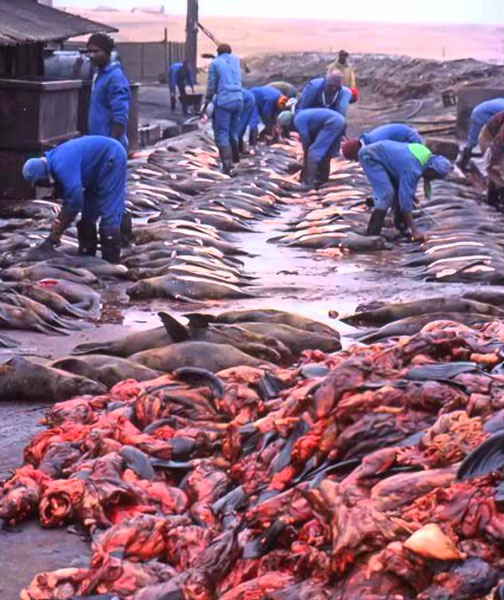
Every year in Namibia, 86,000 Cape Fur Seal pups are butchered to death.


namibia Robben

Namibia is the only southern hemisphere country where seals are commercially slaughtered and the only country in the world where slaughter of puppies still nursed by mothers is possible.


Namibiapg


The cruel seal hunt is actually known only from Canada. And Canada has also resumed the bloody seal hunt, although demand for seal products has plummeted.
But even on another continent, seals are slaughtered by the thousands.
Between 80,000 and 100,000 dwarf fur seals, also known as eared seals, cavort at the Cape Cross on the rocks in Namibia.

Robben-Namibia

Over the next four months, as we learn, thousands of seals living in Cape Cross and Atlas Bay are brutally killed for their fur, oil and genitals. The genitals are exported to Asia. The terrible bloodshed has already begun. The hunting season lasts 139 days from July to November.

Namibia-11

The seal cubs are brutally hit on the head after being separated from their mothers. Under the cries of the mothers, they are stung, whether dead or not, in the neck and slashed with knives. By now 80,000 Robby babies are supposed to be.

The massacre of seals in Namibia is brutal for a number of reasons, including the method of killing and the effects that it has on the entire colony.

The sealers prevent the colony of seals from escaping into the sea. Seal hunters aim for bigger puppies and get away with the smaller, thinner ones – those with less chance of survival. This can weaken the long-term genetic vitality of the populations.

The puppies are killed mainly because of their fur, but also because of their bacon sold as a “food supplement”. The bones are made into pieces of jewelery and then sold with the fur as a luxury item in distant lands. To make a fur coat, it takes about 8 dead seals.

The butcher of Namibia – Hatem Yavuz


Hatem+Seals.Namibiajpg


The Turkish-Australian fur trader Hatem Yavuz is one of the main licensees.
He controls 60 percent of the fur market in the world.


Nambia

Hatem Yavuz, known as the butcher of Namibia, is the man responsible for the death of hundreds of thousands of seals – both in Canada and Namibia, according to hesealsofnam.org.

This one man has the contract to turn their fur into so-called fashionable apparel. We had pictures of what’s going on but Google banned the page for it being too graphic.

The Turkish and Australian based company Hatem Yavuz named after the owner Hatem Yavuz controls roughly 60 percent of the world’s seal market and processes 130,000 seal pelts every year in his Istanbul factory. Yavuz also has a hand in the Canadian seal market and claims to be proud of what he does. In an interview that spurred a flurry of hate mail, Yavuz told 7 News” in Australia that “It’s a job. If I don’t do it, someone else is going to do it.” He is called the King of Seal Killers.

yavuz-business-Namibiapg

Yavuz is an Australian citizen and also has Turkish citizenship. He is honorary consul in Namibia for Turkey and has as a diplomat both a luxury vehicle and offices, which are paid by the Namibian taxpayer. As a Consul of Namibia, he is a government official and benefits directly from the sale of the country’s assets, according to the organization.

Yavuz pays about $ 7 per coat and needs the fur of about 8 dead seals.

Yavuz will sell this coat for $ 30,000. Enough money to buy an exclusive townhouse in Swakopmund, Namibia. However, this money does not remain in Namibia to help the economically disadvantaged. It goes to Yavuz, who rides between Sidney and Istanbul, leading the life of a multi-millionaire.

The fur is processed in his company in Turkey.

Yavuz controls 60 percent of the world’s fur market.

As Turkey is not part of the European Union, which prohibits the import and export of seal products, hides from Namibia are shipped to Turkey, where they are processed and sold to countries such as China and Russia.

http://www.thesealsofnam.org/hatem-yavuz-the-butcher-of-namibia/
https://netzfrauen.org/2019/07/04/namibia


My comment: I read in another website that this bloody spectacle is a popular tourist attraction.
If some dull, mentally ill proletarians can find it beautiful, get excited, and enjoy how innocent and utterly defenseless animals suffer and are tortured to death like this, then they are nothing more than pathetic monsters, and they do not deserve anything like their own human rights.
The Government of Namibia allows this. The Government of Australia, Turkey and Canada allows fur trade.

And if the butcher Hatem Yavuz says massacring innocent beings is just a job, then why is he no longer burning witches, or selling slaves? That would be good business too.

For this, all he needs to do is make an offer to the governments that they can not refuse.

My best regards, Venus


Japan: 5 Whaling Vessels Have Now Set Off For A Hunt.

Japan

We first covered the issue of the Japanese return to whaling a few days ago – see our post:

https://worldanimalsvoice.com/2019/06/30/japan-is-about-to-resume-catching-whales-for-profit-in-defiance-of-international-criticism/


Well now the whaling fleet has set sail:

https://www.bbc.co.uk/news/world-asia-48821797


Japanese whalers set sail for commercial hunting


whale 1

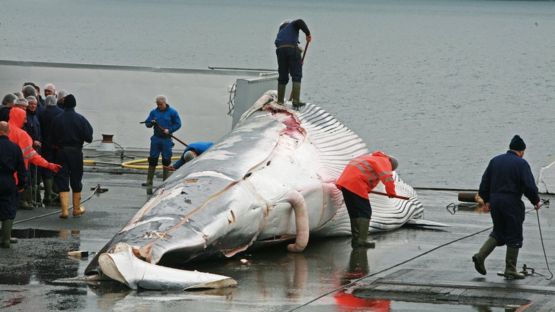
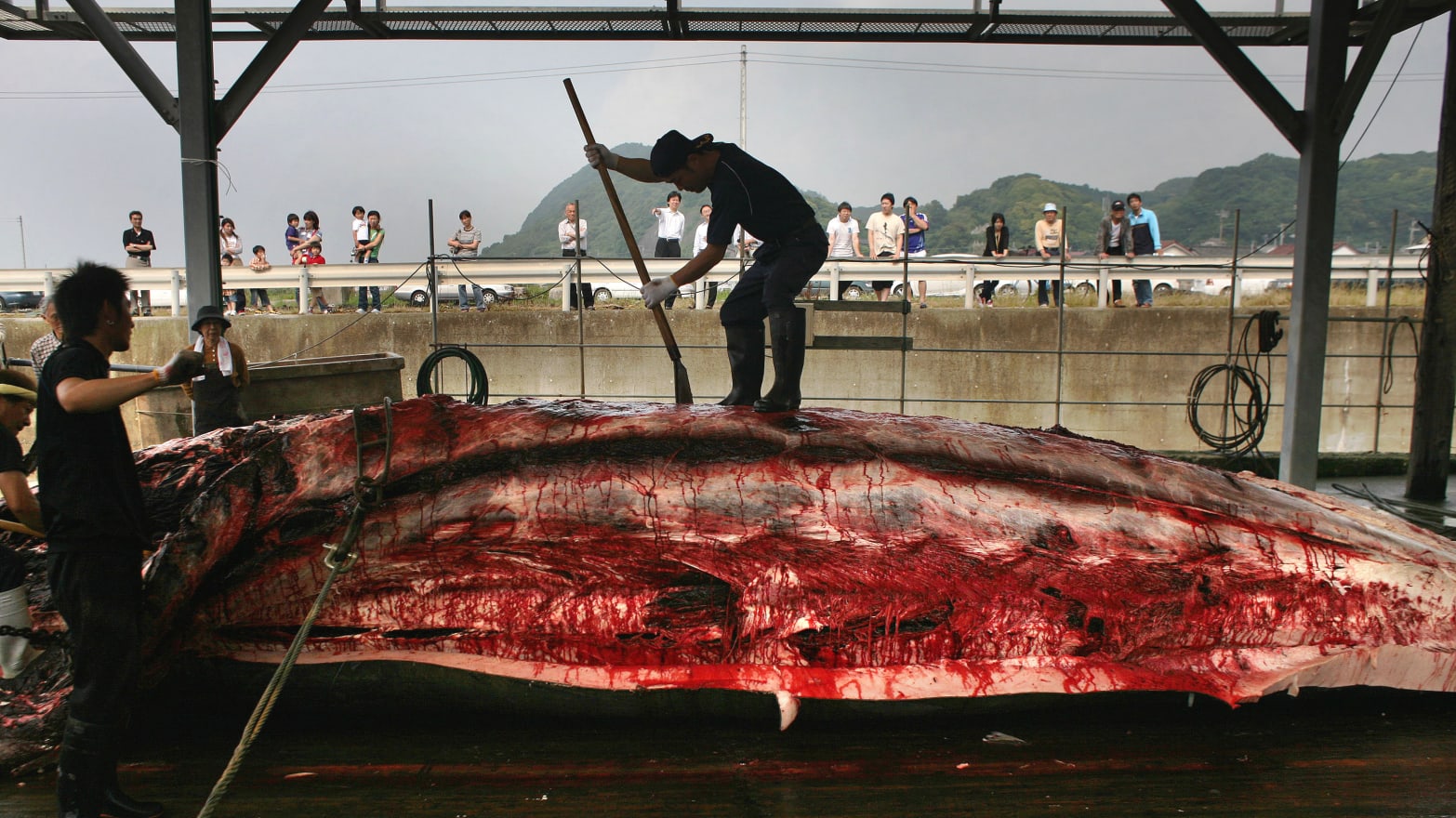
Five Japanese whaling vessels have set sail for the country’s first commercial hunt in decades, in defiance of international criticism.

The whaling ships have a permit to catch 227 minke, Bryde’s and sei whales this year in Japanese waters.

Japan’s last commercial hunt was in 1986 but it has continued whaling for what it says was research purposes.

It has now withdrawn from the International Whaling Commission (IWC) so is no longer subject to its rules.

IWC members had agreed to an effective ban on whale hunting, but Japan has long argued it is possible to hunt whales in a sustainable way.


Enthusiasm among whalers

The fisheries ministry has set a kill cap for the season of 52 minke, 150 Bryde’s and 25 sei whales.

“The resumption of commercial whaling has been an ardent wish for whalers across the country,” the head of the agency, Shigeto Hase, said at a departure ceremony in northern Kushiro for the small fleet.

He said the resumption of whaling would ensure “the culture and way of life will be passed on to the next generation.”

“My heart is overflowing with happiness, and I’m deeply moved,” Yoshifumi Kai, head of the Japan Small-Type Whaling Association, said. “People have hunted whales for more than 400 years in my home town.”

“I’m a bit nervous but happy that we can start whaling,” one whaler told news agency AFP before setting sail.

“I don’t think young people know how to cook and eat whale meat any more. I want more people try to taste it at least once.”

Criticism by conservationists

According to the IUCN Red List of Threatened Species, minke and Bryde’s whale are not endangered. Sei whale are classified as endangered but their numbers are increasing.

Conservationist groups like Greenpeace and Sea Shepherd remain critical of Japan’s resumption of whaling but say there are no concrete plans for action against the country.

Japan “is out of step with the international community”, Sam Annesley, executive director at Greenpeace Japan, said in a statement when Tokyo announced its whaling plans last year.

Like other whaling nations, Japan argues hunting and eating whales are part of its culture.

A number of coastal communities in Japan have hunted whales for centuries but consumption only became widespread after World War Two when other food was scarce.

Didn’t Japan kill whales all along?

Whales were brought to the brink of extinction by hunting in the 19th and early 20th Century. In 1986, all IWC members agreed to a hunting moratorium to allow whale numbers to recover.

Whaling countries – like Japan, Norway and Iceland – assumed the moratorium would be temporary until everyone could agree on sustainable quotas. Instead it became a quasi-permanent ban.

Since 1987, Japan has killed between 200 and 1,200 whales each year under an exemption to the ban allowing scientific research.

Critics say this was just a cover so Japan could hunt whales for food, as the meat from the whales killed for research usually did end up for sale.

In 2018 Japan tried one last time to convince the IWC to allow whaling under sustainable quotas, but failed. So it left the body, effective July 2019.

whale 4


Japan is about to resume catching whales for profit in defiance of international criticism.

Japan

whale 4

https://www.bbc.co.uk/news/world-asia-48592682


Japan is about to resume catching whales for profit, in defiance of international criticism.

Its last commercial hunt was in 1986, but Japan has never really stopped whaling – it has been conducting instead what it says are research missions which catch hundreds of whales annually.

But Japan has now withdrawn from the International Whaling Commission (IWC), which banned hunting, and will send out its first whaling fleet this July.

whale 1


Isn’t whaling banned?

Whales were brought to the brink of extinction by hunting in the 19th and early 20th Century. By the 1960s, more efficient catch methods and giant factory ships made it obvious that whale hunting could not go unchecked.

So in 1986, all IWC members agreed to a hunting moratorium to allow whale numbers to recover.

Conservationists were happy but whaling countries – like Japan, Norway and Iceland – assumed the moratorium would be temporary until everyone could agree on sustainable quotas. Instead it became a quasi-permanent ban.

But there were exceptions in the moratorium, allowing indigenous groups to carry out subsistence whaling, and allowing whaling for scientific purposes.

whale 2

Tokyo put that latter clause to full use. Since 1987, Japan has killed between 200 and 1,200 whales each year, saying this was to monitor stocks to establish sustainable quotas.

Critics say this was just a cover so Japan could hunt whales for food, as the meat from the whales killed for research usually did end up for sale.

Why is Japan restarting whaling now?

In 2018 Japan tried one last time to convince the IWC to allow whaling under sustainable quotas, but failed. So it left the body, effective July 2019.

The fisheries ministry told the BBC it would start issuing permits for hunts on 1 July. “But the starting date is subject to decisions of the whalers, weather and other conditions.”

Whaling is a small industry in Japan, employing around 300 people. About five vessels are expected to set sail in July.

The whaling “will be conducted within Japan’s territorial waters and Exclusive Economic Zone”, Hideki Moronuki of the Japanese fishing ministry told the BBC.

whale 3

This means Japan will no longer hunt whales in the Antarctic, as it did under its earlier research programme.

Like other whaling nations, Japan argues hunting and eating whales are part of its culture. A number of coastal communities in Japan have indeed hunted whales for centuries but consumption only became widespread after World War Two when other food was scarce.

From the late 1940s to the mid-1960s whale was the single biggest source of meat in Japan but since become a niche product again.

Is Japan’s plan legal?

“Within its 12 mile coastal waters, Japan can do whatever it wants,” Donald Rothwell, professor of international law at the Australian National University, told the BBC.

Beyond that, in its 200 miles (322km) exclusive economic zone and of course the high seas, the country is bound by the UN Convention on the Law of the Sea.

Article 65 of said convention mandates that “states shall co-operate with a view to the conservation” of whales and “shall in particular work through the appropriate international organizations for their conservation, management and study”.

Having left the IWC, Japan is no longer part of any such international organisation and that “directly raises questions issues whether or not Japan would be consistent with the convention,” Mr Rothwell explains.

It’s not clear if any country would try to bring Japan to court over this – in its defence, Japan might argue that for years it did try to co-operate within the IWC without any results.

Even if there were to be a ruling or injunction against Tokyo, there’d be no mechanism to enforce it.

What environmental impact will Japan’s whaling have?

The ministry will allow for the hunting of three species: minke, Bryde’s and sei whales.

According to the IUCN Red List of Threatened Species, minke and Bryde’s whale are not endangered. Sei whale are classified as endangered but their numbers are increasing.

So in terms of numbers, Japan’s commercial whaling will have only a minimal impact.

In fact, some defenders of whaling argue that whale meat has a smaller carbon footprint than pork or beef.

Conservationist groups like Greenpeace or Sea Shepherd remain critical of Japan’s resumption of whaling but say there are no concrete plans yet to tackle the country over this.

Japan “is out of step with the international community”, Sam Annesley, executive director at Greenpeace Japan, said in a statement, urging Tokyo to abandon its hunting plans.

Besides the question of stock sustainability, a key argument against the hunt is that harpooning whales leads to a slow and painful death.

Modern hunting methods, though, aim to kill whales instantly and it backers say the near-global anti-whaling sentiment is deeply hypocritical., compared to, say, industrial meat production.

But even if Japan does defy the criticism and stick with whaling, there’s a good chance the contentious issue will gradually die down by itself.

Japanese demand for whale meat has long been on the decline and the industry is already being subsidised. Eventually, commercial whaling might be undone by simple arithmetic.

Image result for japan whalingImage result for japan whaling

Image result for japan whaling


The money machine: wildlife photos in Instagram


The reporter Natasha Daly traveled around the world to unveil the unworthy living conditions of captive wildlife in tourist areas.

A pure product of the tourism or are perhaps also social media to blame?


Bär zum Tanzen_n

The adventures of Instagram celebrity and photographer Jay Alvarrez are followed by 6.5 million people. Stressed relaxed, as if his photo accessory is just a cute puppy, he posts a picture with a lion cub in his lap. Within hours he reaps over half a million likes and thousands of admiring comments in return.

The majority of his followers envy him for this special experience.

19424868_114732662473193_2829698413665189888_n Instagram: Jay Alvarrez


What many of his fans do not want to know or admit, of course Alvarrez did not find the lion child in the wilderness. For this photo, he paid a lot of money to a company that has snatched the baby from his mother and henceforth exploits for tourist selfies. These animals are like the invisible slaves of the tourism industry.

The reporter Natasha Daly traveled the world for a year and a half for the well-known magazine NatGeo, to draw attention to the unworthy housing conditions of caged wildlife. What she found out touched hundreds of thousands in a big report.
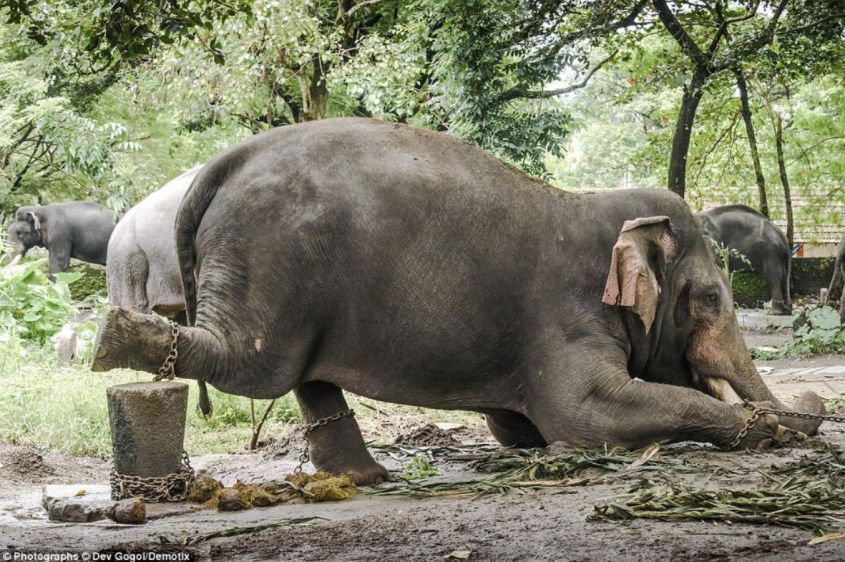
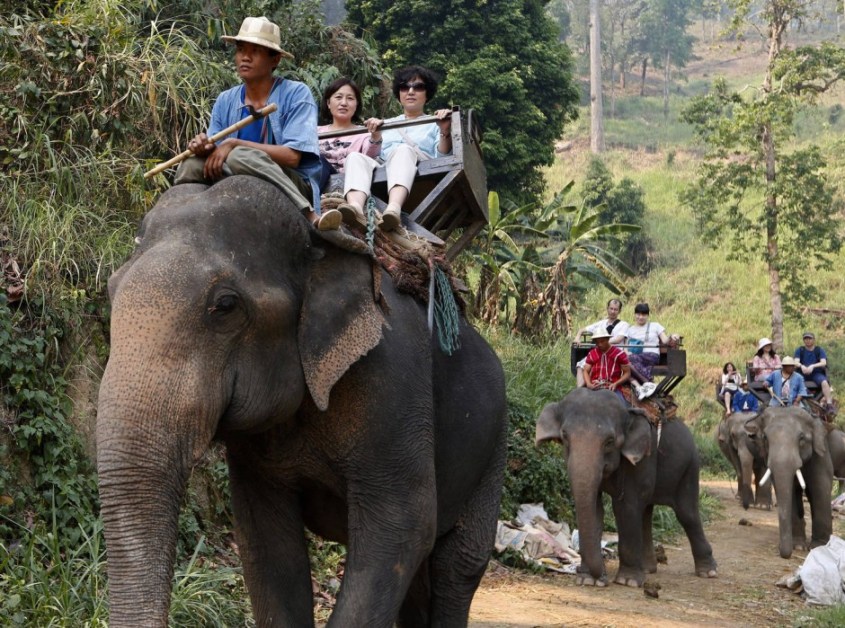
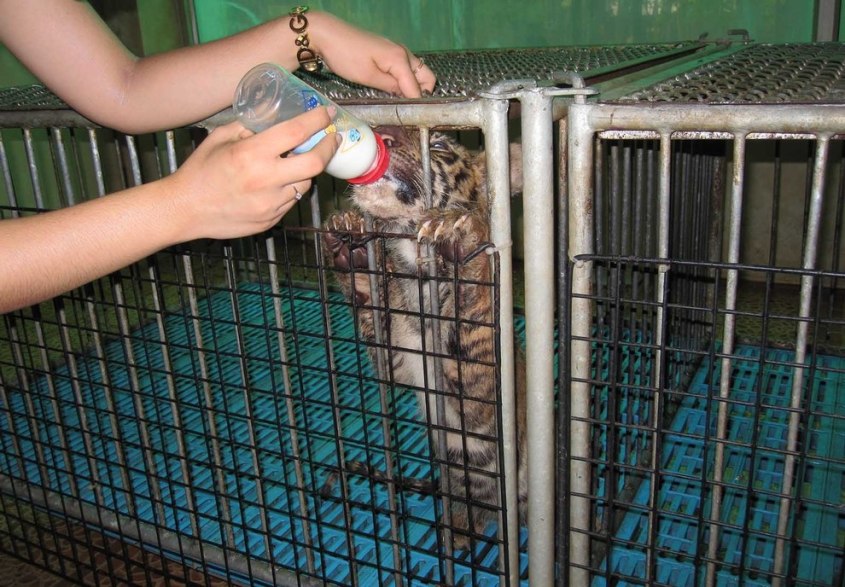
In Thailand she saw Americans hugging tigers and Chinese brides riding young elephants for their wedding photo.
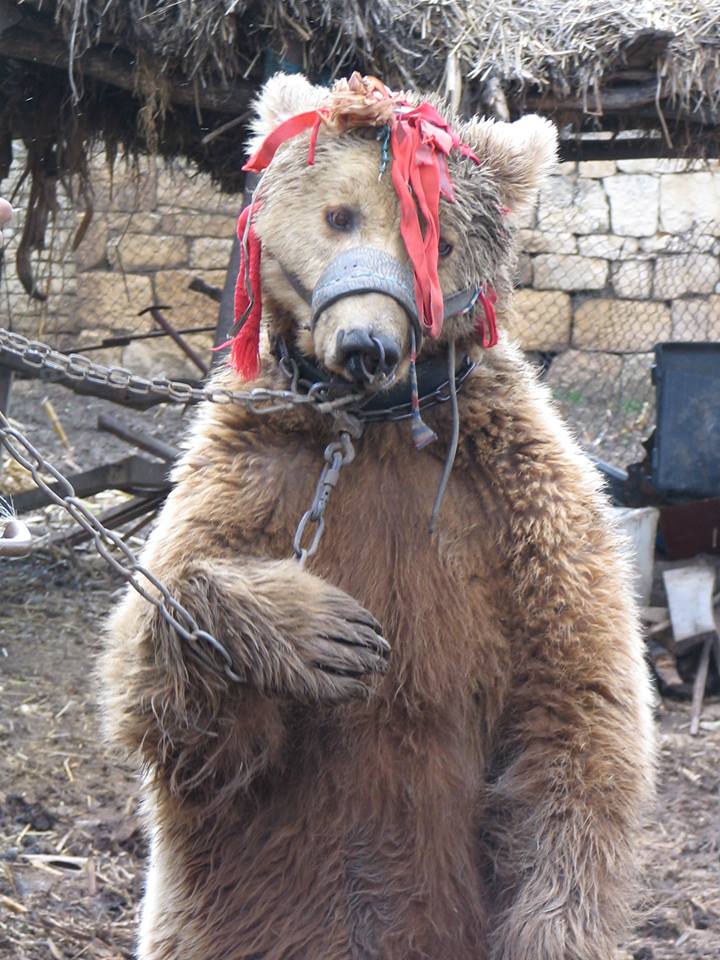
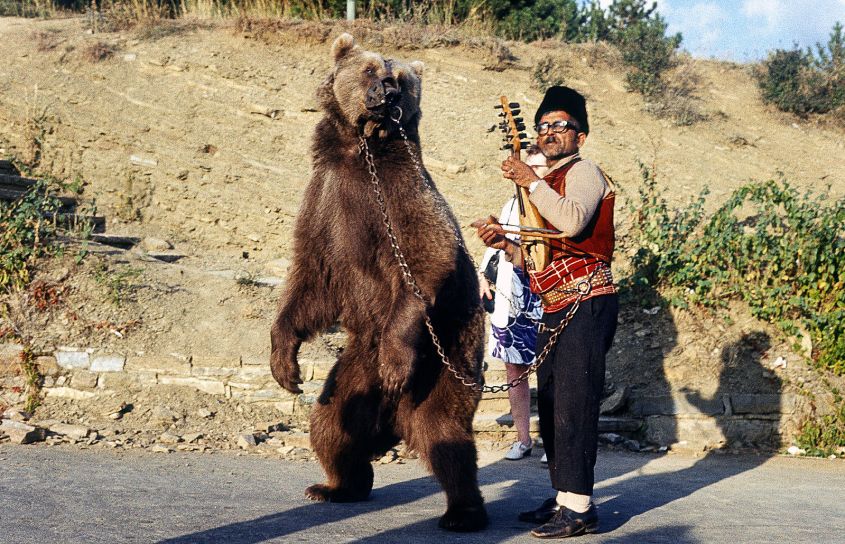
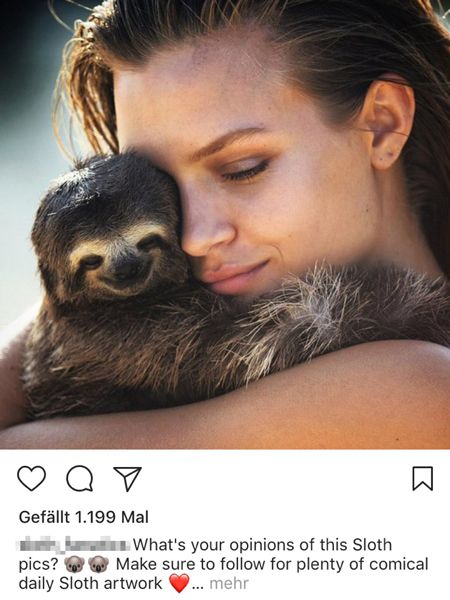
In Russia she saw how polar bears danced with wire muzzles under a circus tent, and in the Amazon she watched teenagers taking selfies with baby sloths.

tanzbärA bear in Bulgaria, who is forced to dance to the amusement of the tourists. Photo: собственная работа.


“Most tourists who enjoy these encounters do not know or are not interested in the fact that, for example, the tigers have been drugged and are clawless. Or that their young animals are taken for tourist photos just a few days after birth.
That the baby sloths die after a few months in captivity or they can only ride the elephants because their will as babies was violently broken by the caregivers.

Long before the advent of social networks, pet owners made good money through tourist animal shows – under extremely poor housing conditions.

problem-elephant-4
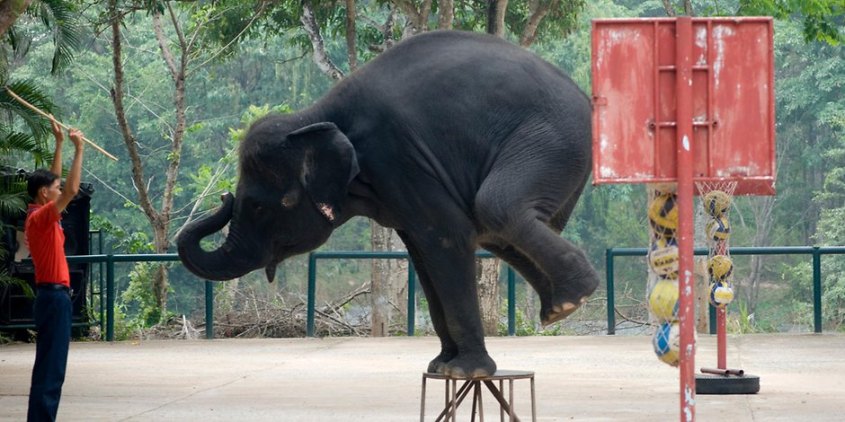
Tourists already wanted to be photographed with a giant python and were astonished how elephants can stand on one leg in animal shows or let balloons burst accurately.
All to the delight of the organizers, who this animal show tourism flushed a lot of money in the cash.

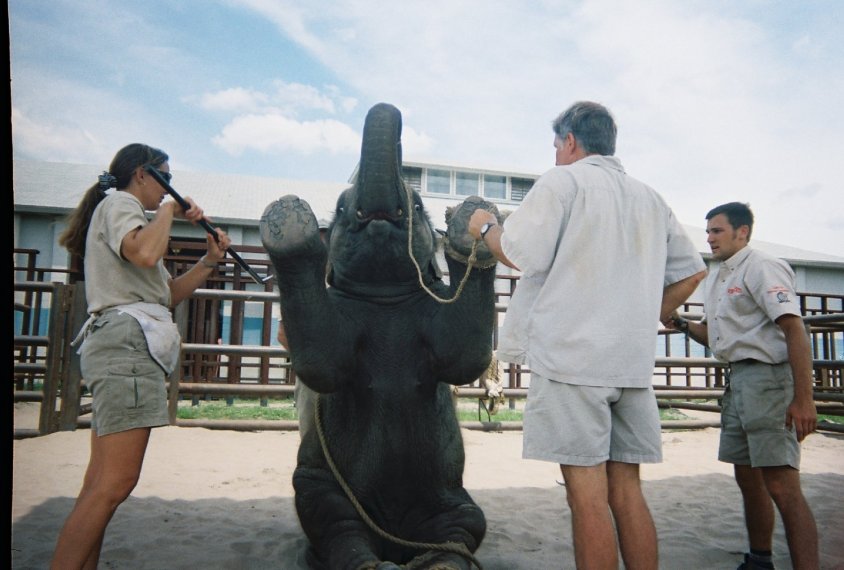
-c-PETA-USA_elefanten training4596-1800x1215Violent elephant training at the American Circus Ringling Bros. Photo: PETA


Today, in an age in which the digital display of his experiences is treated as a social currency, it is increasingly becoming a big problem. The tourists accept the poor living conditions of the animals for a photo that potentially increases their popularity online. Photos posted by the French influencer Mathilde Tantot – in Thailand, half-naked with an captive elephant – unfortunately are uncountable. All with the goal of generating a lot of attention and therefore more followers.

As a social network with a billion users, Instagram has a huge responsibility towards its most popular photo opportunities – whether those through the Instagram tourism run dirty resorts or the suffering baby sloths.

selfie mit wild tier2
After several years of criticism, the platform has responded to calls from numerous petitions by reputable wildlife organizations to finally tackle its known animal cruelty issue.
There are already hundreds of thousands of photos under various hashtags that are related to animal cruelty and were available to the general public for the longest time.

At the end of 2017, the platform finally worked against it.
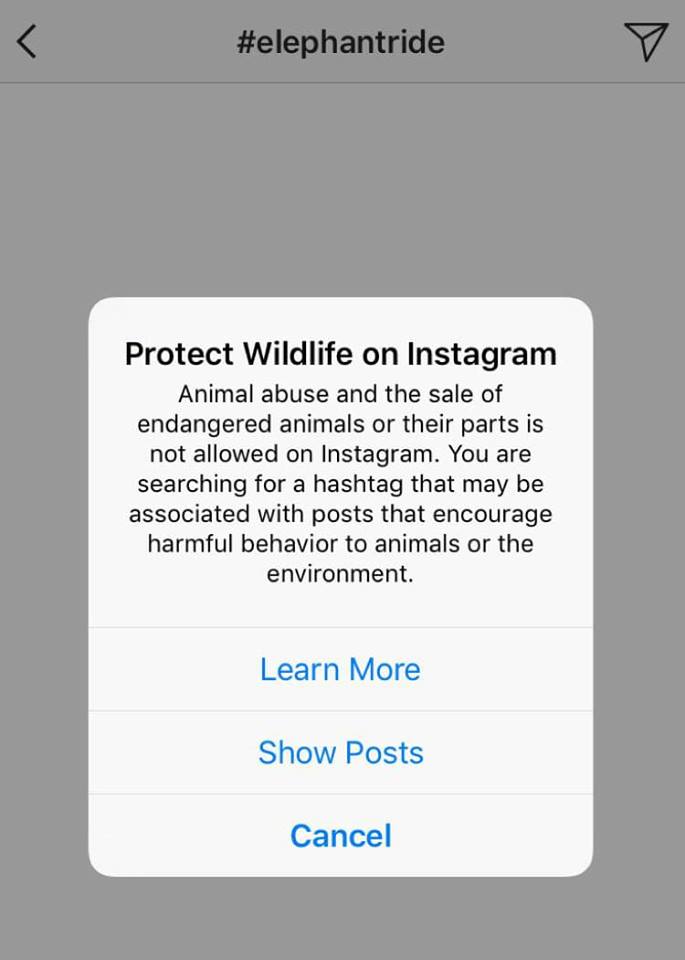
As soon as the user wants to call one of the hashtags, this warning will stop them. For example, animal welfare organizations like World Wildlife Fund and World Animal Protection and National Geographic worked with Instagram for months on a long list of hashtags – such as #tigerselfie, #elephantride, #selfiesafari – which are now closed.

Instagram Verbotpg

If users click on “Learn More”, they will be redirected to the site on Wildlife Exploitation on Instagram.com for more information.

ausbeutung-von-wildtieren-instagram

Instagram spokeswoman Emily Cain told National Geographic that she wanted users to be more aware of animals and nature.

“I think it’s important to the community right now to be more aware. “We’re trying to do our part to educate them”.

Elefanten in Thailand gefoltert5

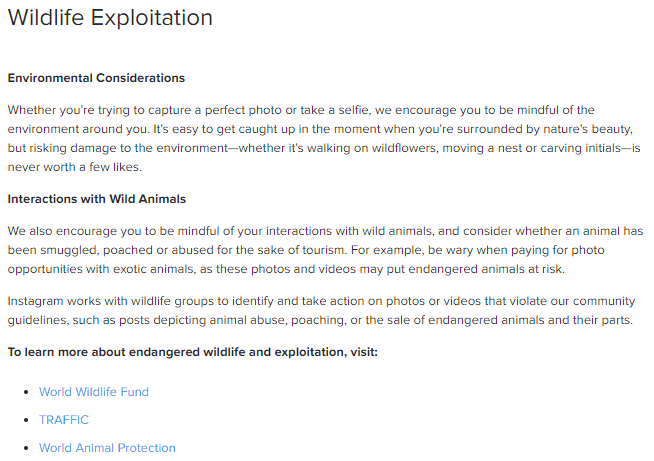
The comprehensive offer for tourists in foreign countries to visit animal shows, to go swimming with wild animals or to make selfies with the chained animals is almost normal for travelers. Often these facilities present themselves with the slogans “Conservation”, “Refuge” and “Rescue”, which is intended to simulate the intention to ensure the protection of the animals.

Everyone should ask themselves, what kind of “nature conservation” elephants are these, when one is allowed to ride on them.

bei-touristen-sind. elefantenjpg

Cassandra Koenen, Head of Wildlife Campaigns bei World Animal Protection:

„Even if the cruelty isn’t right in front of you, [there’s] cruelty that’s behind the scenes to get to that point“

https://www.qiio.de/die-geld-maschine-hinter-den-exotischen-tierbildern-auf-instagram


My comment: Certainly the warning Instagrams will sensitize some people to the conservation of species and nature.

However, it can not be expected to reach those who know exactly what they are doing.

Tiger-Baby-fuettern--Frank-Eidens
And first and foremost they are the mindless ignorant, the indifferent travelers who are driven by their hysterical addiction to exoticism and adventure, and therefore would even ride on animal corpses.
Most people know what’s behind it.
But as with the suffering and torture of the farm animals, they are interested in a shit about it.

ausbeutung-tier-natur-instagram

The hope of restricting trafficking on the endangered species platform is also low, as it is mostly unscrupulous businessmen who then seek other ways.

But still: we see this as a good and, above all, important step in the right direction.

My best regards to all, Venus


USA: Howl for the Wolves – They Need Your Voice.

wolf

All photos are from our archive and are not directly associated with this article – WAV.


-usa-us-flagge-

Dear Mark,

Today, my father Dr. Michael W. Fox is traveling to Brainerd, Minnesota, to join hundreds of other wolf advocates to testify on behalf of Project Coyote before the U.S. Fish and Wildlife Service (USFWS) in opposition to the Trump Administration’s proposal to strip all remaining federal protections for wolves across the lower 48 states (except for Mexican wolves in the Southwest).

As a veterinarian, canid ethologist, bioethicist and author of more than 40 books – including The Soul of the Wolf my father will speak to the many values of wolves. Read his testimony here.


howlingwolvesmoon


Project Coyote Science Advisory Board Member Dr. Adrian Treves is part of a five-member peer review panel appointed by the USFWS that analyzed the proposal to delist the gray wolf. He and several other peer reviewers found the proposal “chock full of scientific errors,” stating “it looks like they decided to delist and then they compiled all the evidence that they thought supported that decision.” Read more here and here.

wolf quote


Across the nation, today is Stop Extinction Day of Action against wolf delisting – and we need your voice!  If you haven’t already, please weigh in on this critical issue for our nation’s imperiled gray wolves. THE PUBLIC COMMENT PERIOD ENDS JULY 15th! 

Please submit comments TODAY in opposition to the proposed rule to delist wolves.

Click here to submit your comments using an online form. If your comments fit into the comment box, this method is preferred. For longer comments, please attach them in a Microsoft Word document.


wolves7

Talking Points:

Your comments can simply state: “I am in opposition to the U.S. Fish & Wildlife Service’s proposed rule to remove Endangered Species Act protections for gray wolves in the lower 48 states. I urge you to reconsider this proposed rule and to instead develop a national wolf recovery plan for wolves that reflects their intrinsic value and the myriad ecological, aesthetic, and economic benefits the species provides to our communities and ecosystems.”

For maximum impact, however, we encourage you to personalize your comments. Here are some talking points you may consider incorporating:

  •  Continuing Endangered Species Act protections for wolves is necessary for the species to fully recover. Federal protections saved gray wolves from extinction following decades of persecution – and the species is still recovering, currently occupying only a fraction of their historic range.
  • The proposed rule would transfer authority over wolves to state wildlife management agencies, which historically have shown little interest in preserving wolves. These state agencies have catered to special interest groups who seek to kill wolves for trophies or entertainment, or on the misguided belief that killing wolves protects livestock or increases deer and elk populations.
  •  Wolves are vital to healthy ecosystems. Benefits wolves provide include increasing biodiversity by keeping large herbivores such as deer from overgrazing habitats and maintaining the health of prey animals such as deer by culling the sick members from the heard, including animals suffering from Chronic Wasting Disease.
  •  The best available, peer-reviewed science demonstrates that killing wolves will not protect livestock or increase populations of game species like deer or elk. Wildlife management decisions should be based on ethics and sound science, not fear and misunderstandings.
  •  The vast majority of Americans are wildlife watchers who prefer to view wolves in their natural habitat – preserved and treated with respect. Allowing wolves to return to their historic range and thrive will provide far more benefits to our economy than allowing a tiny minority of the population to extirpate these iconic animals from our landscape.

Learn more about wolves here.

Wolves CBD

Thank you for acting TODAY to protect wolves from extinction!

For Wild Nature,

Camilla Fox
Founder & Executive Director


The terrorist in the hobby hunter


jäger-

Nowhere is so much manipulated with untruths and false news as on the hunt. Violence and lies belong to the same coin.

Murdering in the forest for the joy of killing animals dilettantisch, is not a sustainable settlement, but an incomparable anomaly. Today’s hunt is a massive, destructive and militant invasion of natural rhythms and can only be described as a natural terrorism!

For decades hobby hunting has been nothing but a permanently costly construction site, patchwork and disputes for politics, forestry, agriculture, administration, justice, health insurance, insurance, animal welfare, environmental and nature conservation organizations, police, federal government, media etc.

der-terrorist-im-jäger

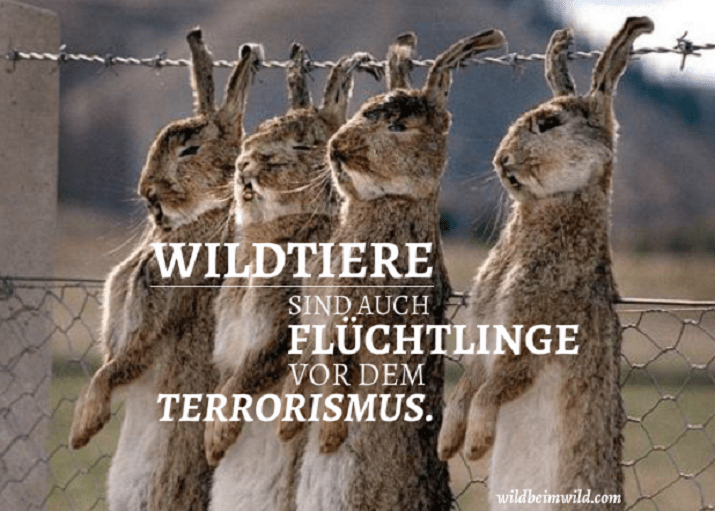
“Wild animals are also refugees from terrorism”

The fact that every day wild animals suffer, flee and die under the often meaningless terror of hobby hunters mostly displaces the collective consciousness in a selfish way.

Jäger am Tisch mit Hirschköpfe

After the various attacks of the followers of the Islamic state, especially in German-speaking countries, it was clear from the state of health what terrorism actually is. The feeling of empathy changed abruptly – into subdued fear.

Even politicians clap applause to this form of terrorism and see no need for action. Sure, of course! It’s not about their life. Not only that: Politicians even organize this terror and bigotry. Anyone who courtes hobby hunters seems to have a broken value compass.

Women, children, adolescents and adults are just as radicalized by hobby hunters and included in a network of violence and life-scorn, as the Pied Piper” in Islam do. Some of the victims are gradually formed into members of terror as early as childhood. Based on crippled ideologies of the “hunter Latin”, the people seeking meaning undergo training to carry out violent actions in the animal kingdom. Foxes, martens, marmots, etc. are only part of their terrorist activities. The faces of the chopped off heads of the dead wild animals, hobby hunters proudly publish on the basis of pictures, videos and statistics.

kinder als jägern

Hunting clubs are always a form of terrorist cells. There are even amateur hunters who claim that shooting a known creature is a special pleasure.

When people hunted earlier, it was important to respect life and feed only their own relatives. Foxes, birds and co. Were not killed, out of boredom, to relax or to recover through a misunderstood nature experience.

Prister segnet Jagdmesseo

“Those who enjoy killing and believe they gain prestige through a meat trophy have neither moral nor intellectual maturity to acknowledge the primitiveness of their actions. This society calls itself civilized, but how can it be civilized if even the persecution, the attacking and the killing of animals, cowering in fear, is still referred by this society as a sport? To kill for pleasure or sport, there is no justification and no apology – Hunt again gives a deep subtle psychosexual Insufficiency. “(Psychologist and neurologist Saper)

One only has to watch the wildlife to see which terror and habitat loss they suffer from. They do not have a quiet minute of their lives, they are in constant fear. As they grow, they constantly raise their eyes in a hunting area to find a hobby hunter. Freedom does not really exist when an animal has to be nocturnal, and so on. The fact that wildlife gets sick under such unnatural and stressful conditions is another point that speaks against this hobby terror.

selbstgemachte Jäger fallen

The fear  the wild animals in front of humans was only trained by them through the hunt. Walkers, cyclists and other nature users get used to the animals. This can be seen in protected areas, such as the Swiss National Park. In spite of the immense flow of visitors, red deer there eat undisturbed even in broad daylight on the open alpine meadows and do not harm any crops. Indeed, according to studies, they even promote biodiversity.

deer-pg

In addition, large parts of the hunters have a knowledge of the last century. This is mainly due to the often inadequate training in the hunter examination courses, which are mainly carried out by fanatics with sect-like ideas, which need no regular qualification. After training, the hobby hunter moves only in the echo chamber of the hunting press, which repeats their crooked and false representations steadily.

In the hunting clubs, one then confirms each other in his view of things. In this way, a secluded sect has emerged, which is hardly accessible for new information.
The fatal thing is that local press and politics still believe under the Hunter’s hat expertise available and in all natural issues like to interview the local hobby hunter.
The hobby-hunter sect then also contaminates the public space.

Hase mit Stock gegen Jäger

“IG Wild at Wild” is a nonprofit community of interests, based in Switzerland, specializing in the legal aspects of wildlife conservation. One of our main concerns is to introduce a contemporary and serious wildlife management modeled on the Canton of Geneva in the cultural landscape – without hobby hunters but with honest gamekeepers. The monopoly on violence belongs in the hands of the state and not delegated to hobby-hunter gangs.


https://wildbeimwild.com/unkultur/der-terrorist-im-jaeger/3910


My comment: What kind of person can enjoy taking the life of another creature?

How can a person practice the killing of animals as a hobby, justify his deeds and bloody hobby?

Psychopaths and serial killers can do it!! Serial murders and animal hunts are terribly similar.
Just like serial killers, hunters have to prove their status as a person who has power over life and death.
There are studies that show that 90% of violent criminals started as animal torturers or by hunting.

Hunting magazines are full of images that stimulate hunters and provoke fierce fantasies of hunting and prey killing.

They are full of pictures of hunters triumphant over the animals they slaughtered. The message behind it is obvious: ” Kill something – or rather someone – and you too can achieve true greatness”.

“Killing people is so much fun,” the Zodiac killer wrote in one of his letters. “It’s even better than killing wild animals in the forest, because humans are the most dangerous of all animals.”

Hunters: You have long revealed your ugly face of mendacity.
Shoot yourself and your stupid fellow travelers in politics too.

My best regards to all, Venus

England: Exposed – Canned Lion Hunts and Their Organisers ‘Blackthorn Safaris’ and Owner Alex Goss.

England


This week we (WAV) have attempted to make contact with Blackthorn Safaris to make our disgust at what they are doing audible to them. They cannot be contacted in any way; and all of their sites appear to have been shutdown; hopefully due to the amount of mails and telephone calls that they have been getting from irate animal supporters. Here below is the basic story; but this has appeared in many UK national newspapers in the last week. Maybe it is this also that has caused Goss to close down all the sites.

Just for once he is now experiencing what it is like to be ’hunted’ – I am sure that there are many people in the UK that would wish him harm. – WAV England.

This pile of crap is an insult to the great work which is being done everywhere by UK animal welfare organisations.  He and his organisation are an offence to the good name that these groups and people have worked years to achieve.  The UK disowns shit such as this.  We hope he has a severe accident with his gun in the very near future.


Some UK press links about this:

https://www.thesun.co.uk/news/9354925/lion-safari-british-boss-trophy-hunter/

https://www.shropshirestar.com/news/local-hubs/oswestry/2019/06/24/shropshire-man-runs-callous-hunting-firm/


http://www.cannedlion.org/united-kingdom.html


Exposed – This British Firm is Hosting Canned Lion Hunts

https://ladyfreethinker.org/exposed-this-british-firm-is-hosting-canned-lion-hunts/


British company Blackthorn Safaris is charging heartless trophy hunters thousands of pounds to murder captive-bred lions like sitting ducks during “canned hunting” shoots on an estate in Kimberley, South Africa.

Alex Goss, who owns the Shropshire-based firm, posted several sickening photographs on the company’s website, picturing him with the innocent animals he and his guests have cruelly slaughtered. It is believed that the lions in the photographs were specifically bred in captivity to be mercilessly hunted down within fenced estates, leaving them with no chance of escape.

Throughout South Africa there are approximately 10,000 lions in more than 300 breeding and captive hunting centers.

 Brit safari boss Alex Goss poses with a dead lion allegedly killed in a so-called 'canned hunt'

Calling canned hunting “cowardly”, Eduardo Goncalves, founder of the Campaign to Ban Trophy Hunting, which exposed Blackthorn Safaris’s gruesome practices, explained how lion cubs are taken from their moms just hours after birth, then raised in captivity to be killed for “entertainment”.

“In the shocking world of trophy hunting, there is nothing more depraved than captive lion hunting,” he said. “For a British company apparently to be actively organizing captive lion hunts will make people sick to the stomach. The Government should ban the import of hunting trophies, help close the loophole in international law which lets hunters shoot endangered animals for “sport” and support moves to abolish all trophy hunting”.

“Lions are in serious danger of going extinct,” added Goncalves. “In the 1950s, there were up to 450,000 lions in the wild. Today there are just 20,000. Lions have disappeared from 90% of their range and gone extinct in 26 countries.”

Good news: Canada bans shark fin trade.


kanada flagge 2


Canada is the first of the G20 countries to fully ban shark fin trade.
This is a significant issue, as Canada was once the largest importer of shark fins outside Asia (according to Statistics Canada, in 2018, 148,241 kg of shark fins with a market value of over EUR 2 million were imported). Will other countries now follow suit and help prevent the slaughter of millions of sharks a year for a bowl of soup?

Hai Symbol BildnPhoto by Brett Lobwein for Sea Shepherd


Meanwhile, Sea Shepherd continues to protect sharks around the world by stopping poachers in direct-action campaigns, uncovering bycatch violations and stopping illegal fishing.

Other countries have also issued bans on finning; these include Ecuador, Malaysia, USA or New Zealand. However, the prohibitions are often undermined and practically not monitored in the vast expanses of international waters.

Shark fins are still traded worldwide despite the brutality of the catch.
According to the Food and Agriculture Organization (FAO), Indonesia is the largest shark exporter with 13 percent of world shark. Spain follows as the first European country in third place worldwide.

Giant sharks reach a size of up to ten meters in length, and their fins are up to two meters long. Such fins can reach prices up to $ 15,000. The Great White Shark has other “souvenirs” that can be used to make money.

The international trade with its jaws and teeth reduces the population’s concern. There are already sums of money: the jaws bring a revenue of up to $ 50,000 and a single tooth an average of $ 60.
Due to increasing demand for their fins, 100 million sharks are killed each year.

hai ohne flossejpg

The brutal shark finning” has long been severely condemned by environmental and animal welfare organizations. The sharks are caught alive with longlines and taken aboard.

There, the fins are cut off from the living animal. Then the shark is again thrown overboard into the water.
The animal is miserably destroyed. Without movement no oxygen-rich water gets into the gills, the shark suffocates.

https://www.facebook.com/SeaShepherdDeutschland/

My comment: And we’ve been told that shark is a monster, the most dangerous animal in the world.
Around 70 people are attacked by sharks a year. In the year 100 million of these intelligent animals die a tumultuous death from human hand.
Most grotesque is that only 4% of their body, the rafts, are eaten, the rest is “waste”, does not bring money and ends up as a waste in the sea.

End product rafts for shark rafts soup, and we have
A tragedy with 100 million victims a year and 180 shark species on the red list.
The human species is an animal species acting in principle with the  fascist ideology of the ruler, and therefore the most dangerous and abominable species on this planet.

My best regards to all, Venus

USA: Arizona Game & Fish Commission Adopts Rule to Ban Wildlife Killing Contests.

-usa-us-flagge-

FOR IMMEDIATE RELEASE – June 21, 2019

proj coyote media release

Contacts:
Betsy Klein, I AM WOLF NATION, (714) 478-0353, b@planb.foundation
Matt Francis, Project Coyote, (435) 659-9635, mfrancis@projectcoyote.org
Katie Stennes, Project Coyote, (240) 328-5369, kstennes@projectcoyote.org
Lain Kahlstrom, Animal Wellness Action, (480) 565-0655, lkahlstrom@outlook.com

Arizona Game & Fish Commission Adopts Rule to Ban
Wildlife Killing Contests

Commissioner Vows to Revisit Rule if Contests are Held Despite the Ban

Phoenix, AZ – Today the Arizona Game and Fish Commission (AZGF) voted unanimously (4 to 0) to ban wildlife killing contests (WKCs) for predatory and furbearing species in Arizona. For months a coalition comprised of concerned citizens and wildlife conservation organizations has worked tirelessly to ban WKCs statewide. Wildlife killing contests are barbaric events wherein participants compete to kill the greatest number, the largest, or even the youngest of the target wildlife species for “entertainment” and prizes. Hundreds of coyotes, bobcats, cougars, foxes and other species are killed in these events every year in Arizona.

In 2018 and 2019, Dewey-Humboldt, Flagstaff, Coconino County and Yavapai County passed resolutions condemning the events (Tucson and Pima passed similar resolutions in recent years). New Mexico and Vermont banned coyote killing contests in 2019 and 2018, respectively. California passed a wildlife killing contest regulation in 2014. Recently the Washington Post highlighted the Santa Slay Coyote Tournament, which takes place annually in Yavapai County, noting the national public outcry against these contests.

“We commend the Commission for adopting a rule to crack down on wildlife killing contests for predatory and furbearing species including coyotes and foxes,” said Matt Francis, Arizona State Representative for Project Coyote. “While we have concerns that potential loopholes may allow these contests to continue, we were pleased to hear that Commissioner Davis is committed to amending the rule if necessary to prevent participants from evading the ban. We all want the same thing: to end the cruel and ecologically destructive killing of the public’s wildlife for no good reason.”

“I believe Commissioner Davis said it best when he said it is the responsibility of the Commission to ensure their rules uphold the highest ethical principles, and they prohibit the take and use of wildlife for economic and illegitimate purposes,” stated I AM Wolf Nation Executive Director Betsy Klein. “As stewards of all wildlife, we owe this to present and future generations. While the rule leaves room for these atrocities to continue, it is a step in the right direction and we are thankful to the Commission for proposing such a rule in the first place.”

The coalition has been working to close loopholes in the rule that may allow WKC participants and organizers to continue their contests so long as participants don’t officially “register or record entry” or “pay a fee.” The rule as passed today also leaves animals such as prairie dogs and rabbits unprotected.

Today Commissioner Davis noted that he believed 99 percent of hunters would abide by the new rule.  
 
Over 70 conservation scientists have signed a statement condemning WKCs on ecological and ethical grounds (see a factsheet here explaining why indiscriminately killing coyotes is counterproductive).

The Arizona Game and Fish Department (AZGFD) itself recognizes that killing coyotes does not reduce their numbers, stating on their website: “Removing coyotes from one area generally results in other coyotes moving in from surrounding areas and breeding faster.” There is no way to know the effect that wildlife killing contests have on coyote populations in Arizona because AZGFD does not monitor the contests or track the number of coyotes killed in these events.

The coalition is hopeful that today’s action by the Game and Fish Commission put an end to the scientifically and ethically indefensible practice of wildlife killing contests in Arizona.

***

Footage of today’s Commission meeting is available here.

Read an Op Ed in today’s Arizona Daily Star by Dan Flores, author and Project Coyote Ambassador, and David Parsons, retired wildlife biologist for the U.S. Fish and Wildlife Service and Project Coyote Science Advisory Board Member condemning wildlife killing contests.

Project Coyote, a national nonprofit organization headquartered in Northern California, is a North American coalition of wildlife educators, scientists, ranchers, and community leaders promoting coexistence between people and wildlife, and compassionate conservation through education, science, and advocacy. For more information, visit ProjectCoyote.org

Project Coyote is a fiscally sponsored project of Earth Island Institute, which has received a Four Star rating from Charity Navigator.


Belgium: 49 hunting seaters destroyed!


belgium flaggepg

Received anonymously, Jun 08:

In May 2019, a group of antispeciesist activists destroyed 49 hunting stands close to the city of Namur, Belgium.

jäger in Jochsitz

The purpose of this type of actions is to cause financial dammage to hunters in order to keep them from killing.

Hunting is absolutely not a way to regulate anything. Hunters create a situation of imbalance in the nature just to have an excuse to intervene and kill the predators they introduced themselves. They also introduce preys. They keep them locked in the forest and they only liberate them to kill them.

treibjagdjpg

Hunters say they restore natural balance but nature never needed any human being to be balanced. Actually, hunters destroy the natural balance and then pretends to be able to fix the problem they created.

The truth is that hunters need an excuse to legitimate the fact that they kill sentients beings for pleasure.

Belgium_hunt_jpg

So tell them to expect us. Cause as long as there will be hunters, there will be activists to track them.

French:
En mai 2019, un groupe d’activistes antispécistes ont détruit 49 tours de chasse dans les environs de la ville de Namur, en Belgique.

Le but de ce type d’actions est de causer un dommage financier aux chasseur.euse.s et ainsi de les emêcher de tuer.

La chasse n’est absolument pas un moyen de réguler quoi que ce soit. Les chasseur.euse.s créent en fait une situation de déséquilibre dans la nature juste pour avoir une raison d’intervenir en tuant les préateur.ice.s qu’ils ont elleux-mêmes introduit.e.s. Iels introduisent aussi des proies qu’iels tiennent enfermées dans des élevages dans la forêt et ne libèrent que pour pouvoir les chasser.

Les chasseur.euse.s disent restaurer l’équilibre de la nature mais le fait est que la nature n’a jamais eu besoin de quel être humain que ce soit pour retrouver son équilibre. En fait, ce que font réellement les chasseur.euse.s, c’est détruire l’équilibre de la nature et prétendre être les seul.e.s capables de réparer les dommages qu’iels ont elleux-mêmes créés.

La vérité, c’est que les chasseur.euse.s ont besoin d’une excuse pour légitimer le fait qu’ils aiment tuer des êtres sentients par plaisir. Mais qu’iels se tiennent prêts, car tant qu’il y aura des chasseur.euse.s, il y aura des activistes pour les traquer.

https://animalliberationpressoffice.org/NAALPO/2019/06/08/49-hunting-stands-destroyed-belgium-2


My comment: At least from these 49 murder seats, no animal will be shot dead!! In Germany, the legal status of these shooting facilities is not clear. Not all are legal, but no one can prove it. This is the reason that very often the hunters, whose high seats are destroyed, do not file a criminal complaint against the unknown offenders.

Therefore, we can be happy if a hunting seat is destroyed. And if that’s 49, the more!
That is not forbidden!

My best regards, Venus