“If you save an animal, you do not change the world. But for this one, the whole world is changing” the ALF said.
And so it is.
Only very often we want to help, but we don`t know how.
Especially with wild animals, the danger is great that we do something wrong, which brings negative results for us as well as for the animal.
First aid for animals, just like first aid to human animals, should be instructed in the school, only so can a child develop early empathy for animals.
In addition, in school education, a clear mission should be taken: to teach children to be sensitive and active against any animal’s suffering.
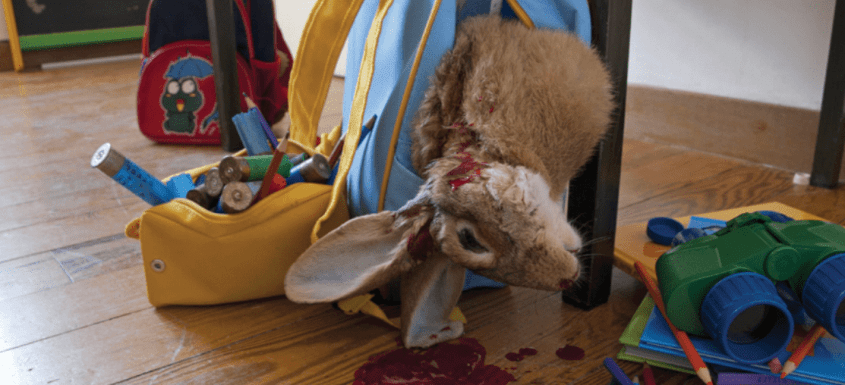
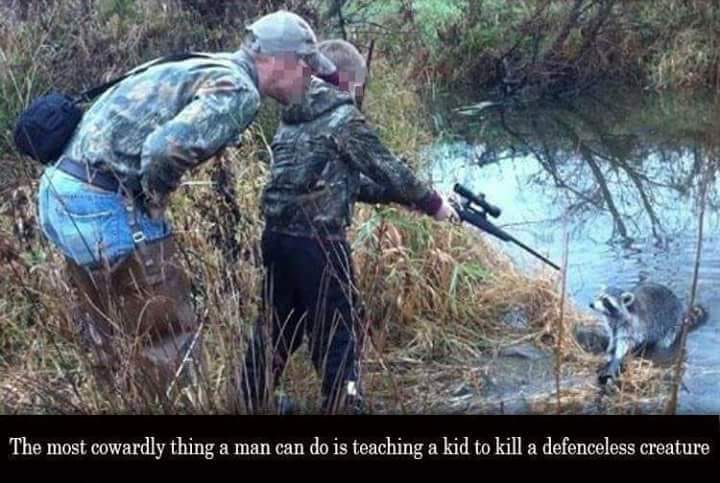
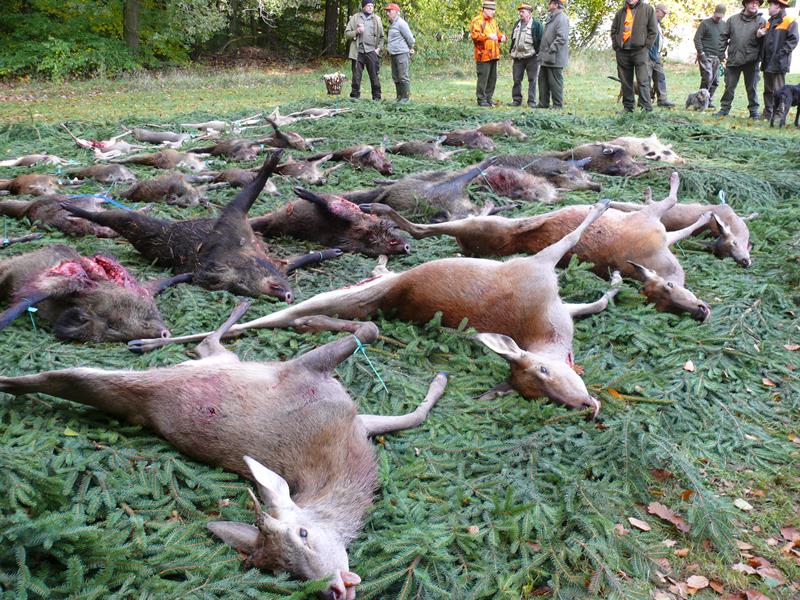
Instead of it, it has been observed for some time in Germany that hobby hunters in childrens’ gardens and schools run a sect-like image campaign with the aim of introducing animal-loving children to the cruel hobby.
The manipulation of the children follows a playful method and is advertised as a conservation project, real backgrounds and outgrowths of hunting are played down, falsified or simply concealed.
The hunters are aware that the sneaky and mendacious hunting and the atrocities that are associated with it, meet with ever greater rejection within society, and therefore they want in educational institutions to teach children to hunt, so that they can win prospects for the future.
That is not yet the case in Germany, but there is already an infiltration in the school system by hunters.
All who have children should show them the nice video!
So that they learn what a trap is, and that it is mostly provided by those who want to teach them the love of hunting at school.
A loophole in international animal trade regulations allows trophy hunters to legally kill animals deemed as extinct in the wild. And they’re doing it with the blessing of the US and U.K. governments, as revealed by the Campaign to Ban Trophy Hunting.
The Convention on International Trade in Endangered Species (CITES) is a trade agreement between world governments. CITES classifies animals into three appendices, and Appendix 1 contains the most critically endangered species. However, instead of protecting these magnificent creatures, CITES awards permits to trophy hunters to brutally murder them for fun.
Trading nearly extinct animals listed in Appendix 1 is banned except when it comes to killing them for “commercial purposes”.
Approximately 2,500 endangered species trophies have been imported into the U.K. between 2004 and 2014 because of this loophole. 2,500 animals that should have been protected, but instead were legally murdered in the name of entertainment.
Even more sickening, ranch owners in the US are breeding animals classified as extinct for the sole purpose of selling them as paid trophy ‘hunts’ for profit.
Several animals declared as extinct are advertised at captive hunting ranges, such as the scimitar-horned oryx and Père David’s deer. The federal government regulates this industry and issues permits through various treaties, including CITES.
“The domestic wildlife trade is the dirty underbelly of the trophy hunting industry,” said Kitty Block, CEO of the Humane Society of the United States. Block told CBS News that “Animals are fenced-in, hand-reared, hand-fed, and they’re baited so food is out when hunters come. Hunters are then driven up to the area where animal is eating and they’re shot there.”
Despite these horrific revelations, CITES is an important global animal trade regulator. Before CITES, wildlife trade was unrestrained. Animals that were killed and exported illegally from one country could easily be imported legally into another.
It’s time to do better than lax regulations that legally permit trophy hunters to kill animals declared as extinct for cruel entertainment.
We must close these loopholes and urge CITES to stop issuing legal permits allowing trophy hunters to kill the world’s rarest exotic animals. They deserve our protection and should not be pawns in a sick game.
CITES international conference started last weekend in Geneva and runs for 2 weeks. There, delegates from 180 countries will deliberate changes to the rules. 50 Members of the European Parliament have already written to Ivonne Higuero, secretary-general of CITES, urging her to close down these loopholes.
We can make demands too. Join us in speaking out against allowing hunters to mercilessly murder nearly extinct animals by emailing the head of CITES Ivonne Higuero at info@cites.org.
Elephants are among the endangered species in Myanmar. The government in Myanmar estimates that there are currently only about 2,000 wild elephants in Myanmar’s jungle.
Already a few years ago the (www.Netzfrauen.org) reported on the terrible trade in Asian elephant skins – for jewelry and traditional medicine. The skin of the elephants is painstakingly removed and sold for traditional Chinese healing methods. New research has now revealed that illegal trade has spread throughout Southeast Asia. The skin of elephants is burned in a clay pot and the ash is mixed with coconut oil. This cream is supposed to help against eczema
According to the new “Elephant Family” Report, the burgeoning Myanmar industry seems to have spread to a greater part of Southeast Asia, including not just China, but also Laos, Vietnam and Cambodia. The pearls are sold in Myanmar and China and skin products for traditional healing methods in all five countries.
The previous report of the “Elephant Family”, published in April 2018, showed that at least initially one person seemed to be behind the pearl trade.
This trader, whom they called “Jaz,” posted about pearls in an online discussion forum in 2014.
“Twenty-three follow-up responses showed that trade in elephant skin pearls was new and poorly understood,” the report said.
The elephant beads are made in the style of traditional Chinese collectibles known as Wenwan. Who exactly wants them, is unknown.
According to the report, some traders said their elephant skins came from captive elephant populations in the area, not from Myanmar’s dense jungle.
Managers of a family-run traditional medicine business said their skins came from “zoos.”
Another trader said his skins came from captive elephant populations in China.
Feb. 16, 2018, photo provided by conservation group “Elephant Family”
The subcutaneous fat of freshly slaughtered elephants is transformed into ruby red pearls
The strong smell is the only thing that prevents men and women from converting the subcutaneous fat of freshly slaughtered elephants into ruby-red pearls. It is harmful. The vapors are grueling because the workers in China have to harden the fat for hours, then polish the translucent fat pearls that often do not maintain their shape.
A trader told investigators at Elephant Family, a London-based conservation group, that it took him a full day to make a pearl. There was also another problem: the fat beads were not very durable when in contact with human skin.
The Chinese saying Wenwan (文 transl) literally means “toy of culture” – illegal wild lifetrade.net
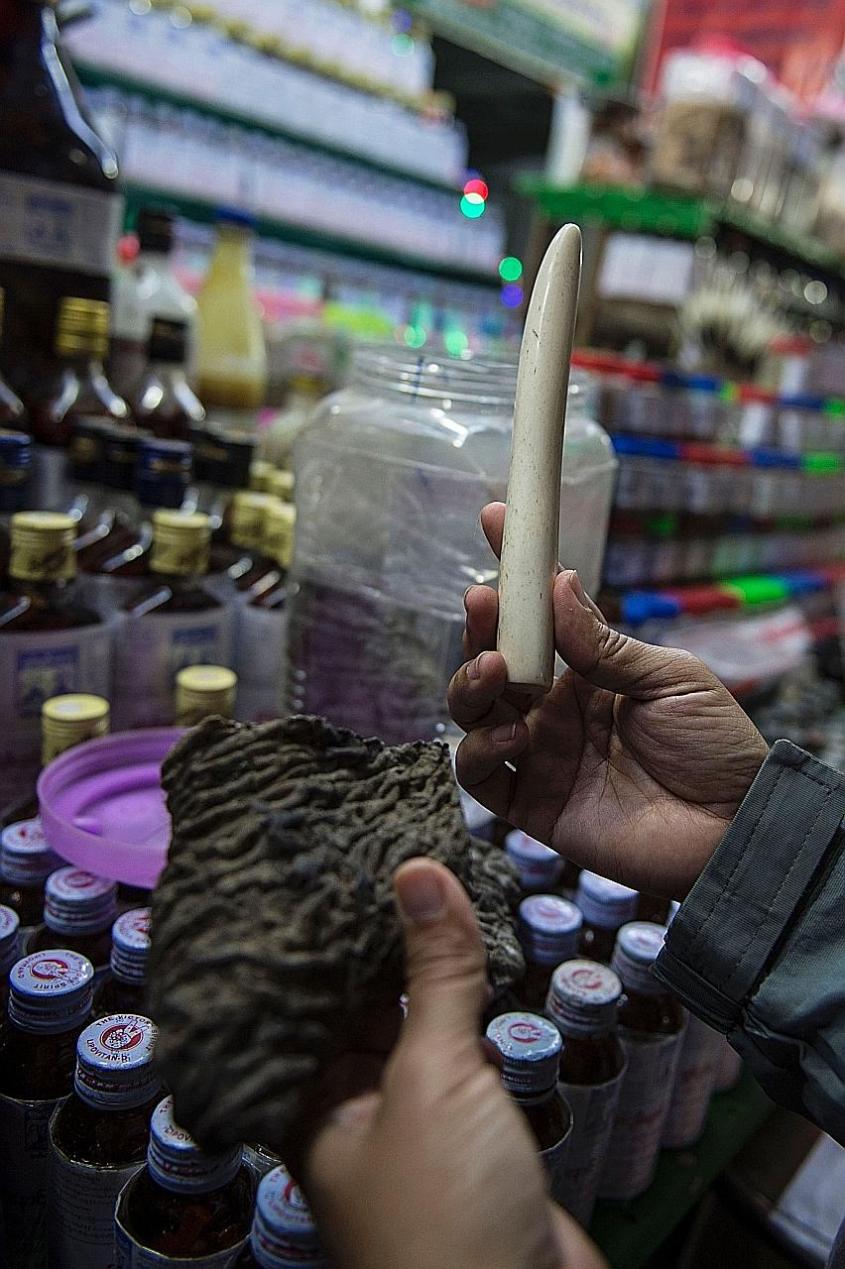
And yet this trade is booming, as can be read on elephant-family.org.
“This trade is continuing, increasing and spreading geographically. It’s scary, “says Dave Augeri, biologist and director of nature conservation at“Elephant Family”.
Elephant populations are sinking dramatically and poaching has increased tenfold in recent years, the government in Myanmar announced after demand for ivory and elephant skin has risen.
Increasingly slaughtered elephants are found whose skin has been stripped off, which is used for traditional medicine or for jewelry. Part of it is sold on local markets, but the vast majority goes to neighboring China, which has an inexhaustible taste for exotic animals, the government said.
The skin of elephants has become the latest fad of traditional remedies in China. In the shops, the skin is sold as devotees (the devotees). There is almost everything, whether as skin or pieces of ivory. In addition, tiger teeth come with bear oil.
Not only is the skin brutally peeled off by elephants and sold, but their habitats also disappear.
Myanmar lost nearly 20 percent of its forests between 1990 and 2010. Since Myanmar’s military rule ended in 1962, the country has become attractive to foreign corporations.
As in other countries, Myanmar has also been discovered for the cultivation of palm oil. Other countries like Thailand use the land in Myanmar for agriculture. Likewise, mining companies have opened the hunt for raw materials.
Even before Myanmar opened its borders in 2011, elephants were smuggled into neighboring countries for tourism.
Already in 2008, the illegal trade in Thailand and China was revealed. There are found 9000 pieces of ivory and 16 whole tusks that were offered for sale. On a total of 14 markets and three border markets in Thailand and China, one was looking for. By 2008, in just a few years, there were about 250 live Asian elephants smuggled out of Myanmar. But now these cruel deeds are so frightening that even the government in Myanmar no longer wants to stand idly by.
My comment: “The earth has a skin; and this skin has diseases. One of these diseases is called “human,” said Nitzsche.
It is not the eczema the disease, that some people need to heal, but their sick brains, who believe in the charlatanry of the Chinese and thus massacre thousands of loving and peaceful animals.
Hunting, fun, enjoyment and new contacts in a hunt for singles in Saxony-Anhalt from 25.-27. October 2019
Dear hunters men and hunters women,
Do you want to spend a great weekend under the hunter singles? The ” love hunt”organizes together with Forest office Eibenstein a hunting experience of a special kind for hunters men and hunters women who are looking for a partner.
A fun speed dating ensures that you can get a sniff on the first evening 🙂
Date: October 25th to 27th, 2019
Number of participants: The number of participants is limited to 30 people. That it can max. 15 hunters and 15 hunters participate.
Prerequisites and instructions:
You have a valid hunting license and are single between the ages of 25 and 55.
In addition to the valid hunting license, you are also in possession of a firearms card, on which the hunting weapon is registered. In addition, an orange hat band and a safety vest must be worn while hunting (can be provided).
In addition to these points, we also ask you to think of weather-related clothing for the driven hunt.
If you would like to participate in the event, please write an email to veranstaltung@liebejagd.de and introduce yourself shortly.
A photo of you would be great too! We also need that for speed dating 🙂
Registration deadline: 30.08.2019
After the registration deadline, we reserve the right to select the participants on the basis of age and gender and, if necessary, to trigger them. The confirmation of participation you get from Forest Office Eibenstein by email.
Terms of payment: With the registration confirmation you will receive our bank account. Payment of the total amount must be made within 8 days. Participation is only possible after full payment.
The general terms and conditions of Forest Office Eibenstein apply. You can download the Terms and Conditions and Privacy Policy of Forest Office Eibenstein here.
Total prices including all mentioned services (additional value tax):
in a single room € 594, – per person
in a double room € 554, – per person
The total price includes the following services:
2 nights incl. Half-board (3-course dinner in the evening)
Organization and processing fees
Sparkling win the start of the SpeedDating
speed dating
Drivers, dogs and dog dealers
Killings of: red deer (calves, small animals, old animals – no lead animals, pikes)
Wild boar (boobies, brooks, boar)
Deer wild (fawn, narrow deer, doe)
Robbery wild (Fox, raccoon dog, raccoon, mink)
Lots of fun, fresh air with luck and new contacts!
We look forward to seeing you
My comment: I am sure that my post will arouse great interest among our readers.
If you want to contact them, it is advisable to do this in German, as hunters are not the smartest and can hardly speak their native language, let alone English.
Then I like to help
The U.S. Government Has Just Gutted the Endangered Species Act – Two States Plan to Sue
Image Credit: Pixabay – skeeze
On August 12, the Trump administration announced significant and potentially devastating changes to the Endangered Species Act (ESA).
Leading up to the changes, the US Fish and Wildlife Service invited public feedback, but went ahead in spite of receiving more than 800,000 public comments and letters signed by a variety of U.S. representatives and senators. Ten states and more than 30 tribal nations also publicly opposed the changes.
Within hours of the announcement, Massachusetts Attorney General Maura Healey and California Attorney General Xavier Becerra both announced plans to sue.
“By gutting key components of the Endangered Species Act, one of our country’s most successful environmental laws, the Trump Administration is putting our most imperiled species and our vibrant local tourism and recreation industries at risk,” Healey said in a statement. “We will be taking the Administration to court to defend federal law and protect our rare animals, plants, and the environment.”
Many other conservationists, organizations, and political and public figures are expected to join the fight against the changes.
“This decision by the U.S. Fish and Wildlife Service (USFWS) eliminates many essential conservation tools that have protected imperiled species and their habitats for decades,” said Cathy Liss, president of the Animal Welfare Institute. “With this drastic revision of core components of the ESA, the current administration is favoring industry at the expense of vulnerable wildlife.”
What are the changes?
Historically, threatened species have received the same levels of protection as endangered species. If the changes go ahead next month as expected, these protections will be significantly weakened.
Previously, economic factors couldn’t be disclosed or considered as part of the decision to protect a species. With the forthcoming changes, the cost of preserving a species becomes part of the equation.
Under the existing ESA, land that vulnerable species historically occupied or might require in the future is protected. Now, these areas may be opened up to development, or industries such as mining.
Climate change will become less relevant. Previously, animals such as the polar bear have been protected due to predictions regarding the loss of sea ice thanks to global warming. Now, officials call this kind of scientific modeling “unpredictable.”
“They’re trying to make it difficult, if not impossible, to protect unoccupied habitat,” said Rebecca Riley, legal director for nature programs at the Natural Resources Defense Council. “We know climate change is going to force animals to move to new habitats.”
About the Endangered Species Act
The ESA was instigated in 1973 and is responsible for preventing the extinction of 99 percent of the 1650 species it has protected.
The bald eagle, California condor, humpback whale, grizzly bear, and American alligator are still around today thanks to this act.
In May this year, the United Nations released a report on world biodiversity, stating that one million plant and animal species are on the brink of extinction. Their survival is our survival; the earth is at breaking point, and these changes to the ESA are nothing short of criminal.
We applaud the organizations and individuals who are determined to fight for our environment and we will do everything in our power to support them.
Officials inspecting a lion breeding farm in South Africa discovered a multitude of horrors during a surprise visit in July.
The first heartbreaking case of neglect was captured on video; two lion cubs locked in separate metal crates displayed serious neurological issues as their heads shook uncontrollably. With their front and back legs paralyzed, accompanying other serious injuries, the vet had no choice but to euthanize them at the scene.
Further searching revealed the bodies of around 20 tiger and lion cubs stuffed into a chest freezer.
Shockingly, this isn’t the first time inspectors have found severe animal welfare issues at Pienika Farm in the North West Province. In April this year, officers from SA’s National Society for the Prevention of Animals (NSPCA) visited the property and found dozens of lions and tigers cramped together in small cages, many with no water or shelter. Twenty-seven animals were nearly bald due to extreme mange. The caracals were so obese they couldn’t even clean themselves.
During that first visit, more cubs suffering from severe neurological conditions were found.
Animal welfare charges were laid, but no action has been taken since then, as officials are reportedly still gathering evidence. Further charges will be added following the second inspection.
This farm is just one of an estimated 300 lion breeding farms in South Africa, where big cats are bred purely for lives of exploitation. Many end up as fodder for the canned hunting industry — but only after being used and abused throughout every stage of their lives. Ultimately, they are harvested for the lion bone trade.
Advocacy organization the Campaign to Ban Trophy Hunting alerted The Sun to this tragic case, bringing the issue of lion farming in South Africa into the media spotlight.
“There are around 60 such facilities in South Africa breeding big cats for people to pet, bottle feed, and then shoot for a trophy,” said Eduardo Goncalves, founder of the Campaign to Ban Trophy Hunting. “The bones are often sold off to dodgy dealers in Asia who make fake medicines out of them. This is the reality of big cat factory farming in South Africa. It’s simply obscene. The animals are kept in appalling conditions, and their owners make a fortune out of their misery.”
What is canned hunting?
Canned hunting is where people pay a fee to kill exotic animals kept in a confined area. The animals have no escape and are conditioned to humans, so they lack the flight response of wild animals.
Not only is the practice of killing animals bred in captivity legal in South Africa, it is thriving. The Born Free Foundation estimates that more than 8,000 lions and other big cats are held in hundreds of farms in the nation.
“Africa’s lions are facing an unprecedented crisis,” says Dr. Mark Jones, Head of Policy at the Born Free Foundation. “There are now almost three times more in captivity than there are in the wild. These animals have a short and traumatic life in what is an incredibly cruel and cynical industry.”
The big cats are ripped away from their mothers at around two-to-three weeks old. The mother is then immediately forced to breed again in a torturous cycle. Gullible animal lovers pay to volunteer at lion cub “orphanages,” petting and bottle feeding these babies, falsely assuming their efforts are contributing to conservation.
The cubs are then exploited at lion-walking facilities, where tourists spend money to get selfies. Finally, they are sold to the canned hunting sites. After being ruthlessly murdered, their body parts and bones are sold.
An estimated 800 farmed lions are slaughtered by trophy hunters every year in South Africa.
“Here in South Africa, where lions are indigenous and a massive part of our heritage, we are condemning thousands of lions to a life of captivity, where their basic needs are not being catered for, and we are subjecting what is globally known as the king of the animal kingdom to a pathetic life in a cage, waiting for death,” said Senior Inspector Douglas Wolhuter, manager of NSPCA’s Wildlife Protection Unit.
These magnificent animals suffer from birth for a gruesome, unethical industry which is kept afloat by wealthy trophy hunters from around the world.
Add your voice to stop the cruelty. Sign our petition to end trophy hunting in S. Africa for good.
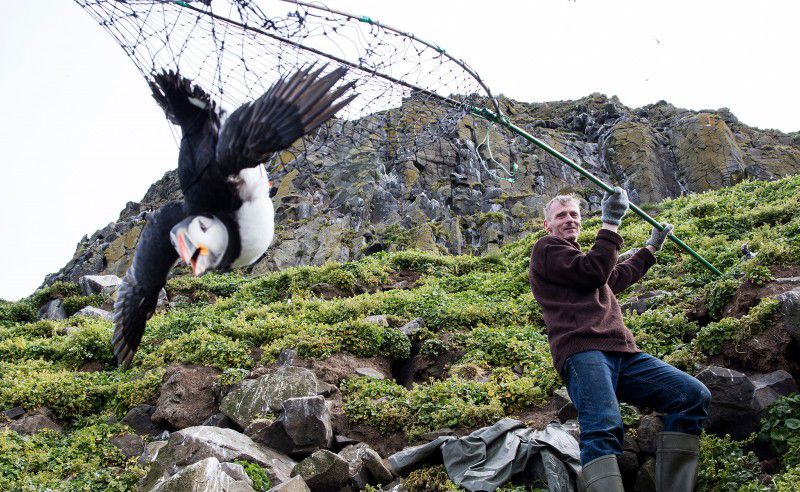
Puffins are among the most popular birds worldwide.
Unfortunately not only with animal friends, but also with hunters. Iceland is home to the largest stock of this species of alken – and mercilessly releases the endangered migratory birds.
Images of the puffin hunt are currently making the rounds, posted on the Facebook page Ban Trophy Hunting. It is all about British foreign fighters who go in the far north on the bird stalk.
But also German hunters seem to enjoy the hunt for the colorful birds: So you can book for example at “Malepartus Hunting Travel” for 1040 € a trip to Iceland – per shot puffin you pay 20 € “shooting fee”!
The hunting for razorbills, fulmars and seals is also offered here to the German speaking public, quite legally! If you reject this form of tourism, the company Malepartus writes your opinion! Here is the link to Iceland Hunt: https://www.malepartus-jagdreisen.com/island.html
The picture shows the screenshot of an Icelandic hunting agency, which advertises big “routes” in the puffin hunt.
Mentally ill murderers proudly pose in front of the murdered victims, and with these pictures, this club advertises travel to different regions of the world.
How primitive and murderous can human nature be!
Instead of evolving and rising to a higher spiritual level, the screw of intellectual and moral development is falling at breakneck speed.
Hunt only satisfies psychopaths.
The fact that there are still “hunters and trophy collectors” is a sign that we are developing faster and faster in the Stone Age than it has lasted to evolve into modern times.
The worst thing is that this animalistic drive is infiltrating more and more industrialists, politicians, celebrities, etc., who feel they are elite.
Hunting is and remains murder, hunters are mentally ill murderers!
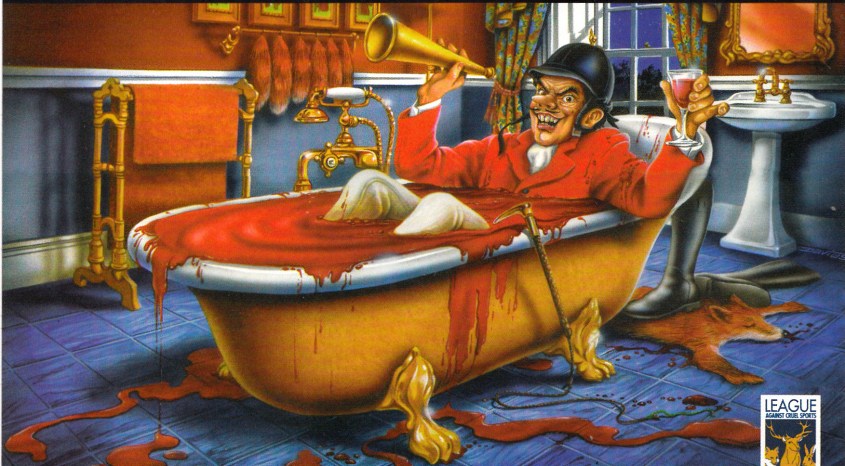
Reproduced from the ‘League Against Cruel Sports (LACS) – England.
Fox hunting is a ‘traditional sport’ in which hunters, usually on horseback, follow a pack of hunting dogs aiming to pick up the scent of a fox, chase it – and kill it. Fox hunting is illegal in England, Scotland and Wales, but evidence suggests that hunts are regularly breaking the law.
Carry on reading for some more fox hunting facts.
IS FOX HUNTING ILLEGAL?
Fox hunting is illegal in England, Scotland and Wales. It is still legal in Northern Ireland.
Fox hunting was banned by the Hunting Act 2004 in England and Wales, and the Protection of Wild Mammals (Scotland) Act 2002 in Scotland. But while these were both welcome and hard-fought pieces of legislation, overwhelming evidence suggests that both are being ignored or exploited by hunts on a regular basis.
Hunts in England and Wales invented the activity of ‘trail’ hunting after the fox hunting ban came in. This claims to be a non-lethal sport where the hunt simply follows a pre-laid trail rather than searching for and chasing a fox. However, years of evidence shows that hunts are using trail hunting as a cover for illegal hunting by claiming to be following a trail but still carrying on and hunting foxes the way they did before the hunting ban.
Hunts in England and Wales also use ‘exemptions’ in the Hunting Act. These were designed to allow certain types of ‘pest’ control or scientific research, but are being exploited by the hunts to give them an excuse to carry on hunting.
In Scotland, an exemption in the law allows foxes to be killed by ‘flushing to guns’, where a pack of hounds is allowed to be used to chase a fox from cover where it can be shot. However, evidence from League investigators shows hunts claiming to be flushing to guns – but without having any guns present in the right place.
MOST PEOPLE WANT TO STOP FOX HUNTING
If you are opposed to hunting, then you are in the majority. More than eight out of ten people are opposed to hunting. This includes more than eight out of ten people in rural areas – which shows that people who truly understand and experience what hunts do want to see it remain illegal.
Hunting is not a town vs country issue, and it is not a ‘class’ issue. More than seven out of 10 Conservative voters want hunting to remain illegal. Hunting is an issue of animal cruelty, nothing else.
Some argue that ‘hunting’ should continue because it’s a grand old British tradition. However, bear baiting and bull baiting were also traditions, and they were rightfully consigned to the history books. Traditions are measured in more than years. They have to reflect the values and attitudes of a society, and the vast majority of the British people oppose hunting with dogs.
IS FOX HUNTING ‘PEST CONTROL’?
Fox hunting is not a credible form of pest control. Hunters claim that they are helping farmers by killing foxes, but this is a senseless argument that most people no longer believe. The League does not believe that there is any requirement for lethal fox control, but even if there was, then hunting is neither a humane nor effective way of doing it.
Any suggestion that fox hunting is about ‘pest control’ can be dismissed very quickly by the fact that hunts have been caught capturing and raising foxes purely so they can then be hunted. In May 2015, a League investigation revealed 16 terrified fox cubs held captive in a barn linked to a fox hunt in Yorkshire. We rescued them, took them to a vet, and sadly one died, but we released the others to safety. We are proud to have protected those foxes.
While the scale of this fox ‘factory’ was shocking, it’s not an isolated case. In December 2015, League Investigators released a fox found locked in a building near to where the Belvoir Hunt was meeting. It is worth mentioning that a few months later, while monitoring the same hunt, our Investigators were brutally attacked, leaving one with a broken neck, which we believe was retaliation for us rescuing this fox.
Watch the story of 16 fox cubs found captive in a barn close to a hunt kennel.
Two young coyote pups were dangled by their feet from a utility pole in front of a home in Vermont’s rural Essex County. The grisly sight took place on a main road and horrified people who passed by. These innocent victims were hunted, killed, and hanged in a smug showcase of vanity.
Brenna Galdenzi of the group Protect our Wildlife was shocked when she saw these poor creatures strung up for a gruesome display. Outraged, she told New England Cable News, “I don’t really think there’s any other way to look at those photos than to be completely appalled.”
Because these pups were hanged on private property, no current laws were violated. Coyotes can be hunted all year in Vermont. In fact, it’s open season on coyotes year-round in most of the US. Even more sickening, most states hold annual coyote-killing contests that are nothing short of “gruesome celebrations of slaughter,” as reported by The Washington Post.
Vermont has recently become the 2nd state to ban these horrific contests, but we need more. Animal advocates are calling for change. However, the Vermont Fish and Wildlife Board recently denied a petition to restrict coyote hunting. We must speak out to save coyotes and other animals from such brutal treatment.
Sign this petition to urge Governor Scott to call for legislation that would protect coyotes and end barbaric practices such as stringing them up like criminals on display.