Category: Hunting

Romania – Nature Does It Better Than Any Human – How Re Introducing 170 Bison Is Capturing CO2 Equivalent To 43,000 Cars – It Is Difficult For Them To Absorb Anything; But Hunters, Try To Absorb The Facts !!

Lets face it, hunters will kill anything regardless of the positives, because they lack the intelligence of reality – or they just lack intelligence !

(DE – Rhineland-Palatinate) Young female Wolf found shot

Image (Pixabay)

And so it begins .. a young female of 9 months was found shot on February 15th, 2025 near the small town of Fiersbach, in the district of Altenkirchen. The autopsy performed confirmed death by pericardial tamponade due to a projectile.

Under the law this is illegal and a crime, and the Upper Nature Conservation Authority SGD Nord has filed a criminal complaint. As usual, this will lead nowhere – the, without a doubt, involved hunters and farmers are a tight-knit group who cover each others’ backs.

Interestingly, only 5 days later, on February 20th, the Rhineland-Nassau Farmers’ and Winegrowers’ Association and the interest group of hunting cooperatives and private hunting owners declared themselves successful with their motion to have the wolf included in the hunting law – meaning that it is henceforth to be regarded as a huntable species.

Together with the EU’s recent decision to weaken the protective status of the wolf this is bad news …

Also, it means, in our view, that one local party produced facts several days ahead of that decision by the state government and the Ministry for Climate Protection, Environment, Energy and Mobility Rhineland-Palatinate.

GERMAN ARTICLES

https://www.swr.de/swraktuell/rheinland-pfalz/koblenz/strafanzeige-illegaler-abschuss-wolf-westerwald-100.html

https://www.blick-aktuell.de/Berichte/Wolf-wird-ins-Jagdrecht-aufgenommen-619242.html?StoryId=625037

(UK) Fox Hunting

(Action below for UK Citizens only)

https://www.league.org.uk/news-and-resources/news/new-figures-show-the-scale-of-fox-hunting-and-the-havoc-being-inflicted-on-rural-communities/

A new set of figures showing the scale of suspected illegal fox hunting and the havoc being inflicted on rural communities by fox hunts has been released today by national animal welfare charity the League Against Cruel Sports.

Nearly 1,600 incidents – consisting of 474 reports relating to suspected illegal hunting, which include 397 reports of foxes being chased, and 1,117 reports of hunt havoc – were recorded in the League’s end of season fox hunting report.

Emma Judd, head of campaigns at the League Against Cruel Sports, said: “These shocking figures underline why the government has announced it will launch a consultation to ban trail hunting later this year, something we are urging them to publish without delay.

“But, more than that, the Hunting Act also needs to be strengthened by removing its loopholes, which are exploited by hunts to avoid prosecution for illegal hunting, and for custodial sentences to be introduced for those who persist in breaking the law.”

The League’s figures reveal that the west of England was a particular fox hunting hot spot, with Gloucestershire, Dorset and Somerset recording the highest figures of all the counties in England and Wales.

Dorset and Somerset’s Blackmore and Sparkford Vale Hunt, four members of which were convicted of illegal hunting this week, was the worst offending hunt in the country – with 61 reports relating to suspected illegal hunting, including 48 reports of foxes being chased and 83 reports of hunt havoc.

The Warwickshire Hunt, a member of which was convicted of illegal hunting last month after the court dismissed his claim that the hunt was following a trail, was also one of the worst offending hunts, with reports of the hunt chasing 20 foxes.

The figures cover the cub hunting season, which began in August, and then the main fox hunting season, from November 2024 to the end of March 2025.

The havoc caused by hunts includes anti-social behaviour and activities inconsistent with trail hunting, the discredited excuse used by hunts since the fox hunting ban in which they claim to claim to follow pre-laid trails.

These activities included hounds being struck on a busy road or railway line where no trail would have been laid, digging up badger setts to get to foxes that have fled underground, trespass – including in people’s private gardens – and causing harm or distress to other animals, such as family pets.

Trail hunting has been described by Temporary Assistant Chief Constable Matt Longman, the national lead on fox hunting crime, as a “smokescreen for illegal fox hunting”. He has also described illegal hunting as “prolific”.

The figures are compiled from the charity’s confidential Animal Crimewatch service and hunt monitors’ reports by the League’s intelligence team, which is staffed by former police officers and civilian analysts.

Emma added: “These figures show the fox hunts have an appalling disregard for the law and are chasing and killing foxes as they did before the ban and inflicting misery on rural communities.

“The time for change is now. New stronger fox hunting laws are needed to consign this barbaric activity to the history books.”

Members of the public can contact the League’s Animal Crimewatch service on 0300 444 1234, email crimewatch@league.org.uk or WhatsApp at 0755 278 8247.

****************************

https://takeaction.league.org.uk/page/160007/action/1

New statistics show the scale of suspected illegal fox hunting which took place over the latest fox hunting season – including hundreds of foxes seen being chased – and how urgent it is for the ban on hunting with dogs to be strengthened.

The government has announced that it will launch a consultation on banning trail hunting later this year. This is welcome and must happen soon.

But if we are to stop illegal hunting for good, the plans must go further and include removing exemptions in the law and introducing prison sentences for those who would break the law.

Please contact your MP and tell them it’s time for change. Ask them to write to the Environment Secretary to urge him to act quickly to close all the loopholes in the hunting ban.

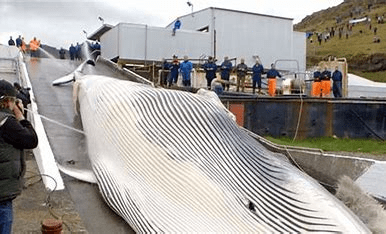
(IT) The She-Wolf who gave life to the founders of Rome … she has returned. And is killed mercilessly …

https://www.theguardian.com/environment/2025/mar/27/italy-wolf-poisoning-conservationists-farmers-laws-livestock-aoe

The referenced incident in 2023 in Italian:

https://www.parcoabruzzo.it/dettaglio.php?id=74362

https://www.ansa.it/toscana/notizie/2017/10/13/lupi-uccisi-e-impiccati-nel-senese_3ea52bcc-985c-4df8-9479-b10f62c1e1d1.html

Medieval Displays of Cruelty in Tuscany

(SVE) Lynx Hunt 2025

So, after already, this year, killing scores of Wolves, Sweden now takes aim at the country’s Lynxes.

This is what it looks like … it’s about “the excitement“, say the hunters. (comment Ed: let not me catch you do it, boys“)

Several Articles on the Issue:

https://www.theguardian.com/environment/2023/mar/02/hundreds-of-lynx-to-be-hunted-in-sweden-following-biggest-ever-wolf-cull

https://swedenherald.com/article/over-80-lynxes-to-be-shot-the-hunt-begins-now

https://bigcatrescue.org/conservation-news/the-silent-slaughter-how-a-few-bloodthirsty-hunters-control-swedens-lynx-conservation-policies

Donald Trump Jr. killing protected “Ruddy Shelduck” in Venice Lagoon

https://www.thepetitionsite.com/829/862/336/

Donald Trump Jr. has once again shown his reckless disregard for wildlife. This time, he has allegedly killed a protected bird in Italy’s Venice lagoon.

A video from his own hunting trip reportedly shows him (https://www.theguardian.com/world/2025/feb/04/donald-trump-jr-accused-of-killing-protected-bird-in-venice-lagoon) posing with the lifeless body of the rare ruddy shelduck bird, clearly flouting Italian and EU laws that criminally prohibit its killing.

We must not allow this flagrant act of wildlife destruction to go unanswered. Sign the petition to demand justice for Italy’s protected wildlife!

The ruddy shelduck is safeguarded under the EU Birds Directive and Italian law. That’s precisely because its population is at risk due to habitat destruction and climate change.

Yet Trump Jr., an avid trophy hunter, treated its death as nothing more than a spectacle. This was not a mistake – this was a crime. Hunting in Italy is strictly regulated, and if Trump Jr. illegally killed this protected species, he must face legal consequences just like anyone else.

No one is above the law – not even the son of a U.S. president. If Italy fails to act, it sends a dangerous message that wealthy foreigners can violate conservation laws with impunity. Italian authorities have already been urged to investigate, and we must amplify that demand.

We call on the Italian government to hold Donald Trump Jr. fully accountable under Italian law! Help us by signing the petition now!

(US) Eyewitness describes Wyoming wolf’s final hours in the Green River Bar

(US) Laughing Wyoming man is branded ‘evil’ over video of him kissing dying wolf after running it over with snowmobile ‘then torturing the animal to death’

https://www.dailymail.co.uk/news/article-13305103/wolf-wyoming-cody-roberts-green-reiver-bar-disturbing-video-kissing.html

BLOOD ON THE SHELVES – ‘Italian’ Tomatoes in UK Supermarkets Likely to Used Chinese Forced Labour – EXPOSING HUMAN RIGHTS ABUSES AS WELL AS ANIMALS !

REGARDS MARK

https://www.bbc.co.uk/news/articles/crezlw4y152o

“Italian” tomato purees sold by several UK supermarkets appear to contain tomatoes grown and picked in China using forced labour, the BBC has found.

Some have “Italian” in their name such as Tesco’s “Italian Tomato Purée”. Others have “Italian” in their description, such as Asda’s double concentrate which says it contains “Puréed Italian grown tomatoes” – and Waitrose’s “Essential Tomato Purée”, describing itself as “Italian tomato puree”.

A total of 17 products, most of them own-brands sold in UK and German retailers, are likely to contain Chinese tomatoes – testing commissioned by the BBC World Service shows.

Most Chinese tomatoes come from the Xinjiang region, where their production is linked to forced labour by Uyghur and other largely Muslim minorities. The UN accuses the Chinese state – which views these minorities as a security risk – of torture and abuse. China denies it forces people to work in the tomato industry and says workers’ rights are protected by law. It says the UN report is based on “disinformation and lies”.

All the supermarkets whose products we tested dispute our findings.

Aerial photo taken on 5 Aug 2020 shows trucks carrying tomatoes waiting in line for sale outside a tomato processing plant in Bohu County, northwest China s Xinjiang Uygur Autonomous Region. The red of the tomatoes contrasts with the brightly coloured blue and turquoise cabs of the trucks.
Image caption,China grows most of its tomatoes in the Xinjiang region

China grows about a third of the world’s tomatoes. The north-western region of Xinjiang has the perfect climate for growing the fruit.

It is also where China began a programme of mass detentions in 2017. Human rights groups allege more than a million Uyghurs have been detained in hundreds of facilities, which China has termed “re-education camps”.

The BBC has spoken to 14 people who say they endured or witnessed forced labour in Xinjiang’s tomato fields over the past 16 years. “[The prison authorities] told us the tomatoes would be exported overseas,” Ahmed (not his real name) said, adding that if the workers did not meet the quotas – as much as 650kg a day – they would be shocked with electric prods.

Mamutjan, a Uyghur teacher who was imprisoned in 2015 for an irregularity in his travel documentation, says he was beaten for failing to meet the high tomato quotas expected of him.

“In a dark prison cell, there were chains hanging from the ceiling. They hung me up there and said ‘Why can’t you finish the job?’ They beat my buttocks really hard, hit me in the ribs. I still have marks.”

Mamutjan, who has dark hair and eyes, looks into the middle distance with tears in his eyes.
Image caption,Mamutjan, who picked tomatoes in detention, says he was hung from the ceiling of his cell as punishment for not picking enough of the fruit

It is hard to verify these accounts, but they are consistent, and echo evidence in a 2022 UN report, external which reported torture and forced labour in detention centres in Xinjiang.

By piecing together shipping data from around the world, the BBC discovered how most Xinjiang tomatoes are transported into Europe – by train through Kazakhstan, Azerbaijan and into Georgia, from where they are shipped onwards to Italy.

Map showing the route most Xinjiang tomatoes take to Italy - beginning in Urumqi and ending in Salerno

One company name repeatedly appeared as a recipient in the data. This was Antonio Petti, part of a group of major tomato-processing firms in Italy. It received more than 36 million kg of tomato paste from the company Xinjiang Guannong and its subsidiaries between 2020 and 2023, the data showed.

The Petti group produces tomato goods under its own name, but also supplies others to supermarkets across Europe who sell them as their own branded products.

Our investigation tested 64 different tomato purees sold in the UK, Germany and the US – comparing them in a lab to samples from China and Italy. They included top Italian brands and supermarket own-brands, and many were produced by Petti.

We asked Source Certain, a world-renowned origin verification firm based in Australia, to investigate whether the origin claims on the purees’ labels were accurate. The company began by building what its CEO Cameron Scadding calls a “fingerprint” which is unique to a country of origin – analysing the trace elements which the tomatoes absorb from local water and rocks.

“The first objective for us was to establish what the underlying trace element profile would look like for China, and [what] a likely profile would look like for Italy. We found they were very distinct,” he said.

Source Certain then compared those country profiles with the 64 tomato purees we wanted to test – the majority of which claimed to contain Italian tomatoes or gave the impression they did – and a few which did not make any origin claim.

The lab results suggested many of these products did indeed contain Italian tomatoes – including all those sold in the US, top Italian brands including Mutti and Napolina, and some German and UK supermarket own-brands, including those sold by Sainsbury’s and Marks & Spencer.

But 17 appeared to contain Chinese tomatoes, 10 of which are made by Petti – the Italian company we found listed repeatedly in international shipping records.

Of those 10 made by Petti, these were for sale in UK supermarkets at the time of testing from April-August 2024:

Graphic showing purees sold by: Asda (Asda Organic Tomato Purée” & Tomato Purée Double Concentrate), Morrisons (Morrisons Tomato Puree),  
Tesco (The Grower’s Harvest” & Italian Tomato Purée) and Waitrose (Essential Waitrose Tomato Purée)

These were for sale in German supermarkets, during our testing period:

Graphic showing purees sold by: Edeka (Tomatenmark), Lidl (Baresa Tomatenmark), Penny (Bio Tomatenmark), and Rewe (Bio Tomatenmark)

In response, all the supermarkets said they took these allegations very seriously and have carried out internal investigations which found no evidence of Chinese tomatoes. Many have also disputed the testing methodology used by our experts. Tesco suspended supply and Rewe immediately withdrew the products. Waitrose, Morrisons, Edeka and Rewe said they had run their own tests, and that the results contradicted ours and did not show the presence of Chinese tomatoes in the products.

But one major retailer has admitted to using Chinese tomatoes. Lidl told us they were in another version of its Baresa Tomatenmark – made by the Italian supplier Giaguaro – sold in Germany last year “for a short time” because of supply problems and that they are investigating this. Giaguaro said all its suppliers respected workers’ rights and it is currently not using Chinese tomatoes in Lidl products. The BBC understands the tomatoes were supplied by the Xinjiang company Cofco Tunhe, which the US sanctioned in December last year for forced labour.

In 2021, one of the Petti group’s factories was raided by the Italian military police on suspicion of fraud – it was reported by the Italian press that Chinese and other foreign tomatoes were passed off as Italian.

But a year after the raid, the case was settled out of court. Petti denied the allegations about Chinese tomatoes and the issue was dropped.

As part of our investigation into Petti, a BBC undercover reporter posed as a businessman wanting to place a large order with the firm. Invited to tour a company factory in Tuscany by Pasquale Petti, the General Manager of Italian Food, part of the Petti group, our reporter asked him if Petti used Chinese tomatoes.

“Yes… In Europe no-one wants Chinese tomatoes. But if for you it’s OK, we will find a way to produce the best price possible, even using Chinese tomatoes,” he said.

A graphic showing: On the left - what Petti told us was its last invoice from Xinjiang Guannong dated October 2020, and on the right - a label on a barrel spotted by our undercover reporter sent from XG to Petti dated August 2023
Image caption,Petti sent us what it said was its last invoice from Xinjiang Guannong (l) dated October 2020, but our undercover reporter spotted a label on a barrel sent to Petti dated August 2023

The reporter’s undercover camera also captured a crucial detail – a dozen blue barrels of tomato paste lined up inside the factory. A label visible on one of them read: “Xinjiang Guannong Tomato Products Co Ltd, prod date 2023-08-20.”

In its response to our investigation, the Petti group told us it had not bought from Xinjiang Guannong since that company was sanctioned by the US for using forced labour in 2020, but did say that it had regularly purchased tomato paste from a Chinese company called Bazhou Red Fruit.

This firm “did not engage in forced labour”, Petti told us. However our investigation has found that Bazhou Red Fruit shares a phone number with Xinjiang Guannong, and other evidence, including shipping data analysis, suggests that Bazhou is its shell company.

Petti added that: “In future we will not import tomato products from China and will enhance our monitoring of suppliers to ensure compliance with human and workers’ rights.”

While the US has introduced strict legislation to ban all Xinjiang exports, Europe and the UK take a softer approach, allowing companies simply to self-regulate to ensure forced labour is not used in supply chains.

This is now set to change in the EU, which has committed to stronger laws, says Chloe Cranston, from the NGO Anti-Slavery International. But she warns this will make it even more likely that the UK will become “a dumping ground” for forced labour products.

Panorama: What’s on Your Supermarket Shelves? The Dark Side of the Tomato Trade

Tomatoes are a store cupboard staple for many of us, but can we trust what we’re eating? The BBC investigates what’s in the tomato purees we buy to make pizzas, pasta sauces and much more besides.

Watch on iPlayerListen on Sounds

Watch now on iPlayer or on BBC One at 20:00 on Monday 2 December (22:40 in Northern Ireland, 23:10 in Wales)

Outside the UK, watch the Eye Investigations documentary Blood on the Shelves on YouTube, external

“The UK Modern Slavery Act, sadly, is utterly not fit for purpose,” she says.

A spokesperson for the UK Department for Business and Trade told us: “We are clear that no company in the UK should have forced labour in its supply chain… We keep our approach to how the UK can best tackle forced labour and environmental harms in supply chains under continual review and work internationally to enhance global labour standards.”

The issue was brought up in the UK Parliament on Monday, where the Parliamentary Under-Secretary of State for Environment, Food and Rural Affairs (Defra) said it was “extremely concerning”.

Baroness Hayman of Ullock told the House of Lords that the department was “looking at labelling as a way to better inform consumers”.

Dario Dongo, journalist and food lawyer, says the findings expose a wider problem – “the true cost of food”.

“So when we see [a] low price we have to question ourselves. What is behind that? What is the true cost of this product? Who is paying for that?”

Related topics

Top stories

More to explore

NOT REALLY ITALIAN THEN

China – YES WE COULD DO WITHOUT IT !

https://www.bbc.co.uk/news/articles/crezlw4y152o#:~:text=Some%20have%20%E2%80%9CItalian,near%20its%20outskirts