Category: Hunting

UK: From badger culls to sewage: Labour under pressure over animal-welfare and farming policies

We have a new Labour government in the UK.

Like all politicians after your vote, they promise the world. Once elected, then we see the reality.


Labour’s animal-welfare and environmental policies may be better than the Tories’ – but they contain disappointing gaps, experts say.

** In a YouGov poll last year, a third of voters said animal welfare was one of their top three issues. **

So new environment secretary Steve Reed will come under pressure from lobby groups – and in some cases, from opposing countryside and farming factions.

The party’s manifesto promised to improve animal welfare, with bans on trail hunting and the import of hunting trophies, an end to puppy smuggling and farming, and to “work towards the phasing out of animal testing”.

It pledged a Labour government would “champion British farming whilst protecting the environment”.

Alongside environmental land-management schemes, the manifesto promised steps to eradicate bovine TB to end the “ineffective” badger cull. And there was a pledge to ban snares.

Mr Reed said Labour would introduce “the biggest boost in animal welfare in a generation”.

Many of the policies have been broadly welcomed by commentators – but already others are facing controversy, including:

Badger cull

Before the election, Labour damned the badger cull as “ineffective”, holding up the prospect of ending it.

But Mr Reed confirmed last week the government would allow existing cull licences to continue until 2026, saying an immediate end to the cull would send “sudden shocks into the system”.

Meanwhile, the Badger Trust and Wild Justice, a campaign group jointly run by Chris Packham, have sent a legal warning letter over Natural England’s decision before the election to grant nine new supplementary cull licences and to authorise 17 existing licences – contrary to the advice of Natural England’s own head of science.

Wild Justice said if the response was unsatisfactory it may seek a judicial review.

Dominic Dyer, ex-head of the Badger Trust and a defeated Lib Dem election candidate, said: “Never in the history of wildlife protection has there been such a betrayal of trust. After 13 years of waiting for a Labour government to stop this cruel madness, they are now planning to kill at least 30,000 more badgers.”

Industrial farming

Labour’s manifesto has been criticised for not mentioning factory farm animal welfare.

Alick Simmons, a former government deputy chief vet, writing for Wild Justice, said: “A pledge to address puppy farming while ignoring industrial pig and poultry farming does not strike me as a balanced manifesto.”

Compassion in World Farming (CiWF) has lobbied all parties for a ban on cages, saying around 8 million farmed animals are kept in them each year in the UK. “The previous government said they’d prepared consultations on this issue, and we want to see them published,” it said.

 The Liberal Democrats had pledged to ban cages for hens, while Labour did not.

CiWF also called for method-of-production food labelling, following a consultation earlier this year.

The Lib Dems were praised for a promise to crack down on antibiotic misuse for farm animals, and the new government will face calls to do so.

Wildlife and nature recovery

Green Party former co-leader Caroline Lucas said she was shocked by the lack of manifesto detail on restoring the natural world.

“As the bare minimum, where’s the increased budget for arms-length bodies like Natural England and the Environment Agency?” she asked. “Or the funding to enable landowners to return land to nature? Or the pay rise to help farmers shift to nature-friendly farming and tackle our broken agriculture system which is driving biodiversity loss?”

But environmental campaigners welcomed a pledge in the party’s pre-manifesto nature policies stating: “We will help coordinate nature’s recovery with bodies responsible for public land and major landowners.”

Guy Shrubsole said in a blog: “This may sound anodyne, but in fact could be one of the most significant policies – the first inklings of a Public Nature Estate: an idea that Wildlife and Countryside Link [a coalition of 82 organisations] have been calling for.”

Forest ranger Samuel Lindsay added: “Although the talk of habitat expansion is positive, this is a very vague statement. There are no clear targets or areas identified for this to be carried out.”

The manifesto promised to plant millions of trees, create new woodlands and expand wetlands, peat bogs and forests.

Mr Simmons said: “Sure, let’s get rid of snares but what about the numerous unaccountable and untested methods of killing wildlife such as Larsen traps, mole traps, Fenn traps and poisons that are on free sale for use by anyone?”

Trail hunting

Opponents and monitors say hunts break the law by fox hunting while claiming to be trail hunting – that is, following a scent without chasing wild animals.

The claims were lent weight by a hunt chief advising others to create a “smokescreen” by laying several trails. His words, during a leaked private Zoom meeting, were interpreted as an admission that foxhunting took place.

Mr Reed said in February that a Labour government would ban trail hunting in its first term, and the manifesto included a promise to ban trail hunting – but it did not promise to close loopholes in the Hunting Act 2004, which bans hunting wild animals with dogs.

A former head of the League Against Cruel Sports, Andy Knott, has cast doubt on achieving a ban through the Hunting Act.

“People have seen the images of packs of hounds getting into private back gardenskilling cats, ripping flocks apart. There’s not a majority in any part of the country that wants to see that continue,” Mr Reed told The Times before the election.

But Oliver Hughes, of governing body the British Hound Sports Association, told Horse & Hound that about 12,000 days of trail hunting took place in England and Wales each year, “with the vast majority taking place without any problems”.

Sewage scandal

Ms Lucas said: “Although Labour’s manifesto commits to tackling the sewage scandal, it fails to get to the heart of the matter – the unmitigated disaster that is our privatised water system. Water is a public good, so the Green Party would bring it back into public ownership.”

Mr Shrubsole criticised the plans for not mentioning agricultural river pollution.

“Farming’s significant contribution to the state of our rivers seems to be a taboo subject for nearly all parties competing in this election – with the notable exception of the Green Party,” he said.

Trade deals

Mr Dyer said a government priority should be suspending the UK’s £970m trade deal with the Faroe Islands to force the authorities to end the mass slaughter of whales and dolphins.

Ciwf said animal welfare should be protected in trade deals by refusing imports of food produced in ways that are illegal in the UK. Labour has said it will do this.

British farmers complained that deals for cheap food imports under the Conservatives undermined their standards.

A spokesperson for the Department for Environment, Food and Rural Affairs said: “The government set out its plans in the manifesto to introduce the most ambitious boost in animal-welfare rights in a generation.

“This includes banning trail hunting and the importing of hunting trophies, while also ending the badger cull, puppy smuggling and farming, and the use of snare traps.”

Regards Mark

https://www.msn.com/en-gb/news/uknews/from-badger-culls-to-sewage-labour-under-pressure-over-animal-welfare-and-farming-policies/ar-BB1pZCaQ?ocid=BingNewsSerp

UK: Some Positive Actions / News.

Dear Friend,

We are delighted to welcome the Pet Abduction Act 2024. Under this new law – which was a Private Members’ Bill sponsored by our Patron Anna Firth and Lord Black of Brentwood and supported by the Government – anyone found guilty of stealing a pet in England or Northern Ireland will face up to five years in prison, a fine, or both.

The new law recognises that cats and dogs are not inanimate objects but sentient beings capable of experiencing distress and other emotional trauma when they are stolen from their owners or keepers.

Evidence from the Pet Theft Taskforce suggests around 2,000 dog and over 400 cat theft crimes were reported to police in 2020, causing considerable distress for owners and their pets alike. With an estimated 28% of UK adults owning a dog and 24% owning a cat, pet theft is a major concern to the public.           

 <https://mcusercontent.com/39260baecf6044e1f26ef4f9d/images/908aee09-9ac7-a6c0-ca21-11ed0c0985b3.jpeg>          

 Anna Firth, Lord Black

Support for the Act builds upon wider action to protect pets from theft, including making the microchipping of cats compulsory from 10 June 2024. This makes it easier for lost, stray or stolen pets to be reunited with their owners and returned home safely.

Anna Firth commented: “As a nation of pet-lovers, it is vital that the law recognises the emotional impact the theft of a pet can have and brings the perpetrators to justice in a way that correctly reflects this. Pets are not merely items in our lives, they are sentient beings, and it is not right that the law does not distinguish this. My thanks to Lord Black, Debbie Matthews, Dr Dan Allen, Pet Theft Alliance, Tilly’s Angels, the Conservative Animal Welfare Foundation and Cats Protection, the Dogs Trust, Battersea Cats and Dogs Home, Refuge and Pet Theft Awareness, all of whom have provided invaluable insight on my Bill.”

Lord Black of Brentwood commented; “I am delighted that the Pet Abduction Act is now on the statute book.  We have seen a great deal of important animal welfare legislation in this Parliament – and it seems fitting that it should end with this vital step forward. It will make a real difference to millions of families, like my own, who love their pets. I am so grateful to the Conservative Animal Welfare Foundation, as well as all the other charities in the sector, who have given such strong support. This is a victory for all of you.”

Lorraine Platt, Co-Founder of the Conservative Animal Welfare Foundation, commented: “We are delighted our Patron Anna Firth’s Pet Abduction Act which will tackle the growing issue of pet theft has become law.  This Act delivers a key component of Defra’s Action Plan for Animal Welfare (2021) and address an issue close to the hearts of the British public. Our pets are members of the family, often providing much-needed companionship and stability throughout our lives. That the theft of a treasured pet was treated no more severely under the law than that of a mobile phone was simply unacceptable, and we look forward to seeing this new legislation provide an effective deterrent against such offences. We would like to thank Anna Firth and Lord Black for the hard work and time they have spent on this important new law and our Prime Minister Rishi Sunak and Secretary of State Steve Barclay for their strong support for the new legislation to protect animals.”

Live Exports Ban

We are thrilled that the Animal Welfare( Livestock Exports) Act is now law after receiving Royal Assent- it has been an important time for animal welfare! This new historical law bans exports of live cattle, sheep, pigs, goats and horses for slaughter and fattening abroad and is the first in Europe to do so.

These two new laws follow other notable Conservative Party achievements for animals since 2019  and include; the Animal Welfare (Sentience Act) including crustaceans and cephalopods, the Animal Welfare (Sentencing Act), the Glue Traps (Offences) Act, the Animals (Penalty Notices) Act, The Ivory Act, the Animal Welfare (Service Animals Act), the Animals (Penalty Notices) Act 2019, a ban on keeping primates as pets, a ban on third-party puppy and kitten sales, a ban on wild animals travelling in circuses, a ban on microbeads to protect marine life, mandatory CCTV in slaughterhouses, mandatory microchipping of cats, the Animals (Low-Welfare Activities Abroad) Act, and the Shark Fins Act.

 <https://mcusercontent.com/39260baecf6044e1f26ef4f9d/images/df2d47e7-6048-a4e6-ce62-d2baf7a8a3ba.jpg>            

Politicians and CAWF team:( left to right top to bottom). Giles Watling, Damian Green, Rebecca Harris, Sir Roger Gale, Louie French, Mark Francois, Kevin Foster, Theresa Villiers, Sir Roger Gale, Selaine Saxby, Sir Roger  Gale, Louie French, Dame Tracey Crouch, Theresa Villiers, Rebecca Harris, Kevin Foster, Peter Gibson, Paul Howell,  Chris Platt( CAWF) Baroness Hodgson, Baroness Fookes, Lorraine Platt and Jenny Lewis( CAWF) Theresa Villiers, Chris Platt( CAWF) Rebecca Harris, George Eustice, Lorraine Platt, Chris Platt and Dame Andrea Jenkyns          

The General Election

Now, with the 2024 General Election underway, it is crucial the Conservative Party continues to build on the positive momentum gained thus far in its upcoming manifesto. We like to call ourselves a nation of animal lovers, and we know that animal welfare is an important focus for the public. It is essential that the Conservative manifesto contains pledges on issues that the voting public care about. We know that there is increasing concern on the lives of billions of farm animals on intensive industrial farms. Our campaigns focus on ending cruel systems where farm animals are confined to small cages and crates, unable to exhibit any of their natural behaviours or see natural daylight or even feel a blade of grass under their feet for their entire lives.            

 <https://conservativeanimalwelfarefoundation.us12.list-manage.com/track/click?u=39260baecf6044e1f26ef4f9d&id=7389e84bb8&e=57f5095601>

Our  Conservative Animal Welfare Foundation 2024 Manifesto for Animals <https://conservativeanimalwelfarefoundation.us12.list-manage.com/track/click?u=39260baecf6044e1f26ef4f9d&id=fb4815b4c4&e=57f5095601> outlines the following primary asks, which are critical for the advancement of animal welfare.

1.         Commit to a fixed and fair phase out period of the use of farrowing crates for sows and gilts in the UK with ongoing transitional support for farmers during the phase out period.

2.         Commit to a fixed and fair phase out period for enriched cages for laying hens in the UK with ongoing transitional support for farmers during the phase out period.

3.         Introduce mandatory animal welfare labelling on all meat products for human consumption.

4.         Legislate to ensure that farmed fish have the equivalent legal protection to that of terrestrial farmed animals, including at time of slaughter.

Additionally, our Manifesto includes asks to ban the commercial importation of foie gras, ban fur imports, trophy hunting imports, prohibit the remote sale and shipping of live animals for food to non-commercial customers, ban the importation of cats or dogs that have been mutilated in ways that are illegal in the UK (such as tail docking, ear cropping or de-clawing), ban the use of snares and introduce a close season for brown hares in England and Wales to align with existing legislation in Scotland and Northern Ireland. It’s important to enshrine core standards for animal welfare in all future trade agreements, in order to safeguard the UK’s existing animal welfare standards and to protect British farmers.

We know that animals matter to the public and we hope that our proposals are considered for the General Election Manifesto.

Thank you for your kind support

Best wishes

Lorraine, Chris and the Team

Regards Mark

“The greatness of a nation and its moral progress can be judged by the way its animals are treated.”

― Mahatma Gandhi

EU: European Elections 6-9 June 2024: 500 Candidates Take The Pledge For Animals.

16 May 2024

Press Release

More than 500 candidate MEPs have pledged to do more to protect animals at EU level should they be elected to the European Parliament in three weeks.

The Vote for Animals campaign, run by Eurogroup for Animals and its members, asks candidates to take a pledge committing to do more for better protection of all animals at EU level.

The pledge addresses live animal transport, non-animal science, welfare of aquatic species, the conservation of wild animals, imports of animal-based products, and welfare of companion animals. It also addresses a future fur farming ban, the importance of sustainable food production and an ask for an EU commissioner for animal welfare.

Candidates spanning the entire political spectrum across 26 Member States have made the commitment. So far, Finland, Italy and France have the largest number of candidates supporting the pledge.

EU citizens have the opportunity to ask their candidates to sign the pledge, by sending a message through a dedicated platform, which is available in all EU languages. So far, over 9,000 citizens have sent a message to their candidates.

An estimated 400 million EU citizens are eligible to vote in the European elections set to take place between 6-9 June. The demand for improved EU legislation on animal welfare has been resoundingly voiced: 91% of Europeans believe that safeguarding the welfare of farmed animals is crucial, while 84% feel that current protection measures are not enough.

Taking the pledge for the animals is a commitment that in the next legislature, should I be elected, I will continue to push for better EU legislation to protect all animals across their lifespan. There is a critical need for action to phase out animals in cages, as per citizens’ demands, and a push for more ambitious legislation for animals during transport. The promised revision of the animal welfare legislation should be a top priority for the next Commission.

Niels Fuglsang, candidate MEP (Socialdemokraterne, Denmark) and Vice-President of the Intergroup for Animal Welfare.

The majority of EU citizens want animals to be better protected in Europe. To achieve this, we need more MEPs who want the EU to do more. Voting for candidates who have signed the Vote For Animals pledge is the best way to advance animal welfare in the EU. If I am re-elected, I pledge to continue to be the voice of animals and their defender in the European Parliament.

Caroline Roose, candidate MEP (Europe Écologie, France) and Vice-President of the Intergroup for Animal Welfare.

It is great to see so many candidates take a pledge for the animals. It is important that the next European Parliament represents citizens’ demands for better protection of all animal species, and MEPs can help to ensure that this topic stays on top of the agenda for the next term.

Reineke Hameleers, CEO, Eurogroup for Animals.

Good stuff !

Regards Mark

England: For Too Many Years The Hunts (Despite A Legislative ‘Ban’) Have Continued To Abuse Wildlife. Time For Change … Support the LACS.

…… and with a General Election just months, the League Against Cruel Sports (LACS); and all of us, want to see all the loopholes which the hunts are using under the guise of ‘Trail Hunting’ hut down for good.

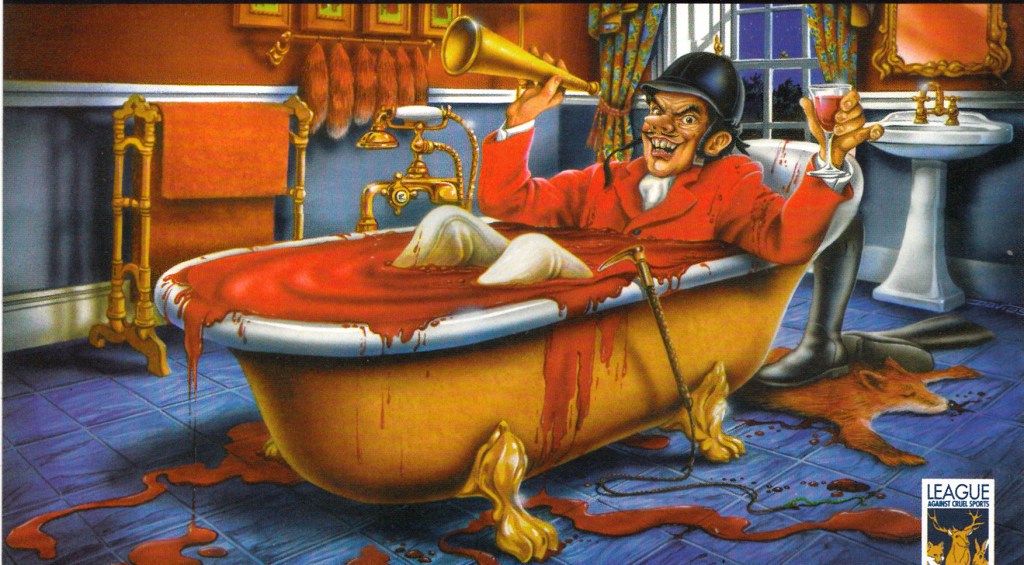
Fox hunts have been using the excuse that they are ‘trail hunting’, a deception invented by them after the legislation to ban hunting was introduced, to fool the police, courts, politicians and the public about what they are really up to; which is targeting and killing foxes.

Last year, the government in Scotland, which has different legislation on fox hunting to England and Wales; banned trail hunting and toughened its hunting laws.

In 2023, Chief Superintendent Matt Longman, England’s most senior police figure on fox hunting crime, highlighted that hunts are claiming to be trail hunting, when in reality, they are using the practice as a ‘smokescreen’ for the continued illegal persecution of animals. He described illegal fox hunting as “prolific” and said the law needed “revisiting”.

With a General Election just round the corner now, the LACS will be pressing all the main political parties to include a manifesto commitment (ie what they will do if elected) to indicate their policy position to strengthen the Hunting Act and BAN trail hunting in England and Wales.

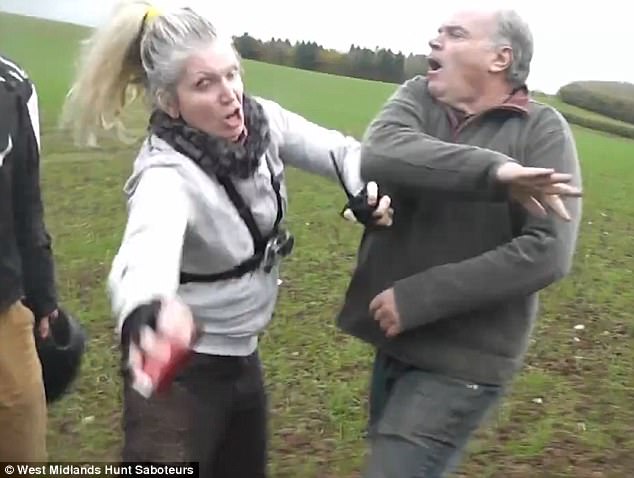
The LACS have already had backing from the Time for Change Coalition Against Hunting which currently consists of 35 animal welfare charities. People in the countryside are fed up with fox hunts and their anti-social behaviour, in which they trespass on people’s property, hunt over roads and railway lines, and intimidate Sabs brave enough to stand up to them.

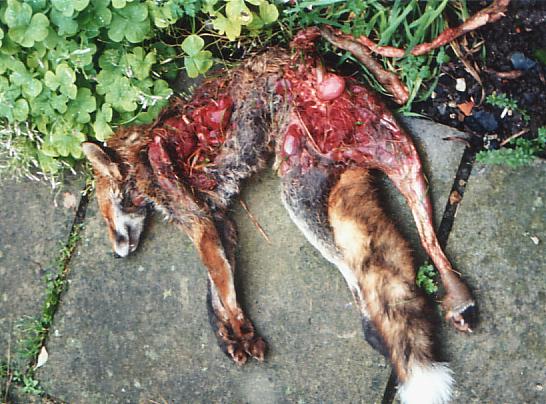
In January, a helper at an animal sanctuary near Loughborough, watched in horror as the Quorn Hunt rampaged through neighbouring fields with several foxes; which it had nursed back to health and released locally, were sent running for their lives. At one point, the hounds gathered in a crazed scrum, yelping frenziedly, indicating that they had caught one of the foxes and were tearing it apart.

This is the tragic reality and it is now time for change.

Above photo – Mark (WAV) and East Kent Hunt Sabs.

Please visit league.org.uk/strengthen-hunting-act to see more.

For a great day out to see and help wildlife and the LACS, please support ‘Baronfest’ on Saturday 13th July 2024. 10am – 6pm; Tickets include all materials for issues, lunch and refreshments. Hurry, space is limited !

The LACS is 100 years old this year, 2024.

Cheers ! -for the foxes; Mark / LACS

Stop the Bloodbath – Do the right thing politicians. Your future depends on it !!!

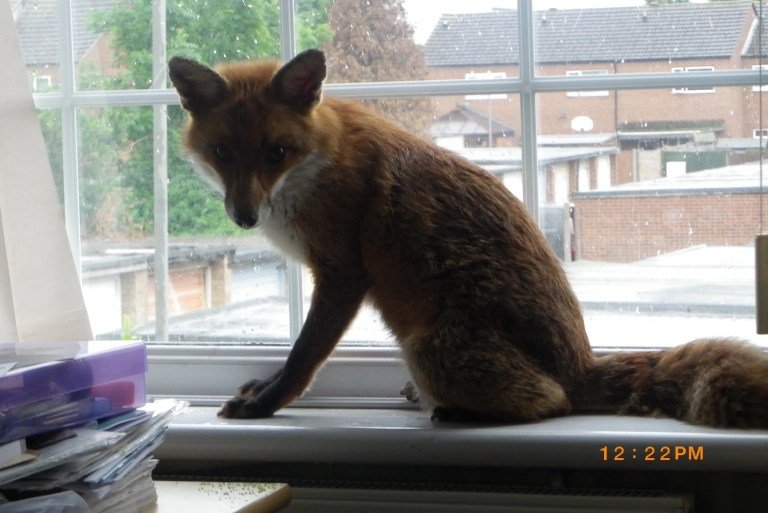
At the old office I used to get a wild fox come in, climb the stairs and sit with me while I worked. After a while, he would go downstairs, through the door and return to the wild. My friend the fox.

I love taking photos of foxes: All following photos – Mark (WAV).

EU: Survey: Tougher Regulation of Hunting Demanded by Rural Communities.

2 May 2024

Inhabitants of rural areas strongly oppose cruel and unjustified hunting and only 12% feel well-represented by hunting interest groups, a new survey shows. With rural inhabitants most affected by hunting policies, it’s time to change the rules.

The survey which focused on large carnivores like wolves, highlighted the broad support of rural communities towards their protection. 

Rural communities show a similar progressive approach when it comes to hunting of other species. 67% prioritise the protection of biodiversity and animal welfare over the maintaining of hunting traditions. While hunting is currently regulated differently in each Member State, 65 % of respondents called for an harmonisation of hunting practices throughout the EU, based on scientific knowledge and in application of EU legislation, especially regarding the protection of biodiversity.

7 out of 10 respondents believe that each wild animal is a sentient being that needs to be protected, and want effective non-lethal and humane wildlife management methods to be researched and implemented. 

A larger group (75%) are demanding a ban of hunting methods causing avoidable suffering to wild animals (underground hunting with dogs, glue-trap hunting, etc). This approach is largely supported by recreational hunters (68%) themselves showing broad support for policy change. 

64% of respondents want a limitation of hunting to cases where independent scientific assessments conclude that the species poses a risk to the environment or public health, clearly calling for the end of leisure hunting. Besides its impact on animals, hunting also raises public safety concerns as only 31% of respondents feel rather safe going out during hunting season and a larger group (39%) avoids going out altogether.

The survey highlights the negative impact of hunting practices on the livelihoods of EU citizens living in rural areas, and demonstrates the need for the EU to promote humane practices in the management of wild animals and finally issue clear guidelines for an efficient regulation of hunting.

This survey clearly shows that the hunting lobby does not represent the interests of rural communities. Rural citizens across the EU demand change, they want protection for themselves and for wild animals victims of cruel, unnecessary and unjustified culling, whether it concerns wolves or other species. It is time for the EU to seriously look into this and promote solutions.

Léa Badoz, Wildlife Programme Officer, Eurogroup for Animals

Hunting survey report

BROWSE TO THIS PUBLICATION

10,000 inhabitants of rural areas in Germany, France, Spain, Netherlands, Italy, Belgium, Poland, Denmark, Sweden and Romania participated in the survey, which was conducted by Savanta in November 2023. The survey was commissioned by Eurogroup for Animals, Humane Society International/Europe, Fondation Brigitte Bardot, Dierenbescherming, Djurskyddet Sverige, Deutscher Tierschutzbund, World Animal Protection Denmark, World Animal Protection Netherlands, World Animal Protection Sweden and LAV.

USA: Support A Ban On Coyote / Wolf ‘Whacking’. Action To Take Below.

Click – Watch on YouTube

Recent Posts

https://worldanimalsvoice.com/2024/04/18/usa-boycott-wyoming-the-call-after-100000-signature-petition-re-wild-wolf-torture-video/

Dear Mark, 

To you, and to the average citizen, running over coyotes and wolves with a snowmobile sounds inhumane, barbaric, and just plain cruel. But unfortunately, this practice is legal in Wyoming and Idaho (wolves and coyotes), and Montana (just coyotes), where wildlife policy is stacked against wild carnivores.

If wolves in the Northern Rocky Mountains received the federal Endangered Species Act protections they deserve, Cody Roberts wouldn’t have felt emboldened to commit the heinous act of running over a yearling wolf before further torturing her in a bar and finally killing her. 

Unfortunately, even if wolves are relisted to the Endangered Species Act (which is essential to prevent decades of conservation work from being undone, and why we’re suing the U.S. Fish & Wildlife Service), it would still be legal to run over coyotes with snowmobiles and other motorized vehicles. Therefore, we’ve joined the Center for Biological Diversity and other groups in calling on the U.S. Forest Service and Bureau of Land Management to ban the use of snowmobiles or other vehicles to run down wolves and other wildlife. 

This practice is utterly barbaric, and one would think that banning it would be straightforward. However, both Wyoming and Montana had the opportunity to prohibit this practice in 2019 and FAILED to do so.

It’s high time to hold wildlife policymakers accountable. They are failing wildlife. They are failing all of us. Thank you for standing with us to show Wyoming, and the rest of the country, that we will not allow wolves, coyotes, or any wild animals to be legally tortured.   Last week, the Wyoming Fish and Game Commission convened and heard impassioned testimony from wildlife advocates across the country regarding the disturbing Cody Roberts’ incident.

Many individuals urged the Commission to support a ban of “whacking.”   We MUST continue this call to end egregious practices like “whacking” and create a more compassionate world where wolves are safe from all persecution and inhumane practices and policies.    Stay loud and join us in demanding justice and stronger protections for wolves, coyotes, and all wild carnivores. Here’s how you can create a safer future for wild lives: 

If you haven’t already, sign this change.org petition calling on Sublette County officials to bring more severe charges against Cody Roberts.

Contact Wyoming State officials urging harsher punishments for Cody Roberts and strengthened protections for Wyoming wolves and coyotes—including banning “whacking.” Please remember to be polite and respectful in your comment. Call 307-777-7434 for Governor Mark Gordon Call 307-777-4600 for WY Game & Fish Department Director Brian Nesvick  

Sample script:

olf & coyote “whacking.” The use of snowmobiles and other motorized vehicles to chase and down and kill wolves and coyotes goes far beyond practices of fair-chase and is purely cruel and inhuman; it must end. Please take action to ensure this never happens again. Thank you. Support our efforts to sue USFWS over their negligence in not relisting Northern Rocky Mountain wolves to the Endangered Species Act and our ongoing litigation in Montana in defense of wolves by donating today or monthly.  It’s high time to hold wildlife policymakers accountable. They are failing wildlife. They are failing all of us. Thank you for standing with us to show Wyoming, and the rest of the country, that we will not allow wolves, coyotes, or any wild animals to be legally tortured.

For The Wild Ones,     Carnivore Conservation Director

USA: ‘Boycott Wyoming’ – The Call After 100,000 Signature Petition Re Wild Wolf Torture Video.

Roberts’ (above) social media accounts show how he is an avid hunter who frequently hunts wild animals alongside his kids. – What a way to raise kids !!!

Upset animal lovers descend on Wyoming over wild wolf torture video – claiming the footage has left them with ‘nightmares’ and calling for a boycott of the state

Latest:

Upset animal lovers descend on Wyoming over wild wolf torture video – claiming the footage has left them with ‘nightmares’ and calling for a boycott of the state | Daily Mail Online

https://www.dailymail.co.uk/news/article-13305103/wolf-wyoming-cody-roberts-green-reiver-bar-disturbing-video-kissing.html

Old post on this issue:

USA: JUSTICE FOR WOLF RUN DOWN BY SNOWMOBILE, TORTURED, AND KILLED AT WYOMING BAR – Petition. – World Animals Voice

Video filmed by witnesses showed him kissing the barely conscious wolf and laughing at its distress as it lay on the floor of the Green River Bar

Roberts dragged the wolf into the bar over protests from the owner, and left it there for hours while he drank.

He was a jokester about it, while it was just sitting there bleeding to death… He was drunk and rambling mostly. A guy who thinks highly of himself.

The owner and many of the other patrons in the bar were unhappy with the situation, but no one challenged Roberts and the bar staff didn’t tell him to leave.

Germany: Another Wolf Run Over At The Schluchsee: Animal Was Pregnant. WE SAY It Was Shot By Hunters And The Body Thrown Onto The Road To Be Hit By A Car.

The only female wolf in Baden-Württemberg was probably run over by a car near Schluchsee on Wednesday. Exactly where a wolf pup was fatally captured in December.

WAV Comment – Does not look that ‘damaged’ if it was ‘run over’ by a car. Where is the driver ? – A hunters bullet does not cause massive damage !

Wounds and traces of blood in the fur: A photo shows the dead wolf that was run over on the B500 between the Windgfällweiher and the municipality of Schluchsee (Breisgau-Hochschwarzwald district).

It is not the first dead wolf in the Black Forest. Back in December last year, there was a collision between a car and an eight-month-old wolf pup.

WAV Comment – “Exactly where a wolf pup was fatally captured in December”  We have contacts who reside in this very area.  Hunters are not supposed to kill wolves; but … many of them ignore the rules – it is exactly the same with the protected Lynx.   The body of a shot (hunted) animal will be thrown onto the road, without failure, after the bullet has been removed, and then left to be run over by a vehicle to make the incident look like a road kill, thus making it all look like a terrible accident – being hit by a car, when in fact the animal was actually shot by hunters.

Female killed in accident: wolf was pregnant

According to police, the collision occurred early Wednesday morning. Around seven o’clock, the animal is said to have crossed the road and was fatally hit by a motorist. The Forest Research Institute (FVA) in Freiburg has now seized the animal. Micha Herdtfelder, head of the Wildlife Institute at the FVA, has confirmed to SWR that it is a female wolf – most likely the female from the wolf pack at Schluchsee. In addition, the animal was pregnant.

The carcass is taken to the Institute for Zoo and Wildlife Research in Berlin for further examination. The aim is to obtain nationwide uniform data on the health and nutritional status of killed wolves.

Ministry of the Environment: Formation of packs in BW off the table for the time being

After the only female wolf in Baden-Württemberg was run over, the rebuilding of a pack may have moved into the distant future. “The formation of packs is now off the table in Baden-Württemberg,” said Claudia Hailfinger, press spokeswoman for the Ministry of the Environment.

As the only reproducing female wolf, the female wolf played an important role in the return of the once native predator. After their presumed death, only male wolves are now settled in Baden-Württemberg. According to the Ministry of the Environment, offspring depend on immigrant ferries. It is unclear whether this will happen next year or again in ten years.

Puppy run over a few months ago

Already last December, the only wolf pup in Baden-Württemberg had died on the B500 near Schluchsee. Now it is very likely that his mother died there as well. The puppy was about eight months old and weighed 20 kilograms.

He also had mange, a contagious skin disease. The puppy had been detected in July 2023 by photo trap of the Forest Research Institute (FVA). It was the first known wolf offspring in about 150 years. Since 1866, the wolf was considered extinct in Baden-Württemberg.

In 2015, the first wolf was detected in the country, the animal came from Switzerland. It was run over in the same year on the A5 in Lahr (Ortenaukreis). It was not until 2017 that the first male resettled permanently in the Black Forest.

In 2023, the first pack formed in the municipality of Schluchsee. However, Baden-Württemberg is still a long way from a stable population. Nevertheless, the number of specimens is increasing.

Another sedentary wolf detected in the northern Black Forest

In mid-February, a male wolf was genetically identified in the northern Black Forest. According to the Ministry of the Environment, the animal originally comes from a pack in the Gutenbrunn area of Lower Austria. The male dog is probably three or four years old. According to the ministry, his new “Hornisgrinde Territory” in the northern Black Forest is located in the already existing Wolf Prevention Black Forest funding area. The area encompasses the entire natural area of the Black Forest. It has a size of about 8,800 square kilometers.

So far, comparatively few specimens live in the country. By way of comparison, in the 2022/2023 monitoring year, a total of 184 wolf packs, 47 pairs of wolves and 22 sedentary lone wolves were counted nationwide by the Federal Agency for Nature Conservation (BfN) and the Federal Documentation and Advice Centre on the Subject of Wolves (DBBW). Nationwide, the wolf focus is also more likely to be in Lower Saxony and Brandenburg as well as in Saxony, Saxony-Anhalt and Mecklenburg-Western Pomerania. Nevertheless, incidents on the pastures always cause a stir in the southwest.