To you, and to the average citizen, running over coyotes and wolves with a snowmobile sounds inhumane, barbaric, and just plain cruel. But unfortunately, this practice is legal in Wyoming and Idaho (wolves and coyotes), and Montana (just coyotes), where wildlife policy is stacked against wild carnivores.
If wolves in the Northern Rocky Mountains received the federal Endangered Species Act protections they deserve, Cody Roberts wouldn’t have felt emboldened to commit the heinous act of running over a yearling wolf before further torturing her in a bar and finally killing her.
Unfortunately, even if wolves are relisted to the Endangered Species Act (which is essential to prevent decades of conservation work from being undone, and why we’re suing the U.S. Fish & Wildlife Service), it would still be legal to run over coyotes with snowmobiles and other motorized vehicles. Therefore, we’ve joined the Center for Biological Diversity and other groups in calling on the U.S. Forest Service and Bureau of Land Management to ban the use of snowmobiles or other vehicles to run down wolves and other wildlife.
This practice is utterly barbaric, and one would think that banning it would be straightforward. However, both Wyoming and Montana had the opportunity to prohibit this practice in 2019 and FAILED to do so.
It’s high time to hold wildlife policymakers accountable. They are failing wildlife. They are failing all of us. Thank you for standing with us to show Wyoming, and the rest of the country, that we will not allow wolves, coyotes, or any wild animals to be legally tortured. Last week, the Wyoming Fish and Game Commission convened and heard impassioned testimony from wildlife advocates across the country regarding the disturbing Cody Roberts’ incident.
Many individuals urged the Commission to support a ban of “whacking.” We MUST continue this call to end egregious practices like “whacking” and create a more compassionate world where wolves are safe from all persecution and inhumane practices and policies. Stay loud and join us in demanding justice and stronger protections for wolves, coyotes, and all wild carnivores. Here’s how you can create a safer future for wild lives:
If you haven’t already, sign this change.org petition calling on Sublette County officials to bring more severe charges against Cody Roberts.
Contact Wyoming State officials urging harsher punishments for Cody Roberts and strengthened protections for Wyoming wolves and coyotes—including banning “whacking.” Please remember to be polite and respectful in your comment. Call 307-777-7434 for Governor Mark Gordon Call 307-777-4600 for WY Game & Fish Department Director Brian Nesvick
Sample script:
olf & coyote “whacking.” The use of snowmobiles and other motorized vehicles to chase and down and kill wolves and coyotes goes far beyond practices of fair-chase and is purely cruel and inhuman; it must end. Please take action to ensure this never happens again. Thank you. Support our efforts to sue USFWS over their negligence in not relisting Northern Rocky Mountain wolves to the Endangered Species Act and our ongoing litigation in Montana in defense of wolves by donating today or monthly. It’s high time to hold wildlife policymakers accountable. They are failing wildlife. They are failing all of us. Thank you for standing with us to show Wyoming, and the rest of the country, that we will not allow wolves, coyotes, or any wild animals to be legally tortured.
For The Wild Ones, Carnivore Conservation Director
Roberts’ (above) social media accounts show how he is an avid hunter who frequently hunts wild animals alongside his kids. – What a way to raise kids !!!
Upset animal lovers descend on Wyoming over wild wolf torture video – claiming the footage has left them with ‘nightmares’ and calling for a boycott of the state
Video filmed by witnesses showed him kissing the barely conscious wolf and laughing at its distress as it lay on the floor of the Green River Bar
Roberts dragged the wolf into the bar over protests from the owner, and left it there for hours while he drank.
‘He was a jokester about it, while it was just sitting there bleeding to death… He was drunk and rambling mostly. A guy who thinks highly of himself.‘
The owner and many of the other patrons in the bar were unhappy with the situation, but no one challenged Roberts and the bar staff didn’t tell him to leave.
The only female wolf in Baden-Württemberg was probably run over by a car near Schluchsee on Wednesday. Exactly where a wolf pup was fatally captured in December.
WAV Comment – Does not look that ‘damaged’ if it was ‘run over’ by a car. Where is the driver ? – A hunters bullet does not cause massive damage !
Wounds and traces of blood in the fur: A photo shows the dead wolf that was run over on the B500 between the Windgfällweiher and the municipality of Schluchsee (Breisgau-Hochschwarzwald district).
It is not the first dead wolf in the Black Forest. Back in December last year, there was a collision between a car and an eight-month-old wolf pup.
WAV Comment – “Exactly where a wolf pup was fatally captured in December” We have contacts who reside in this very area. Hunters are not supposed to kill wolves; but … many of them ignore the rules – it is exactly the same with the protected Lynx. The body of a shot (hunted) animal will be thrown onto the road, without failure, after the bullet has been removed, and then left to be run over by a vehicle to make the incident look like a road kill, thus making it all look like a terrible accident – being hit by a car, when in fact the animal was actually shot by hunters.
Female killed in accident: wolf was pregnant
According to police, the collision occurred early Wednesday morning. Around seven o’clock, the animal is said to have crossed the road and was fatally hit by a motorist. The Forest Research Institute (FVA) in Freiburg has now seized the animal. Micha Herdtfelder, head of the Wildlife Institute at the FVA, has confirmed to SWR that it is a female wolf – most likely the female from the wolf pack at Schluchsee. In addition, the animal was pregnant.
The carcass is taken to the Institute for Zoo and Wildlife Research in Berlin for further examination. The aim is to obtain nationwide uniform data on the health and nutritional status of killed wolves.
Ministry of the Environment: Formation of packs in BW off the table for the time being
After the only female wolf in Baden-Württemberg was run over, the rebuilding of a pack may have moved into the distant future. “The formation of packs is now off the table in Baden-Württemberg,” said Claudia Hailfinger, press spokeswoman for the Ministry of the Environment.
As the only reproducing female wolf, the female wolf played an important role in the return of the once native predator. After their presumed death, only male wolves are now settled in Baden-Württemberg. According to the Ministry of the Environment, offspring depend on immigrant ferries. It is unclear whether this will happen next year or again in ten years.
He also had mange, a contagious skin disease. The puppy had been detected in July 2023 by photo trap of the Forest Research Institute (FVA). It was the first known wolf offspring in about 150 years. Since 1866, the wolf was considered extinct in Baden-Württemberg.
In 2015, the first wolf was detected in the country, the animal came from Switzerland. It was run over in the same year on the A5 in Lahr (Ortenaukreis). It was not until 2017 that the first male resettled permanently in the Black Forest.
In 2023, the first pack formed in the municipality of Schluchsee. However, Baden-Württemberg is still a long way from a stable population. Nevertheless, the number of specimens is increasing.
Another sedentary wolf detected in the northern Black Forest
In mid-February, a male wolf was genetically identified in the northern Black Forest. According to the Ministry of the Environment, the animal originally comes from a pack in the Gutenbrunn area of Lower Austria. The male dog is probably three or four years old. According to the ministry, his new “Hornisgrinde Territory” in the northern Black Forest is located in the already existing Wolf Prevention Black Forest funding area. The area encompasses the entire natural area of the Black Forest. It has a size of about 8,800 square kilometers.
So far, comparatively few specimens live in the country. By way of comparison, in the 2022/2023 monitoring year, a total of 184 wolf packs, 47 pairs of wolves and 22 sedentary lone wolves were counted nationwide by the Federal Agency for Nature Conservation (BfN) and the Federal Documentation and Advice Centre on the Subject of Wolves (DBBW). Nationwide, the wolf focus is also more likely to be in Lower Saxony and Brandenburg as well as in Saxony, Saxony-Anhalt and Mecklenburg-Western Pomerania. Nevertheless, incidents on the pastures always cause a stir in the southwest.
On Feb. 29, a Sublette County man reportedly captured and tormented a wolf in Daniel, Wyoming. He allegedly taped its mouth shut and showed it off in a bar before taking it out back and shooting it. The man has been charged with possession of a live wolf.
The case of a man allegedly capturing a wolf and tormenting it — including by showing it off in bar — before finally killing it could spark enough outrage to shake Wyoming’s wolf management policy.
It’s legal to kill wolves in the part of Sublette County where the incident is said to have happened.
But keeping an animal alive and tormenting it in such manner, as was reportedly done, would be an egregious violation of hunting ethics and a black eye for Wyoming, two sources familiar with the incident told Cowboy State Daily on Tuesday on condition of remaining anonymous.
Cowboy State Daily verified the reports of both sources, which also align with a report of an incident the same day from the Wyoming Game and Fish Department.
One source said they had seen photos of the wolf, with its mouth taped shut, being shown off in a bar in Daniel, Wyoming, a tiny town in Sublette County.
According to the account of events, a man ran the wolf down with a snowmobile Feb. 29, disabling it. Instead of killing the animal on the spot, he reportedly kept the wolf and took it back to his residence, then to the bar — before finally taking it out behind the bar and killing it.
Citation Issued
The Wyoming Game and Fish Department verified that somebody has been cited and fined for being in possession of a live wolf, but didn’t release that person’s name, the name of the investigating game warden or any exact details of the case.
Sublette County Circuit Court records, however, show that local resident Cody Roberts, born in 1981, was cited for a wildlife violation stemming from an incident that day, Feb. 29, and that Adam Hymas was the investigating agent.
A records request from Cowboy State Daily for detailed Game and Fish written reports regarding the case was still pending at press time.
Multiple calls from Cowboy State Daily to a number in Daniel listed as Roberts’ went unanswered.
When asked over the phone about the story of a wolf being taken into the bar — identified in the photos as the Green River Bar — an employee referred Cowboy State Daily to the bar’s owner, who had not returned messages as of publication.
Game And Fish Account Of Events
Game and Fish spokeswoman Breanna Ball sent Cowboy State Daily a statement about the case via email Tuesday.
“An anonymous reporting party notified the Wyoming Game and Fish Department that an individual was alleged to be in possession of a live wolf. The reporting party notified the Department on March 1, 2024. According to the investigation, the individual possessed the live wolf on 2/29/24,” according to the statement.
“The individual was hunting when he came across the wolf in the predator zone and intended to harvest it. However, the wolf was transported alive back to his residence and later to a business in Daniel, WY. The individual euthanized the wolf later that day. The individual was cited for violating Chapter 10, Importation and Possession of Live Warm-Blooded Wildlife,” according to Game and Fish.
That offense carries a $250 fine.
Will This Affect Wolf Policy?
Wyoming has a three-tiered wolf management policy. Inside Yellowstone and Grand Teton national parks, wolves remain under full federal protection and may not be hunted.
In areas of Wyoming adjacent to the national parks, there is a “trophy hunting zone.” There, wolves are managed as a trophy species. Hunting is allowed, but hunters must have wolf hunting tags and can kill wolves only during designated hunting seasons and within predetermined quotas.
The rest of Wyoming, or roughly 85% of the state, is a “predator zone” for wolves. That means they may be killed at any time, with bag limit and no hunting tags required.
One source who spoke to Cowboy State Daily said the worry is that such an act of alleged animal cruelty could turn the tide of nationwide public sentiment against Wyoming’s wolf policy.
“When this story gets out, and it will, this is going to drastically change the discussion about wolf management in Wyoming,” the source said.
ACTION
SIGN: JUSTICE FOR WOLF RUN DOWN BY SNOWMOBILE, TORTURED, AND KILLED AT WYOMING BAR
PETITION TARGET: Sublette County Sheriff and County Attorney
A wolf in Wyoming was allegedly horrifically disabled after being hit by a snowmobile. The animal’s pain was drawn-out when the man responsible allegedly taped the wolf’s snout shut, brought the injured wolf home, took pictures posing with the abused animal, took the terrified wolf to a bar, and later killed the wolf outside the business in Sublette County, as reported by Cowboy State Daily.
In a video from Wyoming Game and Fish Department, obtained by Lady Freethinker via a Freedom of Information request, the muzzled wolf can be seen languishing in pain inside a bar.
The wolf was kept alive and in pain — apparently so the man could take pictures of the wolf’s suffering and subject the frightened animal to an audience before killing the animal.
Wyoming law permits what it calls “humane destruction” of certain animals. What this wolf endured was not humane.
Wyoming Game and Fish Department cited a man — but only for possession of the live animal.
“Animal cruelty charges are not applicable to predatory animals,” Wyoming Game and Fish Department said in a statement about the incident.
The law which Wyoming Game and Fish Department cites – Title Six – does not prohibit the “hunting, capture, killing or destruction of any predatory animal, pest or other wildlife in any manner not otherwise prohibited by law.” However, tormenting animals is otherwise prohibited by law. Title Six goes on to describe felony cruelty to animals as “knowingly, and with intent to cause death or undue suffering, beats with cruelty, tortures, torments or mutilates an animal.”
Other hunters have reportedly agreed that the circumstances under which this wolf was captured and killed were inhumane, according to Wyoming Public Radio.
The Wyoming Game and Fish Department has come under question for their handling of this case and we are calling on prosecutors to treat it with the severity it deserves.
No animal deserves to be tortured and suffer prolonged pain before death. Wolves are sentient, intelligent animals. They deserve to be protected from merciless acts of cruelty.
This wolf was made to suffer tremendous pain and fear before being killed in a manner resembling a public execution. Animal cruelty charges must be filed against the person responsible for mercilessly tormenting this wolf to send the message that Wyoming does not condone animal cruelty and to prevent others from inflicting similarly inhumane violence against animals.
Sign our petition to urge Sublette County officials to investigate and pursue felony animal cruelty charges against the person responsible for torturing this wolf to set a precedent that animal cruelty will not be permitted in Wyoming.
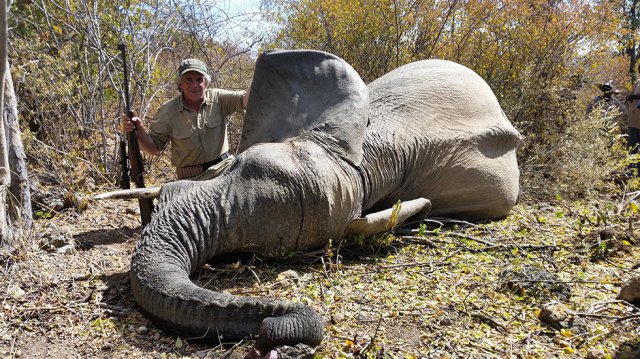
The dispute began earlier this year when Germany’s environment ministry, citing concerns about poaching, suggested imposing stricter limits on the import of hunting trophies. Germany is the EU’s chief importer of African elephant trophies, according to a 2021 report by the Humane Society International.
The landlocked nation is home to 130,000 elephants, accounting for a third of the world’s tuskers. In recent years, the president said elephant herds have been trampling people and destroying homes and crops.
Facing pressure from local communities to tackle the problem, Mr Masisi’s government in 2019 lifted the prohibition on trophy hunting imposed five years earlier.
Botswana had previously offered to send 8,000 elephants to Angola and 500 to Mozambique to deal with the “overpopulation”.
Mr Masisi said he would “like to offer such a gift to Germany” and “not take no for an answer”.
He criticised the German government and particularly the environment ministry for seeking to ban the import of trophies. “It is very easy to sit in Berlin and have an opinion about our affairs in Botswana. We are paying the price for preserving these animals for the world,” he said.
“We want our elephants to roam freely. The German weather is bad enough for them,” he added. “If you like them so much, then please accept this gift from us.”
The German environment ministry said Botswana had “not yet contacted them on this matter”, Politico reported. However, environment minister Steffi Lemke “signalled that she will accept Botswana’s invitation if an opportunity arises” to inspect wildlife protection.
Coming Soon – the Story of Tiger Trapa and the ex Dancing Bears.
Back in 2005 I was heavily involved in starting an organisation which focused on the Stray (Street) Dogs and Cats of Serbia. I set up SAV as a platform for them to get a voice – you can still visit it now at https://serbiananimalsvoice.com/ to see all the work we were involved with as well as our ‘fights for strays’ with the Serbian government.
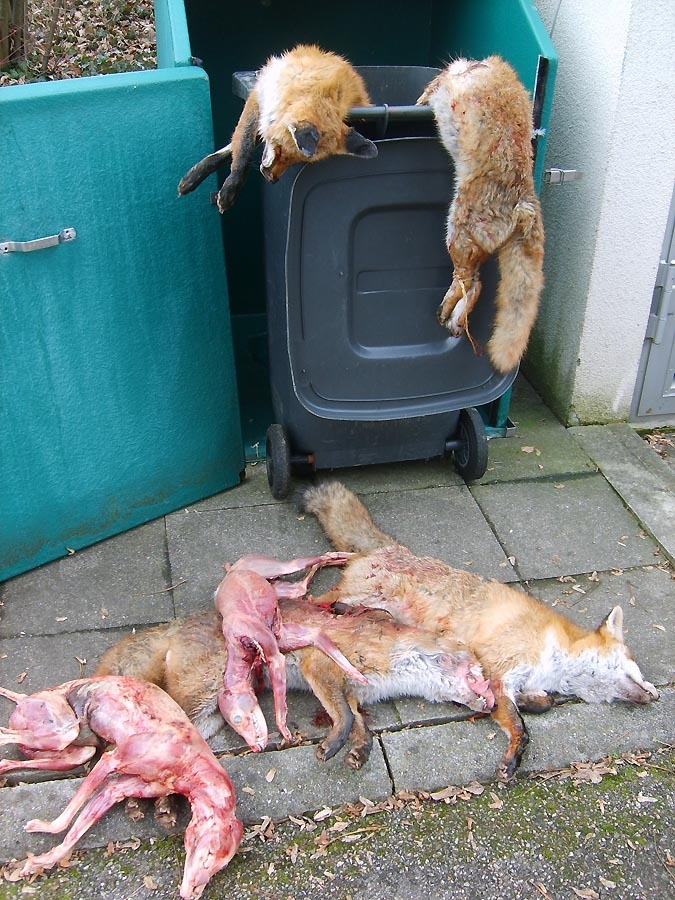
It was here that Diana first made contact with me; and as well as fighting for strays in Serbia, we decided to take on the challenge of fighting the hunt(ers) in Germany; exposing their underbellies and how hunter killed wildlife was being disposed of.
Diana still works with me and together we have produced a lot of info and data on the dark web system that operates out of China regarding cat torture and killings.
During SAV operations relating to Serbia, I made many wonderful friends involved with helping animals. Two of them are Branka and Pavel; who are devoted to rescuing dancing bears; and providing sanctuary; as well as their story relating to the rescue of Tiger Trapa; which at the start was a very young Tiger being used by a Circus for photographs After just a few months the baby tiger had grown large and so the Circus Director decided there was no way he needed the animal; and so it could be destroyed.
This is where friends Braka and Pavel immediately stepped in to rescue the young tiger from certain death.
So, there are several stories to tell here; and over the last month or so I have been communicating with Branka and Pavel to do a lot more about Tiger Trapa and the ex dancing bears rescues. We are still working together to ‘make stories’ of these issues which we hope you will enjoy reading about in the near future.
In the meantime here a few photographs and a video link relating to the rescue of such beautiful animals by such very good people.
More to come soon;
Regards Mark
Branka with Tiger Trapa after rescue –
Ex Dancing bear Sanctuary video featuring Pavel and Branka) – note the size of the claws ! –
A hunt in East Yorkshire and the volunteers who monitor it say tension between the two groups is at an all-time high.
Fox-hunting was banned in 2004 but the Holderness Hunt, like many hunts across the country, mimics the traditional countryside sport with the legal activity of trail-hunting. This involves laying an animal-based scent trail for their hounds to chase.
A spokesman for a group called Hull Wildlife Protectors claims trail-hunting is a “smokescreen” to mask the killing of wild animals with dogs. A spokesman for the Holderness Hunt, based near Beverley, says “accidents will happen” during trail-hunting, which can lead to the death of wildlife.
Humberside Police has been approached for comment.
‘It can make you quite anxious’
Leo from Hull Wildlife Protectors did not want to give his full name. He said “it is a necessity” that members watch and record the Holderness Hunt every time they meet “to monitor for any wildlife crimes”.
The volunteer said his group has reported three incidents of wildlife crime to Humberside Police this year and that two are still being investigated.
According to the Holderness Hunt, none of its members has been charged with any wildlife crimes this year.
Tom Wright, huntsman for the Holderness Hunt, said the monitoring group’s behaviour amounts to trespass and harassment.
He described how masked strangers sit in cars outside the kennels where he works, sometimes at 03.30 GMT.
“It can make you quite anxious,” said Mr Wright. “You never know who is behind the mask.”
Hull Wildlife Protectors admit they watch the kennels but said they have to because Holderness Hunt refuses to share details of when its trail-hunting events start.
A spokesperson for the group said only a minority of its members wear masks to conceal their identities.
Leo from Hull Wildlife Protectors said it is a non-violent group
Leo said intimidation goes both ways. He says members of the hunt have told him that “they know who I am, my name, where I live”.
A spokesperson for Holderness Hunt agrees that tension between the two groups is growing.
‘Insufficient evidence’
The BBC has seen footage of wild animals being killed during trail-hunts.
In an incident from 2023 Holderness Hunt’s hounds clearly kill a fox that diverted their attention from the pre-laid scent trail.
The BBC has seen an email from Humberside Police confirming that it investigated the incident but that “no further action” would be taken.
In the email Humberside Police explains that this is because of “insufficient evidence” that the kill was “intentional”.
Leo said this left the group “deflated” and the “lacklustre” law has “many loopholes” that need closing.
Last year a senior police officer said the law on fox-hunting was not working.
Ch Supt Matt Longman, the National Police Chiefs’ Council lead on fox-hunting, also labelled trail-hunting a “smokescreen” for the illegal persecution of animals.
He was speaking at the launch of a coalition against illegal hunting led by the League Against Cruel Sports and backed by more than 30 charities including the RSPCA.
William Bethell, master of the Holderness Hunt, said hunting is “stronger than the church” for some in the countryside. He said it is important that it continues because many rural jobs rely on it.
National parks are some of our country’s most beautiful landscapes, combining stunning scenery and beautiful wildlife.
Unfortunately, all is not as it seems. Hunters with packs of hounds maraud across the parks, chasing and killing wildlife, causing havoc to the public and the environment.
This fundamentally undermines the National Park Authorities’ aims to protect its land and preserve its flora, fauna, and wildlife for future generations.
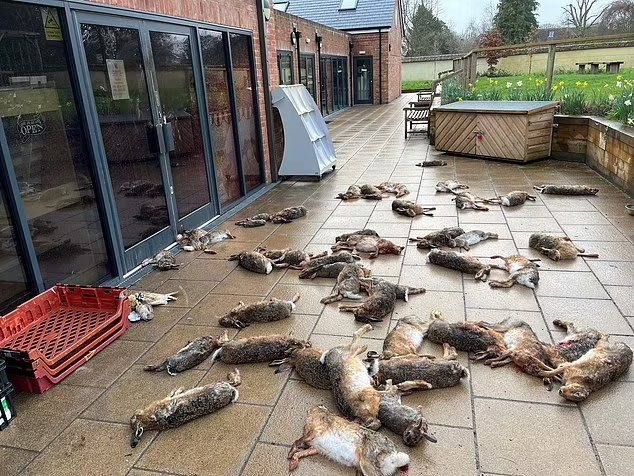
Above – Dozens of bloodied hares were dumped by illegal poachers at the entrance to the community shop in Broughton, Hampshire
Diana has sent this over:
Police find burnt out Suzuki SUV in hunt for suspect after dozens of dead animals were dumped outside a village shop weeks after a nearby primary school was targeted
As it is quite a large article, best to go back to source as there are also many photographs.
To mark the RSPCA’s 200 year anniversary, we interview Chris Sherwood, the organisation’s Chief Executive. He tells us about the RSPCA’s unwavering commitment to animal welfare since 1824.
Tell us a bit about the RSPCA and its main battles?
There’s so much to say!
This year is our 200th anniversary – that’s two centuries we’ve been changing laws, attitudes and behaviours towards animals. More than 400 animal welfare laws have passed since we were founded in 1824, and we have literally changed the way we all think, feel and act towards animals.
We’ve fought for animals in homes, laboratories, farms, and the wild, and of course, we’ve rescued, rehabilitated and rehomed countless numbers, while always showing them all the compassion they deserve.
Our landmark anniversary is an amazing time to reflect on all that – and just how much society has changed for animals over the past two centuries. Indeed, I’m so proud that the RSPCA has been at the forefront of many of those changes – from stopping bear baiting and cockfighting shortly after our formation, to championing a Protection of Animals Act in 1911; and campaigning for laws like the Hunting Act 2004 and Animal Welfare Act 2006. But our influence has not just been legislatively. From setting up the RSPCA Fund for Sick & Wounded Horses during the First World War, to responding to the East Coast Flood of the 1950s – and so much more – we’ve been there. Into the 1970s, and the RSPCA Reform Group helped us develop a comprehensive animal welfare policy platform – further shaping how society – all of us – treat and think about animals.
Yet, there is still so much to do. Animals are arguably facing the biggest challenges of our history, through climate change, industrial farming, loss of habitat, the cost of living and the effects of the pandemic. Unless we put animal welfare on the mainstream agenda as one of the most pressing causes of our time, we risk animals lives getting worse, not better.
But we know that we can’t do this alone – we need as many people to join us as possible. So to mark our 200th anniversary this year we launched our million strong movement – we want a million people to join us in our 200th year and beyond, whether that is volunteering, giving their voice to animals or fundraising for us.
In which countries is the RSPCA present?
The RSPCA works in England and Wales – with dedicated staff and a proud network of branches operating in every single community of both nations. But as the world’s first animal charity, we sparked a global movement that spread around the world – so we’re also proud to have links with the animal welfare movement in all corners of the globe.
We have a dedicated international team who take our experiences and expertise of animal welfare in England and Wales all around the world – and have helped inspire and influence change right across Europe, Africa and Asia. We are also proud to be active members of Eurogroup for Animals, and a founding partner of the World Federation for Animals.
From humble beginnings at the Old Slaughter’s Coffee House in Central London in the early 19th century, it’s amazing to think what the RSPCA has gone on to achieve.Image What about you? Tell us a bit more about your role within the RSPCA and why you joined.
It’s been an enormous privilege to serve as the RSPCA’s chief executive since August 2018 – I could not be prouder to lead this fantastic charity for the past nearly six years.
My background is probably not typical of many chief executives – I was the first person in my family to get GCSEs, let alone an A level or undergraduate degree.
Before joining the RSPCA, I spent time as director of innovation and development at leading disability charity Scope, before working in policy and external affairs at Relate – the UK’s leading family and relationships charity – where I was later chief executive.
I’d always wanted to work in the voluntary sector because of my passion for creating a good society – inspired by where I grew up, in a former steel down battling with the social and economic effects of deindustrialisation. For me, a good society is one which is kind, inclusive and compassionate, and where everyone has the opportunity to thrive, not just survive – a better world in which we all take responsibility for our individual and collective impact on each other, on animals and on the planet.
Since becoming CEO at the RSPCA, we’ve of course endured a global pandemic, the ongoing cost of living crisis, and the continued, mounting threat of serious climate change – to name but a few of the challenges at the top of my in-tray, so it has certainly been an incredibly busy and challenging five and a half years.
I am inspired every day by the work of our diverse, dedicated teams – from our frontline officers, to our animal centres, call handlers, science experts, campaigners and so many others; all dedicating themselves to making our world a better one for the animals we share our lives with.
And I think we’ve been making a real difference, from continuing to deliver frontline animal rescue services throughout Covid-19, to supporting people through these difficult economic times, with, among other things, a pet food bank scheme, which delivered 1.5 million meals to needy pets last year. We’ve secured tougher sentences for animal abusers (my proudest moment as CEO) while animal sentience has been recognised in law and we are on the cusp of seeing live exports banned, something we have been campaigning against for more than 50 years.
In 2021, we launched a new strategy Together for Animal Welfare, which set ambitious targets to cut animal neglect in half, see more than half of UK farmed animals reared to RSPCA standards, and secure a UN declaration for animals. It’s ambitious, and we need as many people as possible to support us, and to support the animal welfare cause if we are going to continue to change animals’ lives now and in the future.
We know the RSPCA can’t fix every problem animals face by ourselves – and our response is so much stronger when we work together. But that’s why I see 2024 – our 200th anniversary – as the start of a new chapter in a remarkable story of helping animals; and a chance to transform again how we work together, everyone for every animal, to meet the challenges of the years, decades and centuries to come.https://www.youtube.com/embed/PkyLdSEHVDs?autoplay=0&start=0&rel=0&enablejsapi=1&origin=https%3A%2F%2Fwww.eurogroupforanimals.orgWhen did the RSPCA join Eurogroup for Animals and why?
We’re the OG! We’ve been involved since the very beginning – some 44 years ago, in 1980!
In fact, the RSPCA founded Eurogroup for Animals – because we know that the animal welfare sector is stronger when it works together and speaks with a united voice. Over more than four decades, we’ve worked closely with our partners and are proud of the campaign successes it has secured for animal welfare.
It’s really important to pay tribute here to our outgoing president Dr Richard Ryder; Eurogroup for Animals was very much his vision; and also to our former director general Peter Davies – who did inspiring work as president.
Since the UK left the European Union, our membership has remained vital as we negotiate the Brexit transition. The European Union remains the UK’s largest market for imports and exports. The UK also left the EU, but not Europe, and we know animal welfare transcends national borders. The ongoing war in Ukraine has highlighted the need for collaboration, and the RSPCA worked with and through Eurogroup for Animals as part of our response to helping animals there.
What are RSPCA’s main campaigning achievements in 2023?
2023 was a really busy year for our campaigns; we saw an incredible 200,000 people sign petitions, write to the UK and Welsh Governments, contact their elected representatives and get their voice heard. We know animal issues are responsible for filling many politicians’ mail bags – and we make no apology for that!
But it was a turbulent year in British politics. We are leading up to an election which polls suggest could lead to a change of UK Government for the first time in 14 years.
And there were challenges, and frustrations, for animal welfare policy. The UK Government sadly dropped its flagship Kept Animals Bill, which was a tough pill to swallow, and we had to mobilise very quickly to ensure lots of very hard work and policy commitments were not lost altogether. We also saw the UK involved with new free trade agreements that failed to include measures to ensure imports met the UK’s higher animal standards. At one point, the list of broken promises from the UK Government for animals was as high as 15 – but fortunately the tide could be turning in favour of animals again.
We’ve seen the fruits of our campaigning continue in recent weeks and months; with restrictions on the keeping of primates as pets, a ban on the live export of animals and new rules around pet theft back on the agenda. In Wales, we successfully campaigned for the UK’s first ban on the use of snares, while glue traps were outlawed too – offering a real lifeline for wild animals. The UK Government also committed to a consultation on mandatory food labelling, which could give millions of people more information than ever before about where the food they eat comes from.Image How can the public act for the RSPCA?
There’s so many ways our supporters can get involved – and help animals.
None of our work for animals would be possible without our amazing supporters and volunteers. We have approximately 16,000 members, and last year more than 7,000 volunteers supported our work. We’re lucky that many people choose to support us – but this year, we want to go even further by inspiring a million-strong movement to come together for animal welfare.
From transporting injured wildlife to rescue centres, to signing and sharing petitions, going into schools and chatting to kids about animals, or taking on a fundraiser for us, there are endless opportunities for people all over England and Wales to help us create a better world for every animal.
And it’s thanks to our kind donors that we can keep our work going. Last year, rates of animal abandonment reached a three-year high, and we’ve seen unprecedented demand on many of our services due to the cost of living crisis. A few pounds really can make all the difference and help keep our rescuers on the road.
Words to live by?
Anyone who follows me on X will know I regularly tweet about cake (carrot cake being my favourite!); so I subscribe to the adage “a party without cake is just a meeting”!
I’m also always inspired by Margaret Mead’s quote – “Never doubt that a small group of thoughtful, committed, citizens can change the world. Indeed, it is the only thing that ever has”. It really highlights the power of people. Indeed, many charities start by a group of people coming together who aren’t happy with something in society and want to see it change; that is the story of the RSPCA and from those humble beginnings – a global movement sparked.
And it’s perhaps a bit of a cliche in the animal welfare world now – but it’s always hard to look beyond Mahatma Gandhi’s great quote – “The greatness of a nation and its moral progress can be judged by the way its animals are treated”. As the RSPCA turns 200, we can be proud of the moral progress we’ve seen in this country – but there’s still so much more work for us all to do.
























 World Animals Voice