“Utterly unacceptable and unlawful”: Ireland’s mistreatment of male calves
14 July 2023
EFI
Investigation
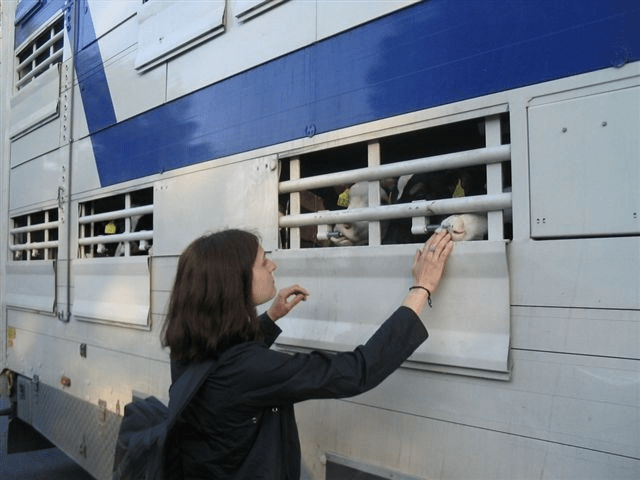
A new documentary by Ireland’s RTÉ Investigates programme, ‘Milking It; Dairy’s Dirty Secret’ has exposed animal welfare breaches of male calves in Ireland, both on-farm and during live export to Europe.
Irish milk production has jumped 68% since the EU milk quota system was abolished in 2015. Ireland now produces just short of 9 billion litres of milk every year and 10% of the world’s infant formula. To meet this demand, approximately 1.5 million dairy calves are born in Ireland every year. While female calves are reared to become dairy cows, over half a million male calves born each year are considered a valueless by-product of the sector, as they neither produce milk nor fatten well for beef. Male calves therefore face a difficult fate: either killed at a few days old, or shipped to veal farms in Holland, Spain, Italy, and, more recently, to a growing market in Poland and Romania.
The RTÉ documentary included investigation footage carried out by L214 and Eyes on Animals, assisted by our member organisation Ethical Farming Ireland, which covered the journey of calves transported from Ireland to France and the Netherlands.
Despite scientific evidence suggesting that these animals should not travel until 12 weeks old due to their undeveloped immune systems and incapacity to correctly use feeding devices, the industry continues to ignore this recommendation, and calves are exported at around 15 days old. Also, The European Food Safety Authority (EFSA) recommends a minimum age of 5 weeks for transport, emphasising the vulnerability of these animals during their early stages of life.
Furthermore, EU regulations clearly state that unweaned calves must be given water and, if necessary, fed after 9 hours of transport, when they should receive a rest period of at least 1 hour before being transported again. However, footage reveals that the calves are subjected to 30-hour journeys without milk or rest: a flagrant violation of EU law, and a general disregard for animal welfare.
Further footage taken by RTÉ told the same story of gruelling journeys for young calves that breach the EU Regulation on the transport of live animals. In addition, workers could be seen repeatedly kicking young calves, hitting them with sticks, and throwing them from trailers. .
The documentary has caused political outcry, with the Irish Department of Agriculture confirming an investigation into the programme findings. Irish Agriculture Minister Charlie McConalogue called the practices uncovered in the documentary “utterly unacceptable, and in some instances unlawful”.
Irish Taoiseach (Prime Minister) Leo Varadkar described the footage as “repugnant”. Mr Varadkar said there would be “robust and timely” action against people found to have breached regulations in the footage, and that the reputation of the sector relied on compliance with the regulations in place.
The documentary proves once again that the existing animal welfare legislation does not go far enough to protect EU farmed animals at rearing, transport or slaughter. The European Commission has the power to improve the transport regulation this year, with the revision of the EU Animal Welfare legislation. In particular, they must:
Ban ‘unfit animals’ from being transported, including unweaned animals, for whom these journeys are even more difficult to bear
Place strict limitations on journey times
Ensure that the new rules are better enforced
Let’s be clear, there is no way to export calves humanely or in line with legislation because it is not possible to feed calves during transit. That is the simple truth. The dairy industry must find an alternative outlet for their calves, and keep them with the herd until weaned. If you don’t have the facilities to look after them then don’t breed them in the first place.
Caroline Rowley, Founder of Ethical Farming Ireland
Indeed, and as recommended during the documentary, the culling and mistreatment of “valueless” male calves should be avoided, which is currently possible by using sexed semen. The transport of farmed animals should be reduced, refined and replaced by meat and carcasses, semen and embryos as recommended by the FVE, WOAH and EFSA.
I have more to say about Irish calf transport investigations which we have undertaken in the past; I will provide details and links in another post very soon.
Import and production of horsemeat under cruel conditions must stop
AWF
Investigation
The latest investigations by the Animal Welfare Foundation (AWF), Animals’ Angels USA and Tierschutzbund Zürich (TSB) reveal the mistreatment of horses slaughtered in Canada and Uruguay for European consumption. Thanks to these investigations, and in collaboration with a coalition of animal protection organisations, we are calling for an end to the import and production of horsemeat derived from cruel treatment.
Horsemeat from Canada
Half of the horses slaughtered in Canada come from the United States. EU meat export rules require American horses to be kept in feedlots for six months before slaughter to gain weight. This results in numerous health problems (painful hooves, metabolic diseases, ect.).
“In the course of our on-site investigations we found on several occasions that horses were limping, suffering from laminitis and had died as a result of their illnesses or injuries,” explains Sabrina Gurtner, project manager at AWF. Mares and stallions are mixed. They also take in pregnant animals. “The chances of foals surviving in the feedlots are slim. We have found foals that were sick in summer and froze to death at birth in winter,” recalls Sabrina Gurtner.
Horsemeat from Uruguay
In a recent two-year investigation by AWF and TSB, conducted in parallel with a pre-announced EU inspection, all three EU-certified slaughterhouses in the country were subject to overt and covert observations before, during and after the EU visit. “Our research shows that the EU audits are manipulated through extensive preparations,” reports Sabrina Gurtner.
What is particularly striking is that only a fraction of the horses are in the slaughterhouse pastures during the audits. “They’re placed in green pastures, sheltered from the weather. But that’s not the reality before and after the inspection visits. Once the inspectors have left, the horses are sent back to dusty, dirty fields, often without roughage and sometimes even without water.” Workers were also observed, beating the horses when the audit was over.
Problem: traceability and food safety
Together with AWF and the other members of the coalition, we condemn the inadequate traceability of horses in meat production abroad. There is no identification system for horses. The last owner, usually the horse dealer, provides information on the medication and origin of the horses he sells to slaughterhouses. “People rely on the honesty of the sellers. This paves the way for systematic fraud and puts EU consumers at risk,” criticises Sabrina Gurtner.
These investigations clearly demonstrate that animal welfare and traceability issues remain unresolved for the import of horsemeat from Uruguay and Canada. We therefore call on the European Commission to stop imports of horsemeat from these countries, as well as from all countries that do not comply with EU requirements.
Broiler chickens: why are these innocent beings suffering by the billions?
It’s a difficult life for broiler chickens in Europe’s farming systems. Not only are these poor birds reared to grow incredibly fast – so they’re ready for slaughter after just six weeks of life – but they’re subjected to painful stunning practices, arduous journeys and awful habitats, too. As one of the most widely farmed and consumed species in Europe, it’s critical the Commission takes their welfare seriously in their ongoing revision to the animal welfare legislation. Billions of lives hang in the balance.
Broiler chickens are incredible animals. They’re clever, have amazing memories, and can form close bonds with their peers. But to see the way they are farmed across Europe, you’d think they were little more than robots – crammed into dark rooms with nothing to do, no room to move, and raised to be slaughtered in just a six-week timeframe.
It’s a shocking lifestyle to imagine… and an even more shocking one to watch up-close.
What are some of the key issues broiler chickens face in Europe’s farming systems?
Around 90% of the EU’s farmed broiler chickens are raised in intensive systems, which are riddled with problems. Here are just a few of the most concerning issues for this species in the sector.
Broiler chickens are being bred to grow too quickly
95% of the broiler chickens currently being reared on factory farms are ‘fast-growing’ breeds, which means they’re bred to grow very quickly and reach slaughter weight in just five to six weeks.
These poor beings cannot live a good life. Due to their fast-growing nature, they’re in constant discomfort, and commonly suffer from problems such as lameness, heart failure, metabolic disorders, and heat stress. These health problems are a direct result of their genetics, which means the only solution is to phase out the farming of fast-growing broiler chicken breeds entirely.
Broiler chickens are rarely given adequate space or access to the outdoors
Most broiler chickens live in horrible confinement. Thousands of birds are routinely crammed into the same small, dark spaces in factory farms, with the European Commission currently allowing stocking densities for up to 42 kg/m2 in its legislation.
The findings of the EFSA scientific opinion on broiler welfare point to the fact that stocking densities over 11 kg/m2 creates significant welfare problems for broiler chickens, with common issues including they’re more likely to contract footpad dermatitis, will have more difficulties with walking, and struggle to express their natural behaviours. Furthermore, high stocking densities cause chickens to suffer from overheating, as well as subject them to unhygienic conditions that are a threat to their health (as they’re surrounded by a much higher volume of litter than if they lived in smaller groups).
The needs and natures of broiler chickens are being ignored
Broiler chickens are feeling, curious and engaged creatures with a range of physical and emotional needs – just like any other sentient being.
However, these needs are far from being met across European factory farms. Billions of broiler chickens live indoors without any form of entertainment (such as perches or straw bales), and with no room to exercise, play or socialise naturally. Because of this, they have almost no opportunities to have positive experiences in their lifetimes.
Broiler chickens are being transported alive by the billions
Did you know that poultry makes up over 90% of live animal transports each year?
Many are broiler chickens, as they are frequently transported across Europe to reach slaughterhouses. Despite the huge number of them being forced to undergo long and arduous journeys annually, poultry is rarely considered in conversations about live animal transport, meaning these birds are suffering in silence.
Broiler chickens are being slaughtered in horrific ways
Industrially farmed broiler chickens are not granted the dignity of a pain-free death. Countless of them are subjected to a cruel and ineffective form of ‘waterbath stunning’ before they are sent to slaughter, where they often killed by having their throats cut – some while still fully conscious:
Clearly, the welfare laws for broiler chickens need to be heavily updated
Broiler chickens are farmed at a gigantic scale across Europe – yet as the above points show, the conditions in which they’re reared are far from acceptable. It’s absolutely critical that the European Commission focuses on this neglected species, and writes strong and robust laws for their welfare as they continue with their revision of the animal welfare legislation.
Emphasising the critical nature of the changes needed, our members have been campaigning for better lives for broiler chickens for years. Over in Sweden in 2022, Djurens Rätt launched an incredibly popular campaign exploring the issues these birds commonly experience:
This campaign won our award for ‘Best Campaign’ at the Eurogroup for Animals Annual General Meeting this year.
Members including Equalia, LAV and Essere Animali have also published several investigations that shine a light on the horrors industrially farmed broiler chickens are exposed to, sparking outrage and signalling a clear need to adapt the Commission’s laws for their welfare – and enforce them across the EU.
This is amazing progress for broiler chickens, but to change their lives at the kind of scale needed across the entirety of Europe, the European Commission must create standards for their welfare that all Member States must follow.
The European Commission must write species-specific legislation for broiler chickens! Do you agree?
Some of the most important changes they should make to the welfare laws for broiler chickens are:
Banning fast-growing broiler breeds
Banning ‘waterbath stunning’
Limiting stocking densities in farming systems following EFSA recommendations
Ensuring they have access to enrichment materials and the outdoors, so they can lead fulfilling lives
Putting measures in place to make sure all welfare laws for broiler chickens are sufficiently enforced across Europe.
It’s time to ring in a brighter era for broiler chickens in the EU and beyond. Are you with us?
We’re working to ensure all kept species are considered by the European Commission in their update to the animal welfare laws! Learn more here.
I think that any of us in welfare who have been involved with live animal transport over one, two, or (in my case) around 40 years, we all know what a complete and utter farce the Regulation is for the ‘protection of animals during transport’ – Reg 1/2005 – EUR-Lex – 32005R0001 – EN – EUR-Lex (europa.eu) We know it well as part of our work, and yet despite overwhelming evidence and footage over decades showing endless suffering of animals during transport, and the non compliances with the EU legislation, the people in the EU who could change things just ignore and turn the other way.
The footage you see here from our friends at AWF is yet more examples of the EU gone wrong.
It has been time for change for decades; but now the EU Commission hopefully is really in last chance saloon. It happens all over the world, not just in Europe. The sooner we see legislators get off their butts and do something to actually protect animals in transport, is a day that cannot come soon enough. Until the ban the fight goes on; and the evidence continues to pile.
Mark
Photo – Mark
The Animal Welfare Foundation, released three reports on June 16 highlighting some of the horrific realities of the live animal transport industry. Coupled with their recent investigations into the sector, it’s clear change must happen – and that only the European Commission can bring on the scale of action needed.
The first report is concerned with which factors – including bedding, loading density, and distance – have the strongest impacts on the welfare of cattle during transport. It analyses 112 consignments of cattle on trucks that were inspected over a period of five years, between 2016 and 2021. Ultimately, their findings indicate that insufficient welfare provisions overwhelmingly impact an animal’s physical and emotional health, and can even shorten their lifespans.
The second report focuses on the long distance transport of lambs between the same time period. The findings are shocking – AWF records that out of the consignments they investigated:
100% had inadequate drinking devices for lambs
90% provided insufficient space for the lambs to move – in at least 44% of the vehicles, the space for each individual animal came only to 0.18m2
65% had issues that were likely to lead to injuries, such as sharp edges and loose dividers
At least 35% of the vehicles had been travelling for longer than permitted by law.
The third and final report follows a similar theme, and reports on the transport of unweaned calves between 2015 – 2021. As with lambs, it was found that the care these poor calves received was far from satisfactory, as in the consignments they investigated:
100% had inadequate drinking devices for unweaned calves
In at least 73%, animals were not fed after nine hours
At least 47% of the vehicles had been travelling for longer than permitted by law.
In both the second and third reports, AWF noted that well over half the animals being transported were showing acute signs of distress, including restlessness, biting and licking the metal bars they were trapped behind, and making loud noises.
Their insightful work makes the connection clearer than ever. The millions of sentient beings that are subjected to long journeys each year are not only being badly taken care of, but they are sensitive to the conditions in which they are transported as well. Measures must be taken to ensure these sentient beings are given adequate space to move, access to clean water, good nutrition and a comfortable environment to make these journeys as stress-free as possible.
Recent investigations by the Animal Welfare Foundation also stress the urgency of new live animal transport rules
Earlier this year, the Animal Welfare Foundation released heartbreaking footage of the journey of some young calves, which they followed from the Czech Republic to a fattening farm in Spain.
Their footage shows that these poor infants were starved for hours, and one calf in particular, which they named Marek, was not even able to get a quick drink of water.
Also this year, AWF’s investigative team intercepted trucks carrying lambs to Italy for Easter – resulting in over 20,000 EUR worth of fines for transport companies which were caught violating the EU’s transport legislation:
All the evidence points to a critical need for the European Commission to take action
AWF’s illuminating work complements a range of scientific evidence published by the likes of EFSA and the European Court of Auditors already that points to the necessity of better animal welfare provisions being made for animals that are transported.
The European Commission must use this wealth of information and data to make dramatic changes to this industry that causes so much suffering to millions of sentient beings each year. In particular, they must:
Ban ‘unfit animals’ from being transported, including unweaned animals and very young babies, like the lambs and calves recorded by AWF, for whom these journeys are even more difficult to bear
Place strict limitations on journey distances
Enforce any new animal welfare legislation written for live transport more effectively, to guarantee these stricter regulations are being followed.
It’s time for the welfare needs of transported animals to be honoured as seriously as they deserve.
We’re putting the spotlight on animal welfare this year through phase two of our No Animal Left Behind campaign! Learn more.
Around 1.5 million farm animals undergo long and gruelling journeys from Europe to other countries each year. Transported via land and sea, these poor sentient beings have few rules in place to ensure their welfare, especially when they are exported to countries outside the EU’s scope. Affecting so many species and in such great numbers, it’s vital the European Commission puts the live animal transport industry under the microscope while revising the animal welfare legislation.
In the best case scenario, the European Commission should aim towards phasing out live animal transport entirely – substituting it for a meat and carcasses trade, so that no animals should be forced to endure difficult journeys that are innately abnormal for them. At the very least, they should enforce much stricter laws within the sector to ensure these animals experience the highest possible welfare standards during transportation. We dig into the issues a little more below.
Some quick facts about live animal transport in the EU
The below was taken from our 2021 white paper, ‘Live Animal Transport: Time to Change the Rules’. Download it here for more insights.
In 2019:
1,618,275,545 ovines, bovines, poultry and pigs were transported alive across the EU and from the EU to non-European countries
Poultry made up 98% of total live animal exports, which made them the most traded farm animal species. The top EU exporters of poultry were Poland, Hungary, the Netherlands and France
57,523 tonnes of fish was reported as exported alive from the EU, with 93% of these destined for other Member States
87,817 horses, asses, mules and hinnies were transported alive across the EU and to the rest of the world.
These are not small numbers. Changes to the laws surrounding live animal transport would affect millions of lives and most kept species, making it arguably one of the most important sectors for the European Commission to address in their ongoing changes to the animal welfare legislation, especially as…
The live animal transport industry is riddled with problems
This sector is not in a good state. Current laws for live animal transport are not strong enough or go far enough to protect all the animals that are transported annually. As of this moment, the industry:
Does not have any strict limitations on journey times: Which means animals can be transported for days – or even weeks – before they get to their destination. Can you imagine being hungry, thirsty, sleepless and stressed for this long?
Permits ‘unfit animals’ to be transported: This includes heavily pregnant and injured animals, as well as babies. These sentient beings feel the burdens of live transport even more heavily than their ‘healthy’ counterparts. Sometimes, even sick animals are subjected to these journeys as well, as they are not inspected properly before being loaded onto transport vessels – which poses a big risk to both the animals they are travelling with and public health
Does not have any control over what happens to exported animals: The European Commission cannot regulate what happens to animals once they are transported beyond the EU’s borders. As a result, millions of animals ‘disappear’ beyond the scope of our welfare laws, and become the victims of potentially horrific treatment
Does not enforce good welfare conditions for transported animals: There are currently few measures in place to monitor the welfare of transported animals, meaning there’s little knowledge of what really goes on in the sector. What’s more, there’s evidence these oversights are being exploited – recent investigations by our members Essere Animali and the Animal Welfare Foundation report animals being neglected, injured and malnourished during journeys this year.
Across the world, live animal transport causes countless tragedies
The past few years have played host to a number of awful incidents related to the live animal transport industry, too.
In 2020, the Gulf Livestock 1 vessel sank off the coast of Japan while travelling to China, taking around 6,000 animals with it.
Similarly two vessels bound for Turkey – the Karim Allah and Elbeik – ended up being stranded at sea for over three months in 2020, resulting in the deaths of hundreds of cattle. We worked with the Animal Welfare Foundation to produce a report on this incident, concluding the welfare of the animals on these ships was seriously compromised from the start.
Travelling via land or sea in boats, lorries and otherwise is in itself an unnatural experience for non-human animals – and in the worst cases, it can be fatal. The European Commission must do everything it can to reduce the stress, discomfort and fear these poor beings feel while being transported alive, as well as to mitigate the potential loss of life that can be incurred through long distance exportations. It’s the least they can do.
Official bodies agree the live animal transport industry cannot be ignored – and some countries are already setting the standard for change
In 2022, the European Food Safety Authority published their recommendations to improve animal welfare during live transport, which included shorter journey times and more space for the animals to move.
Even more recently, in 2023, the European Court of Auditors released a review on the transport of live animals, concluding structural changes to the industry and more notice of welfare provisions were much-needed.
We welcome this support from these official bodies to change live transport for the better – and in fact, a lot of what they recommend echoes the steps we laid out in our 2021 white paper to improve the standards in this sector. When it comes to exports in particular, however, the Commission should go even further – by banning live animal exports to countries outside the EU entirely. Live animal exports by sea have already been banned in New Zealand, and a trial court in Brazil opted to make a similar move earlier this year. A little closer to home, Luxembourg banned the export of live animals to third countries for slaughter purposes in 2022. As the welfare of exported animals outside Member States can’t be guaranteed, and the risks are greater during these longer journeys, a full ban on this type of transport is the only move that makes sense.
The European Commission must not miss this opportunity to reform live animal transport for the better
This is a critical year for kept animals, as the European Commission continues to revise its animal welfare legislation. The only way for them to show they’re taking higher animal welfare standards as seriously as they deserve, however, is to make bold and enforceable changes to the laws related to live animal transport: an industry which influences the fates of so many sentient beings, and therefore wields enormous power over their welfare as a whole. Will you tweet in support of better animal welfare standards for all?
We’re putting the spotlight on animal welfare this year through phase two of our No Animal Left Behind campaign. Find out more about how we’re trying to change history for animals.
Live animal transport: new Essere Animali report presented to the European Parliament
9 June 2023
Essere Animali
Yesterday at the European Parliament Essere Animali presented a new report dedicated to the investigations on live animal transport conducted in the last three years.
The report analyses the law enforcement controls that took place during the investigations conducted in Italy and the shortcomings of the current European Regulation which is currently being revised by the European Commission.
The debate was also an opportunity for MEPs from different parliamentary groups to exchange views on such a complex and important issue in order to truly guarantee compliance with higher welfare standards in the EU.
The key priorities for the Transport Regulation’s review must be the 8-hour limit for all transport and the ban on transport for pregnant and unweaned animals. Another crucial aspect is the ban on extra-EU transports. We believe that these points and animal welfare should be included in the manifestos for the next European elections in 2024 and we will work in this direction.
Niels Fuglsang – MEP
Francisco Guerreiro MEP (Greens, Portugal) emphasised that “The role of the European parties to include these demands in the electoral programmes is crucial”.
Every year, more than one billion animals are transported in Europe both to extra-EU countries and within Europe’s borders. According to the latest report released at the end of 2022 by the Italian Ministry of Health on the activity carried out by the Border Control Posts (PCF) and the Veterinary Offices for Community Compliance (UVAC), in 2021 the following animals were imported into Italy from other EU countries: 1.4 million pigs, 1.3 million cattle, 790 thousand sheep and over 56 million poultry, most of which were 1-day-old chicks.
Essere Animali investigations, started in 2021 and carried out until Easter 2023, focused on two of the main problems affecting Italy: the long-distance transport of lambs and the very high temperatures that affect animals during transport, even on short distances, in the summer.
The latest shocking checks by Essere Animali conducted in Easter this year showed the terrible suffering to which animals are still subjected, with conditions so painful that Italian vets found themselves forced to euthanise some animals inside the trucks.
The lambs transported on long distances often travel in overcrowded conditions, without access to food and water and without protection from dangerous gaps that often cause injuries and end up trapping body parts of these fragile and very young animals.
In recent years, the European Parliament has tried, with the ANIT Committee, to document the limitations of the current legislation, but the final Recommendations called for minor improvements rather than systemic change.
Investigations conducted also in recent weeks show that animal transport is one of the phases of production with the most violations, the least protection for animals and continuous suffering and mistreatment that can no longer be ignored.
We hope, therefore, that the Commission can take into account our report and the scientific evidence also highlighted by the latest EFSA opinions (2022) and propose a revision that can really protect animals during this phase, raising animal welfare standards and at the same time starting a transition to the transport of meat and carcasses.
Chiara Caprio, Head of Public Affairs at Essere Animali
A few years ago I took part in a government consultation which aimed to move on and stop live animal exports – a campaign which I had personally been involved with for around 30 years.
In my response to the consultation I submitted around 40 pages of answers and evidence as to why there should be a ban on live animal transport. Exports were just one part of the Animal Welfare (Kept Animals) Bill, which you can read more about below.
By scrapping the Bill now, the Conservatives are showing their true colours. There was lots of talk on the issue by Boris when he became leader; but now the excuse is being used that Labour was ‘seeking to widen its scope’. So what is wrong with that ? – improving animal welfare issues even more ?
I think the reality is that the Conservatives are not that concerned about this legislation; it has been running around the corridors of Whitehall for a long time now, the result being that it has not become lawful legislation. In theory, for live exports, this does open up the chance that someone may decide to try and operate a service out of England once again. By scrapping the Bill, we are now back in a position where transporters from Ireland use the UK as a ’land bridge’ to transport Irish livestock into Europe; something which the Bill would have stopped.
I could go on and on about this, giving you a lot more, especially as the Bill also aimed to prohibit puppy farming and puppy smuggling. We have a General Election here in the UK in the next 18 months (or earlier); and so this scrapping of potential legislation will NOT go down well with voters when the time comes.
And the lesson, which I think many of us voters are fully aware of, is never trust what a government says. Lets see what the next election brings; but this is something we can remind Tory MP’s of when they come knocking on our doors asking for me and you to vote for them.
Mark
———————————————————-
Legislation designed to protect pets, livestock and wild animals has been scrapped, the government has confirmed.
Environment minister Moark Spencer said the Animal Welfare (Kept Animals) Bill, which had almost completed its passage through the Commons, will no longer go ahead over concerns that Labour was seeking to widen its scope.
The Bill sought to tackle puppy smuggling by reducing the number of pets (dogs, cats and ferrets) that can travel under pet travel rules and see a ban on the export of live animals for slaughter and fattening.
Other policies within the Bill would have banned the keeping of primates as pets, protect livestock from dangerous and out of control dogs and ensure zoos are doing more to contribute to conservation.
Mr Spencer insisted the government remained “fully committed to delivering” on those promises but would do so by taking the measures forward individually rather than collectively.
But Labour said the move is “further proof that you can’t trust the Tories to deliver on animal welfare”.
Shadow Environment Secretary Jim McMahon added: “The government’s decision to scrap the Kept Animals Bill demonstrates that it has lost the ability to get its own legislation through Parliament.”
Battersea Dogs and Cats Home tweeted to say it was “deeply disappointed” about the Bill being withdrawn.
“This is a major setback for both animal welfare and our community of animal lovers,” it said.
Explaining why the Bill was being scrapped, Mr Spencer said: “Unfortunately this multi-issue nature means that there has been considerable scope creep.“The Bill risked being extended far beyond the original commitments in the manifesto and the action plan. “And in particular, Labour is clearly determined to play political games by widening the scope of this Bill.”
He said “enormous progress” on animal welfare has already been made with “single-issue” legislation, adding: “Therefore we will be taking forward measures in the Kept Animals Bill individually during the remainder of this Parliament.
“We remain fully committed to delivering our manifesto commitments. And this approach is now the surest and quickest way of doing so, rather than letting it be mired in political game-playing.”
Labour’s shadow Commons leader Thangam Debbonaire said the move was “shocking”.
Speaking in the Commons before the legislation was scrapped, she asked: “Is this prime minister so weak he can’t even bring himself to stand up against evil puppy smugglers? What a way to run a government.”
The Bill had already suffered long delays since it was first introduced in June 2021.
Senior director of campaigns and public affairs at Humane Society International/UK, Claire Bass, said: “The government’s decision to abandon the Kept Animals Bill is an astonishing betrayal of both animals and public trust.”
NEW report: current levels of animal production and consumption in the EU is proving very expensive
31 May 2023
What kind of impact does industrial livestock farming really have on the planet? We commissioned a new report by the Impact Institute, ‘External costs of animal sourced food in the EU’, to explore the various problems associated with these systems to people, animals and the environment. The numbers are shocking – but the solutions are clear.
The rate at which Europeans farm and consume animal products, including meat and dairy, is getting increasingly unsustainable. The latest evidence shows that this level of production and consumption is having huge effects on global problems, including climate change and public health, along with causing suffering to millions of sentient beings each year, as welfare standards for animals are not strong or enforced enough on European factory farms – something we’re currently campaigning to change.
As it stands, the rate at which the EU produces and consumes animal-sourced products has been linked to:
Poor animal welfare standards: because the animals reared on European factory farms often face issues including illness, being trapped in cages, poor nutrition, lack of capacity to express their natural behaviours, suffering during transport, and inhumane slaughter
The antimicrobial crisis: as antibiotics are used routinely on the animals within industrial systems, who as mentioned, are more prone to falling sick due to the poor conditions in which they are raised
Non-communicable diseases: as the scale at which red meat, like beef and pork, is being eaten has been linked to cardiovascular disease, kidney disease, and cancers in people
Environmental destruction: because of the way land is used to grow feed for animals, as well as because of the air pollution that is created by some factory farming systems (for instance, the ammonia produced from breeding broiler chickens at scale). The EU is already experiencing the first impacts of climate change, including severe weather and drought – almost one fifth of which can be attributed directly to greenhouse gases from meat and dairy production.
All of these issues stemming from industrial livestock farming come with great cost. Our new report estimates that the external costs produced by the industry are nearly eight times higher than any profits made by it. Transitioning to a sustainable farming future with high animal welfare standards, more plant-based diets, and nature and climate-friendly agricultural practices in place could save the EU a lot of money, as well as help to secure a happier and healthier future for the planet.
Our food and farming systems urgently need to change
The report estimates that if plant-based diets, less meat consumption, and high animal welfare standards were prioritised in Europe’s food and farming systems, then there would be a reduction of 79% of the external costs related to the environment, public health, and animal welfare that the current consumption and production of animal-sourced foods causes today. Download the report ‘External costs of animal sourced food in the EU’ here, to discover its full findings.
Policymakers shouldn’t delay. Our new report provides several recommendations and insights for them to bear in mind when they write new food, farming and animal welfare-related laws – and there are some great opportunities to incorporate them in their ongoing revision to the animal welfare legislation and upcoming focus on a Framework for Sustainable Food Systems.
I am starting off with a different gripe tonight. Wednesday, I think it was, I sat through the second round of Eurovision song contest qualifiers. After 4 songs, I went out to take some painkillers for my back; only then did I realise that actually they also helped me get through the rest of the qualifying songs:
My cat could probably write, and sing, something better. The whole second qualifier was, well, rather bad in my opinion. I had to throw the telly out of the window before the end.
But something I really cannot get a grip with is why Australia is taking part in the Eurovision song contest ? – Australia IS NOT part of Europe: so why are they in it ?
The TV star leads a host of celebrities and animal welfare campaigners calling on the Government to deliver on its pledges about protecting animals and cracking down on abuse
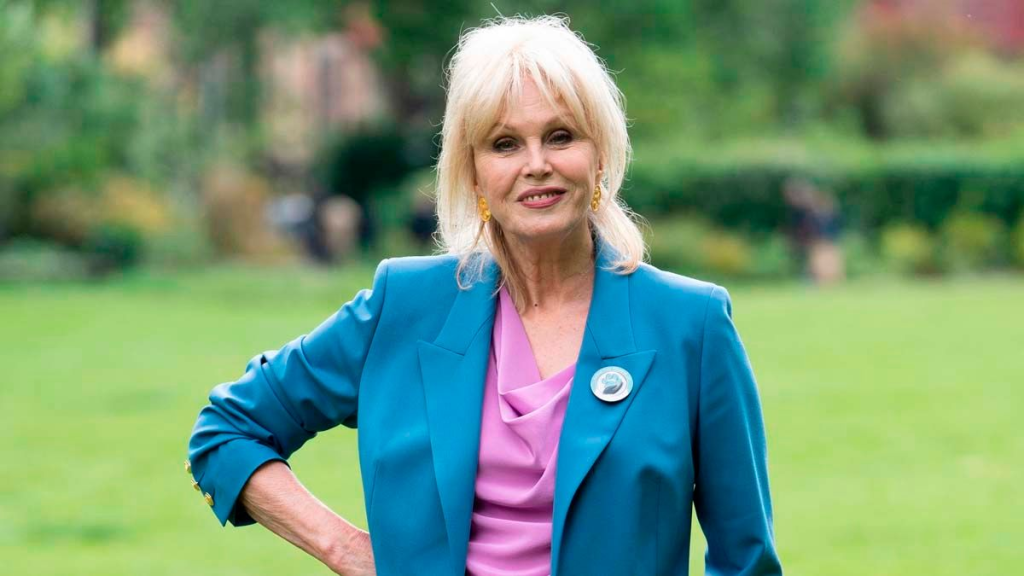
Actress Dame Joanna Lumley today urges Rishi Sunak to keep Tory pledges on boosting animal welfare.
The Absolutely Fabulous star is among celebrities to sign a letter calling on the Prime Minister to deliver on Conservative promises made in 2021 – including to drive through new legislation to tackle abuse of animals and bolster protections.
Dame Joanna, 77, told the Mirror: “Animals are being utterly let down by the Government’s dismaying failure to deliver the plans it promised two years ago.
“I urge the Prime Minister to progress vital animal protection measures, including the Kept Animals Bill and a ban on the import of cruel fur, as a matter of the utmost importance.”
The letter, which was also signed by Pop Idol singer Will Young, TV presenter Kirsty Gallacher and Countdown’s Susie Dent, tells the Tory leader: “Britain prides itself on being a nation of animal lovers and in May 2021 the Government pledged to reinforce our country’s position ‘as a global champion of animal rights’ with the publication of its Action Plan for Animal Welfare.
“The plan promised the animal-loving British public it would deliver improvements in the lives and wellbeing of millions of animals.
“But two years on, we and the animals we care so deeply about have been badly let down.”
The current version of the legislation, the Animal Welfare (Kept Animals) Bill, is stuck in the Commons.
If passed, it aims to tackle cruel puppy smuggling, live exports, banning keeping monkeys as pets and improving zoo regulations.
But a separate letter from 25 animal charities and campaign groups tells the PM the legislation has “been left languishing as the Government’s Kept Animals Bill has not been given parliamentary time for over 17 months”.
It adds: “Our patience, and our trust, has now been exhausted.
“The Kept Animals Bill, and the majority of the Action Plan, now appears to be little more than an inconvenience to a government that believes it can quietly abandon its promises.
“Animal issues matter to voters.”
Humane Society International’s senior campaigns director Claire Bass said: “The Government’s apparent disinterest and unwillingness to deliver its own Action Plan for animals is frankly baffling.
“MPs tell us they receive more constituent correspondence calling for better animal protection than any other issue, so passing legislation like the Kept Animals Bill and a ban on fur imports should be an easy and obvious choice in terms of popular policy.
“But instead, we and animals are enduring endless delays, seemingly deprioritised by this Government despite huge public concern.
“We urge Mr Sunak to remember his party’s promises and start delivering the action that animals deserve and voters expect.”
People for the Ethical Treatment of Animals vice-president Elisa Allen said: “Animals are in peril and the Government has seemingly abandoned them as time is running out for it to make good on its word.”
RSPCA chief executive Chris Sherwood claimed that “animals have been left in limbo by continued inaction on key animal welfare issues”.
Regards Mark
UK General Election in about 12 months – oh, and animal welfare people vote – so lets get moving !










 World Animals Voice