Category: Live Transport

EU: Live animal transport: new Essere Animali report presented to the European Parliament.

Live animal transport: new Essere Animali report presented to the European Parliament

9 June 2023

Essere Animali

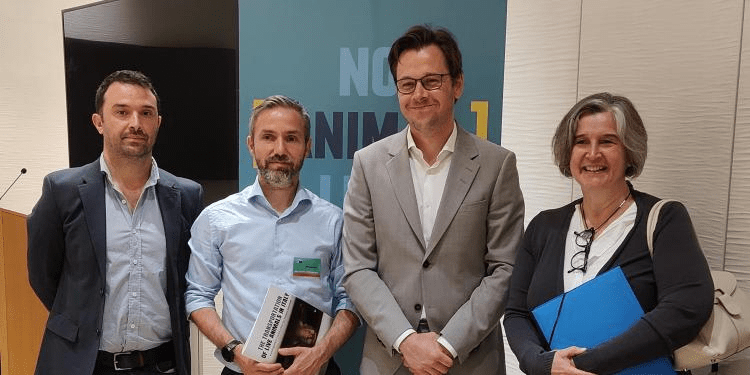
Yesterday at the European Parliament Essere Animali presented a new report dedicated to the investigations on live animal transport conducted in the last three years.

The event was hosted by Niels Fuglsang MEP (S&D, Denmark), Vice-President of the Intergroup on the welfare and conservation of animals and Chairman of the Animal transport working group.

The report analyses the law enforcement controls that took place during the investigations conducted in Italy and the shortcomings of the current European Regulation which is currently being revised by the European Commission.

The debate was also an opportunity for MEPs from different parliamentary groups to exchange views on such a complex and important issue in order to truly guarantee compliance with higher welfare standards in the EU.

The key priorities for the Transport Regulation’s review must be the 8-hour limit for all transport and the ban on transport for pregnant and unweaned animals. Another crucial aspect is the ban on extra-EU transports. We believe that these points and animal welfare should be included in the manifestos for the next European elections in 2024 and we will work in this direction.

Niels Fuglsang – MEP

Francisco Guerreiro MEP (Greens, Portugal) emphasised that “The role of the European parties to include these demands in the electoral programmes is crucial”.

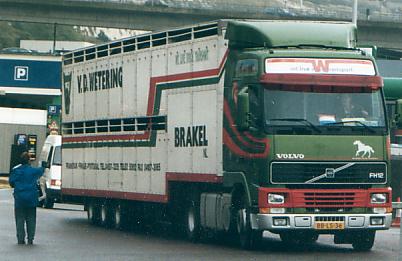
Every year, more than one billion animals are transported in Europe both to extra-EU countries and within Europe’s borders. According to the latest report released at the end of 2022 by the Italian Ministry of Health on the activity carried out by the Border Control Posts (PCF) and the Veterinary Offices for Community Compliance (UVAC), in 2021 the following animals were imported into Italy from other EU countries: 1.4 million pigs, 1.3 million cattle, 790 thousand sheep and over 56 million poultry, most of which were 1-day-old chicks.

Essere Animali investigations, started in 2021 and carried out until Easter 2023, focused on two of the main problems affecting Italy: the long-distance transport of lambs and the very high temperatures that affect animals during transport, even on short distances, in the summer. 

The latest shocking checks by Essere Animali conducted in Easter this year showed the terrible suffering to which animals are still subjected, with conditions so painful that Italian vets found themselves forced to euthanise some animals inside the trucks. 

The lambs transported on long distances often travel in overcrowded conditions, without access to food and water and without protection from dangerous gaps that often cause injuries and end up trapping body parts of these fragile and very young animals.

In recent years, the European Parliament has tried, with the ANIT Committee, to document the limitations of the current legislation, but the final Recommendations called for minor improvements rather than systemic change.  

Investigations conducted also in recent weeks show that animal transport is one of the phases of production with the most violations, the least protection for animals and continuous suffering and mistreatment that can no longer be ignored.

We hope, therefore, that the Commission can take into account our report and the scientific evidence also highlighted by the latest EFSA opinions (2022) and propose a revision that can really protect animals during this phase, raising animal welfare standards and at the same time starting a transition to the transport of meat and carcasses.

Chiara Caprio, Head of Public Affairs at Essere Animali

Regards Mark

England: Trust A Government ? – No, I Will Take the Kick In the Teeth Thanks.

A few years ago I took part in a government consultation which aimed to move on and stop live animal exports – a campaign which I had personally been involved with for around 30 years.

In my response to the consultation I submitted around 40 pages of answers and evidence as to why there should be a ban on live animal transport.  Exports were just one part of the Animal Welfare (Kept Animals) Bill, which you can read more about below.

By scrapping the Bill now, the Conservatives are showing their true colours.  There was lots of talk on the issue by Boris when he became leader; but now the excuse is being used that Labour was ‘seeking to widen its scope’.  So what is wrong with that ? – improving animal welfare issues even more ?

I think the reality is that the Conservatives are not that concerned about this legislation; it has been running around the corridors of Whitehall for a long time now, the result being that it has not become lawful legislation.  In theory, for live exports, this does open up the chance that someone may decide to try and operate a service out of England once again.  By scrapping the Bill, we are now back in a position where transporters from Ireland use the UK as a ’land bridge’ to transport Irish livestock into Europe; something which the Bill would have stopped.

I could go on and on about this, giving you a lot more, especially as the Bill also aimed to prohibit puppy farming and puppy smuggling.  We have a General Election here in the UK in the next 18 months (or earlier);  and so this scrapping of potential legislation will NOT go down well with voters when the time comes.

And the lesson, which I think many of us voters are fully aware of, is never trust what a government says.  Lets see what the next election brings; but this is something we can remind Tory MP’s of when they come knocking on our doors asking for me and you to vote for them.

Mark

———————————————————-

Legislation designed to protect pets, livestock and wild animals has been scrapped, the government has confirmed.

Environment minister Moark Spencer said the Animal Welfare (Kept Animals) Bill, which had almost completed its passage through the Commons, will no longer go ahead over concerns that Labour was seeking to widen its scope.

The Bill sought to tackle puppy smuggling by reducing the number of pets (dogs, cats and ferrets) that can travel under pet travel rules and see a ban on the export of live animals for slaughter and fattening.

Ministers scrap animal welfare bill designed to protect pets, livestock and wild animals | ITV News

Other policies within the Bill would have banned the keeping of primates as pets, protect livestock from dangerous and out of control dogs and ensure zoos are doing more to contribute to conservation.

Mr Spencer insisted the government remained “fully committed to delivering” on those promises but would do so by taking the measures forward individually rather than collectively.

But Labour said the move is “further proof that you can’t trust the Tories to deliver on animal welfare”.

Shadow Environment Secretary Jim McMahon added: “The government’s decision to scrap the Kept Animals Bill demonstrates that it has lost the ability to get its own legislation through Parliament.”

Battersea Dogs and Cats Home tweeted to say it was “deeply disappointed” about the Bill being withdrawn.

“This is a major setback for both animal welfare and our community of animal lovers,” it said.

Explaining why the Bill was being scrapped, Mr Spencer said: “Unfortunately this multi-issue nature means that there has been considerable scope creep.“The Bill risked being extended far beyond the original commitments in the manifesto and the action plan. “And in particular, Labour is clearly determined to play political games by widening the scope of this Bill.”

He said “enormous progress” on animal welfare has already been made with “single-issue” legislation, adding: “Therefore we will be taking forward measures in the Kept Animals Bill individually during the remainder of this Parliament.

“We remain fully committed to delivering our manifesto commitments. And this approach is now the surest and quickest way of doing so, rather than letting it be mired in political game-playing.”

Labour’s shadow Commons leader Thangam Debbonaire said the move was “shocking”.

Speaking in the Commons before the legislation was scrapped, she asked: “Is this prime minister so weak he can’t even bring himself to stand up against evil puppy smugglers? What a way to run a government.”

The Bill had already suffered long delays since it was first introduced in June 2021.

Senior director of campaigns and public affairs at Humane Society International/UK, Claire Bass, said: “The government’s decision to abandon the Kept Animals Bill is an astonishing betrayal of both animals and public trust.”

Regards Mark

EU: NEW report: current levels of animal production and consumption in the EU is proving very expensive.

Via Eurogroup for Animals.

NEW report: current levels of animal production and consumption in the EU is proving very expensive

31 May 2023

What kind of impact does industrial livestock farming really have on the planet? We commissioned a new report by the Impact Institute, ‘External costs of animal sourced food in the EU’, to explore the various problems associated with these systems to people, animals and the environment. The numbers are shocking – but the solutions are clear.

The rate at which Europeans farm and consume animal products, including meat and dairy, is getting increasingly unsustainable. The latest evidence shows that this level of production and consumption is having huge effects on global problems, including climate change and public health, along with causing suffering to millions of sentient beings each year, as welfare standards for animals are not strong or enforced enough on European factory farms – something we’re currently campaigning to change.

As it stands, the rate at which the EU produces and consumes animal-sourced products has been linked to:

Poor animal welfare standards: because the animals reared on European factory farms often face issues including illness, being trapped in cages, poor nutrition, lack of capacity to express their natural behaviours, suffering during transport, and inhumane slaughter

The antimicrobial crisis: as antibiotics are used routinely on the animals within industrial systems, who as mentioned, are more prone to falling sick due to the poor conditions in which they are raised

Non-communicable diseases: as the scale at which red meat, like beef and pork, is being eaten has been linked to cardiovascular disease, kidney disease, and cancers in people

Environmental destruction: because of the way land is used to grow feed for animals, as well as because of the air pollution that is created by some factory farming systems (for instance, the ammonia produced from breeding broiler chickens at scale). The EU is already experiencing the first impacts of climate change, including severe weather and drought – almost one fifth of which can be attributed directly to greenhouse gases from meat and dairy production.

All of these issues stemming from industrial livestock farming come with great cost. Our new report estimates that the external costs produced by the industry are nearly eight times higher than any profits made by it. Transitioning to a sustainable farming future with high animal welfare standards, more plant-based diets, and nature and climate-friendly agricultural practices in place could save the EU a lot of money, as well as help to secure a happier and healthier future for the planet. 

Our food and farming systems urgently need to change 

The report estimates that if plant-based diets, less meat consumption, and high animal welfare standards were prioritised in Europe’s food and farming systems, then there would be a reduction of 79% of the external costs related to the environment, public health, and animal welfare that the current consumption and production of animal-sourced foods causes today. Download the report ‘External costs of animal sourced food in the EU’ here, to discover its full findings.

Policymakers shouldn’t delay. Our new report provides several recommendations and insights for them to bear in mind when they write new food, farming and animal welfare-related laws – and there are some great opportunities to incorporate them in their ongoing revision to the animal welfare legislation and upcoming focus on a Framework for Sustainable Food Systems.

Food and farming systems that are truly sustainable and good for animals, people and the planet start with high animal welfare standards! Learn more about the kind of Europe we’d like to see by 2050 in our ‘future of farming’ position paper.

Regards Mark

England: Eurovision and Animal Welfare (Kept Animals) Bill. Jo Lumley Tells Rishi To Get A Grip. !

I am starting off with a different gripe tonight.  Wednesday, I think it was, I sat through the second round of Eurovision song contest qualifiers.  After 4 songs, I went out to take some painkillers for my back; only then did I realise that actually they also helped me get through the rest of the qualifying songs:

https://www.walesonline.co.uk/lifestyle/tv/eurovision-2023-grand-final-full-26894815

My cat could probably write, and sing, something better.  The whole second qualifier was, well, rather bad in my opinion.  I had to throw the telly out of the window before the end.

But something I really cannot get a grip with is why Australia is taking part in the Eurovision song contest ? – Australia IS NOT part of Europe: so why are they in it ?

ausatralia part of europe – Search (bing.com)

If you have a response, then please send it to  Markisconfused.co.uk.com.abc.??

I found this – Why is Australia in Eurovision 2023? | What to Watch

So, gripe over, give me the Cure anytime.

On to more important things.

Joanne and I had the pleasure of spending an evening with Joanna at an animal rights event several years ago.

Joanna Lumley leads celebrities urging Rishi Sunak to keep animal welfare vows

The TV star leads a host of celebrities and animal welfare campaigners calling on the Government to deliver on its pledges about protecting animals and cracking down on abuse

Joanna Lumley leads celebrities urging Rishi Sunak to keep animal welfare vows – Mirror Online

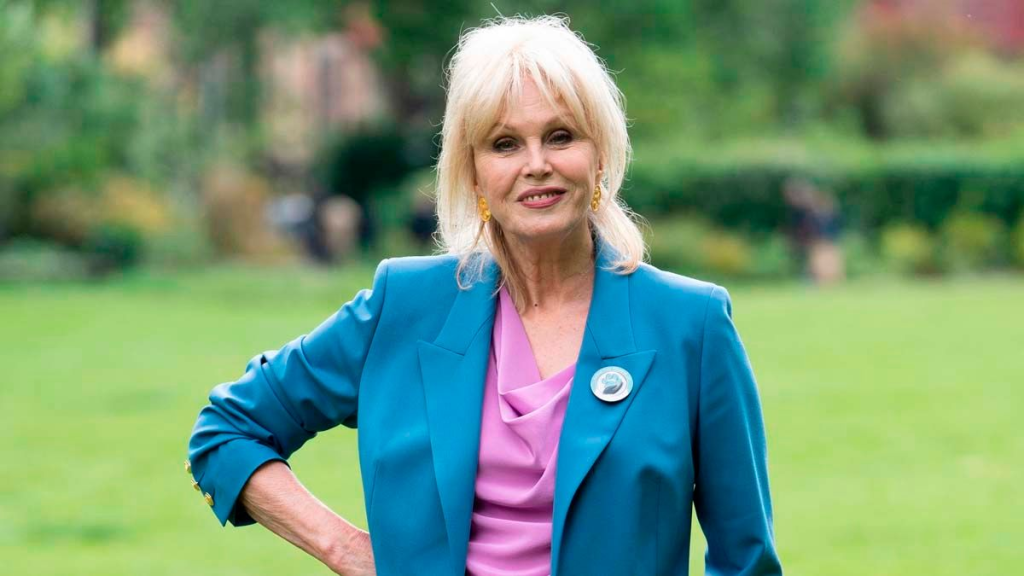
Actress Dame Joanna Lumley today urges Rishi Sunak to keep Tory pledges on boosting animal welfare.

The Absolutely Fabulous star is among celebrities to sign a letter calling on the Prime Minister to deliver on Conservative promises made in 2021 – including to drive through new legislation to tackle abuse of animals and bolster protections.

Dame Joanna, 77, told the Mirror: “Animals are being utterly let down by the Government’s dismaying failure to deliver the plans it promised two years ago.

“I urge the Prime Minister to progress vital animal protection measures, including the Kept Animals Bill and a ban on the import of cruel fur, as a matter of the utmost importance.”

The letter, which was also signed by Pop Idol singer Will Young, TV presenter Kirsty Gallacher and Countdown’s Susie Dent, tells the Tory leader: “Britain prides itself on being a nation of animal lovers and in May 2021 the Government pledged to reinforce our country’s position ‘as a global champion of animal rights’ with the publication of its Action Plan for Animal Welfare.

“The plan promised the animal-loving British public it would deliver improvements in the lives and wellbeing of millions of animals.

“But two years on, we and the animals we care so deeply about have been badly let down.”

The current version of the legislation, the Animal Welfare (Kept Animals) Bill, is stuck in the Commons.

If passed, it aims to tackle cruel puppy smuggling, live exports, banning keeping monkeys as pets and improving zoo regulations.

But a separate letter from 25 animal charities and campaign groups tells the PM the legislation has “been left languishing as the Government’s Kept Animals Bill has not been given parliamentary time for over 17 months”.

It adds: “Our patience, and our trust, has now been exhausted.

“The Kept Animals Bill, and the majority of the Action Plan, now appears to be little more than an inconvenience to a government that believes it can quietly abandon its promises.

“Animal issues matter to voters.”

Humane Society International’s senior campaigns director Claire Bass said: “The Government’s apparent disinterest and unwillingness to deliver its own Action Plan for animals is frankly baffling.

“MPs tell us they receive more constituent correspondence calling for better animal protection than any other issue, so passing legislation like the Kept Animals Bill and a ban on fur imports should be an easy and obvious choice in terms of popular policy.

“But instead, we and animals are enduring endless delays, seemingly deprioritised by this Government despite huge public concern.

“We urge Mr Sunak to remember his party’s promises and start delivering the action that animals deserve and voters expect.”

People for the Ethical Treatment of Animals vice-president Elisa Allen said: “Animals are in peril and the Government has seemingly abandoned them as time is running out for it to make good on its word.”

RSPCA chief executive Chris Sherwood claimed that “animals have been left in limbo by continued inaction on key animal welfare issues”.

Regards Mark

UK General Election in about 12 months – oh, and animal welfare people vote – so lets get moving !

Night boat to Eurovision.

Brazil: Live animal exports might be banned in Brazil – setting the scene for the kind of change we want to see in Europe.

Live animal exports might be banned in Brazil – setting the scene for the kind of change we want to see in Europe

9 May 2023

A trial court in Brazil recently ruled to ban live exports, following a number of NGOs filing lawsuits against the practice based on the harm it causes to farm animals. While the decision is not yet final, this is the kind of bold move we need to see European policymakers make against live animal transport in the EU – a system within which millions of poor sentient beings suffer physically, mentally and emotionally each year.

Animals are not things. They are sentient living beings, that is, individuals who feel hunger, thirst, pain, cold, anguish, fear.

Djalma Gomes, federal judge (source).

On April 25, a potentially historic ruling was made by a trial court in Brazil to end live animal exports. This decision was made following the tireless efforts of several NGOs who, since 2017, have been campaigning to end all live animal exports from Brazil after NADA, the largest live cargo transport ship in the country, came under scrutiny for its extremely poor animal welfare conditions.

Brazil’s call for a ban should inspire the EU to look at its own Transport Regulation more closely

While this ruling will not be final until it is reviewed by a higher court (Brazil’s Third Regional Federal Court) – a process which could take years – it’s an extremely promising first step towards changing the country’s live animal export industry in a truly effective way, mirroring a recent move by New Zealand to ban live exports by sea.

Both bans also send a strong message to the rest of the world, that we hope European policymakers take note of: that the live animal export sector is filled with serious affronts to animal welfare, and needs to be addressed at a dramatic scale. Farm animals often suffer hugely on long journeys, whether travelling via land or sea, including by being:

Starved and dehydrated – as they often travel for several hours without being given food or water

Exhausted – due to the strain these journeys put on them, and the impossibility to relax. A WELFARM investigation found animals being transported from Poland to the Franco-German border were kept in their trucks for 20 hours with no breaks

Subjected to overheating – especially when they are being transported in the summer, when temperatures soar

Crammed together – which can cause injuries and further stress to these animals as they are transported, a process which is already entirely unnatural to them.

Not only do these sentient beings suffer immensely on these journeys, but the rules that are already in place to protect them through the EU’s Transport Regulation are not even being adequately enforced. Over Easter this year, our member Essere Animali together with the Italian police stopped seven trucks transporting lambs arriving from Romania, Hungary and Slovakia. Six of these were violating the EU’s transport rules, including by overcrowding the trucks, overlooking injuries to the animals and more. 

Much firmer rules and restrictions: how should Europe’s live animal transport sector be addressed?

In 2019, over 1.6 billion farmed animals were transported alive across the EU and to non-European countries. It’s clear the European Commission’s Transport Regulation needs a serious overhaul if it is to effectively improve the lives of farm animals across Europe, as our extensive white paper on the subject explores in more detail. 

Beyond creating much stricter rules for animals transported between EU countries, however, it’s important that policymakers also consider taking similar steps to Brazil and New Zealand by enacting a full ban on live animal exports to countries outside of Europe’s borders. When animals are transported to third countries, it’s much easier for the EU’s transport rules to go unfollowed. Banning live exports to non-European countries entirely would be the only way to ensure the EU’s high animal welfare standards are not being undermined elsewhere in the world.

Ideally, international instruments for animal welfare will also be developed in future to ensure that animals are protected globally, by strong and enforced regulations that have their welfare at their heart. But Europe can already inspire great change in this area – and improve the lives of billions of European farm animals – by making powerful revisions to animal legislation that prioritise their essential needs and comfort. More insights into animal welfare during transport can be obtained in our 2022 position paper.

We have our fingers crossed that change is ahead

The live animal transport sector has always been notoriously difficult to monitor, as well as one in which the welfare of animals has been easily cast aside. We’re impressed with Brazil’s recent ruling, and hope it inspires policymakers both in Europe and the rest of the world to give the sector the kind of attention it deserves. If it does, the future will look a lot brighter for billions of farm animals.

Regards Mark

EU: Draft Impact Assessment – a good start for an ambitious legislation.

Draft Impact Assessment – a good start for an ambitious legislation

20 April 2023

Press Release

The draft Impact Assessment report on the revision of the EU’s animal welfare legislation, leaked today, reaffirms the European Commission’s aim of making the EU the global leader in animal protection.

In the Farm to Fork Strategy, the European Commission (EC) committed to revise all animal welfare legislation, to align it with the latest scientific evidence, broaden its scope and make it easier to enforce. The proposed measures are based on scientific recommendations provided by EFSA, the European Food Safety Agency, anchoring them in a strong evidence-base. 

The proposals are expected by late September, however, the details of the Impact Assessment (IA) working document, as revealed by Agra Facts, are promising for the billions of animals involved.

The EC recognises that “Societal demands are not met – As identified in the Fitness Check, the trend is clear: many EU citizens pay increasing attention to animal welfare. A clear reflection of this is the ECI ‘End the Cage Age’ …. Ethical concerns are also raised against e.g. the systematic killing of male one-day old chicks and against long-distance animal transports and fur farming…..In addition, most EU citizens expect a more sustainable food production, i.e. less intensive farming and breeding systems.”

The impact assessment looks at 18 measures to improve the welfare of kept animals. Eurogroup for Animals particularly welcomes measures to: 

Phase out of cages for all species 

Increase space allowance for all species

Ban the systematic culling of male chicks

Introduce welfare requirements for the stunning of farmed fish

Ban cruel slaughter practices like water baths and CO2 for poultry and pigs

Ban mutilations, like beak trimming, tail docking, dehorning or surgical castration of pigs 

Limited journey times for the transport of animals destined to slaughter

Apply the EU’s standards to imported animal products in a way that is compatible with WTO rules

We are also pleased to see that on fur farming the EC is acknowledging the serious welfare issues that a cage system causes to wild animals and is taking into consideration the 1.7 million voices calling for a Fur Free Europe

The final Impact Assessment still has a long road to go before the actual proposals will be adopted, and we call on the Regulatory Scrutiny Board and Interservice Consultation to improve the proposals mainly with regards to shortening transition times to phase out cages and tightening the rules on live animal transport. 

This is a very good start and reflects the decades of citizens campaigning and scientific evidence produced in the EU. In light of the results of the Impact Assessment, the EC must seize this once-in-a-generation opportunity and come forward with strong legislation that effectively improves the welfare of animals in Europe and globally. Ambitious legislation will benefit animals, citizens and farmers alike.

Reineke Hameleers, CEO of Eurogroup for Animals

Regards Mark

EU; We Have Known It For Decades – New review on live animal transport echoes our call for change in the industry.

New review on live animal transport echoes our call for change in the industry

18 April 2023

Opinion

We were pleased with the conclusions drawn in the “Transport of live animals in the EU: challenges and opportunities’’ review produced by the European Court of Auditors. Published on April 17, it re-emphasises the need for a serious revision of the Live Animals Transport Regulation – a bold move for animal welfare that we have been campaigning for for years.

The review recognises many problems involved in long-distance transport, and presents some important proposals for addressing them.

It highlights that reducing the number and length of journeys, improving the conditions for live animals during transport, and finding alternatives to transporting them could mitigate the negative impacts of this practice – of which there are many.

What is more, the report recognises that the Regulation is not implemented in the same way by all Member States, resulting in some industry players being able to exploit the different systems enabled by national sanctions.

In addition, the report acknowledges that the quality of animal welfare during transport is not considered in the cost of transport/price of meat – and neither is the environment. The review points out that there is a contradiction between the Green Deal’s call for a transition to a more sustainable food system and the increased amount of live animals that are transported, and further cites studies that show that transporting meat and carcasses is more sustainable than transporting live animals.

Horrible for animal welfare and economically and environmentally worse than the alternatives on offer, it’s clear that live animal transport does not belong in the future of farming in the EU.

Another critical aspect the report addresses is the need for more reliable data on live animal transport. The tracking systems that are currently available do not provide an accurate read on the number and condition of animals transported into, and especially outside of, the EU. In 2018, the Commission estimated that TRACES recorded only 31.6% of cattle and 3.5% of sheep exported by livestock vessels from Croatia, Slovenia, Spain, France, Ireland, Portugal, and Romania combined. With no insight into what’s happening on these long journeys across Europe, who knows what these poor sentient beings are going through?

So far, decisions in the live animal transport industry have mostly been made based on consumer preferences and economic factors. Based on the review’s findings, and with the European Commission soon to revise its animal welfare and transport rules, the European Court of Auditors urges that they instead focus on: 

Promoting the transport of meat rather than live animals, as well as the use of local and mobile slaughterhouses – to reduce the suffering of animals and their time spent travelling

Increasing transparency and harmonisation in meat labelling – for example, through an EU animal welfare labelling system, so consumers can make more considered buying choices and are aware of where their animal products have come from

Harnessing the latest technologies to track all animal journeys – so the EU really knows what’s happening while animals are on the move, and can take clearer steps to protect them.

The report adds to the pile of evidence and conclusions shared in the last couple of years from the ANIT CommitteeEFSA, the fitness check of the European Commission and several investigations by animal NGOs that demonstrate live animal transport is causing tremendous suffering to animals. It should give the final push to the Commission to propose a revised Transport Regulation that doesn’t allow for animals to be transported beyond eight hours (or four hours for poultry and rabbits), prohibits the transport of vulnerable animals (like unweaned calves) and bans live exports. We believe no more evidence should be needed for the Commission to make these decisions once and for all.

Learn more about our views on live animal transport in our 2021 white paper.

Regards Mark

Belgium: No Animal Left Behind posters take over Brussels’ EU district.

12 April 2023

As part of Eurogroup for Animals’ ‘No Animal Left Behind’ campaign, posters can be found in Brussels’ EU district this week targeting the European Commission in light of the “once in a lifetime opportunity” to change history for farmed animals with its imminent revision of animal welfare legislation.

EU animal welfare rules remain limited, poorly enforced, and plagued by loopholes, leading to widespread suffering in the farming sector. From the cruel handling of broiler chickens to chaining the back legs of dairy cows, our recent exposé reveals how the EU’s farmed animals are being callously treated by those who are meant to care for them.

At the end of March, Eurogroup for Animals launched the second phase of the ‘No Animals Left Behind’ campaign together with its over 80 member organisations around Europe and beyond. The campaign aims to expose existing animal welfare shortcomings in EU legislation and offer feasible solutions to the unnecessary suffering of the EU’s farmed animals that could be incorporated in the revised legislation due by the end of the year. 

Posters were strategically placed around Brussels’ EU district to raise awareness about the upcoming revision of the EU’s animal welfare legislation and remind policy makers about EU citizens’ expectations in light of the mass public response to End the Cage Age European Citizens’ Initiative, Fur Free Europe European Citizens’ Initiative and the first No Animal Left Behind campaign.  

Regards Mark

England – Fighting For Calves !

You know; fighting for the welfare of calves has always had a special ‘box’ within me.

In my 35+ years of live animal transport investigation work, the suffering of these babies on the road really used to get my goat more than just about anything.

As British calves were being exported to the NL at the time; we took some time out of our schedule to ‘sniff around’ and find out a little more about places they were being sent to.

We shared many hours on the road; laughing, talking and generally trying to have a good time in work that we both knew the live animal export business caused immense suffering to – innocent, sentient beings.  Calves“.

England: Another Terrible Loss – John Callaghan. – World Animals Voice

With calves, you often hear them long before you actually see the truck – they are babies, and they bellow immensely for the milk produced from the mothers that they have been torn away from at what ?, often ages of just 1 day old.  Cow milk is for baby cows, NOT humans; yet the systems today try to make people think that humans are in need of cow milk, not the cow babies.

I took this picture above decades ago of British calves being exported to the veal systems of France and the Netherlands,  you can just make out the calves suckling the bars of the transporter; desperate for milk held within their mothers.  This is the reality of live animal transport; and just one reason of thousands why it needs to stop now.

In the past calves were held in individual ‘crates’ until they reached slaughter age of around 4 to 6 months.  During their short lives in the crates; they were deprived of any iron in their food; to make them anemic and thus make their flesh ‘white’ as required by the gastronauts of Europe.  What humans do to animals in the name of ‘food’ just really bums me off.

Anemia is defined as a low number of red blood cells. In a routine blood test, anemia is reported as a low hemoglobin or hematocrit. Hemoglobin is the main protein in red blood cells. It carries oxygen, and delivers it throughout the body. If you have anemia, your hemoglobin level will be low too.

We fought hard for the calves – (above) here I am (with Barb, a hunt sab) at Dover port (where calves were exported from) after we had put the British Prime Minister (at the time John Major) into the crate to get a feel for what he was approving.  You can see the liberated calf standing alongside.

Here are some pictures of real calves suffering in the crate systems.  Every one a valid reason why I fight tooth and nail for the calves;

Above – an investigation showed British calves were being exported to Hungary and that they were still being crated individually years after the EU ban came into place !

Above – with our tour truck in Holland teaching the Dutch about live veal systems.

Above – great campaigning days in the Netherlands for the calves.

Here – photographs from a PMAF investigation which I used in the compilation of an EU Parliament investigations report on calves being transported to France.

Above – Dover demo with animal buddies fighting live calf exports.

Often it feels like you are running up that hill – but a positive end makes it all worth it:

Regards Mark

EFSA opinions on the welfare of calves

The European Food Safety Authority (EFSA) published today their scientific opinion on calf welfare. The EFSA was mandated to describe the most used systems, their welfare consequences and measures to prevent and mitigate those consequences.

EFSA also looked at three specific issues: 

Welfare of calves reared for white veal (including requirements for space, group housing and iron intake), 

Risk of limited contact between mother and calf 

What type indicators can be measured in slaughterhouses to monitor the welfare on farm. 

A species-specific Directive already exists to protect calves in the EU (Council Directive 2008/11/EC), yet it is extremely outdated, and fails to take into account new science published since it was adopted in 2008. Proof of this is that EFSA identified several hazards connected to these systems ranging  from respiratory and gastrointestinal diseases to inability to perform natural behaviours or even calves experiencing group stress. 

They have advised several solutions that Eurogroup for Animals welcomes: 

Group housing from the first week of life (between 2 to 7 calves) and keeping them in stable groups.

Increased space allowance – 20 m² is recommended so calves can express their full behaviour and 3 m³ is the minimum recommended per calf (all in group housing)

In regards to feeding: Good colostrum intake, increased amount of milk provided, and good quality roughage availability from 2 weeks of age. 

Several welfare indicators can be collected in the slaughterhouse, but they should be complemented with behavioural ones collected on farm

Regrettably, although the available science already points towards a need for a longer period of cow-calf contact and bonding, EFSA took a conservative approach, only recommending a minimum 24 hours of cow-calf contact. We strongly oppose this conclusion. Cow and calf contact can reduce stress of both adult females and calves, it increases the vitality and resilience of the calves and leads to an increase in body weight gain of the calves. Furthermore, it provides a better social behaviour for the calves in the long run that is prolonged until adult age. It also leads to an increased expression of positive behaviours for both. Eurogroup for Animals recommends that contact between the calf and the mother should be allowed for at least the first eight weeks of age. During this period, calves and cows shall be kept in a half-day contact system – at least – with suckling permitted.   

Furthermore, Eurogroup for Animals would like to see a more science-driven, animal welfare approach when it comes to iron levels in the calves’ blood. For acceptable blood levels of iron, we recommend a blood haemoglobin concentration of at least 6,0 mmol/L throughout the life of the calf, as already required by the German Directive 2008/119 (EFSA is recommending 5.3 mmol/L).

The science demonstrates that business as usual for calves is not going to work anymore. We urge the Commission to listen to the science and seriously improve the species-specific legislation to protect calves in the EU and beyond.

Welfare of calves kept for white and rosé veal production

 DOWNLOAD PDF 240.21 KB

Regards Mark

Italy: Essere Animali shines a light on the experiences of lambs during live transport in Italy.

6 April 2023

Essere Animali

Press Release

Essere Animali, recently collected footage that exposed the conditions lambs face while being transported during Easter. Their investigation was raised to the Chamber of Deputies at the Italian Parliament during yesterday’s ‘question time’ by Agriculture Minister Francesco Lollobrigida.

Poor and ineffective controls. The rules on animal transport in Italy are not respected

This was said by Eleonora Evi, deputy of Alleanza Verdi e Sinistra, who tabled a direct question to the Minister precisely to highlight the dramatic problems that still affect live animal transport, particularly long-distance transport.

‘Italy is a country much affected by the long-distance transport of lambs and young sheep, especially during the Christmas and Easter holidays.

In 2022 – out of a total of 2,199,832 lambs slaughtered in Italy (source: Istat) – 653,303 came from Eastern Europe (mainly from Hungary and Romania). These transports often involve animals that are only a few weeks old, which have to endure traveling up to 30 hours inside trucks. 

Last March, Essere Animali, along with members from the police, carried out road checks from Gonars to the province of Bologna and Florence to monitor the transport of lambs arriving from Romania, Hungary and Slovakia. Six out of seven lorries were traveling in violation of the rules, with serious cases of overcrowding, lambs stuck in the partitions of the lorries, unusable watering systems and being generally unsuitable for the transport of this species.

In one case in particular, the lorry stopped near Altedo (Bologna) had 200 animals more than the permitted load, and three lambs were slaughtered by the Italian authorities because they were no longer able to continue the journey. Ultimately, current regulations are inadequate to guarantee the protection of animals during transport, one of the most stressful phases and cause of suffering for animals raised for food’.

It’s time to change the trend – and call for this cruelty to end 

The images and complaints collected by Essere Animali and the police once more show how the transport of live animals is a practice that must be overcome, and how important it is to robustly revise the rules that should protect animals during journeys.

When questioned on the revision of the European Regulation on the transport of live animals during the Question Time in the plenary session, Minister Lollobrigida confirmed that he did not support Portugal’s proposal, contrary to what was previously stated. Portugal’s briefing note, strongly contested by many other Member States, in fact re-proposes the status quo and calls for ‘continuing to facilitate intra-EU trade and the export of live animals, without focusing on measures to ban or restrict certain types of transport’. 

Evi adds: ‘This position is frankly unacceptable, considering that the current European Regulation is not only incomplete – a condition unexpectedly noted by the Minister himself – but also outdated and very weak as well as constantly violated by the Member States… [it] is disavowed day after day by the incredible amount of analyses and scientific opinions that confirm what we have been advocating for some time: the need for rules that protect animal welfare starting from species-specific needs’. 

‘We therefore take note of a possible change of position on the part of Italy, which has until now been ambiguous in its positions at European level, and certainly not vocal against maintaining the status quo unlike many other EU states. We therefore expect to see, in line with what the Minister has said, our country lined up with those countries that play a proactive role at European level in support of ambitious and courageous positions to provide the EU with a transport regulation that seriously focuses on animal welfare, starting with listening to scientific recommendations, greatly reducing traveling hours, banning long journeys and exporting outside the EU, banning the transport of unweaned animals and creating the conditions for a transition to transporting meat, carcasses and genetic material instead of live animals,’ she concludes.

Regards Mark