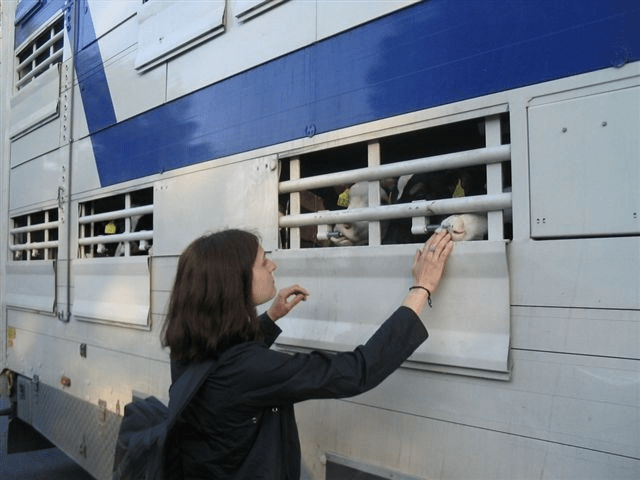
Photo – Mark – Mrs Plod makes sure I behave !
I do not aim for this to be a politically biased site – in my view they are all liars and make false election promises which thereafter they often fail to keep.
For those of you who are non UK resident, we have here 2 main political parties – namely the Conservatives and Labour. The Conservatives (Tories) form the current government with a majority of MPs, and Labour is in opposition.
The Tories have been in power for 12 years,following the General Election in May 2010.
Many people now consider it is time for a change.
There will almost certainly be a General Election where citizens vote for a government in 2024.
Each party has an area associated with animal welfare – and here are the links:
Conservatives – About Us | Conservative Animal Welfare Foundation
Labour – https://www.labouranimalwelfaresociety.org.uk/
The Conservatives have promised a lot – and then failed: England: Here We Go Again – Government Bullshit Promises On Actions ALREADY Making Their Way Through Parliament Which Would Have Given Animals More Protection. – World Animals Voice

After Brexit, we were promised legislation to ban the export of live animals for slaughter and further fattening. Despite personally being involved in a government consultation; at wich I personally presented over 50 A4 pages of evidence as to why live transport should be banned; the Tories have now pulled the plug and are not moving on with this – see last link for more.
CAWG says:
We have been disappointed by moves to drop the long-promised Consultation on animal welfare labelling, and the discontinuation of the Kept Animals Bill (which included an end to live exports for fattening and slaughter). While we remain supportive of the Government’s approach to deliver these measures through alternative legislative vehicles, we fear not all of these can become law before the next General Election.
Maybe not as disappointed as you will be at the next General Election !!
We now wait for Labour to move forward with the issue – animal welfare is a big vote winner – the problem is some political parties do not recognise this.
As I previously said, this site is not politically biased; I attempt to proide info and some links, as I have done here, and then individuals can further research as required.
Regards Mark
Associated live export consultation links:
UK: Live Exports (Ban) Consultation. – World Animals Voice
UK; Live Animal Export Ban Is Progressing Through Parliament. – World Animals Voice

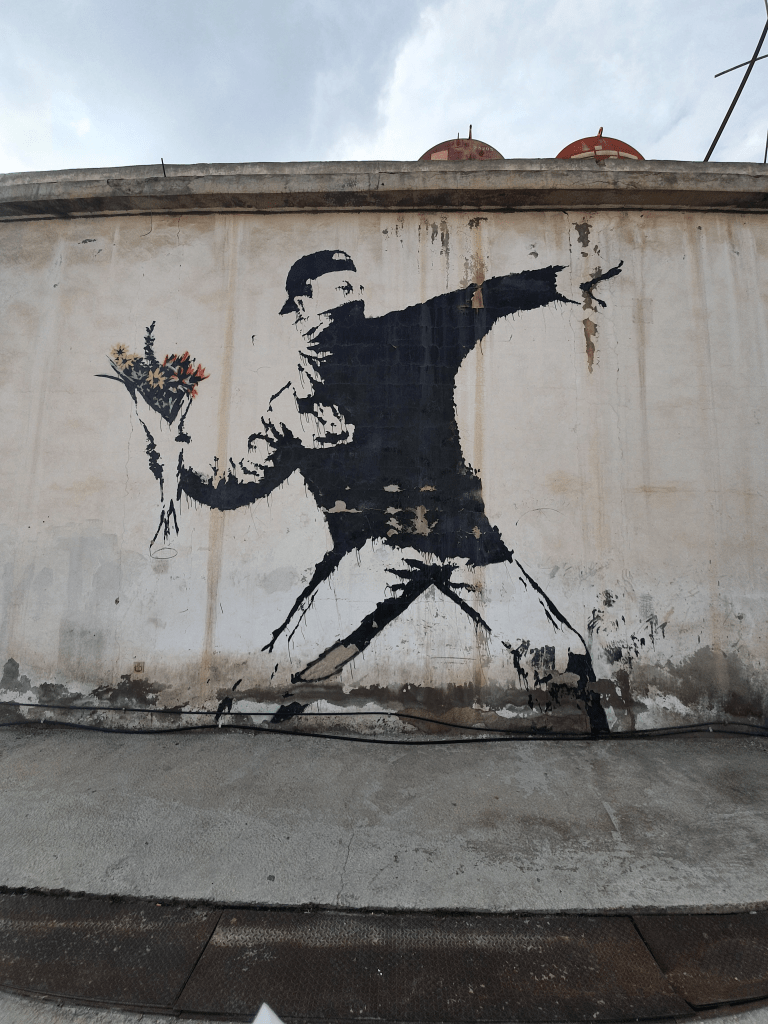
Banksy is an English artist who’s true, real identity is unknown to most.
He is a British icon.
He produces amazing artworks, often on buildings, garages, anything anywhere type attitude; and these artworks ‘just appear’ anywhere overnight for people to enjoy.
Here in New York he does his bit for live animal transport; the ‘Sirens of the lambs’.
This is very typical Banksy:
Going, going, gone:
Behold Dismaland: Inside Banksy’s Disneyland-Inspired Theme Park | Mashable News
Banksy has been secretly assembling his own Disneyland-inspired creation in this West Country seaside town, and it’s not exactly the happiest place on Earth. Dismaland, which opens to the public Saturday and sits on the 2.5 acre site of the Tropicana lido, is the shadowy artist’s first “bemusement park,” and it’s packed full of subversive artworks.
Enjoy !
Regards Mark
The following are typical Banksy artworks:


I had this through the other day (9/8) from the Conservative Animal Welfare Group; the Conservatives currently being in government here in the UK.
When Boris was the Prime Minister; he appeared to be pushing forward more on animal welfare issues; probably because he was also being driven by wife Carrie; an activist in her own right.
Since Rishi ousted Boris and became PM himself, there has been no real movement on both animal welfare or environmental issues. See below.
Rishi Sunak’s approval rating on environment falls to record low | The Independent
The 52 signatories to the letter, dated July 28, include Friends of the Earth, Greenpeace UK, the National Trust, RPSCA and RSPB. They say they represent 20 million people.
After referencing recent wildfires across the globe, and flash flooding in India, they write that the environment “remains a central concern for voters” and there is “no public mandate for a delay”.
The letter concludes: “We will not stand by whilst politicians use the environment as a political football.
Environmental groups warn Rishi Sunak over green pledges – BBC News
Now the CAWF are banging out mails as follows below. Personally I have been fighting for a live export bn for 35 years. In my view, the Conservatives have never had, and currently do not have, any real idea of what a big vote winner both positive animal welfare and environmental action can be; see the poll results in the CAWF actions below. Yet still, right now, both issues appear to have been put on the back burner by the current Rishi government,

How long does tis go on ? – I personally predict that in the next General Election, which will probably be within the next 12 months, the Conservatives are due to be annihilated by other parties who claim to be better at animal and environmental issues. I don’t really have faith in any of them; they all make false promises to get votes and when elected into power on those issues, the British public are just given a kick in the teeth. I have over 60 years experience of being bullshitted to and being kicked in the teeth by past and current governments. The big problem is that in reality, there does not appear to be any UK political party which acts for animals, and will act for animals and the environment in the future. Now I read from the CAWF of their policy recommendations for the Conservative Party to adopt in their next Manifesto.
They say; We have been disappointed by moves to drop the long-promised Consultation on animal welfare labelling, and the discontinuation of the Kept Animals Bill (which included an end to live exports for fattening and slaughter). While we remain supportive of the Government’s approach to deliver these measures through alternative legislative vehicles, we fear not all of these can become law before the next General Election.
The Kept Animals Bill was already working its way through Parliament; this would have included a ban on the live export of animals for both slaughter and further fattening. Along with New Zealand, the UK would have been pivotal in halting live animal exports. Now. Rishi has done a U turn and scrapped the entire Bill.
Tories accuse Sunak of breaking pledge after animal welfare U-turn | Animal welfare | The Guardian
Ban on puppy smuggling and live exports dropped by Rishi Sunak’s government | The Independent
I can do U turns as well; and steering well clear of Conservative Manifesto bullshit for the next General election will be at least one of the. They have betrayed so amny of us, the voting public; maybe soon it will be time for revenge !
From the CAWF:
Dear Friend,
We hope you are enjoying a relaxing summer. From briefing officials at 10 Downing Street, to launching our new report on perceptions of farm animal welfare, it’s certainly been a busy few months since our last update in April.
With a General Election now on the horizon, CAWF launched its 2024 Manifesto ‘Leading the Way for Animals’ in July which set out key policy recommendations for the Conservative Party to adopt in their next Manifesto. This coincided with some brand new polling we commissioned through Opinium, which showed two thirds of people (64%) would feel more positively about a political party if they included a strong commitment to animal protection.
Last month we also launched a new report ‘Farm Animal Welfare in the UK: What Does the British Public Want?’ which reveals the significant gap between what the British public demands as citizens and consumers, and the realities of what they receive via standard UK farming industry methods of production and practices.
Meanwhile last week our Co-Founder Chris Platt delivered a speech at the 2023 Animal and Vegan Advocacy (AVA) Summit in Los Angeles, United States. We were delighted with this opportunity to expand our international presence and advise other countries on building genuine, Conservative animal welfare advocacy.
Of course, all of this has taken place against the backdrop of major legislative changes on animal welfare. We have been disappointed by moves to drop the long-promised Consultation on animal welfare labelling, and the discontinuation of the Kept Animals Bill (which included an end to live exports for fattening and slaughter). While we remain supportive of the Government’s approach to deliver these measures through alternative legislative vehicles, we fear not all of these can become law before the next General Election. We are calling for a specific Government-led Bill on live exports, to ensure this vital policy and key Manifesto commitment for farmed animals is honoured.
We are also urging our supporters to ask their local MP to write to the Prime Minister and ensure time is set aside for a Government Live Exports Bill.
Read on for more information about all of this and much more. We hope you have a restful summer, and look forward to continuing to keep you up to date with our latest work.
Thank you for your support and best wishes,
Chris and Lorraine Platt
Co-Founders
Finally, on a lighter cringe note, I guess he should have should have stuck to guitar
At least he got a clap. How do they all sit there with such straight faces ? – I would be howling with laughter !
Regards Mark

Back in 2010 I was the EU correspondent for a Kent based anti live animal export group, named KAALE; At that time I worked with Lesley, founder of ‘Eyes on Animals’ (Netherlands) – Eyes on Animals – Watching out for their Welfare, also PMAF (now Welfarm) in France Welfarm – World Farm Animal Protection – Wikipedia, the free encyclopedia, also Animals Angels (Germany) Stop Animal Transports! – ANIMALS‘ ANGELS (animals-angels.de) to produce a large report on the transportation of live dairy calves from Ireland into France (via Cherbourg).

You can read more about the report and the investigations at About Us. | Serbian Animals Voice (SAV)
Scroll down until you come across the images of the calves and the transporters.
The report comprised several investigations into the Irish calf export business. Here is a link to one of the investigation reports:
Hundreds of copies of the report were printed and sent to MEP’s at he EU, with the hope it would make difference.

So for some of us, and you as campaigners, the new investigation footage shown at Ireland: Milking It – “Utterly unacceptable and unlawful”: Ireland’s mistreatment of male calves. – World Animals Voice comes as no surprise at all. The investigative work back in 2010 concentrated on a staging (control) post (stop, unload, feed calves) associated with an operator named Pignet.
By pure coincidence, Lesley has additional Pignet control post abuse footage in the current EoA site – you can read more about it here – Violence against young calves at Pignet control post (eyesonanimals.com)
The fight for animal justice goes on – stop live animal transports !
Regards Mark

“Utterly unacceptable and unlawful”: Ireland’s mistreatment of male calves
14 July 2023
EFI
Investigation
A new documentary by Ireland’s RTÉ Investigates programme, ‘Milking It; Dairy’s Dirty Secret’ has exposed animal welfare breaches of male calves in Ireland, both on-farm and during live export to Europe.
Irish milk production has jumped 68% since the EU milk quota system was abolished in 2015. Ireland now produces just short of 9 billion litres of milk every year and 10% of the world’s infant formula. To meet this demand, approximately 1.5 million dairy calves are born in Ireland every year. While female calves are reared to become dairy cows, over half a million male calves born each year are considered a valueless by-product of the sector, as they neither produce milk nor fatten well for beef. Male calves therefore face a difficult fate: either killed at a few days old, or shipped to veal farms in Holland, Spain, Italy, and, more recently, to a growing market in Poland and Romania.
The RTÉ documentary included investigation footage carried out by L214 and Eyes on Animals, assisted by our member organisation Ethical Farming Ireland, which covered the journey of calves transported from Ireland to France and the Netherlands.
Despite scientific evidence suggesting that these animals should not travel until 12 weeks old due to their undeveloped immune systems and incapacity to correctly use feeding devices, the industry continues to ignore this recommendation, and calves are exported at around 15 days old. Also, The European Food Safety Authority (EFSA) recommends a minimum age of 5 weeks for transport, emphasising the vulnerability of these animals during their early stages of life.
Furthermore, EU regulations clearly state that unweaned calves must be given water and, if necessary, fed after 9 hours of transport, when they should receive a rest period of at least 1 hour before being transported again. However, footage reveals that the calves are subjected to 30-hour journeys without milk or rest: a flagrant violation of EU law, and a general disregard for animal welfare.
Further footage taken by RTÉ told the same story of gruelling journeys for young calves that breach the EU Regulation on the transport of live animals. In addition, workers could be seen repeatedly kicking young calves, hitting them with sticks, and throwing them from trailers. .
The documentary has caused political outcry, with the Irish Department of Agriculture confirming an investigation into the programme findings. Irish Agriculture Minister Charlie McConalogue called the practices uncovered in the documentary “utterly unacceptable, and in some instances unlawful”.
Irish Taoiseach (Prime Minister) Leo Varadkar described the footage as “repugnant”. Mr Varadkar said there would be “robust and timely” action against people found to have breached regulations in the footage, and that the reputation of the sector relied on compliance with the regulations in place.
The documentary proves once again that the existing animal welfare legislation does not go far enough to protect EU farmed animals at rearing, transport or slaughter. The European Commission has the power to improve the transport regulation this year, with the revision of the EU Animal Welfare legislation. In particular, they must:
Ban ‘unfit animals’ from being transported, including unweaned animals, for whom these journeys are even more difficult to bear
Place strict limitations on journey times
Ensure that the new rules are better enforced
Let’s be clear, there is no way to export calves humanely or in line with legislation because it is not possible to feed calves during transit. That is the simple truth. The dairy industry must find an alternative outlet for their calves, and keep them with the herd until weaned. If you don’t have the facilities to look after them then don’t breed them in the first place.
Caroline Rowley, Founder of Ethical Farming Ireland
Indeed, and as recommended during the documentary, the culling and mistreatment of “valueless” male calves should be avoided, which is currently possible by using sexed semen. The transport of farmed animals should be reduced, refined and replaced by meat and carcasses, semen and embryos as recommended by the FVE, WOAH and EFSA.
Read more at source
Regard Mark
I have more to say about Irish calf transport investigations which we have undertaken in the past; I will provide details and links in another post very soon.

Import and production of horsemeat under cruel conditions must stop
AWF
Investigation
The latest investigations by the Animal Welfare Foundation (AWF), Animals’ Angels USA and Tierschutzbund Zürich (TSB) reveal the mistreatment of horses slaughtered in Canada and Uruguay for European consumption. Thanks to these investigations, and in collaboration with a coalition of animal protection organisations, we are calling for an end to the import and production of horsemeat derived from cruel treatment.
Horsemeat from Canada
Half of the horses slaughtered in Canada come from the United States. EU meat export rules require American horses to be kept in feedlots for six months before slaughter to gain weight. This results in numerous health problems (painful hooves, metabolic diseases, ect.).
“In the course of our on-site investigations we found on several occasions that horses were limping, suffering from laminitis and had died as a result of their illnesses or injuries,” explains Sabrina Gurtner, project manager at AWF. Mares and stallions are mixed. They also take in pregnant animals. “The chances of foals surviving in the feedlots are slim. We have found foals that were sick in summer and froze to death at birth in winter,” recalls Sabrina Gurtner.
Horsemeat from Uruguay
In a recent two-year investigation by AWF and TSB, conducted in parallel with a pre-announced EU inspection, all three EU-certified slaughterhouses in the country were subject to overt and covert observations before, during and after the EU visit. “Our research shows that the EU audits are manipulated through extensive preparations,” reports Sabrina Gurtner.
What is particularly striking is that only a fraction of the horses are in the slaughterhouse pastures during the audits. “They’re placed in green pastures, sheltered from the weather. But that’s not the reality before and after the inspection visits. Once the inspectors have left, the horses are sent back to dusty, dirty fields, often without roughage and sometimes even without water.” Workers were also observed, beating the horses when the audit was over.
Problem: traceability and food safety
Together with AWF and the other members of the coalition, we condemn the inadequate traceability of horses in meat production abroad. There is no identification system for horses. The last owner, usually the horse dealer, provides information on the medication and origin of the horses he sells to slaughterhouses. “People rely on the honesty of the sellers. This paves the way for systematic fraud and puts EU consumers at risk,” criticises Sabrina Gurtner.
These investigations clearly demonstrate that animal welfare and traceability issues remain unresolved for the import of horsemeat from Uruguay and Canada. We therefore call on the European Commission to stop imports of horsemeat from these countries, as well as from all countries that do not comply with EU requirements.

Sign the petition – Demand an import suspension of cruelly produced horsemeat from overseas!
From stable to fork: EU Horse Meat Imports (updated version)
Regards Mark

Broiler chickens: why are these innocent beings suffering by the billions?
It’s a difficult life for broiler chickens in Europe’s farming systems. Not only are these poor birds reared to grow incredibly fast – so they’re ready for slaughter after just six weeks of life – but they’re subjected to painful stunning practices, arduous journeys and awful habitats, too. As one of the most widely farmed and consumed species in Europe, it’s critical the Commission takes their welfare seriously in their ongoing revision to the animal welfare legislation. Billions of lives hang in the balance.
Broiler chickens are incredible animals. They’re clever, have amazing memories, and can form close bonds with their peers. But to see the way they are farmed across Europe, you’d think they were little more than robots – crammed into dark rooms with nothing to do, no room to move, and raised to be slaughtered in just a six-week timeframe.
It’s a shocking lifestyle to imagine… and an even more shocking one to watch up-close.
What are some of the key issues broiler chickens face in Europe’s farming systems?
The stats listed below are from our 2021 No Animal Left Behind report.
Around 90% of the EU’s farmed broiler chickens are raised in intensive systems, which are riddled with problems. Here are just a few of the most concerning issues for this species in the sector.
Broiler chickens are being bred to grow too quickly
95% of the broiler chickens currently being reared on factory farms are ‘fast-growing’ breeds, which means they’re bred to grow very quickly and reach slaughter weight in just five to six weeks.
These poor beings cannot live a good life. Due to their fast-growing nature, they’re in constant discomfort, and commonly suffer from problems such as lameness, heart failure, metabolic disorders, and heat stress. These health problems are a direct result of their genetics, which means the only solution is to phase out the farming of fast-growing broiler chicken breeds entirely.
Broiler chickens are rarely given adequate space or access to the outdoors
Most broiler chickens live in horrible confinement. Thousands of birds are routinely crammed into the same small, dark spaces in factory farms, with the European Commission currently allowing stocking densities for up to 42 kg/m2 in its legislation.
The findings of the EFSA scientific opinion on broiler welfare point to the fact that stocking densities over 11 kg/m2 creates significant welfare problems for broiler chickens, with common issues including they’re more likely to contract footpad dermatitis, will have more difficulties with walking, and struggle to express their natural behaviours. Furthermore, high stocking densities cause chickens to suffer from overheating, as well as subject them to unhygienic conditions that are a threat to their health (as they’re surrounded by a much higher volume of litter than if they lived in smaller groups).
The needs and natures of broiler chickens are being ignored
Broiler chickens are feeling, curious and engaged creatures with a range of physical and emotional needs – just like any other sentient being.
However, these needs are far from being met across European factory farms. Billions of broiler chickens live indoors without any form of entertainment (such as perches or straw bales), and with no room to exercise, play or socialise naturally. Because of this, they have almost no opportunities to have positive experiences in their lifetimes.
Broiler chickens are being transported alive by the billions
Did you know that poultry makes up over 90% of live animal transports each year?
Many are broiler chickens, as they are frequently transported across Europe to reach slaughterhouses. Despite the huge number of them being forced to undergo long and arduous journeys annually, poultry is rarely considered in conversations about live animal transport, meaning these birds are suffering in silence.
Broiler chickens are being slaughtered in horrific ways
Industrially farmed broiler chickens are not granted the dignity of a pain-free death. Countless of them are subjected to a cruel and ineffective form of ‘waterbath stunning’ before they are sent to slaughter, where they often killed by having their throats cut – some while still fully conscious:
Broiler chickens are farmed at a gigantic scale across Europe – yet as the above points show, the conditions in which they’re reared are far from acceptable. It’s absolutely critical that the European Commission focuses on this neglected species, and writes strong and robust laws for their welfare as they continue with their revision of the animal welfare legislation.
Emphasising the critical nature of the changes needed, our members have been campaigning for better lives for broiler chickens for years. Over in Sweden in 2022, Djurens Rätt launched an incredibly popular campaign exploring the issues these birds commonly experience:
This campaign won our award for ‘Best Campaign’ at the Eurogroup for Animals Annual General Meeting this year.
Members including Equalia, LAV and Essere Animali have also published several investigations that shine a light on the horrors industrially farmed broiler chickens are exposed to, sparking outrage and signalling a clear need to adapt the Commission’s laws for their welfare – and enforce them across the EU.
Their voices have been impactful. We’re now beginning to see changes made and interest in the subject politically: at a PETI Committee last month, for example, Animal Equality managed to keep the petition to outlaw fast-growing broiler breeds open. More recently – just last week – the Danish government agreed to phase out the state procurement of fast-growing broiler chickens, and to back a ban at EU level. Over in Sweden this year, the Swedish National Agency for Public Procurement included standards for higher welfare chicken breeds in line with European Chicken Commitment.
This is amazing progress for broiler chickens, but to change their lives at the kind of scale needed across the entirety of Europe, the European Commission must create standards for their welfare that all Member States must follow.
The European Commission must write species-specific legislation for broiler chickens! Do you agree?
Some of the most important changes they should make to the welfare laws for broiler chickens are:
Banning fast-growing broiler breeds
Banning ‘waterbath stunning’
Limiting stocking densities in farming systems following EFSA recommendations
Ensuring they have access to enrichment materials and the outdoors, so they can lead fulfilling lives
Putting measures in place to make sure all welfare laws for broiler chickens are sufficiently enforced across Europe.
It’s time to ring in a brighter era for broiler chickens in the EU and beyond. Are you with us?
We’re working to ensure all kept species are considered by the European Commission in their update to the animal welfare laws! Learn more here.
Regards Mark

Photo – Mark
I think that any of us in welfare who have been involved with live animal transport over one, two, or (in my case) around 40 years, we all know what a complete and utter farce the Regulation is for the ‘protection of animals during transport’ – Reg 1/2005 – EUR-Lex – 32005R0001 – EN – EUR-Lex (europa.eu) We know it well as part of our work, and yet despite overwhelming evidence and footage over decades showing endless suffering of animals during transport, and the non compliances with the EU legislation, the people in the EU who could change things just ignore and turn the other way.
The footage you see here from our friends at AWF is yet more examples of the EU gone wrong.
It has been time for change for decades; but now the EU Commission hopefully is really in last chance saloon. It happens all over the world, not just in Europe. The sooner we see legislators get off their butts and do something to actually protect animals in transport, is a day that cannot come soon enough. Until the ban the fight goes on; and the evidence continues to pile.
Mark

Photo – Mark
The Animal Welfare Foundation, released three reports on June 16 highlighting some of the horrific realities of the live animal transport industry. Coupled with their recent investigations into the sector, it’s clear change must happen – and that only the European Commission can bring on the scale of action needed.
The first report is concerned with which factors – including bedding, loading density, and distance – have the strongest impacts on the welfare of cattle during transport. It analyses 112 consignments of cattle on trucks that were inspected over a period of five years, between 2016 and 2021. Ultimately, their findings indicate that insufficient welfare provisions overwhelmingly impact an animal’s physical and emotional health, and can even shorten their lifespans.
The second report focuses on the long distance transport of lambs between the same time period. The findings are shocking – AWF records that out of the consignments they investigated:
100% had inadequate drinking devices for lambs
90% provided insufficient space for the lambs to move – in at least 44% of the vehicles, the space for each individual animal came only to 0.18m2
65% had issues that were likely to lead to injuries, such as sharp edges and loose dividers
At least 35% of the vehicles had been travelling for longer than permitted by law.
The third and final report follows a similar theme, and reports on the transport of unweaned calves between 2015 – 2021. As with lambs, it was found that the care these poor calves received was far from satisfactory, as in the consignments they investigated:
100% had inadequate drinking devices for unweaned calves
In at least 73%, animals were not fed after nine hours
At least 47% of the vehicles had been travelling for longer than permitted by law.
In both the second and third reports, AWF noted that well over half the animals being transported were showing acute signs of distress, including restlessness, biting and licking the metal bars they were trapped behind, and making loud noises.
Their insightful work makes the connection clearer than ever. The millions of sentient beings that are subjected to long journeys each year are not only being badly taken care of, but they are sensitive to the conditions in which they are transported as well. Measures must be taken to ensure these sentient beings are given adequate space to move, access to clean water, good nutrition and a comfortable environment to make these journeys as stress-free as possible.
Recent investigations by the Animal Welfare Foundation also stress the urgency of new live animal transport rules
Earlier this year, the Animal Welfare Foundation released heartbreaking footage of the journey of some young calves, which they followed from the Czech Republic to a fattening farm in Spain.
Their footage shows that these poor infants were starved for hours, and one calf in particular, which they named Marek, was not even able to get a quick drink of water.
Also this year, AWF’s investigative team intercepted trucks carrying lambs to Italy for Easter – resulting in over 20,000 EUR worth of fines for transport companies which were caught violating the EU’s transport legislation:
All the evidence points to a critical need for the European Commission to take action
AWF’s illuminating work complements a range of scientific evidence published by the likes of EFSA and the European Court of Auditors already that points to the necessity of better animal welfare provisions being made for animals that are transported.
The European Commission must use this wealth of information and data to make dramatic changes to this industry that causes so much suffering to millions of sentient beings each year. In particular, they must:
Ban ‘unfit animals’ from being transported, including unweaned animals and very young babies, like the lambs and calves recorded by AWF, for whom these journeys are even more difficult to bear
Place strict limitations on journey distances
Enforce any new animal welfare legislation written for live transport more effectively, to guarantee these stricter regulations are being followed.
It’s time for the welfare needs of transported animals to be honoured as seriously as they deserve.
We’re putting the spotlight on animal welfare this year through phase two of our No Animal Left Behind campaign! Learn more.
Regards Mark
12 June 2023
Around 1.5 million farm animals undergo long and gruelling journeys from Europe to other countries each year. Transported via land and sea, these poor sentient beings have few rules in place to ensure their welfare, especially when they are exported to countries outside the EU’s scope. Affecting so many species and in such great numbers, it’s vital the European Commission puts the live animal transport industry under the microscope while revising the animal welfare legislation.
At Eurogroup for Animals, we’ve been campaigning for change in the live animal transport industry for years. Not only is it detrimental to the welfare of countless animals, but tragedies in this sector are common.
In the best case scenario, the European Commission should aim towards phasing out live animal transport entirely – substituting it for a meat and carcasses trade, so that no animals should be forced to endure difficult journeys that are innately abnormal for them. At the very least, they should enforce much stricter laws within the sector to ensure these animals experience the highest possible welfare standards during transportation. We dig into the issues a little more below.
Some quick facts about live animal transport in the EU
The below was taken from our 2021 white paper, ‘Live Animal Transport: Time to Change the Rules’. Download it here for more insights.
In 2019:
1,618,275,545 ovines, bovines, poultry and pigs were transported alive across the EU and from the EU to non-European countries
Poultry made up 98% of total live animal exports, which made them the most traded farm animal species. The top EU exporters of poultry were Poland, Hungary, the Netherlands and France
57,523 tonnes of fish was reported as exported alive from the EU, with 93% of these destined for other Member States
87,817 horses, asses, mules and hinnies were transported alive across the EU and to the rest of the world.
These are not small numbers. Changes to the laws surrounding live animal transport would affect millions of lives and most kept species, making it arguably one of the most important sectors for the European Commission to address in their ongoing changes to the animal welfare legislation, especially as…
The live animal transport industry is riddled with problems
This sector is not in a good state. Current laws for live animal transport are not strong enough or go far enough to protect all the animals that are transported annually. As of this moment, the industry:
Does not have any strict limitations on journey times: Which means animals can be transported for days – or even weeks – before they get to their destination. Can you imagine being hungry, thirsty, sleepless and stressed for this long?
Permits ‘unfit animals’ to be transported: This includes heavily pregnant and injured animals, as well as babies. These sentient beings feel the burdens of live transport even more heavily than their ‘healthy’ counterparts. Sometimes, even sick animals are subjected to these journeys as well, as they are not inspected properly before being loaded onto transport vessels – which poses a big risk to both the animals they are travelling with and public health
Does not have any control over what happens to exported animals: The European Commission cannot regulate what happens to animals once they are transported beyond the EU’s borders. As a result, millions of animals ‘disappear’ beyond the scope of our welfare laws, and become the victims of potentially horrific treatment
Does not enforce good welfare conditions for transported animals: There are currently few measures in place to monitor the welfare of transported animals, meaning there’s little knowledge of what really goes on in the sector. What’s more, there’s evidence these oversights are being exploited – recent investigations by our members Essere Animali and the Animal Welfare Foundation report animals being neglected, injured and malnourished during journeys this year.
Across the world, live animal transport causes countless tragedies
The past few years have played host to a number of awful incidents related to the live animal transport industry, too.
In 2019, over 14,000 sheep were left to die in the Black Sea after a boat capsized on the way to Saudi Arabia.
In 2020, the Gulf Livestock 1 vessel sank off the coast of Japan while travelling to China, taking around 6,000 animals with it.
Similarly two vessels bound for Turkey – the Karim Allah and Elbeik – ended up being stranded at sea for over three months in 2020, resulting in the deaths of hundreds of cattle. We worked with the Animal Welfare Foundation to produce a report on this incident, concluding the welfare of the animals on these ships was seriously compromised from the start.
Travelling via land or sea in boats, lorries and otherwise is in itself an unnatural experience for non-human animals – and in the worst cases, it can be fatal. The European Commission must do everything it can to reduce the stress, discomfort and fear these poor beings feel while being transported alive, as well as to mitigate the potential loss of life that can be incurred through long distance exportations. It’s the least they can do.
Official bodies agree the live animal transport industry cannot be ignored – and some countries are already setting the standard for change
In 2022, the European Food Safety Authority published their recommendations to improve animal welfare during live transport, which included shorter journey times and more space for the animals to move.
Even more recently, in 2023, the European Court of Auditors released a review on the transport of live animals, concluding structural changes to the industry and more notice of welfare provisions were much-needed.
We welcome this support from these official bodies to change live transport for the better – and in fact, a lot of what they recommend echoes the steps we laid out in our 2021 white paper to improve the standards in this sector. When it comes to exports in particular, however, the Commission should go even further – by banning live animal exports to countries outside the EU entirely. Live animal exports by sea have already been banned in New Zealand, and a trial court in Brazil opted to make a similar move earlier this year. A little closer to home, Luxembourg banned the export of live animals to third countries for slaughter purposes in 2022. As the welfare of exported animals outside Member States can’t be guaranteed, and the risks are greater during these longer journeys, a full ban on this type of transport is the only move that makes sense.
The European Commission must not miss this opportunity to reform live animal transport for the better
This is a critical year for kept animals, as the European Commission continues to revise its animal welfare legislation. The only way for them to show they’re taking higher animal welfare standards as seriously as they deserve, however, is to make bold and enforceable changes to the laws related to live animal transport: an industry which influences the fates of so many sentient beings, and therefore wields enormous power over their welfare as a whole. Will you tweet in support of better animal welfare standards for all?
We’re putting the spotlight on animal welfare this year through phase two of our No Animal Left Behind campaign. Find out more about how we’re trying to change history for animals.
Regards Mark