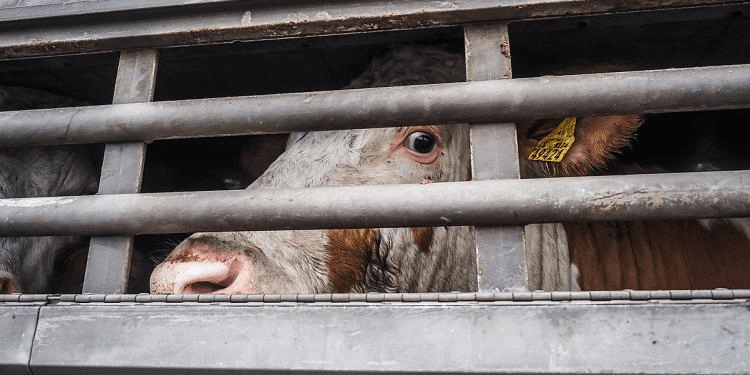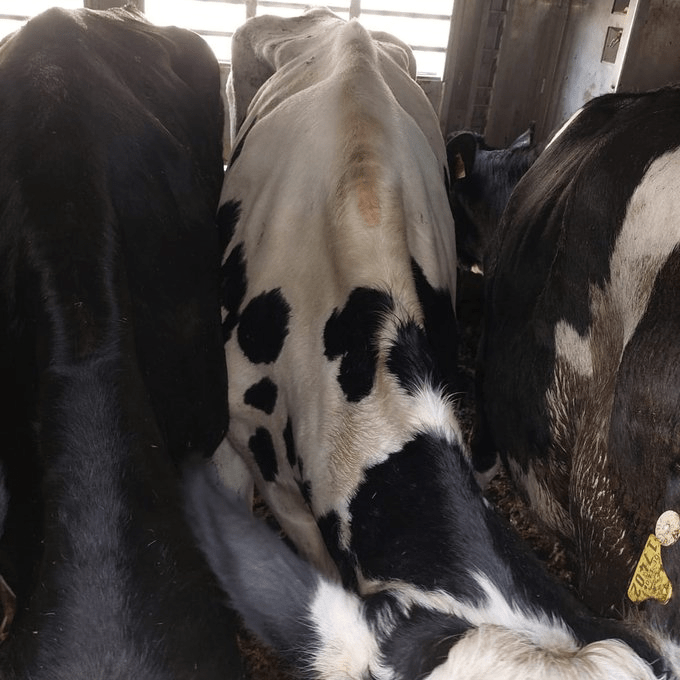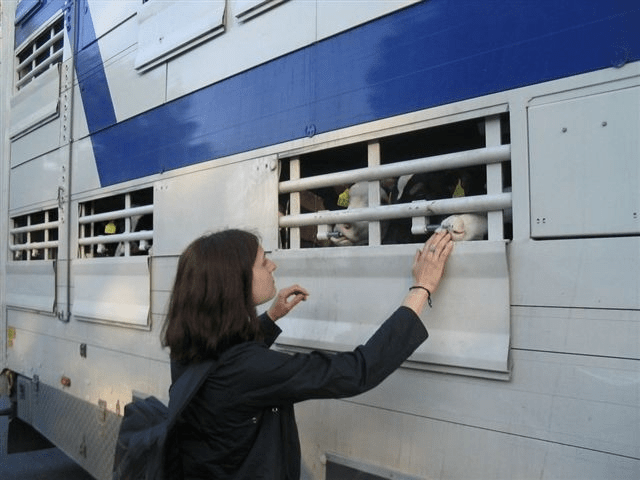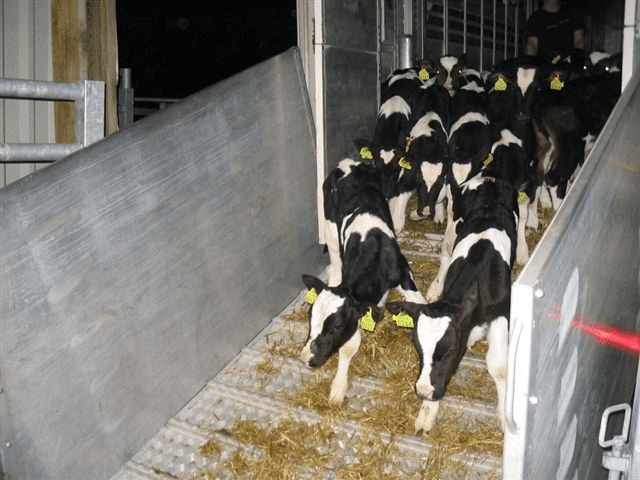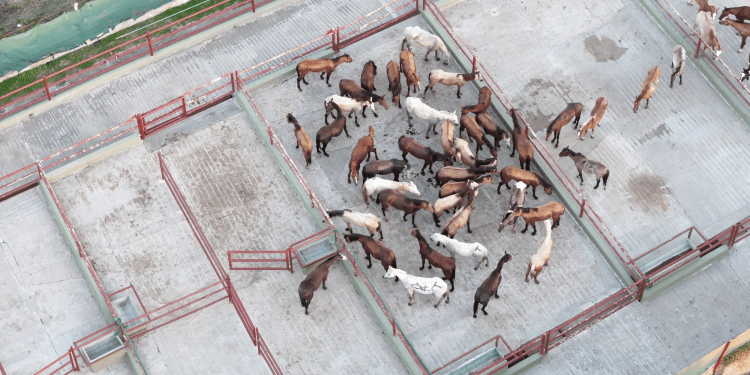
Last week, 69 pregnant heifers suffered a terrible death after being stranded at the border between Bulgaria and Turkey for over four weeks.
Because the cows were coming from Brandebourg, which is considered an epidemic area for the bluetongue virus, Turkish authorities stopped the animals, and legal bureaucracy did not allow a return to the EU.
Despite many reports from animal advocacy groups, the cows were left stranded in their own faeces, with many dying in the truck. No authority chose to take responsibility for these animals.
Just days after this terrible event, another situation surfaced at the same border. This time, 47 cows are stranded without food and water.Animals have started to fall ill, and two have already died.
Animals suffer greatly while being transported for days on end, with journeys lasting for up to three weeks. Cramped tightly in vessels that are often filthy and hazardous, they endure injuries, sickness and heat stress.
The effects on vulnerable animals, like young and pregnant animals, can have long-term effects. Evidence shows that in the case of calves, issues sustained during transport can lead to lifelong problems with their digestive and respiratory systems.
What needs to be done?
The EU is not doing enough.
The transport file, where the new legislation is being discussed, is still at a standstill, and it is still legal to transport animals to non-EU countries.
Animal protection NGOs call for legislation that meaningfully protects animals during transport, and an end to all live transport from the EU to third countries.
Undercover footage showing unweaned calves facing abuse and neglect was recently aired by the Irish television broadcaster, RTÉ Television. This new evidence echoes the findings of animal protection organisations on the ongoing mistreatment of unweaned calves and the horrors they face in the live animal transport industry.
RTÉ Investigates aired “Live Exports: On The Hoof”, a gruelling documentary which covered abuse at an assembly centre in Ireland, as well as suffering during export outside the EU. Footage revealed calves being repeatedly hit with paddles and pitchforks, as well as being dragged by their ears and tails while being unloaded from trucks. It also showed dead calves being left in varying states of decay around living animals, posing a significant disease risk.
The programme also explored the fates of those exported to third countries. While thousands are exported directly from Ireland to places including Morocco and Israel, some are sent to Spain, Hungary and Romania, after which they must endure further travel to North Africa and the Middle East. These journeys can become incredibly long, putting significant strain on the young animals. When they are finally offloaded from the vessels, they face slaughter in a country where they are not protected by EU animal welfare laws.
Putting Ireland’s calf export industry in the spotlight
While the programme caused quite a stir, it’s not the first time that animal protection organisations have heard of these kinds of abuses against calves. In March 2024, Ethical Farming Ireland, Dier&Recht, L214 and Eyes on Animals followed trucks travelling from Ireland to veal farms in the Netherlands and beyond, where they witnessed multiple counts of abuse.
Select ‘watch on Youtube’:to view:
Not only was it clear that the young animals were being harmed as they were prepared for long distance transport, but also during the journey, reports have repeatedly shown the calves face significant dehydration, hunger, stress, and neglect. The conditions inside these livestock trucks are poor, as up to 300 calves are crammed into one truck over three tiers with no headroom and barely enough space for them to lie down. These journeys can continue as far as Romania and Poland, which takes several days. What’s more, calves that don’t end up in veal farms can be fattened and sent on even longer journeys on livestock vessels, to countries far outside the EU.
So far, over 160,000 unweaned calves under six weeks old have been exported from Ireland this year. The majority end up in veal farms in the Netherlands, where they face “a hideous existence, packed together in crowded pens on hard slatted flooring, [where they are] never outside and they are sent to slaughter within a year”, comments Frederieke Schouten, director of the Dier&Recht Foundation.
These young, vulnerable calves are subjected to rough treatment and abuse… prolonged starvation, and horrendously long journeys in crowded trucks. RTÉ Investigates has exposed a major exporter and we need action. It’s time the sector took responsibility for these animals.
As one investigation after another continues to highlight the immense suffering that millions of animals endure each year in the live animal transport industry, it’s clear something urgently needs to change. Eurogroup for Animals calls for a much stronger revision to the Transport Regulation, as well as for a shift to a meat and carcasses trade, which could precipitate the end to the transport of live animals to countries outside the EU entirely.
Regards Mark – Here is a little more for you relating to some of our past work:
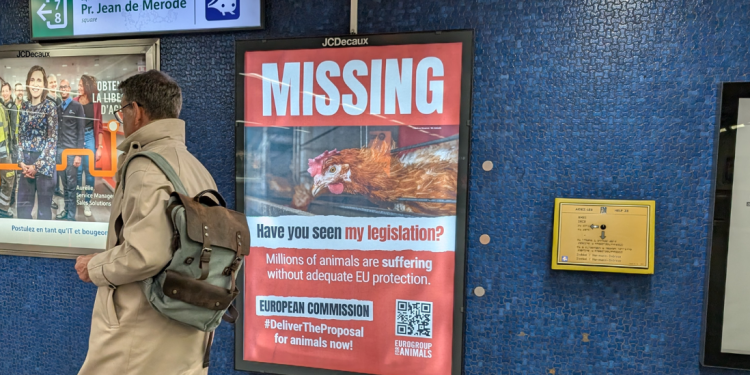
A billboard campaign has been launched in the heart of Brussels’ EU quarter, urging the European Commission to fulfil its promises on the animal welfare legislation, now overdue by a year.
The European Commission had committed to a comprehensive overhaul of animal welfare legislation by October 2023. However, a full year has passed without the promised proposals for kept animals and slaughter being unveiled.
Countless animals continue to suffer in factory farms across the EU under outdated and inadequate laws that fail to protect them or meet their most basic needs.
As part of our No Animal Left Behind campaign, Eurogroup for Animals placed 40 billboards across 17 metro stations in the EU capital to send a strong message to the European Commission: citizens are still waiting for meaningful legislative change for the animals.
Despite the delayed proposals, it was promising to see consensus by all stakeholders of the Strategic Dialogue on the Future of EU Agriculture on the urgent need for a revision of EU animal welfare legislation by 2026 and a phase-out of cage systems. In a historic move, European Commission President Ursula von der Leyen also announced the creation of the role of Commissioner for Health and Animal Welfare. This new role will ensure animals have more representation on the political stage.
Next steps will see candidates for the Commissioner roles face hearings in the European Parliament in November 2024, where their priorities and plans will be scrutinised. Finding the right candidate is crucial to keep animal welfare legislation a top priority in the next legislative term.
Regards Mark – PS They always were bloody useless !
He realised the only thing I couldn’t say no to was giving all the money away to animal rights organisations. The irony is the only way to get me on tour is to make sure I don’t make a penny from it.
Moby’s passion for animal rights is no secret as the star has even brand himself with his beliefs through tattoos.
His boldest are two arm tattoos which he debuted in 2019 and read ‘Animal Rights’, one word on each arm in thick black ink.
All across Europe, billions of animals endure unimaginable suffering every day, as current EU laws continue to fall short in providing them the protection they desperately need. NGOs Eurogroup for Animals and FOUR PAWS have teamed up to host the photo exhibition Silent Suffering which will expose the pain and distress endured by farmed, companion, wild, and aquatic animals.
The invite-only event will take place on 1 October at the Royal Library of Belgium in Brussels, bringing together MEPs and representatives of animal protection organisations from across Europe.
The photos, put forward by Eurogroup for Animals’ member and partner organisations are spread across nine categories: cage farming, transport, broiler chickens, aquatics, fur farming, animals in science, large carnivores, pets, and trade.
Why this exhibition matters now
As the European Commission prepares to enter a new term, FOUR PAWS and Eurogroup for Animals call for animal welfare to be a priority, and for a revision of the outdated animal welfare legislation to be put forward without further delay.
Sir Brian May, Queen Rock Band lead guitarist, co founder of animal welfare organisation ‘Save Me’, https://savemetrust.co.uk/ and a Doctor of Astrophysics, has resigned as Vice President of the RSPCA after 11 years as he considers the farm assured scheme as promoted by the RSPCA is in fact, anything but.
Almost 4,000 farms are certified RSPCA Assured, which indicates that their meat, fish, eggs and dairy products have been produced to strict standards which exceed the UK’s legal requirements.
Here Brian plays lead guitar – the singer is the brilliant Led Zeppelin frontman Robert Plant – or ‘Planty’; This event took place at Wembley Stadium, LONDON on Easter Monday, 20th April 1992 for a Freddie Mercury (Queen vocalist) tribute concert.
As animal campaigners, we can all appreciate how very difficult it must be to pack up and walk away from a positions such as this. The RSPCA are a fantastic charity who get NO funding from the government – they live solely through donations and legacies such as funds left by the public in personal Wills.
Regardless of this particular issue, I do, and will continue to give a small monthly donation to the RSPCA – why ? – because I have full respect and support for all the wonderful works they do in other areas; rescuing animals from suffering and harm; campaigning against animal cruelty, undercover work in dog fighting for example. Like Brian, I have very serious concerns about their farm assured labelling; and serious concerns anyway about all animals kept under the ‘farming’ umbrella; but this does not automatically stop me making a monthly donation. For many now, times have gotten that bit harder financially, and all charities are grateful for any support given to them.
So, they still get a little support from me regardless of how I feel specifically about the farm assured labelling. Policy can and is already underway to be changed in this area; animal cruelty does not stop overnight, so for me and the RSPCA, it is because of their other work that I still support.
Sadly, the farm assured scheme has been questioned for many years by us in the AR camp; but I am now pleased to see Bri put his words into actions; and for this I support him 110%. In 2023, Chris Packham, known to many UK viewers for he BBC Watch series – Springwatch, Autumnwatch etc became the President the the RSPCA. Chris is also a massive AW person and is Patron of many fine UK animal organisations, such as World Land, Animal Aid and Compassion In World Farming. I understand that for years Chris has been saying that the RSPCA farm assured scheme must be scrapped; but I suggest that some others in the organisations fight to keep the scheme going.
So back to Brian – Fully respected and understood reason why you decided to leave as VP. Hopefully the RSPCA will review their farm assured policies and as such, will bring back to the British Public the respect they deserve when they see the sticky label on food in their local supermarkets. A label which should mean that their food products are produced to the highest animal welfare standards.
Most Brits care a lot about animal welfare – I know cos I am one of them ! As a consequence they have a right to know that what the food label says in what they as consumers get; a guarantee that the labelling means that their food is produced to the highest standards and that NO cruelty takes place when to comes to animals raised.
We now wait to hear what the RSPCA is going to do.
In he meantime, well done Sir Brian for speaking out; full respect for this and all your badger work.
The new Commission, announced today, will include a Commissioner dedicated to Animal Welfare, in a move very positively welcomed by animal protection NGOs. This will allow for better prioritisation of the topic, in line with the demands of EU citizens.
Animal welfare will be included in the title of the new Commissioner for Health and Animal Welfare, President Ursula von der Leyen announced today as she revealed the structure and nominees of the new College.
Hungary’s Olivér Várhelyi has been nominated to take this role, subject to his approval in the EP hearing in the next weeks.
It is welcome to see that the competence of Animal Welfare remains under DG SANTE, ensuring a One Health approach that acknowledges the interlink between animal welfare, public health and the environment.
The ask for a Commissioner dedicated to Animal Welfare aligns with the collective voice of 310,000 citizens and over 200 MEPs in the 2019-24 term of the Parliament, and already over 100 MEPs in the new one, in a years-long EU for Animals campaign, led by Eurogroup for Animals’ member GAIA. The new Commissioner will be crucial in ensuring the delivery of the promised revision of the outdated EU animal welfare legislation.
The work of the new Commissioner responsible for Animal Welfare will also greatly interlink with that of other Commissioners – including that of nominee for Agriculture and Food, Christophe Hansen, who is expected to “bring to life the report and recommendations of Strategic Dialogue on the future of EU agriculture”. The report explicitly recommends a revision of animal welfare legislation by 2026 as well as a transition to cage-free systems.
It will also include working closely with the Commissioners responsible for Fisheries, Trade and Environment, among others, to ensure ambitious EU legislation that ensures high animal welfare standards in all relevant areas.
It is great to see that finally, the new Commission is listening to the demands of citizens, who have continuously asked for better EU laws to protect animal welfare. The inclusion of Animal Welfare in the title will ensure that this topic remains a priority in all relevant discussions and we expect the revision of the animal welfare legislation to be the first file to be dealt with.
Feedback from a public consultation on amendments to the live animal transport regulation has just been published. The results reveal that citizens are very concerned about how animals are treated in this sector.
Read the summary results of the public consultation here.
In 2023, the European Commission announced it would update the Transport Regulation as part of its full revision to the animal welfare legislation. Soon after, it published its initial proposal for the update, which it invited European citizens to feed back on through a public consultation.
The response level was very high. The public consultation, which was open for a period of over four months (between 8 December 2023 and 12 April 2024) gathered over 5,000 contributions for analysis.
Within this number, a lot of the key input came from Spain, Germany, France and Italy, highlighting significant public interest for this topic in these Member States.
The results showed citizens overwhelmingly support stricter regulations to protect animal welfare in this industry, including by:
Banning certain types of transport and exports. Including banning long-distance and sea transport, and the export of live animals to third countries;
Improving transport conditions. Calling for adequate space, ventilation, food and water, as well as for reduced transport times;
Protecting vulnerable animals. Calling to ban the transport of unweaned and vulnerable animals, along with enforcing strict temperature controls;
Supporting stricter weather protection. Incorporating recommendations for stricter measures to safeguard animals from extreme weather;
Condemning harmful methods. Opposing the use of electric prods;
Addressing transition periods. Issues were raised about the length of transition periods to implement new welfare rules;
Helping poultry and rabbits. With suggestions to further limit transport times for these animals, based on their specific needs and natures;
Possibly transitioning to a different type of trade entirely. There is widespread support for shifting to the transport of meat and carcasses instead of live animals, which is viewed as a more humane alternative that could significantly reduce suffering.
Stakeholders from various fields, including agriculture, public authorities, and NGOs, also provided feedback on different areas of the proposal, such as its current scope and what it says about journey times and temperature controls. These results were mixed, with some differences of opinion arising between the groups. For instance, industry voices and farmers raised concerns about limiting journey times during transport, whereas NGOs posited that journey times should be reduced significantly, for the wellbeing of the animals subjected to them.
The transport proposal needs some changes to truly work for animal welfare
As the responses to the public consultation show, the current transport proposal should be further revised. Our white paper details several measures that can be used by policy-makers to draft the strongest policies possible in this area: addressing both the needs of the animals in this sector, as well as the concerns of European citizens who have voiced support for protecting their welfare.
It’s great to see that, yet again, the public is so engaged in the topic of live animal transport, and that European citizens in particular want to see more being done for animal welfare. This sector is very complex and causes suffering for millions of animals each year, both in the EU and beyond. The current transport proposal needs to be much stronger if it is really going to have an impact on the wellbeing of animals, and a lot of the conflicts of opinion expressed within the consultation could be addressed to a wider transition to a ‘meat and carcasses’ trade, in which no live animals would have to be subjected to these long and difficult journeys anymore.
Inês Grenho Ajuda, Farm Animals Programme Leader, Eurogroup for Animals