Category: Stray Animals

Caring for cats: Cartagena’s commitment to stray animal welfare

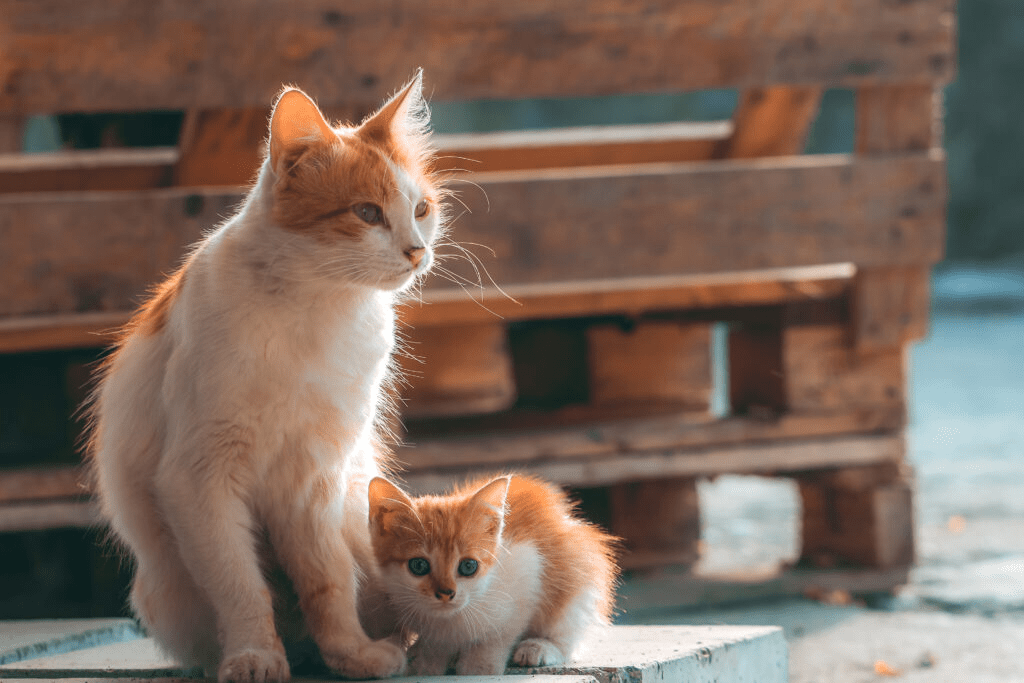
IN a significant step towards animal welfare, the Cartagena Department of Health has signed a contract aimed at managing over 110 stray cats in the area. With a budget of €11,641, the plan includes sterilisation, vaccination, deworming, and microchipping these cats, ensuring each one is properly identified.

Image – Shutterstock/ rbkomar

The CER method: Effective strategy for stray population control

This plan follows the successful implementation of the CER (Capture, Sterilise, and Return) method, which has been a priority for the department, especially after the pandemic. The agreement, formalised with Los Molinos Veterinary Clinic, allows for essential medical care for cats in various neighbourhoods, including Canteras, Perín, and La Magdalena.

Future funding and commitment to animal welfare

The council highlighted that this contract aligns with the new animal rights law and continues ongoing efforts to control the stray cat population in collaboration with local animal protection organisations. Since the start of the program, about 400 cats from different colonies have already received care. With further funding opportunities on the horizon, Cartagena aims to strengthen its commitment to the health and welfare of its stray cat community.

Benefits of caring for our feline friends

  • Improved Health for Stray Cats: With sterilisation, vaccination, and deworming, the program ensures that stray cats receive essential medical care, leading to healthier feline populations.
  • Reduced Overpopulation: By implementing the CER (Capture, Sterilise, and Return) method, the program helps control the stray cat population, preventing overcrowding and the associated issues that come with it.
  • Community Safety: Fewer stray cats can lead to reduced incidents of territorial behavior, making neighborhoods safer and more pleasant for everyone.
  • Support for Local Animal Welfare Organisations: The program promotes collaboration with local animal protection groups, strengthening community efforts to care for animals in need.
  • Increased Awareness of Animal Rights: By aligning with the new animal rights law, the program highlights the importance of treating all animals with compassion and respect.
  • Microchipping for Identification: Microchipping ensures that stray cats can be easily identified and returned to their caretakers if they are lost, promoting responsible pet ownership.
  • Enhanced Quality of Life: With proper care and support, stray cats can thrive in their environments, improving their overall quality of life and contributing to a healthier ecosystem.

https://euroweeklynews.com/2024/10/27/caring-for-cats-cartagenas-commitment-to-stray-animal-welfare

Excellent – well done them !

Mark
EU Brussels: Missing posters spotlight EU’s stalled animal welfare progress.

7 October 2024

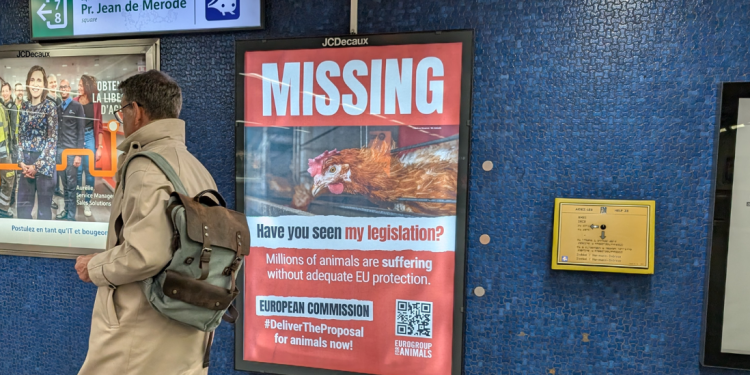
A billboard campaign has been launched in the heart of Brussels’ EU quarter, urging the European Commission to fulfil its promises on the animal welfare legislation, now overdue by a year.

The European Commission had committed to a comprehensive overhaul of animal welfare legislation by October 2023. However, a full year has passed without the promised proposals for kept animals and slaughter being unveiled.

Countless animals continue to suffer in factory farms across the EU under outdated and inadequate laws that fail to protect them or meet their most basic needs. 

As part of our No Animal Left Behind campaign, Eurogroup for Animals placed 40 billboards across 17 metro stations in the EU capital to send a strong message to the European Commission: citizens are still waiting for meaningful legislative change for the animals. 

Despite the delayed proposals, it was promising to see consensus by all stakeholders of the Strategic Dialogue on the Future of EU Agriculture on the urgent need for a revision of EU animal welfare legislation by 2026 and a phase-out of cage systems. In a historic move, European Commission President Ursula von der Leyen also announced the creation of the role of Commissioner for Health and Animal Welfare. This new role will ensure animals have more representation on the political stage.

Next steps will see candidates for the Commissioner roles face hearings in the European Parliament in November 2024, where their priorities and plans will be scrutinised. Finding the right candidate is crucial to keep animal welfare legislation a top priority in the next legislative term.

Regards Mark – PS They always were bloody useless !

Related news

Common Agricultural Policy found to lack ambition by European Court of Auditors

Popular TV programme reveals calves in Ireland endure abuse and long journeys

Missing posters spotlight EU’s stalled animal welfare progress

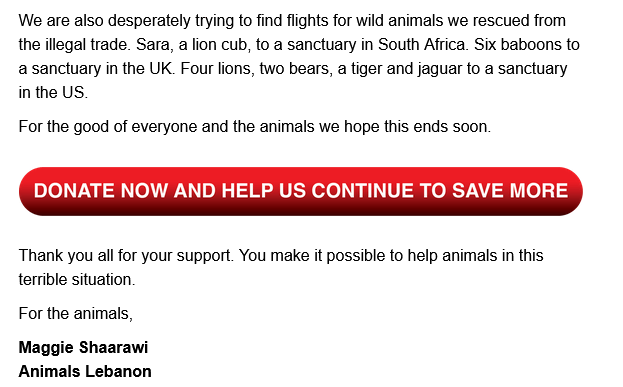
Animals Lebanon

Dear all,

this terrible conflict that defies all sense and humanity has now moved on to Lebanon. As in Gaza, Innocents – Human and Non-Human alike – suffer the impossible due to the relentless bombardment of Israel.

Please, if you can, spare a few Euros/Dollars/Pounds, etc.
Every little helps to alleviate the suffering and save lives.

Thank you.

Diana & Mark

from
https://www.wavy.com/news/world/ap-activists-risk-their-lives-to-rescue-animals-in-areas-of-lebanon-hit-by-israeli-airstrikes/

__________________________________________________________________________________________

From “Animal Lebanon

Donation link: https://www.animalslebanon.org/donate

90s legend Moby reveals surprising reason he’s touring again after 13 years. Animal Rights !

He realised the only thing I couldn’t say no to was giving all the money away to animal rights ­organisations. The irony is the only way to get me on tour is to make sure I don’t make a penny from it.

Moby’s passion for animal rights is no secret as the star has even brand himself with his beliefs through tattoos.

His boldest are two arm tattoos which he debuted in 2019 and read ‘Animal Rights’, one word on each arm in thick black ink.

Regards Mark

Metro – London

EU: Silent Suffering: photo exhibition exposes realities of animals in Europe.

27 September 2024

Four Paws

All across Europe, billions of animals endure unimaginable suffering every day, as current EU laws continue to fall short in providing them the protection they desperately need. NGOs Eurogroup for Animals and FOUR PAWS have teamed up to host the photo exhibition Silent Suffering which will expose the pain and distress endured by farmed, companion, wild, and aquatic animals.

The invite-only event will take place on 1 October at the Royal Library of Belgium in Brussels, bringing together MEPs and representatives of animal protection organisations from across Europe.

The photos, put forward by Eurogroup for Animals’ member and partner organisations are spread across nine categories: cage farming, transport, broiler chickens, aquatics, fur farming, animals in science, large carnivores, pets, and trade.

Why this exhibition matters now

As the European Commission prepares to enter a new term, FOUR PAWS and Eurogroup for Animals call for animal welfare to be a priority, and for a revision of the outdated animal welfare legislation to be put forward without further delay.

Regards Mark

EU: Bad news: Member States propose to downgrade the protection status of the wolf, against science and public opinion.

Bad news: Member States propose to downgrade the protection status of the wolf, against science and public opinion

25 September 2024

Press Release

Wolves are likely to no longer be strictly protected as the Council of the European Union has adopted the proposal by the European Commission (EC) to request a downgrade of their protection status under the Bern Convention. This move seriously jeopardises the conservation efforts of the past decade and prioritises politics over science and data, while sending a dramatic message on the future of co-existence.

In December 2023, the EC published a proposal to downgrade the strict protection of wolves at international level, in a move that has been considered widely political. Now that Member States have voted in favour of a downgrade, the proposal must be endorsed formally at ministerial level, in time for the request to be presented and voted upon at the next Standing Committee meeting of the Bern Convention in December. If adopted, this could be translated in the EU under the Habitats Directive, giving flexibility to Member States to authorise the unnecessary culling of these majestic animals.

In the past decade, the EU has invested significant resources towards the recovery of wolves, resulting in an increase of 25% in population. Yet, populations have not yet reached a favourable conservation status and the proposal to downgrade their protection seriously jeopardises conservation efforts. 

Hundreds of civil society organisations have urged the EU to strengthen the protection of wolves, not reduce it, as wolves are apex predators vital in ecosystem stability, and in the current global biodiversity crisis, their role cannot be compromised. The protection of wolves is also supported by the general public as 68% of inhabitants of rural areas state that the wolf should remain strictly protected. Over 300,000 citizens have also called for wolves to remain strictly protected.

The EU has funded innovative projects across Europe that have proven co-existence is possible and attacks on livestocks can be significantly reduced with preventive measures. The EC admitted, in its in-depth analysis, that culling is not a solution to protect farmed animals from depredation contrary to coexistence measures. It is therefore alarming to see that the EU, instead of further promoting and supporting such efforts, has opted to downgrade the protection status, giving way to unnecessary suffering.

Wolves are our allies, not our enemies and it is crucial to protect them. Member States are dangerously failing their mission to protect wild animals and our shared ecosystem. This is a very outrageous move and shows that Member States are ignoring their citizens’ calls and science. Facilitating culling sends a dramatic message on the future of conservation and coexistence. We urge the other parties to the Bern Convention to reject this proposal and protect wild animals in the EU and beyond and continue to champion biodiversity protection at the global level.

Léa Badoz, Wildlife Programme Officer, Eurogroup for Animals.

Regards Mark

EU: 300+ civil society groups urge EU to strengthen wolf protection, not weaken it.

300+ civil society groups urge EU to strengthen wolf protection, not weaken it

19 September 2024

The coalition is calling for a new proposal to downgrade the protection of wolves to be rejected, as well as for increased efforts to promote coexistence with large carnivores, and to safeguard decades of conservation success.

A large coalition of civil society and animal welfare organisations is calling on EU Member States to reject the European Commission’s proposal to downgrade wolf protection under the Bern Convention. Their status would be lowered from ‘strictly protected’ to ‘protected’, if the Member States approve the change.

It’s speculated that the change is politically motivated, whilst any change to conservation status of wolves should be justified by rigorous scientific data.

Peaceful coexistence with large carnivores is possible. Raising awareness amongst citizens is key, by providing science-based education on the ecological and socio-economic benefits of wolves. We can also strengthen preventive measures such as the use of fences and sheepdogs and make them more accessible to farmers.

Proper protection of wolves should also be enforced, ensuring that illegal wolf hunting is eradicated and the EU’s Habitats Directive is upheld. This would support efforts made for the recovery of wolf populations in the EU, allowing them their natural place in European ecosystems. 

The EU’s inhabitants of rural areas have also highlighted their broad support to protecting wolves and large carnivores: in a recent survey among 10,000 Europeans in 10 Member States, 68% stated that wolves should be strictly protected and 72% agreed that they have a right to co-exist.

According to media reports, there has been a lot of political pressure on Member States to accept the European Commission’s unscientific and politically motivated proposal. Wolves must remain strictly protected – not just for the sake of the species and science, but for the health of our ecosystems and the credibility of the European Union. If the EU wants to be a trusted ally of nature and a global leader, we must set the right example now.

European Environmental Bureau

Regards Mark