
Rally on animal rights at Jantar Mantar on Sunday | Pune News – Times of India (indiatimes.com)
PUNE: In commemoration of Mahatma Gandhi’s birth anniversary ..

Regards Mark
Rally on animal rights at Jantar Mantar on Sunday | Pune News – Times of India (indiatimes.com)
PUNE: In commemoration of Mahatma Gandhi’s birth anniversary ..
Regards Mark


Above – click on ‘Watch on YouTube’
Link to all of our past South Korean dog meat links / actions : https://worldanimalsvoice.com/?s=south+korea

Merck Life Science:
Tell your Partner, South Korea, you oppose the torture and consumption of dogs and cats.
The Korea Herald reported on 5/3/2023, “Merck, a leading science and technology company based in Germany, said Wednesday it plans to build a bioprocessing unit in Daejeon, South Korea. Under a three-way memorandum of understanding signed by the firm with Korea’s Ministry of Trade, Industry and Energy and the government of Daejeon, they will discuss detailed plans for building the international pharmaceutical company’s new bioprocessing unit that can produce raw materials for drugs.”
In South Korea, there are numerous dog farms, slaughterhouses, markets, and restaurants where the dogs, who have been tortured their entire lives, end up being slaughtered in the most inhumane ways, such as by electrocution, hanging, or beating, and then thrown into boiling water – sometimes while they are still alive. In many places, dogs are being killed in full view of other terrified, caged dogs, and this takes place in broad daylight.
Therefore, we are asking that Merck Life Science reconsider any affiliation with South Korea and that they cancel plans to build a bioprocessing unit in Daejeon.
👉 Click HERE to take action.
👉 Click HERE to sign and share the petition.

Photo: The Korea Observer. Documentary: The Dog Meat Professionals: South Korea.https://koreandogs.org/dmp/

Chuncheon arrested CARE activists working to shut down illegal dog slaughterhouses
While working to shut down multiple dog slaughterhouses in Chuncheon, Gangwon Province, Coexistence of Animal Rights on Earth (CARE) activists have been unjustly arrested by the Chuncheon Police. We have sent emails to Chuncheon’s Friendship city, Vejle, Denmark, and Gangwon province’s Sister State, Colorado, asking for their help in releasing the activists immediately and shutting down the massive illegal dog meat industry in Gangwon province.
Read more:
Donate to Care:
(사) 동물권단체 케어 – 언제나 동물들의 편으로 남겠습니다 (careanimalrights.or.kr)
| 📣 We still need a volunteer to translate our “Suggested Message” into Estonian for our campaign. Please contact me if you can help. 📧 KoreanDogs.org@gmail.com 📣 Click HERE to continue taking action and share our urgent campaign: No World Expo 2030 in South Korea, the nation of horrific cruelty and mass murder of millions of dogs and cats! 📣 Animal Rights Korea (ARK) Shelter needs your help today. Click HERE to learn more. Thank you! 🐶🙏👍 |
Regards Mark



Wolves in the EU at risk of having protection downgraded
6 September 2023
Protection for the species is under threat following movement from the European Commission towards a proposal that would downgrade wolves’ status of protection, which could give Member States more flexibility to authorise culling.
In light of “conflicts with local farming and hunting communities”, The European Commission issued a press release stating that they will collect data until 22 September 2023 on wolf populations and their impacts. This will inform their decision on proposing to downgrade the conservation status of the species.
Wolf populations in the EU remain fragile
EU efforts towards the recovery of wolves are paying off. Wolf range has increased over 25% in the last decade, and they are now present in all mainland Member States. Yet, this success remains fragile as 6 out of the 9 transboundary wolf populations in the EU did not yet reach a favourable conservation status. The downgrading of the protection status of wolves would jeopardise the efforts invested and further threaten the viability of populations.
The current legal framework allows sufficient flexibility
The high protection status granted to wolves under the Habitats Directive already provides the possibility of derogations under article 16. In 2017, a fitness check of the Birds and Habitats Directives concluded that the Directives remain relevant and fit for purpose. In 2019 and 2020, Member States reported 772 derogations for the killing of large carnivores to prevent serious damage to livestock. In 2018, it was estimated that over 900 wolves were killed each year in the EU.
The use of such derogations should be strictly regulated as they are only permitted when no alternative solutions could be identified, and should not jeopardise the conservation status of the species. The European Commission issued guidelines for Member States to comply with these requirements. In this context, the use of such derogations have been subject to multiple infringement procedures, including against Sweden that remains pending.
Coexistence is the solution
President von der Leyen’s claim that “wolf packs in some European regions have become a real danger for livestock and potentially also for humans” is false. We estimate the presence of 19,000 wolves in the EU, which is insignificant compared to the 86 million sheeps reared. Between 2012 and 2016, the annual number of sheep compensated because of wolf depredation corresponded to 0.05% of the over-wintering sheep stock.
More than 80 projects funded through the European Commission LIFE programme since 1992 have demonstrated the efficiency of coexistence measures such as livestock guarding dogs and fencing. These measures have proven more effective than culling large carnivores to protect livestock. Farmers across the EU should be appropriately supported to install and maintain such protection systems. In addition, risks of attacks in the EU are minor and wolves usually move away when encountering humans.
Benefits from wolves
Besides potential damages to livestock that can be efficiently prevented, wolves provide important services to the environment and the economy. They are keystone species, bringing back biodiversity, preventing the spread of diseases and reinstating a natural balance in the ecosystem, as demonstrated in Yellowstone National Park. Such services can also provide important economic benefits. In light of the global biodiversity crisis, the EU must ensure the continued protection of these important species and promote coexistence in the interest of all.
We trust the European Commission will uphold their commitment to preserve existing protection levels. We also call for increased transparency on the data received and considered to be publicly available.
Local communities, scientists and all interested parties are invited to submit data by 22 September 2023 on wolf population and their impacts to the following email address: EC-WOLF-DATA-COLLECTION@ec.europa.eu
Regards Mark

Want to check out the work we did for stray dogs and cats in Serbia from 2005 on ?
Then please go to https://serbiananimalsvoice.com/
This is just an archive site now of all our work; but it does contain lots of archive info and pictures, many disturbing !


Regards Mark




For those of you who are non UK residents, the United Kingdon comprises of England, Wales, Scotland and Northern Ireland. Each has its own Parliament.
Great news – on June 27th, members of the Senedd in Wales voted through a total ban on snares as part of the Agriculture (Wales) Bill.
The next step is to make sure that this historic achievement is replicated by English, Scottish and Northern Ireland governments.
Snares are often used in areas to ‘protect’ the millions of purpose bred gamebirds (until the start of the shooting season) which are then shot and killed for fun by hunters each year – the sick ‘sport’ as they call it. In the UK, lots of wildlife conservation organisations do not allow the use of snares on their land; which proves that despite the arguments put forward by the hunting fraternity, the use of snares is not necessary in modern conservation.
Snares are not selective as they often catch non targeted animals such as dogs, cats, and even our loved and protected badgers.

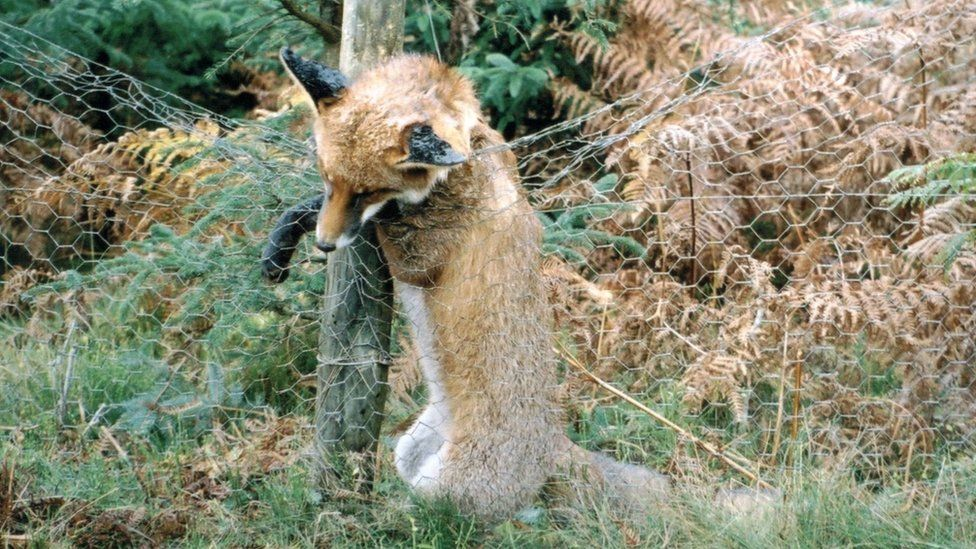
The ban on snares in Wales has been a difficult and long campaign; especially with pressure from pro-shooting lobbyists who wanted to allow the continued use of snares under a new name of ‘humane cable restraints’. There is nothing humane about snares, they are simple killers, and yes, animals are restrained until their deaths which can be long and cause great suffering.
The Minister for Rural Affairs in Wales, Lesley Griffiths, stood firm and rejected the allowance of ‘humane cable restraints’ by the hunters; citing animal welfare concerns and the indiscriminate nature of snares, which can cause long term suffering to many species.
The victory in Wales is a wonderful result for the movement and one which will save countless animals from appalling suffering. We thank the Welsh government (Senedd) for their decisive action to protect all animals from suffering. The next step is to make sure that this historic achievement in Wales is replicated in England, Scotland and Northern Ireland.
The Scottish government already has the issue under review, and there is an opportunity ton ban snares under the Wildlife Management and Muirburn (Scotland) Bill which is currently in its early stages.

England and NI; a parliamentary petition on nares obtained more than the 100,000 signatures required, resulting last year in a Westminster (London) debate in Parliament at the tart of this year. Sadly, as we all know the regard current animal welfare s, the government is again dragging its feet in taking any action. I wrote about this recently – https://worldanimalsvoice.com/2023/08/11/england-here-we-go-again-government-bullshit-promises-on-actions-already-making-their-way-through-parliament-which-would-have-given-animals-more-protection/
It is now vital that pressure on snares is kept on MP’s and the government; and that they know that action to ban nars throughout the UK is taken. As a General Election is not far away now, there is never a better time to let the government know that in your opinion, THEY are failing animal in every sense.
Regard Mark

Launch of Animais de Rua’s new Trap-Neuter-Return manual
8 August 2023
Animais de Rua
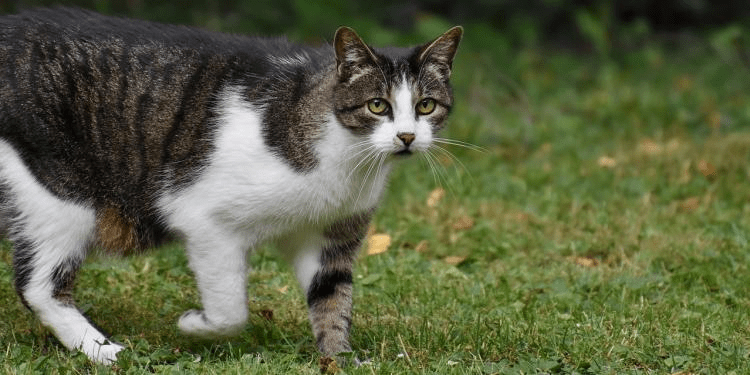
The global cat population is (roughly) estimated at around 600 million (127 million in Europe only), half of which are not owned. Cats have certainly managed to adapt well to most environments, particularly to more urban habitats which, like us, they see as their territory.
Trap-Neuter-Return (TNR) manual by Animais de Rua
File
Trap, neuter, return manual – Animais de Rua10.72 MB
Coexistence between people and cats has not always been peaceful. Most developed countries promote neutering campaigns in compliance with the guidelines of the World Health Organization (WHO) and the World Organization for Animal Health (OIE).
There is not single intervention that will work for all situations while managing cat populations. What is essential is that the programme is comprehensive and focused on root causes of the cat roaming population and not solely on treating the symptoms (see “Dog and cat population management guidelines” and “ICAM guidance“).
Animais de Rua, our Portuguese member organisation, that help thousands of stray animals has recently published a manual with practical and science backed up advice for those official animal collection centres, animal welfare organisations and informal groups of citizens who are willing to help the street cats in their communiy.
TNR (Trap, Neuter and Return) is a reproduction control and veterinary care leading to the management of unowned cats in situ on the streets, a humane and effective method of managing cat populations.
When implemented correctly, TNR is not just limited to the capture and neutering of cats, but it also includes the creation of a safe and healthy environment for animals and people, the set up of feeding points, good winter shelters and community engagement promoting an amicable relationship within the neighbourhood.
This manual will help to know whether your organisation is up for the challenge, to lay out the necessary policies and procedures, protocols with veterinarians, motivational guidelines for the volunteers, trapping techniques, step by step approach to TNR, relocation, adoption and much more. No matter how small, every TNR programme, as part of a bigger picture of cat population management will certainly contribute to a better cat welfare.
Trap-Neuter-Return (TNR) manual by Animais de Rua
File
Trap, neuter, return manual – Animais de Rua10.72 MB
Regards Mark

Dear Mark,
Despite weeks of forewarning, saying farewell to animal protector Seema Mohanchandran was bitter-sweet.
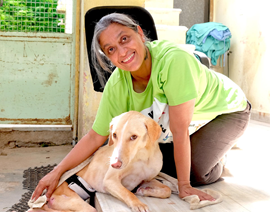
After several years gracing Udaipur with her care for animals, Seema’s husband (and partner in kindness) Mohan was recently transferred to Calcutta.
The generous staff lunch she hosted–one of several over the years–ended in a tearful goodbye
Seema has fed 80 dogs in her neighborhood every day, and arranged for us to sterilize more than 200 dogs. And by “arranged” we don’t mean simply placed a request. She befriended, caught, contained, and often personally transported many of them.
Ever resourceful, Seema has arranged for neighbors and friends to continue feeding and getting sterilized the four-legged friends she has protected for many years. They made an epic journey across India with their eight rescues, including Vayu, pictured here, who is paralysed in his hind legs.
We will miss Seema so much, but we take great joy knowing the dogs of Calcutta are in for a beautiful surprise
The beauty of a Blessing
Old, emaciated and dehydrated, this beautiful girl was admitted with a seriously infected wound on her face. When she arrived, we found that she had a twitching condition caused by the canine distemper virus. The virus was no longer infectious, but it left her with permanent neurological twitch. Her twitching was focalized to her mouth, and had caused one of her teeth to puncture through the roof of her mouth, leading to infection in her nasal passage.
The wound made it almost impossible for her to search for food or to eat. We started her on antibiotics and gave her IV fluids right away. With coaxing, she ate her first nutritious meal in a long time.
Day by day, she continued to gain weight and get stronger. But she was elderly and needed extra time, both to get strong on her feet and to beat the infection. She’ll never have complete control of her tongue, but in our eyes, she’s all the more beautiful for it. Meet Blessing today.
When a wound led to starvation, Animal Aid was her only chance. Make a donation today.
When Petey’s multiple problems were solved, what he wanted most was to be a good boy.
This elderly street dog seemed to know we were there to help. He sat right down and let us carefully carry him to our ambulance. Covered in scabs and wounds from mange, as well as a deep wound on his leg and a seriously infected eye, this poor gentle boy had almost reached the end of his life. With a deep maggot-filled wound on his leg, he could hardly walk.
His vision too was blurred by a wound near his eye that was probably caused by scratching. He was starving and even his toes were swollen and tender. When we reached our hospital we removed maggots from the deep wound on his leg, and began the series of creams, medicated baths and nutritious food that would change–and save!–his life. He’s not rambunctious or bouncy. Gentle Petey is one of those shining souls who just wants to be a good boy.
For the elderly who need a little extra help, make a donation today.
16 years later…welcome back to Animal Aid, brave lady.
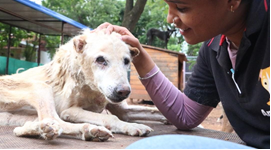
When we rescued this elderly lady for a wound on her shoulder and trouble walking, she seemed hazily at ease. Her old crooked tail wagged peaceably and her eyes shone with sweetness behind blue cataracts.
While conducting her admission exam, we saw something curious in her ear: A tattoo, faded and illegible, but definitely made by our team from a much earlier era of Animal Aid, when we used to tattoo the dogs we sterilized.
We know how old this lady is because we only tattooed the ears for a couple of years between 2005 and 2007, making this lady at least 16 years old–truly ancient for a street dog.
Hugs all around to gorgeous Lady, who may have sailed the seven seas for all we know. Her longevity is a testament to her neighbors who cared for her all these years, up until the point of calling us when she needed our help for the last time. We don’t think she will ever be mobile enough to be released, so Animal Aid will be her old-age home.
Achievements in July that you made possible

Looking good, Doing good.
Your purchase helps save a beauty.
100% of the proceeds go to our street animal rescues
Go shopping here
https://shop.animalaidunlimited.org/pages/jewelry
We thank you deeply for all you do, are, and inspire for animals.
Founding family Erika, Claire and Jim,
and the Animal Aid Unlimited team.

Regards Mark


Almost 500 cats and dogs were treated at a pop-up shelter in Athens in the course of one week as the wildfires raged (Photo: Dogs Voice)
How animal charities are racing to save dogs, deer, hedgehogs and tortoises from Greece wildfires
Volunteers have been working round the clock to rescue pets and wildlife – from cats to deer -caught up in the fierce blazes
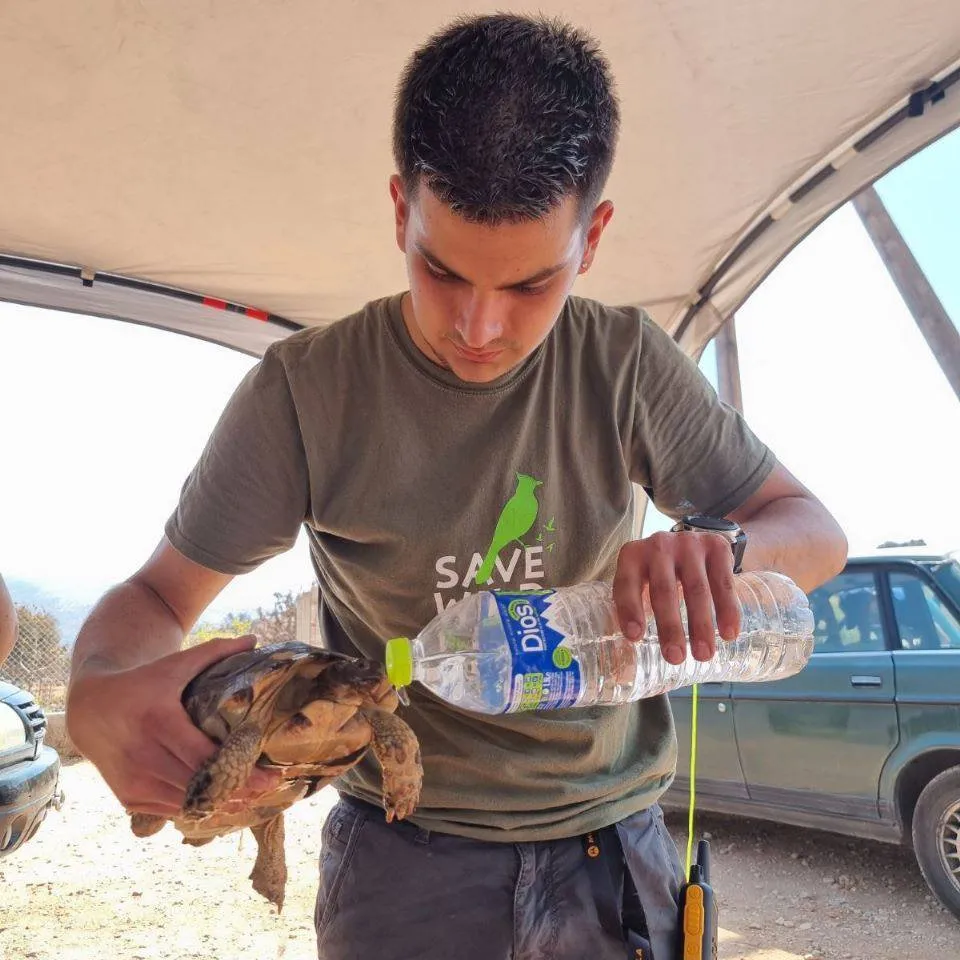
Teams of volunteers from charity Anima have been going out to the areas where the wildfires have burnt to rescue and treat wildlife (Photo: Anima)
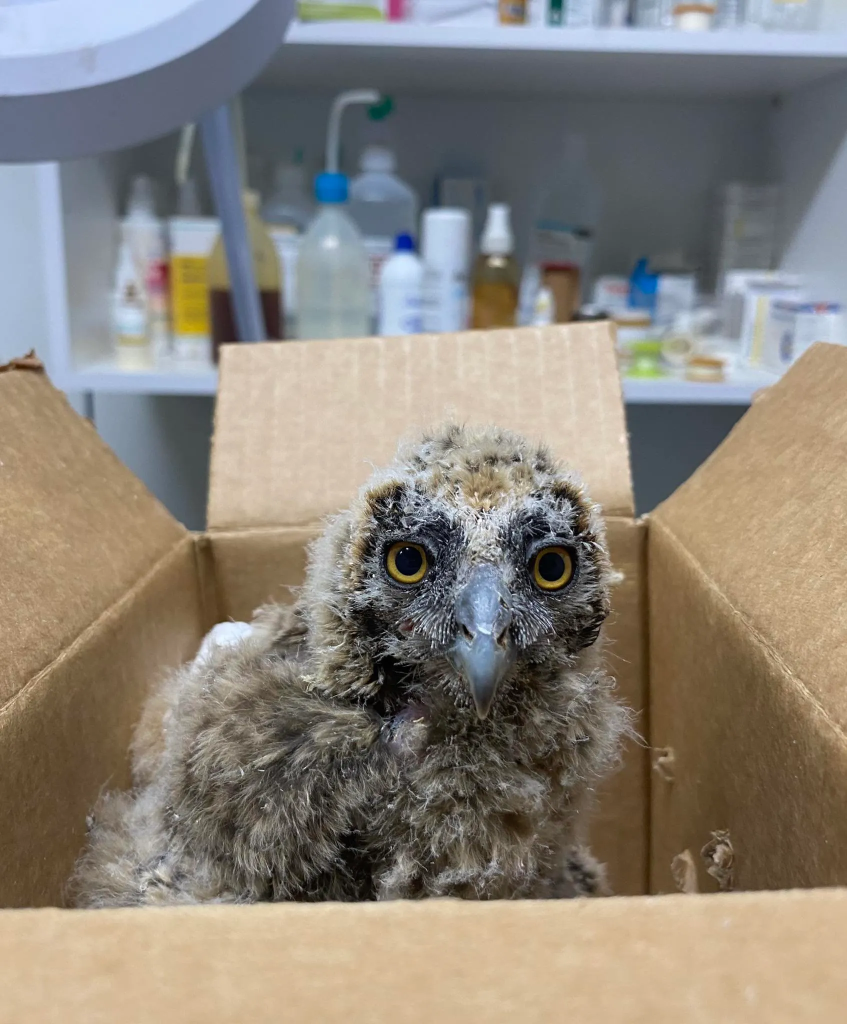
Among the vulnerable wildlife are chicks abandoned in nests as the fires take hold (Photo: Anima)
Greece’s wildfires have ravaged the landscape and taken their toll on the human population, but they have also been a disaster for animals – and animal charities are on the frontline of the scorched habitats.
Continue reading at:
Regards Mark

In one week, Dogs’ Voice treated 444 dogs, cats and one parrot at the shelter in the Greek capital (Photo: Dogs’ Voice)


Demand Justice for Six Kittens Brutally Tortured and Killed in Chicago
Girlfriend Turns Serial Kitten Killer Into Police, Says He Wouldn’t Stop Buying Cats to Torture: Report
He’s been arrested and charged with animal torture
Published 07/12/23

A 22-year-old Chicago man has been arrested and charged with aggravated animal cruelty after his girlfriend found videos and images on his phone of kittens being violently killed.
Thomas Martel is accused of killing at least six kittens in the past three months and buying lookalikes on Craigslist so his mother wouldn’t become suspicious, CWBCChicago reports.
Even more horrific details were revealed in a bail hearing this week reported by The Daily Beast, with prosecutors alleging he drowned and microwaved the kittens.
Judge Kelly McCarthy called it “a pattern” of “going back again and again.”
“Killing an animal, going out and get a replacement. Kill that one, get a replacement. Kill that one, get a replacement,” she said. “And, unfortunately, this was allowed to continue for a sustained period of time and numerous animals lost their lives.”
Martel’s girlfriend, who remains unnamed, says he told her “he enjoyed killing cats and he had been like that since he was eight years old.”
She alleges Martel bought at least five different, but similar-looking, kittens named Shelly over a few week period — each time the previous Shelly disappeared or died.
According to The Daily Beast, when she tried to tell him to stop buying cats he immediately called asking for money to buy another kitten.
She also told authorities he admitted to killing three cats in the microwave, which led them to discover a black, foul-smelling bag in the pantry with parts of “multiple” kittens.
Martel faces four counts of animal torture and two counts of aggravated animal cruelty.
He turned himself in to the police on Monday and is undergoing a week-long mental health evaluation, CWBCChicago reports.
The FBI’s Law Enforcement Bulletin in a post from 2021 discusses animal cruelty and its link to violence against humans. Studies suggest violence against animals is a predictor of future offenses, including domestic violence, arson and weapons charges.
Officials encourage those experiencing or witnessing domestic violence or violence against animals to contact The Humane Society of the United States or the National Domestic Violence Hotline at 800.799.SAFE(7233).
***************************************************************
Chicago Man Accused of Brutally Killing Cats and Replacing Them With Lookalikes
HORRIFIC

Some of the kittens may have been microwaved, a prosecutor said.

A Chicago man has been accused of killing at least six kittens since May and buying lookalike replacements of the animals so that his mother wouldn’t become suspicious.
Prosecutors have charged Thomas Martel, 22, with four counts of animal torture as well as two counts of aggravated animal cruelty, according to CWBChicago.
At a bail hearing Tuesday, Cook County Assistant State’s Attorney Sarah Dale-Schmidt detailed horrific allegations of brutality in which she claimed Martel drowned and possibly microwaved the kittens.
Police reportedly became aware of the alleged cruelty last month when Martel’s girlfriend gave authorities disturbing images and videos she found on his phone, including one picture of a living kitten captioned “just before I murdered her.”
Prosecutors claim he also recently told his partner that “he enjoyed killing cats and he had been like that since he was eight years old.”
At one point during his alleged spree, Martel’s girlfriend said he kicked her out after she told him he had to stop buying cats—only to immediately call asking for more money to buy another kitten.
Martel’s girlfriend also said he later told her he had microwaved three cats and put them in the pantry of his apartment, where police subsequently found a bag containing what looked like parts of “‘multiple’ kittens,” according to Dale-Schmidt.
Martel turned himself into police on Monday.
Regards Mark and Diana

Dear Mark,
When we consider the quality of life of animals who are other-abled, it’s joyous to see how much love and play are core elements that make a life worth living.
Although first-time visitors may express sadness in seeing dogs with physical impairments, our volunteers almost always express finding, after even just a few days, that it’s not the number of legs that measure happiness.
Instead, the dogs’ happiness is expressed in their play, curiosity, mischief and in the friendships they form with other dogs and people.
Thank you for helping us provide not only a safety net for the healing, the blind, the 2-and-3-leggers, the oldies and youngies, but also place where every bed can become a trampoline when the mood strikes!
Transformed by trust, Cheeto won’t stop playing!
Cheeto was in excruciating pain from a laceration to the side of his face, and cried out in fear when we approached. We gently placed a blanket over his eyes to calm him down enough to let us carry him to our ambulance.
He was so forlorn during his first treatment and we found the wounds were very deep. But within just days the swelling had reduced, his pain was subsiding and suddenly he became a whirlwind of love! Meet Cheeto now!
Help put the life back in the party for someone hurting. Make a donation today.
Trapped in a sewer, a paralysed dog needed our help to get out.
We’d received a call that a dog was lying in a sewage drain, unable to move. We found him forlorn and worried, sitting perfectly still as the cold sewage water rushed past him.
We found that his hind legs were not responding when we checked for sensation, indicating spinal injury. Spinal injuries have different rates of recovery depending on the severity, and we were very worried by the lack of sensation in his toes. But we gave him a chance, and began his bedrest and physical therapy in hopes that the sensation and movement would come back to his legs.
After several weeks working with him daily and helping him stand, Hopper surprised us all!
For someone in desperate need of help: Make a donation today.
More shade and shelter for our biggest boys and girls.
Preparing for this year’s monsoon season which began a few weeks ago, we have built more shade throughout the shelter including an addition in the large animal hospital, giving more space where the biggest boys and girls can go for a nap or night’s sleep without getting wet or muddy.
Thank you for giving us the means to continually improve Animal Aid’s shelter each year.
Your wonderful donations at work!
Our June statistics reflect an increased number of spay-neuter surgeries thanks to the re-opening of our Animal Birth Control (ABC) Center, and we thank our donors for enabling this wonderful boost
Lovely ways to help animals.
100% of the proceeds go to our street animal rescues
https://shop.animalaidunlimited.org/
We thank you deeply for all you do, are, and inspire for animals.
Founding family Erika, Claire and Jim,
and the Animal Aid Unlimited team.

