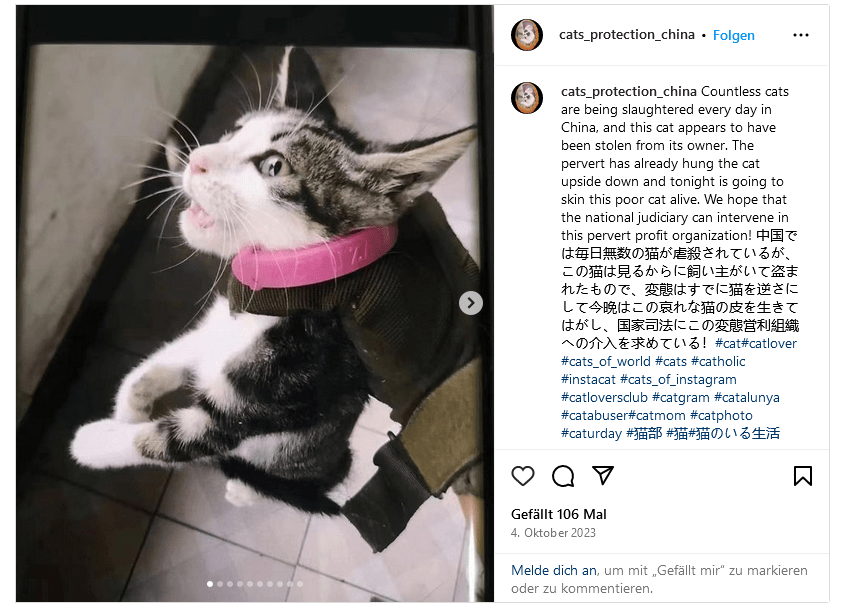
We are proud to be part of this effort by “Feline Guardians” to bring the monsters to justice who torture and kill cats in China, as previously reported on.
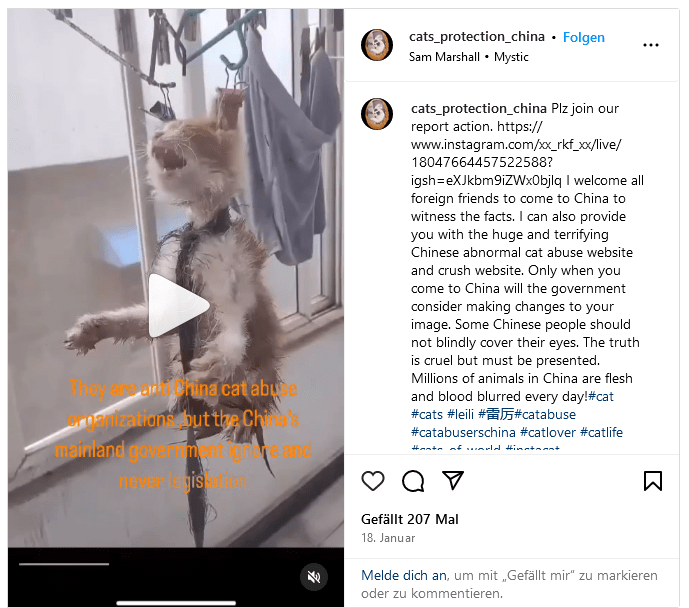
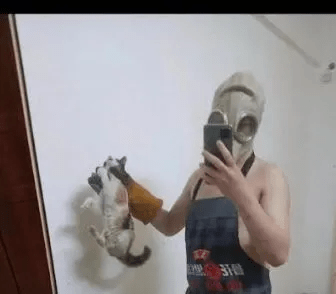
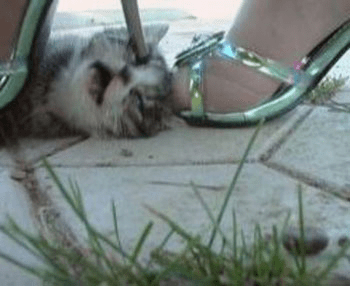
Cat abuse is a serious issue in China that requires urgent attention. Since the “Cat in Blender” incident, Telegram communities that deliberately torture animals for fun have been operating “legally” within China, evading justice and promoting young people to harm animals.
The absence of effective measures and prolonged inaction by the authorities have allowed cat abuse to become rampant, to the extent that in recent days, stray cats in internet-face stations have been seen being abused on livestreams, causing shock and distress to animal lovers worldwide. This situation is unacceptable and must be stopped immediately!
Please join us for an X demo on Friday, February 23.
– New York: 5-6pm – Los Angeles: 2-3pm – London: 10-11pm – Paris: 11-12am – Rio de Janeiro: 7-8pm – Tokyo: 6-7am (next day) – Beijing: 5-6am (next day)
Use the hashtag #StopChinaCatTorture and #CatAbusersChina to express our collective disdain and demand immediate intervention. Every tweet can drive change!
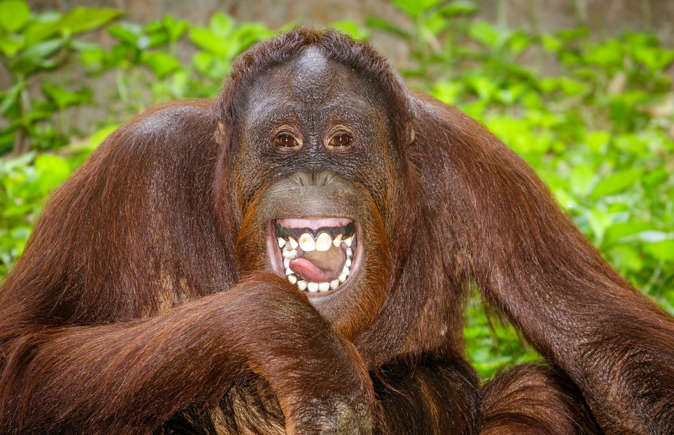
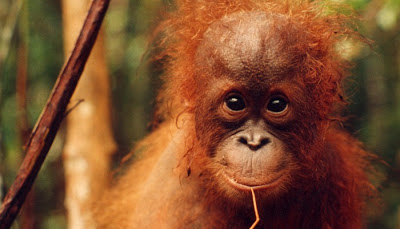
Orangutans are solitary creatures but like to laugh at a joke. They can learn to use tools and communicate with sign language, and are strong but gentle. Yes, there’s lots to celebrate on August 19, which is designated International Orangutan Day (#OrangutanDay). The day is not only designed to raise awareness of these large tree dwellers so fond of fruit and swinging on branches, but to raise awareness of their plight as a species threatened with extinction because of disappearing jungle habitat. So here are 20 things worth knowing about these orange-furred apes.
In Malay, “orangutan” means “man of the forest,” since the animal lives a solitary existence in lowland forests, as they “feast on wild fruits like lychees, mangosteens, and figs, and slurp water from holes in trees.” The two main types of these apes, Bornean and Sumatran orangutans, are much alike in how they look and behave. They both have shaggy reddish fur, but Sumatran orangutans boast longer facial hair. The Tapanuli orangutan is a third species of orangutan, described as distinct since 2017. Only about 800 of these animals live in the wild, making it the most endangered of the orangutans.
While orangutans have short legs, they have proportionately long arms, in fact the longest of the great apes (their arms stretch to the ankles when they are standing). With a span reaching lengths of 2.2 metres, or seven feet, the arms end in hook-like hands with long fingers and short thumbs. Orangutans can swing through the trees using their arms alone.
Orangutans have a lot of heft. They are the largest and heaviest tree-dwelling mammals. On average males weigh 83 kilograms (183 pounds) and are about 1.5 metres (five feet) tall. Females are usually smaller and lighter, averaging 37 kg (82 lb.). They tend to build nests in trees, although adult males sometimes make themselves comfortable sleeping on the ground.
Apparently orangutans like to laugh. Research has shown that during play these apes will tickle each other, punch playfully, and when one does a gaping grin—their version of laughter—their playmate will often respond in kind, demonstrating they possess empathy. “It shows how important this form of emotional communication is,” says researcher Marina Davila Ross. “Empathy helps one communicate with social partners … It helps form social bonds and it’s supportive in terms of cooperation.”
Chantek was one smart cookie. The male orangutan, who lived at Zoo Atlanta, learned to communicate with American Sign Language under the care of an anthropologist. He was also able to clean his room, use a regular toilet, and haggle for his favourite treats—particularly cheeseburgers. Sadly, he died in 2017, at the ripe old orangutan age of 39, despite being placed on a low-sodium diet and regularly monitored with cardiac ultrasounds, blood pressure tests and blood work.
In the jungle, orangutans swing from branch to branch. But if there’s a gap too big for a youngster to negotiate, the mother will often make “a living bridge for the baby to scamper across.” If adult males can’t swing across the gap between trees, because their weight is too much for a branch, they will quite sensibly descend to the ground and walk to the next tree.
PETITION TARGET: Onondaga County District Attorney William J. Fitzpatrick
A black cat named Milo was ruthlessly stomped on and beaten using fists and other objects in Syracuse, New York. He was beaten so horrifically that he could not be saved.
A 24-year-old man has since been arrested.
According to the Syracuse Police Animal Cruelty Unit, the person who beat Milo first tried to get a dog to attack Milo.Milo appears to have attempted to scratch the individual out of fear and self-defense. That’s when Milo was violently attacked.
Cornell University’s autopsy found that Milo suffered a brutal and painful beating. His right eye was displaced, his eye socket fractured, and he suffered an open rib fracture, which made it difficult to breathe.
Veterinary staff ultimately determined the most humane response was euthanasia.
The arrested man has been charged with aggravated cruelty to animals, which is a felony. He has been released awaiting his day in court.
No innocent cat deserves such a gruesome and painful demise.
Sign our petition to get justice for Milo by holding the perpetrator of this senseless violence accountable to the fullest extent of the law and forbidding the person responsible from ever having animals in the future.
Today, we at WAV, join many in the world in mourning for
Alexei Anatoljewitsch Nawalny
murdered in a Russian State prison. There is nothing, in what news there is coming from Russia, and the way Mr. Navalny has been treated by the Russian regime, to suggest otherwise.
He was a man of exceptional courage, integrity, humour – a beacon of humanity in a darkening world.
While our focus on WAV is and remains with the animals of this world, we recognise the link between Human and Animal oppression, Human and Animal torture, and Mr. Navalny was a champion of Freedom, Democracy, and Truth – for all that is right, and must remain so, and against all who would trample those values, and subject those they are taken from to Imprisonment, Torture and Death.
Evil must never prevail, not in Russia, nor anywhere else in the world. Where Evil is allowed to thrive no being can live in Peace and Freedom.
For us personally, and our continued struggle for the welfare and rights of non-Humans worldwide, Mr. Navalny, as a voice of Compassion, Justice and Truth, and above all, an example of singular courage, will be a source of inspiration. We may not be fighting the same fight – although Human Freedom and Human Rights are as important to us as those of Non-Humans, as issues clearly linked – and Russia’s political landscape was Mr. Navalny’s chosen ground of battle, where he, for his people and his country, sought to bring about much-needed change. We seek to see the principles of humanity applied to all species sharing our world with, worldwide. In the end, it is our common struggle for a better world, and all that makes us – positively – human, that unites us.
One light has gone out, millions of others will burn the brighter now.
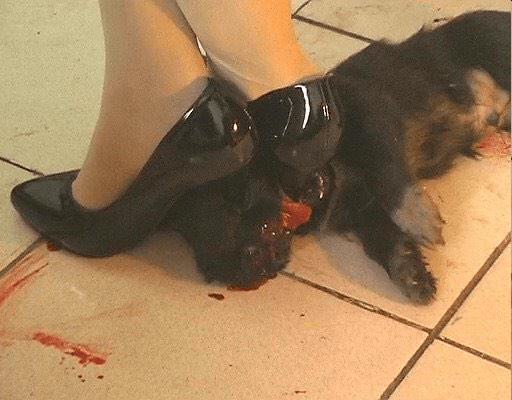
This connects to : CHINA: “Cat Torture Ring”, “Crush Videos”
England – On Friday 2nd February, two young teenagers – a boy and a girl, were given 22 years and 20 year prison sentences respectively for the murder of another innocent teenager.
From what is being said, the two murderers did a lot of communication – including the planning of the murder, in which this poor girl was stabbed no less than 28 times ! – which was undertaken using the “Dark Web or DARK NET’. Through our work relating to Chinese cat torture/abuse/killings and the production and distribution of “Crush Videos“, we know that this is also, in the main, done using the Dark Web – given that these activities are, in many countries, illegal and subject to criminal investigation and punishment.
So what exactly is the Dark Web; what is special to it and how does it operate when compared to the ‘normal’ web ? Hopefully we can give you an oversight of what it is about; and why it is so very difficult to track the perpetrators of these terrible crimes or other illegal activity associated with it.
Murder and gross abuse of Human and non-Human alike – the Dark Web seems to be a place where both can thrive undetected.
So, what is it ?
By the definition given on “www.pcmag.com” the Dark Web is ..
A file sharing network used to illegally distribute copyrighted music and videos, as well as nefarious documents.
The Dark Web is the World Wide Web content that exists on darknets: overlay networks which use the Internet but which require specific software, configurations, or authorization to access. Through the Dark Web, private computer networks can communicate and conduct business anonymously without divulging identifying information, such as a user’s location, i.e. IP (IP: see below).
We all use URLs, or a Uniform Resource Locator during our daily computer work to visit webpages and other resources on the web. The URL is an address that sends users to a specific resource online, such as a webpage, video or other document or resource. When you search on Google, for example, the search results will display the URL of the resources that match your search query. The title in search results is simply a hyperlink to the URL of the resource.
“Although we use a “Clustrmap” on our site, which you can view at https://clustrmaps.com/site/1a9kn – you will see that there is no specific detail for any visitor; other than the country of origin, as the flags show. For us, the “Clustrmap” is used solely as a resource for identifying where visitors (to the site) are from, and to potentially see, by the absence of visitors from certain countries, which areas, in terms of “Animal Welfare/Rights” news, are under-represented on the site.
Hence it is for us a very useful identifier of where the current site visitors are located – UK, USA, Italy, Netherlands etc.
The IP Address
The Dark Web forms a small part of the deep web, the part of the web not indexed by web search engines, although sometimes the term ‘deep web’ is mistakenly used to refer specifically to the Dark Web.
An Internet Protocol address (an ‘IP’ address) is a numerical label such as 192.0.2.1 that is assigned to a device connected to a computer network that uses the Internet Protocol for communication. IP addresses serve two main functions: network interface identification, and location addressing.
As a word of warning, your own IP address is something you should guard. Many of these Dark Web sites use applications such as “IP loggers”, which record your IP upon visiting, and so disclose to the potentially criminal users of these services your personal data, such as your exact location, etc. So please be mindful, ideally DO NOT visit such sites/networks – even if, as in the case of the Crush Video/Cat Torture groups, you wish to assist in bringing these “people” to justice.
The Deep Web
The Deep Web, also referred to as the ‘invisible web‘[, or ‘hidden web‘ are parts of the World Wide Web (www) whose contents are not indexed by standard web search-engine programs. This is in contrast to the “surface web“, which is accessible to anyone using the Internet.
Deep Web sites can be accessed by a direct URL or IP address, but may require entering a password or other security information to access actual content. Uses of Deep Web sites include web mail, online banking, cloud storage, restricted-access social-media pages and profiles, and web forums that require registration for viewing content. It also includes paywalled services such as video on demand and some online magazines and newspapers.
The Dark Nets which constitute the Dark Web include small, friend-to-friend networks, as well as large, popular networks such as Tor, Freenet, I2P, and Riffle operated by public organizations. Individuals users of the Dark Web refer to the regular web as Clearnet due to its unencrypted nature.
So all data on the net is either unencrypted (not converted into a code), or encrypted (convertedinto a code), for a variety of reasons. Usually encryption is used to protect data from access by unauthorized persons, or indeed to conceal potentially illegal activity, as in the case of the Dark Web. Encryption is also used to conceal/hide data itself by converting it to (often nonsensical) “code”, altering its entire appearance, and so masquerading as something it is not.
Another way of making it hard for outsiders to access “sensitive” or forbidden data is the hiding of data in a layered construct, much like, and so called, an onion – the TOR Dark Web, or otherwise known as “onionland]” uses this technique. It is a traffic anonymization technique of onion routing under the network’s top-level domain suffix .onion.
Onion routing refers to the fact that Tor encapsulates your internet traffic in layers of encryption, which are nested like the layers of an onion. Onion routing is the reason why, when you access a site through Tor, it takes a very long time to load – your internet traffic is being routed through many different Tor “nodes” (volunteers on the network who are helping run it on their devices).
We cannot, here, go into more detail – “World Animals Voice” is not a site devoted to technical issues. It was, however, our intention to give you some idea why pursuing the perpetrators committing the terrible crimes we have highlighted so far – and will continue to do so – is difficult.
However, once again: we will renew our commitment, together with all the cooperating parties, and our supporters, to this cause, and the animals concerned.
To those hiding in the shadows, feeling safe and sneering at those who pursue them, we will say this:
YOU WILL BE FOUND, AND YOU WILL FACE THE CONSEQUENCES. MAKE NO MISTAKE
Mark & Diana
Here are past links to our work associated with Cat Torture, Crush, and animal liings by perverted supporters who use the above to cover their tracks and identities.
The native doctor is seen in several video clips uploaded on his Facebook page torturing and violently killing animals apparently to perform rituals for his clients.
The police in Enugu State, south-east Nigeria, say they have begun investigation into the alleged torture and violent killing of animals by a native doctor in the state.
The native doctor, identified simply as Nnabuikem, popularly known as ‘High Chief Enenie Nwa ite,’ hails from Ovoko, a community in Igbo-Eze South Local Government of the state.
Torturing, killing of animals
Mr Nnabuikem is seen in several video clips uploaded on his Facebook page torturing and violently killing animals, apparently to perform rituals for his clients.
In one of the clips, the native doctor was seen pounding a live chameleon and a cat in a mortal while making some incantations.
He was seen in another clip violently slitting the throat of a ram in a river, after which he threw the ram’s head and body separately into the river.
An unidentified woman, dressed in white garment, was seen standing in the river while the native doctor performed sacrifices on her
Police speak
The police, in a post on their X handle on Thursday, said they had received “several” reports on the alleged torture and cruelty to animals by the native doctor.
“Thus, necessary investigative actions have been initiated. (Further) development will be communicated please,” the police said.
Outrage
There is widespread condemnation and anger over the native doctor’s act by many Nigerians, with some calling for his arrest.
“Please, stop this man from his terrible action,” an X user @ClaireChec53197 wrote.
Another x user @belindaburns244 asked the police to “find and deal with” the native doctor and his cohorts to stop the torture of animal.
“Arrest the serial killer… He is still torturing and killing animals and posting his crimes on Facebook. Act Now,” an X user @AbeerAGharbieh, appealed to the police on Friday.
Another X user @Loris_chaser expressed worry that if the native doctor was not stopped, he could resume killing residents instead.
“Please act quickly to stop this…human from continuing to torture animals and prevent him from acting out towards humans which is a common next step with those who commit animal abuse/torture,” the user told police.
US-based animal rights group demands native doctor’s prosecution
Meanwhile, a US-based animal rights protection group, People for the Ethical Treatment of Animals (PETA) had petitioned Nigeria’s Inspector General of Police, Kayode Egbetokun, and the Enugu State Commissioner of Police, Kanayo Uzuegbu, to intervene in the matter.
President Bola Tinubu, Nigeria’s attorney-general, Governor Peter Mbah of Enugu State, Senate President Godswill Akpabio, and Speaker of House of Representatives, among others, were copied in the petition.
In the petition, dated 29 January and signed by Jenn Forbes, the national legislative officer of the group’s Cruelty Investigations Department, PETA said it had received “disturbing reports” of multiple videos originally posted on the Facebook account of the native doctor.
“Numerous extremely graphic videos are posted and remain active on the (Facebook) account depicting him and his cohorts beating and starving animals, slowly roasting live animals over open fires while also beating them in the face, cutting animals open and torturing and killing their fetuses, slowly splitting, torturing puppies to death while they scream in agony, setting other animals on fire while alive, and many more,” the group said.
It said the conduct of the native doctor in the videos appears to “explicitly violate” section 495 of the Nigeria’s Criminal Code Act, which prohibits torturing animals and causing unnecessary suffering, adding that section 450 of the Act equally prohibits wounding and killing of animals.
“We ask that this matter be urgently investigated by Nigerian officials, with consideration given the removal of any animals found in this person’s possession as well as filing of charges where appropriate,” it stated
There is a lot of this happening in China, supported by a large network of people who relish in watching this torture and killing.
Here are links to our past posts relating to this – re Cat Torture and Killing:
Very soon we will be publishing a post on the ‘Dark Web’; the means by which people subscribe to, watch, and yet remain undetected in what they do. The dark web has to be used by them as otherwise their identities and locations could be identified.
The Dark Web and Animal Torture – coming very soon.
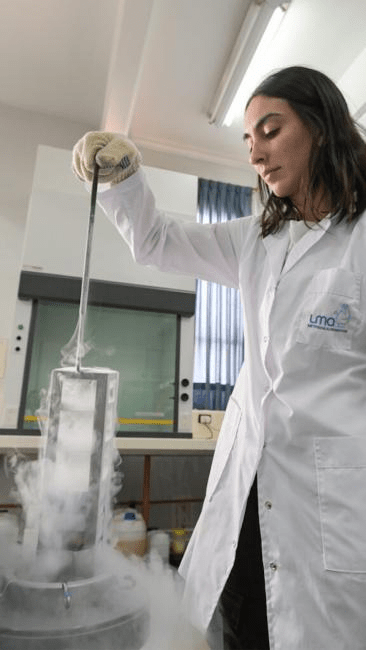
February 11 was International Day of Women and Girls in Science, a reminder that women play a critical role in science and that their participation should be strengthened. We are celebrating one of the women who help change science for the better by delivering humane science through the exploration of non-animal approaches; the winner of our grant to attend the European Commission’s Joint Research Centre (JRC) summer school.
Martina Benedetti is a PhD student working in the pioneering laboratory for alternative methods in Argentina.
Can you tell us more about yourself and your journey as a PhD student?
Our primary mission in the research group is to pioneer the introduction of validated methodologies, a significant first for Argentina. This initiative aims to provide non-animal testing services to the local industry. Beyond that, our focus extends to the development of new methodologies and the refinement of strategies, all geared towards gradually replacing the reliance on animal testing that regulatory bodies still mandate. Of course, being part of a pioneering laboratory in my country has been challenging but also very rewarding. Overall, I think my journey is led by a strong desire to contribute to the advancement of humane and effective scientific practices in Argentina. So far, it has been a very fulfilling experience!
What are the main goals of your research?
My research focuses on modelling the eye using in vitro techniques to assess the reversibility of potential damage when the eye is exposed to a toxic substance.
More into detail, my project consists of designing a model to help replace animal use on ocular toxicity testing implementing stem cells as well as 3D culture. We are studying the cornea architecture and function in vitro to test different chemicals and evaluate the damage they produce on the organ and its potential damage reversibility. This is important because the available alternative methods do not allow documenting the reversibility of the damage, let alone the time necessary for such reversibility to occur, as required by the UN GHS classifications.
As a participant in the JRC Summer School, I gained valuable insights into in vitro methods and computational modelling that were new to me. The program allowed me to gain a comprehensive understanding of innovative techniques through expert presentations, which was very valuable for me as there are no scientific activities in Argentina that deal with these topics. The debate sessions were also very interesting for me, as we focused on real issues that are being discussed today by the experts in the field (In our case, we had to argue that setting an annual cap on the number of animals used for research is the best way to reduce the use of animals in science).
I should also mention that the visit to the EURL-ECVAM laboratories was great! It provided a practical dimension that allowed me to experience first-hand the application of the methods available. I am particularly grateful that the summer school also provided me with an excellent platform for exploring career paths and building a professional network, which enhanced my overall understanding and connections in the field.
What inspires you to use your scientific expertise to advance non-animal science?
My inspiration stems from a commitment to ethical research practices and a desire to contribute to more sustainable and humane scientific advances. Ethically, I am motivated to contribute to research practices that meet modern standards of compassion and responsibility. Scientifically, I am driven by the prospect of developing and implementing methods that not only eliminate the need for animal testing, but also provide more accurate and relevant results for humans. In addition, I think it is particularly motivating to make progress in this area in Argentina, as in my country we are taking the first steps towards researching non-animal methods, which of course motivates my work even more.
On International Day of Women and Girls in Science, what message would you like to send to women who, like you, want to accelerate the transition to human-based, non-animal science?
I want to encourage and empower my fellow women. Let your passion for innovation guide you and bring your unique perspectives to the field. Seize the opportunities to collaborate, learn and lead, because our collective efforts can make a meaningful difference. I think we can all agree that advances in research should go hand in hand with compassion for all living beings. So, let’s strive together for ethical and sustainable scientific practices. Your commitment can make a significant contribution towards a more humane and effective scientific landscape.
Happy International Day of Women and Girls in Science!
I had a really nice e mail this morning from Michelle; who told me about her daughter Katie who is working throughout the month of February with her friends to achieve their ‘Voices for Animals’ badge.
Michelle says – This is a senior badge that explores the connection between humans and animals so they can make informed choices and help others make them too. The badge requires the girls to investigate animals used for science, take a look at animals used for sports and entertainment and dive deeper into animal rights issues.
“Your web page had all of the information we were looking for, so Katie requested I reach out and let you know how much you’ve helped us!”
Well we try to help; and it sounds like some of our posts have helped with your research – great !
Katie’s troop meet on Fridays after school; so in accordance with the request, I am putting this out days in advance.
Well done everyone in the troop for speaking up for the animals – they cannot speak to defend themselves, and so we have to be a voice for them all. I am sure you will all get your badge and pass with flying colours !
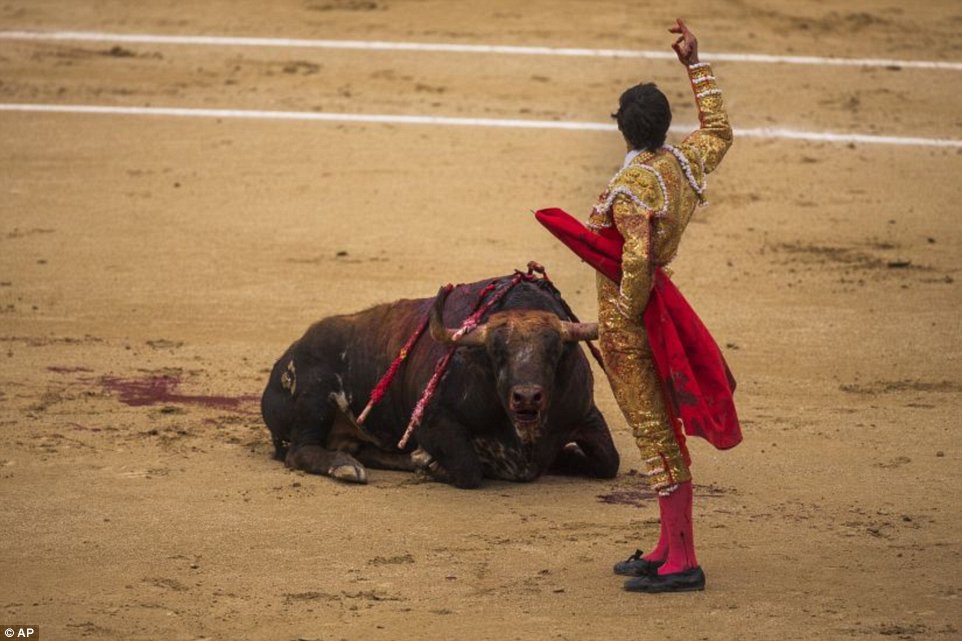
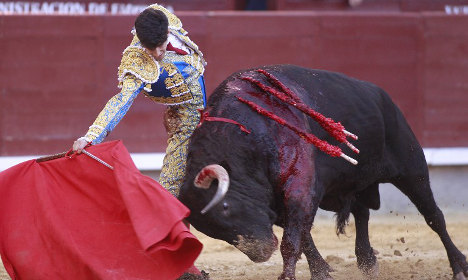
ROME (Reuters) – Two women from an animal rights group interrupted a vespers service presided over by Pope Francis at a Rome basilica on Thursday, shouting and holding up banners against bullfighting before being taken away by guards.
Video and pictures showed the two women at the back of the centre aisle of the Basilica of St. Paul Outside the Walls, where the pope and other Christian leaders were taking part in a traditional annual service for Christian unity.
One of the women held up a banner reading “Stop Blessing Corridas” and wore a T-shirt with the same slogan in Italian. Corrida is the Spanish word for a bullfight.
It was not clear if the pope heard the women, who were at the back of the church, which is in Rome’s outskirts.
The ceremony, which was attended by Archbishop of Canterbury Justin Welby, spiritual leader of the world’s Anglicans, went ahead without interruption before about 1,500 people. Both the pope and Welby went on to deliver their homilies.
The women were from the Italian branch of the organisation People for the Ethical Treatment (PETA), witnesses said.
Members of the same group gathered near the Vatican last July in red capes and fake horns to urge the pope to denounce what they see as the barbaric practice of bullfighting. The practice does not exist in Italy.















 World Animals Voice