
Category: Uncategorized

EU Parliament Shows Positive Commitment Toward Systemic Change to Regulate the (Exotic) Pet Trade.

EU Parliament shows positive commitment toward systemic change to regulate the (exotic) pet trade

25 November 2022

AAP Press Release

Yesterday, the EP adopted a resolution on improving EU regulation through an EU positive list of (wild and exotic) pets. This was the direct result of a petition and subsequent debate at PETI Committee from Eurogroup for Animals and AAP and Dyrenes Beskyttelse.

Excitingly, it’s the second EP Resolution in as many months with encouraging language on an EU positive list. It’s a strong message to the Commission to expand upon their initial commitment for a feasibility study on the EU positive list in the revised Action Plan against Wildlife Trafficking.

This resolution is the icing on the cake of a very successful year in political calls for the EU positive list, such as the May AGRIFISH position paper supported by 19 Member States, and the October EP resolution on the Convention on the International Trade of Endangered Species (CITES), which provided the EP’s opinion on the position the Commission should take at CoP19. Incidentally, the exotic pet trade has been front and centre of the debates at this important meeting of the Parties to CITES. 

Finally, the text cites the EP’s June 2021 resolution on the EU Biodiversity Strategy for 2030: bringing nature back into our lives, which includes reference to a white (positive) list.

An EU-wide positive list is a tool to more effectively and efficiently regulate the pet trade, by producing a list of animal species that are allowed to be traded as companion animalsany species not on the list is de facto illegal to keep.

The resolution stresses that the European trade policy needs to ensure that pet trade practices do not compromise the welfare of wild and exotic animals or contribute to biodiversity loss, and that the keeping of such animals as pets does not jeopardise the welfare of the animal and the owner.

Moreover, it expresses the Parliament’s concern that current regulations in Member States are fragmented and not consistent, often failing to encompass much of the animal kingdom.

Additionally, it notes that the EU legal framework is currently insufficient to tackle animal welfare, public health and safety, and invasiveness risks associated with the trade and keeping of wild and exotic animals as pets.

Of vital importance, the Commission recently released a revised Action Plan against Wildlife Trafficking, which had and action to “Explore the need for, added value of, and feasibility of revising existing measures or creating new tools to reduce unsustainable trade in wildlife (e.g. a ‘positive list’ of species whose specimens taken from the wild can be traded and kept as pets)”.

It’s our view that this action does not go nearly far enough, but that this resolution comes at the perfect moment to urge the Commission to expand on their initial commitment. The resolution calls “on the Commission to carry out an impact assessment of the added-value and feasibility of establishing such a list, using a science-based set of criteria to determine which species are suitable as pets, and to include a careful analysis of various criteria already used in national positive lists, in order to establish the most effective ones to be possibly adopted in an EU-wide positive list”. 

It is vital that the European Commission hears the strong message of the Member States through the Council, and the continued calls from the Parliament, to ensure a timely and strict implementation of the Action Plan, especially its feasibility study on the EU Positive List. The Commission is now mandated to be flexible in its impact assessment approach, to seek out feasible ways that an EU Positive List can fit with, and add value to the current legislative framework. It should be conducted with a view to ease the establishment of the Positive List. If not, an important and viable tool to protect animals, humans and the environment could be missed out on. This cannot be allowed to happen.

Reineke Hameleers, CEO, Eurogroup for Animals

Regards Mark

Australia: A New South Wales Council is Considering a Licence for Rodeos at the Local Showground – We Want to Halt Any Future Potential Animal Abuse – Please Sign the Petition BEFORE End of January Thank You.

At rodeos, calves are yanked violently with ropes and pinned down; bulls and horses are jolted with electric prods, spurred, and viciously kicked; and straps are tightened around the animals’ abdomens to provoke them to bolt and buck – all in the name of putting on a show.

A New South Wales council is considering a licence for rodeos at the local showground, which means now is the perfect time to tell it that rodeos are a relic of a cruel, bygone era.

Please sign our petition, which we’ll enter as our submission to the public consultation before it closes on 31 January at 10 am.

TAKE ACTION – Please sign the petition to stop this animal abuse:

This is action immediate – the PETA Australia submission to the public consultation before it closes on 31 January at 10 am.

Stop the Moruya Rodeo’s Licence to Harm Animals | PETA Australia

Regards Mark

India: UPDATE: The Betrayal of India’s Elephants from ‘In Defense of Animals’.

All photos and text from ‘In Defense of Animals’.

For 50 years India has had legislation in place to protect elephants from commercial exploitation in the form of a ban on trading and transporting elephants. That protection ended with a devastating vote by the Indian Parliament, which recently amended the 1972 Wildlife Protection Act with the Wildlife Protection Bill, allowing elephants to be “transported or traded for religious or any purpose.”

A betrayal of advocates

In India, activists who have dedicated much of their lives to ending the brutal treatment of Asian elephants were heartbroken by this news. In Defense of Animals has been fighting along with them to call attention to the plight of these endangered animals. This law passed despite elephants being given the highest protection under the Convention on International Trade in Endangered Species of Wild Fauna and Flora (CITES). Our alert was signed by thousands of In Defense of Animals supporters to urge the Indian Parliament to stop this bill from proceeding. But on December 8, 2022, all hopes were dashed and all concerns for the protection of elephants were dismissed.

Betrayal of a sacred tradition

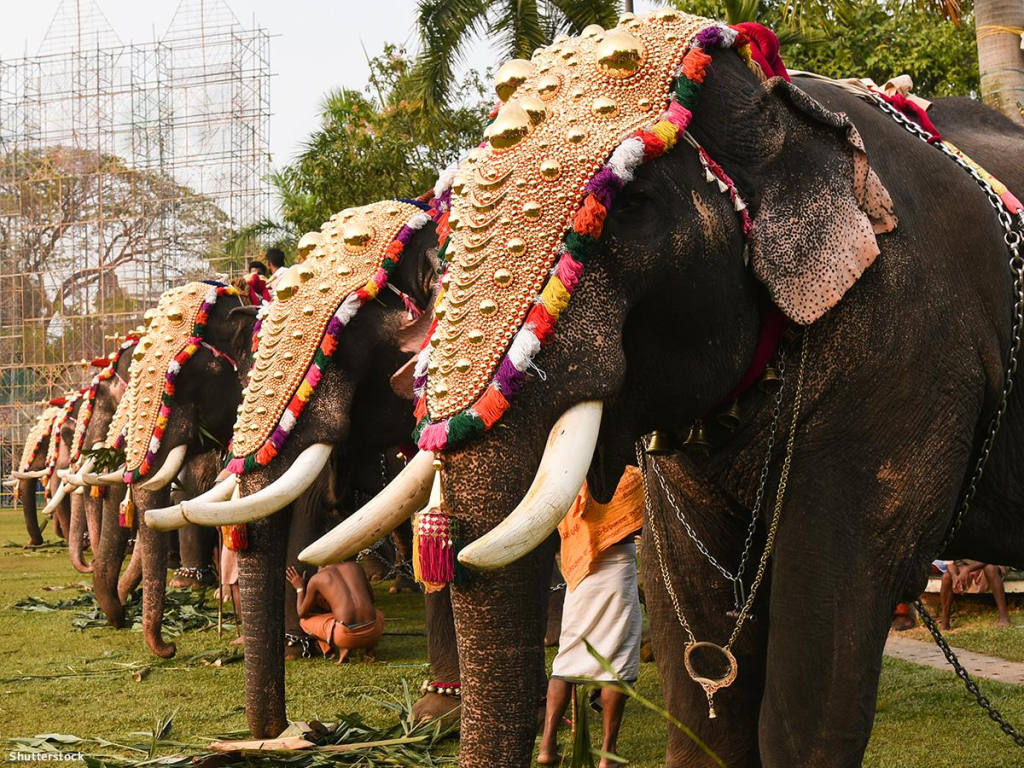
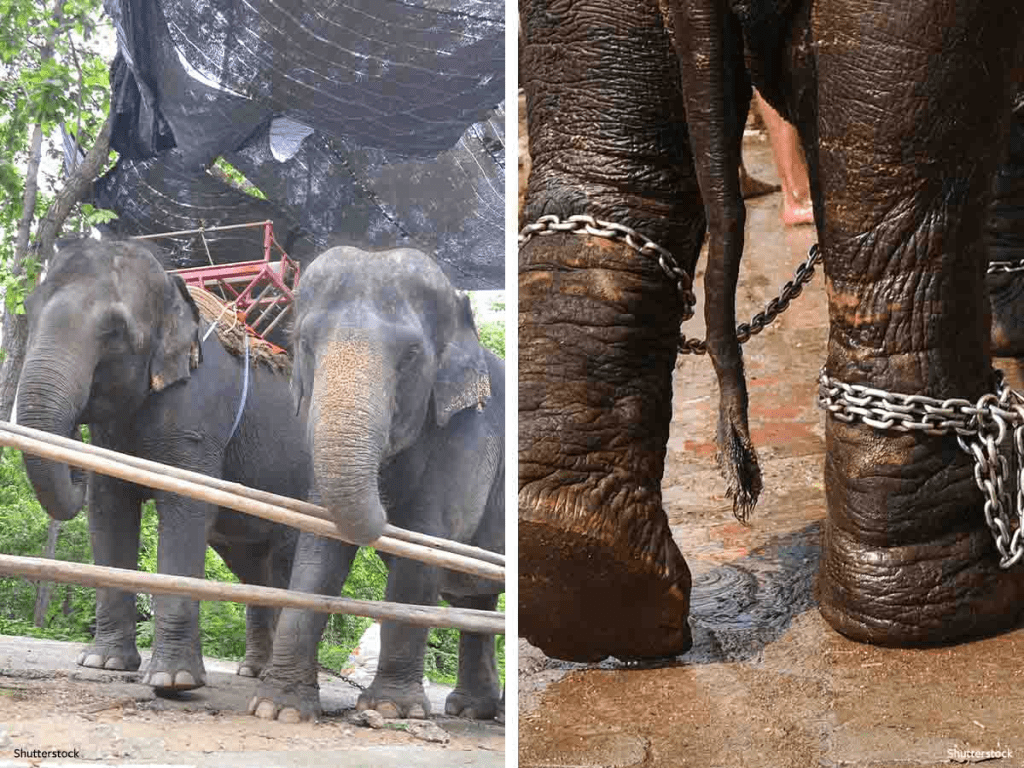
Elephants are revered as India’s national heritage animals. Since 300 B.C. killing a sacred elephant has been declared an odious crime. Where is this reverence when captive elephants are shackled so mahouts can inflict deep gashes on their legs with machetes, when boiling water is poured into their mouths, when they are beaten with bullhooks, forced to stand for hours on hot tarred streets, and subjected to the deafening roar of thousands of boisterous parade goers and the exploding fireworks that they set off that can blind and kill the elephants? Reverence for elephants has taken a back seat to the demand of brokers, religious temples, and private “owners” who put pressure on Parliament to protect their selfish desires to grow their elephant populations at the expense of the elephants themselves. This bill opens the door wide open for the capture of wild elephants to be used as indentured servants for life.

Not only that, but beaten and traumatized elephants rampage, causing injury and death. Keeping and parading elephants is touted as culturally critical, especially in the southern state of Kerala. But it’s also financially profitable. Temple elephants are rented out for Rs 7 lakhs ($10,500) a day so the rupees start to quickly stack up. Ganesha, the elephant-headed god is one of the most loved and feared gods throughout India. It’s believed that Ganesha’s penchant is to place obstacles in the paths of those who need to be checked, so it’s too bad that those who are exploiting them for religious reasons don’t seem to notice the contradiction.

A path forward to protect India’s treasured heritage

One temple has taken a step to protect India’s sacred elephants. Nalapathenneeswaram Sree Mahadeva Temple in Cherthala has introduced life-like robotic elephants to take the place of live elephants in temple parades. This is a vital move towards progress for the nation’s brutalized elephants. Let’s hope more temples side-step Parliament’s unfortunate decision to weaken protections for elephants, by also adopting this bold, innovative and humane action.

Learn more about what we’re doing to help elephants here, and please consider making a donation to support our work.

UPDATE: The Betrayal of India’s Elephants (idausa.org)

Regards Mark

USA: Texas Sicko Blood Lust Hunter Eliminates Hundreds of Feral Hogs. But They Dont Go To Ukraine To Fight and Kill, Do They ? – They Pick on Those Which Cannot Fight Back.

‘Feral swine are not considered game animals in Texas and may be hunted by any means or methods at any time of year’.

Sounds like the blood lusters are getting to have things just the way they want them.

No doubt all dressed up in their camo gear looking real tough – why dont they dress up and go help the Ukranians kill Ruskies ? – no, cos they are not real men, only pretend men; and they want it all their way, without the risk of being shot back at by Russian military !.

USA: Sen. McKell, actress seek to end gas chamber euthanasia in animal shelters.

Sen. McKell, actress seek to end gas chamber euthanasia in animal shelters

For the third straight year, a bill pushing to end the use of gas chamber euthanasia at animal shelters has reached the Utah Legislature.

Sen. Mike McKell, R-Spanish Fork, announced the introduction of Senate Bill 108, “Animal Shelter Revisions,” at a press conference Wednesday in the Utah Senate building alongside animal rights activist and actress Katherine Heigl.

Read more:

Sen. McKell, actress seek to end gas chamber euthanasia in animal shelters | News, Sports, Jobs – Daily Herald (heraldextra.com)

Regards Mark

USA: PETA Bosses Celebrate Lisa Marie Presley’s Commitment To Animal Rights Following Her Death.

People for the Ethical Treatment of Animals (PETA) bosses have celebrated Lisa Marie Presley’s commitment to animal rights following her death.

Lisa Lange, Senior Vice President of PETA, honoured Lisa Marie’s legacy as “a friend to animals” in a statement on Thursday, recalling how the singer/songwriter helped free a chimpanzee named after her and housed two dogs during the Covid-19 pandemic.

“Lisa Marie Presley was not only a talented singer-songwriter, loving wife, and mother but also a friend to animals,” Lange expressed. “After learning that an Elvis impersonator had named a chimpanzee after her and was exploiting her for profit, she successfully teamed up with PETA to achieve the release of her namesake to a sanctuary. And she didn’t stop there.

Ontinue reading:

PETA celebrates Lisa Marie Presley’s dedication to animal rights advocacy – Music News | Music-News.com

Regards Mark